Craig was born April 5, 1950. He grew up in Carlotta, California. He attended Cuddeback Elementary and graduated from Fortuna High School.
Craig was preceded in death by his father, Walter and his mother, Clarice.
He is survived by his wife, Linda Doolaege; Daughters; Chelsi Sabo (Mark), Raechael Campbell, and Renae Bertschi. His brother David Doolaege and his sister Jan Carrico (Don); His granddaughter, Courtney Lee and his grandson, Logan Sabo, as well as his niece, nephew and several cousins.
Craig will be greatly missed.
###
The obituary above was submitted by Craig’s loved ones. The Lost Coast Outpost runs obituaries of Humboldt County residents at no charge. See guidelines here. Email news@lostcoastoutpost.com.
Digital rendering of Nordic Aquafarms’ planned fish farm for the Samoa Peninsula, a five-building compound with a combined footprint of 766,530 square feet. | Image via Humboldt County.
###
Ready for some acronyms? Buckle up: Humboldt County, acting as lead agency under the California Environmental Quality Act (CEQA), has released the Final Environmental Impact Report (FEIR) for the land-based recirculating aquaculture system (RAS) facility that Nordic Aquafarms plans to build on the Samoa Peninsula.
Clocking in at 1,080 pages, the document, which was prepared by GHD, takes a deep dive into a long list of topics regarding the project’s anticipated environmental impacts. It responds to the hundreds of comments submitted by the public and various regulatory agencies following the release of the Draft Environmental Impact Report (DEIR) in December.
The project is expected to come before the Humboldt County Planning Commission on July 28, according to Stacy Atkins-Salazar, who, in addition to being Arcata’s current mayor, is also an independent contractor working with Nordic to facilitate community outreach.
The Outpost has yet to pore through the entire document, but in a quick skim we note that the report addresses some of the most commonly expressed concerns about the draft EIR, including the project’s eyebrow-raising energy usage, greenhouse gas emissions, truck traffic/road safety and the composition of the fish feed, though questions still remain — particularly on that last piece.
The FEIR notes that many commenters called for a more thorough analysis of truck traffic and questioned whether the projected truck trips listed in the DEIR were correct. The latest report explains its rationale and methodology and effectively dismisses those concerns, saying, “no new impacts have been raised that have not been adequately evaluated and found to be less than significant impacts.”
We mentioned the massive energy usage above. At full build-out (which isn’t expected to be complete until 2030), the project is expected to have an average electricity demand of 22.3 megawatts (averaged out over a year), or 195 gigawatt hours of energy per year. That would account for roughly 21 percent of the county’s total electricity usage.
The project description has been updated in the FEIR to reference the fact that Nordic has voluntarily committed to using 100 percent renewable and/or non-carbon energy. The report says the company has committed to meet the goals of the Redwood Coast Energy Authority, the county’s local community choice aggregator for electricity.
“This commitment is not only described as part of the Project within the DEIR but is fully enforceable by the County through the County’s Coastal Development Permit (CDP) Conditions of Approval,” the report says.
However, the company does plan to install dual fuel generators, which would be capable of operating on natural gas and diesel. “Diesel fuel will be used to provide backup power if both natural gas and electricity temporarily fail,” the report says, adding that these emergency generators “would only be used during required testing … and power outages.”
As for the fish feed, the FEIR says the company still hasn’t made a final decision on the feed supplier and cannot say for sure what the ingredients will be.
“It is too early in the process to do so because the sources of ingredients making up these diets are changing as the aquaculture industry continuously strives for improvement in the sustainability ranking of those ingredients,” the report says. “A feed formulation that may be the best available today may not be the best 4-5 years in the future when operations are planned to commence.”
The report addresses many other aspects of the project, including the potential for fish escape (virtually nil, they say), the impacts of discharge from a 1.5-mile outfall pipe, waste handling/disposal and much more.
If you’d like to download the full report, you can find a link near the top of the page at this link.
Humboldt County cannabis farmers rallying against cannabis taxation at the courthouse earlier this year. | Photo: Andrew Goff
###
Governor Gavin Newsom signed legislation on Thursday to bring immediate tax relief to struggling cannabis farmers.
AB 195, the cannabis tax reform trailer bill, permanently eliminates California’s cannabis cultivation tax – which increased from $154.40 per dry-weight pound to $161.28 per pound earlier this year – and guarantees three years of net tax relief to the cannabis industry as a whole.
“Since Proposition 64 passed it has been a major priority for farmers and trade organizations to really push back against this tax on cannabis cultivation,” Ross Gordon, policy director at the Humboldt County Growers Alliance (HCGA) and policy chair at the Origins Council, told the Outpost. “…It’s a tax that is not applied to any other agricultural product and it places a really unfair burden on farmers.”
The new law will freeze the state’s cannabis excise tax rate at 15 percent. After three years, the excise tax will increase to as high as 19 percent to make up for revenue lost due to the elimination of the cultivation tax. Beginning January 1, 2023, excise tax collection will shift from distribution to point of sale, Gordon explained, meaning the wholesale markup rate calculation will go away entirely.
The bill also provides significant tax relief for equity businesses. “Equity retailers are receiving essentially a 20 percent rebate on their cannabis excise taxes, which amounts to effectively a decrease of the excise tax for equity retailers from 15 percent to 12 percent,” he said. “There’s also a tax credit for equity operators that could be worth up to $10,000 for any given equity operator.”
The bill will also strengthen labor peace requirements and protect programs funded by cannabis taxes by allocating $150 million of the state’s General Fund to backfill lost revenue. Plus, it will make illegal cannabis operations liable for unpaid taxes, according to the Department of Cannabis Control (DCC).
The passage of the tax reform initiative is a great start, but “it’s not enough,” Gordon said.
“The Industry is still in crisis,” he said. “I think that’s true across the state, but even more so here in Humboldt. …The price of cannabis has dropped from $1,000 per pound to $300 or less. Farmers have been taking essentially a 70 percent pay cut and it’s not sustainable.”
Earlier this year, the Humboldt County Board of Supervisors voted to slash Measure S, the county’s cannabis cultivation tax, by 85 percent to provide relief to farmers struggling amid a market collapse. The drastic tax cut was “critical to keeping farmers alive” who did not have cash on hand, but they needed state intervention as well, Gordon said.
“So this is a really substantial step forward and I think it’s going to make a significant difference,” he continued. “That said, I think it’s important that we don’t view this as the industry and farmers in Humboldt are no longer in crisis because the situation continues to be really problematic. We absolutely need additional action and additional action quickly to really give us a fighting chance.”
One of the big issues is direct sales.
AB 2691, introduced by North Coast Assemblymember Jim Wood (D-Santa Rosa), would authorize the DCC to issue temporary event retail licenses that would open the door for cannabis cultivators to sell their product directly to consumers at cannabis events like the Emerald Cup. As it stands, small-scale cultivators can participate in such events, but they cannot sell directly to the buyer.
The other big issue is the normalization of cannabis as an agricultural product, Gordon said.
“Cannabis farmers are farmers and they need to be treated on par with other types of farmers,” he said. “…We really need a major philosophical shift in how cannabis farming is regulated and treated. And we really need to see the normalization of cannabis farmers as farmers more broadly beyond just this tax policy.”
The following is a press release from the DCC:
Good Afternoon,
Yesterday, Governor Gavin Newsom signed legislation implementing the 2022-23 state budget, including a trailer bill focused on measures that will bring tax relief to the cannabis industry, support equity businesses, strengthen enforcement tools against illegal cannabis operators, and protect youth, environmental, and public safety programs funded by cannabis tax revenue.
The cannabis tax reform trailer bill will:
Indefinitely suspend the cannabis cultivation tax effective July 1, 2022
Move cannabis excise-tax collection and remittance to retail in 2023, establishing one point of collection and remittance and greatly simplifying tax requirements for the entire cannabis supply chain
Retain the current 15-percent excise tax rate until at least 2025, and thereafter increase the tax rate (no higher than 19 percent) as necessary to make up for cultivation-tax revenue
Allow eligible equity retailers to keep a percentage of the excise tax they collect
Create new tax credits for equity licensees and some cannabis businesses with stronger labor standards
Strengthen labor peace requirements
Protect programs funded by cannabis taxes by allocating $150 million General Fund to backfill potential lost revenue
Make illegal cannabis businesses liable for all unpaid tax and allow bad actors to be held personally liable for tax evasion
Among many things, this bill invests millions of dollars into equity operators and retailers and expanding retail access, and contains reforms that will help stabilize the cannabis market, provide relief to farmers, incentivize stronger labor standards and crack down on the illegal market. You can access the bill language here.
This historic budget also provides further economic relief to Californians, expanding healthcare, boosting small businesses, and pouring billions into public schools.
DCC is grateful to Governor Newsom and the Legislature for their commitment to improve California’s cannabis policies and further support an equitable, safe, and sustainable cannabis industry in California.
Want to help make the Arcata Plaza a better place? Maybe you should become a Community Ambassador. | File image from City of Arcata
###
For years the City of Arcata has been looking for ways to make the town’s social and economic nucleus – the Plaza – a safer and more attractive place for community members and tourists. The City’s latest idea is to station a few friendly folks around the Plaza and downtown to help address some of the day-to-day issues in the area.
These people will be known as “community ambassadors” because they will be sort of like ambassadors of Arcata – interacting with tourists and locals to provide recommendations and help them feel welcome. The Community Ambassador Program was approved by the council a few months ago. Now, with grant funding from American Rescue Plan Act (ARPA), the City is looking to hire people to be community ambassador.
“The idea is for them to be a helpful presence,” Arcata Mayor Stacy Atkins-Salazar told the Outpost in a recent interview. “We need great people for this job. They will be interacting with all people from all walks of life – from someone in a crisis to someone just looking for a place to eat.”
The Community Ambassador Program is a collaboration between the Arcata Police Department and the nonprofit Arcata Main Street, Atkins-Salazar explained, and the ambassadors will focus both on supporting local businesses and helping with some police-like duties related to safety and security. With the ARPA funds, Arcata will be able to fund a pilot program for two years, Atkins-Salazar said, initially focusing on the Plaza and downtown neighborhood. If the program is successful, she hopes it can expand to other parts of the city.
Other cities, including San Francisco, Oakland and San Bernardino, have implemented Community Ambassador Programs to strengthen community partnerships and make their cities a prettier and safer place to live and visit. Ambassador duties vary from city to city but generally include things such as answering visitors’ questions and connecting them to businesses or services; checking in with local business owners and assisting with their needs; interacting with the unhoused population and connecting them to services; and helping with city cleanup, including picking up trash or removing graffiti.
Sgt. Luke Scown, APD’s community outreach team supervisor, is in charge of overseeing Arcata’s ambassador program. He’s now looking to hire six community ambassadors and one team lead. In these part-time positions, ambassadors will work 20 hours per week in four-hour shifts. Scown wanted to emphasize that although the program will be overseen by the police department, the community ambassadors are not police officers. They will be trained in de-escalation techniques, Scown said, but only so they may safely navigate any dangerous situations that may arise while they are working. They are not expected to respond to crime in the way a police officer would.
“[The ambassador program] is working with us but also very much its own thing,” Scown told the Outpost in a recent interview. “I don’t want people to feel that this is an immediate extension of the police. It’s got a different focus.”
The program will help take some of the burden off the police department, which is already stretched thin, by having ambassadors patrol downtown and respond to situations that don’t require an officer, while also providing a presence that may be less intimidating to some folks than armed and uniformed officers. The ambassadors will wear some type of uniform, though – likely a brightly colored shirt and/or vest.
The idea is that anyone can approach a community ambassador for whatever kind of help they need – whether it’s asking where to eat, requesting directions to the beach, reporting graffiti or a gross mess around the plaza or asking where to go for a free meal or shelter. If the ambassador is able to help, they will. When necessary, they may call the police department for help. The ambassadors can also act as “safety escorts,” Scown said, walking people to their car, home or hotel if they feel unsafe. Scown added that the organizers are still figuring out exactly how that service will work. Most likely, he said, there will be a phone number posted publicly that people can call for this service.
Scown and Atkins-Salazar said they’re still figuring out ways to post public information about the ambassador so that people will understand the role of the ambassadors when they see them out in public. They will probably post informational signs or create a pamphlet about the program. But they feel the most effective way to let people know about the program will be through the ambassadors themselves. They’re hoping to fill the positions with people who aren’t afraid to introduce themselves and explain their role to business owners, service providers and people just walking around downtown.
“The main way this program will work is by getting the right people who are outgoing and engaging,” Scown said. “This is not a position for passive people.”
If this sounds like something you’d be good at, you can find more information and apply for a community ambassador position on the City of Arcata’s website.
The Board of the Greater Eureka Chamber of Commerce is pleased to announce the selection of Nancy Olson as the Chamber’s new President/CEO, Board Chair Linda Wise announced today. After a careful and detailed search, the Chamber Board of Directors Personnel Committee recommended Nancy Olson to the full Board at its June meeting. She was overwhelmingly approved.
“We are delighted to have Nancy on our team,” Wise said. “Nancy has held high level positions with the Los Angeles Area Chamber of Commerce and non-profit organizations and comes with an entire package of experience that will lead our membership into the dynamic times ahead.”
Most recently, Nancy has served at Cal Poly Humboldt, providing professional and organizational development for the campus, focused on leadership development, team building, well-being, anti-bias training, strategic planning, and more. She also founded and co-led the People-Centered Change Initiative, fostering enhanced change management practices for the University.
Prior to moving to Humboldt, she served as a Vice President at the Los Angeles Area Chamber of Commerce overseeing the Center for Leadership and as Executive Director for Southern California Leadership Network, a program housed within the Center for Leadership. With an extensive background in civic engagement and public service, she spent five years in California’s Office of the Governor leading statewide initiatives focused on creating social change through cross-sector partnerships and personal action. Nancy also spent eight years living and working in the country of Haiti, serving with organizations including the United States Agency for International Development (USAID), International Child Care and World Concern. In addition, she has had an active consulting practice serving nonprofits, government agencies and business associations for more than two decades.
“When I moved to Eureka, one of the first organizations I reached out to was the Greater Eureka Chamber of Commerce,” said Olson. “I knew it would be a hub for getting involved in our community while expanding my network - which has proven true in spades! Fast forward a few years and here I am, honored and energized by the opportunity to serve as its President/CEO. I sincerely look forward to building on the Chamber’s success and expanding its impact on the vitality of our region.”
The Greater Eureka Chamber of Commerce has a membership of approximately 500 members and is an active advocate for local business. If your business would like to become a member, you may visit our website at https://eurekachamber.com/ or call (707) 442-3738.
Press release from the Humboldt County Department of Health and Human Services:
An Assisted Outpatient Treatment (AOT) pilot program for people experiencing mental health crises will launch today, thanks to a partnership with the Humboldt County Department of Health & Human Services (DHHS) Behavioral Health Branch and nonprofit Environmental Alternatives (EA).
EA is a community-based organization that contracts with counties across Northern California to provide an array of services including mental health and foster care. AOT is a program for individuals diagnosed with serious and persistent mental illness, like schizophrenia or bipolar disorder, who are in crisis or recovering from a crisis caused by mental illness andfor whom voluntary services are not working.
DHHS Behavioral Health Deputy Branch Director Jack Breazeal said individuals might be referred to AOT after multiple visits to Sempervirens psychiatric hospital and/or jail in conjunction with unsuccessful engagement by the individual in traditional outpatient services.
When an individual is referred to the AOT program, EA will conduct outreach to engage the individual, and the referred individual will be offered services and supports to help stabilize their mental health and address ongoing treatment barriers.
Individuals can be referred to the AOT program by a qualified mental health professional, law enforcement, qualified community partners and adults living with the referred individual. The AOT program is designed to help support and stabilize individuals diagnosed with a serious mental illness through a program that is less restrictive than inpatient hospitalizations and conservatorship to prevent the need for higher levels of care.
As the program kicks off, Breazeal said staff hope to have 10 people in the program at any given time with the goal of helping approximately 30 people in the first year. “Ultimately it is up to Behavioral Health staff who will be referred to EA for services, and we will reserve our limited slots for those who have repeated episodes of inpatient hospitalization and/or incarceration and have struggled to engage effectively in outpatient services.”
The program is the result of a California state law known as Laura’s Law which allows for court-ordered assisted outpatient treatment. Individuals who refuse to participate in the AOT program on their own may be directed by the courts to participate in the program. While there are no legal ramifications to an individual refusing to participate, involving the courts and a judge often makes it more likely for individuals to comply with treatment recommendations.
“We look forward to this program and our increased ability to help individuals in our community who we recognize are in need of services but can be reluctant to seek them,” Breazeal said. “In collaboration with the courts we are hopeful that this program will allow for a greater opportunity and access to assist individuals get the treatment they need.”
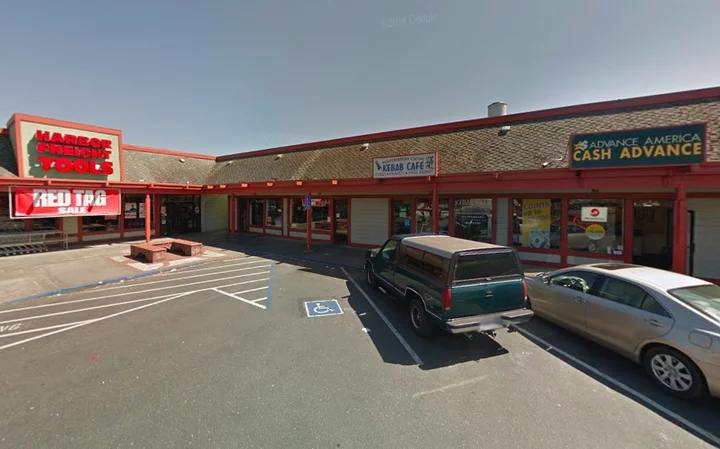
Valley West Shopping Center via Google Street View
###
The following is a press release from the Humboldt Area Center for Harm Reduction:
Humboldt Area Center for Harm Reduction (The Center) has moved to 5000 Valley West Blvd Unit
17/18 in Arcata. We will reopen to the public in 4-6 weeks, once we settle in and adjust to the new space.
For
the last 5 years, The Center has been incredibly lucky to have a secure and central location to serve our
participants in Eureka. The work we’ve been able to provide has played a role in saving hundreds of lives.
We’ve been able to build a strong community for people who use drugs, who are otherwise marginalized and
often under-resourced. Our drop-in center has served as a place where people could go to feel safe while being
treated with dignity and respect. Our Eureka participants will still be able to access our mobile services in
Eureka, established in 2020 in accordance with the Eureka City Council’s mobile-only syringe exchange program (SEP) ordinance.
Although leaving Eureka is a difficult adjustment, we are excited about the opportunities and future
collaborations to come in the Valley West and broader Arcata community.
Please reach out to us directly if you
have questions! We’d love to talk with you. Rumors and misinformation creates harmful narratives about the
people we serve and our organization.
The Center will NOT be providing any syringe services out of our new Valley West location. Arcata
syringe services have long been available through mobile-only outreach, and these services will continue,
separate from our office space. Our new Valley West location will be used as an administrative office, a storage
space, a place to host volunteers, and participant support services. We are excited to continue offering linkage
to low-barrier treatment via telehealth - the Valley West office will make this important treatment available to
Arcata participants. Our case managers and harm reduction specialists will be available to support participants
with a variety of needs like navigating the healthcare system, obtaining bus tickets, gas cards, clothing, food,
water and other basic amenities to stay healthy and safe while engaging with our program.
We are eager to connect with our new community partners, neighboring businesses and programs!
Below you can find all the ways to contact us. The Center’s staff are a group of welcoming individuals
dedicated to advocating for and serving people who use drugs in our community. While the move is bittersweet
for us, it presents itself with many opportunities for growth and new access points to vital, life-saving services
in the community.
Thank you for any future collaboration and communication,