

From Street Vendor to Crypto Artist: How Digital Assets Offer Minorities New Opportunities
Jacqueline Garcia / Wednesday, Dec. 8, 2021 @ 7:32 a.m. / Sacramento
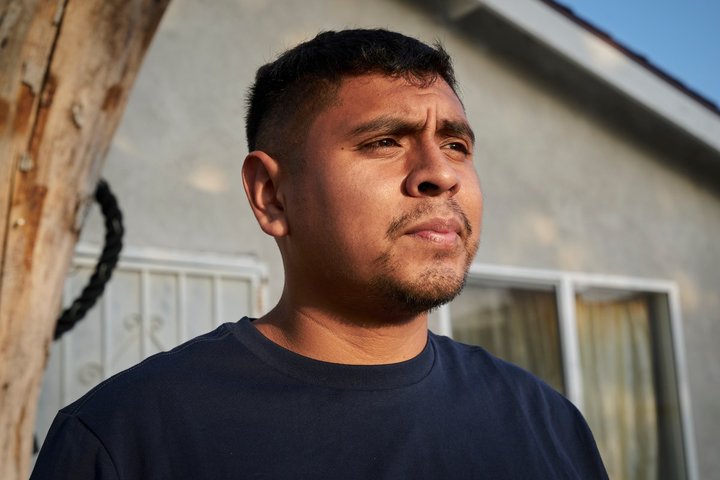
Jesús Martinez, an NFT artist and crypto investor, outside his family’s home in Eagle Rock on Dec. 3, 2021. Photo by Bing Guan for CalMatters
###
Jesús Martínez finds inspiration on his morning runs around his neighborhood of Eagle Rock in Los Angeles: a sunrise, a street vendor or a landscape.
When the 24 year-old artist sits down at home, he goes to work on a tablet and stylus pen.
Martínez, who grew up selling flowers on street corners with his parents, recently made his way into the world of non-fungible tokens, or NFTs, which are unique digital assets bought and sold using cryptocurrencies, such as bitcoin. The crypto artist’s biggest sale so far is a digital artwork titled “Genesis life,” which sold for $38,000 and is now valued at around $80,000.
As decentralized investing gains popularity, Martínez has also found a nontraditional way to generate wealth. He’s not alone. The Harris Poll found 25% of Black Americans and 15% of Latino Americans have purchased NFTs, compared to 8% of white Americans. And USA Today reported over summer that minority investors are more likely to outpace white investors in owning digital currency.

A digital art piece by Jesús Martinez. Martinez sells the digital art pieces as NFTs. Image courtesy of Jesús Martinez
Martínez is still amazed at venturing into this world since, until a few years ago, he worked alongside his parents, who emigrated from Mexico.
“We would sell flowers on street corners or for graduations,” Martínez said. “I stopped selling flowers after high school, but that helped me learn about work and humility.”
Martinez’s passion for digital illustration took hold in high school. Three art classes introduced him to graphics software such as Sketchbook Pro, Photoshop and After Effects. He went on to study communications at California State University, Northridge.
Martinez had heard about Bitcoin as early as 2012 but didn’t dive into digital assets until this year. He published his first digital artwork in May and has sold about eight pieces ranging from 1,000 to 3,000 NFTs. The most expensive was purchased by a collector who appreciated the story behind the artwork.
“The collector told me: ‘What made Picasso and Mona Lisa interesting was not the painting but the story behind the artists and you have a beautiful story and I would love to be a part of that,’” Martínez said. “That’s when he bought my piece for a lot of money.”
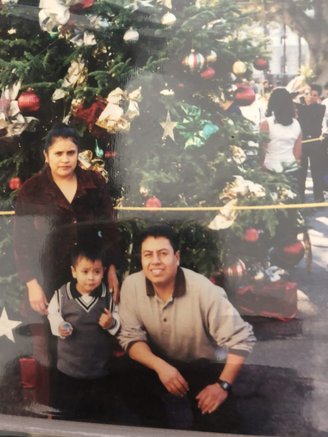
Jesús Martinez (center) in a photo with his parents, with who he sold flowers for many years. Photo Courtesy of Jesús Martinez
The young artist said his work has caught the attention of other collectors. Among them Gil Weisblum, who is a web 3.0 advisor and part of the office of iconic fashion designer Diane Von Furstenberg.
“Gil was among the first to say that my story is what is going to achieve record sales in the NFT space,” Martínez said, “and that would give me recognition as a crypto artist.”
Martinez now works full time on his digital art. He hopes one day to become a philanthropist to help worthy causes, such as building schools in third world countries or providing student scholarships.
Martinez is also serving as a strategic advisor for an initiative of Time Magazine.
Even in the world of cryptocurrency, Martínez strives to stay grounded. He hopes to buy his father, who works as a janitor, a new car.
“He has never had a new car,” said Martinez, the youngest of two children.
Martinez advises young people who are interested in cryptocurrency to investigate closely because these investments are risky. Don’t be afraid to ask experienced cryptocurrency investors for help.
“I recommend that you make sure you do your due diligence, spend a lot of time doing your research before investing money, and don’t just put money in because you read it online,” Martínez said “Take the time to read and (understand) why people are investing.”
###
This article is part of the California Divide, a collaboration among newsrooms examining income inequality and economic survival in California.
CALmatters.org is a nonprofit, nonpartisan media venture explaining California policies and politics.
BOOKED
Today: 12 felonies, 16 misdemeanors, 0 infractions
JUDGED
Humboldt County Superior Court Calendar: Friday, Sept. 4
CHP REPORTS
0 Sr299 (RD office): Trfc Collision-1141 Enrt
0 Us101 S (HM office): Traffic Hazard
ELSEWHERE
RHBB: CDPH Issues Immunization Recommendations for 2026-27 Respiratory Virus Season
RHBB: Redway Transfer Station to Close an Extra Day for Construction
RHBB: Dows Prairie Road to Close for Two Months for Culvert Repair
Why Is California’s Redistricting Commission Under Increasing Scrutiny?
Sameea Kamal / Wednesday, Dec. 8, 2021 @ 7:30 a.m. / Sacramento
California’s independent redistricting commission is taking a lot of heat for the congressional and legislative maps it’s drawing to beat a Dec. 27 deadline.
But it’s not just the at-times confusing product that’s under the microscope. It’s also the commission’s messy process — with accusations of secrecy, complaints about public input and now questions about whether taxpayers are getting their money’s worth.
The state is funding the commission with $20.3 million — about twice as much as the previous independent commission received.
Steven Maviglio — a Sacramento-based Democratic consultant who has been one of the commission’s most outspoken critics and opposed its creation to begin with — said it has been plagued with “cost overrun after overrun.”
“Everyone understands that redistricting is an ugly process no matter who does it, but what I’m seeing here is amateur sausage-making,” he told CalMatters.
Jane Andersen, chairperson of the commission this week, said that the panel has demonstrated a commitment to an open process with extensive public outreach – one that took place under “extraordinary circumstances,” including the pandemic and an unprecedented delay in the 2020 Census data.
One reason for the current commission’s bigger budget is because it started four months earlier than the previous one, and its work has been extended by the Census delay. Having to conduct public outreach virtually over the summer due to COVID-19 also drove up costs – audio and video, translation, captions and interpretation, said Fredy Ceja, director of communications for the commission.
“The people of California entrusted the redistricting process to a group of their peers without a blueprint for how to do so,” Andersen, a Republican from Berkeley who is a civil engineer, said in a statement issued Tuesday night. “The Commission created and executed a robust community input process, which may not be perfect, but was led with integrity and transparency in hopes that it will result in fairer maps for the people of California.”
Rising costs for redistricting
When voters approved the 2008 ballot measure that created the commission and took once-a-decade redistricting away from the Legislature, the initiative stated that the cost would be set at the amount of the prior redistricting, plus inflation. After the 2000 Census, that was about $3 million.
In reality, the first independent commission that drew districts after the 2010 Census spent $10.4 million in state money, plus $3.3 million donated by a private foundation for public outreach.
Of the $20 million state appropriation for the current commission, it had received $8.4 million as of July 1, according to budget documents provided to CalMatters. The commission wasn’t able to give an updated spending total.
“Everyone understands that redistricting is an ugly process no matter who does it, but what I’m seeing here is amateur sausage-making.”
— Steven Maviglio, a Democratic political consultant
The money goes to pay staff, rent venues, produce audio and video and provide translations. There are also costs for public outreach: printing marketing materials, purchasing ads online and other costs to educate the public about redistricting and seek its involvement.
The budget also includes $1.2 million for its legal counsel. Under the contract with Strumwasser and Woocher LLC, the senior counsel and partners are paid $575 an hour and associates $375 an hour.
And the commission has budgeted $1.6 million for its mapping consultants: HaystaqDNA and Q2 Data & Research, LLC. The previous commission paid $592,000 to Q2 for line drawing.
The Legislature allocated money separately to the Statewide Database to create a mapping tool. And the state auditor’s office received a separate $5.2 million appropriation to select and empanel the commission.
Commissioners, themselves, get a stipend — $378 per day when attending meetings or doing commission work. Though some commissioners have been noticeably absent from meetings, there are no attendance requirements. The commission voted to allow those commissioners who wanted to meet in person to do so, and their travel is reimbursed. The others participate via Zoom.
Republican political strategist Matt Rexroad said that while he understands that the citizens commission members might be juggling multiple jobs, they need to hear the public input to make decisions.
“If you value the public input, you show up to listen to it,” he said via email.
The commission has been meeting six days a week most weeks since mid-November and plans to continue on that schedule until adopting final maps late this month.
It approved preliminary maps Nov. 10, but it’s already blowing some of them up. It wrapped up new versions of state Assembly maps, but not until about 12:40 a.m. Tuesday.
To balance the various criteria the commission has to weigh, some of the districts ended up oddly-shaped. There were long “necks” within districts, for example, in San Pedro to separate the ports, as requested by community input.
Commissioners, who started reviewing congressional districts Tuesday, asserted that there isn’t a great way to evaluate one community of interest’s input over another.
But Sen. Lorena Gonzales, a San Diego Democrat, called the line-drawing “a mess.”
“Why? The lack of foresight to start with previous maps also drawn by an independent commission,” she tweeted Tuesday. She also said that legislators should be allowed to apply to be commissioners.
She’s so fed up that she says that the initiative that gave redistricting power to the commission should be revisited: “There should be a better way to avoid political gerrymandering, while giving a true voice to the community and its representatives.”
Jonathan Mehta Stein, executive director of California Common Cause, a government reform group that pushed for independent redistricting, said the messiness is better than the alternative.
“Democracy done in public is going to be messy. These are 14 folks with the best interests of California in mind, trying to draw a huge number of districts on a public livestream,” he told CalMatters via email. “They can’t take things into a back room for a couple weeks to work on it, make some mistakes, and then bring back a more polished product. We’re seeing everything — and that includes the good and the bad.”
Efficiency and transparency
Commissioner Sara Sadhwani defended the new Assembly map, which she said was “based on compromise and consensus.” But in a Tuesday tweet, she acknowledged that “not everybody will be happy.”
For some, it’s more than unhappiness with the maps themselves.
On Nov. 30, five Republican voters filed an emergency petition with California’s Supreme Court to order the commission to disclose its analysis on past racially polarized voting, which it uses to draw districts to comply with the Voting Rights Act.
The petition, filed by Harmeet Dhillon, a Republican National Committee member, also says that any private conversations between commissioners and interest groups should be made public. Finally, the complaint urges that the commission’s legal counsel be fired because it has also worked for legislative leaders and the campaigns of former President Barack Obama.
In its response, filed with the court Tuesday, the commission categorically denied the allegations and gave no indication it will comply with any of the demands in the petition. The commission’s lawyers said it had posted maps showing the results of the racial voting analysis, and said commissioners have not been holding any secret or illegal meetings.
The petition is lacking in merit and, at worst, “represents a politically motivated attempt to obstruct the Commission’s efforts by denying it the advice of its chosen counsel in these final crucial days of the redistricting process,” added the response filed by the commission’s counsel.
“Democracy done in public is going to be messy….We’re seeing everything – and that includes the good and the bad.”
— Jonathan Mehta Stein, executive director of California Common Cause
The commission is already expecting to be dragged into court again, even after it submits its final maps to the Secretary of State. Its budget includes $4.3 million for litigation following redistricting.
The previous commission spent about $2 million on legal costs after the 2011 redistricting. The congressional and state Senate plans were challenged in state and federal court, and the composition of the commission, itself, was challenged in state court, according to research from Loyola Law School. None of the challenges were successful.
Aside from the GOP voter petition, redistricting experts and close observers have complained about the public comment process, including a lack of clarity on specific timing, files not posted early enough for the public to review and comment, or file formats that were hard to read.
Other voters, however, have commended the commissioners for their labors on a compressed timeline.
“This is not easy work and very time-consuming,” said one caller from Bakersfield. “Thank you for what you have done.”
###
CALmatters.org is a nonprofit, nonpartisan media venture explaining California policies and politics.
OBITUARY: Mark Leslie Rios, 1956-2021
LoCO Staff / Wednesday, Dec. 8, 2021 @ 6:56 a.m. / Obits
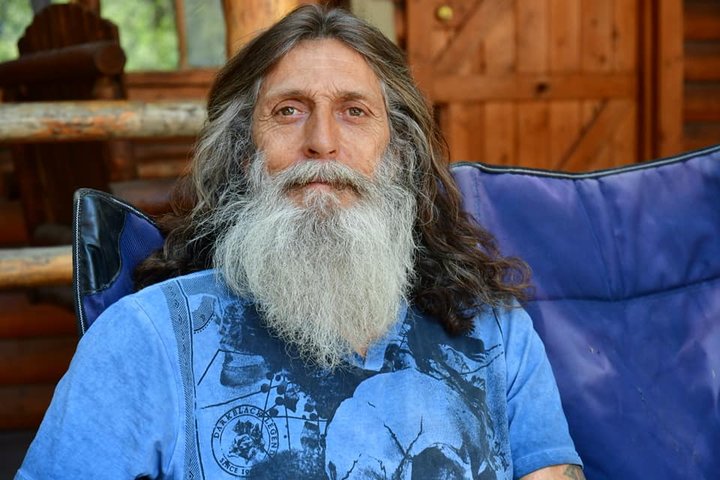
Mark Leslie Rios — “Tweety” — moved on from this physical world on August 4, 2021. Anyone who knew Mark will know there is no way to sum him up in a few paragraphs. Mark was born in San Mateo on August 2, 1956 to adoptive parents, Albert Rios and Frances Janice Arresta.
Mark was raised with his four older sisters Bev, Chris, Nelda, Linda and younger brother Mike. When Mark was 17 he enlisted into the Armed Forces, serving the Army as a Combat engineer. Mark was a Patriot and proud of the brotherhood he shared. Proud to be called Veteran. He was stationed in Anchorage, Alaska. Coming home on leave in 1975 his sister Nelda brought along her friend to pick him up at the airport. That is when Mark first met the love of his life and future wife Kimberli Ann Abreu. July 10, 1976 they would marry and reside in Anchorage. 1977 they welcomed their first-born daughter Richelle Renea. They would move back to Kim’s home town of Brentwood after Mark was discharged from the Army, purchasing their first home in Pittsburgh, Calif. and in 1979 welcoming their second daughter Karon Lezly.
Mark went to work for PG&E in the gas department, and in 1982 PG&E would transfer Mark to Eureka. Mark was an avid outdoorsman and he was thrilled to be moved to Humboldt County, where he could live out his dream of raising his family in the mountains. He loved the outdoor life — fishing, hunting, hiking, exploring nature and the wildlife. Later in 1999 would purchase the ranch that would pass down his legacy of mountain living.
Mark was a boy who dreamed to be a musician. Music was in his soul. He could play multiple instruments, but the drums were his passion. He had drummed for multiple bands including Raise your Hair, Loose Gravel and AKA. He built many lifelong friendships.
Family was everything to Mark. He was a role model to many children while raising Richelle and Karon. But most of all to his own nephews and nieces including James and Denise Provancha, Jeffrey Anello, Malynda Burnett, Brianna Anello and Antonia Parks. He always made clear his door was open for whatever the need. In 1998 Mark became Papa! His ultimate loves in life are his seven grandbabies, each of which carry a trait of Papa — from musicians, serving the military, fishing, love of outdoors and their quick wit! In 2010 Mark started his journey to reconnected with multiple biological family members and began building close relationships. He looked forward to every family reunion.
Mark was a book of knowledge, and many enjoyed the meaningful and deep conversations. He will be greatly missed, and this world will never be the same without him. Mark is survived by his wife Kim Rios, His daughters Richelle McClurg (Ryan), Karon Rios, Grandchildren Kayla Hansen, Cameron Reeves, Bridgette Reeves, Rylin Grow, Cayden McClurg, Renea McClurg and Jameson Leonhardt. Sisters Beverly Craig (Tom), Nelda Provancha, Sister in-law Doreen Anello (Phil), Sisters Sharee DeMaderios, Denise DeMaderios,, Sister in-law Kathy DeMaderios and many nephews, nieces and cousins. Mark is proceeded in death by his Father and Mother Albert and Francis Rios, Grandparents Raymond and Genevieve Preston, Mother in-law Norma Loughner, Brothers Michael Rios and Earnest “Butch” DeMaderios, Sisters Linda Hester and Chris Cobb. Brother in-laws Larry Anello and Michael Provancha and Nephew James Provancha.
A celebration of life will be held July 3 and 4, 2022, in Salyer.
###
The obituary above was submitted on behalf of Mark Rios’ loved ones. The Lost Coast Outpost runs obituaries of Humboldt County residents at no charge. See guidelines here.
OBITUARY: Doug Collard, 1946-2021
LoCO Staff / Wednesday, Dec. 8, 2021 @ 6:56 a.m. / Obits
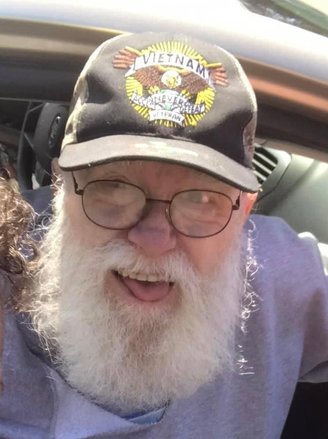
Doug Collard passed away
Oct. 28, 2021 at the age of 75. He suffered from Parkinson’s Disease
and Lewy Body Dementia for the past 3-plus
years,
with his family around him and an angel of a caregiver, Craig.
Doug came to the United States at the age of 5 with his family from Canada and settled in Burbank. He graduated from Burbank High School in 1964 and joined the U.S. Marines in August 1965. He did two tours of Vietnam between 1966 to 1968, but before first tour he married his high school sweetheart, Cindy on Dec. 7, 1965. He graduated from CSUN with a BS degree in anthropology.
In 1978 he stared his career with the phone company, transferred to Humboldt County in 1994 and retired in 2005. Doug then got his real estate license and enjoyed doing that for about three years when he qualified for 100 percent disabled veteran and retired completely.
He leaves behind his high school sweetheart, Cindy, his children Bernie (wife Suzie), Jaime (husband Randy), Jessica, and Douglas (significant other Meghan), sister-in-laws Cathy (Shorty) and Dolly Sue, sister Debbie (friend Art) and two nieces (Tita and Stef) as well as three nephews (Joey, Jason, and Travis), four grandchildren (Kayla, Brieanna, Mason and Mackenzie) and eight great-grandchildren.
Doug requested no service and we will honor his wishes.
###
The obituary above was submitted on behalf of Doug Collard’s loved ones. The Lost Coast Outpost runs obituaries of Humboldt County residents at no charge. See guidelines here.
Longtime Ag Commissioner Retires; Supervising Inspector Appointed to Serve as Interim Commissioner
LoCO Staff / Tuesday, Dec. 7, 2021 @ 5:01 p.m. / Local Government
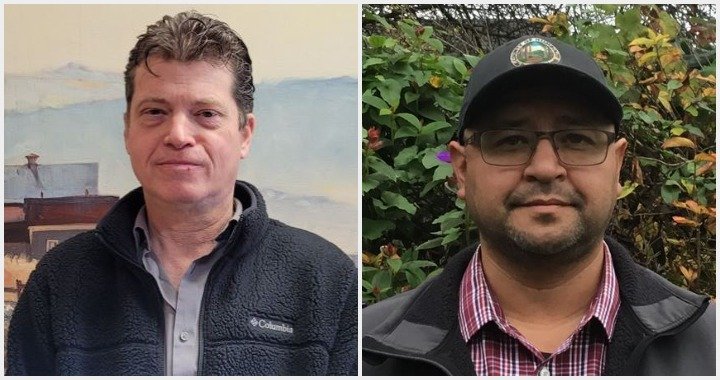
Outgoing Ag Commissioner Jeff Dolf (left) and incoming Interim Ag Commissioner Weylan Shaw. Photos: County of Humboldt.
From the County of Humboldt:
The Humboldt County Board of Supervisors today appointed Weylan Shaw as the Interim Agricultural Commissioner, effective Jan. 1. Shaw will replace current Ag Commissioner Jeff Dolf, who after 34 years in public service submitted his letter of resignation, effective Dec. 31.
“I am honored the Board of Supervisors has the confidence in me to lead this department in the interim,” said Shaw. “I am excited to work with them and take on new responsibilities required to manage a department of county government.”
The Agricultural Commissioner provides environmental protection through agricultural pest exclusion, detection, pesticide use enforcement, and support of the United States Department of Agriculture animal damage control program and protects consumers by inspecting/testing all commercial weighing devices and enforcing package label laws.
“The Humboldt County Department of Agriculture has fostered a great working relationship with regulated industry, stakeholders, and the public for many years under the direction of Commissioner Dolf,” said Shaw. “It is my goal to continue the high level of public service our department provides to our community.”
Shaw started working for the Agriculture Department in March of 2010 as extra help. He later accepted a full-time position as Agricultural Biologist/Weights and Measures Inspector I. Shaw obtained the requisite licensing and experience to advance to Inspector II and Senior Inspector and was promoted to Supervising Agricultural Inspector in 2016.
“With his experience, Weylan Shaw has proven to be capable and we are grateful to have him serve as the Interim Ag Commissioner,” said 1st District Supervisor Rex Bohn. “We would also like to thank Jeff Dolf, for his many years of service and dedication to our Ag industry and the community.”
Dolf, a Humboldt County native, began working for the office in 1987 as a seasonal pest-detection trapper. He earned a Bachelor of Science degree in wildlife management from Humboldt State University and was appointed Ag Commissioner in 2009.
###
WHOOPS: The headline of this post originally misidentified who was the Humboldt native in this transaction. The Outpost regrets the whoops.
TODAY in SUPES: Board Finalizes New District Map (Same as the Old Map), Names Next Year’s Chair (Same as Last Year’s Chair) and Ponders Its Responsibility to Counter COVID Misinformation
Ryan Burns / Tuesday, Dec. 7, 2021 @ 4:42 p.m. / Local Government
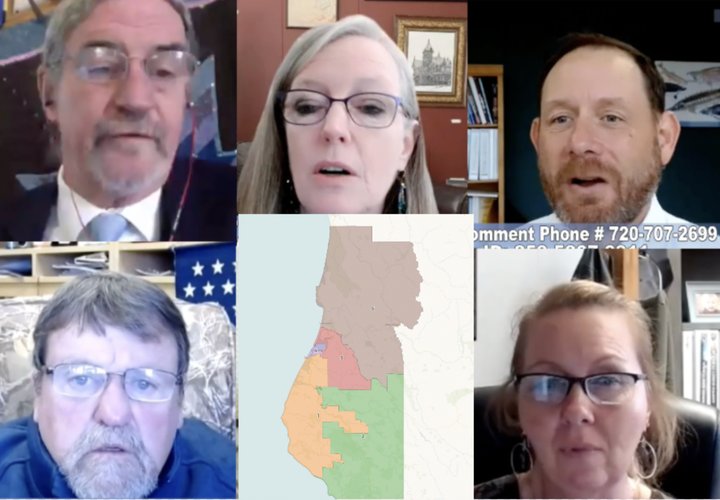
Five county supervisors and a map (clockwise from top left): Fifth District Supervisor Steve Madrone, Fourth District Supervisor Virginia Bass, Third District Supervisor Mike Wilson, Second District Supervisor Michelle Bushnell, the final county supervisorial district map for the next decade and First District Supervisor Rex Bohn. | Screenshots.
###
Do county supervisors bear a responsibility to correct the COVID misinformation being spouted by public commenters at virtually every meeting these days? And if so, how to go about it?
Those questions were briefly considered at Tuesday’s meeting of the Humboldt County Board of Supervisors following the latest batch of fist-shaking claims about ivermectin, natural immunity and government overreach.
Humboldt County Health Officer Dr. Ian Hoffman had offered his latest update on local conditions surrounding the pandemic, saying our case, hospitalization and death numbers have improved but also plateaued, and local vaccination rates have continued their slow climb, with roughly three out of every four eligible residents having gotten at least one dose. He commended the county for this progress.
He also noted that there are many as-yet-unanswered questions about the omicron variant, with preliminary data suggesting that it spreads rapidly but may cause less severe and deadly infections.
“Hope is there, but we need more time to understand this variant,” Hoffman said.
Then came the public comments, which were once again dominated by unwitting exemplars of the Dunning-Kruger effect. One guy claimed that masks don’t work (they do) and that the county’s emergency health powers are fraudulent (naw). Another argued that mask mandates are an “egregious violation” of some law or other. One relayed an anecdote about a man who allegedly “threw himself off a building after admitting that COVID is a scam.”
Dr. Stephanie Dittmer, a family medicine specialist in Fortuna, called in the midst of these comments to denounce such blatant misinformation, saying it’s the reason why we’re still in this pandemic. She lamented the politicization of the science and suggested that there needs to be “a targeted approach to eliminating the misinformation.”
After the comment period, Third District Supervisor Mike Wilson noted that while many people seem to focus on COVID deaths, there are other serious impacts, including “long COVID.” He mentioned a 45-year-old friend who died after contracting COVID and was “very misinformed about vaccines.”
Wilson said he empathized with Dittmer’s concern over allowing public meetings to become forums for the spread of misinformation.
However, First District Supervisor Rex Bohn, who has been consistent in his advocacy of vaccines, pushed back a bit, noting that even doctors don’t all agree about everything and that stories in the media don’t typically come with stamps saying “this is good information” or “this is bad information.” He referred to the wide array of public feedback as “the people’s information.”
Wilson deemed this “a reasonable critique” of his own comments, though he said the board should “give a reasonable response” — to misinformation, presumably.
Second District Supervisor Michelle Bushnell suggested that the frequency of these official COVID updates could maybe be reduced to once per month instead of every other week. The board deliberated that a bit and then agreed to it unanimously.
###
Later in the meeting, the county put a bow on its decennial redistricting effort, unanimously approving a new supervisorial district map that’s virtually identical to the one established in 2011. Senior Administrative Analyst Neftali Miller-Rubio noted that there are some very minor variations due to census block shifts along the Mad River. (Click here for a pdf of the new map.)
She also said that even though the map didn’t really change, the redistricting effort wasn’t a waste of time because it established a de-politicized process that provided channels for community feedback and ultimately confirmed the public’s satisfaction with the status quo.
Wilson remarked that the county’s redistricting process “wasn’t the best,” but he also expressed gratitude that it didn’t get as politicized as in other counties, such as San Luis Obispo.
The board unanimously approved the new map.
###
The board later spent some time discussing who should serve as chair and vice chair next year. The positions don’t really confer any power to speak of, though the chair is responsible for moderating the meetings — that is, calling on fellow supervisors and staff members who raise their hands to speak, cutting off public commenters who exceed their time limit, asking for motions and seconds, etc. (The vice chair fills in if the chair is absent.)
Though there’s no written policy governing this annual transfer of minor power, the board has a longstanding tradition of taking turns, cycling through each supervisor in numerical order based on the districts they represent.
Last year, however, Wilson threw a bit of a wrench in the works. It was his turn to serve as chair and Fourth District Supervisor Virginia Bass’s turn to be vice chair, but Wilson begged off, saying he couldn’t commit to the extra responsibility given his other duties, which include serving on the California Coastal Commission and being at home with kids whose schools were shuttered due to the pandemic. He and Bass wound up swapping roles for this calendar year.
What does that mean for next year? Wilson said he’d be happy to take his overdue turn but didn’t necessarily feel compelled to do so. If the board reverted to its established order then next year would technically be Bass’s turn, with Fifth District Supervisor Steve Madrone in the vice-chair seat.
“I very much would like to be the vice chair next year,” Madrone said, referring to it as a training opportunity. He also said he doesn’t particularly care to take over as a board representative on the county’s Audit Committee, even though that committee’s charter calls for the chair and vice chair to represent the board. He suggested that Bass and Wilson continue their service on that committee through next year.
Ultimately, the board opted to revert to the established order, making Bass chair for a second year in a row and allowing Wilson to skip his turn entirely. Madrone will serve as vice chair. He’ll be elevated to the position of chair in 2023 — if and only if he wins re-election next year, that is.
###
A couple other tidbits:
- During the public comment period for matters not listed on Tuesday’s agenda, a couple of cannabis cultivators called in to complain that applicants for the county’s Project Trellis microgrant program must have business licenses and permitted structures on their parcels, which can be difficult hurdles to clear for “legacy” farmers dealing with regulatory delays. They asked for applications to be opened to people who’ve started the process.
- Representatives from the McKinleyville Municipal Advisory Committee (nicknamed the McKMAC) appeared with an updated set of rules and regulations, which they asked the supes to approve. However, Bushnell was reluctant to do so without seeing exactly what changes had been made, and so the matter was continued to the board’s Jan. 11 meeting.
Local Photography Legend Who Helped Establish Redwood National and State Parks Sets Out to Complete His Life’s Work
John Ross Ferrara / Tuesday, Dec. 7, 2021 @ 3:55 p.m. / Our Culture
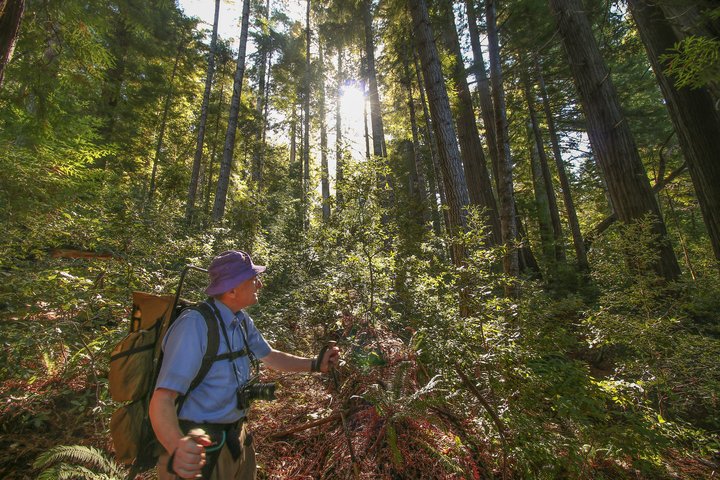
Dave Van De Mark revisiting the redwoods in his 70s. | Photo by Ally Gran, provided by Dave Van De Mark.
At the age of 78, celebrated local photographer Dave Van De Mark is returning to Redwood National and State Parks to recapture the influential photos that helped establish the park more than 53 years ago.
Van De Mark initially hoped to begin the project in 2018 for the park’s 50th anniversary, but his plans were halted due to COVID-19. Now, with formal approval from the National Parks Service and ample funding provided by community members, Van De Mark is ready to put the finishing touches on his life’s work.
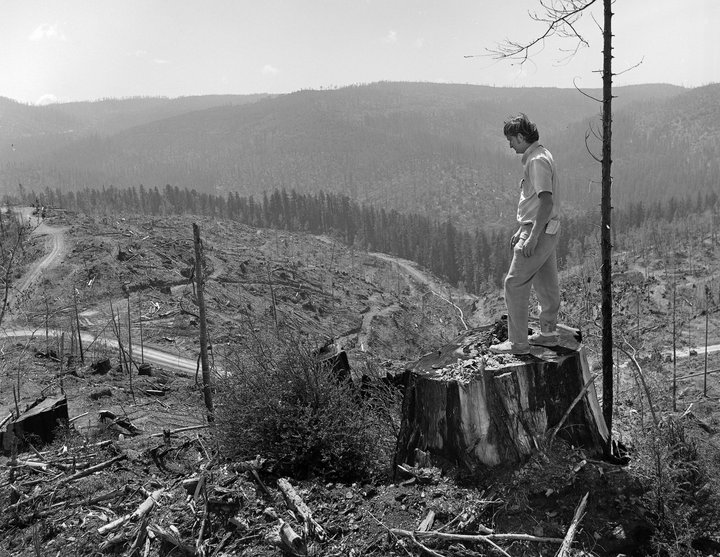
Van De Mark stands on the upper slopes of a heavily logged area near Redwood Creek in the early ‘70s. | All Photos by Van De Mark unless otherwise stated.
“I have been spending more time revisiting the [park],” Van De Mark told the Outpost from his Arcata home. “This project would entail a concerted effort to go back to places I photographed in the late ‘60s before the park was created, and between 1964 and 1978 when the park was expanded.”
Van De Mark began photographing the Humboldt Redwoods in 1963 while working a summer job at a local sawmill. The Southern California native was so inspired by the natural wonders he found while trespassing on private timber lands in Humboldt and Trinity Counties that he dropped out of USC, enrolled at Humboldt State and never left.
With the establishment of Redwood National and State Parks, Van De Mark’s photos also helped to save many of the region’s old-growth redwoods, which were still being clear-cut until the late 1970s. Through his current project, Van De Mark hopes to rediscover and re-photograph many of these historic scenes in an effort to capture the slow, natural recovery of vegetation and the stabilization of soils and water courses previously affected by the logging industry.
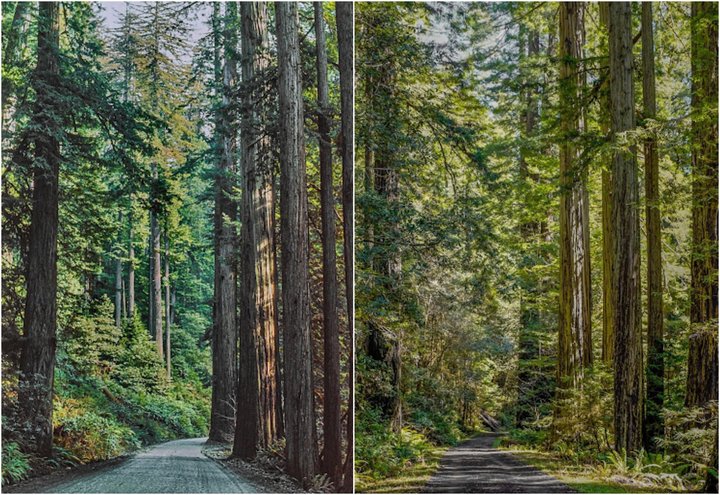
Geneva Road (logging road) along Lost Man Creek in October 1964 (left). The same road, now part of Lost Man Creek Trail. March 17, 2019 (right).
“My approval ends in December of 2023,” he said. “That’s two springs, two summers and two falls. It’s going to be very difficult to reach many of the places now because the parks service has put to bed many of the logging roads that existed then. It was also easier to get around in the Redwood Creek channel then than it is now.”
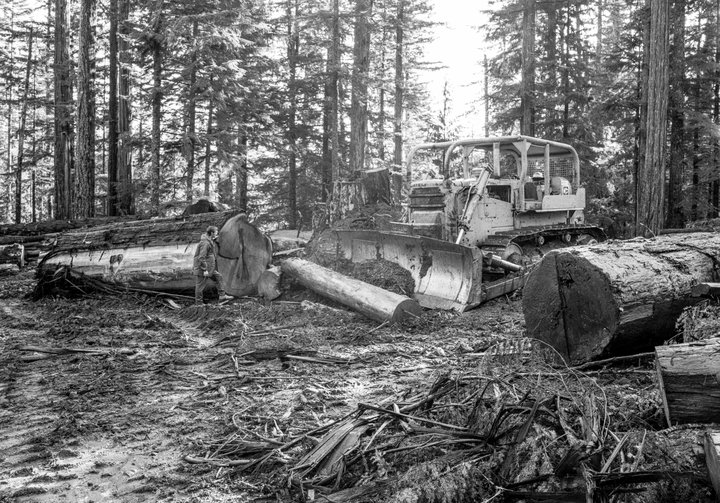
A logging site near Redwood Creek in 1967.
Retracing his steps won’t be easy. In his heyday, Van De Mark hiked more than 1,000 miles and took more than 5,000 photographs, which he later donated to the Parks Service. In the midst of his golden years, Van De Mark hopes to recapture 50 of these images.
“One of the major projects that I envision is to try and walk the entire channel of Redwood Creek,” he said. “That will literally entail backpacking for three to five days. Because of the nature of the channel, it won’t be walking as much as it will involve swimming and floating through big pools. I hope to photograph the channel all along the way and compare those with photos I took during a [rafting trip down the creek] in February of 1966.”
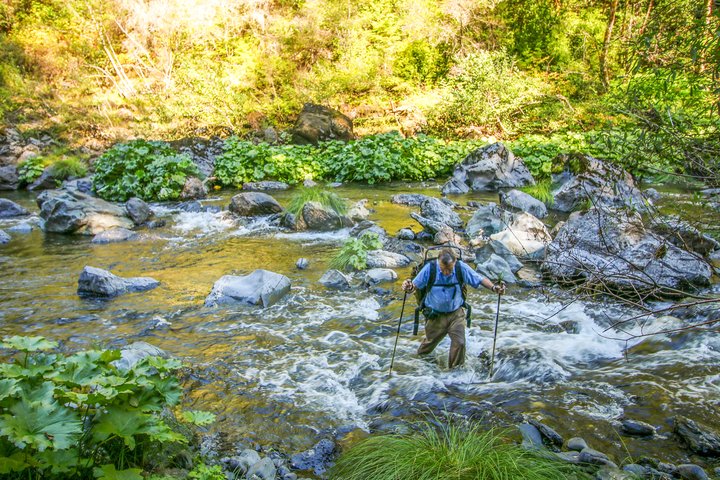
Photo by Ally Gran.
In order to accomplish this feat, Van De Mark needed a significant amount of money for a proper camera, hiking gear and travel expenses. In an effort to raise the funds, Van De Mark’s friend Ted Humphry started a GoFundMe page to help Van De Mark complete his project.
“Without his dedication to photography and conservation, our favorite places at Redwood National and State Parks might not exist,” Humphry wrote.
The page has since raised nearly $20,000.
“I’m very gratified,” Van De Mark said about the donations. “I am quite amazed.”
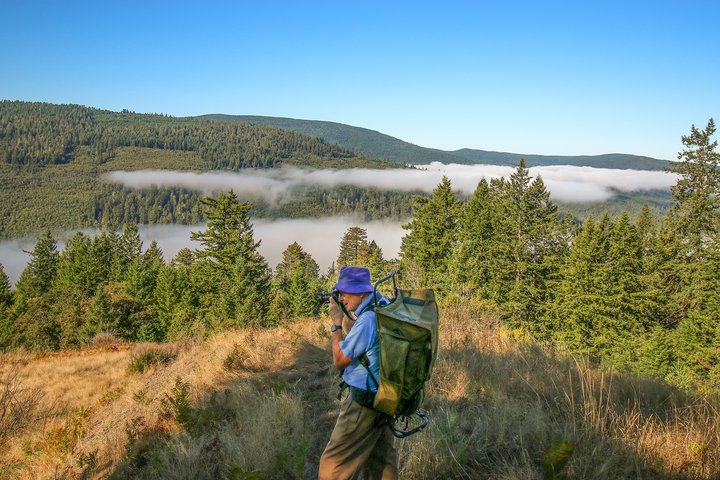
Photo by Ally Gran.
With NPS approval and the necessary funding acquired, Van De Mark is ready to return to the project that helped define his life more than 50 years ago.
“Right now, I’m going through some of my color images that I took during those years — scanning some of them,” he said. “During the winter months I’ll be developing what I hope will be a long-range game plan. Then, come spring, I will actually begin taking trips into those places to try and reach many of the spots and photograph the character of the area now.”


