

North Coast Journal Buys Ferndale Enterprise, Plans to Expand Paper’s News Coverage to Entire Eel River Valley
Ryan Burns / Thursday, Sept. 16, 2021 @ 1:33 p.m. / Business , Media
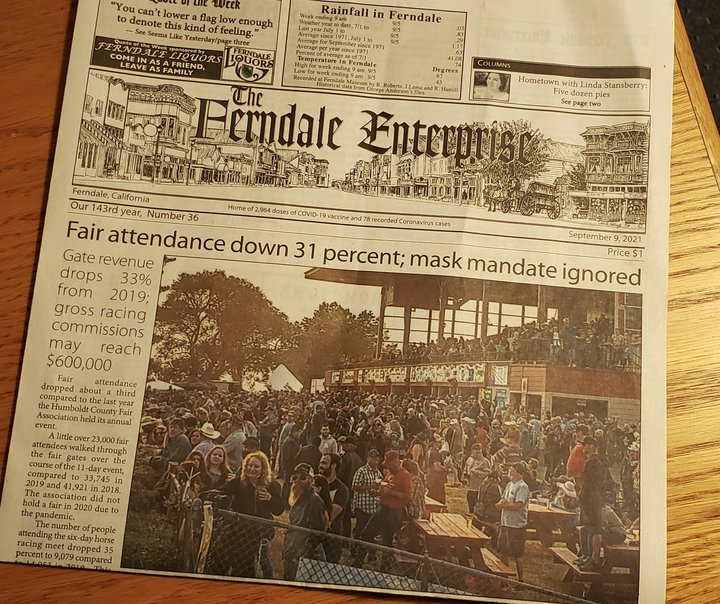
A recent edition of the Ferndale Enterprise.
###
The North Coast Journal, Humboldt County’s most widely circulated weekly newspaper, is purchasing another print weekly, the venerable Ferndale Enterprise, and has plans to expand the 143-year-old publication’s news coverage into Fortuna and the larger Eel River Valley.
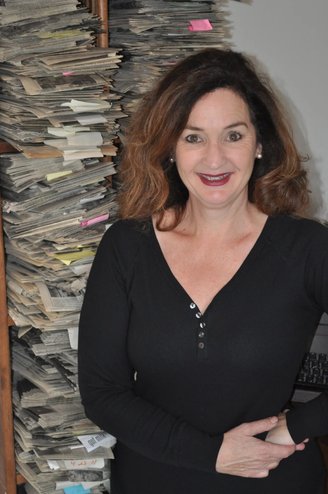
Caroline Titus, the Enterprise’s current owner and publisher.
Both the Journal and the Enterprise announced the pending sale online Thursday afternoon, with current Enterprise owner/publisher Caroline Titus saying she’s happy and relieved.
“After putting to bed more than 1,300 consecutive issues, it’s time I take a break,” she said in the jointly published post.
But Titus, who purchased the paper in 1998 and has been operating as a virtual one-person newsroom for many years, won’t be retiring. She plans to remain onboard as a contributing editor and reporter, with Journal News Editor Thadeus Greenson taking over lead editing duties at the Enterprise.
Reached by phone, Journal Owner and Publisher Melissa Sanderson, who just purchased the Journal in April, said she’s excited and honored to be able to keep the Enterprise going.
“I’m a born-and-raised Eel River Valley girl, and my grandfather was a dairyman,” Sanderson said. “I want to say I have a little warmer spot for the Enterprise just because of my connection with the Eel River Valley, than I do with the Journal. I’m very excited that [Titus] gave me this opportunity.”
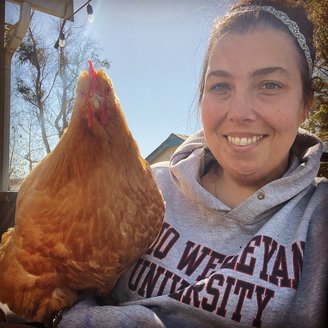
North Coast Journal Owner and Publisher Melissa Sanderson and hen. | Submitted.
Sanderson said the paper will continue to be distributed in print, available for purchase in about a dozen coin-operated boxes around town and supported financially primarily by subscribers. Enterprise stories will not be published online.
The deal will be official on October 1, according to the two papers. The Journal’s parent company, North Coast Journal Inc. also publishes Humboldt Insider and Humboldt Cannabis Magazine.
Sanderson said the Enterprise will still be called the Ferndale Enterprise out the gate, though once she’s legally able she plans to shorten it to simply the Enterprise.
As for reporting in the Enterprise, Sanderson said, “Thad is going to lead the charge on editorial content in terms of news, using Eel River Valley freelancers and our Journal staff.”
Read more at the Journal or the Enterprise blog pages.
BOOKED
Today: 3 felonies, 8 misdemeanors, 0 infractions
JUDGED
Humboldt County Superior Court Calendar: Today
CHP REPORTS
No current incidents
ELSEWHERE
RHBB: Magnitude 3.7 Earthquake Centered East of Hydesville
RHBB: Motorcyclist Injured in Solo Crash at 14th and California in Eureka
RHBB: Southbound Highway 101 Traffic Backs Up From Richardson Grove to Benbow
RHBB: Woman Suffers Possible Leg Fracture in Dyerville Loop Road Motorcycle Crash
City of Eureka Deems Downtown Motel Uninhabitable; Boards Up Windows, Evicts Tenants
Hank Sims / Thursday, Sept. 16, 2021 @ 12:41 p.m. / Local Government

Photos: Andrew Goff.
###
Over the last two days, the city of Eureka red-tagged another of the city’s flophouse motels — the Royal Inn, in the city’s downtown district on Fifth Street. Windows were boarded up and long-time tenants were evicted yesterday and the day before.
The city’s actions were prompted Tuesday morning, when the Eureka Police Department served a warrant on a room on the motel’s upper floor. According to Brian Gerving, the city’s public works director, police at the scene noticed that only one staircase was operational — the other had been blocked off. Police called the city’s code enforcement unit, as having only one staircase operation posed a potential hazard in case of an emergency.
Code enforcement and building inspectors arrived, and noticed that the other staircase — the one that was not blocked off — was in a bad way as well. When people walked up and down, Gerving told the Outpost yesterday, the stair case “bounced up and down very significantly.”
Gerving says that as inspectors continued their work, they discovered numerous other health and safety violations on both floors of the motel — faulty electrical systems, water damage from bad plumbing, the accumulating of debris and rotten framing.
“It’s a very lengthy list that we haven’t finished compiling yet,” Gerving said.
The decision was made to remove tenants from the building until such a time as the motel’s ownership remedied the violations. City representatives, along with the county’s Department of Health and Human Services, were able to re-lodge some of the tenants at the scene, Gerving said, and motel ownership will be responsible for the costs of relocating both those tenants and the others. Gerving said that the city can front funds for these tenants and recoup the cost in court, if necessary.
The evictions at the Royal Inn differ from other well-known shutdowns of substandard motels in the city — such as those at the Budget Motel or the Blue Heron, in years past — in that they took place at a moment’s notice.
“Often times when there are properties in this condition, we’re aware of it for a length of time,” Gerving said. “There’s a lot of planning that goes into an action like today. We really didn’t have that luxury this time. The violations we found were so egregious that we needed to take immediate action.”
Eureka Police Department spokesperson Brittany Powell told the Outpost yesterday that the suspect the police were looking for Tuesday morning was not at the motel. However, officers did find drugs, ammunition and a silencer in the room they were searching.

On September 14, 2021, at about 8 a.m., Detectives with the Eureka Police Department’s Problem Oriented Policing team (POP), served a search warrant a motel on the 1100 block of 5th Street in response to drugs and weapons. Detectives seized a large amount of ammunition in different calibers and two suppressors. The male subject of the warrant was not on scene but a warrant for his arrest is anticipated.
Also written into the search warrant was the City of Eureka Code Enforcement and Building Inspector, who observed structurally compromised stairways and other dangerous building code violations. Based on this information, the City of Eureka Code Enforcement team obtained an inspection and abatement warrant, which was served on the morning of Wednesday, September 15th. During the course of the inspection, code enforcement personnel catalogued numerous violations of the Eureka Municipal Code, California Building Code and Health and Safety Code including hazardous electrical work, leaking plumbing, rotten stairs and structural members, rooms contaminated with blood, urine and feces, severe mold issues, infestations of rats, cockroaches and bedbugs, fire hazards and other violations. These issues posed a significant hazard to the occupants and surrounding community and the decision was made to vacate the motel and secure it against entry.
During the course of the day, the City worked with other organizations and local housing providers to immediately relocate the most at-risk individuals and to provide relocation assistance to residents of the motel. The costs of all relocation expenses, staff time, contractors and materials will be tied to the property and collected by all legal means available including liens and tax assessments. In the past, the City has been very successful in recouping taxpayer dollars spent cleaning up problem properties.


McGuire Announces $10 Million in State Funds to Acquire Investment Mogul’s Ranch in the Eel River Canyon
LoCO Staff / Thursday, Sept. 16, 2021 @ 9:53 a.m. / Sacramento

File photo of the Lone Pine Ranch via realtor Bill McDavid.
###
PREVIOUSLY:
- (PHOTOS) Late Business Titan’s 26,600-Acre Ranch In Heart of Emerald Triangle On Market for $31 Million
- Conservation Nonprofit Buys Chunk of Mogul’s Massive Ranch on the Eel, in the Path of the ‘Great Redwood Trail’; Group Still Looking for Donations to Acquire the Rest
- ECONEWS REPORT: Protecting the ‘Grand Canyon’ of the Eel River
###
From the Office of Sen. Mike McGuire:
Senator Mike McGuire is thrilled to announce that the State of California has appropriated $10 million dollars to complete the acquisition of the iconic Lone Pine Ranch, in the beautiful Eel River Canyon.
“The Eel River Canyon is like no other place in the west, and it will be the crown jewel of the Great Redwood Trail,” Senator Mike McGuire said. “I’m thrilled that we were able to secure these funds which will allow The Wildlands Conservancy to acquire and open the Lone Pine Ranch to the public. This amazing piece of Earth will feature a breathtaking twelve miles of Trail along the Eel River with a total of 18 miles of riverfront. We couldn’t be more thrilled!”
The ranch was owned for decades by Dean Witter, an investment banker and stockbroker originally based in San Francisco who purchased the land in the early 1940s and died in 1969.
The Wildlands Conservancy has been working on this acquisition for several years. The Conservancy previously spent $3.9 million of its own funds to purchase a 3,000-acre portion of the Ranch straddling Humboldt and Trinity counties. That deal gave the nonprofit organization a two-year option to purchase the remaining 27,000 acres for $25 million. The $10 million from the State is the final piece of the puzzle to ensure a successful purchase of the property. Additional funds had been previously secured via private donors and grant funding.
“I am so impressed with The Wildlands Conservancy. Their vision for this spectacular landscape, ability to raise the funds to help purchase this property and their track record of working with the neighbors and the public is unmatched,” said McGuire. “We can’t wait to move the property’s master plan forward and eventually get folks onto the land and hiking the Trail. We’re grateful for the Conservancy’s partnership.”
The Wildlands Conservancy owns and operates California’s largest nonprofit nature preserve system. All of their properties are open to the public and are free of charge for hiking and camping.
“The Wildlands Conservancy applauds Senator McGuire’s effort to secure critical funds to protect 18 miles of the scenic Grand Canyon of the Eel River and catalyze progress on the Great Redwood Trail. The Wildlife Conservation Board’s support for acquisition of the Lone Pine Ranch is the key to protecting wildlife, vibrant forests, and rich wetlands, which significantly advances the State’s vision to protect 30 percent of our lands and waters by 2030. The Wildlands Conservancy is proud to add this nationally significant landscape into its Preserve system for permanent stewardship and development of free public access,” said David Myers, President of The Wildland Conservancy Board of Directors.
Myers called acquisition of the Witter Ranch “a rare opportunity to preserve some of the most breathtaking landscapes in the country.”
California Commits $500 Million More to Student Housing: ‘A Drop in the Bucket’
Mikhail Zinshteyn / Thursday, Sept. 16, 2021 @ 7:05 a.m. / Sacramento

Newly-built student housing at UC Merced on August 2, 2019. Photo by Anne Wernikoff for CalMatters
###
Free tuition is great, and California excels at that compared to the rest of the country. But with rents sky high, affordable housing has become the chief expense for most students – and relief is harder to come by.
Lawmakers have a plan for that: They’ve poured $500 million into this year’s state budget so that public colleges and universities can build affordable housing or renovate existing property.
The plan – part of a commitment of $2 billion over three years if the Legislature fully funds it – may seem like a massive sum, but the amount of housing the money can build is likely a rounding error in the total need for the state’s students.
“It’s a drop in the bucket, but every drop counts,” said Dana Cuff, a UCLA professor and director of CityLab, an urban design research center.
The housing program that lawmakers approved last week and that is awaiting Gov. Gavin Newsom’s expected signature is new – part of the heap of surplus cash in the state budget this year. The governor initially proposed $4 billion for student housing but it got halved during negotiations with the Legislature. The deal:
- Creates a grant process that colleges apply for, committing 50% of the money to community colleges, 30% to California State University and 20% to the University of California;
- Caps rents for low-income students at a low percentage of what the median income is in the area. In Los Angeles, monthly rent would be $700 per student;
- Says the money is meant for full-time students only, which by default excludes most community college students.
If the full-time requirement slows down applications from community colleges, “we can adjust in the future,” said Nancy Skinner, a Democrat and state senator from Oakland who chairs the Senate’s budget committee.
That would require another act of the Legislature to change the terms of the housing program, but she doesn’t rule out that the promise of cheaper rent may compel more community college students to enroll full-time if their campuses take up the money. A full-time schedule means graduating faster, but often students can’t attend that many classes because of work obligations.
The argument for more student housing is a political no-brainer — only one Republican lawmaker voted no on the measure. It “relieves pressure on student housing costs while simultaneously increasing supply around universities and helping to improve housing affordability in these areas in general,” said H.D. Palmer, spokesperson for Newsom’s Department of Finance.
But the housing problem besetting all of higher education boils down to an elementary-school math problem: Building homes for students costs a lot, arguably hundreds of thousands of students need affordable units, and all that adds up to an amount that far exceeds what the state is providing in its housing plan.
Scope of the housing problem
Surveys show that a large number of students lack reliable housing options, which means they live in cars, couch-surf, temporarily reside with family or seek other options that make their lives unstable — a terrible recipe for doing well in school.
More than a third of students reported some version of housing insecurity in California, according to a 2019 survey by the California Student Aid Commission. But that masks the range of strife depending on the student. More than half of community college students in Los Angeles experienced housing insecurity, a 2016 survey found. Community college students are often older and have less income, so their economic and social safety nets are more threadbare. But even at the University of California, 16% of those surveyed were housing insecure and 6% of students who receive federal aid grants because of their lower-income status experienced a bout of homelessness.
The UC had 100,000 beds available for students last fall and expects to create space for 25,000 more by 2025, but the system enrolls 285,000 students. (Though not every student without student housing wants it.)
The scale is big. So is the price tag to house all those students.
Cost to house a single student
It’s hard to calculate how much building a unit of student housing costs. Some measures look at the price per bed, which lowers the average cost because placing three students into a room costs a third of having one student live in a room.
“We don’t have a per-bed cost estimate,” said Palmer of Newsom’s Finance Department.
The Cal State system built enough units to house 12,800 students between 2014 and 2020 at a cost of $1.3 billion, which works out to about $100,000 a bed — a figure that is likely higher today given the drastic jump in prices for building supplies. The system also calculated that it had 17,700 students with “unmet” housing need.
All those figures spell out a cost of $1.8 billion just to build the units Cal State says it needed.
But the fresh round of student housing money from the state commits just 30% of the total $2 billion pot to the Cal State, or $600 million – far less than what’s presumably required to meet student demand.
A housing project at UCLA that’s supposed to deliver 1,159 beds by next year costs a whopping $180,000 a bed. The 20% the whole UC system is to get from the $2 billion pool would fall just short of covering two of those structures.
And it’s possible using figures for dorms underestimates the true cost of the housing students need, said Cuff. That’s because many students are older and with families, especially at community colleges. Those households require more space and amenities, such as kitchens. In that case, the units would be closer in cost to what cities spend on affordable housing, which averaged $425,000 a unit in 2016.
But because colleges could build on land they own, especially community colleges that have more available space, a key expense — buying land — for building homes would go away.
Should community colleges get the most money?
There’s some grumbling within the UC that the system should have gotten a larger share of the state money, in large part because it has a large housing program and can put the money to work quickly.
Lawmakers left the door open to funding a housing plan for students from more than one of the three state systems.
Student housing would be a new enterprise for most community colleges, which typically don’t run dorms. About a dozen of California’s 116 community colleges provide housing, suggesting the system has less experience to get into home-building. The state-funded housing program anticipated that, putting aside up to $25 million that community colleges can use for planning, such as legal fees and engineering studies.
“I highly expect that in the very first year, we will not see as much or as many proposals from community colleges,” Skinner said.
Instead, the plans will come from the Cal States and UCs that have more experience in developing housing.
“Community colleges were all imagined to get housing from their neighborhoods,” said Cuff. But with rents and the price for land soaring, the colleges need to build housing to create community for their students.
It’s also a good use of state money, said Paavo Monkkonen, a professor of urban planning at UCLA. Unlike grant money or financial aid, housing is a one-time expense that pays dividends because it can be used repeatedly.
But for sure the state needs more housing, otherwise the units built with this new money may result in a lottery system where only the lucky few get discounted units. “A better system would be one in which there’s a long-term plan to grow the stock sufficiently that everyone that wants to live there, can,” he said.
###
CALmatters.org is a nonprofit, nonpartisan media venture explaining California policies and politics.
Full Speed Ahead on Overhauling California Recalls
Ben Christopher / Thursday, Sept. 16, 2021 @ 7:05 a.m. / Sacramento

A Gavin Newsom supporter holds up a sign against the recall at a campaign event at the IBEW-NECA training center in San Leandro on Sept. 8, 2021. Photo by Anne Wernikoff, CalMatters.
###
With the wreckage of the failed recall attempt against Gov. Gavin Newsom still smoldering, California Democrats have reached a new consensus: They really don’t want to do that again.
On the morning after voting ended and recall candidates conceded, the chairpersons of the election committees in the state Assembly and Senate said they’re kicking off a public debate to overhaul California’s recall process.
“Californians are very frustrated that we just spent $276 million on this recall election that, from the looks of it, certified what voters said three years ago and what voters could have said next year,” Assemblymember Marc Berman of Los Altos said at the virtual press conference today.
In unofficial and partial statewide returns, 5.8 million Californians voted to keep Gov. Newsom in office, compared to 3.3 million who voted to remove him. Newsom, himself, says the recall has been “weaponized.”
“The voters want to see a more democratic process put in place that keeps elected officials accountable, but prevents political gamesmanship,” added Sen. Steve Glazer of Orinda.
Berman and Glazer said they plan to hold joint hearings as soon as next month. They also want the discussion to be bipartisan.
The Little Hoover Commission, a nonpartisan, independent state oversight agency, also announced today that it would be looking into possible changes to the state recall.
But it’s not clear if any Republicans, who put so many electoral chips on the recall, will get on board.
“Democrats continuously try to manipulate the rules to support their political interests, so it’s not surprising to see them trying to do it again at the expense of voters they were elected to serve,” California GOP Chairperson Jessica Millan Patterson said in a statement. “They wouldn’t have to worry about a recall if they were doing their jobs and addressing wildfire prevention, homelessness, crime, taxes and fixing the broken unemployment department. You want to prevent a recall, do your job.”
Republican Kelly Seyarto from Murrieta, vice chairperson of the Assembly election committee, was non-committal. “I am looking forward to participating in these hearings to ensure that we have a recall process that continues to hold elected officials accountable and protects the rights of voters to participate in our democracy,” he said in an emailed statement.
GOP political consultant Dave Gilliard is skeptical that any members of his party will ultimately back a change to the recall rules. “There is zero chance any Republican will go along,” said Gilliard, who worked on the successful 2003 campaign to recall Democrat Gray Davis, as well as this one.
Sen. Josh Newman, a Democrat from Brea who in 2018 became the most recent state official to be removed from office by recall, also doubts whether any recall reform will be bipartisan. “I would be tickled pink if any member of the Republican caucus on either side of the Legislature stepped up to support meaningful changes to the recall at this point,” said Newman, who was elected again in 2020.
Today, Newman said he will introduce two constitutional amendments to change the process: One to make it more difficult for recalls to qualify for the ballot, and a second that would replace a recalled governor with the lieutenant governor.
The recall’s unusual rules
Once a rarely used — and to many voters, thoroughly obscure — provision of the state constitution, California’s recall is now the subject of unprecedented scrutiny. That’s because though the state’s last Republican governor, Arnold Schwarzenegger, was elected via recall in 2003, this year’s attempt put some of the system’s quirks into sharp relief.
“California laws should not allow an elected official to be recalled and then replaced by someone else who receives far fewer votes.”
— Assemblymember Marc Berman of Los Altos
Unlike in 2003, when Davis was polling in the mid-20s, Newsom faced a recall despite remaining broadly popular with California voters. That’s convinced many Democratic legislators that the law makes it too easy to put a recall on the ballot.
And unlike in 2003, when Schwarzenegger won with 48% of the vote and had more support than the 45% who wanted to keep Davis, there was no such frontrunner this year. Given the quirky two-questioned structure of the recall, 2021’s fragmented field could have produced a candidate like Larry Elder who became the next governor after winning fewer votes than were cast in defense of Newsom.
“California laws should not allow an elected official to be recalled and then replaced by someone else who receives far fewer votes, and I really look forward to hearing from a bipartisan group of experts about how California’s recall process should be reformed,” said Berman.
On the Democratic side, momentum for change has been building for months. Earlier this summer, California Secretary of State Shirley Weber said the state’s recall rules deserve a “second look.” More recently, former Democratic Gov. Jerry Brown called the process “awkward and cumbersome and certainly a distraction” while Davis, the state’s only recalled governor, has his own ideas for reform.
“It’s a process that was put in place about a century ago and it certainly bears looking at,” Assembly Speaker Anthony Rendon said in a television interview Tuesday night.
There are two reasons that Democrats will likely have an easier time changing the rules after this recall than they did in 2003, said UC San Diego political scientist Thad Kousser.
“One, the Democrats won by the rules of the game and now they can change those rules without looking like sore losers,” he said. “And two, they have the votes.”
As for Californians themselves, a recent UC Berkeley survey of registered voters found that an overwhelming majority, 75%, look upon the electorate’s recall powers favorably. But a consistent majority also favor making tweaks to the process.
The call for legislative hearings is only the first step in a long process. Any serious alterations would require constitutional amendments. That means getting two-thirds of both legislative chambers on board to put the question to voters. That won’t happen until 2022 at the earliest.While Democrats have enough votes in both the Assembly and Senate to put constitutional amendments on the ballot, it would likely take some independent voters, as well as Democrats, to win approval statewide — thus at least the window dressing of a bipartisan recall reform effort.
Glazer and Berman said they were “open minded” about the range of changes up for debate. Here’s a short list of possibilities, ranked from more minor tweaks to outright nixes:
Increase the requirements for recalls
A recall election against a governor qualifies for the ballot if its supporters can gather signatures equivalent to 12% of the turnout in the prior gubernatorial election. This time around, that number was just shy of 1.4 million; recall proponents collected more than 1.7 million.
“How can anybody with a straight face argue that it’s too easy or it’s being abused when it’s happened twice in 108 years?”
— GOP political consultant Dave Gilliard
Of the 19 states that allow voters to put a recall on the ballot, only Montana makes it easier, with a 10% threshold. Other states put the requirement between 15% and 40%.
The current cutoff may have made sense in 1913 when the recall was introduced as a popular check against the political influence of railroad interests, Newman said. But in the age of social media, he said he’d like to see the requirement set at “something more rigorous” to “adjust for political inflation.”
Gilliard, however, dismissed the suggestion that it’s too easy to put a recall on the ballot.
“In 108 years, two gubernatorial recall elections have qualified for the ballot,” he said. “How can anybody with a straight face argue that it’s too easy or it’s being abused when it’s happened twice in 108 years?”
UC Berkeley Law school Dean Erwin Chemerinsky, who has argued that the state’s recall may be unconstitutional, countered that Californians live in a more polarized political environment in which Republican activists are more likely to use the recall to win in low-turnout off-year elections when they can’t succeed in regularly contests.
“We should realize that we may be in an era where there’s going to be more and more efforts to use recalls if changes aren’t made,” he said. “I hope that this is not going to be a situation where people breathe a sigh of relief and just forget about it until the next time this happens.”
Add a ‘cause’ requirement
In the governor’s office, as in any job, California is an at-will employment state. Any governor can be recalled at any time for any reason. No justification required.
While no-cause recalls are the norm, that isn’t true in every state. Rhode Island, for example, requires that the governor have broken a law or gotten into trouble with the state’s ethics commission before booting them from office.
Without weighing in on the idea directly, Berman said the debate over whether “criminal misconduct or malfeasance should be a kind of threshold issue is something that we’re going to discuss.”

Lt. Gov. Eleni Kounalakis waves to the crowd as she walks toward the podium at an anti-recall campaign event for Gov. Gavin Newsom at the IBEW-NECA training center in San Leandro on Sept. 8, 2021. Photo by Anne Wernikoff, CalMatters.
Make the lieutenant governor the replacement
Unlike the ballot pairing of candidates for president and vice president, the lieutenant governor is elected separately and serves independently.
Newman, for one, favors elevating the lieutenant governor if a governor is removed and going without the second question on replacement candidates.
“We have a number two constitutional officer in California,” he said. “If you think the governor’s malfeasant, by all means, let’s have a plebiscite and remove him or her from the office. But let’s not use that as the pretext for getting a hidden ball trick do-over.“
Unlike some more expansive reform proposals, this one would only apply to recall efforts against the governor.
Go beyond ‘yes’ or ‘no’
As many confused California voters only recently learned, Newsom was not listed among the candidates vying for office on the recall ballot. That wasn’t an oversight; election law doesn’t allow an incumbent to run as his or her own replacement.
Sen. Ben Allen wants to change that. He introduced a constitutional amendment last year in response to Newman’s recall that would nix the first question altogether. If a recall qualifies, the state would go straight to a snap election. The idea: Avoid the counter-intuitive possibility that a recall winner could earn fewer votes than those cast to keep the incumbent in office.
A potential downside: There would be no requirement that the winner receive a majority. In a large field of candidates, like the 46 on this year’s recall ballot, the next governor could win with a sliver of the vote.
So why not hold a run-off election between the top two vote-getters, as in regular elections?
“Two rounds of recall elections on top of our regular election cycle?” asked Allen. “It would certainly be fairer than the current model, but I’m not sure that it would be particularly satisfying. In this case we would have had Elder versus (Democrat Kevin) Paffrath — would that really have solved everyone’s problems?”
Just get rid of the recall
Maybe one gubernatorial election every four years is enough?
This proposal isn’t likely to go anywhere, no matter what some political commentators might say. The recall remains popular as a general concept, even if there’s criticism of the specifics.
“Neither of us,” Glazer said with Berman, “are suggesting that the recall process be eliminated.”
###
CalMatters reporter Laurel Rosenhall contributed to this story. CALmatters.org is a nonprofit, nonpartisan media venture explaining California policies and politics.
OBITUARY: Kongmany Xayavong, 1981-2021
LoCO Staff / Thursday, Sept. 16, 2021 @ 6:56 a.m. / Obits
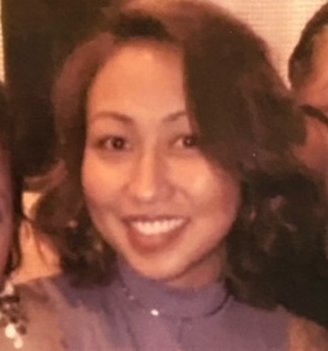
Kongmany Xayavong passed away
on September 12, 2021 after a long battle with end-stage renal failure from lupus.
Kongmany was born Dec. 20, 1981 in Eureka to Thong and Hon Xayavong.
She attended Alice Birney Elementary, Winship Junior High, Eureka High School and SF State University. She had a passion for surfing, nutrition, cooking and traveling. She was always ready for a new adventure and trying new things. She loved to wander the Arcata Farmer’s Market on Saturday mornings for fresh ingredients. She was very much a foodie and would frequent the local restaurants when she wasn’t cooking up delicious meals herself. If a new restaurant opened up she would be the first to try it. She always jumped at the chance to help others improve their health in their nutritional journey. She never met a stranger and made friends everywhere she went. She had this smile that would brighten anyone’s day and this infectious goofy laugh that sometimes ended with a snort from laughing so hard. She always had this positive energy about her. She was a true friend, compassionate, caring and kind.
Kongmany leaves behind her father Thong Xayavong, mother Hon Xayavong, her son Anthony Tito Thompson, her sisters Linda and Mena Xayavong, her brother Toni Xayavong, sisters-in-law Paige Xayavong, Jessi Xayavong, and Christina Thompson, nieces Bianca and Kailynn, nephew Nikolai, aunts, uncles, cousins and numerous friends.
Kongmany’s will to live was driven by her love for her son Anthony Tito Thompson. She fought as long as she could to be around to see him grow up to be the wonderful young man he is today. She was so proud of him. She always spoke of how lucky she was to be his mother. He was her pride and joy.
If there was one thing Kongmany would want for her loved ones to know it would be to never take life for granted, live life to the fullest, enjoy every moment, always be kind and laugh often. This is how she lived her life.
Service will be held at Sanders Funeral Home at 1835 E Street in Eureka on Friday, September 17 from 8:30 a.m. to 10:30 a.m. All are welcome. Facial coverings required.
In lieu of flowers please consider a donation to her son Tito at this link or Venmo: @mena-xayavong.
###
The obituary above was submitted on behalf of Kongmany Xayavong’s loved ones. The Lost Coast Outpost runs obituaries of Humboldt County residents at no charge. See guidelines here.
OBITUARY: Arlen Wayne Reece-Doolittle Sr., 1971-2021
LoCO Staff / Thursday, Sept. 16, 2021 @ 6:56 a.m. / Obits
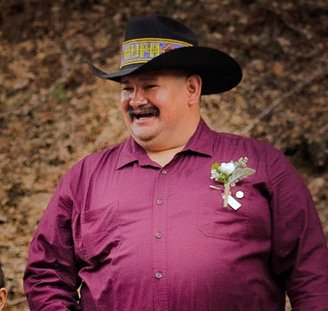
Arlen Wayne Reece-Doolittle Sr. was born on March 9, 1971 and began his journey to the other side on September 10, 2021.
Arlen was a proud Hupa tribal member and was well known for his loud, contagious laugh, deep voiced jokes, and his good, loving spirit. He was a compassionate husband, son, father, grandfather, great-grandfather, brother and uncle. A jack of all trades, if there was a need, Arlen was there. He was a great cook, handy-man, mechanic, you name it. Arlen truly enjoyed his time on the river, fishing and swimming alike. His love for time in the mountains will forever be admired and missed. He was an avid hunter, and skilled woodsman. He loved a good challenge and thrived off of providing to those in need.
Arlen took pride in his years of coaching soccer and baseball for his children’s teams. One of his greatest joys was the time he invested in coaching traditional stick games (hand-picked and mentored by Roy Jones). In turn, he mentored and guided many of our local boys and young men not only teaching them how to play the game, but also how to be respectful and to live in a good way, always looking out for one another. Arlen was a very selfless person and had many friends, near and far. Wherever he went, he made new friends. He loved to talk and make jokes almost as much as he loved to dance. There is a Hopi saying that truly resonates with the memories of Arlen Doolittle Sr, “To watch us dance, is to hear our hearts speak.” If you had the pleasure of knowing Arlen you know of his heart of gold and love for dancing. His pride and passion for his family and his traditional ways of providing not only for his family, but for his people.
He is survived by his wife Monda Doolittle, his mother Fern Doolittle-Rogers, his father John Rogers Sr., his uncle Kenny Doo, his children: Roseanna Aubrey (Frank Surber), Antone Aubrey IV, Arlene Doolittle (Jimmy Sanders), Virgil Doolittle, Starlene Bussell (Isaac Bussell), Arlen Doolittle Jr. (Melissa Phines), Raven Doolittle, Freddy Doolittle, Waterphall Doolittle (Lorenzo Rogers), Renee Doolittle, Kenneth Doolittle, Wes Marshall (Rindy Marshall), Shan Davis, & Mickela White, his siblings: John Burr Rogers Jr., Cinnamon Rogers, Ginger Rogers, Loretta Doolittle, Craig Reece, Soccer Reece, Filomena Harvey, Viola Marshall, Filmore Harvey Jr., Kachina Cossey. His 30 grandchildren, his many nieces & nephews & his Great-granddaughter Millie Blake all of whom, he loved sincerely.
He is preceded in death by his first wife Rachel Saxon, daughter Angel Aubrey, son Issac Saxon, nephew Roman Scott, Auntie Corrine O’neal, Auntie Mary Doo, cousins; Rachel Doolittle, Frank Doolittle, Fran Doolittle, Rodney Doolittle, Grandfather Reatus Doolitte Sr., Grandmother Virginia June Spencer, father-in-law Filmore Harvey.
Arlen Doolittle Sr. was an only child for his first twelve years of life and felt a strong desire for siblings. Because of that feeling he wanted to make sure his own children were never alone. That they always had one another to lean on. Family is everything. He will be missed dearly. His love went beyond his family, it’s important to mention his precious baby “Minnie,” the loyal black daschund, who misses him tremendously.
The wake will be held on Friday, September 17, 2021 at 6 p.m. at Arlen’s residence on Tish-Tang Road.
Graveside services will follow on Saturday, September 18, 2021 at 9:30 AM on Fern Doolittle Rogers’ property, Doolittle Flat. COVID-19 safety precautions are expected. Please wear your masks when in close proximity of others. If you do not have one, we will have masks and hand sanitizer on site.
Honorary Pallbearers: Kenny Doolittle, Eugene “Yogi” Saxon, John Rogers Sr., Thom Cooke, Virgil Blake Sr., Virgil Pole Sr., Robert Blake, Benjamin Spencer Jr., Mikey McCovey, Freddy Brown, Doug Brown, Sylvester Brown, Jason Rakestraw, Dwight “Corky” Vanpelt, Ralph Peters, Eddie Leach, Thomas “Smitty” Branham, Marion “Buck” McCovey, Filmore Harvey Jr., Robert Jackson, Bill Taylor, Greg Moon, Raymond “Guy” Baldy, Frank Ames, Warrior Sanchez, Abe Camez, Michael Gabriel, Melvin Marshall Jr., Perry Lincoln, Genuh Lincoln, Sots Lincoln, Owan Lincoln, Shisholuk Lincoln, Doug McCleode, Michael Robertson, Raymond Ferris, Delbert O’neill, Raymon Hayden, Charles Hayden, Robert Masten Sr., Billy Colegrove, Wes Crawford, Moses Hurley, Loren “Gizz” Colegrove, Rocky McNeal, Dean Powell, Greg Nelson.
Pallbearers: Virgil Doolittle, Arlen Doolittle Jr., Freddy Doolittle, Kenneth Doolittle, Shan Davis, Wes Marshall, Lorenzo Rogers, Antone Aubrey IV, Isaac Bussell, Burr Rogers, Blaze Carpenter, Craig Reece, James “Little Guy” Doolittle, Lonnie Wilson, Sebastian Ferris, Duane “Roogers” Carpenter, Jimmy Sanders, Doug Branham, Fabian Ruiz, Gabriel Anderson, ‘A’de:ts Rogers, Julian Rogers, Cade Rogers, Aiden Rogers, Ryon Markussen, Daniel Masten, Jacob Gayton Jr., Tic-mil Ashley, Russell Marshall Jr., Frank Redhat, Klinton Hunsucker, Andrew Hunsucker Sr., Frank Surber, Damon Martin, Lawrence Hostler, Kimit Peters, Trout Peters, Sammi Jones, Josh Moon, Eagle Moon, Shawn Navarro, Leonard Smith, Robert Kelsey, Whits Marshall, Darvin Davis, Jess McGlaughlin, Sonny Jones, Mario Rangel, Timmy Bussell, Nolan Begay, Ronny Robbins, Harold Marshall.
###
The obituary above was submitted on behalf of Arlen Reece-Doolittle’s loved ones. The Lost Coast Outpost runs obituaries of Humboldt County residents at no charge. See guidelines here.


