Charles
L. Bean Jr. September
12, 1956 - July 16, 2021
Charles
L. Bean Jr., age 64, died peacefully at home on July 16, 2021,
entering into eternal rest with the Lord Jesus Christ.
Charlie
was a loving, caring man who loved his family, friends and life. He
was born September 12, 1956 in Eureka.
He
loved the Hoopa area, working at the Hoopa Grocery store at age 17, a
job he enjoyed. After graduating in 1974 from Hoopa High he enlisted
in the Army, later marrying his high school sweetheart. But in 1975,
Charles was in an accident that would leave him a quadriplegic,
changing his life entirely. He was discharged from the Army, also
divorcing his first wife.
Skip,
as his family called him, was determined to not let his wheelchair
define him. He attended CR, taking accounting classes as he excelled
at math, and received an A.A. degree. Over the years he would marry
three more times before marrying the love of his life in August 2018.
Charlie lived in Colorado for a time while working for the U.S.
Forest Service, but always returned to Eureka. He worked for Sears,
and Tri-County Independent Living – jobs he loved. He also worked
for 10 years teaching English in China; while in China he and his
wife Lei Hou adopted their daughter Bien Hou.
His
passion and purpose was CICA, California
IHSS
Consumer
Alliance where he served as executive director. He loved helping
others; the challenges he faced in life is what made him so good at
being an ADA advocate and consultant.
Charlie
enjoyed attending meetings and gatherings in Sacramento, Chico,
Willits and Redding. He travelled to the State Capitol several times
with CICA, in association with IHSS. He also served on at least 10
boards, as well as serving on the Grand Jury.
He
was an elder in the Yurok Tribe and he had always wanted to live in
Hoopa. Over the years he attended family holiday gatherings in Willow
Creek, bowled, played pool, danced, snow skied, jumped out of an
airplane (attached to someone), river rafted, quilted and wheeled
from Blue Lake to Willow Creek along with his brother Kenny and a
cousin. Over a period of three days they accomplished the task.
To
say that Charlie lived life to the fullest would be an
understatement. He will be missed by all who knew and loved him.
He
was preceded in death by his mom, Jean L. Craig, his dad, Charles
Luther Bean Sr., stepdads Jackson A. Howard Jr. and Gerry Craig, his
brother Kenny Howard, uncle Alan Hodgson and Aunt Elaine Hoyerdahl.
Charles
is survived by his beloved wife, Carolyn J. Bean, daughter Bien Hou
and her mom Lei Hou, sisters Janice Stevens (George), Jerri Amos
(Ron), brothers Robert Howard and Stephen Bean, Emil Craig (Cindy)
and his two brothers, foster sister Ginnie Larson (John), nieces
Cheyenne Stevens, Lynnette Robins-Hicks (Cory), nephew Joshua Howard
(Kaila) and daughter Charlotte, sister-in-law Keron Christian, uncle
David Hoyerdahl, his daughters Anita Miller and Jessica Hoyerdahl and
other nieces and nephews, long-time friends Mike Lewis (Sheila), Mary
and Joe Dare.
Special
thanks to Dr. Barker and the staff at Mad River Hospital and Wound
Care Center, the doctors and staff at Providence St. Joseph Hospital,
St. Mary’s In-Home Health, Hospice of Humboldt, the Yurok Tribe,
and Dr. Miranda, doctors and staff at CPMC Davies Campus, San
Francisco for everything they did for our loved one, Charles L. Bean
Jr.
There
will be a memorial/celebration of life service at Eureka First
Presbyterian Church in Eureka, California on Saturday, August 7, 2021
at 1 p.m.
Anyone
wishing to make a tax-deductible donation in Charlie’s memory may
do so at:
CICA 181
Anne Way Los
Gatos, CA 95032
Arrangements
provided by Humboldt Crematorium at Ocean View Cemetery.
###
The obituary above was submitted on behalf of Charlie Bean’s loved ones. The Lost Coast Outpost runs obituaries of Humboldt County residents at no charge. See guidelines here.
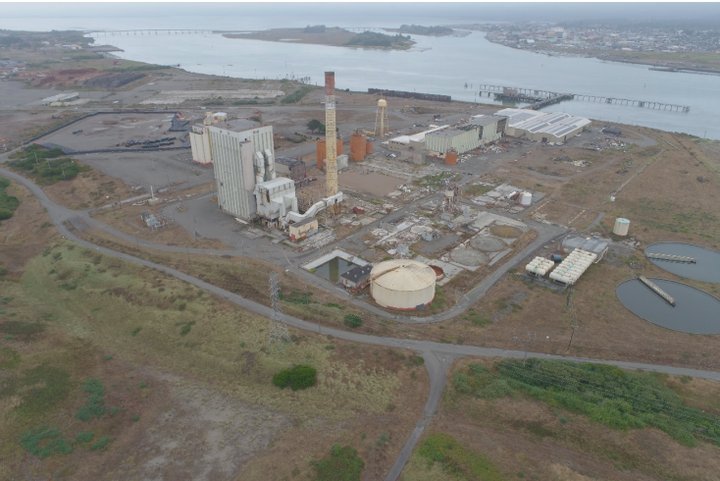
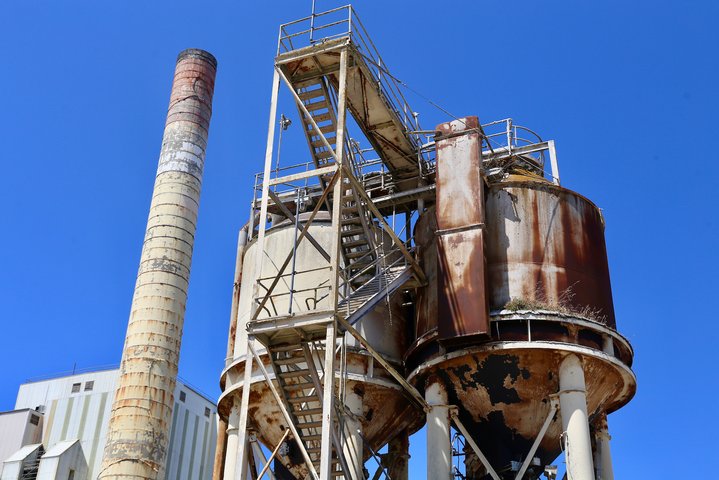
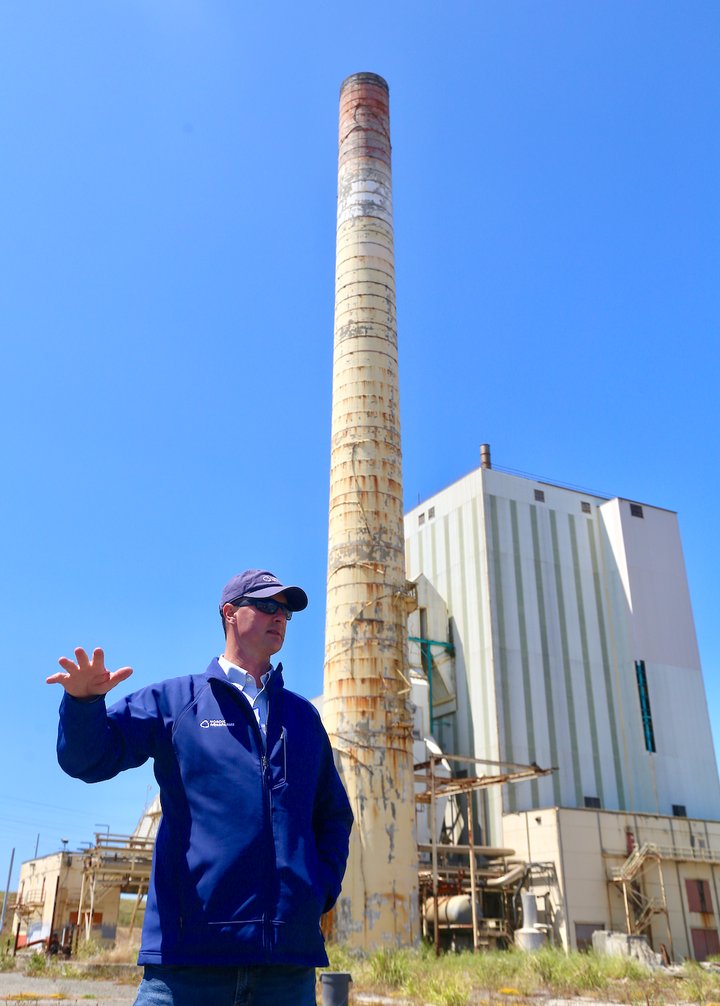
The former pulp mill property on the Samoa Peninsula includes towering infrastructure such as the 270-foot-tall boiler building and adjacent smokestack, all of which is slated for demolition to make way for Nordic Aquafarms’ proposed recirculating aquaculture system (RAS). | Photos by Andrew Goff except where noted.
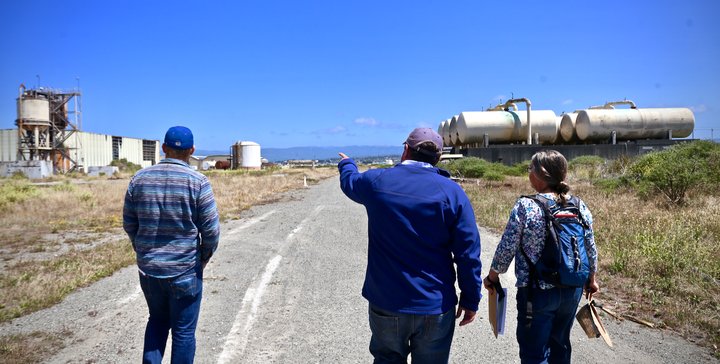
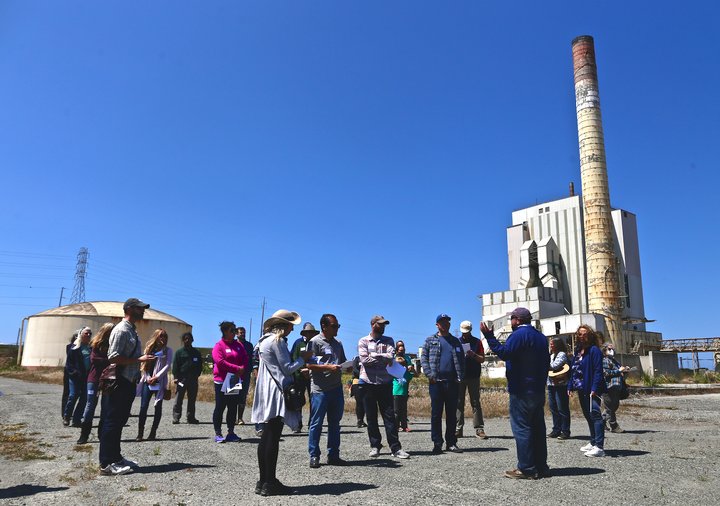
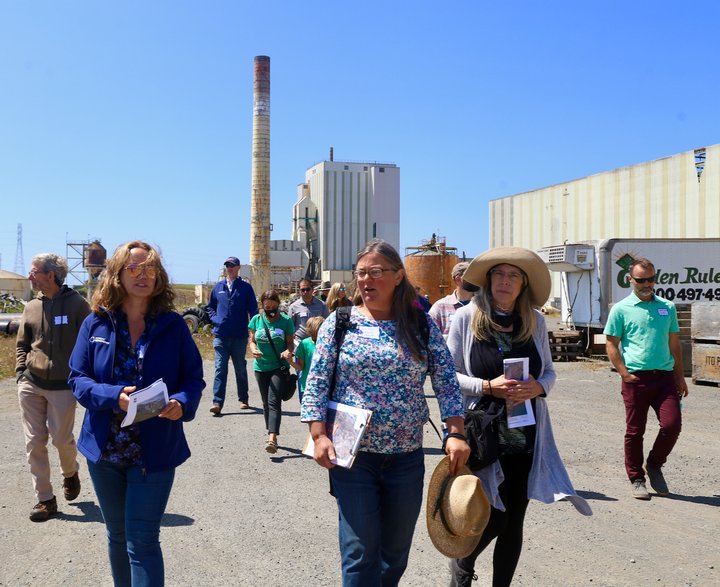
Executives from Nordic Aquafarms were busy this week giving a series of tours out on the Samoa Peninsula, offering politicians, environmentalists, fishermen and others an up-close view of the dilapidated industrial site — home to the corroding remains of the Evergreen Pulp mill — where the company plans to build a large, land-based fish farm.
The draft environmental impact report for the project is still being prepared, so some of the details remain in flux. But here’s a quick recap of the project as proposed.
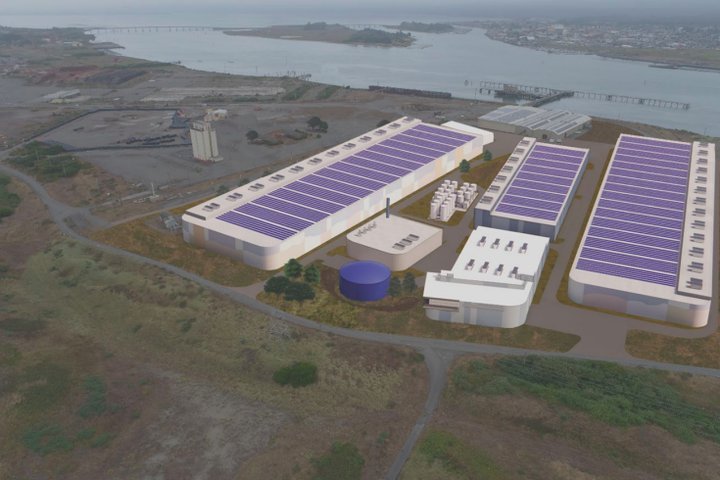
TOP: Aerial view of the former Samoa pulp mill site, now known as Redwood Marine Terminal II. BOTTOM: A simulation of the proposed Nordic facilities. | Images via County of Humboldt.
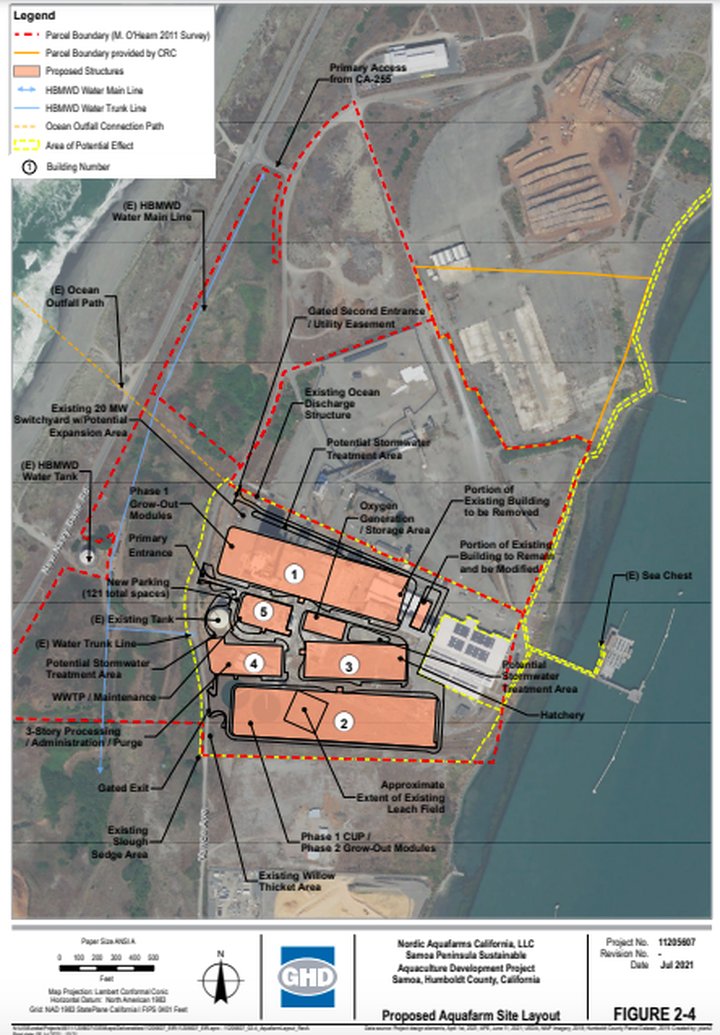
The five-building facility, totaling some 766,530 square feet, would include two massive production modules where all-female Atlantic salmon would be raised inside fully-contained recirculating aquaculture systems (RAS). Eggs would be imported, hatched in a dedicated facility and raised to juveniles, then transported via underground pipes to “grow-out modules” where they’d reach market size, eventually producing up to 27,000 metric tons of fish per year for distribution to markets up and down the West Coast. (The company is also developing a facility in Maine for distribution to East Coast markets.)
Nordic executives say the company aims not to compete with local fishermen but rather to supplant the huge supplies of fish currently being imported from overseas.
Seawater — 10 million gallons per day — would be drawn in from Humboldt Bay via existing sea chests, slated to be retrofitted with fine-mesh screens to prevent impingement and entrainment of sea life. The facility would also require up to 2 million gallons per day of fresh water, which the Humboldt Bay Municipal Water District (HBMWD) has agreed to provide.
Treated effluent — 12.5 million gallons per day — would get pumped out to the Pacific Ocean via an existing 1.55-mile-long outfall pipe, which the Simpson Paper Company was made to install following a 1989 Clean Water Act lawsuit brought by the nonprofit Surfrider Foundation.
Nordic’s planned wastewater treatment facility would remove 90 percent of the nitrogen and 99 percent of the phosphorus prior to discharge, according to the company’s published plans, though some environmental advocates have expressed concerns about potential impacts to ocean habitat. At a tour on Thursday, Marianne Naess, the company’s executive vice president of commercial operations, said Nordic will agree to independent monitoring of the effluent.
Prior to beginning construction, Nordic plans to spend an estimated $100 million on clean-up, remediation, demolition and various site improvements, including tsunami/earthquake safety measures.
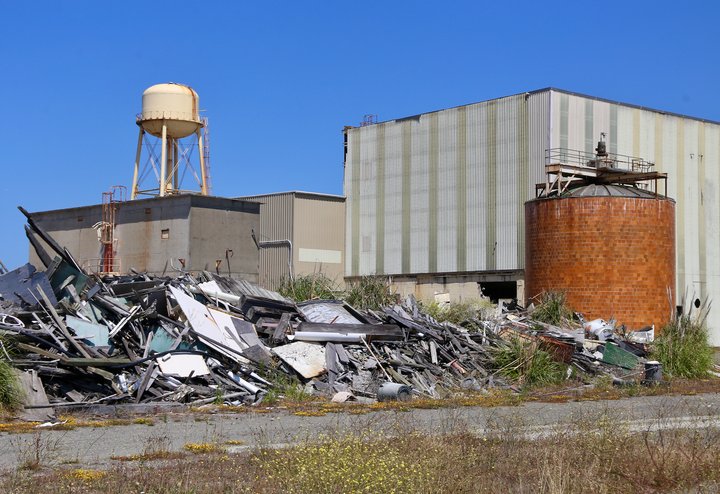
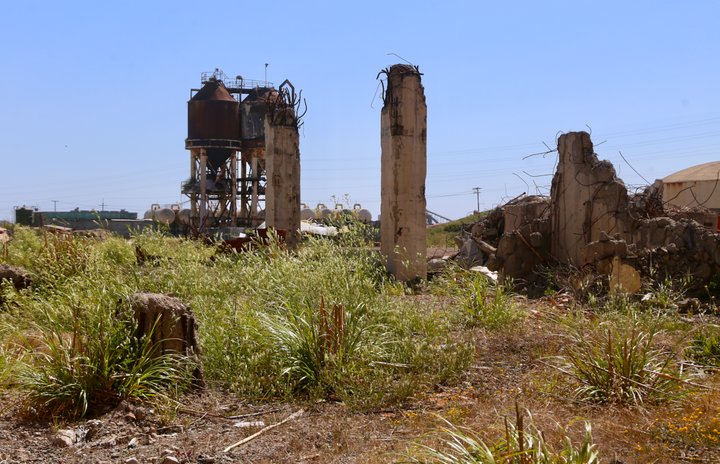
As you’ll see in the photos below, the property remains occupied by crumbling buildings and infrastructure, much of which contains hazardous materials such as lead and asbestos. It’s a former brownfield now owned by the Humboldt Bay Harbor, Recreation and Conservation District. More than 3 million gallons of toxic pulping liquors were hauled off in 2014 with help from the EPA, but much more cleanup is needed.
Jennifer Kalt, executive director of environmental nonprofit Humboldt Baykeeper, said her organization still has concerns about whether the project can be completed in a way that protects the ecosystems of Humboldt Bay and the nearby Pacific. But after touring the site on Wednesday, she said in a Facebook post that the project would include not only much-needed cleanup but also construction of a modern stormwater system.
“As it stands today, every major rainstorm carries polluted runoff into the bay,” the post reads. “And the way our legal system works, it will stay that way until someone invests in the cleanup. Nordic estimates it will cost $10+ million to demolish and remove everything. Sure, the Harbor District can continue applying for EPA Brownfields grants, but at $250,000 apiece, it would take several lifetimes.”
The Outpost tagged along on Wednesday’s tour and snapped some photos, which you can see below. For more details on the project, see this post or you can contact Nordics local community liaison Lynette Mullen at Lynette.mullen@gmail.com.
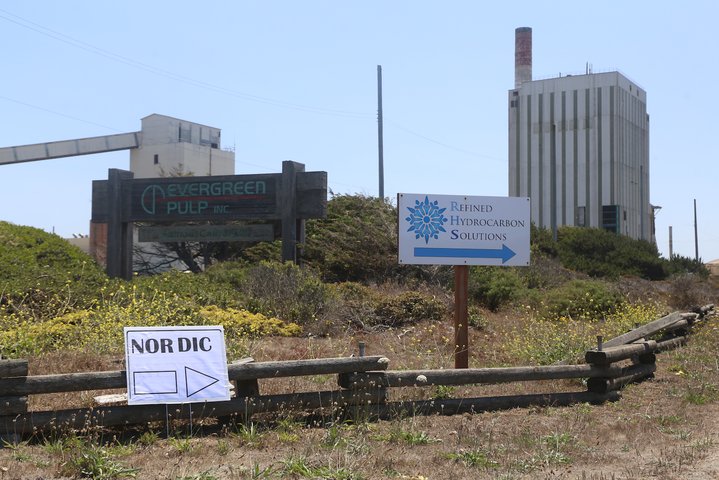
A simple sign bearing the name Nordic directs people to the parking area for a tour.
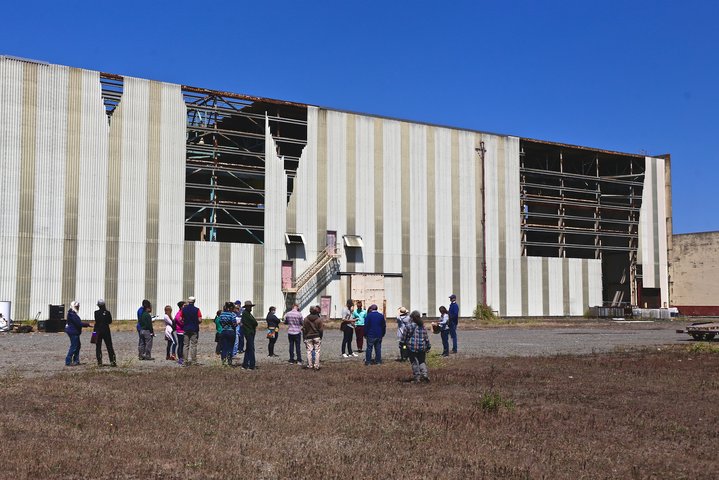
Corrugated metal siding has been falling off the boiler building.
Nordic’s local project manager, Scott Thompson, and executive vice president of commercial operations, Marianne Naess.
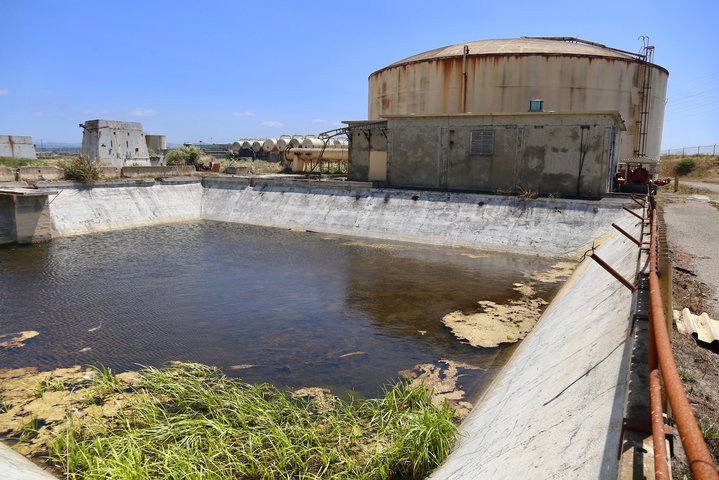
On open pool where the pulp mill stored toxic pulping liquors.
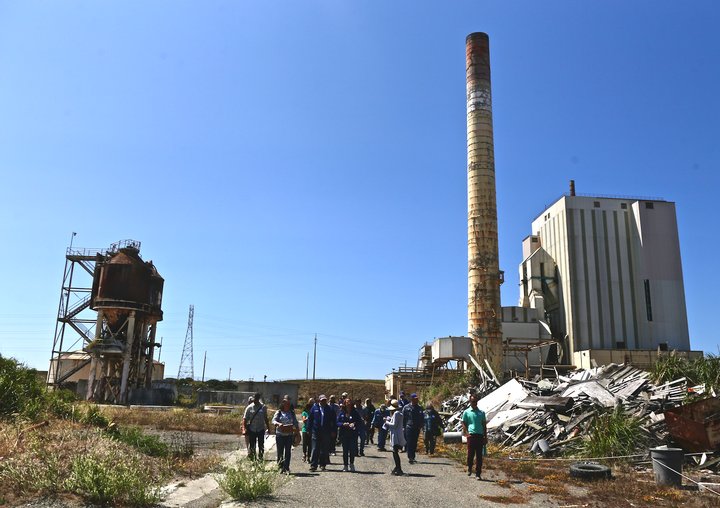
Thompson leads tour attendees around the property.
Nordic executives led a group made up primarily of representatives from local environmental groups.
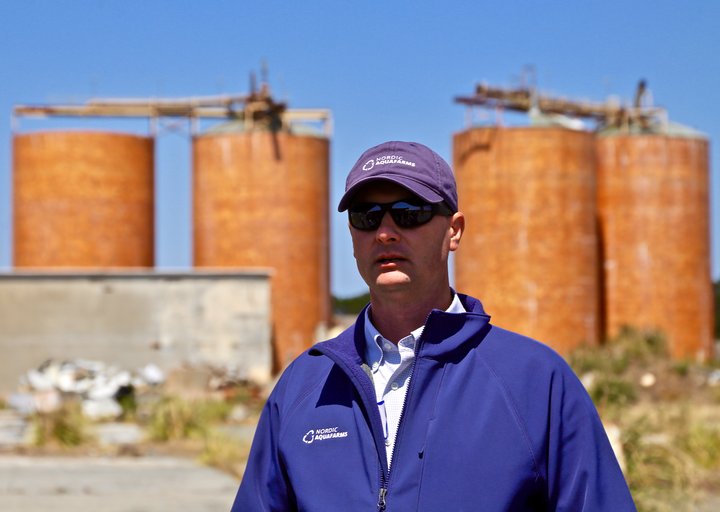
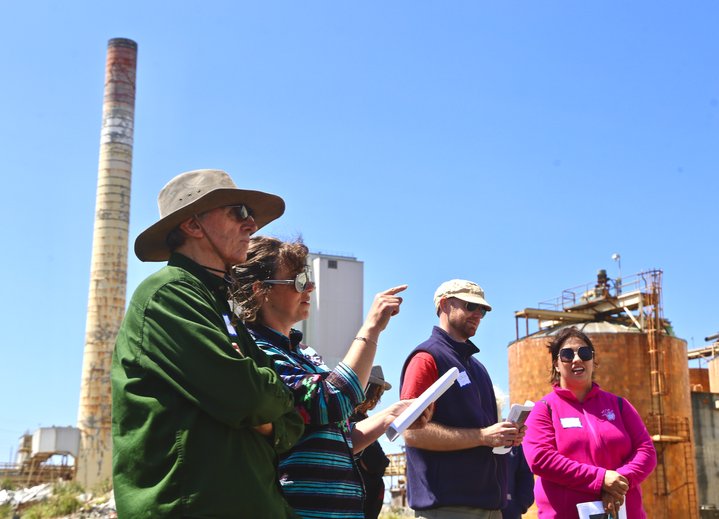
David Noyes, Nordic’s vice president of technology, speaks to the group with tile-lined tanks from the former pulp mill in the background.
More rusting infrastructure slated for demolition.
Noyes and smokestack.
Much of the scrap metal and debris left over from the pulp mill has been removed, but a good deal of it remains onsite.
Another vacant building slated to be removed.
Humboldt Baykeeper Executive Director Jennifer Kalt (center) speaks with Naess (left) on the tour.
(From left) Larry Glass and Caroline Griffith of the Northcoast Environmental Center (NEC), Colin Fiske of the Coalition for Responsible Transportation Priorities and Olivia Kernen from the Humboldt County Office of Education.
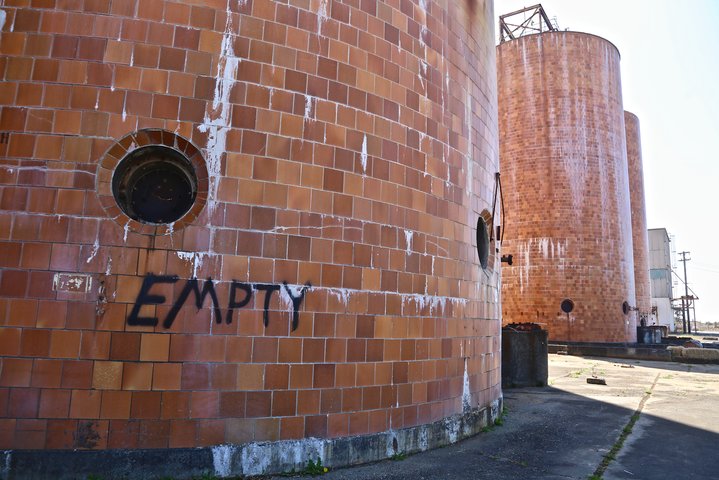
Tile-lined tanks that once held highly corrosive pulping liquors have since been emptied.
Plant life springs up amid crumbling concrete and twisted rebar.
The smokestack.
A computer simulation showing Nordic’s planned administrative building and a replaced water tank with RAS facilities in the background. | Image courtesy Nordic Aquafarms.
Schematic of the planned layout. For a high-resolution pdf, click here.
Humboldt County joins 25 other California counties in recommending that everyone, regardless of vaccination status, wear a mask indoors in public places.
As the highly transmissible Delta variant of COVID-19 is increasingly circulating locally, masking indoors is an extra precautionary measure for those who are fully vaccinated and ensures easy verification that all unvaccinated people are masked in those settings. The State of California requires unvaccinated individuals to wear a mask indoors.
Locally, the Delta variant made up 25% of sequenced samples in June, and health officials anticipate that number will increase. The Delta variant represents more than 50% of sequenced COVID-positive test samples statewide, according to the most recent genomic sequencing data from the California Department of Public Health. The Centers for Disease Control and Prevention noted that the Delta variant is now responsible for 83% of new infections across the country.
Federal health officials have recently reported that more than 97% of people hospitalized nationwide for COVID-19 and more than 99% of those who died were unvaccinated.
People are recommended to wear masks indoors in settings like grocery or retail stores, theaters and family entertainment centers, even if they are fully vaccinated, as an added layer of protection for unvaccinated residents, including those with compromised immune systems and children under 12 who can’t yet get vaccinated.
Humboldt County Public Health Director Sofia Pereira said, “We still have many unvaccinated people in our community who are vulnerable to serious illness from this virus. Masking is a reasonable precaution we can all take in light of our recent case rate increase and the rise of the Delta variant.”
Humboldt County Health Officer Dr. Ian Hoffman said, “We’ve all sacrificed to get to a point where vaccine is widely available, and our gains in containing this pandemic have been hard won, so we don’t make this recommendation lightly.”
Dr. Hoffman added that Public Health will continue to closely monitor rates of vaccination as well as local virus transmission, hospitalizations and deaths and revisit this recommendation in the coming weeks.
Businesses are encouraged to adopt universal masking practices for customers entering indoor areas to provide better protection to employees and customers. Workplaces must also comply with Cal/OSHA requirements in regards to masking, including providing masks to unvaccinated employees. Fully vaccinated employees can also choose to wear a mask in the workplace.
Those who are fully vaccinated are well protected from infections and serious illness from known COVID-19 variants, including Delta. Health officials say vaccinating as many people as possible, as soon as possible, is the best defense against severe infection. Vaccines are safe, effective, free and widely available to everyone ages 12 and older.
A person is considered fully vaccinated two weeks after their second dose in a two-dose series, such as the Pfizer or Moderna vaccines, or two weeks after a single-dose vaccine, like the Johnson & Johnson vaccine. Individuals with only one dose of Pfizer or Moderna are not fully protected. Completion of the vaccine series is necessary to provide full protection.
Visit myturn.ca.gov or vaccines.gov to find a vaccination site or call the COVID-19 Community Information Line at 707-441-5000.
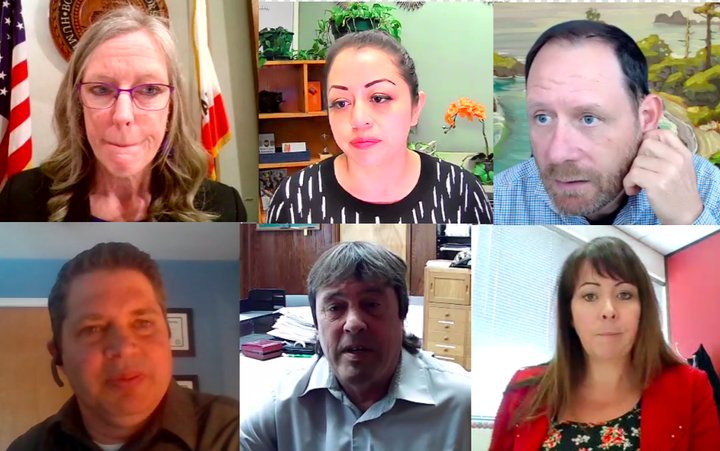
Screenshots from Thursday’s meeting (clockwise from top left): Supervisor and Audit Committee Chair Virginia Bass, Auditor-Controller Karen Paz Dominguez, Supervisor Mike Wilson, Acting County Administrative Officer Elishia Hayes, Public Works Director Tom Mattson and Rich Gonzales, principal at accounting firm Clifton Larson Allen.
At the outset of Thursday’s meeting of the Humboldt County Audit Committee — a group formed earlier this year in hopes of resolving internal fiscal dysfunction — Auditor-Controller Karen Paz Dominguez sounded overwhelmed.
The agenda was dominated by a list of issues that pose “significant financial risks and exposures” to the county, including past due reports and large sums of lost revenue from the Public Works Department.
Speaking about the county’s overdue annual financial statement review, Paz Dominguez said some coordination with other departments will be required, but she acknowledged that her own department is running behind.
“We do have limited staffing capacity right now because we are catching up on a lot of our backlog as well as training new hires,” she said. “So we haven’t seen the progress that we would have liked to see. But we are actively working on these items every day.”
That review needs to be wrapped up before an outside auditor can start working on the 2020-21 2019-20 fiscal year audit, which is due by September 30. (The State Controller’s Office extended the usual March 31 deadline due to the COVID-19 pandemic.) Rich Gonzales, a principal at the firm that will conduct that audit, Clifton Larson Allen, was on hand (virtually) for Thursday’s meeting and expressed anxiety about that rapidly approaching date.
“Our concern is [that] if we’re not able to start on the audit soon, we’re not going to meet that deadline,” Gonzales said.
Paz Dominguez spoke a bit about the process involved, and then she requested help.
“In terms of timelines, I think I’m going to need some assistance here, because we are doing the best we can already and it appears to not be meeting the needs of certain entities or agencies,” she said. “I’m not quite sure who I can ask for help because this requires accounting skill … . I am only one person. I’m happy to keep working on this. I’m happy to keep training the staff here in the Auditor-Controller Department. But I think there needs to be some more collaboration amongst departments, and I would like to request assistance.”
Supervisor Virginia Bass, who chairs the Audit Committee, said she believes all county departments are pretty stretched right now, but she asked acting County Administrative Officer Elishia Hayes for suggestions. Hayes recommended employing one of two outside accounting firms regularly used by the county, Clifton Larson Allen and MGO.
“[Our] office is happy to work closely with the auditor-controller to identify any other resources that might be helpful in order to make sure that this audit is completed,” Hayes said.
Paz Dominguez said she’s conflicted because there are several other projects besides the audit that require immediate attention, “so it’s a matter of prioritization for this organization,” she said, referring to the county government as a whole. “I would like to prioritize the audit … [but] there needs to be a county-wide understanding that that makes me unavailable for other requests that are not as critical or as urgent.”
She asked for support from the committee and the board of supervisors “so that other departments understand, I will not be as available as they need me to be.”
Some of the work burdening her office probably shouldn’t be the county’s responsibility, she argued. Local independent special districts, including various community street lighting and fire protection agencies, have come to expect the Auditor-Controller’s Office to perform their regulatory reporting and bookkeeping.
“They do not contribute to the county for these services, but they do expect us to perform them,” Paz Dominguez said. She added that if her office is expected to continue performing those tasks then formal agreements should be established, and her office will need more resources.
“We are constantly in recovery mode,” she said, citing the pandemic as a primary cause of the backlog.
Scott Johnson, a partner with MGO who also attended the meeting via Zoom, said his agency is available to be contracted for help. Later, an employee from another department called in to say she has accounting experience and could also help Paz Dominguez with the work. Gonzales said his agency would like to get the necessary data from the Auditor-Controller’s Office by early August, if at all possible.
Paz Dominguez said she was feeling encouraged by the conversation and told Gonzales that her office has made “great improvements” in its accounting and documentation methods. “I am confident that we can meet this deadline,” she said.
Delinquent report
Next, the committee discussed a financial transactions report that was supposed to be submitted to the state by the end of January. Hayes said the State Controller’s Office sent a notification in February and has been following up in recent weeks, warning that fines may be imposed.
Paz Dominguez said that, historically, the county has prepared this report after completing the annual audit, but while the state extended the deadline to submit the audit, it didn’t extend the deadline for the financial transactions report. She said she would welcome the State Controller’s Office or an outside agency coming in to prepare the report.
Johnson said his agency, MGO, could subcontract that work for $5,200, and the committee quickly agreed that the price tag was worth paying.
“I do welcome the assistance,” Paz Dominguez said.
Lost revenue
Tom Mattson, the county’s director of public works, has previously said that the Auditor-Controller’s Office’s delays in closing the books on past fiscal years has caused his department to lose hundreds of thousands of dollars in revenue because he’s unable to bill the state and federal governments for reimbursement when such reporting is delinquent.
At Thursday’s meeting, Mattson showed a spreadsheet with a list of projects his department completed over the last three years along with the dollar amounts at stake. In all, a total of $657,836.68 hangs in the balance, he said.
“I show these numbers to show how important that is to us and how important it is that we can work together as a team to close the books and get this audit done,” Mattson said. “Karen, you know my staff well. Anything they can do to help you, you know you can call on them.”
Johnson, one of the independent auditors attending the meeting, questioned whether Mattson’s analysis was correct, saying the state may allow counties to bill for reimbursement based on figures from the previous year and then “true-up” with the actual amounts when they’re available. He and Mattson agreed to discuss the matter after the meeting.
Paz Dominguez said that regardless of the particulars of this situation, she’s grateful to Mattson.
“He’s always very responsive, and not just on a professional level but also just, like, ‘You hanging in there?’ kind of thing,” she said. “And I really appreciate that, because these, you know, being in these positions, it’s very taxing on a person, so I appreciate that fellowship and that teamwork.”
The committee discussed a few other matters, and everyone in attendance seemed to be making an effort to be congenial.
“I’m very pleased that this has been a very productive and collaborative meeting today,” Treasurer-Tax Collector John Bartholomew said. “I think that there’s been a lot of progress, and that I’m very happy that people are on the same page and working together to get the job done. So thank you all.”
He, too, said his department’s staff would be happy to help the Auditor-Controller’s Office staff catch up on the work that needs doing.
###
A quick update to the story we published two weeks ago regarding the county’s mounting fiscal fiascoes: One of those fiascoes has since been resolved. Darlene Spoor, executive director of Arcata House Partnership, said that after the story was published her nonprofit received the $507,394 owed by the county.
In an email to the Outpost that arrived shortly after the July 9 story was published, Paz Dominguez said her office had seen no outstanding invoices for Arcata House Partnership until the previous day, when the Department of Health and Human Services (DHHS) sent 23 of them all at once, with invoice dates spanning back to the beginning of the year. She sent screenshots from the county’s financial software which she said proved this to be true.
Being unfamiliar with the software, the Outpost couldn’t say for sure what the screenshots meant. We reached out to DHHS to confirm or deny that these 23 invoices had indeed been with their department for months.
DHHS employees previously told the Outpost that such delays can occur when Paz Dominguez repeatedly rejects payments to certain organizations, requiring the underlying contracts to be amended or rewritten. But through a spokesperson, DHHS Director Connie Beck declined to comment on the particulars of this case, instead offering the same statement provided for our previous story:
“Due to ongoing investigations, Director Beck declines to comment at this time.”
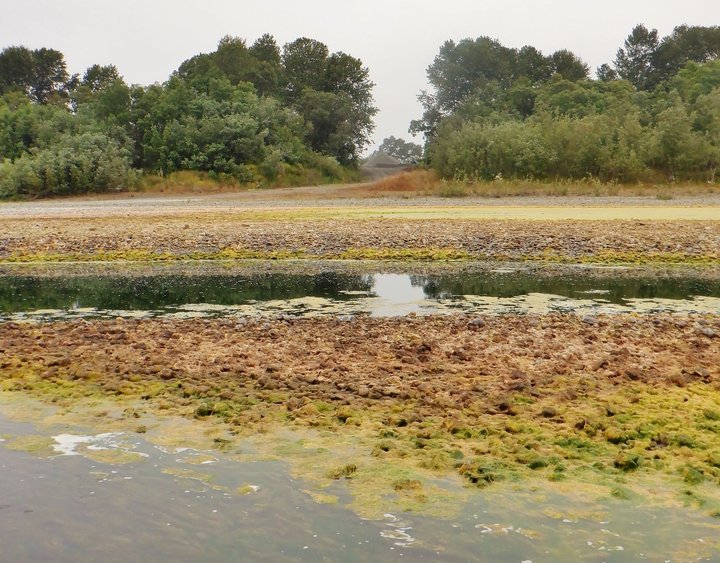
Algal blooms on the lower Eel. Photo: Eric Stockwell.
From the Humboldt County Public Health Division:
Environmental
health officials are reminding community residents to be on the
lookout for harmful algal blooms after a report was made of a person
becoming ill following time spent in the South Fork Eel River north
of Weott. State staff is currently taking water samples at this
location and will post warnings on the shore.
This
news comes days after testing confirmed cyanobacteria, also referred
to as blue-green algae or harmful algal blooms (HABs), was found at a
location in the main stem of the Trinity River east of Willow Creek
and likely contributed to a dog’s death earlier this month.
Cyanobacteria
can be present in any fresh water body and looks like green,
blue-green, white or brown scum, foam or mats floating on the water.
Warm water and abundant nutrients can cause algae to grow more
rapidly than usual and these floating algal masses or “blooms”
can produce natural toxins that are potent and dangerous. Dogs and
children are most likely to be affected because of their smaller body
size and tendency to stay in the water for longer periods.
Low
flows along several local rivers including the South Fork Eel, Van
Duzen and Mad Rivers, coupled with sustained high temperatures in the
inland areas and record low rainfall have created the ideal
conditions for rapid blooming of this harmful algae.
Since
2001, there have been 12 documented dog deaths locally where the dogs
died shortly after swimming in Big Lagoon, the South Fork Eel River
or the Van Duzen River. In each instance, water samples confirmed the
presence of cyanobacteria in the water.
Most
algal blooms in California contain harmless green algae, however, it
is difficult to test and monitor the many miles of local rivers with
conditions that readily change. To stay safe, it is best to assume
that an algal bloom has the potential to contain toxins.
Symptoms
in people may include eye irritation, skin rash, mouth ulcers,
vomiting, diarrhea and cold or flu-like symptoms. Following exposure
to harmful algal blooms, symptoms in dogs may include lethargy,
difficulty breathing, salivation, vomiting, urination, diarrhea or
convulsions.
The
following guidelines are recommended for recreational users of all
freshwater bodiesin
Humboldt County:
Keep
children, pets and livestock from swimming in or drinking water
containing algal scums or mats.
Adults
should also avoid wading and swimming in water containing algal
blooms. Try not to swallow or inhale water spray in an algal bloom
area.
If
no algal scums or mats are visible, you should still carefully watch
young children and warn them not to swallow any water.
Fish
should be consumed only after removing the guts and liver and
rinsing fillets in tap water.
Never
drink, cook with or wash dishes with water from rivers, streams or
lakes.
Get
medical attention immediately if you think that you, your pet or
livestock might have been poisoned by cyanobacteria toxins. Be sure
to tell the doctor or veterinarian about possible contact with
cyanobacteria or algal blooms.
Join
or support one of the many watershed and river organizations.
To
learn more about cyanobacteria and HABs, visit the state of
California’s website at mywaterquality.ca.gov/habs.
To
learn more about cyanobacteria and algae on the South Fork Eel River,
visit eelriverrecovery.org/algae.
To
report a bloom, e-mail CyanoHAB.Reports@waterboards.ca.gov
or call 844-729-6466 (toll free). Blooms can also be reported via the
“bloomWatch” app which is available for free download on iTunes
or Google play.
For
information on conditions occurring within Humboldt County, contact
the Humboldt County Department of Health & Human Services
Division of Environmental Health at 707-445-6215 or 800-963-9241.
Photos of suspected blooms can also be emailed to
envhealth@co.humboldt.ca.us.
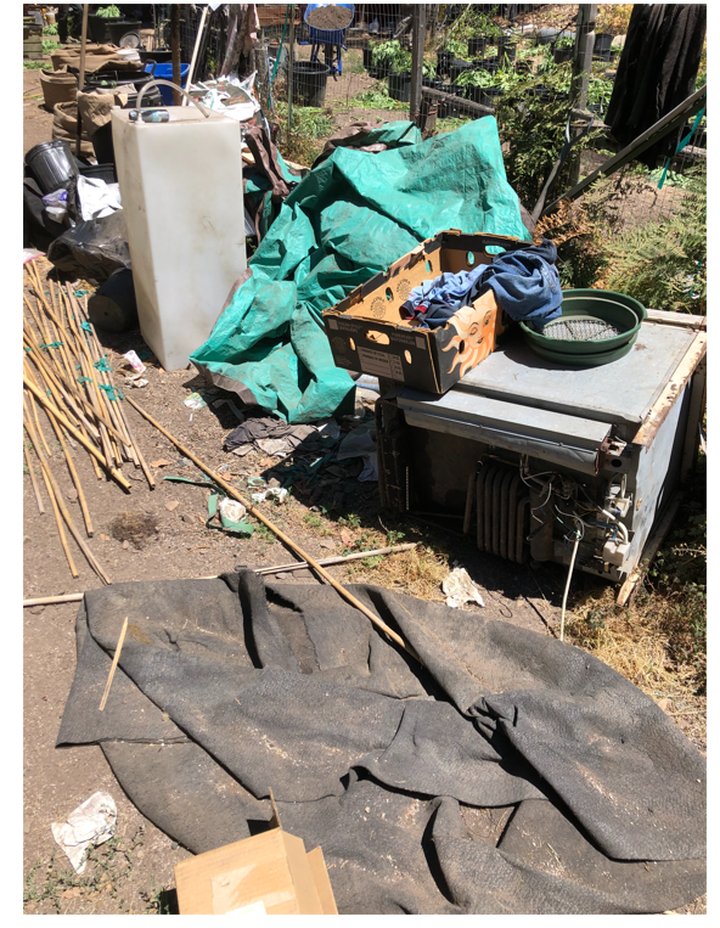
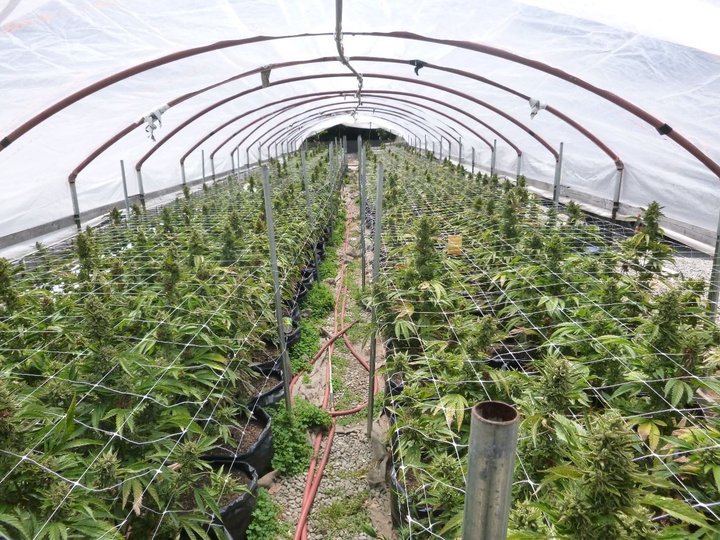
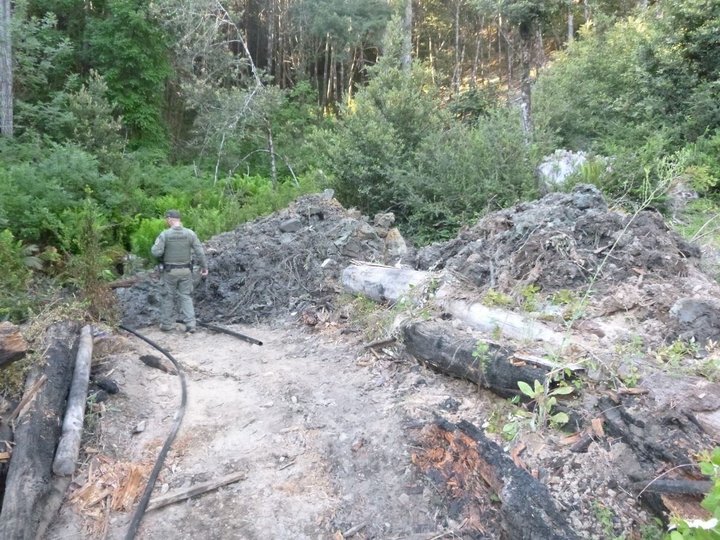
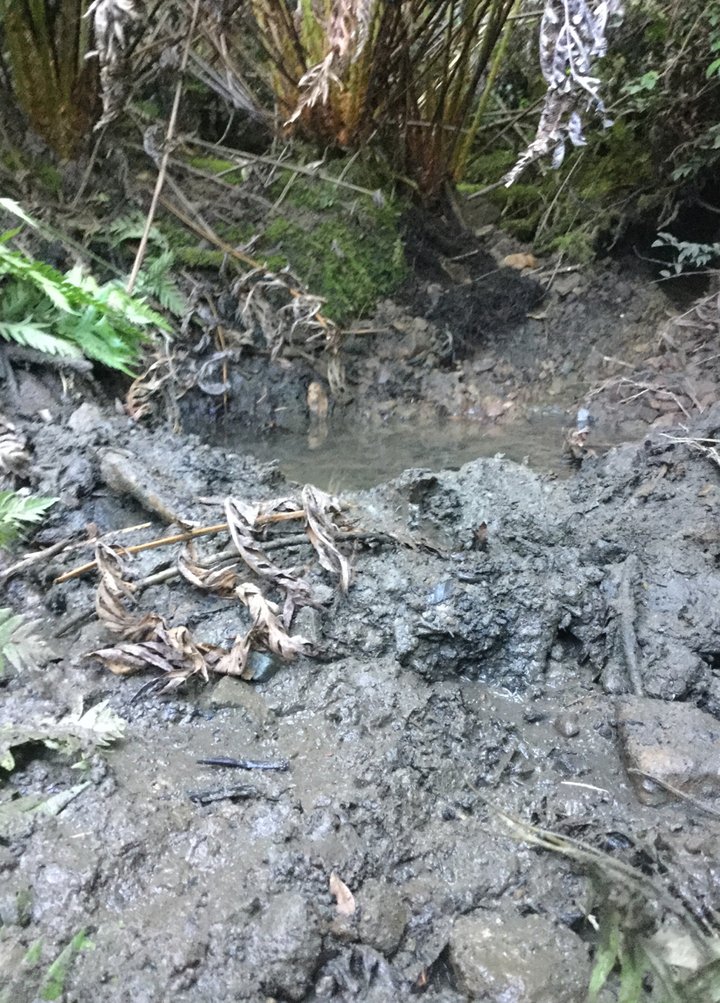
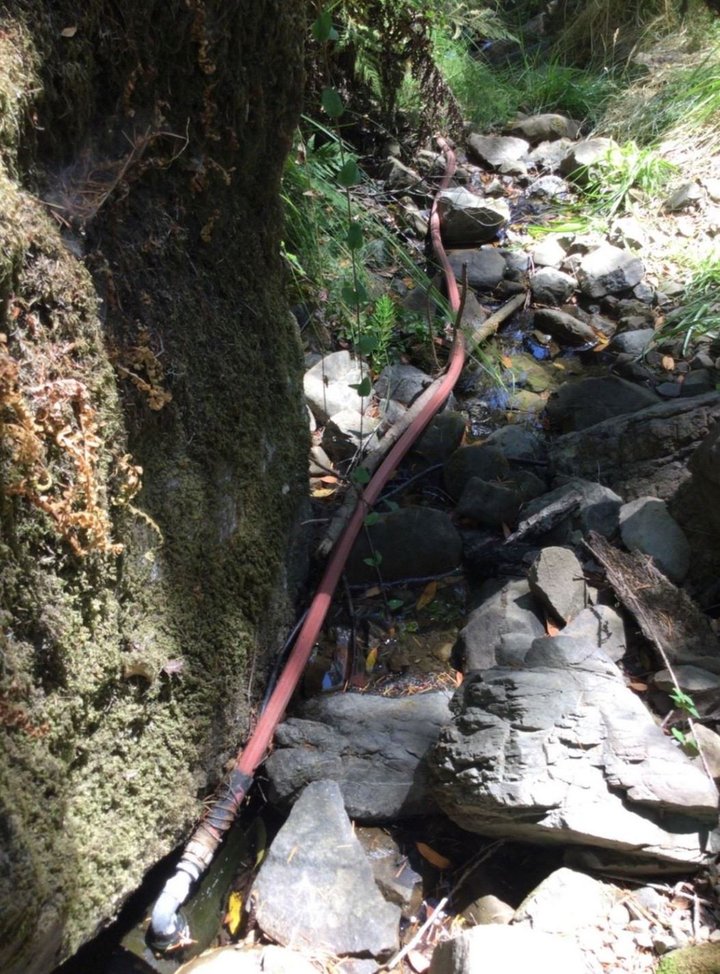
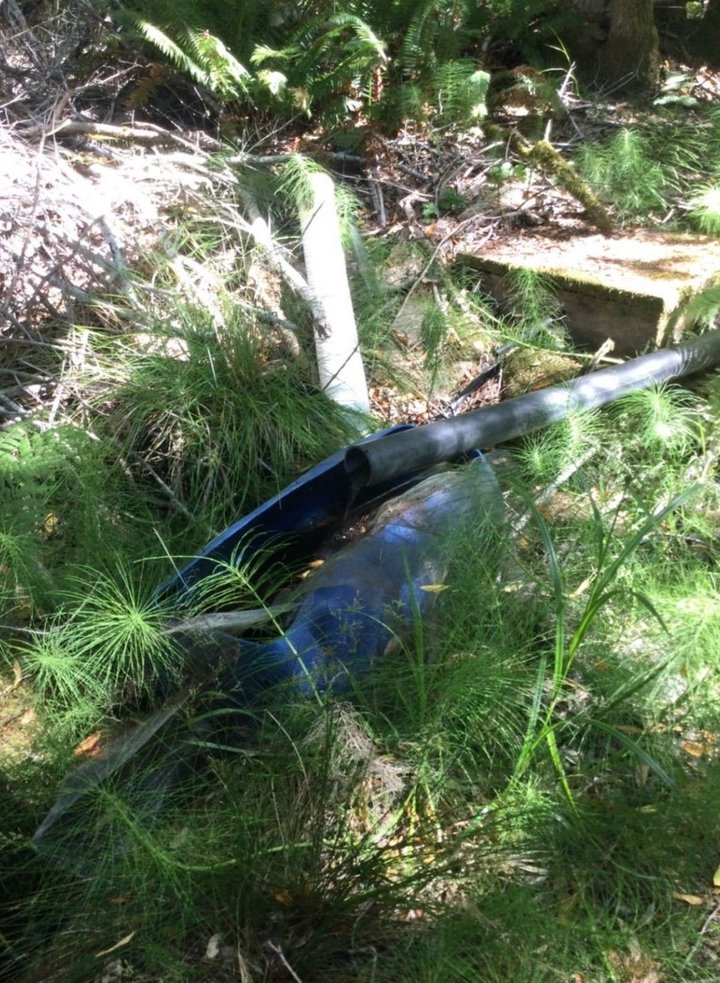
Growing cannabis plants from a bust in the Roach/Tulley Creek watershed.. | All photos courtesy HCSO.
###
Press release from the Humboldt County Sheriff’s Office:
During the week of July 19-22, 2021, deputies with the Humboldt County Sheriff’s Office Marijuana Enforcement Team (MET) served 23 search warrants to investigate illegal cannabis cultivation in four Humboldt County watersheds. The California Department of Fish and Wildlife, El Dorado County Sheriff’s Office, Tri County Drug Enforcement Team (TRIDENT), Humboldt County Code Enforcement, Humboldt County Department of Health and Human Services - Environmental Health, California Department of Food and Agriculture (CDFA) CalCannabis, California State Water Resources Control Board and California Division of Water Rights assisted in the service of the warrants.
Numerous parcels were investigated during the service of the warrants in the Redwood Creek, Steelhead/Powers Creek, Salmon Creek and Roach/Tulley Creek watersheds. Through scientific studies, these watersheds were identified to be losing water flow at an alarming rate due to illegal commercial cannabis cultivation. The watersheds are home to protected species such as Coho and Chinook salmon, and Steelhead trout who are already faced with unprecedented drought conditions. Illegal cultivation activities during a drought year put an exuberant amount of pressure on already strained fish and wildlife resources. This week’s eradication effort will help to conserve salmon and steelhead habitat critical for species survival.
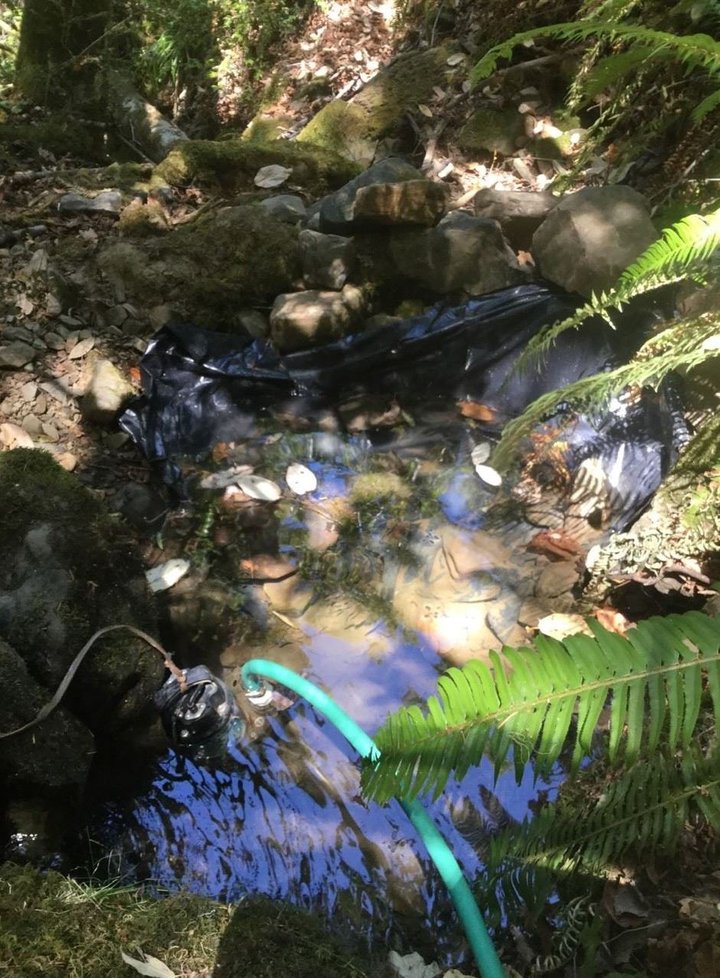
None of the parcels investigated possessed the required county permit and state license to cultivate cannabis commercially. In total, deputies eradicated over 35,000 growing cannabis plants and documented approximately 97 environmental violations. During the service of the search warrants, environmental scientists and law enforcement found and documented severe damage to the watersheds. Additionally, juvenile salmonoids were located in dammed pools in the watersheds where water was being pumped out of with large gasoline-powered water pumps.
The following statistics and photographs were recorded during these investigations.
1. Redwood Creek Watershed
On July 19, 2021, teams served seven warrants on parcels in the Redwood Creek Watershed. During the service of the warrants, deputies eradicated approximately 17,082 growing cannabis plants. Deputies seized and destroyed over 618 pounds of cannabis bud and over 3,580 pounds of processed cannabis.
Assisting agencies found the following violations:
Twelve (12) water diversion violations (up to $8,000 fine per day, per violation);
Three (3) water pollution violations (up to $20,000 fine per day, per violation);
Four (4) depositing trash in or near a waterway violations (up to $20,000 fine per day, per violation).
Dammed up creek with 100 percent of water being pumped out for Illegal cultivation. Juvenile salmonoids located in pool.
Garbage spread out next to Redwood Creek watershed.
Packaged cannabis bud.
Greenhouse with flowering cannabis.
2. Steelhead/Powers Creek Watershed
On July 20, 2021, teams served eight warrants on parcels in the Steelhead/Powers Creek Watershed. During the service of the warrants, deputies eradicated approximately 8,918 growing cannabis plants. Deputies seized and destroyed over 17 pounds of cannabis bud and over 1,310 pounds of processed cannabis.
Assisting agencies found the following violations:
Twenty-three (23) water diversion violations (up to $8,000 fine per day, per violation);
Nineteen (19) water pollution violations (up to $20,000 fine per day, per violation);
Sixteen (16) depositing trash in or near a waterway violations (up to $20,000 fine per day, per violation).
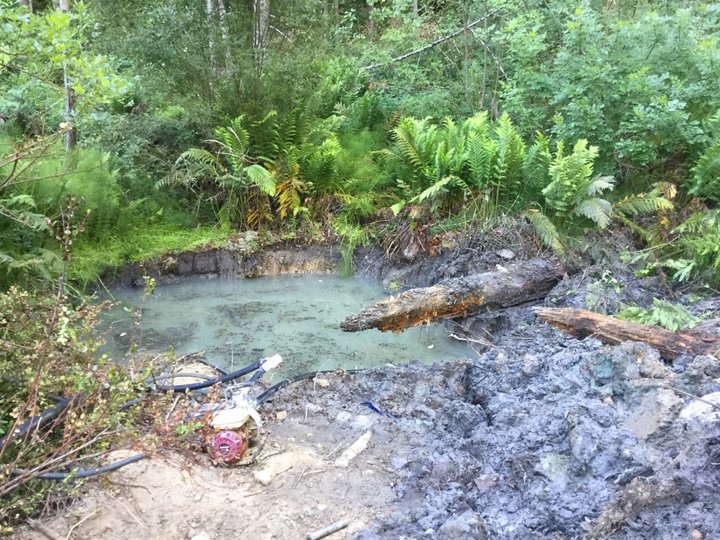
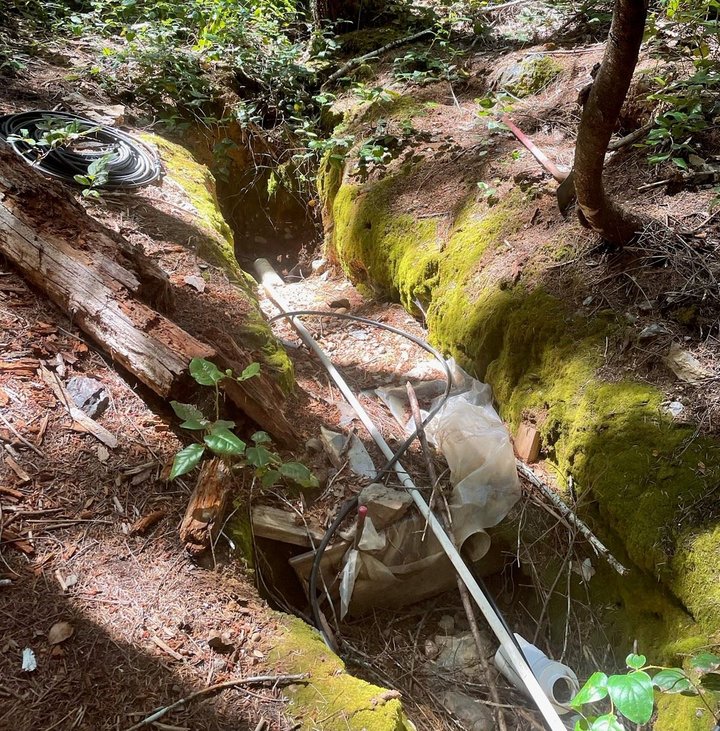
Eight-foot deep hole dug into creek bed diverting 100 percent of waterflow to illegal cultivation.
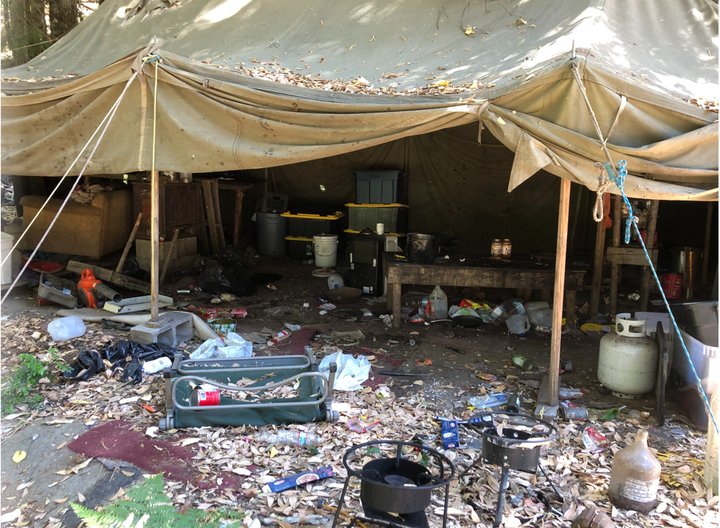
Cooking shack and garbage spread about.
Creek dammed up and 100 percent of flow being diverted to Illegal cultivation.
Creek dammed up and 100 percent of flow being diverted to Illegal cultivation
Illegal grading and commercial cannabis cultivation.
3. Salmon Creek Watershed
On July 21, 2021, teams served four warrants on parcels in the Salmon Creek Watershed. During the service of the warrants, deputies eradicated approximately 2,205 growing cannabis plants.
Assisting agencies found the following violations:
Six (6) water diversion violations (up to $8,000 fine per day, per violation);
Two (2) water pollution violations (up to $20,000 fine per day, per violation);
Four (4) depositing trash in or near a waterway violations (up to $20,000 fine per day, per violation).
Dammed up Salmon Creek with bump in creek diverting 90 percent of waterflow. Juvenile salmonoids located in pool.
Ninety percent of waterflow being diverted from waterway.
4. Roach /Tulley Creek Watershed
On July 22, 2021, teams served four warrants on parcels in the Roach /Tulley Creek Watershed. During the service of the warrants, deputies eradicated approximately 6,922 growing cannabis plants. Deputies seized and destroyed over 55 pounds of processed cannabis.
Assisting agencies found the following violations:
Six (6) water diversion violations (up to $8,000 fine per day, per violation);
Two (2) water pollution violations (up to $20,000 fine per day, per violation).
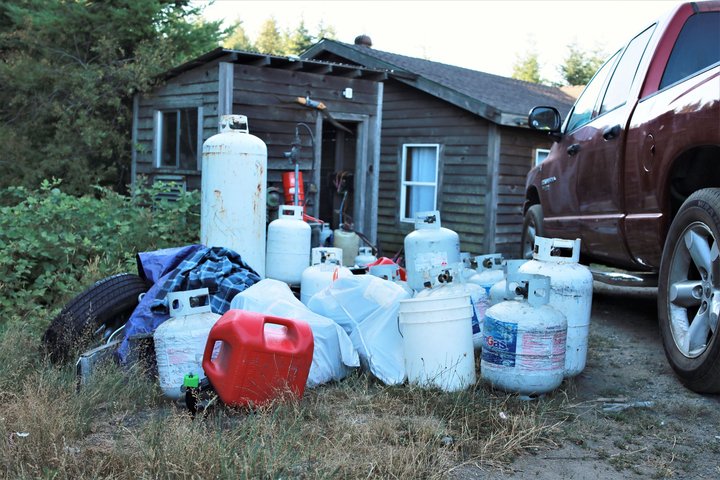
Multiple discarded fuel tanks at illegal cultivation site.
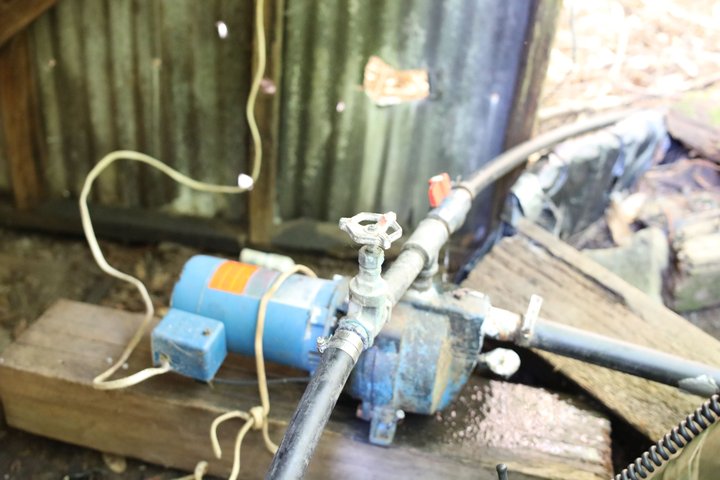
Active water diversion with pump.
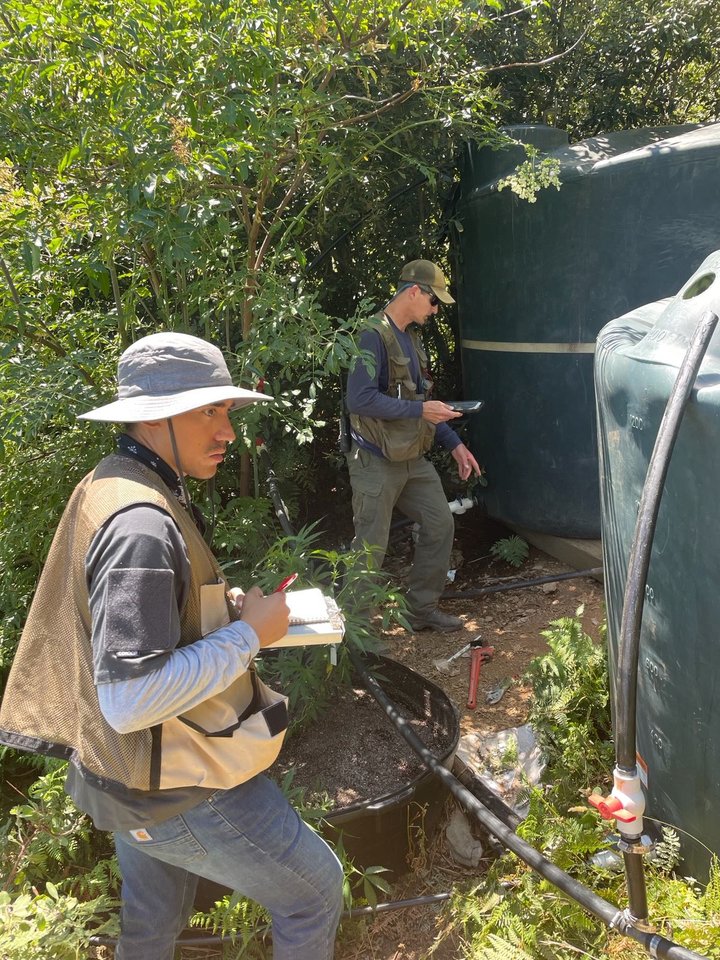
Water pump diverting water from a creek.
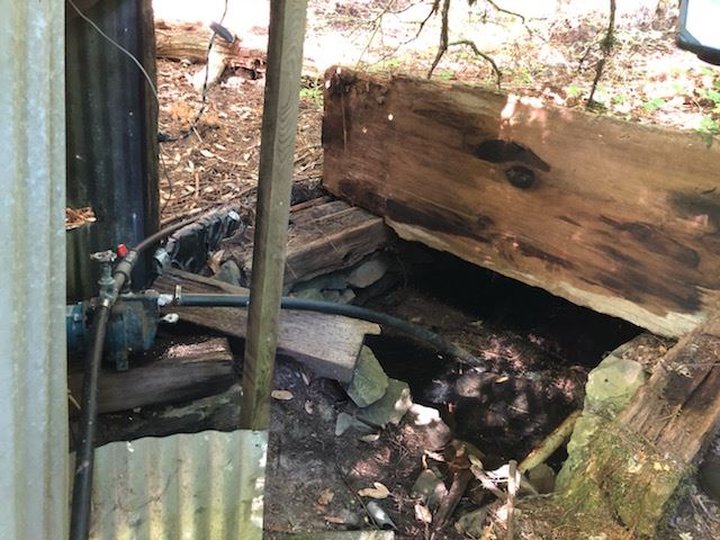
Ponded water from illegal diversion.
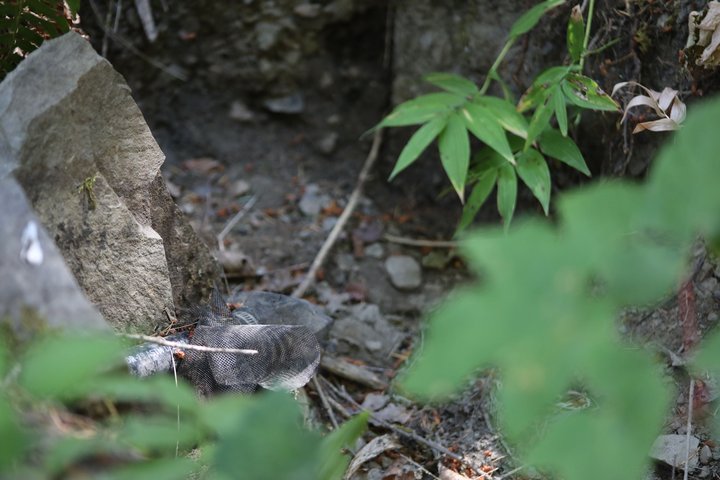
Point of diversion at a dried up creek.
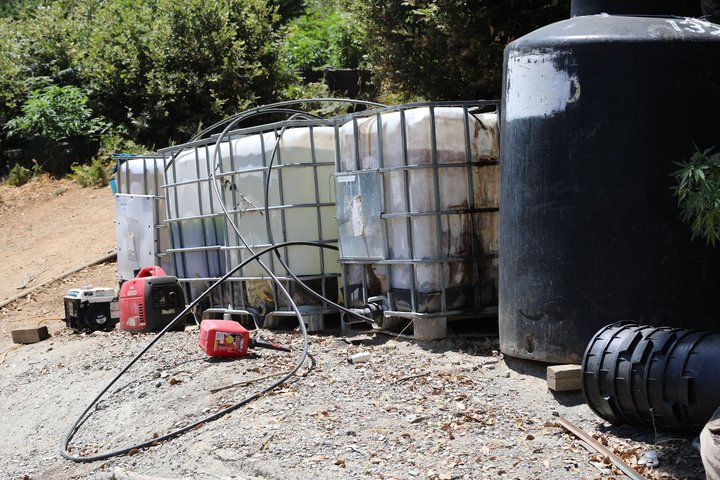
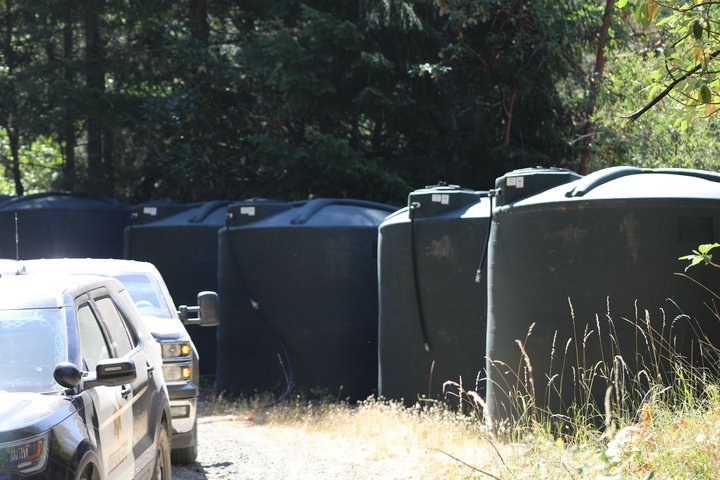
Multiple water storage containers, a generator and a discarded gas can.
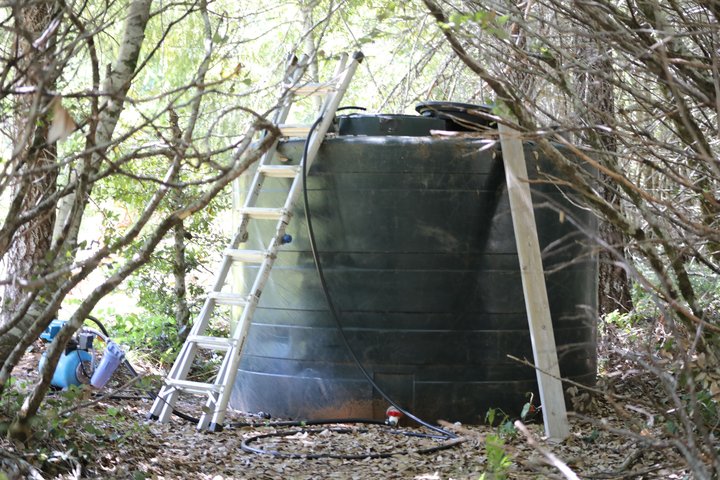
Multiple water storage containers suspected to be filled through illegal water diversion.
A water container, filled through illegal water diversion, and a fuel-powered pump.
Significant water diversion causing a creek to run dry.
Growing cannabis plants.
Cannabis plants with shipping containers in the background.
Environmental scientists investigate water diversion and storage.
No arrests were made during the service of the warrants. The cases will be forwarded to the DA’s Office for review. Additional violations with civil fines are expected to be filed by the assisting agencies.
Anyone with information about these cases or related criminal activity is encouraged to call the Humboldt County Sheriff’s Office at (707) 445-7251 or the Sheriff’s Office Crime Tip line at (707) 268-2539.
California has proposed a new health goal for regulating perfluorinated contaminants in drinking water. Photo by Tash Kimmell for CalMatters.
###
California took a major step towards regulating dangerous “forever chemicals” in drinking water by proposing new health limits for two of the most pervasive contaminants.
State environmental health officials recommended goals of one part per trillion and less — a minuscule amount 70 times smaller than the federal government’s non-binding guideline for drinking water nationwide.
Called “forever chemicals” because they persist in the environment, the contaminants are ubiquitous. Traces of two — perfluorooctanoic acid (PFOA) and perfluorooctane sulfonate (PFOS) — are in the well water of 146 public water systems serving nearly 16 million Californians, a CalMatters analysis found last fall.
Long used to make non-stick and stain-proof coatings, firefighting foams and food packaging, the perfluorinated chemicals have been linked to kidney cancer and other serious health conditions in people drinking contaminated water. They often are found near airports, military bases and landfills.
The announcement sets in motion a multi-year process to develop enforceable state regulations to replace California’s guidelines.
State officials will seek public comments and outside scientific review of the proposed “public health goals” before they are finalized, which could take at least a year, said Sam Delson, a spokesperson for the state Office of Environmental Health Hazard Assessment.
After that, another agency, the state Water Resources Control Board, will develop enforceable standards. Those standards must under state law be set as close as possible to the health goal while considering what is economically and technically achievable. That process could take several years.
The health goals are based on concentrations that would pose “no significant health risk” to people, according to the report by the Office of Environmental Health Hazard Assessment. Attaining them would limit Californians’ risk to one case of cancer per one million people over a lifetime, based on studies of people and lab animals.
“We don’t consider a (public health goal) to be the boundary between safe and dangerous. It is a goal for negligible risk,” Delson said.
The proposed targets are 0.007 nanograms per liter of water for perfluorooctanoic acid (PFOA), which was used to manufacture Teflon, and 1 nanogram for perfluorooctanesulfonate (PFOS), which was formerly used to make Scotchgard.
A nanogram per liter is equivalent to a part per trillion — or one cup of a contaminant in a trillion cups of water.
“Keeping levels low will ensure that those who are most likely to experience adverse health outcomes, like children or people … who live in areas of high exposure, will be adequately protected,” said Jamie DeWitt, a professor of pharmacology and toxicology at East Carolina University, who studies the chemicals but was not involved in California’s analysis.
But cleaning up water to meet stringent standards for perfluorinated chemicals would be expensive. At military sites alone, the US Government Accountability Office estimates that investigating and cleaning up the contamination will cost far beyond the $3.2 billion that the Department of Defense spent in 2020 and expects to pay in 2021.
These chemicals are everywhere, in everyone
Nationwide, the drinking water of up to 80 million people is estimated to contain at least 10 nanograms per liter of the two chemicals combined, according to a study by the Environmental Working Group, an environmental group that focuses on toxic substances.
The chemicals are everywhere, in virtually everyone, in samples taken from pole to pole — they have accumulated not just in water, but also in soil and in human and animal bodies, beginning in the late 1940s, when 3M Co. developed a process to make them.
“They’ve shown toxicity in animals and in humans,” said Elaine Khan, chief of the Water Toxicology Section at the Office of Environmental Health Hazard Assessment. “It’s definitely something that we need to address in terms of protecting public health.”
Olga Naidenko, vice president for science investigations at the Environmental Working Group, said California’s analysis confirms that the chemicals pose health risks at levels lower than the parts per trillion dominating discussions at the national and international levels.
Philippe Grandjean, a renowned environmental health scientist at Harvard University, said the U.S. Environmental Protection Agency has been “exceedingly slow” enacting water standards for perfluorinated chemicals.” He said he hopes that California “will continue the effort to show the way to control or eliminate” them in the environment and in human bodies.
So far, there are no federal enforceable limits on any of the thousands of perfluorinated chemicals. Federal advisories set guidelines for PFOA and PFOS in drinking water of 70 parts per trillion, combined. The EPA announced plans in February to regulate the two chemicals, but standards are still likely years away.
In the absence of federal standards, a patchwork of recommendations and regulations have emerged across the country. Nine states have set guidelines ranging from 8 to 35 parts per trillion for PFOA and 10 to 40 for PFOS, according to an analysis published last year.
Last year, California developed thresholds of 10 parts per trillion for PFOA and 40 parts per trillion for PFOS. These are just guidelines, although a state law empowers regulators to require that water providers either clean up contaminated supplies, shut down tainted wells or notify customers.
CalMatters’ analysis in November 2020 found that nearly 200 drinking water wells, or 15% of those tested, have exceeded the new thresholds in at least one round of testing over the prior year.
The new public health goals don’t change anything for now, said Darrin Polhemus, deputy director of the water board’s drinking water division. “This is the very, very, very first step of the regulatory process,” he said.
But some water providers may want to enforce them, or at least start developing plans to remove the chemicals from their water or blend supplies to dilute them.
“These are really important chemicals to address,” Khan said, “because they are forever chemicals, and they stay around for a very, very long time.”
###
CALmatters.org is a nonprofit, nonpartisan media venture explaining California policies and politics.