The well-heeled megadonors spending the most to defend Gov. Gavin Newsom in a near-certain California recall election hail from monied coastal enclaves, mansion-studded Silicon Valley and the toniest and most solidly Democratic parts of Los Angeles.
As for those big donors spending the most to boost the recall and kick Newsom out of the governor’s office — actually, that’s pretty much where they live, too.
A newly launched CalMatters live tracker of the $15.3 million and counting that has poured into either side of the recall shows that though California voters may be divided by geography and class, its major political donors are not.
The financial battle between the “pro” and “anti” campaigns was upended May 20 when Netflix CEO Reed Hastings — an on-again, off-again Newsom ally — pumped $3 million into the effort to beat back the recall. (Hastings gave $7 million to a committee backing a Democratic rival to Newsom in 2018.)
As a result, 95060 in Santa Cruz now sits at the top of the state’s biggest contributing ZIP codes.
The blue ZIP codes that dominate
That single seven-figure contribution, the largest of the campaign to date, only underlines two points that have been clear to political insiders for weeks now:
Hence, the other big donations on the anti-recall side come from Sacramento — home base of the state party and the fundraising arms of influential unions such as the United Nurses Associations of California — and from regular liberal super donors including ag and juice giant Stewart Resnick and from Democratic, deep-pocketed law firms.
The pro-Newsom side has brought in $10.6 million so far, and more support is on the way.
Next week, the California Labor Federation’s executive council is expected to vote on whether to take a position on the recall campaign. It’s a pro forma gesture; no one expects organized labor, a stalwart ally of the state Democratic Party, to sit out the recall.
Steve Smith, a federation spokesperson, said it’s too early to talk exact figures, but that the union umbrella group plans to make “a significant investment.”
As important as the money will be the organizational might. After an election cycle spent socially distancing, “there’s a lot of excitement amongst volunteers to get out going door-to-door again, and that will be utilized to the fullest extent for the recall campaign,” said Smith.
That should help the governor offset a potential lack of support from much of the state’s unionized workforce. Monday, Service Employees International Union Local 1000, which represents some 96,000 state employees, elected Richard Louis Brown as its new president. Brown told Politico the organization would not be supporting Newsom during the recall, a response to pay cuts the governor enacted in the early months of the pandemic.
On the pro-recall side, which has raised $4.7 million, the biggest donors are mostly in Southern California, a hodgepodge of familiar GOP backers and lower-profile millionaires who have had it with the governor.
Other big recall backers are real estate developer and Donald Trump megadonor Geoff Palmer, Silicon Valley venture capitalist Douglas Leone and Central Valley gasoline tycoon Stan Boyett.
Then, there’s the mysterious DGB Ranch, based in Los Angeles. Though campaign finance filings do not include much information about this entity that contributed $150,000 to the recall effort, there are clues hidden in public records.
The committee’s name matches a $250 campaign contribution to Los Angeles City Council candidate Jose Gardea in 2011. According to the city’s ethics commission, that committee’s address is located in central Los Angeles’ Hancock Park. County property records list the owners of the Tudor Revival mansion — more country club than ranch — as pediatrician Daniel G. Berdakin (initials, DGB) and his wife.
Berdakin, who spent $10,500 on Republican national political causes last year, did not respond to phone calls and emails made to his office, his lawyer and his family foundation.
Though some of the largest sources of cash to the Republican-supported recall effort come from purple-to-blue regions of the state, that doesn’t seem to be true of voters in general. Californians in counties that gave former President Trump a larger share of the vote in 2020 were much more likely to sign the recall petition, according to data from the California Secretary of State’s office.
Newsom backers pulling away in money race
Last week’s donation from Hastings also upset what had been a near balance in financial might between the two sides.
To see for yourself, consider the horizontal and vertical lines below:
Unlike those fundraising in support of the governor, recall proponents have had to spend their war chest in two stages: first to get the recall on the ballot, then to wage the campaign itself. The first donor blitz was dedicated to accomplishing the first goal, but efforts toward the second will “start again very soon,” said Anne Dunsmore, who runs the largest recall fundraising committee.
She also downplayed the contribution from Hastings. “I’m surprised, with the trouble that (the governor)’s in, that it was only $3 million,” she said.
In the months to come, recall backers could also re-focus their donations to the campaigns of any one of the Republicans seeking to eject Newsom from office. But so far, they haven’t.
John Cox, known for losing badly to Newsom in 2018 and campaigning alongside a Kodiak bear named Tag in 2021, has raised more than $5 million for his bid — though most has come from his own bank account. Former Olympian and reality TV star Caitlyn Jenner has raised about $212,000 so far, former San Diego Mayor Kevin Faulconer has pulled in a little less than $120,000 and former Sacramento-area member of Congress Doug Ose reported about $47,000, including $32,400 from himself.
Unlike the general pro- or anti-recall committees, which can raise and spend unlimited sums of money, candidates can’t receive more than $32,400 from a single donor. That means they’re more reliant on small-dollar donors — and some recall candidates are using a controversial tactic for repeat donations.
As first reported by Politico, online contributions made to both the Jenner and Ose campaigns through their websites are pre-checked to be charged repeatedly and to include “bonus” donations. Donors can opt out of both payment options, but only if they notice them. It’s a fundraising tactic made famous — and to consumer protection advocates, infamous — by the Trump campaign in 2020.
National Republican money fizzles
Last December, former House Speaker Newt Gingrich and former Arkansas governor Mike Huckabee endorsed the recall effort. Huckabee’s political action committee threw $100,000 behind the effort. That was a sign to some political insiders that the state’s recall could become more than a mere California affair as national GOP donors and media personalities smelled “blood in the water.”
But that wave of red state cash has failed to materialize. Both sides have raised more than 90% of their itemized donations from within California, and the largest contributions from elsewhere have gone to defend the governor.
That includes $500,000 from the Democratic Governors Association. It also includes a $100,000 contribution from the law firm Baron & Budd, which represented 14 California cities and counties in a $1 billion settlement with PG&E for damages from catastrophic wildfires. The firm is based in Texas, meaning that the lion’s share of the campaign money coming out of the Lone Star State is backing the governor.
Darry Sragow, a Democratic political consultant and the publisher of the California Target Book, which tracks campaign finance data, said he sees no evidence that another wave of recall cash is on the way.
The worst of California’s pandemic seems to be over, the economy is rebounding, Newsom’s approval numbers are holding steady and no overwhelming favorite has emerged among the would-be replacement candidates. A statewide poll published this week by the nonpartisan Public Policy Institute of California found that 54% of likely voters approve of the governor’s job performance and that only 40% support removing him from office.
“If I’m a Republican donor who is acting reasonably rationally, I just don’t see an argument for throwing a lot of money into the recall side,” he said.
With U.S. Senate, House and redistricting battles across the country, there is no shortage of more likely GOP electoral opportunities, Sragow added. “Republicans want to run the country. I don’t think they think they can run California.”
###
CALmatters.org is a nonprofit, nonpartisan media venture explaining California policies and politics.
On May 25, 2021, Detectives with the Eureka Police Department’s Problem Oriented
Policing Team (POP), with assistance from the Humboldt County Drug Task Force
(DTF), served a search warrant on 42-year-old Michael Wade Thielen at a hotel on the
200 block of 5th Street in Eureka. The warrant was for possession of controlled
substances for sale.
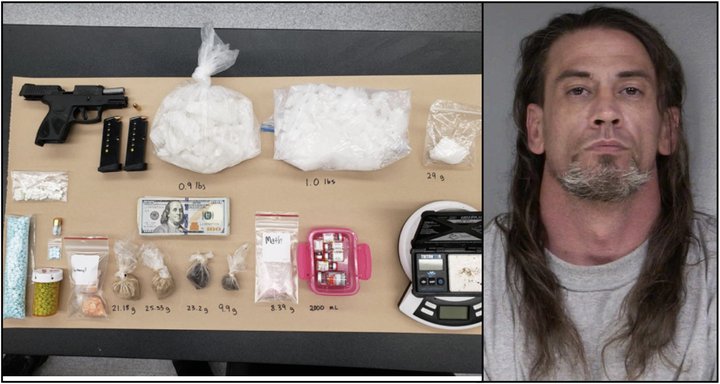
Detectives detained Thielen inside his hotel room. During the search, detectives
located a handgun, 2 pounds of methamphetamine, over 1600 Fentanyl pills, nearly 80
grams of heroin, 2000 milliliters of testosterone, 32 Xanax pills, and US currency.
Thielen was transported and booked into the Humboldt County Correctional Facility
for possession of a controlled substances while armed, possession of controlled
substances for sale, and possession of narcotics for sale.
Someday we’ll all be back here. For now, it’s still Zoom. File photo.
###
This year’s drought is shaping up to be very, very bad. Juvenile
salmon in the Klamath River system are already starting to perish in
“catastrophic”
numbers, with low flows as the primary cause. It looks very likely
that the Eel River will fail to reach the sea later this year, as
last happened during the 2014 drought. The soil and the
vegetation, especially in the inland areas, are parched, and the
likelihood for wildfire is high. Some areas might have problems
getting drinking water.
Pretty much everyone
who spoke at yesterday’s Humboldt County Board of Supervisors
meeting – during which the board and the public heard from a parade
of governmental agency representatives on the front lines of this
problem – agreed to these basic statements of fact. What to do
about those facts? That’s another question, and one that was agreed
to only vaguely, after about an hour and a half of somewhat chaotic
deliberation.
Apart from that,
there were two other major items on the Board of Supervisors’
agenda. Supervisors and the public got a first look at a draft
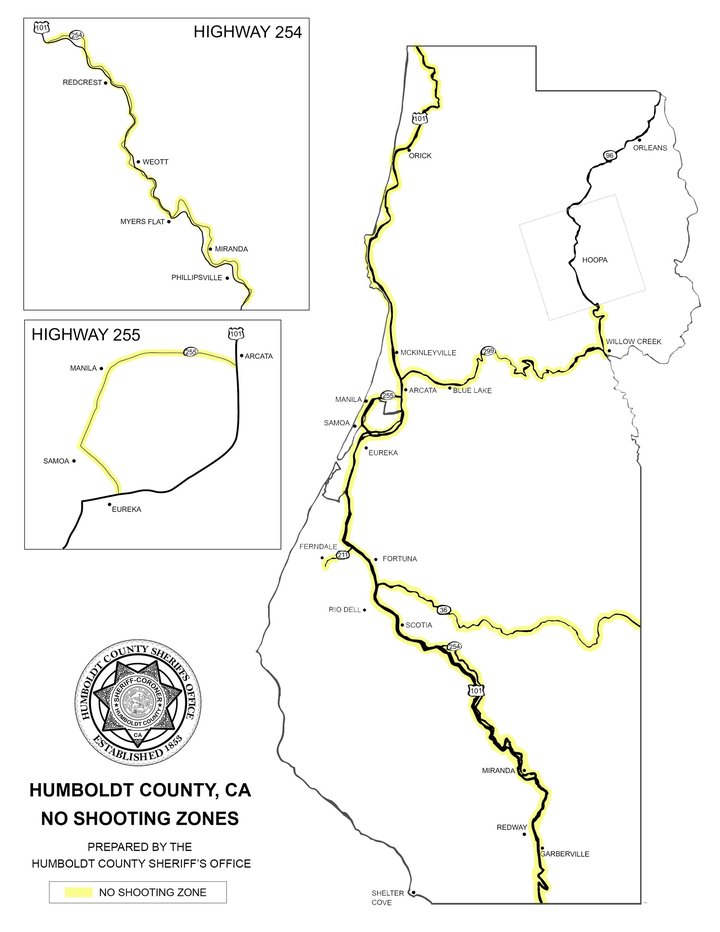
revision to the county’s firearms ordinances, which would prohibit
the shooting of firearms on most of the Samoa Peninsula and elsewhere
near “heavily used recreation areas.” And it brought to an end a
fairly disastrous (and expensive) effort to outsource parts of its
broken payroll system for county employees.
Our Dry Future
“What
I’m going to suggest is what a lot of other experts are suggesting,
is that this is something more significant than a drought,” said
Craig Tucker, a natural resources consultant for the Karuk Tribe,
during the morning’s public forum. “In California, nine out of
the 11 hottest years on record, and three out of the five driest
years on record, have occurred since 2011.”
“So what I’m trying to say is the weather is changing, and this
is a change that really has been predicted by climatologists for at
least two decades. So what we’re living, here, is not really a
drought but a new normal that is being driven by climate change.”
Tucker
was one of the eight experts
from local, tribal, state and federal agencies
invited by Supervisor Mike Wilson to speak to the board about the
coming dry year and beyond, with the intention of starting a
conversation about what the county should be doing to prepare.
Though most Humboldt County residents are in no danger of running out
of water, thanks to the vast untapped capacity of the Humboldt Bay
Municipal Water District’s operations on the Mad River, the same
doesn’t hold true for people outside
the Eureka-Cutten-Arcata-McKinleyville population core. And that’s
leaving aside the devastating impacts of the current drought on our
natural systems, which will inevitably lead to wildfire and stress on
fisheries.
Kathleen Zontos, a hydrologist with
the National Weather Service in Eureka, kicked off the discussion
with an overview of just how bad the current drought year is shaping
up to be. Right now, she said, Eureka is at about 60 percent of
normal rainfall in this “water year” – October to September.
(That number ranges from 50 to 70 percent at different locations
around the county.) That’s on top of a dry year last year as well.
Given that the bulk of our wet weather has already passed, that means
we’re already in drought.
“Weather-wise,
the damage has already been done,” she
said.
Kurt
McCray, chief of the Humboldt-Del Norte Cal Fire unit, said that his
agency is preparing for the worst this year. The wildlands are full
of dry, dead fuel, he said, and just as importantly the soil
moisture level is currently very low. They’ll be staffing up to
full firefighting readiness on June 1 this year – about three weeks
ahead of normal – and he urged people in the hills to be prepared,
by maintaining defensible space around their homes and being prepared
to evacuate.
“I
want to leave something – a little bit of a trivial fact, but of
very significant importance to me,” McCray said. “At one point
last fall, five of the six largest fires in recorded California
history were burning at the same time in California. So the potential
is there, and the conditions are far worse than they were at this
time last year.”
Joe
James, chair of the Yurok Tribe, said that the Klamath River is
already in a state of emergency – the tribe itself has issued a
declaration, and so
has Governor Newsom – and reiterated that juvenile salmon are
experiencing a die-off right now. He urged everyone on the call to
reach out to the state and federal government to sound the alarm.
Chris
Harris of the Humboldt Bay Municipal Water District reiterated that
Ruth Lake reservoir is at nearly full capacity, and there’s little
danger of running out. (But the district gets its water not only from
behind the dam, she noted, but from various tributaries that flow
into it. It sucks up water from its Ranney
collectors on the banks of the Mad near Blue Lake.)
Harris
told the board about a couple of initiatives her district is working
on. One: They’re looking to some of their excess capacity for
environmental purposes – “in-stream flows,” as she called them
– to supplement river water for natural systems in the dry times.
Secondly, she said, they’re looking at developing loading stations
for water delivery trucks to deliver to communities in need. These
could only supply non-potable water, she said, and there are some
questions about whether they would have enough scale to meet demand –
trucking enough water to meet even a small community’s regular
demands would be an enormous, probably impossible, undertaking.
Three
county employees wrapped up the testimony: Hank Seemann,
the county’s deputy
director
of public works; John Ford, its planning director; and Ryan Derby,
the county’s emergency operations manager.
And
then the board got on to the sticky question about what to do about
this grave state of affairs.
What
to Do
The testimony from the experts
lasted just about an hour. The amount of time supervisors deliberated
on their testimony – taking public comment, asking questions of
panelists, their staff and each other, proposing and voting on
motions – took about double that amount of time.
One thing that loomed large during
the discussion: Whether or not Humboldt County should itself declare
a state of emergency in regard to the drought – if not now, then at
some point in the near future.
Supervisor Madrone was all for
immediate action. “I really firmly believe we need to pass a
proclamation, like, today,” he said. “I want to advocate for
getting that done sooner rather than later.” But Supervisor Bohn
was strongly against such a move, at least at this point, citing
the fact that the county is already operating under emergency
declarations relating to homelessness and COVID. (Earlier,
during his presentation to the board, emergency operations manager
Ryan Derby warned that at this point any actions taken pursuant to a
local declaration of emergency would have to be funded locally –
that there aren’t any federal or state dollars available yet.)
Supervisor
Bushnell, meanwhile, repeatedly expressed caution about taking any
significant action at this moment, given, she said, that the board
had not heard any testimony from the agricultural and cannabis
communities about the subject. (During the public comment period,
Bushnell’s appointee to the county’s planning commission, Thomas
Mulder, railed against the
speakers
that kicked off the discussion:
“I know you’re asking for people to be polite, but I feel that the
way in which the presentation was structured was an attack on our
rural property rights,” he said.)
There
was much back and forth and some
side discussion. What
about the water impact of new “megagrows”? Most
of the new
permits
being approved these
days
are small and preexisting operations, said Planning Director John
Ford. (Though
people calling in during the public comment period charged that those
preexisting operations are growing in size.) What about groundwater
resources in the Eel River Valley – wells
and such – that are covered by the state’s Sustainable
Groundwater Management Act?
(Scientists
are currently studying the relationship between those underground
supplies and drought conditions on the surface, said Public Works
Deputy Director Hank Seemann, and
should have answers next year.)
One concrete proposal was offered:
Supervisor Mike Wilson, echoing Craig Tucker’s comments about our
climatological “new normal,” suggested that the county should
create a new position – a “sustainability and resilience
coordinator” – that could be the local point person for policy
relating to climate change, and could
also seek funding for the
county’s adaptation efforts. Many
other California counties have already created such a position, he
said.
Finally, Wilson
put forward a motion for the
board’s consideration. It
came in two parts – one: that staff come back with a drought update
in four to six weeks, and to have some policy options for the board
to consider; and two: that the
board discuss, at a future date, the option of hiring a
sustainability and resilience coordinator.
Wilson:
Yes. Bass: Yes. Madrone (surprisingly):
No.
Bohn (with
a bit of a laugh): No.
Bushnell: No. Motion fails.
Bass,
as the board’s chair, prepared to move on the next item on the
agenda, saying “Well, this has been an interesting day already.”
But Madrone,
who had been largely silent during the back-and-forth among the other
supervisors, chimed in, saying wanted to justify his seemingly
out-of-left-field no vote. Madrone said he supported all the aspects
of Wilson’s proposals except one: Four to six weeks was too slow.
“I’m
looking to take action not in four to six weeks,” he said. “I
think we ought to be acting today, and if not today then in a week or
two, but I very much support the [sustainability and resilience]
position that was suggested.”
“Would
you like to make a motion to that half of the item?” Wilson asked.
“Because we’ve now just sent a message that we don’t want that.
And that message is going to be heard loud and clear. So would you
like to make a motion of something you want
to see happen here today?”
Thus
began another 20-odd minutes of hair-pulling discussion about things
like parliamentary procedure, about what sort of time frame would be
reasonable for staff to do the new work requested of them without
pulling them from other duties. Eventually,
two new ideas were thrown into the mix: That the board could direct
county staff, now,
to put out statements to the public that we are in a serious drought
crisis, and that everyone should conserve water and practice fire
readiness; and two, that Derby, Seemann and Ford could be formally
appointed to a task force that would study policy options for a
county drought response, and that this task force would report back
to the board as
soon as possible.
Madrone
made two separate motions to incorporate those two ideas into
Wilson’s previous omnibus motion, and both of Madrone’s motions
passed unanimously.
The
Payroll Debacle
After
a lunch break, the board got back to business. First up: An
embarrassing about-face on its choice of a payroll software vendor,
which had
been a major point of contention in last year’s war between
Auditor-Controller Karen Paz Dominguez and much of the rest of county
leadership.
County
payroll has
been broken for a long time. Disregarding Paz Dominguez’s
defiant
protest, the county chose a new software vendor in an effort to
fix the problem – Automatic Data Processing, or ADP. They
didn’t come cheap: The county was to pay one-time costs of $146,000
and about $359,000 per year for the pleasure of using ADP systems.
What
we learned yesterday: Despite receiving such an astounding amount of
cash, ADP hasn’t been able to get their systems to work with
vagaries of Humboldt County payroll. Or, if you’d like to place the
blame the other way, Humboldt County payroll hasn’t been able to
adapt itself to the vagaries of APD’s system. In particular,
according to the staff report:
Through this process the project team has identified
significant limitations associated with the ADP platform that have
the potential to create considerable risk for the county. These
limitations are functionally related to position control, multiple
pay assignments, mandated equal opportunity reporting, and the ADP
system’s inability to handle the county’s five-digit decimal
point salary configuration. These shortcomings have profound
implications for agency operations and create financial risk.
… which,
to this untutored but somewhat software-savvy observer, seem like a)
the kinds of things you could figure out before
forking over $146,000, and b) the kinds of things a software company
could fix
for $146,000. That
is an editorial aside.
But
this was not the moment for recrimination, apparently, and
the
Board of Supervisors voted unanimously to cut bait on the whole deal
without
much discussion.
Human
Resources Director Linda Le offered thanks to everyone, and most
especially Paz Dominguez, who participated in the attempt to
implement ADP, and several other department heads chimed in to say
that cutting off ADP was the right decision.
Payroll
is still more or less broken. Treasurer/Tax
Collector John Bartholomew, always a level head, hoped that this
would be a learning experience.
“I
feel badly for the amount of time they had to expend to come to that
determination,” Bartholomew said, speaking of the county staff who
were tasked with implementing ADP and eventually came to the decision
to ditch it. “But at the same time, they’re launching into the
next stage of this process to figure out what the best payroll system
is for the county in good fashion.”
“Next
time around, we’ll find the right solution to these problems.”
Soon:
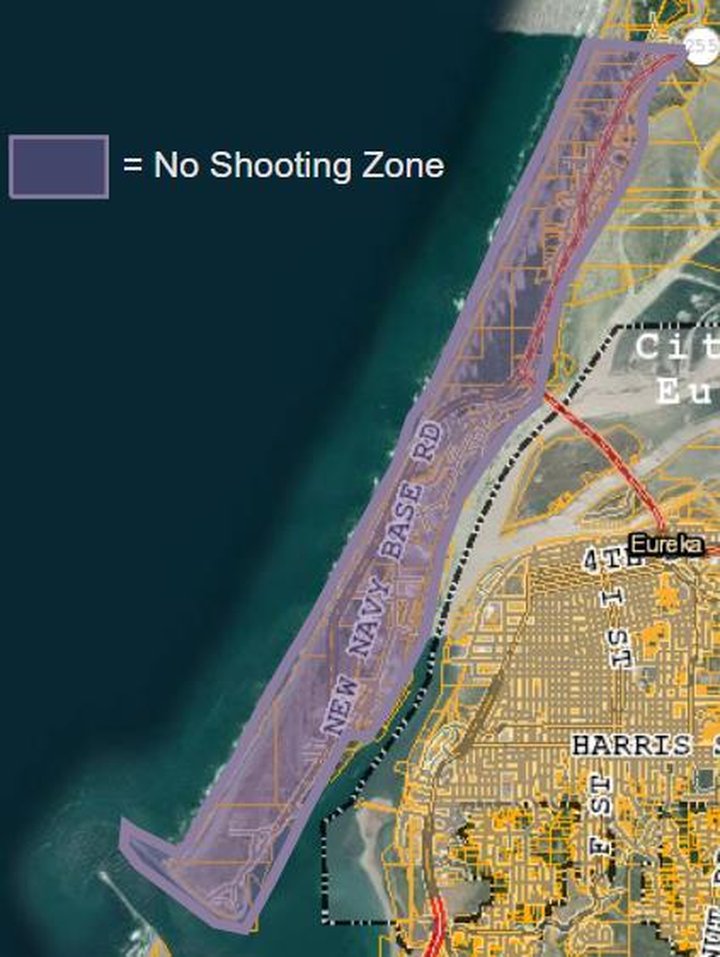
No Shooting on the Spit
No action was taken, but the county
took its first look at a revision to its firearms ordinance. The main
points: When passed, there will be no shooting allowed on most of the
Samoa Peninsula, or within 150 yards of any “heavily used
recreation area” or any occupied building not belonging to the
shooter, anywhere in the county.
Supervisor Bohn took some pains to
verify that this would not be a hardship on local duck or goose
hunters, since they’re not hunting on the Peninsula much anyway,
and also that this would not affect the Redwood Gun Club, the target
range just to the north of Ma-l’el Dunes. The Gun Club is indeed on
the Samoa Peninsula, but is just outside the proscribed range in the
new ordinance.
Map of the probably soon-to-be “no shooting zone” on the Samoa Peninsula.
Press release from the Humboldt County Sheriff’s Office:
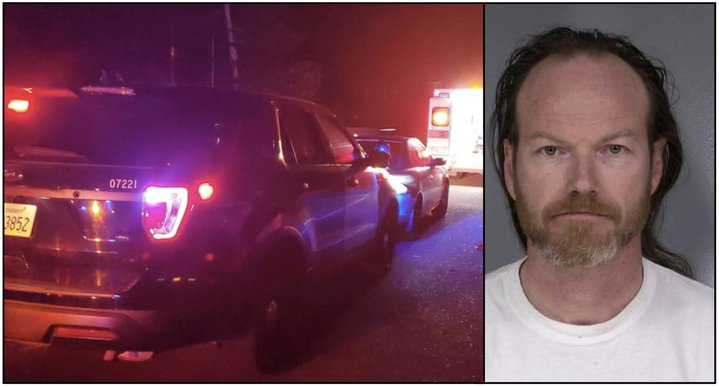
On May 25, 2021, at about 9:46 p.m., a Humboldt County Sheriff’s deputy on patrol in the area of Central Avenue and School Road, in McKinleyville, observed a vehicle stopped in the middle of the roadway.
As the deputy approached the vehicle to offer assistance, the vehicle accelerated and fled at a high rate of speed. The deputy pursued the vehicle for approximately 1.8 miles, observing the vehicle commit multiple vehicle code violations. The vehicle yielded near Central and Horrell Avenues, then began to back up at a high rate of speed, colliding with the deputy’s patrol car.
Deputies conducted a high-risk traffic stop on the vehicle following the collision. The driver of the vehicle, 46-year-old David Andrew Niedrich, was detained. The California Highway Patrol (CHP) was requested to respond to conduct a DUI evaluation and collision investigation. Niedrich was later arrested by CHP officers and booked into the Humboldt County Correctional Facility on charges of driving under the influence of alcohol (VC 23152(a)) and evading a peace officer (VC 2800.2).
Anyone with information about this case or related criminal activity is encouraged to call the Humboldt County Sheriff’s Office at (707) 445-7251 or the Sheriff’s Office Crime Tip line at (707) 268-2539.
The Humboldt County Sheriff’s Office has received an increased number of reports regarding unsafe target shooting on the Eel River bar near Fernbridge putting residents and livestock at risk.
The Sheriff’s Office reminds the public that pursuant to Humboldt County Code Section 915.5, target shooting with firearms is prohibited on the Eel River bar at/near Fernbridge.
Humboldt County Code prohibits target shooting with firearms in a public place within one-half mile of any state highway (915.5-6). Additionally, areas utilized for target shooting must have a 20-foot-tall backdrop of earth behind the target (915.5-8).
The Eel River bar near Fernbridge is within one-half mile of a state highway and does not have the required safe shooting backdrop, therefore, it is unlawful under County Code to conduct target shooting in that area. Violation of this code is a misdemeanor, punishable by a fine of up to $1,000, imprisonment, or both (915.5-9).
Anyone witnessing illegal target shooting is encouraged to contact the Humboldt County Sheriff’s Office at (707) 445-7251 or the Sheriff’s Office Crime Tip line at (707) 268-2539.
Press release from the Humboldt County Sheriff’s Office:
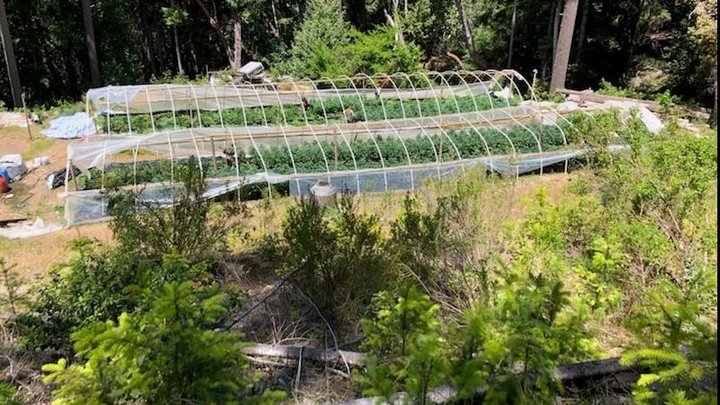
On May 25, 2021, deputies with the Humboldt County Sheriff’s Office Marijuana Enforcement Team (MET) served five search warrants to investigate illegal cannabis cultivation in Southern Humboldt County. The California Department of Fish and Wildlife, Humboldt County Department of Health and Human Services Environmental Health - HazMat Unit, Humboldt County Code Enforcement, CAL FIRE and the California State Water Resources Control Board assisted in the service of the warrants.
Five parcels were investigated during the service of the warrants. The parcels did not possess the required county permit and state license to cultivate cannabis commercially.
During the service of the warrants, deputies eradicated approximately 21,028 growing cannabis plants. Deputies seized and destroyed over 40 pounds of cannabis bud. Deputies also located and seized one firearm.
Assisting agencies found the following violations:
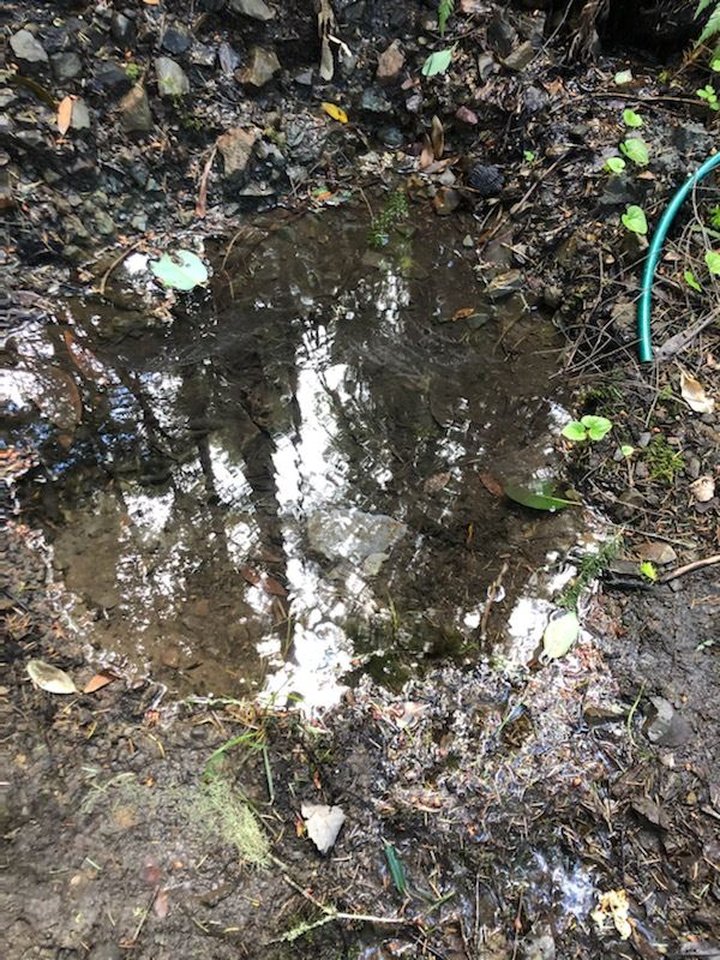
Six water diversion violations (up to $8,000 fine per day, per violation)
Sixteen depositing trash in or near a waterway violations (up to $20,000 fine per day, per violation)
Additional violations with civil fines are expected to be filed by the assisting agencies.
No arrests were made during the service of the warrant. The case will be forwarded to the Humboldt County District Attorney’s Office for review.
Anyone with information about this case or related criminal activity is encouraged to call the Humboldt County Sheriff’s Office at (707) 445-7251 or the Sheriff’s Office Crime Tip line at (707) 268-2539.
Manuel
Augusto Morais, age 88, passed away peacefully on Friday, May 21,
2021, at home surrounded by his loving family.
He
was born April 10, 1933, in Faial, Azores, Portugal, to Jose Joaquim
Morais and Rosa Augusta Da Silva. He is survived by his wife, Maria
Rita Morais of McKinleyville; daughter and son-in-law, Lenda M. Leal
and Francisco Paulino Leal of McKinleyville; daughter and son-in-law,
Helena M. Ward and Donald D. Ward of Merriam Woods Village, Missouri
; Granddaughter, Rachael M. Leal of McKinleyville California;
Grandson and wife, Manuel M. Leal and Kelly P. Leal of McKinleyville;
Granddaughter and husband, Andrea M. Goodwin and Rocky W. Goodwin of
McKinleyville; and Grandson Anthony M. Leal of McKinleyville; Great
Grandchildren, Jacob L. Goodwin, Marianna P. Leal, Ethan L. Goodwin,
Damian T. Leal, Manuel P. Leal and Vincent R. Leal; former
son-in-law, Antonio T. Leal and one sister, Elvira Da Rosa of Canada.
He was predeceased by his brother Jose Morais; and three sisters,
Fernanda Terra, Adelina Serpa and Helena Alves.
Manuel
was an adventurous and brave man. In 1959 he and his pregnant wife
ventured from their home in the Azores, Portugal, seeking the
American Dream. He began his work life in the sawmill pulling green
chain and instantly became known and respected for his work ethic,
tireless strength and energy. His ambition drove him to explore an
opportunity that would enable him to work for himself and create a
life and legacy for his family. Bricklayer by trade, he ended up in
the dairy and cattle business for over fifty years. His force of
nature enabled him to accomplish his dreams and provide for his
family for generations to come. Manuel was proud of his
accomplishments in life, but he never forgot his humble beginnings.
Manuel
was a proud member of the Portuguese community and his pride was
reflected in his support of traditional Portuguese religious
celebrations held annually at the Portuguese Hall in Arcata. His
support of the Portuguese Hall was appreciated by many. He was known
for his donations of beef from his cattle business to prepare the
meals served by members of the committees to the community at these
religious events. His generosity extended to individuals throughout
the Portuguese community and in his birthplace.
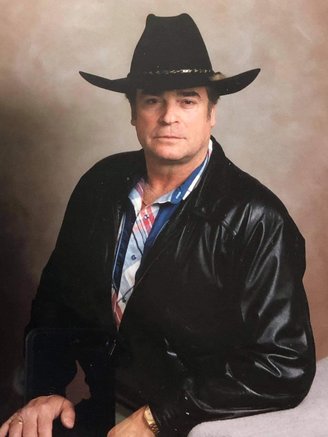
It
is with saddened hearts that we bid farewell to Manuel. He will be
remembered for his generosity, his love of family and friends, pride
of accomplishment and strength, as well as his big red pickup truck,
and let’s not forget that black cowboy hat, leather jacket and
boots.
Funeral
services, including a rosary, will be held at 1 p.m., Thursday, May
27, 2021, at St. Mary’s Catholic Church in Arcata, for those who
wish to attend. Interment will be in St. Mary’s Catholic Cemetery
immediately following the church services.
###
The obituary above was submitted on behalf of Manuel Morais’s loved ones. The Lost Coast Outpost runs obituaries of Humboldt County residents at no charge. See guidelines here.