

Newsom, Lawmakers Agree to $600 Stimulus Checks Plus Boost for Undocumented Workers
Jackie Botts / Thursday, Feb. 18, 2021 @ 7:28 a.m. / Sacramento
As Congress hammers out President Joe Biden’s $1.9 trillion stimulus package, California has worked out its own plan to get more cash into the hands of struggling Californians, particularly undocumented families left out of federal assistance.
After weeks of public hearings and closed-door negotiations, Gov. Gavin Newsom, Senate leader Toni G. Atkins and Assembly Speaker Anthony Rendon today announced $600 one-time payments to households receiving the state’s earned income tax credit, along with an extra $600 for undocumented taxpayers earning less than $75,000 who were ineligible for previous federal stimulus payments and other assistance for low-income residents.
The deal is a compromise version of Newsom’s Golden State Stimulus package and would help an estimated 5.7 million Californians. It now needs formal approval in the state Legislature as part of a $9.6 billion California economic stimulus package aimed at helping workers and small businesses. A vote could come as soon as Monday.
“People are hungry and hurting,” Atkins, a San Diego Democrat, said in a statement. “I’m proud we were able to come together to get Californians some needed relief.”
Under Newsom’s original $2.4 billion proposal, California would have sent $600 payments to the families of approximately 4 million workers with annual incomes below $30,000, including some undocumented workers. But some advocates and lawmakers argued that the money would be better spent on filling gaps in federal relief, rather than trying to jumpstart the economy. Instead, they pushed for two alternatives that would send much larger cash payments payments to California’s nearly one in 10 workers who are undocumented.
Today’s $3.8 billion Golden State Stimulus deal took those concerns into account. California will now send $600 tax rebates out to 3.8 million workers who made less than $30,000 last year. On top of that, an estimated 575,000 undocumented workers who make up to $75,000 a year will get an extra $600, in some cases bringing their total aid to $1,200.
Grants of $600 will also go out to 405,000 very low-income families with children enrolled in CalWorks, as well as 1.2 million elderly, blind and disabled recipients of Supplemental Security Income or the state’s Cash Assistance Program for Immigrants.
Sending out more cash
California’s coffers have grown since Newsom’s January proposal, likely increasing lawmakers’ appetite to send out more cash. The state now expects $10.3 billion more in revenue than was projected in January, driven by the pandemic gains of the state’s wealthiest residents.
Sending thousands in relief to undocumented immigrants would be a political nonstarter in most other parts of the country. But not in California, which has used its growing Democratic super majority of legislators — of which one in four are Latino — to break economic barriers for those without legal status, granting them driver’s licenses, sending them low-income tax refunds, and expanding health care for undocumented children and young adults.
“I think about my community and the 2 million people across the state who have been left out of any type of assistance,” said Assemblymember Wendy Carrillo, a Democrat from Los Angeles who was formally undocumented herself, in a hearing on the proposal.
Ineligible for federal aid
Undocumented Californians, many who work in industries ravaged both by pandemic closures and the coronavirus itself, don’t qualify for federal stimulus payments and unemployment benefits. They are also largely ineligible for other safety net benefits, like food stamps. Newsom created a program to send $500 to undocumented immigrants last spring, but there was only enough money for about 150,000 people.
Over the summer, Newsom also created Housing for the Harvest to provide hotel rooms for farmworkers who can’t safely quarantine at home. But as of late January, just 119 rooms had been reserved. Earlier today Newsom acknowledged that the program has been “underutilized.” The early action deal doubles down on the program, investing $24 million in financial assistance and services for farmworkers.
Newsom’s stimulus will act like a boost to the California’s Earned Income Tax Credit, which is already available to undocumented workers who file taxes with an Individual Taxpayer Identification Number, thanks to a new law passed last year.
During legislative hearings, the nonpartisan Legislative Analyst’s Office recommended sending $1,800 payments just to the low-income ITIN filers, cutting the plan’s price tag to under $1 billion. Then distribute the remaining funds to the approximately half of undocumented workers who don’t have ITINS or other very low-income Californians.
Target aid to undocumented
Fiscal and policy analyst Chas Alamo said Newsom’s $2.4 billion proposal was too small to stimulate California’s $3.1 trillion economy. By contrast, he noted Californians received about $4 billion in unemployment benefits each week during 2020.
The LAO alternative had gained support from a group of 17 Assembly Democrats.
“We must continue to work together to address the void created by years of inaction by the federal government that has left our undocumented worker population in the cold, without any viable economic support to survive this pandemic,” the lawmakers wrote in a letter to the budget committee.
Meanwhile, a coalition of pro-immigrant and anti-poverty advocacy groups had called for lawmakers to build immigrant relief on top of Newsom’s original proposal: For most workers, they wanted to keep the $600 tax credits. For households making less than $50,000 last year that file taxes with ITINS, they asked California to send $1,200 per parent and child.
The compromise with Newsom was less. Advocates applauded lawmakers for sending extra help to undocumented immigrants, but said it didn’t go far enough.
“With a multi-billion dollar surplus we should be creating a real California for All,” said Sasha Feldstein, economic justice policy manager at the California Immigrant Policy Center. “And that means filling in all of the gaps left by exclusionary federal relief efforts, not just pieces.”
###
This article is part of the California Divide, a collaboration among newsrooms examining income inequality and economic survival in California.
CALmatters.org is a nonprofit, nonpartisan media venture explaining California policies and politics.
BOOKED
Yesterday: 6 felonies, 8 misdemeanors, 0 infractions
JUDGED
Humboldt County Superior Court Calendar: Friday, Sept. 18
CHP REPORTS
366-377 Benbow Dr (HM office): Trfc Collision-Unkn Inj
ELSEWHERE
RHBB: CDPH Notifying Public of Measles Exposure Across Multiple Counties Involving Train and Bus Passenger
RHBB: Bid Now: Humboldt County Department of Public Works Auctions Off Surplus Property
RHBB: Major roadwork scheduled Friday, September 18 through Thursday, September 24
Governor’s Office: What they are saying: California leaders praise Governor Newsom’s democracy defending action ahead of November elections
OBITUARY: Marlene Lois Hrdina, 1937-2021
LoCO Staff / Thursday, Feb. 18, 2021 @ 6:56 a.m. / Obits
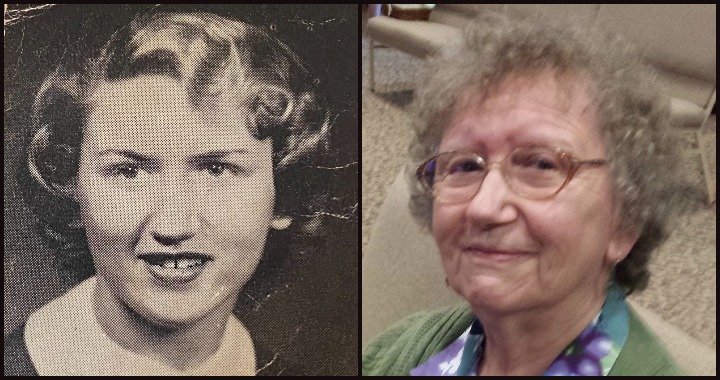
Marlene Lois Hrdina peacefully stepped into the arms of her Lord and Savior on February 8, 2021 in Eureka. She was 83 years old at the time of her passing.
Marlene was born on May 3, 1937 to Clarence and Wilhelmina (Billie) England. She graduated from Eureka High School in 1955. In July of that year she was married to her lifelong sweetheart, John Charles Hrdina (Johnny), who she met while working at the Rialto theatre in Eureka. Marlene and Johnny had three children (Rick, Dennis, & Cindy) who they raised here in Humboldt County.
Marlene was a homemaker most of her life and was a very steady hand in managing her home while the kids were growing up. She was always positive and encouraging to her children. She worked at the General Hospital in Eureka for a little over 10 years in the dietary department. She was a member of Faith Center Church in Eureka and was a faithful attendee for well over 50 years. She developed many friendships over the years at Faith Center and volunteered in various capacities. In more recent years, Marlene and Johnny volunteered as greeters on Sunday mornings. She and Johnny thoroughly enjoyed attending couples retreats at Old Oak Ranch in Sonora early on and attending the Prime Timers group at Faith Center more recently.
Marlene was quick-witted and had a great sense of humor. She could hold her own and was able to take it and dish it out at the same time. She could be fun in that way.
Marlene is survived by her husband of 65 years John Hrdina, son Rick Hrdina and his wife Bonnie, son Dennis Hrdina and his wife Kay, son-in-law Kurt Harpe, and brother Carl England. She is also survived by her grandchildren Rebekah Kencke, Laurie Hrdina Shepherd, Jennifer Hrdina Mathieson, Rachel Hrdina, Michelle Buckingham, Audry Hrdina, Stacia Harpe, Zach Harpe, Lisa Harpe, and Julie Harpe as well as 17 great-grandchildren and numerous nephews and nieces.
Marlene is preceded in death by her parents, Clarence England & Wilhelmina England, brother Albert England, brother Clinton England & his wife Gloria England, sister-in-law Loretta England, sister Wilma Nevers (who she was very close to), brother-in-law Frank Nevers, and her close friend who was like a sister to her, Anita Ellingwood. She was also preceded in death by her beloved and precious daughter who she adored, Cynthia Harpe (Cindy).
A special thanks and deepest gratitude to the wonderful staff at Sea View Wellness & Rehabilitation Center for the care and compassion they displayed for Mom during her time there. They truly became Mom’s extended family.
I can do everything through Him who gives me strength. — Philippians 4:13
Those who hope in the Lord will renew their strength. They will soar on wings like eagles; they will run and not grow weary, they will walk and not be faint. — Isaiah 40:31
###
The obituary above was submitted on behalf of Marlene Hrdina’s loved ones. The Lost Coast Outpost runs obituaries of Humboldt County residents at no charge. See guidelines here.
OBITUARY: Mary Marie Carson, 1921-2020
LoCO Staff / Thursday, Feb. 18, 2021 @ 6:56 a.m. / Obits
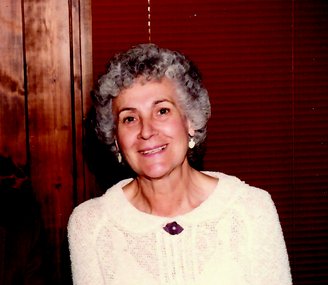
Mary
Marie Carson (Picchi) was born at home in Korbel on August 22, 1921,
and died 99 years later at her home in Arcata on November 9, 2020, of
natural causes. She was the daughter of Zelindo and Elena Picchi,
immigrants from Paganico, Italy, who came to America via Ellis Island
in 1920.
When she wasn’t in school at Arcata High, Mary was busy working at her aunt and uncle’s restaurant and hotel, the Buon Gusto (known as the Eagle House today). After high school, Mary and her sister, Lily, became owners of Bordens Ice Cream Parlor on the Arcata Plaza. Bordens became a hub of activity during difficult but memorable times: WWII air raid drills (Mary and her sister were air raid wardens), rationing, the loss of loved ones to the war.
During this time Mary met her “sailor boy,” Jack Carson, from Nashville, Tennessee, who was based at the navy air station in McKinleyville. Mary and Jack were married at St. Mary’s Church in 1945, and they welcomed their dear son, Mark, a few years later. Mary’s most creative times followed. Her artistic gifts flowed through her hands into the creations she sewed. Pattern, or no pattern, reconstructing, altering, designing — her talent was a marvel to behold. Following in the footsteps of her mother, Mary was the “go-to” seamstress for so many in Arcata. Wedding gowns were a particular specialty of hers.
Mary’s communities were always important to her and she devoted many hours supporting her neighborhood Sewing Club, as well as her parish, St. Mary’s Church, and its affiliates: St. Mary’s Catholic School, Altar Society, Ladies Guild, and the Appennini Lodge. Saturday nights were set aside for dressing up “to the nines” for dinner and dancing at the Big Four Inn or the Deluxe Club, progressive dinners, birthday parties, poker games, and going to shows. Also important to Mary and her extended family was their cabin in Willow Creek, California, which provided memories for a lifetime. These were known as the “Glory Days.”
Mary and Jack were married for 65 years. After his passing, Mary continued to live in their home where she became the neighborhood grandmother to so many. She loved children and always had a full cookie jar and a bowl of candies to share with them. Her neighbors became her extended family and her kindness was rewarded through the love and the care they gave back to her, often in the form of homemade soups, Portuguese sweet bread, her favorite jello salad, breakfast casseroles, lemon squares, roast chicken, and Kahlua cake.
Mary is preceded in death by her parents, Zelindo and Elena Picchi; her mother-in-law, Gertrude Carson; sister and brother-in-law, Lily and Dick Boemker. She is survived by her son, Mark, daughter-in-law, Jane, and grandson, David; her niece, Dede, and her children, Jonathan (Noel), and Cristina (husband James and son Louis).
Special recognition goes to Dr. Senffner and his staff for decades of attention; Eleanor King and Jeri Nicholas for their years of loving care that allowed Mary to live in her home until her death; her niece, Dede, who loved cooking for her aunt and uncle; Fred Vanni, a forever friend; Mary’s neighborhood family.
Mary was loved by many and we miss her. To honor her memory, reach out to those you cherish, tell them you love them, and be kind to your neighbors.
Condolences may be emailed to: MaryCarsonFamily@gmail.com.
###
The obituary above was submitted on behalf of Mary Carson’s loved ones. The Lost Coast Outpost runs obituaries of Humboldt County residents at no charge. See guidelines here.
Driver of Stolen Car Crashes Into Another Car, Sending it Careening Into a Eureka Home, EPD Says; Suspect Tries, Fails to Flee on Foot
LoCO Staff / Wednesday, Feb. 17, 2021 @ 4:02 p.m. / Crime
###
From the Eureka Police Department:
On February 17, 2021, at about 12:04 p.m., officers with the Eureka Police Department responded to W Hawthorne and Albee Streets for the report of an injury traffic collision involving two vehicles and a residence.
The at fault driver was identified as 30-year-old Lance Adams of Eureka and was found to be driving a stolen vehicle. Adams attempted to flee on foot but was swiftly taken into custody by officers. Based on the investigation, it appears Adams was driving the stolen vehicle and collided with the victim’s vehicle in the intersection. The impact caused the stolen vehicle to strike a nearby residence.
Humboldt Bay Fire and City Ambulance responded and provided emergency medical care and transport to both Adams and the victim. Both drivers suffered moderate, non- life-threatening injuries. A dog was inside the victim vehicle and appeared uninjured.
Adams was placed under arrest for hit and run causing injury, DUI, possession of a stolen vehicle, and resisting arrest. Once medically cleared he is expected to be booked into the Humboldt County Correctional Facility.
Are Big Box Store Employees Being Vaccinated? What About Cannabis Workers? Humboldt County Health Officer Takes Media Questions
LoCO Staff / Wednesday, Feb. 17, 2021 @ 3:22 p.m. / COVID-19 and Humboldt
Earlier today, Dr. Ian Hoffman — Humboldt County’s health officer — took questions on the state of the pandemic. What of these reports that big box store employees and cannabis workers are getting vaccinated? Are we inching closer to moving out of the purple zone? What about reopening schools — any update?
All these questions and more. Video above, rough transcript below.
###
From the Lost Coast Outpost: Earlier in the week, a local woman reported on the Nextdoor app that her employer — Target — was told that hundreds of doses of vaccine became suddenly available on Friday, and that they were offered to Target employees. The woman said she got her shot at CVS because of this. Are you aware of this incident? If so, could you tell us how it came about, and how the decision was made to offer them to employees of that store?
The local partnership with CVS pharmacy is through the federal government and the Biden administration. The shipments come directly from the federal government to CVS, so public health locally is not involved. Also what we know about who they’re targeting for those clinics is based on their website and the information they have posted, which they’re targeting 65 years and older and Phase 1A healthcare workers again through that federal partnership program.
From the Lost Coast Outpost: Last week, Director Stephens stated in a media release: “No doses go to waste, so if you miss your appointment, your vaccine is given to someone else.” Who is it given to?
We hope that everyone shows up for their appointment. I think that’s a really important part of this question because we try to plan really meticulously these clinics. If someone doesn’t show up, we do have standby lists at least for public health and all the other partners are asked to create standby lists. Also lists of people who could come in at the last minute. Those are - we try as best we can to keep those within the tiers and age groups that are open currently. If it’s really an emergency situation, clinics are instructed to give it to anyone and not let those doses go to waste. So far in the county that we know of there’s only one vial that’s gone to waste and that was five doses and that was because of a freezer failure.
From the Lost Coast Outpost: Has the county considered creating a “standby” list for situations such as the ones above, or is the decision about whom to give the leftover vaccine left to individual vaccine providers? If the latter, is there any sort of transparency, or accountability, or oversight into whether those doses are distributed equitably, or to people in an appropriate tier?
I think we answered that in the last question..
From the Two Rivers Tribune: Humboldt County residents have not heard any more information on the variant strains since January; national news claim there are seven strains and more homegrown variants being identified, why has the county not provided more brief information in those regards?
We work closely with CZ Biohub in San Francisco to do our genomic sequencing and that’s been going on since last summer. We send periodically, when we have enough samples we send those down to get sequenced. That isn’t a daily thing like the testing, so it happens at different intervals and we haven’t had any updates since the last update was one of the reasons and if we do ever get updates that are of urgent regard we certainly will let everyone know. And we expect some updates in the near future on some of those samples that have been sent in the last few weeks.
From the Two Rivers Tribune: Is it too soon to project when the county may be considered to be reduced to a lower level in the Blueprint for a Healthy Economy table, and do you as a health official believe that we can maintain that status, why?
We received our current blueprint metric yesterday and things are looking better overall for the county. The case counts down, the test positivity rates down and we met the equity metric which is one of the key things for us to probably get out of the purple tier and into the red tier. So if things hold the way they’re looking for the last week for the current coming week with all of those things, we very likely will be in the red tier come next Tuesday when the next blueprint announcement comes out. I think we’re in a different place than we were the last time this happened in early January. At that time our case counts were very high overall. The case investigations were just becoming bigger and bigger each day that went by. We have noticed in the last few weeks that the number of investigations have gone down dramatically, so it feels like this time if we go into the red tier next week it’s going to stick.
From the North Coast Journal: You mentioned last week that Public Health will be doing outreach to the food and agricultural employment sectors as a means to interact more with local Spanish-speaking and Latinx populations. When will the outreach begin and for how long?
So this has already started. There’s a group called the Promotores network which is really a lot of different groups who work with the Spanish-speaking population in Humboldt County. It includes providers like Open Door, Paso a Paso, other organizations like Centro de Pueblo, LatinoNet and also Humboldt Area Foundation among others who work through that network in the Promotores group. So public health goes to those discussions and has been working on identifying what are the obstacles and barriers and what could be done to improve our ability to reach both reach the Latinx population and also deal with any concerns around vaccine hesitancy. The timeline is ongoing. It’s really - the vaccine efforts can go on for a long time, so we will continue that conversation and try to keep that door open. And also in terms of opening up more broadly for the vaccine effort that really comes down to vaccine availability. So as I said last week, if someone has an opportunity to get a vaccine now because they’re in an open tier based on their age or their occupation, we definitely encourage people to do that and when there’s enough vaccine we hope to hold more specific events for the Latino community and more specific outreach.
From the North Coast Journal: Will it be public health or a community organization be in charge of the outreach?
I think we covered that one.
From the North Coast Journal: Can you give us a few examples of how the outreach will work? Will public health solely be focusing on getting information to agriculture workers or will it be more of a “promotor” situation where Public Health will have workers available to answer any questions about access to healthcare coverage, COVID-19 testing, and vaccines?
Yeah, I think we covered most of that in the original question.
From the North Coast Journal: What does Public Health see as the goal for the outreach?
The goal for the outreach is again to really deal with any issues that might arise that could be barriers to getting certain populations in. And this isn’t only just with the Latinx population, this is a lot of different populations in Humboldt County. So what kind of barriers are there, both from a vaccine hesitancy point of view, to timing, people having time off of work, people who have to travel very long distances, people who are worried about the kinds of documentation that they might have to show; all of those are the sorts of things that we’re working with our local partners to try to come up with solutions and and make it easier for people to get vaccines.
From the North Coast Journal: Will the outreach be evaluated for effectiveness?
Yes. We constantly are trying to evaluate any public health program. We will do that with this as well. We’ve been watching certain penetration levels in different groups already through the CARE data - that’s the state database - and seeing how much penetration we get into certain age groups or certain populations in Humboldt County, which is one of the ways we know that we could be doing better with the Latinx community.
From the Redwood News: With Covid-19 variants appearing in Humboldt County, will wearing two masks improve the protection against Covid-19 and the variants? If we wear two masks, what types of masks should we wear? Are cloth masks still recommended or as effective as surgical masks at this point of the pandemic?
Two masks are certainly going to be better than one regardless of the type of mask it is. They double up the layers, they also create a tighter fit. Other things can be done to tighten the fit like putting a loop, an extra loop in the ear loop so that it tightens it up. A cloth mask or a surgical mask is better than a cloth mask, so if you have access to a surgical mask that you could put underneath your cloth mask it would improve the efficacy, but certainly two cloth masks are going to be better than than just one.
From the Redwood News: The California Department of Public Health says that when it comes to eligibility for a covid vaccine, cannabis industry employees are included in phase 1a for medicinal cannabis and phase 1b for growing, production, storage, and distribution. Considering the large cannabis industry here on the North Coast, can you explain what this means for us locally and where cannabis industry workers fit into the County’s vaccination plan?
We are following CDPH guidelines, so they fit in just as you said phase 1a for medicinal cannabis and phase 1b for growing production and storage and distribution. We haven’t yet reached out to food and agriculture and opened up to vaccination of that group yet because there hasn’t been enough supply, but again just like all the other groups in food and agriculture, cannabis industry is one that we’re start preparing for and we’ll be doing outreach in the future to to figure out ways to get folks in that industry and for vaccine.
From the North Coast News: Some high schools are opened to in-person instruction, with safety measures in place, like Fortuna High School, since they opened when the county was in a less restrictive tier. Other high schools, like Eureka High School, are not open because they remained closed when given the opportunity to reopen when the county was in a less restrictive tier. How is the decision to allow schools to remain open that already were open, but not allow any more to open? What kinds of factors are included for the state to decide this? Are things like transmission rates, case counts, or school population considered? Do you think this is a consistent way of monitoring the reopening of schools? And do you think it makes a significant difference in keeping students and teachers safe across the county?
A lot has changed around opening schools over the course of even the last month or so. The state has really ramped up its efforts to get schools open so there are a lot of new rules and regulations around the schools reopening. I think that the point in time when we were trying to limit reopening for schools that hadn’t already been open was also during case count surging and the surge statewide and so if it didn’t feel like the right time to be opening up schools that didn’t have that experience with setting up the kinds of things that need to happen like having a classroom that’s safe for kids to return to. We’re at a really different point now. We’re likely going into the red tier next week. Many schools are now looking at reopening that have not been open to this point. If we go into the red tier next week there are no more restrictions on opening any of those schools. And some of the new guidelines for K-6 do allow schools that were not open previously to open in the purple tier if case counts are lower. So I think we’re going to see a really big change in the coming weeks and months as more schools are able to open and hopefully decide to open. I think that the guidelines that are put forth by CDPH are good and have been shown to keep kids safe across the state. Many counties have been open throughout the pandemic for their schools and have had no transmission in those schools.
From the North Coast News: Are you concerned about businesses becoming fed up with a year of pandemic restrictions and staying open in defiance?
It’s certainly always a concern that public health has that these are very difficult things to follow and have had a massive impact on our economy. We certainly want to work with businesses to remain open to the safest degree that they can. I think that going forward being in a different place in the pandemic, we could see some changes from the state along the lines of what is allowed in the coming months.
From KMUD News: When will the vaccine become available for cannabis industry workers and others who qualify under food and agriculture?
As we mentioned earlier, the food and agriculture, we’re underway looking at that group and, but I don’t think it’s going to be open broadly for food and agriculture for at least a month or more.
From KMUD News: The New York Post recently released an article titled “California is letting medical Marijuana workers get COVID vaccine ahead of teachers.” Is this headline true locally? What can you share about this topic?
We’re open for teachers to get vaccinated currently and that’s now across the board. So all K-12 teachers anyone who works in a school is a support staff or volunteers there - and that also includes licensed child care facilities and anyone who works in those. So we have not opened up to marijuana workers more broadly and as far as the medical marijuana group, that has recently come down from CDPH and I don’t know that we’ve done any specific outreach to the medical marijuana industry here in Humboldt County.
From KMUD News: If a community member received their first dose with Pfizer and their second was a Moderna, will that be effective protection against the virus? Is there anything they should do?
Well what the CDC says is that you are covered, we don’t want this situation to happen it’s certainly not recommended. It should be reported to the CDC as an error and there’s a reporting system that the providers have to report anything like this through. As far as anything someone should do there if that happens to them specifically, you’re likely covered, but they do want to track this at a federal level so that we can gather data on it for the future.
From the Redheaded Blackbelt: The case numbers of those with COVID have been dropping. Can you tell us if the number of people getting tested for COVID has also dropped? For instance, can you give us an idea of how many tests were done yesterday when there were zero positive cases?
Yeah, the testing is definitely dropping. We know that it’s happening here locally, it’s happening statewide, it’s happening nationally. There are many reasons for that and some of which we’re just guessing at, but I think the main one is that we’re thinking is likely going on as people are getting tired of the pandemic. We have the capacity to still test broadly and I think it’s important that we continue to do so. Given the variants that are out there, that they could come back, there could be another surge in the coming months, continuing to get tested is extremely important. The zero positive cases was likely because of the holiday weekend and labs were closed and many medical practices were closed. I think more importantly pay attention to the sort of average case count over a period of time and if we look at our case positivity or case count per 100 000 it was as high as 26 back a month ago and now it’s down to under 10. So it’s really come a long way and that’s really what we pay attention to is that average case per hundred thousand that gives us the sense of the day-to-day.
From the Redheaded Blackbelt: Several readers have asked us about an outbreak at Timber Ridge Care Home in Eureka, Is it true? And if so, can you tell those readers why an outbreak at other nursing homes such as Grenada in December was announced to the community and this isn’t. Is there a number or percentage of those ill that leads to an announcement?
We work very closely with our skilled nursing facilities and our long-term care facilities. There are mandates from the state for testing and so anytime there’s a positive test in any of those facilities it results in what we call response testing where we test much more broadly and more frequently. The decision to make public any of those positive tests that are caught in a round of surveillance testing, that then leads to response testing that might catch other positives, is really up to that individual facility. So, when for instance we had the outbreak at Granada, we did work with them to discuss making that public. There’s no specific percentage or trigger, it’s more of a discussion with those individual facilities when the right time is to and how they would want public health to take the lead on that.
From the Redheaded Blackbelt: While vaccine appointments are taking place, what efforts are being made to collect demographic data similar to the testing data, such as ethnicity, age, zip code, gender, etc., in order to better track the equitable distribution of the vaccine rollout?
All that data is collected in the CARE system, which is a state based system for tracking vaccines. While early on in the vaccine effort there were definitely lags and delays in that data, it is much much better now. So we’ve been tracking that locally for the last few weeks and feeling that it is getting much better and as mentioned, we’ll be putting that up soon on the website and we will continue to use that internally to look at penetration into certain populations geographically and based on race and ethnicity.
From the Times-Standard: As the one-year anniversary of COVID-19 in Humboldt County approaches, are there any more details about the first case of COVID-19 reported in the county: What date was it confirmed? How did come to Humboldt County? Can Public Health explain the initial response to COVID-19 and how the virus spread once it was detected in the county?
Public health does not provide case-specific transformation information and that continues to be the case. The way that the virus was first detected is - this is the same story as it was everywhere - it came in with individuals who were traveling and it spread among the community over time. I think in Humboldt County, that really didn’t start happening in really large amounts until like the rest of California this last surge in December and January. Before that there were certainly cases and pockets where it would come in, but it wasn’t broad-scale community transmission until the winter months. Hopefully as we go into the spring and the trends that we’re seeing statewide and nationally hold here that we’ll see really a reduction in the spread. And then if that holds true, along with the vaccine things could look really different by the end of the summer and going into the next fall.
From the Times-Standard: When the COVID-19 pandemic hit the United States, panic swept the nation and misinformation ran rampant. Can you talk about how things have changed in the last year, from when COVID-19 was initially detected in Humboldt County to now?
Yeah we’ve all certainly learned a lot about pandemics and viruses and how they spread in the past year. I think that the response to this continues to evolve over time and our understanding of the vaccine and how it plays into that response will continue to evolve over the coming months and allow us to see at what point we can start to roll back some of these measures that have been in place for almost a year now. I think going forward, what we can look forward to in the pandemic response is when and where to roll back each of the measures that were put into place nearly a year ago.
From the Times-Standard: Target and other big box stores appear to be getting supplies of vaccines and are vaccinating some of their workers. Can you detail which retailers are receiving vaccines, how many they’re receiving and who those are to be administered to?
Again, CVS is getting it directly from the federal government, but we don’t have any more information about how many there are other than what’s on their website who they should be administering those to. Everyone else in the county gets it through public health with a small amount going to St. Joseph’s Hospital from Providence Saint Joseph’s larger network, called a multi-county entity. So anyone else in Humboldt County is who’s vaccinating is working directly with public health and should be following the public health guidelines of who’s to be vaccinated currently.
From the Times-Standard: Which populations, regardless of prioritization, are receiving vaccinations right now? What percentage of different sectors, such as teachers, cannabis workers and retail workers, have received at least one dose?
I don’t have specifics on some of the sectors. It’s not as easy to get that information. In terms of population we know that for the 75+ population, who was the original age based target, we’re approaching about 60% of those who’ve had at least one dose. In certain race and ethnicity groups like Native American, Native Alaskan groups, it was approaching about 17% of those have received at least one vaccine. In terms of going back to the worker groups, we really just know based on the feedback we’re getting from those groups when we feel like enough of those have been offered an appointment to move on to other groups. And that’s through a close working relationship with the organizations or employers who have worked with us to get those invitations out to each group.
Cannabis Equity Programs Aim to Repair Damage Done by the War on Drugs, But Who Most Deserves the Help?
Ryan Burns / Wednesday, Feb. 17, 2021 @ 2:41 p.m. / Cannabis , Local Government

Photo courtesy Humboldt County Growers Alliance, by Anda Ambrosini.
###
The County of Humboldt is preparing to hand out more than $1.2 million worth of services to local residents who’ve been impacted by the war on drugs — specifically, cannabis prohibition. Anyone who meets the eligibility requirements can apply for up to $10,000 in reimbursement for a range of services, including permitting and license fees, business development assistance, even loans and grants to set up solar electrical systems or build water storage capacity.
This infusion of capital into the region’s cannabis economy comes via the county’s Project Trellis Local Equity Program (Version 1.0), which got its funding from the state’s Bureau of Cannabis Control, plus local Measure S tax revenues.
It’s a not-insignificant windfall for the burgeoning legal weed industry, and it looks likely to be just the first in annually recurring waves of state and local money ushered in by Senate Bill 1294, the California Cannabis Equity Act of 2018. And it has sparked conversations within the industry about who is most deserving of the help and how the money can best be put to use.
In recent years the concept of equity has been trending, you might say, in the realms of politics, education, health care and more. (See recent stories on COVID-19 vaccine distribution, for example). Equity has become something of a buzzword, albeit a meaningful one that sparks conversations about such issues as diversity, representation and systemic oppression.
But what does “equity” mean in the context of cannabis? Does it differ depending on which community you’re in? Or the upbringing you had? Or your race and gender? Locals in the cannabis industry, county government and beyond have been grappling with such questions as they attempt to help level a playing field that’s been uneven for generations.
Under SB 1294, the specific criteria for issuing awards are developed by local jurisdictions. (We’ll get into how Humboldt County developed its criteria below.) But broadly speaking, the legislation is intended to address what its author, SoCal State Senator Steven Bradford, calls the “devastating impact[s]” and “long-term consequences” of cannabis prohibition.
That includes racial disparities in marijuana arrests and convictions. It also includes the trauma endured by Southern Humboldt families whose properties were raided by paramilitary forces during CAMP operations.
But should those two examples be given equal weight? How do you compare one person’s injustice to another’s in the quest for equity?
“It’s really hard because they’re not apples and apples,” Drew Barber, owner of East Mill Creek Farms, said in a recent phone interview. “Generally speaking, Humboldt County’s equity issues — and this is not without counterpoints — but it’s mostly Anglos who have, for one reason or another, chosen to participate either in this community or in the cannabis economy.”
“There’s no question, Humboldt County was adversely impacted by the war on drugs. … Having your home raided by the National Guard, kids taken away from their family — that’s a pretty big deal.”
—Drew Barber
Which isn’t to say that people here didn’t suffer from cannabis prohibition. “There’s no question, Humboldt County was adversely impacted by the war on drugs,” Barber said. “Nobody [living in SoHum] was unaffected by the low-flying helicopters over the years. Having your home raided by the National Guard, kids taken away from their family — that’s a pretty big deal.”
Barber believes reparations in the form of equity programs are appropriate for people who endured such experiences. “But when we look at the African American plight in cannabis [prohibition], it’s much longer-term and it’s much more targeted,” he said. “They don’t get to make a choice about their race.”
Black people are 3.6 times more likely than white people to be arrested for marijuana possession, despite similar usage rates, according to a 2020 data analysis from the ACLU.
“Native Americans also,” Barber added. “How can we stand here and talk about egregious things that happened to us over the last 30 years when they’ve suffered much more heinous and systematic trauma? … The argument is easily made: ‘Hey, you wouldn’t have this land to grow weed on if you didn’t steal it.’ Which is 100 percent true.”
###
Should cannabis equity programs attempt to address such historical injustices? Or should the focus be more narrow?
Andelain Roy was born and raised on a cannabis farm, and one of her earliest memories is the deafening sound of CAMP helicopters descending on her family’s SoHum property. As troops with machine guns rappelled out of the thundering aircraft, Roy remembers an adult swooping her up and running for cover.
“This person was holding me, covering my mouth, and I could feel his heart pounding,” Roy said. “Here we are, just a family. I mean, yeah, we had several cannabis plants in the garden, but it was mostly orchards.” The experience was formative, she said. “It was terrifying.”
As kids, Roy and her closest friends adopted a “don’t ask, don’t tell” policy regarding their parents’ livelihoods, and this culture of secrecy left gaps in their understanding of the industry.
“I feel legacy cultivators weren’t really able to develop their business skills,” Roy said. The highly regulated legal market involves countless tasks that her parents never had to deal with, like getting licenses and permits from myriad government agencies and navigating metrc, the state’s online track-and-trace program. “There’s a big need for education on even how to start your business and run it compliantly,” Roy said.
But like Barber, Roy is aware that others have faced more significant barriers to success in the industry.
“Unfortunately, I feel like the Black and brown community, they were affected a lot more than someone like me,” she said. “I’m white, so it’s much easier for me to function in the world. I have a lot of conversations with my community, which is mostly Caucasian: ‘Is this fair? Is this right? Should I even apply [for equity funding] as somebody with my privilege?’”
As a woman, though, she has faced discrimination in the industry — men who’ve dismissed her as a “hippie with flower crowns” rather than the competent professional she is. (Roy owns DewPoint Farms, a licensed cultivation operation near Honeydew.) Her gender and her upbringing qualify Roy to apply for Humboldt County’s first round of equity funding.
“Do I deserve it?” she asked. “Yes, I think so.”
But does she deserve it more than, say, Alonzo Bradford? In a recent phone interview, Bradford told the Outpost he’s pretty sure he’s the only African American dispensary owner in Humboldt County. (He co-owns Dr. Greenthumbs in Myrtletown with Cypress Hill emcee B-Real.)
A second generation “legacy” farmer, Bradford (no relation to the Senator who authored SB 1294) came to Humboldt at the dawn of legalization because a friend of his weed-growing father had property for sale. Bradford said discrimination threw up numerous hurdles in his attempts to get established here. Some of them were due to the color of his skin.
“I would have to explain to people the experience I went through as 24-year-old African American from Los Angeles,” he said. “Like, when I told [prospective landlords] that I planned to open a dispensary legally, people said, ‘I don’t believe you’ or, ‘I’d rather not risk it,’” Bradford recalled.
He also faced discrimination for being an outsider — someone without connections in local government or a family name that goes back multiple generations in Humboldt.
“There’s not enough talk about the gatekeepers. … When it comes to being African American, you tell people your experience and they dismiss it. You’re constantly having to prove yourself.”
—Alonzo Bradford
“There’s not enough talk about the gatekeepers,” Bradford said. “When it comes to being African American, you tell people your experience and they dismiss it. You’re constantly having to prove yourself — to your landlord, to the county [government], to locals who feel like you can’t grow because you don’t have land that goes back generations.”
That’s another kind of privilege that should be factored into equity equations, Bradford said: land ownership. While plenty of Humboldt County residents got arrested and even jailed for growing cannabis, many of them retained ownership of their land, he noted. After getting busted they could just borrow some seeds from a neighbor and start up again. Meanwhile, Bradford said, Black people in the Bay Area and Southern California were serving hard time for selling the product grown in our hills.
“When we think of equity up here [in Humboldt], it shouldn’t be a Black or white thing,” Bradford said. “It should be [about] what’s fair for the community, what makes it right. It should give a leg up to those who didn’t have those opportunities.”
###
So how does the cannabis equity funding work here in Humboldt?
Version 1.0 of the county’s Local Equity Program is being administered by the Economic Development Department. The Outpost recently spoke with Scott Adair, that department’s director, and Peggy Murphy, an economic development specialist who’s overseeing Project Trellis, the county’s three-tiered cannabis support initiative. (The tiers include the equity program, a micro-grant program and a marketing program.)
Adair explained that the county’s eligibility criteria and list of services were developed in collaboration with the Humboldt Institute for Interdisciplinary Marijuana Research (HiiMR) and the California Center for Rural Policy (CCRP) at Humboldt State University. In 2019, those two research institutions released a joint study called the Humboldt County Equity Assessment, which includes a list of findings and recommendations based on “a data-informed look” at how cannabis prohibition impacted the community.
That report informed the eligibility requirements in the county’s cannabis local equity program manual. Some of the criteria are simple. For example, any woman, person of color or LGBTQ individual working in the industry (or even those who used to work in the industry) qualify. As do people in the industry who’ve been arrested and/or convicted of a non-violent weed offense, or who were subject to asset forfeiture due to a “cannabis-related event.”
Locals who’ve experienced “sexual assault, exploitation, domestic violence, and/or human trafficking” while working in the industry also qualify, as does anyone who became homeless as a result of marijuana enforcement. Other criteria are based on local poverty rates, time living in the county and — one of Bradford’s suggestions — operating a small-scale garden on property you don’t own.
Adair said the county’s program is not designed to address social equity writ large. “It’s more about the inequity that exists between some individuals who may face different levels of barriers to access, or who have greater leverage or privilege over others,” he said. “The equity program offers support for those who can’t overcome those barriers on their own.”
That support could come in the form of fee waivers or deferrals, technical assistance, employment skill training or a variety of other services. As noted above, eligible applicants can apply for up to $10,000 per service.
Humboldt County was proactive in developing its Local Equity Program. “I believe ours was the first completed [in the state],” Adair said, adding that the HiiMR and CCRP have gone on to help neighboring counties and other jurisdictions develop their own equity assessments.
Getting on the ball so quickly helped the county secure nearly $3.7 million in funding from the state, but it also locked the county into a contractual agreement with the Bureau of Cannabis Control. That means the eligibility criteria for this round are fairly rigid and largely dictated by the state’s Bureau of Cannabis Control, according to Adair.
But Murphy said the county has applied for another round of funding through the Governor’s Office of Business and Economic Development (GO-Biz), and hopefully that source funding will be available annually.
“Equity programs are evolving at the state and local level,” Murphy said. “We plan to continue to get community engagement and gather more data so we can improve our understanding of those affected populations.”
Some people working in the local cannabis industry have been critical of the county’s equity efforts thus far, and they have suggestions for how the system might be improved.
Timo Espinoza is a second-generation grower who came to Humboldt from San Francisco, where he’s been “equity verified,” meaning he has met the city’s criteria for its own cannabis equity program. The equity issues in the Bay Area are largely about gentrification, Espinoza said, noting that minorities and cannabis businesses alike have been pushed out by tech companies like Twitter.
Grassroots organizing efforts among cannabis advocacy groups in San Francisco had a major impact on the city’s equity program, and Espinoza said there should be similar efforts here in Humboldt.
“Only the community can voice their needs,” he said. “I understand to an extent what the needs are, but let’s be real. My trauma and my needs are different than Humboldt County’s.”
Espinoza, who’s Black Latino, is running a manufacturing and distribution facility in Arcata, with a delivery-retail component, and he said he’s faced discrimination locally.
“I’ve had the police called on me just for being on the property — my property,” he said. “I’ve been pulled over multiple times on the freeway coming up [from San Francisco].”
Yet he doesn’t believe equity, in this context, should be all about race. “I believe it’s not about demographics; it’s about how you’ve been affected by the war on drugs,” he said. “Humboldt County’s a special place. Nobody else had to deal with CAMP raids like you did.”
His idea for the equity program? “I would say let’s set up mental health services for people who do have PTSD from the helicopters,” he said.
Barber said the money would go farther if it could be awarded to businesses, co-ops or industry organizations such as the Humboldt County Growers Alliance, which could help more locals acquire the executive and business skills necessary to succeed in the regulated marketplace.
“My take is if you give someone a $10,000 grant to participate in a business that costs multiple hundreds of thousands of dollars … in community that’s already relatively impoverished, it doesn’t seem like recipe for success,” Barber said. “I wouldn’t recommend that someone get involved [in the industry] largely or in part because they got a $10,000 grant. … It seems like recipe for disaster for them.”
And by the same token, for someone who’s already fully licensed, up and running, $10,000 in services isn’t likely to make or break them, he said.
Barber is a member of an agricultural cooperative of cannabis cultivators called Uplift, and he argued that if co-ops like his were allowed to apply for cannabis equity funding, “you could get so much more bang for your buck that way.”
Alternatively, he argued that Humboldt’s cannabis community should work to improve its connections with urban counterparts in Oakland and San Francisco.
“Historically, over the last 35 to 40 years, we’ve kind of gotten into this trouble together,” Barber said. “Like, Humboldt grew the weed and our urban counterparts would sell it. The Anglo people in Humboldt got CAMP while the African American people in Oakland were constantly under threat of arrest … . We need to use this equity [initiative] not as competition, but we really need to work together to remedy some of those inequities.”
Working collaboratively could produce benefits throughout the cultivation and distribution chain, he said. “We got in it together, so let’s get out of it together.”
Natalynne DeLapp, executive director of the Humboldt County Growers Alliance, said the county simply needs to hear more from the local community. In an emailed statement, she said the HCGA encourages the county’s economic development department to “reach out to the community” and “commence countywide listening sessions to hear directly from those impacted by the war on drugs.”
###
Adair said that while the criteria for this first round of funding is fairly set in stone, and based mostly on requirements from the state, the county is by no means finished developing its cannabis equity program.
“There was admittedly a bit of rush” developing version 1.0 of this program, he said, so his department relied heavily on the county’s 2019 Cannabis Equity Assessment. “We were up against a tight timeframe. … But because we expect this [funding] to be annual, this can be a living program that we can continue to monitor and adjust annually moving forward.” Adair and his staff plan to hold town hall meetings, as they did during the development of Project Trellis’s micro-grant program.
“The industry is going to keep changing and equity will continue changing, so we don’t want an outdated program.”
—Economic Development Director Scott Adair
“The industry is going to keep changing and equity will continue changing, so we don’t want an outdated program,” Adair said. “We will continue to have discussions with the community. … Our challenge has been trying to get these programs developed quickly, which left us with a quandary: When do we stop trying to perfect the program and when to do we get the money out into the community?”
Ultimately, Adair said, the program will benefit the community and the industry, even if the conversations it stimulates are sometimes awkward.
“I think that this is a good problem to have,” he said. “It’s a great discussion, trying to figure out who will get [the benefits] and how to spend this money. … We’ll continue to refine it, and we will need stakeholders to give that feedback so we can, one, give that feedback to the state and, two, incorporate that into improvements in the program moving forward.”
Murphy said the county hopes to hear back from the state regarding the next round of funding by May. And in April or thereabouts, the Economic Development Department plans to release a request for proposals for a cannabis marketing initiative — the third upright in the county’s Project Trellis industry support program.
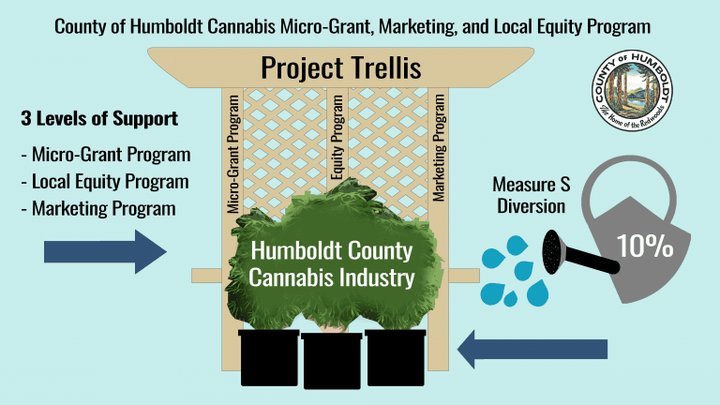
The money waters the weed, which grows tall and strong on the “trellis.” Graphic: County of Humboldt.
Eureka Man Arrested for Attempting to Bring a Loaded Gun Into the Humboldt County Courthouse
John Ross Ferrara / Wednesday, Feb. 17, 2021 @ 1:35 p.m. / Crime
A Eureka man was arrested for attempting to bring a loaded gun and an additional loaded magazine into the Humboldt County Courthouse yesterday.
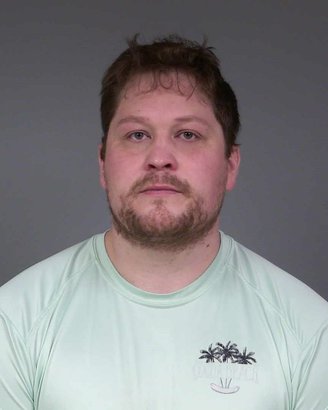
Jonathan Lyndon Palmer. | HCSO
Humboldt County Sheriff’s Office spokesperson Samantha Karges told the Outpost today that courthouse security discovered the weapon when 32-year-old Jonathan Lyndon Palmer passed his backpack through the courthouse X-ray machine at approximately 11:15 p.m.
“Palmer did have a concealed-carry weapons permit, however, that permit does not allow for the carrying of firearms into government buildings,” Karges said.
Palmer was booked into the Humboldt County Jail for possession of a gun inside a public building.
Palmer reportedly told officers that he was entering the courthouse to file paperwork on the third floor. His concealed-carry permit has subsequently been suspended.


