

After Court Ruling on Unpaid Traffic Tickets, State Lifts Suspensions of Half a Million Driver’s Licenses
Robert Lewis / Friday, Jan. 29, 2021 @ 7:40 a.m. / Sacramento
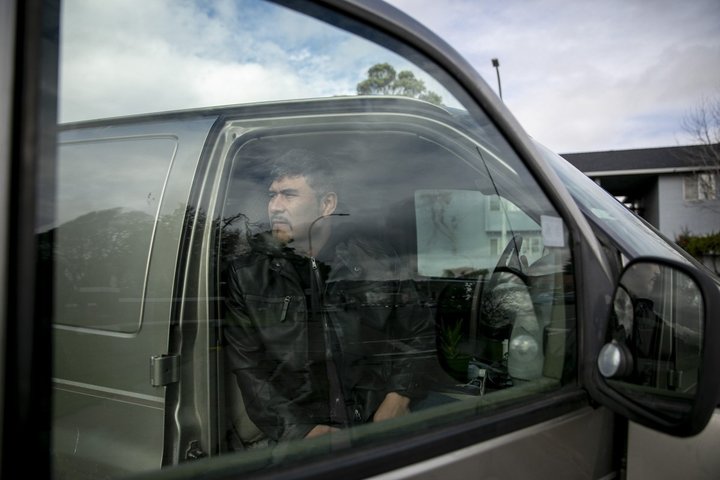
Guillermo Hernandez, who uses his van for his businesses, lost work when his license was suspended in 2013 for failure to pay a ticket. He sued the DMV along with several other Bay Area residents and won. Photo by Anne Wernikoff, CalMatters
###
More than 400,000 Californians had their driver’s licenses reinstated last month after an appeals court ruled that the state was illegally penalizing people who failed to appear in court on costly traffic tickets.
The lawsuit was part of a broader, ongoing effort by legal advocacy organizations to roll back California’s traffic fines and court fees, which they contend disproportionately impact low-income residents and communities of color.
More than three million traffic infraction citations are issued in California every year, averaging between $600 and $700 each.
California has among the highest traffic ticket penalties in the country due to a litany of state and county add-on fees. A ticket for running a red light — which has a base fine of $100 — actually costs nearly $500 because of state and local fees, and more than $800 if the driver misses a deadline to pay or appear in court.
The ruling “limits this blunt instrument of punishing people for not taking care of traffic tickets when in reality, for many Californians, traffic tickets are simply too expensive to take care of,” said Rebecca Miller, senior attorney at the Western Center on Law and Poverty, one of the organizations that sued the Department of Motor Vehicles.
“Like any state in the country, we have over-policing of lower-income and black and brown communities in California.”
Several Bay Area residents sued the DMV in 2016 when their licenses were suspended after they failed to pay a traffic ticket or appear in court. Last June, a three-judge panel in the First Appellate District ruled in their favor, deciding that the state inappropriately suspended the licenses of drivers without formal notices from traffic courts that their failure to appear was willful.
As a result, the DMV lifted suspensions on 555,000 driver’s licenses. Because some had additional suspensions for other reasons, about 426,000 motorists were eligible to have their licenses reinstated, according to the DMV.
“Like any state in the country, we have over-policing of lower-income and black and brown communities in California.”
— Rebecca Miller, senior attorney at the Western Center on Law and Poverty
Legal aid groups — the Western Center on Law and Poverty, Bay Area Legal Aid, the Lawyers’ Committee for Civil Rights of the San Francisco Bay Area and the East Bay Community Law Center — represented the plaintiffs.
The lead plaintiff, Guillermo Hernandez, of Richmond, had been ticketed in 2013 for not updating his driver’s license information and driving without a valid registration, court records show.
Hernandez said he tried to go to court to take care of the ticket but was told twice that clerks couldn’t find it in the system. It was only later when he tried to renew his license that he discovered there was a hold on it for more than $900 in fines and fees.
“At that time I just didn’t have the money. I didn’t have work. That’s a lot of money… How am I going to pay it?’” he said, speaking in Spanish.
Hernandez had to cut back on his work buying and selling secondhand goods around the area. “I was afraid they would grab me and make me pay more money for tickets,” he said.
Hernandez said he’s glad he saw the lawsuit through the appeals court even after his attorney helped him get onto a repayment plan and get his license back before the case concluded.
“I feel really proud that I did something for society,” he said.
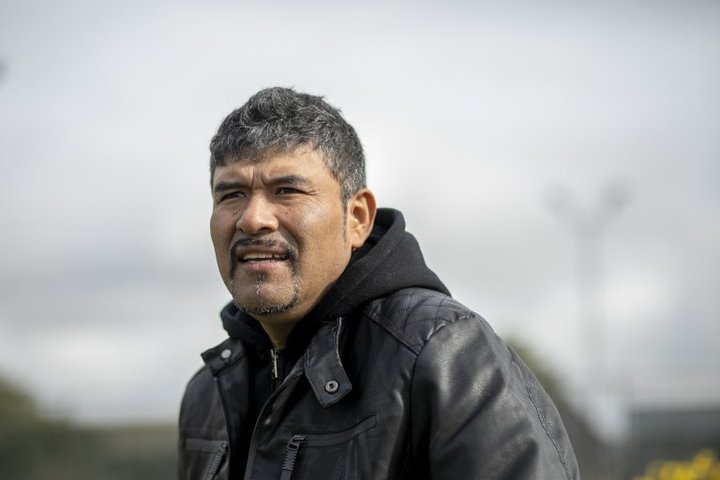
Richmond resident Guillermo Hernandez, the lead plaintiff in a 2016 case against the DMV, is photographed at Nicholl Park on Jan. 28, 2021. Hernandez had his license suspended after he was unable to pay a ticket and fees in 2013. Photo by Anne Wernikoff,
The appellate opinion is somewhat narrow and technical: By law the DMV is supposed to suspend a license if it receives a notice from a traffic court that a driver “willfully” violated a written promise to appear in court, according to the opinion. The DMV argued that when it receives notices a driver failed to appear in court that indicates that the actions were willful. The trial court agreed, but the Appeals Court found that the DMV needed a more formal notice that a driver broke the law.
The DMV said in a statement to CalMatters that from now on it “will only impose a (failure to appear) suspension based upon misdemeanor (failure to appear) notifications submitted by the courts.”
But attorneys involved in the case said it’s too soon to tell how the case will affect license suspensions going forward.
Fees tacked onto traffic fines
Economic justice advocates and some government officials are examining court fines and fees as part of a national reckoning over racial disparities in the justice system. A growing body of data suggests black and brown drivers are more likely to be pulled over than white motorists, and they often face staggering bills for traffic tickets.
That’s because state and local governments have tacked on numerous fees that have nothing to do with traffic violations, said Martin Hoshino, the state Judicial Council’s administrative director, who served on a national task force regarding fines, fees and bail practices.
“It became unnerving to think that courts had been turned into revenue centers, and judicial officers were in this really awkward position of perhaps knowing they were imposing a fine or fee for which their court operation was benefiting. I think that’s wrong,” Hoshino said.
Records and interviews show fees in criminal court, including for traffic violations, have funded an array of services and projects in California, including court construction, DNA collection, emergency medical air transport and sunken vessel recovery off the coast.
“When you put all of the decisions together and look at it holistically 30 years later, you find out you’ve created a regressive, harmful, at times self-defeating revenue system because you’re pushing people into debt traps,” Hoshino said.
In addition, “you’re not able to collect the debt,” he said. Uncollected debt on court fines and fees doubled over the past decade to roughly $10 billion in California.
“I pleaded to have that license so I could pay my bills and look for work. I was working with two temp agencies who wanted nothing to do with me when I explained the situation.”
— Stacey Kmetz, delivery driver
Stacey Kmetz knows about the burden of traffic ticket debt. The San Jose resident, who was out of work and sleeping on a friend’s couch, got a nearly $900 ticket in Marin County for driving without proof of insurance.
“I was really stuck. I asked everybody I knew for help,” Kmetz said.
When she didn’t appear in traffic court by the date on her citation, her license was suspended. Kmetz ultimately went to court and got a $78-a-month payment plan, records show. But the court did not notify the DMV to lift the suspension.
“I pleaded to have that license so I could pay my bills and look for work,” she said. “I was working with two temp agencies who wanted nothing to do with me when I explained the situation.”
Legal Aid attorneys stepped in and got the court to recall the failure-to-appear notification. Kmetz was able to get her license back in October after six months without it.
“It was terrible. The anxiety of the whole dilemma…it was awful,” she said, adding that she’s since used her license to work as a driver for some delivery apps.
Pilot program to avoid court appearances
Lawmakers and court officials have taken some recent steps: They have eliminated license suspensions for failing to pay traffic tickets and developed payment plans.
The court system also developed a pilot project that makes it easier for low-income motorists to request a traffic ticket fee reduction. A website called MyCitations allows motorists to request a reduction online. The courts can consider a driver’s income and other information on their ability to pay before deciding whether to lower a penalty.
The virtual ticket system was created so that motorists wouldn’t have to appear in person at a courthouse if they wanted to get their ticket debt reduced.
Many Californians can’t afford a day off work to plead their case to a judge. But when they don’t pay and don’t show up at court, the fines increase, their licenses can be suspended and if they are caught driving on a suspended license, they face criminal charges.
“It’s the criminalization of poverty,” said Asher Waite-Jones, staff attorney and clinical supervisor at the East Bay Community Law Center.
The pilot project includes seven counties. Tulare, Shasta and Ventura counties launched the first year, San Francisco and Santa Clara counties are in year two and Fresno and Monterey counties are launching now.
From April 2019 through Nov. 2020, nearly 7,000 drivers requested a fine and fee reduction through the pilot program. More than 85 percent of those drivers reported incomes below the poverty line and their debt was an average of 447 days outstanding, according to a recent report on the project the Judicial Council prepared for the legislature. Three quarters of the requests were approved; the penalty was reduced an average of $347 per ticket, according to the report.
Many Californians can’t afford a day off work to plead their case to a judge. But when they don’t pay and don’t show up at court, the fines increase, their licenses can be suspended and if they are caught driving on a suspended license, they face criminal charges.
The governor’s current budget proposal includes money to bring the pilot system statewide. Ongoing funding would increase to $58.4 million by 2024-25.
“It’s been really important during the pandemic because it gives people a way to request a discount without going into traffic court,” said Anne Stuhldreher, director of the financial justice project in the San Francisco treasurer’s office. “We should be able to hold people accountable without putting them in financial distress.”
Stuhldreher and legal service attorneys suggest a better fix is doing away with many of the fees. Last year, lawmakers eliminated a number of fees levied in criminal court. Advocates are pushing them to do the same with traffic tickets.
When courts do reduce a driver’s ticket penalty, the amount varies, depending on the court and judge; the reduction can be 50 percent in some courts and 80 percent in others.
“Fifty percent is not necessarily meaningful to many of my clients who are homeless or completely destitute,” said Waite-Jones, the East Bay Community Law Center attorney.
The court system administrator, Hoshino, recommends more substantial changes from lawmakers.
But he also worries about how California will make up the revenue for vital services if the fees are slashed. The state collected $1.4 billion in court fines and fees — all cases, not just traffic-related — in 2018-19.
“If you’re going to remove $1.4 billion for state and local programs, you’re either going to end up abolishing those programs or you’re going to have to find alternatives,” Hoshino said.
###
CALmatters.org is a nonprofit, nonpartisan media venture explaining California policies and politics.
BOOKED
Today: 9 felonies, 16 misdemeanors, 0 infractions
JUDGED
Humboldt County Superior Court Calendar: Today
CHP REPORTS
4400 Kings Valley Rd (HM office): Trfc Collision-1141 Enrt
30 W Coast Dr (HM office): Missing Indigenous
Sr36 / South Fork Mountain Rd (RD office): Trfc Collision-1141 Enrt
ELSEWHERE
KINS’s Talk Shop: Talkshop September 23rd, 2026 – John Ford
RHBB: Candlelight Vigil for Ronnie Franklin Set for Arcata Plaza Tonight
Governor’s Office: Governor Newsom announces world-leading experts to deliver on his AI executive order, including advancing creation of a “kill switch”
Governor’s Office: Governor Newsom announces key step forward in California plan to link carbon markets with Washington State
THAT CAMPING ORDINANCE, AGAIN: Eureka City Council to Once Again Tackle its Camping Ban Ordinance, Plus Receive an Update From Its Marketing Firm
Hank Sims / Friday, Jan. 29, 2021 @ 7:10 a.m. / Local Government
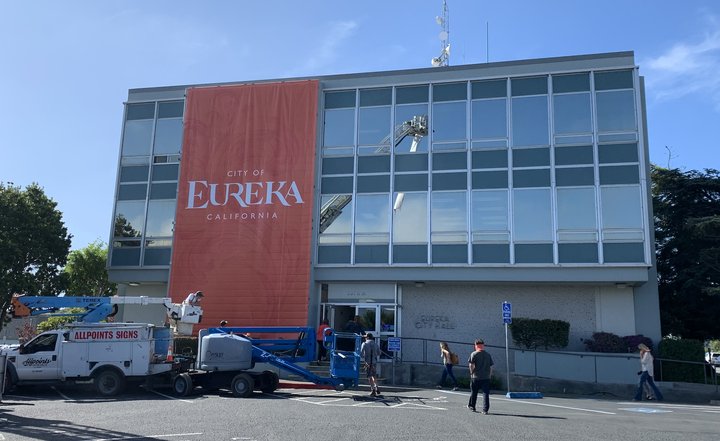
Eureka City Hall, with its then-new Eddy Alexander-authored branding unfurled. File photo: Andrew Goff.
###
At its Tuesday night meeting, the Eureka City Council will return to the oft-delayed and rerun camping ordinance that City government has taken up and rejiggered several times over the past few months. (See here and here and here for previous episodes).
What’s the nut of the ordinance? Basically, the point of it is to restrict camping in high-profile areas of the city while at the same time threading the legal needle laid down by the Ninth Circuit in the Martin v. City of Boise decision, which held that it was impermissible for local jurisdictions to criminalize the act of sleeping.
What would the ordinance do, if passed? A couple of things. First of all, it would ban all camping in certain well-defined areas of the city: Downtown/OldTown, Henderson Center, the waterfront and the city’s “Northern Gateway.” (See maps and text definitions of these areas at the links.) It would also ban all camping within 75 feet of a public trail, or at the city golf course, or at city parks, including Sequoia Park.
It would also ban camping on any public property during the daytime, unless it’s raining, snowing or below 40 degrees. Unless the weather is bad, people will have to pack up their tents in the morning.
Why is this legal, in light of Boise? In the most recent city staff report, City Attorney Bob Black argues that this is perfectly within the Ninth Circuit’s guidelines. For one, staff say, the city isn’t proposing to criminalize camping everywhere in the city – there are still publicly owned parcels of land where camping (at night) will be legal.
Where are those spots? The city takes care not to define them, but it says they are definitely out there. The staff report says that:
City staff have supplied the information that over 900 acres of City, State, and Federal public property, not counting streets, sidewalks and buildings, remain outside the prohibited places of the ordinance.
One such property, it appears, would be none other than the property formerly known as “the Devil’s Playground” near the Waterfront Trail, which was the site of a large homeless encampment for years until the city conducted mass evictions there in May 2016. Whatever happens there going forward, it clearly won’t be Devil’s Playground II – the new rules against camping and leaving up tents during the daytime will be the same as in the rest of the city.
(UPDATE, 9:15 a.m.: Actually, not that much of the area of the old Devil’s Playground encampment will be campable, City Manager Miles Slattery tells the Outpost this morning — some of it is in the waterfront restricted area, and more of it is marsh.)
The draft ordinance makes clear that the city’s goal in these programs is not punitive. If passed as it is currently drafted, this will be written right into city code.
The law enforcement response to a violation of this Section should prioritize the City of Eureka’s restorative justice and diversion programs in preference to citations for infractions when offenders are willing and able to participate in those programs.
###
Elsewhere on Tuesday night’s agenda, perhaps not coincidentally: The council will receive a report from City Manager Miles Slattery on the city’s Community Safety Engagement Team, a multidisciplinary and multidepartmental task force that works with the city’s homeless population, attempting to steer chronically homeless people into services and shelter. (Our Freddy Brewster wrote a great profile on the CSET team’s work a couple of years ago. You can find it here.)
Also, the council will hear an update from Eddy Alexander, the Virginia-based marketing firm hired to promote the city in the summer of 2019.
###
The Eureka City Council meets virtually on Tuesday night at 6 p.m. Full meeting agenda here. Instructions on how to view and participate below:
You can view the City Council meetings live on the City of Eureka’s website at www.ci.eureka.ca.gov or on Cable Channel 10. To view from the website, select the Watch City Council Meetings orange button from the home page. Members of the
Public who wish to speak and be heard during the Council meeting may submit their phone number and the name of the item that they would like to comment on by e-mail to cityclerk@ci.eureka.ca.gov or leave a message at 707.441.4175. The City Clerk will call the public member during the discussion of the item or the public member may request the Zoom meeting link to log into the meeting for comment.
At Roundtable Last Week, Humboldt Educators Discussed Why We’re Failing Native Kids and Detailed Some Changes That are Coming
Jacquelyn Opalach / Friday, Jan. 29, 2021 @ 7:05 a.m. / Education
PREVIOUSLY:
- ACLU: Humboldt County Education System Failing to Serve Native American Students
- ‘ERASURE’: A Blistering Report Highlights Disparate Education Outcomes for Native Students, Charts a Course Forward
- ‘A Curriculum That Empowers’: Virtual Roundtable Focuses on Need for Better Education Outcomes for Native Youth
- Governor Newsom Names Yurok Education Director to State Board of Education
###
Through partnerships between local tribes, Indigenous-led organizations and school districts, curriculum with more representation of American Indian history and culture is on its way to Humboldt’s schools. Leaders of these efforts met last week during a virtual roundtable, where speakers discussed updates on upcoming state and local initiatives aimed to better support Native students, and former students shared their experiences of going through Humboldt’s K-12 system as Native kids.
The meeting was the second virtual discussion addressing the ACLU Foundation of Northern California’s recent “failing grade” report, which found that Native students in Humboldt face harsher discipline, higher expulsion and suspension rates, and wider achievement gaps in educational outcomes than their non-Native peers. The report also highlighted a lack of health professional presence in local schools.
An area in need of improvement discussed at the first roundtable in December was Native American representation in curricula. “Culturally relevant curriculum that includes Indigenous worldviews” is “sorely lacking” in local education systems, Tedde Simon, Indigenous Justice Program Manager at the ACLU of Northern California, said with the release of the report. At the second discussion last week, Yurok Tribe Education Director and California State Board of Education member Jim McQuillen spoke about statewide initiatives taking place to boost American Indian representation in education.
McQuillen.
“It’s a time when we need to really have our kids learn about each other’s backgrounds and cultures. It’s desperately needed,” McQuillen said.
Upcoming in California curriculum is an ethnic studies program, which will eventually become a graduation requirement and will primarily focus on American Indian, Asian American, African American and Latino studies. McQuillen described some model lessons outlined in the American Indian studies curriculum, such as exploring the mascot controversy or expanding student understanding of tribal relationships with land. Integrating Indigenous land acknowledgement is a practice currently happening in classrooms elsewhere; it’s become policy to acknowledge land daily in some Canadian schools, McQuillen said. Another suggested lesson explores debates surrounding sacred site preservation, focusing on the Ohlone people of the Bay Area and traditional shell mounds that have existed there for centuries.
McQuillen also discussed a recent executive order signed by Governor Gavin Newsom, creating the Truth and Healing Council of tribal leaders, who will document the truthful history between the state of California and tribes. “That’s a wonderful potential relationship for curriculum for our students also,” McQuillen said.
Locally, the Yurok Tribe recently received a grant called “Accessing Choices in Education” from the US Department of Education. The tribe is calling the program created with this grant the “Native Educational Choices and Empowerment Program.” In partnership with local districts, the grant will allow the Yurok Tribe to help develop curriculum and resources for American Indian students, whatever those resources may be. “Sometimes they need tutoring, sometimes they need counseling, sometimes they need transportation,” McQuillen said.
Dyer.
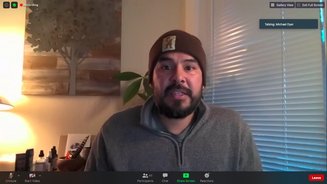
Goals for the grant include identifying existing services that serve Native students well within school districts, as well as looking into creating new services that might help, said Michael Dyer, who is managing the project. Energy from the grant will also go toward curriculum, with aim to implement “culturally sustaining, revitalizing pedagogies within the schools.”
The main goal is “empowering students,” Dyer said. “We want to make sure our students are comfortable in school, [and that] there’s a safe space for Native students in school.” Following a year-long planning process, implementation will begin next school year.
The Wiyot Tribe is also working on ways to help develop a curriculum of local American Indian history and culture, for educational uses in the classroom and also at their soon-to-be-opened cultural center in Old Town Eureka. They’ve assembled a curriculum development committee that meets monthly, Marnie Atkins, cultural center manager, explained.
“I personally see the act of even putting together a cultural center is about the continuance and survivance of Native people,” Atkins said. It is “a way for all of us to come together no matter your heritage, your race your ethnicity — but to acknowledge that on these lands there was a lot of genocide, and a lot of violence. But we can, you know, overcome this, if we work together as a community to stop that kind of negative behavior and rhetoric.”
Darrell Sherman, who is a Bear River Band of Rohnerville Rancheria councilmember, spoke at the forum to share his experience as a Native student who has been through local education systems. Noting that his overall experience at Loleta Elementary school was positive, the impacts of racism, from actions to comments, are lasting and damaging, Sherman said. “If we were able to change, that would be one of the first places — to start, you know, just stop with the innuendo, stop with the soft racist jokes like it’s not going to hurt anybody or, we’re just going to laugh it off. It’s not funny.”
Building youth up by expressing positive, encouraging expectations for their success might help students succeed in local schools and in higher education, Sherman said. “Countless times I’ve heard people like making a big deal about high school graduation — which it is a big deal — but then they’ll say ‘Eell, we didn’t expect you to get one,’” he said.
Humboldt State student and future teacher Clarrissa Readen, who is of Yurok and Karuk decent, shared her experiences at the Weitchpec Elementary School-Yurok Magnet Program (of the Klamath-Trinity Joint Unified School District), where Yurok culture and language are woven into curricula. She later attended Orleans Elementary, also a part of KTJUSD, where students could participate in cultural activities and weekly language lessons. The school had a yearly Indian Day, dedicated to learning dances, traditional card games, and how to make acorn soup.
“I wouldn’t be who I am without the cultural knowledge taught to me during school,” Readen said. “Students of color distance themselves from school if they don’t see faces, stories and cultures of their own in the curriculum. And that’s why we have such low rates of graduation, and people in higher education.”
The opportunities she had can be implemented elsewhere, Readen said. “I got lucky where I go to school but every school can change and add these things to help their Native students.”
OBITUARY: Wayne Frances Dennison, 1956-2021
LoCO Staff / Friday, Jan. 29, 2021 @ 6:56 a.m. / Obits
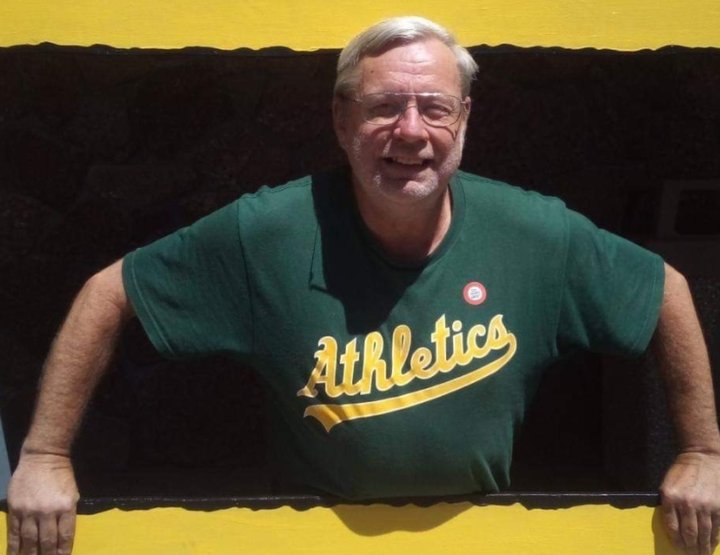
Wayne Frances Dennison was born and raised in Eureka and was a fourth-generation Eurekan. Wayne was well traveled, as every year the family took a vacation visiting national parks, historical sites and major league baseball games, where he once met Willie Mays. He attended Lincoln Elementary, Jacobs Jr. High, and graduated from Eureka High in 1974. His talents included playing trumpet with the marching band and with the Pig marching band at HSU. He received a degree from College of the Redwoods in accounting.
Later, he met and married his wife Jenny and they had a son, “Wally.” He loved to watch baseball and was a lifelong Crabs fan usually attending with his friend, David. Wayne worked at the Blue Lake Casino for 17 years and loved his co-workers. He had a “happy soul” and loved everyone.
He leaves behind his brother Paul Dennison and sister-in-law Janice Dennison, sister Dian Tucker and brother-in-law James Tucker, Jenny Dennison and son Wally. He is also survived by many nephews and nieces. COVID-19 took his life too soon. Due to the pandemic there will be no memorial service.
###
The obituary above was submitted on behalf of Wayne Dennison’s loved ones. The Lost Coast Outpost runs obituaries of Humboldt County residents at no charge. See guidelines here.
OBITUARY: Keyontae Lamar Taylor, 1990-2021
LoCO Staff / Friday, Jan. 29, 2021 @ 6:56 a.m. / Obits
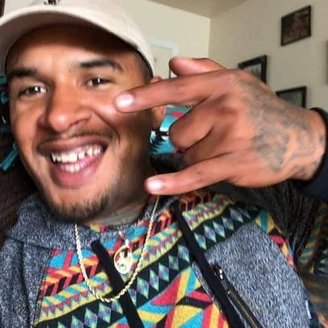
Keyontae Lamar Taylor
June 7, 1990 to January 3, 2021
Keyontae Lamar Taylor was born June 7th, 1990, in Sacramento, California. He later lived in Humboldt County, California with his Papa and Nana, where he spent the rest of his childhood.
Growing up, his love for the drum was apparent, because you could always find him by the drum at whatever pow-wow he was at. He went to Morris Elementary in McKinleyville, California. As a youth he played football for McKinleyville schools. If he wasn’t playing football, he was wrestling, playing basketball or even baseball. He loved to compete and was good at anything he decided to do.
He graduated from Dewey High school in Oakland, California. He studied kinesiology at Laney Community College in Oakland. He was an enrolled member of the Confederated Tribes of Siletz Oregon.
He loved to be involved in cultural events. His love to sing and dance was always apparent. Who could forget his “ninja turtle” regalia? He was so ambitious.
As an adult, he loved to travel. Life with him was always an exciting adventure. He loved to garden and was always so proud of his skill. He was a master jokester. He was always able to make you laugh.
Keyontae entered his rest on January 3rd, 2021 at 30 years old. He was laid to rest in Siletz Oregon on January 23rd next to his grandfather and Great grandmother. He was preceded in death by his grandfather, “Papa,” Keith Taylor; his great grandmother Agnes Baker Pilgrim. He leaves behind his mother Katrina Sims his sister Kimberly Lindquist his brothers Robert/Day-Day Zhontae/Scoopy Sims, his great-aunts Sonya Taylor, Nadine Martin, Ramona Hudson and aunts Brandy Ben Kibby, Stormy Taylor Whitehurst, Gina Sydathong, his uncle Jai Kibby He adored his nieces, Natalee Solis, Reylin Lindquist, Harmony Taylor and Eliyanna; and his nephew/cousin Jesse Widmark
His wings were ready, but our hearts were not. He will be missed dearly by anyone who had the opportunity to get to know him.
###
The obituary above was submitted on behalf of Keyontae Taylor’s loved ones. The Lost Coast Outpost runs obituaries of Humboldt County residents at no charge. See guidelines here.
OBITUARY: Janet Jones, 1955-2021
LoCO Staff / Friday, Jan. 29, 2021 @ 6:56 a.m. / Obits
###
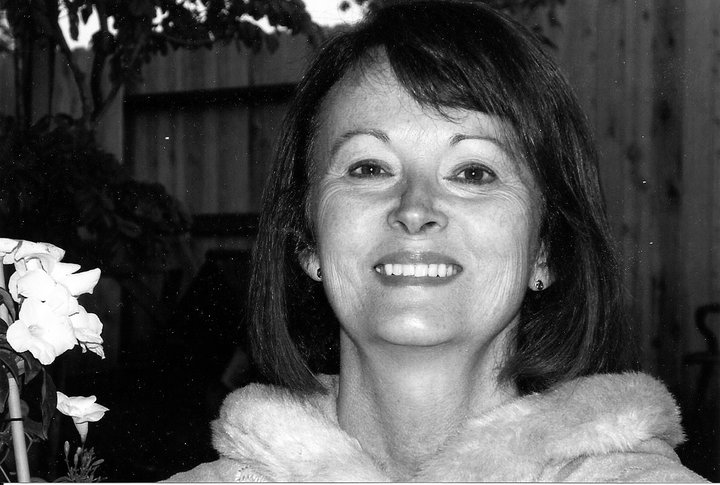
I’ve been trying to write the “normal” obituary for our mother, Janet Jones. She was born October 4, 1955, she passed January 21, 2021. She was sister to two brothers, mother to a daughter and then a son. But that’s the end of the normal.
We battle many things in life. We battle ourselves, ideas, people, and time. Time is eventually the winner. Our mom had many battles. She also fought along side of many who were battling. Some people have a God-given gift of just loving unconditionally, bringing forth a light to the darkest situations, even with a smile. This our mother had. No matter what had wounded you, she could fix it. Easily. Seamlessly.
She was a mother to so many, a sister, an aunt, a cousin, a best friend, a Nana, and a Granny goose. She was a patchwork quilt of many things. A blanket that could wrap around you, no matter the time or circumstance. She was the golden thread that held the pieces together, no matter how frayed and worn we were. And she will be so deeply missed. They say that grief is a window that opens on its own. The storm can come through, uninvited, but it will pass.
I will leave the window open, Mom. And we will remember you, when the sea touches and turns the stones. When the storms blow in, and rattle the windows. When the sun sets, and the last bits of light kiss the sea. We will be reminded of you, until we cross the path to eternity. Thank you for holding us all together, and loving us so deeply. Rest In peace our mother, our warrior, our protector and our best friend.
###
The obituary above was submitted on behalf of Janet Jones’s loved ones. The Lost Coast Outpost runs obituaries of Humboldt County residents at no charge. See guidelines here.
Local Nonprofit Will Plant Free Fruit Trees in Your Yard, As Long as You Promise to Share The Fruit
Stephanie McGeary / Thursday, Jan. 28, 2021 @ 6 p.m. / Community , Food
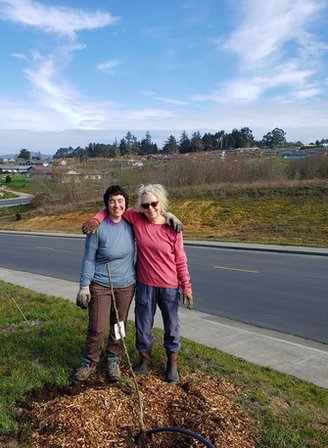
A fruit tree planting from last year | Image from Cooperation Humboldt’s website
If you have space in your yard, but maybe don’t have the time, money or motivation to plant your own fruit trees, Cooperation Humboldt can help you out by planting one (or several) for you! You only need to do two things in return: take care of the trees and promise to share the bounty with your community.
“Part of what we’re trying to do is shift our culture around resource and food sharing,” Cooperation Humboldt Food Team Coordinator Tamara McFarland told the Outpost in a recent phone interview. “We’re trying to shift people’s understanding of food from a commodity to a fundamental human right.”
The trees — which include a variety of apple, pear, asian pear and plum — are available for planting at any publicly accessible location, including private front yards, community centers, churches or schools. Cooperation Humboldt will take care of transporting and planting the trees, and recipients are responsible for watering and care.
Participants also have to sign an agreement saying that when the tree starts bearing fruit, they will share that fruit with anyone who wants some. Once the tree is fruiting — which will likely take about five years, McFarland said — Cooperation Humboldt will provide a sign to let folks know that they are welcome to pick the fruit.
Planting community fruit trees is just one of the nonprofit’s many programs, including little free pantries and free mini-gardens, that focus on promoting a solidarity economy — an economic system that aims to meet everyone’s needs without a focus on financial profit. This is the third year Cooperation Humboldt is planting free fruit trees, with 23 trees planted in 2019 and 57 planted last year. “This year we’re hoping for 100,” McFarland said.
So far the trees have been planted primarily around Arcata, Eureka and McKinleyville, but McFarland said that volunteers can come to other parts of Humboldt, as long as the location is somewhat close to town, since the idea is for the fruit to be accessible to passersby. (Sorry, no trips down mile-long driveways out in the sticks.) In the future, however, McFarland hopes to be able to expand the program to include the more remote parts of Humboldt.
Map of all the current fruit tree locations | From Cooperation Humboldt’s website
This year Cooperation Humboldt is also partnering with Two Feathers Native American Family Services, providing 20 fruit trees for the organization to make available to tribal communities.
Cooperation Humboldt already planted seven trees last weekend and will continue to plant through April. If you or your organization are interested in participating, you can fill out this online form and a volunteer will contact you. Cooperation Humboldt will then work with you to decide what type of tree(s) are best for you and to identify the best location for planting.
McFarland hopes to see a lot of participation in the program this year and says that her goal is to increase food security, promote environmental sustainability and help beautify the area by filling our local cities with edible plants.
“The goal is really just to flood the community with resources that can be available anytime,” McFarland told the Outpost. “We want to basically turn this region back into a life-sustaining food forest. We sometimes say ‘we’re recreating a food forest one yard at a time.’”


