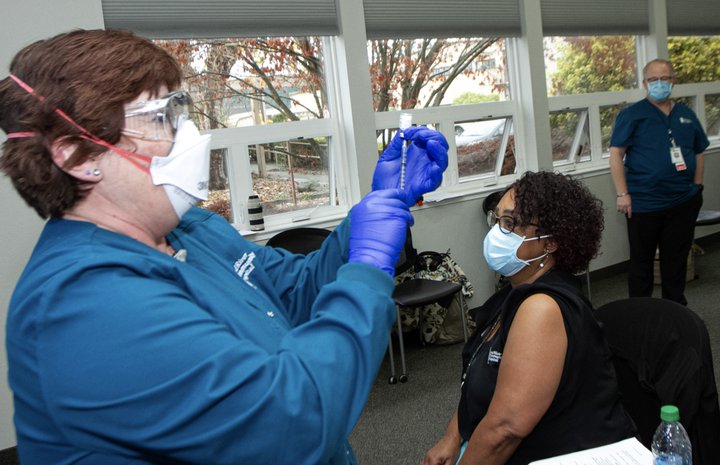
It’s happening. On Tuesday Humboldt health care workers were among the first people in the county to receive doses of the Pfizer-BioNTech’s COVID-19 vaccine. To commemorate the momentous occasion, the Humboldt County Joint Information Center sent along some footage of Yolanda Stevens, Occupational Health Supervisor at Mad River Community Hospital, becoming Humboldt’s first vaccine recipient. Watch above.
JIC’s statement on the occasion below:
Today at Mad River Community Hospital, Yolanda Stevens, Occupational Health Supervisor, received the first dose of the Pfizer-BioNTech COVID-19 vaccine, delivered by Tina Wood, Nurse Manager of Critical Care Services. Broader distribution of the Pfizer vaccine to Humboldt County hospitals will begin Wednesday, Dec. 16.
For more information about how early doses of the vaccine will be allocated in California, please view the state guidelines here: https://tinyurl.com/y4tpcfy2.
Press release from the Humboldt County Sheriff’s Office:
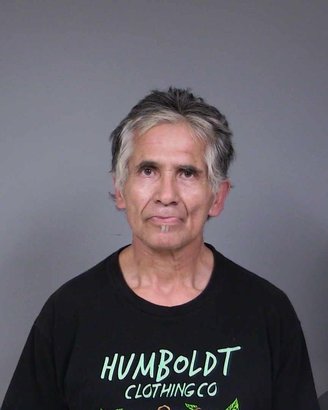
On Dec. 14, 2020, at about 12:30 p.m., Humboldt County Sheriff’s deputies were dispatched to State Highway 299, just west of Willow Creek, to assist the California Highway Patrol with a traffic stop.
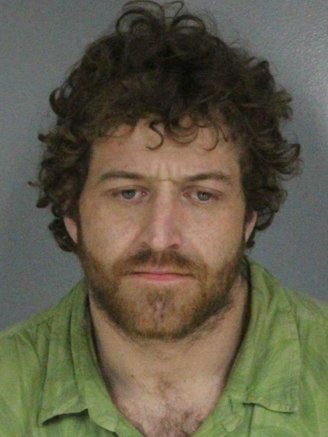
Upon arrival, deputies learned that the female driver was on probation with a search clause. Additionally, a passenger of the vehicle, 59-year-old David Curtis Hostler, was found to have an active warrant for his arrest.
During a search of the vehicle, deputies located materials consistent with packaging and sales of a controlled substance. During a search of Hostler incident to arrest, deputies located approximately 37 grams of heroin packaged for sales.
Hostler was booked into the Humboldt County Correctional Facility on his warrant for person prohibited in possession of ammunition (PC 30305(A)), in addition to fresh charges of possession of a controlled substance for sales (HS 11351) and transportation/sale of a controlled substance (HS 11352(a)).
Anyone with information about this case or related criminal activity is encouraged to call the Humboldt County Sheriff’s Office at (707) 445-7251 or the Sheriff’s Office Crime Tip line at (707) 268-2539.
“The time for compromises is over,” HACHR declared in a scathing press release issued the day after the special meeting. “We are going to do everything we can to get syringes to those who need them.”
As promised, in a new release issued Monday night, HACHR says starting Wednesday its staff will park at city limits to provide syringe pick-up to its clients, though it declined to give a specific location it would operate at. The Outpost reached out to HACHR Executive Director Lasara Firefox Allen to inquire where they planned to be. “We will find spots and move as needed,” they replied. “But the best way for participants to find out where we are will be to call the main number.”
Why does Allen anticipate needing to move? “We will move so as not to be a nuisance in any particular spot and in order to meet our participants.”
Read HACHR’s latest release below:
In an effort to serve our population to the best of our ability, and to reduce community vulnerability to and risk of future HIV and Hep C spikes, HACHR staff will park at city limits and offer syringe services via pick-up as per our authorization with California Department of Public Health (CDPH) beginning on December 16, 2020. We will also continue SEP services and outreach in Arcata and other parts of Humboldt County. Though it was not explicitly restricted in the resolution, HACHR will not be offering safer smoking kits or safer snorting kits (both CDPH-endorsed harm reduction tools) at the 3rd Street location, but will continue offering these supplies via the pick-up locations along with syringes, cookers, and all other safer use equipment.
All other HACHR services, including overdose prevention, medication assisted treatment (MAT) through Bright Heart Health, hygiene kits, wound care and disease prevention, and access to grab and go food and drinks, phone charging stations, warm clothing, and more will continue at 1522 3rd Street. We will continue to staff our 3rd Street location during our regular open hours —Monday 11-1 and Tuesday and Thursday 10-2— and will be serving our program participants a holiday meal on Christmas Eve, as usual.
To locate a pick-up spot or schedule syringe services outside the city of Eureka call HACHR’s direct line at (707) 407-6013 during open hours. For all other needs, please visit 1522 3rd Street.
Moving forward, we ask you, our community members and supporters, to continue putting pressure on the city council in order to restore SEP services within the City of Eureka. Write letters to the editor. Talk to your neighbors, friends and family members about harm reduction and how essential it is for the health of our community. We continue to be grateful for your support.
In the weeks leading up to Feb. 12, the day Ryan Anthony Tanner allegedly committed murder, Tanner physically attacked his girlfriend Vanessa Womack several times and threatened her with death, Womack testified Monday.
Womack, 44, had been in a rocky relationship with the 33-year-old Tanner for about two years before Tanner allegedly shot Jason Todd Garrett to death with an AK-47. She is not only the ex-girlfriend of an alleged murderer but the mother of Christopher Champagne, the only eyewitness in the case.
Tanner.
Under questioning by Deputy District Attorney Whitney Timm, a tearful Womack recounted several harrowing episodes, including a time when Tanner choked her into unconsciousness and a time when she dislocated her wrist trying to stop him from getting a gun from her truck console.
On Jan. 28 or 29, Womack had just returned home to Briceland after a trip to the East Coast. She took an early flight home, she testified, after receiving a phone call that left her worried about Tanner harming her son.
Arguing with Tanner at her home, Womack told him “I can’t do this (relationship) anymore. And he hurt me.”
Womack said Tanner “pulled me up by my hair and threw me on the ground a few times. And he choked me. I thought I was going to die.”
Timm asked her how long the choking lasted.
“I don’t know how long. I know I wet my pants.”
Regaining consciousness, Womack saw her truck keychain hanging from the edge of her bed. She grabbed the keys, ran barefoot to her truck outside and locked the doors.
“He jumped on the hood,” Womack recalled. She began driving, with Tanner still on the hood. But then she turned around and drove back home.
“Why?” Timm asked.
“I was just scared. I didn’t know what to do.”
This occurred about 2 a.m., Womack said, and she parked the truck outside her house. Tanner stayed on the hood until daylight.
“I opened the door and we went inside and went to bed,” Womack testified. Afterward, Tanner “was normal, like nothing was wrong.”
A couple of weeks before that incident, Womack was driving Tanner to his house about 10 miles from her home on Briceland Road.
“I don’t know what set him off,” Womack said, “but he was reaching for the console of my truck. That’s where I kept my gun.”
During their struggle, with Womack trying to keep the console closed and Tanner trying to open it, Womack dislocated her wrist. Eventually Tanner was able to get the gun, a .38-caliber revolver. He got out of the truck, walked around to the driver’s side and fired the gun “past me,” Womack recalled. She drove away.
Another trip taking Tanner home was even more terrifying. Womack said she had stopped her truck at “the call spot,” a place on the road where cellphone service is available, and placed a call to her son.
“As soon as we drove away, Ryan took the (truck) keys,” Womack said. He made her get into the passenger seat.
“He drove my truck to above his house, where the water tank is. He told me to get out.”
Womack refused and locked the doors. Tanner was pointing an AR-15 rifle at her and screaming ‘’Get out and die with honor!”
She finally told him she would get out and die with honor, ‘but I was all wet. I wanted to go home and change my clothes.”
Womack said that at some point during the incident, Tanner had drenched her with water or soda.
When Timm asked Womack why she never reported these incidents, Womack provided a response common with people abused by their partners.
“Well, I loved Ryan and I thought it would get better. I didn’t want him to get in trouble.”
After the water tank episode, Womack didn’t see Tanner until he showed up at her house a day or two after he allegedly murdered Garrett. Tanner was wearing a noose around his neck. He was hitting her sleeping son Christopher with another noose, saying he was going to kill him if he “told anybody.”
The third noose was for her, Womack said.
Tanner ordered mother and son to follow him to his house. They got into Womack’s truck and began following. At the time Womack was pregnant with Tanner’s child, and was so ill that she had to keep opening the truck door to vomit.
At some point she stopped, and she and her son argued about what to do. Champagne insisted Tanner would kill them if they didn’t drive to his house. Womack said, ‘’He’s going to kill us if we do. I can’t go up there.”
Tanner was arrested that day or the next. Womack later suffered a miscarriage.
Womack was expected to return to the witness stand today to be cross-examined by defense attorney Russ Clanton. Judge John Feeney is presiding over the preliminary hearing, which is held to determine whether there is enough evidence for the defendant to go to trial.
Illustration by Anne Wernikoff for CalMatters, iStock
###
What seemed like a Herculean task just months ago is now here: the COVID-19 vaccine.
For the next several weeks, vaccines will be available in limited amounts in California and across the nation — and only to high-risk individuals, with supply expected to ramp up in the months to come. Experts estimate vaccines will be available to the general public sometime in the spring.
Until then, step in line.
But the pandemic already has showcased deep inequalities, scams, greed, fraud and a system that favors the rich and famous. Will it be the same with the COVID-19 vaccine?
“We will be very aggressive in making sure that those with means, those with influence are not crowding out those that are most deserving of the vaccines,” Gov. Gavin Newsom said in a recent press briefing.
The state, he said, will be monitoring distribution very closely.
There is cause for concern, however. Early in the pandemic, when testing was in short supply and unavailable to most, the affluent were getting their hands on tests through membership-based medical concierge services, Reuters reported in March. When President Donald Trump and his personal attorney Rudy Giuliani contracted COVID-19, they had access to scarce antibody treatments. Giuliani, whose symptoms were reported as mild, later admitted that his “celebrity” status helped him access care possibly not available to others.
On Sunday, the New York Times reported that the Trump administration was planning to offer the vaccine to senior White House staff members, even though these first doses are reserved for health facilities and nursing homes. The president later took this back on Twitter and said he looked forward to receiving a vaccine at an “appropriate time.”
Even before Pfizer’s vaccine was authorized for use in the U.S., celebrities joked about having already received their shot, a nod to Hollywood’s privilege that allowed celebrities like Heidi Klum and Kris Jenner to get tested early in the pandemic. Meanwhile the National Hockey League had reportedly begun planning the private purchase of doses soon after Canada OK’d the Pfizer vaccine.
“We will be very aggressive in making sure that those with means, those with influence are not crowding out those that are most deserving of the vaccines.” — Gov. Gavin Newsom
Acknowledging a system that is not always fair, Newsom and other California leaders have promised equity in distributing what’s available.
On Monday, from Kaiser Permanente’s Los Angeles Medical Center where selected health workers got some of the first vaccines in California, Newsom said he is confident in the vaccine’s efficacy and safety — but would not cut in front of those who are “more deserving.”
“I look forward to taking this vaccine…but I’m not going to get in the way of any of the critical workers,” he said.
The plan is to first offer vaccines to health workers and nursing home residents, then to other essential workers and individuals at high risk of becoming ill. Newsom created a panel of experts to draft those plans and then a separate advisory group to offer input on who should go next and why. Those Californians who will follow health workers and nursing home residents have not yet been decided.
In an email, the California Department of Public Health said that to aid transparency, it will report data on the vaccine’s administration on a public dashboard that will be updated regularly.
“We will release as much data as possible while remaining fully in compliance with federal and state patient privacy laws,” a department spokesperson said.
Dr. Trudy Larson, dean of the School of Community Health Sciences at the University of Nevada, Reno, thinks the close monitoring will help guard against any significant fraud, especially in the first months. Every dose will have to be accounted for, she said.
States, for example, will be collecting information from people who get the vaccine. That data will be inputted into a state immunization registry.
“My sense is that this may be one way for them to be able to say ‘Good, we’re reaching the folks we’re supposed to get in Tier 1, now we can move to Tier 2,’ but it also might be a disincentive for people trying to get to the front of the line,” Larson said.
California’s public health department said that it will not share names, addresses or any identifiable information with the federal government. California’s immunization program does not collect social security numbers.
However, once distribution moves beyond the first phase and doses start to be sent directly to doctors and local pharmacies, the potential will mount for people to try to pull strings to get the valuable shots, experts said.
There will always be someone who tries to cheat the system — “It’s impossible for that not to happen,” said Dr. Belas Matyas, Solano County’s health officer. The question, he said, is whether it will happen enough to truly disrupt distribution. He hopes not.
But abusing the system isn’t just about people buying their way to the front of the line. There also is the possibility of vaccine theft and counterfeit shots. In 2004, during a flu vaccine shortage, federal officials seized thousands of doses imported illegally and headed to the black market. In 2009, during the swine flu pandemic, the U.S. Centers for Disease Control and Prevention reported a number of “distribution and marketing irregularities” involving the H1N1 vaccine.
Experts said the public should remember that vaccines will be free of charge, and should beware of anyone offering an early dose for payment.
Earlier this month, the International Criminal Police Organization (Interpol) issued an “orange notice” globally, warning countries that COVID-19 vaccines will likely be a prime target of organized crime, both online and in-person. It warned of theft and the possibility of people advertising, selling and administering fake vaccines.
Experts said the public should remember that vaccines will be free of charge, and should beware of anyone offering an early dose for payment. Also, ads promoting therapies, supplements and other products as COVID-19 cures are most likely scams. As of last month, the Federal Trade Commission had sent 330 warning letters to companies that made unsupported claims that their products helped against the virus.
The California Attorney General’s office deferred questions about potential fraud related to vaccines to the governor’s office. The state’s medical board, which oversees disciplinary action for physicians, said it will be reviewing complaints it receives regarding the inappropriate administration of vaccines, as it does with any other complaint.
###
CalMatters COVID-19 coverage, translation and distribution is supported by generous grants from the Blue Shield of California Foundation, the California Wellness Foundation and the California Health Care Foundation. CALmatters.org is a nonprofit, nonpartisan media venture explaining California policies and politics.
CalMatters talked to a handful of the 4.3 million Californians who chose to sit out this year’s election to find out why, given 17.8 million set a record by voting in November.
He Supported Bernie
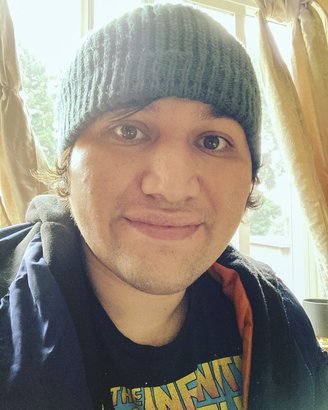
Sergio Berrueta, 28, is a student at Humboldt State. Here is how he explains his decision to not vote.
I didn’t vote this year because, frankly, I didn’t like the candidates for both parties. I wasn’t going to vote for Trump, but I also wasn’t going to vote for Biden. I’ve been registered as a Democrat since the first time I could vote in an election, and this time around I didn’t think Biden was fit enough as a candidate.
I was a Bernie Sanders supporter like many other college students.
Sergio Berrueta, a student a Humboldt State University. Photo courtesy of Sergio Berrueta
In the last election in 2016, I voted third party. It was the same, I didn’t like Clinton as an option and I voted third party because I was like, I believe in this other thing and I don’t think the system is really working out.
What I want to see in a politician is someone that is going to focus on the nation. It’s weird because you have one candidate saying let’s make America great again, but they’re not really doing what would make this place great.
What I want for a candidate is someone who is fighting for us. We need universal healthcare, we need access to proper public health, that is the biggest issue for me. Someone that is pro-choice, someone that wants to actually work on gun control because that has been a problem for years.
I am tired of constantly funding the military for endless war. I just want a candidate that is going to focus on this nation because we have been so focused on everything outside and we haven’t focused on what is going on here. We have problems internally and we should be growing, we shouldn’t be going backwards.
My mom has voted Democrat in every election. My grandpa, he flip-flops. In the last election, he voted for Clinton, in the election prior he voted for Romney, and in 2008 he voted for McCain. But he voted for Gore in 2000 and Kerry in 2004. He also voted for Reagan in the 80s, and I’m still mad about that — even though I wasn’t alive then.
My friend Patrick voted — or he better have, I don’t remember. Heidi, my partner, voted, she did by mail. I registered (in Humboldt County) and they mailed my ballot to an old address, but once again, I didn’t vote this election because of what I said.
It boiled down to this: No matter what happens, things are going to kind of stay the same. You gotta vote for the lesser of two evils and honestly — I hope I don’t sound weird or anything — but it came down to morals.
It Wouldn’t Have Mattered
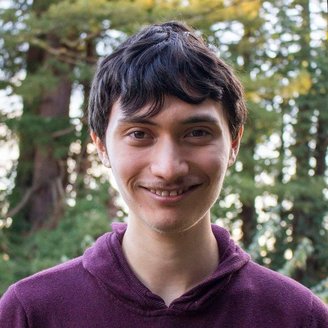
Gabe Kim is 21 and a student at Humboldt State. He said he didn’t think his vote would make a difference.
I didn’t vote.
There were a few things going on, one was laziness and another reason is that I realized, yeah sure, my vote matters a little bit, but it’s not going to affect the outcome of the election one way or the other.
Most of my friends and family voted and they probably did for Joe Biden considering the overwhelming amount of people that swing that way.
Gabe Kim, a student a Humboldt State University. Photo courtesy of Gabe Kim
I don’t feel ostracized in any way because I didn’t vote. You know, if I were to sum it up in one sentence, I just really didn’t feel like it. I didn’t feel like it mattered and that there is no reason to go out and expose myself to other people during a pandemic.
I kind of have been in a downward spiral this semester when it comes to a lot of things. I think the pandemic really has caused me to feel isolated because I can’t go to school and I can’t do this or that and I just figured, why go out and vote and expose myself. And I didn’t really understand the whole mail-in ballot thing.
So it was a number of things, I don’t think I could point to only one specific reason that caused me to not vote.
I mean, is it a bad thing I didn’t vote? Umm, maybe some people would say that. But for me, even when I did vote two years ago… I didn’t know who was doing what. I didn’t really do my research.
When I voted in 2018, there was a lot of stuff to go through. You weren’t just voting for the top dogs, you were also voting for things within the county and within the state and the different levels of government. I got overwhelmed and I mean, I don’t know exactly who is the best candidate for the position or whatever.
If I were to have voted, I would have voted for Joe Biden, but a lot of the stuff that politicians talk about are very broad and I don’t really involve myself in politics unless it directly affects me. Something like student loan debt or something like that would encourage me to go out and vote more.
If politicians were to come down to my level and do things that appeal to me, that directly affected me or related to me, not just broad things like whether or not we are going to be in the Paris Climate Agreement or the Iran Nuclear Deal.
These things matter and I understand that, but they’re not really affecting me.
###
This coverage is made possible through Votebeat, a nonpartisan reporting project covering local election integrity and voting access. In California, CalMatters is hosting the collaboration with the Fresno Bee, the Long Beach Post, and the UC Berkeley Graduate School of Journalism.
CALmatters.org is a nonprofit, nonpartisan media venture explaining California policies and politics.
A
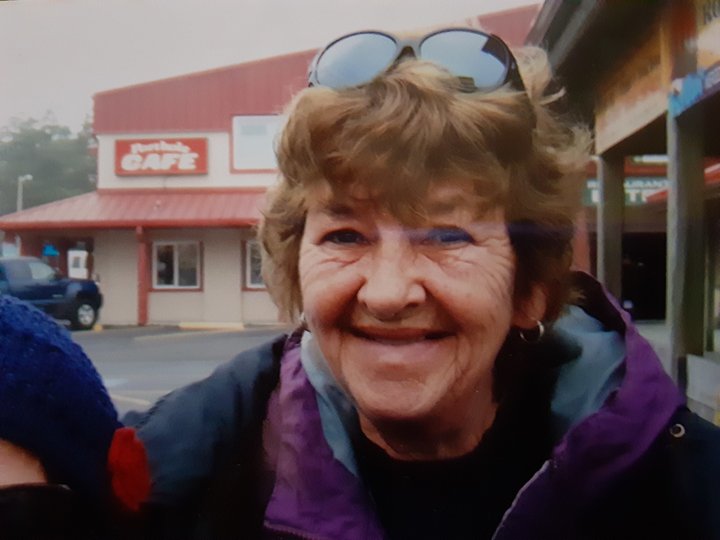
lovely lady known as Bev died on November 6, 2020. Bev was born
Beverly Ann Canfield to Charles and Mildridge Canfield in San Luis
Obispo 73 years ago. Bev grew up in Hoopa, where she attended
elementary school and graduated from Hoopa High. After high school
Bev and her friend Judy moved to Oregon to work at a company that
made mobile home vents. Bev had many fond memories with Judy. At one
point someone installed vents backwards and the work crew had to be
uninstalled and redo all the vents. They laugh now, but it wasn’t so
funny then. Sometimes at the end of the month when there wasn’t much
money between the two they would eat Saltines
and make the best of it.
Bev
later moved to Trinity County, got
married and divorced, then
married in 1971 to Jack Welch. They had daughter and a son, Nancy and
Christopher. During this time Jack and Bev bought a house in Arcata.
Bev was a wonderful stay-at-home mom, happily
devoted to keeping the house up and running and taking the kids to
any and all events that occurred and so much more.
About
1986 Bev started working at Jacoby Creek School, working in the
cafeteria serving lunches. That is where Bev bloomed. No longer was
she just known as Nancy and Chris’s mom. She loved the kids and gave
loads of hugs. Bev was also the crossing guard at Jacoby Creek
School. She watched as the crosswalk evolved over the years. The
hustle in bustle in the morning could make for a dangerous walk. Bev
took her job very seriously as a crossing guard and appreciated those
who respected that. There is a short video that was made a few years
ago called “Stop, Look and Listen.” Bev was honored to be a
part in the video. The video is on YouTube and is another
kid-friendly tool to encourage safety. Bev made so many wonderful
friends at JCS. Friends that fought for her to keep her job when
budget cuts were being taken. Friends that knew she was having a hard
time at home taking care of her elderly cantankerous mom. Friends
that were great to laugh with. Friends that when there was cake in
the staff room, would save her a piece. She loved working at Jacoby
Creek School.
I
was reminded that Bev also worked at the Bayside Market for a time
for Julie Moore. Forming a beautiful friendship. Bev would help Julie
start her business day.
Bev
worked quite a few years at Bayside Post Office. She sorted paper to
be recycled, cleaned the lobby to her standards, swept the outside
and much more. Whatever she was doing she was always up for a
friendly hello or wave .
Bev
absolutely love spending time with her family. Whether it was
camping, making Halloween costumes, hand-stitching quilts, gardening
or playing games. Anything that brought her favorite people together
would make her happy. Bev would have her two grandkids (Zach and
Riley) over for sleepovers. Often times they would do crafts, play
games and sometimes pull weeds and make a game out of that! Hanging
with the girls on our annual ladies camping trip was a thing she
looked forward to. A long weekend of playing games, swimming, telling
stories and jokes.
Bev
excelled as a painter. In the beginning she took some art classes in
oil. But, for the most part she was self-taught. She religiously
followed Bob Ross and Bill Alexander on PBS. If it didn’t move there
was a good chance she would paint it. That is what we always teased
her. Her most recent painting projects were done in acrylics, which
was her favorite. But she painted or tried at least once in most all
mediums. Bev painted on boots, rocks, canvas, pumpkins, flower pots
and faces etc.
Bev
loved making people happy. She, hated the act of bullying and
hospitals. In the end, she passed away in her own bed at home and on
her own terms. Exactly the way she wanted.
Bev
was preceded in death by her parents Mildridge
and Charles Canfield; siblings
Dorothy Denton, Betty Almond, Coralie Canfield, Rose McCoy, Robert
Canfield and James Canfield.; nieces
Shelly Denton and Doreena Ruth; nephew
Robby Canfield.
Beverly
Welch is
survived
by her husband
Jack Welch; children Nancy Sanders husband Bruce; son
Christopher Welch; grandson
Zachery Sanders and granddaughter
Riley Sanders; nieces
and nephews
Kelli Welch, Kevin Welch, Timothy Denton, Tammy Harris, Tracy Sloan,
Randy Coleman and Ronnie Coleman.
Bev’s
family would like to give a huge thank you to Delma Powell, Michael
Lindsey, Moms neighbor Carla, Lorre Hopson, Terri Scholz, John and
Julie Moore, Kris Croy and family, Bev’s Nurse Catina, Sonya Jackson
and Moms longtime friend and honorary family member, Mark Cofield.
Mark gave Bev and her family his love, his time and knowledge of
caregiving. We appreciate all of you so very much. I’m sure many more
who we have forgotten to mention. Thank you for all the love, cards,
and well wishes. You mattered. Celebration of life will be at a
unknown later date.
Mom,
we love you so very much. You will never be forgotten.
###
The obituary above was submitted on behalf of Bev Canfield’s loved ones. The Lost Coast Outpost runs obituaries of Humboldt County residents at no charge. See guidelines here.