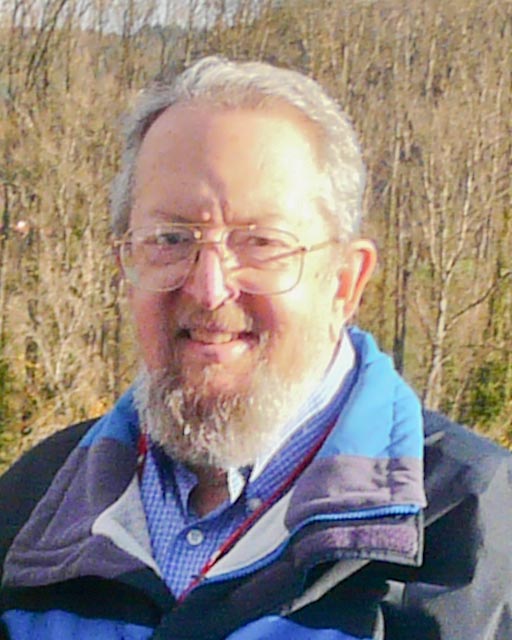
It is with great sadness and a heavy
heart we announce the unexpected passing of Sean Swanson on March 13,
2023. Sean was born on December 30, 1967 in Minneapolis, Minnesota to
parents Kathleen Weber and Sidney Swanson. Sean grew up in Laguna
Beach/Southern California, moved to Humboldt as a teen and started
Fortuna High, where he loved woodworking. He enjoyed surfing, the
beach, riding dirt bikes, tearing up the hills around Swain’s Flat
on his motorcycle, RC car racing and NASCAR. Sean worked in
construction building houses and also as a painter. One of his most
proud accomplishments was building and maintaining the Dennis Wendt
Memorial Trail located at the north end of Fortuna.
As an adult Sean had many struggles
and was headed down a bad path when an event happened that changed
his life. River Life Foundation (RLF)
began when Sean had hit rock bottom. As he walked along a river bar
contemplating ending his life, he heard cries for help. A man was
drowning and Sean, without hesitation, jumped in and saved him. At
that point, Sean found his purpose: helping and serving others. He
started RLF on July 5, 2008 with the promise to make a positive
difference in Fortuna. Under Sean’s direction, RLF held monthly
cleanups of homeless camps with 483,000 pounds of trash collected,
provided positive outreach to the vulnerable homeless population with
193 people assisted by reuniting them with family, onto a job or into
rehab and held community holiday meals. RLF’s mission was, and in
honor of Sean, still is to make a positive difference in the
community.
Sean is survived by his mom Kathleen
Weber, his children Sean Kelly Swanson, Jr. and Morgan Lee Swanson
(Adam) and grandson Adam Barnhart Jr., his children’s mother
Tiffany Brink, stepmother Debbie Swanson, half-sisters Amy Heltemes
and Heidi Barthel, half-brother Joshua Swanson. Sean is also survived
by his beloved fiancée Jenifer Larue and her daughter Lily Larue and
all his RLF “trashy homie” volunteers too numerous to name
individually.
Sean was preceded in death by his
father Sidney Swanson, step father George Weber, his dog Boscoe, and
special friends Dennis Wendt, Bob Wilson and Phil Leavitt.
A celebration of life is planned for
Saturday, April 22, 2023 from 1pm to 3pm at the Fortuna Veteran’s
Hall. Bring your stories and memories to share!
In lieu of flowers, donations can be
sent to the Christ Lutheran Church discretionary fund to 2132 Smith
Lane, Fortuna, CA 95540, memo: River Life Foundation.
###
The obituary above was submitted on behalf of Sean Swanson’s loved ones. The Lost Coast Outpost runs obituaries of Humboldt County residents at no charge. See guidelines here. Email news@lostcoastoutpost.com.
Press release from the District Attorney’s Office:
Today,
Judge Kelly Neel sentenced Eureka woman Daniella Patricia Moore (43
years) to serve 15 years to life in state prison for the murder of
19-year-old Hannah Hayhurst, and assault with a deadly weapon upon
Misty Miller. Family and friends of Ms. Hayhurst addressed Moore and
Judge Neel, sharing the anguish, loss and heartbreak caused by these
terrible crimes.
Moore.
On
July 4, 2019, Moore attacked Misty Miller causing significant wounds
to her head. Some hours later, Moore stabbed and disemboweled Hannah
Hayhurst, leaving her body near the foot of Hilfiker Lane in Eureka.
Moore then drove to Garberville, still dressed in clothing drenched
in Ms. Hayhurst’s blood.
Sheriff’s
deputies located her there in the early morning hours of July 5.
Moore appeared to be psychotic, a condition that evidence indicated
was brought on by use of illegal narcotics. Deputies initially
intended to detain Moore on a mental health hold pursuant to Welfare
and Institutions Code section 5150, but soon realized she was a
suspect in the Eureka Police Department’s (E.P.D.) investigation
into the suspected homicide of Ms. Hayhurst. They transferred her
into the custody of E.P.D. officers. Detective C. Watson led the
investigation into the murder, ultimately arresting Moore for the
murder of Ms. Hayhurst. The additional investigative efforts of
Detective R. Harpham led to evidence revealing Moore as the
previously unidentified assailant of Misty Miller.
The
District Attorney filed charges against Moore for her crimes against
both victims, including allegations that Moore had tortured Ms.
Hayhurst. The torture allegations made Moore eligible for a sentence
of life without the possibility of parole. Moore initially pled not
guilty by reason of insanity to the charges, and the court appointed
three forensic psychologists to evaluate Moore. Two of the three
filed reports indicating their expert opinion that Moore was, in
fact, not guilty by reason of insanity when she committed her
offenses. One of the psychologists disagreed, and he opined that she
was sane. If found true by a jury, Moore’s insanity plea would
have made her eligible to serve her sentence at a mental health
facility and could have resulted in her release if she was found to
have recovered from her mental illness.
Prior
to trial, on February 24, 2023, Moore changed her plea to guilty of
violations of Penal Code sections 187(a), murder in the second
degree, and 245(a)(1), assault with a deadly weapon. She also
withdrew her previously entered pleas of not guilty by reason of
insanity and waived her right to appeal. As part of the plea,
District Attorney Stacey Eads agreed to dismissal of the torture
allegations, which had made Moore eligible for a sentence of
life without parole.
District
Attorney Eads stated: “I extend my deepest sympathies to Hannah’s
family and friends for the unbearable grief and tragedy suffered with
the loss of her life. Although evidence demonstrated Ms. Moore
experienced severe psychosis when she committed her violent crimes,
her years of voluntary methamphetamine use significantly attributed
to her mental state. Ms. Moore will now serve her sentence in
prison, not a state hospital, and be held accountable for her choices
that led to her senseless acts of violence and tragic loss of a young
life. She is serving a life sentence, and my office will vehemently
oppose her release on parole under any circumstances.”
HUMBOLDT TODAY: California’s ocean salmon fishing season has been canceled forcing state officials to scramble to aid those in the industry; local environmental groups have choice language for Eureka business owners’ legal attempts to stop city housing projects; plus, your weekend events and weather in today’s newscast with John Kennedy O’Connor.
Press conference this morning on the California waterfront featuring Rep. Jared Huffman, Rep. Nancy Pelosi, California Natural Resources Secretary Wade Crowfoot and representatives of industries dependent on the salmon catch.
Yesterday, the Pacific Fishery Management Council took a long-expected step by recommending the official closure of all ocean salmon fishing — recreational and commercial — off the coast of California.
The proposed closure was prompted by the extraordinarily small numbers of fish returning up the Klamath and Sacramento rivers last year, following years of drought.
The management council’s recommendation will have to be affirmed by the National Marine Fisheries Service next month. That action is all but guaranteed.
This morning, several members of California’s Congressional declaration — Rep. Jared Huffman, Rep. Nancy Pelosi and Rep. Kevin Mullin — held a press conference on the San Francisco waterfront (see video, above). They were joined by several industry representatives, as well as California Natural Resources Secretary Wade Crowfoot.
Much of what the speakers had to say concerned combating the long-term threats to the survival of California salmon, and of the fishing industry built up around them. There was much talk of the drought, and of climate change, and the number of almond trees planted in the Central Valley in recent decades, competing with the fish for water.
But the main, immediate message that Huffman wished to convey is: That federal disaster needs to be declared, and given the precarious state of many fishermen’s finances after a rocky crab season and years of decline, those funds need to be released quickly.
“We’ve gotta bring this relief home in a couple of months,” Huffman said.
Press release from the Pacific Fishery Management Council:
[Yesterday], the Pacific Fishery Management Council (PFMC) acted unanimously to recommend a full closure of California’s commercial and recreational ocean salmon season. Options put forward by the PFMC last month for public review, which were developed by industry representatives, all proposed closure of both commercial and sport ocean salmon fisheries off California. This action follows recent projections showing Chinook salmon abundance off California is at historic lows.
After reviewing the Council’s recommendation, it is expected that the National Marine Fisheries Service will take regulatory action to enact the closure, effective in mid-May. In addition, the California Fish and Game Commission will consider whether to adopt a closure of inland salmon fisheries at its teleconference on May 17.
“This decision, while difficult, is intended to allow salmon to recover in order to provide future fishing opportunities, said California Department of Fish and Wildlife Director Charlton H. Bonham. “Salmon are an iconic species in California. We treasure them for their intrinsic, cultural, recreational and commercial values. The state is committed to ensuring long-term survival of our salmon runs and supporting our struggling fishing communities. We are looking into all possible options to bring relief as soon as possible to fishing businesses to addresses costs incurred to maintain their commercial licenses and lost revenue when the season is entirely closed.”
Prolonged and historic drought, severe wildfires and associated impacts to spawning and rearing habitat, harmful algal blooms, and ocean forage shifts have combined to result in some of the lowest stock abundance forecasts on record for Sacramento River Fall Chinook and Klamath River Fall Chinook. The low ocean abundance forecasts, coupled with low 2022 returns, led the PFMC to recommend full closure of California’s commercial and recreational ocean salmon fisheries.
In part, the low returns and abundance forecasts are due to difficult environmental factors faced by these salmon on their initial journey out to the ocean three years ago. Following a drought sequence, the 2016-2017 Sacramento and San Joaquin numbers were less than 135,000 returning fall-run Chinook. Three years later, after rains, it was over 200,000. Similar rebounds happened after 2010 had above average rainfall. Salmon returns three years later more than doubled from around 163,000 to around 448,000. These patterns indicate that salmon returning three years from now will benefit from the ample precipitation California has experienced this year.
“This closure is painful,” said Director Bonham. “We deeply appreciate the fishing community in California voicing support for this serious step to help these stocks recover. We have worked with our commercial and recreational partners over the years to rebuild other fisheries following closures and now some of those, like some groundfish populations, are providing opportunities for fishing for the first time in years.”
More information regarding the PFMC actions can be found on the PFMC website at www.pcouncil.org.
Following the PFMC’s recommendation of a full closure, Governor Gavin Newsom announced his administration’s request for a Federal Fishery Disaster Declaration to support impacted communities. Read Gov. Newsom’s news release.
Press release from the Environmental Protection Information Center
A newly-formed group called “Citizens for a Better Eureka” have
filed litigation under the California Environmental Quality Act
(CEQA) against the city of Eureka for releasing city-owned properties
for building affordable housing. Citizens for a Better Eureka argues
that the city has violated California’s most important
environmental law by failing to consider the environmental impacts of
housing development in underutilized parking lots. On behalf of the
Environmental Protection Information Center, Northcoast Environmental
Center, Coalition for Responsible Transportation Priorities, Humboldt
Baykeeper and the Redwood Coalition for Climate and Environmental
Responsibility, we say, “Bullshit.” Not only is the lawsuit
frivolous, but it actively undermines much-needed housing and climate
action.
California
has properly recognized that infill development, like that moved
forward by Eureka, is both necessary to meet the state’s housing
crisis as well as a climate-smart strategy for community development.
By centrally locating new residences, infill development reduces
greenhouse gas emissions and reduces the threat to greenspace, like
farms and forests, by converting poorly-utilized urban areas to
higher, better uses.
The
lawsuit is based on the absurd claim that building housing on a few
downtown parking lots will lead to an array of impacts ranging from
traffic congestion to business closures and violent crime. In fact,
decades of research and evidence demonstrate that exactly the
opposite is the case, and the projects will help revitalize downtown
and lead to more walking, biking and bus riding. Even if this weren’t
the case, the types of “impacts” imagined by the petitioners are
legally excluded from being considered under CEQA. The petitioners
either lack a basic understanding of both the planning profession and
the law, or just believe that they can get their own way regardless
of the facts.
State Senator Mike McGuire was in Arcata yesterday to celebrate the expansion of Carlson Park, that newish city park up in Valley West on the banks of the Mad River.
While he was there, the Outpost’s John Kennedy O’Connor was able to buttonhole him for a chat about many hot-button local issues with a Sacramento nexus — the Cal Poly Humboldt expansion and the associated drive to build new housing in the county, poverty and benefit programs at the end of the pandemic and McGuire’s particular pet project The Great Redwood Trail.
Video above, transcript below.
###
JOHN KENNEDY O’CONNOR:
Welcome to another Humboldt Conversation. I’m very pleased to say I’m here today with State Senator Mike McGuire. Mike, great to see you.
MCGUIRE:
Thank you so much for being here.
O’CONNOR:
Well, it’s a pleasure.
MCGUIRE:
I’m very grateful.
MCGUIRE:
No, I’m very grateful that you’re here today. How have things been going?
O’CONNOR:
It’s been great. You know, Humboldt Today has been going well and it’s great to have you as a guest. Thank you.
MIKE MCGUIRE:
How about Conversations? I love watching. And you said we need to do tea, so we got to figure out how to do that.
O’CONNOR:
You’ve got to work that out, absolutely. You’ve got to come and have a cup of tea.
MIKE MCGUIRE:
Earl Grey, what do you do?
O’CONNOR:
We’ve been using PG Tips, but I do like Earl Grey.
MCGUIRE:
Hot damn. I like it.
O’CONNOR:
Well Mike it’s great to see you, thank you so much for joining us today. Now obviously Carlson Park is the reason you’re here today. This is a big project for Arcata, something you’ve been very passionate about, so congratulations.
MCGUIRE:
We are here today because of the dedication of the Arcata City Council and literally dozens of members of the Arcata community who have come forward and want to see a park on the north side of town. It is going to open up, for the first time in history, public access to the Mad River here in the city of Arcata and it’s an underrepresented community neighborhood where this park will be.
O’CONNOR:
No, that’s absolutely right. Now you’re very passionate about these projects, because the Great Rail Trail is another one that you’ve been very involved in. And you just recently, actually, released a report on the huge financial benefits that that’s going to have an archive. community as well.
MCGUIRE:
Yeah, absolutely. The Red River Trail generate about $60 million in visitor spending and new tax revenue for the North Coast. That’s just from the Mendocino County line all the way up to Humboldt. We also know there’s going to be an additional $40 million in health benefits to the residents of the North Coast. This is a game changer. The average trail user will spend about $90 per day in lodging, $60 per day in both eating out as well as spending. This is going to be one of the larger economic drivers that we’ve seen on the North Coast in decades.
O’CONNOR:
I agree with you, but now some people that have been quite negative, they’re saying, you know, our cities need regeneration, our cities need housing, our cities need commercial regeneration. How do you react to that? Should they be investing in these, if you like, beautification projects?
MCGUIRE:
I mean this is an economic development project. I don’t think that there is any one silver bullet in regards to a rejuvenation of our rural communities. And that’s why you’re seeing literally hundreds of millions of dollars over the last eight years since I’ve been in the Senate invested in Humboldt County, Mendocino County, and Del Norte. $350 million is being invested with Cal Poly Humboldt, turning into the third polytechnic university here in the state of California. That is a massive investment and commitment by the state to better turn our rural economy around. You’re going to see significant investment in workforce housing based on that Cal Poly Humboldt project.
The Great Redwood Trail is more of an economic driver than it is a beautification project. This is going to be a game changer for rural communities that have some of the highest poverty rates that we see in the state of California. And we’re investing tens of millions of dollars to better combat our homelessness crisis here on the North Coast and throughout the state. Over $8 billion over the last 48 months has been invested to help combat the homelessness crisis. Hundreds of units of new permanent supportive housing, when it comes to housing wrapped with mental health care as well as addiction services, have been and will be built in Mendocino, Humboldt, Del Norte counties.
So there is not one single strategy. It has to be a multitude of strategies that we deploy. The Great Redwood Trail is one of them. Cal Poly Humboldt is another. And the last thing I’ll just say on housing, the state of California over five years will invest $14 billion on workforce affordable housing. And we’re seeing hundreds of units built throughout the three-county region. We are seeing more progress than we’ve seen in decades. I’ll just be honest, it’s not going to happen all overnight. But we are going to see significant momentum here in the months to come.
O’CONNOR:
But of course student housing is a huge issue. We’re here in Arcata today just near Cal Poly Humboldt. That’s been a very hot topic recently. They’re talking about bringing in a ship. Obviously as the Cal Poly Humboldt campus expands we need to house the students.
MCGUIRE:
Oh, 100%. So that’s why you see that $350 million that’s been invested. It’s not just going to be for expanded academic programs and new buildings for students. It’s going to also focus on student housing. But I also believe that we need to be transparent. The first five years of this transition, we’re going to have some bumps. What the state has always known were the biggest challenges to the transition of Humboldt State to Cal Poly Humboldt, will be finding enough student housing.
So that’s why you’re seeing Cal Poly Humboldt now moving with speed, acquiring pre-built properties like hotels throughout the region. Here in Arcata, I believe you’re going to see additional action taken in other areas for student housing in and around the campus. But just want to be really honest about it, right? I think we need to be transparent. The first five years of the transition, while generationally this is going to have a massive impact on this community, getting such a large project up and running is going to be a little bumpy.
But we’re going to get there. I’m committed to that. We were committed to secure this money to help turn our economy around here that used to be focused on natural resources. Now you’re going to see new innovation hubs for jobs established here, just like you’ve seen in Pomona, as well as San Luis Obispo. You’re going to see that same impact here in Humboldt. But again, we are going to have some growing pains. I’ll describe it as short-term pain for long-term gain. And we have to focus on housing. We have to focus on transportation for students. That’s another issue that we’re very focused on with the administration at Cal Poly Humboldt, as well as the Chancellor’s Office. The Chancellor’s Office is deeply involved on this project. And we’re going to remain attached at the hip to make sure that this is going to be successful for generations to come.
O’CONNOR:
Now, you touched on there, talking about poverty, and this is an issue around the area. Last time we met actually you were looking at the new Food for People facility. When are we going to get to a point, are we ever going to get to a point where we don’t need facilities like that, where we can lift people out of poverty, they’re not reliant on food banks?
MCGUIRE:
Well, if we take a look at what … This pandemic was tragic, right? For this country and for rural parts of America, right here in California. But what we also saw was historic, game-changing investment in programs that combated poverty — expanded CalFresh benefits, expanded Medicare benefits. Actually getting folks the resources they need to be able to pay their rent, to be able to purchase food and fuel. And now that the pandemic is over, the federal government is now starting to cut back on those benefits.
We know what we have to do to be able to bust poverty in this nation, in this state, but what it’s gonna take is ongoing investment. And I’m a firm believer of this: A government’s budget, a business’s budget, it’s a value statement. If we value people when it comes to busting poverty, combating our homelessness crisis, making sure that working families have the resources they need to thrive in this state, then we’re gonna fund it.
And we’re gonna fund it one of two ways. Either upstream, making sure that we’re actually focused on the challenge, or we’re gonna fund it on the back end and being reactive. And again, we know a silver lining in this pandemic — the levels of assistance was coming from the federal government, helped cut childhood poverty in this country. But now because we’re out of the public health crisis, they’re starting to cut it back. I think that we need to continue that status quo, because we saw real life-changing benefits from that increase in benefits.
O’CONNOR:
Well Mike, as always your passion about these subjects is always evident and always there and I really appreciate that and it’s great to chat with you today. Eight years at Healdsburg, eight years in the Senate, where next? Governor’s mansion?
MCGUIRE:
Oh my gosh, hey, hot dang — I just want tea!
O’CONNOR:
Tea first, Governor’s mansion next.
MCGUIRE:
I just want to say the Lost Coast Outpost is so lucky to have you. Thank you. No BS. You are really good at what you do and I’m grateful that you’re here today. Thank you.
O’CONNOR:
Mike, it’s great to see you and so grateful you’re here too. Thanks so much. And join us for another Humboldt Conversation very soon.
After a long and courageous fight with a weakening heart, COPD and diabetes, Clay went Home peacefully on Friday, December 9, 2022, with family at his side. Family and friends whether kin or extended were everything to Clay and enriched his life immeasurably.
Clay was born in Baltimore, Maryland, on August 23, 1941, to Fran and Goodie Sollers. He graduated from Baltimore City College High School in February 1960 and proudly served his country in the U.S. Air Force. He joined to see the world but was stationed 100 miles from home. After his service he heeded the advice of an AF buddy to “come West, Young Man’’ to San Francisco in 1964 and settled in Fortuna in 1965 with his first wife, Jeri. He resided there until his death.
He served the community as a member of the Fortuna Junior Chamber of Commerce (Jaycees) for eight years, including two years as president. It was there that he met lifelong friend Richard Peterson. He was elected to the Fortuna City Council in 1972 and received the highest percentage of votes cast in the election, his first and only attempt at public office.
He spent most of his life as a salesman, first in insurance, and then in sales and servicing accounts for full line food services with Gemini Foods and its successor Port Stockton Foods, retiring in 2001. Old customers always became part of that extended family and meant so much to him.
He is survived by his loving wife and best friend, Louise, of 45 years and his two sons, Glenn D. Sollers of Phoenix, Arizona, and Keith G. Sollers of Fortuna, California. Also surviving are his brother and sister-in-law, Duvall and Barbara Sollers of Parkton, Maryland; niece Julie and her husband Bill Morgan and niece Lisa Sollers all of Maryland as well as numerous cousins including John Sollers of Oregon.
He was preceded in death by his father, Lyde G. Sollers; mother, Nevada Frances Sollers; and younger sister, Edith F. Sollers; and his godparents, Ernest A. “Doc” Knorr, Jr. and his wife Bernadine “Penny”.
After his first marriage Clay continued to live and work in Fortuna. He and the boys had very recently moved to Stafford when serendipity took over and Clay met Louise while filling in for his co-worker’s lunch break at State Compensation Insurance. Six weeks later they were engaged and six weeks after that they were married beginning their 45 years of romance, family adventures, and travel.
Within a few months the young family moved back into Fortuna to be nearer the boys’ after school activities. A lot of time was spent at Little League and basketball games when the boys were young. Clay loved to travel and the family shared camping trips and hiking in Glacier NP with Louise’s parents. They met Clay’s brother and his family in Yellowstone and most recently in Monterey just before Covid. Many trips were made through the years to visit his family in Maryland, to attend meetings of The Ice Screamers in Pennsylvania, and to enjoy the nearby Amish country. Trips were made to Davis and Arizona and New York to visit the boys once they graduated from high school and left home. He was very proud of his sons and the wonderful men they’ve become.
He and Louise visited New Zealand nearly a dozen times as well as Australia to visit lifelong friends met on their first NZ trip in 1986. They considered New Zealand their second home. The list of friends grew with each trip. They made an extended visit to China as well. After Clay retired his brother and wife persuaded he and Louise to join them on a river cruise in France to visit niece Lisa who was teaching in Paris. The nearly dozen cruises that followed almost all with Viking expanded to include river and ocean and they ventured on their own before and after each cruise to spend extra time in favorites places like Bruges, Lisbon, Copenhagen, Rome, Budapest and Bastogne as well as more stays in Normandy and numerous other places. Clay was able to expand and bring to life his interest in WWII history.
Clay loved to go antiquing and collected pewter ice cream molds and collectibles. Bookstores were a favorite haunt wherever he found them focusing especially on WWII history. He was an avid daily reader and sports fan. He enjoyed his beloved Baltimore Orioles, the GS Warriors, the SF Giants, and the SF 49ers. Clay continued his love of gardening especially with his berries and rhododendrons. He delighted in growing blueberries for the neighborhood children who were allowed to pick their own when supervised by a parent. He always saved them for the kids so that meant that he and Louise had to buy some for themselves.
When air travel became too arduous Clay and Louise continued their getaways closers to home with jaunts to Ashland and the Oregon Coast and Fort Bragg and Anderson. Clay was very adept at spotting quilt and yarn shops for Louise. He always joined her inside and more new friends were made while she shopped. Health complications finally overtook the travel and the Covid risk brought travel to an end. With Clay too vulnerable to exposure his world tragically shrunk as it did for so many. Outside visits were limited to the fully vaccinated.
Clay and his family are grateful to his friend and physician of 50 years, Dr. Don Baird, and his wonderful colleagues at Ferndale Community Health Center. Our thanks, too, to the ER doctors and staff at Redwood Memorial Hospital. Heartfelt thanks to extended family of Jerry Olsen (and Bonnie), Richard and Cheryl Peterson, Arlene and Ken Britt, and Bob and Jackie Clarke (New Zealand) for their love and friendship and keeping spirits up. Many thanks, too, for all our wonderful friends and especially all those on Corinna Court for always being there for him and our family.
As Clay requested ashes will be scattered privately by family. Donations may be made to the American Heart Association, St. Jude or a favorite charity.
###
The obituary above was submitted on behalf of Clay Sollers’ loved ones. The Lost Coast Outpost runs obituaries of Humboldt County residents at no charge. See guidelines here. Email news@lostcoastoutpost.com.