

THE ECONEWS REPORT: Do We Have a Human Right Not to Die in the Climate Wars?
The EcoNews Report / Saturday, Nov. 26, 2022 @ 10 a.m. / Environment

Photo by Markus Spiske, via Pexels.
Do we have a fundamental human right to a healthy climate? If so, how do we know when our rights have been violated?
Global climate agreements are structured to keep warming below 1.5C (or 2.7F, for our American friends). But this number reflects a political compromise — what global leaders believe is politically achievable, not a scientific understanding of climatic risks. Below this threshold, science predicts dire consequences. (Think Biblical: floods, fires, pestilence, and the like.) Yet, in informal and legal discussions of climate change, 1.5C is treated as some kind of legal litmus test.
Professors Jen Marlow (CalPoly Humboldt), Lauren Sanckin (U. of Washington School of Law) and attorney Andrea Rodgers join Gang Green to talk about their most recent scholarship and break down the state of national and international litigation to recognize the right to a healthy climate.
BOOKED
Today: 10 felonies, 12 misdemeanors, 0 infractions
JUDGED
Humboldt County Superior Court Calendar: Today
CHP REPORTS
1656 Union St (HM office): Missing Indigenous
ELSEWHERE
County of Humboldt Meetings: Behavioral Health Board - SUD/Dual Recovery Committee - Sept. 10, 2026
County of Humboldt Meetings: Behavioral Health Board Executive Committee Meeting - July 1, 2026
RHBB: Judge Overturns Search Warrant in Student Activist Case: Devices Ordered Returned
RHBB: Multi-Vehicle Crash Closes South Fortuna Boulevard Near Strongs Creek Plaza
OBITUARY: Holly Niclai Theuerkauf, 1963-2022
LoCO Staff / Saturday, Nov. 26, 2022 @ 6:56 a.m. / Obits

Holly
(Niclai) Theuerkauf, 58, of Eureka, passed peacefully away on Friday,
November 18th, 2022. She was surrounded by family and the
compassionate and expert care from the team at the Ida Emmerson
Hospice House when she passed.
Holly Niclai was born on Christmas Day, 1963. She was a joyous gift to her parents and the third of fourchildren. Although born in Carbondale, Illinois, the Niclai family moved to Arcata in 1964, when Dick accepted the head basketball coaching position at Humboldt State College (now Cal Poly Humboldt). Holly remained in Humboldt County until called to her forever home.
After graduating from Arcata High School, 1982, Holly worked as a dental assistant, and in the healthcare field, and lastly, as a courier (and so much more) for Humboldt Land Title, but her highest fulfillment came from being a mom. Motherhood brought Holly great joy but also deep sadness and loss when her youngest daughter, Heather, died before her third birthday, due to complications of her Hydrocephaly, 1994. Recognizing light in dark places, finding moments of joy when surrounded by heartbreak, and summoning the courage to endure, became Holly’s defining attributes for the rest of her life. She had a beautiful spirit of hope based on her faith and knowledge of God’s neverending grace and goodness.
Holly’s sparkling smile, laugh, and quick wit made her a joy to be around, and every room brightened when she entered! Co-workers, hospital staff, and even hospital roommates have all commented that Holly delivered light and fun with every connection. Holly loved spending time outdoors and she found her deepest peace enjoying time in nature. From rounds golf with her dad (where they both shared a hole-in-one at Beau Pre), to creating contemplative gardens at all of her homes, Holly cultivated beauty in her surroundings. Wether walking beaches, jetties, and lagoons, weekend camping trips, or day long drives exploring Humboldt’s redwood forests, rivers, and coastal mountains, Holly was always searching for where the sun was shining. Most often, these adventures ended with nighttime firepits where the sparks rose to meet the starry skies above.
Holly is survived by her husband, Ross Theuerkauf, and step-son, Kyle; her daughter Michelle (Laurendeau) Barnes and 2 grandchildren, Emma & Lincoln Barnes; step-daughters Kellie Shaner, Brandie Shaner, and Brooke Ponte; Holly’s 3 siblings Matt Niclai, Andie (Niclai) Ullsmith, and Julie (Niclai) Bills, and too many nieces and nephews to count as they all claim to be her “favorite.”
Sadly, Holly was predeceased by her daughter, Heather Shaner, her parents Richard (Dick) and Jan Niclai, and former husbands, Mike Laurendeau and Paul Shaner.
The family would like to thank Dr. Shen and the nursing team at St. Joseph, especially the Palliative Care Team at St. Joeseph, led by Danika McCartney, and Dr. Bruce Nelson, as well as the Hospice of Humboldt care team, speciically nurses Simone & Matt for their sincere concern, honest communication, and extraordinary efforts to care for Holly.
A celebration of life service will be held in Holly’s honor at 2 p.m., Saturday, December 3, at Lutheran Church of Arcata (151 E 16th St., Arcata). All who knew Holly, or the family, are invited to attend.
Holly’s family wishes to deeply thank all who have offered their support, prayers, and friendship during this time of grief, especially the Real Estate community, who have become part of the extended family.
Those wishing to make a donation as a way to continue spreading light in Holly’s honor, please consider giving to the Hospice House of Humboldt or Lutheran Church of Arcata.
###
The obituary above was submitted on behalf of Holly Theuerkauf loved ones. The Lost Coast Outpost runs obituaries of Humboldt County residents at no charge. See guidelines here. Email news@lostcoastoutpost.com.
OBITUARY: Ruby Lynn Abarr, 1963-2022
LoCO Staff / Saturday, Nov. 26, 2022 @ 6:56 a.m. / Obits
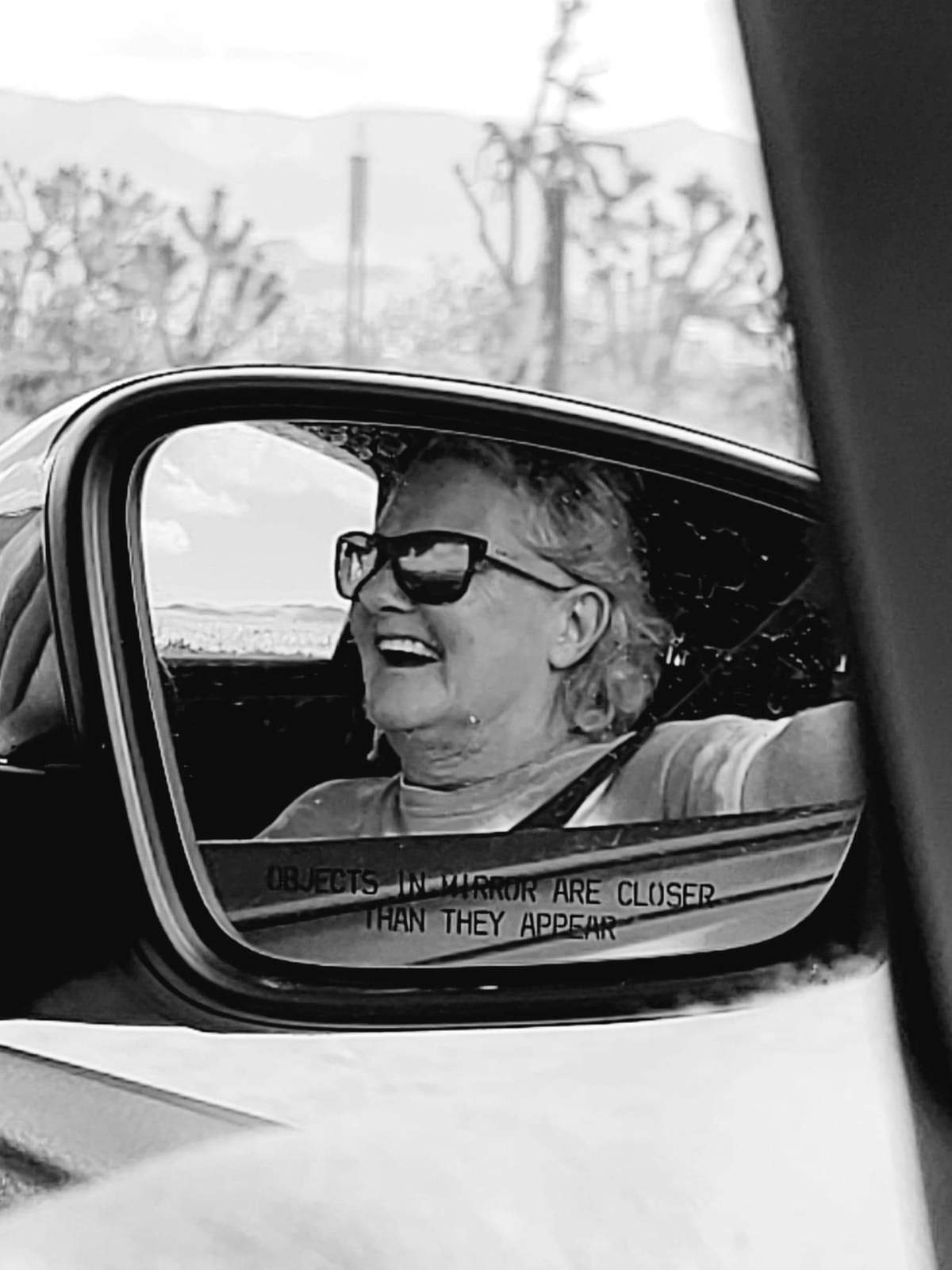
Ruby Lynn Abarr, age 59, passed peacefully away in the early hours of November 8 after a courageous seven-year fight with breast cancer. She was a loving mother of four, and adoring friend to very many.
She was born April 25,1963 in Oakland but lived in Arcata her whole life. She loved to travel, fish, craft and go to the local beaches to look for agates. Her rock collection is out of this world!
Everyone who knew her knew how much love she had to give, and her sense of humor was something else. She always wanted to see the seven wonders of the world and now may she see those travels.
The world could always use one more Ruby in it! She now gets to fly with the birds and the butterflies and look upon all of us from above.
Ruby is survived by her daughters Renee White and Nicole Ward-Conant. Her son’s Aaron Weimer and Chris Ward. Her brothers Marc VanCleave and Randy Gomes. Her Sisters Ronda Ford and Cindy VanCleave. She will be greatly missed, appreciated and never forgotten.
###
The obituary above was submitted on behalf of Ruby Abarr’s loved ones. The Lost Coast Outpost runs obituaries of Humboldt County residents at no charge. See guidelines here. Email news@lostcoastoutpost.com.
OBITUARY: Larry Bitte, 1937-2022
LoCO Staff / Thursday, Nov. 24, 2022 @ 6:56 a.m. / Obits
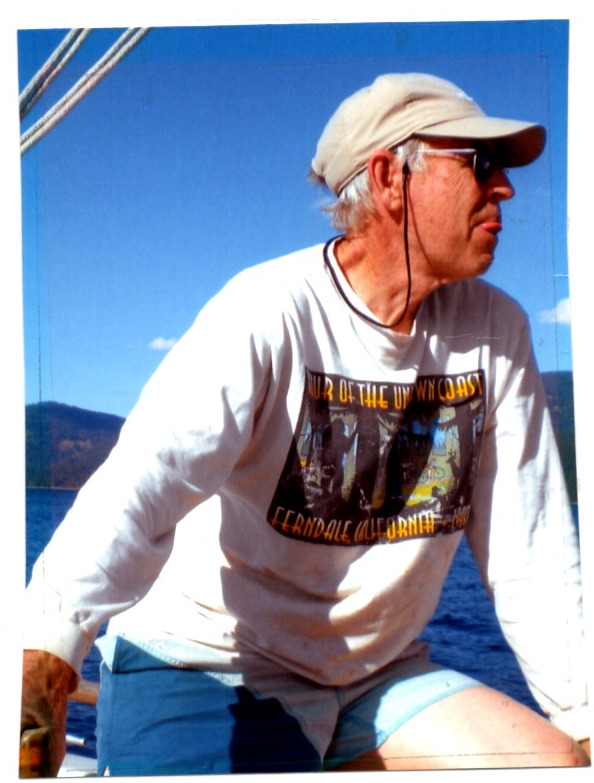
Larry
Bitte was born in Longview, Washington March 9, 1937. Our neighbor of
45 years, Dwane, was also born there the same year (two peas in a pod
in Carlotta).
Larry
passed away November 12, 2022, with family at Humboldt Hospice House
in Eureka. Service will be at Fortuna Nazarene Church Sunday, February 19, 2022, at 3 p.m. Refreshments follow.
Larry was raised in St Helens, Oregon, a mill town where at a young age he toted firewood from his dad’s mill to his customers via a wheelbarrow and helped his mother, Margaret, with their annual garden. Later, he daily greased the mill before grade school. His Latvian grandfather rebuilt an old canoe for him and at 12 he had his own motorboat, in which his best lifelong friends Don Heacock (Claudia), Gary Seawright (LuAnne) and he played hooky on the Columbia River most afternoons.
In high school he and Gary played baritones, and they were pronounced the two best players in Oregon. He swam on the local team, which won first place in Oregon.
When Larry turned 16, his father put all the logging trucks in Larry’s name so he could legally drive them. After high school he left St. Helens to attend college and earned a BS, MS and PhD, the latter in Biochemistry from the University of Oregon Medical School in Portland. While attending Oregon State he marched in the 1957 Rose Parade packing his beloved baritone seven miles.
From 1960 to 1962 he served in the US Army in Maryland at Aberdeen Proving Ground and was married. In 1962, his first daughter Lisa was born severely handicapped from the last American rubella epidemic. His professors told him to put Lisa in an institution, because she would hinder his professional career. He replied “never” amid many expletives. Lisa lived at home, part of a loving family.
In 1963 he met Kenneth Gamon (Sue) in Organic Chemistry. Lifelong friends for over 58 years.
In 1966, he married Dianne, his wife of 56 years. Dianne joined a family of avid mushroom hunters, crabbers and zealous razor clam diggers. Learning to dig clams and cook them was an initiation.
In 1966, Larry’s dear Aunt Betty was thrown off a Cannon Beach, Oregon beach. The sand had been roped off as private property. Always a scrapper, that event launched Larry’s passion to keep all Oregon beaches public. During that fight his only car, a VW bug, was stolen and burned and his phone was tapped for many months. He was also forced to leave his PhD program for a year- for political reasons. (He learned how to paint houses that year to support his family.) Larry, Bob Bacon (Anatomy Professor) and wife Sue Daniels and Jeff Gonor (OSU’s Marine Science Center) formed Citizens To Save Oregon Beaches, Inc. God directed Larry to an extraordinary clerk in Salem who knew what research materials Larry needed to write the legal brief which authenticated that, indeed, Oregon beaches had been preserved by Osward West, a former governor. The Oregon Supreme Court later agreed.
Several PBS TV Specials were made of Lary and Bob which are shown biannually so that Oregonians never forget what they almost lost. Oregon is the only lower 48 state in the union with every mile of coastline open to the public. Local authors documented their victory in several book.
In 1973, Larry’s daughter, Rachel Elizabeth, was born, the third love of his life.
In 1976, Larry left the academic research community and settled in Carlotta. He went salmon fishing out of Trinidad in a 22-foot boat, always happiest on the water, whether the Columbia River or the Pacific Ocean.
In 1977, Larry met many local Native Americans who needed a grant writer for a national film project. The grant placed seventh nationally and regrettably they only funded four that year. But many life-long friends remain.
In 1973, he secured an NIH grant and moved to Denver (where he met his friend Gordon Watson, a fellow biochemist, tennis player and wine maker) and later San Francisco. Throughout subsequent years he fished, joined seismic boats around the world, sold real estate (after saving one man’s home from foreclosure several times — always a scrapper for the underdog — he was the recipient of yearly buckets of candle fish left on the doorstep.)
Then, as his grandfather before him, he started working with his hands, building, repairing and designing homes, joining with John Roudebush (Donna) for several decades. During that time he met Dave Franceschi (Teresa) for albacore fishing and crabbing.
In 2000, Greg Hess joined his family as his favorite son-in-law: Incredibly talented, funny, versatile, and devoted to Rachel and Lisa.
Jesus was the rock of his life. He rededicated his life to the Lord in 1992 at Sacred Heart’s Crusillo: dinner was late and the group sang “Amazing Grace” over forty times waiting for dinner to be miraculously cooked (that was his favorite hymn). Later he helped in Whitethorn at Lady of the Redwoods Monastery twice a year fixing, clearing and helping with their homes and property.
He is survived by his wife, Dianne, daughters Lisa and Rachel and son-in-law Greg Hess, his brother Steven Bitte, cousins Walter Passarge (Lois) and Garry Wilson (Karen) who grew up as siblings and nephew Eric Bitte (Andrea Yount.), cousin Dan Magone (Sue), sister-in-law Barbara Flores (Eric) brother-in-law Robert Brack (Iva) and Chris Lassen(Cyndy.) Special thanks to our faithful friends and neighbors: Roudebushes, Franceschis, Parkers, Kurtz, McQueens, Nanette Long, Isaacs, Bronsons, Anita Horner, Elizabeth Overstreet, our Mennonite friends and angels from Hospice House of Humboldt.
###
The obituary above was submitted on behalf of Larry Bitte’s loved ones. The Lost Coast Outpost runs obituaries of Humboldt County residents at no charge. See guidelines here. Email news@lostcoastoutpost.com.
‘It Was the Hardest Thing I’ve Ever Had to Do’: Singing Trees Owner Closes the Beloved Recovery Center After 31 Years Of Serving the Community
Stephanie McGeary / Wednesday, Nov. 23, 2022 @ 2:12 p.m. / Community
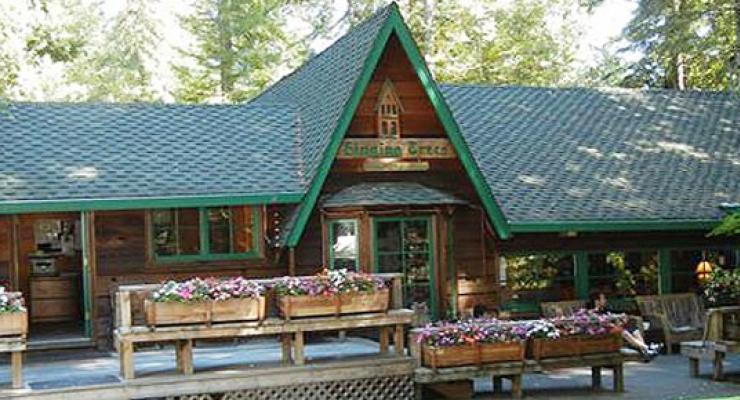
The Singing Trees Recovery Center just of Highway 101, south of Garberville | Images from the Singing Trees website
###
After more than three decades of helping people struggling with addiction, Singing Trees Recovery Center – a detox and rehabilitation facility nestled in the redwoods south of Garberville – permanently closed its doors last month, and the owners are planning to sell the property that has been in the family for decades.
“I’ve been spending the last month just going through everything and getting rid of 31 years worth of stuff,” Pattie Watson, owner of Singing Trees, told the Outpost in a phone interview last week. “I feel like I’ve only made a dent. It’s good for me to just go every day to clean and clear out stuff. Most days it gives me comfort, and some days I’m just overwhelmed with grief and sadness.”
Singing Trees opened in early 1991, after Watson’s brother, Chuck Watson, and his friend decided to open a treatment center on the property owned by the Watsons’ mother. Coming out of recovery treatment herself, Patti joined the team working in the office. Eventually she took over as co-owner with her brother. About six years ago her brother moved and Patti took over as the primary facility operator.
Located on 7.5 acres of redwood forest along the Eel River, Singing Trees was known for its beautiful location that provided a calming setting for detox and recovery. The center served people not just in Humboldt County, but also from all over Northern California. From supervised detox, to two-week, 30-day, 60-day and 90-day rehabilitation programs, Singing Trees offered a variety of different treatments for people who wanted/needed help with their addiction. The center held 20 beds and usually had a staff of three counselors, who would guide 12-step meetings, group counseling and one-on-one counseling sessions.
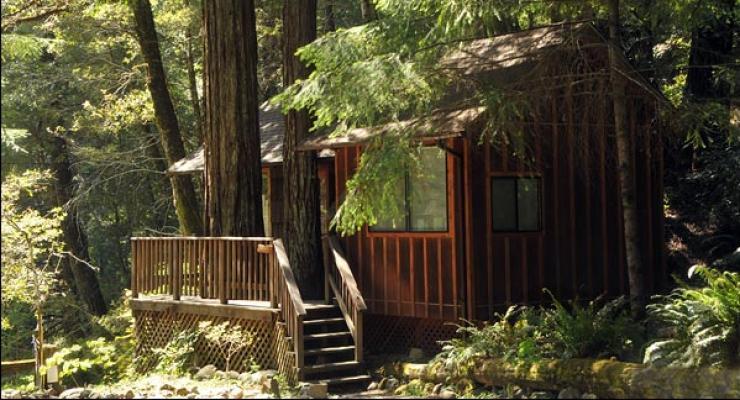
One of Singing Trees cabins
The center also had a big kitchen, a recreation room with ping pong tables and a sweat lodge. Sessions in the sweat lodge were one of several holistic approaches to recovery used at Singing Trees, with residents also offered art therapy sessions and yoga classes. Nature also played a big role in recovery at Singing Trees, with residents – and their visitors – encouraged to sit under the redwoods, hike through the property and swim in the majestic Eel River.
“Family counseling sessions were on the weekends, and families would come and they would bring the kids and the dogs and they would go down to the river and spend the afternoon together,” Watson said. “It really was wonderful.”
Thursdays through Sundays the center also held meetings of Alcoholics Anonymous (AA) and Narcotics Anonymous (NA) that were open to the public and not just the residents. Many 12-steppers of SoHum will remember the popular Sunday lunch meeting that was held at noon, followed by a big free meal at 1 p.m. “We did that for 28 years,” Watson said. “Then when COVID hit, we had to stop that and then we never resumed it again.”
It’s no surprise that COVID changed a lot of things at Singing Trees, and it was difficult for the facility to recover from the impacts. In addition to canceling the lunch meetings (and group meetings altogether for a while), the center had to temporarily cut their residency in half, housing only 10 clients at a time. With the residents unable to gather in the kitchen or other common spaces during COVID, meals also needed to be delivered to the rooms. With no group meetings, counselors could only offer individual therapy sessions. It was a difficult time for the guests and the staff, Watson said.
Since COVID, it has been difficult for Singing Trees to keep on enough staff to operate, and that, Watson said, is the primary reason the center had to close. Keeping staff was always somewhat difficult, Watson said, because of the rural location. There is limited housing available in the Garberville/ Piercy area, and some staff members lived in Eureka and commuted the roughly 75 miles to the center. This usually resulted in people trying to find a job closer to where they live. It can also just be difficult in general to find qualified, certified staff in the field of substance use disorder.
On top of the staffing issue, the buildings were aging and upkeep of the facility was becoming more and more difficult and expensive, Watson said. There was nearly always some maintenance work that had to be done, and the rural location also meant labor and materials were costly and sometimes hard to find – another issue that was compounded by COVID.

Above: the recreation room. Below: a staffer in the kitchen.

“It just got to be too much,” Watson said. With all the issues piling up, Watson and her family decided that it was time to close Singing Trees.
Once the decision was made, the center stopped accepting new clients, but the people who were already at Singing Trees were allowed to finish their treatment. The last three residents left Singing Trees on Oct. 13. Two weeks before the closure, all of the remaining staff was informed and the residents were told one week after that.
“It was the hardest thing I’ve ever had to do — tell them that we were closing down,” Watson told the Outpost. “We’re still getting calls every day from people interested in treatment, or wanting information. [The closure] certainly wasn’t for any lack of business, because the phone was still ringing off the hook.”
Watson and the staff have been referring people to the other recovery centers — Waterfront Recovery, Humboldt Recovery Center, or Crossroads, which are all located in Eureka. Though there are other options for 12-Step meetings in SoHum, there are no other recovery/rehab centers in the area.
And other facilities are feeling the increased pressure that came with Singing Trees closure. Jeremy Campbell, executive director of Waterfront Recovery, said that they have seen a definite increase in calls in the last month and they are “doing their best” to accommodate everyone. But it is difficult, Campbell said, adding that Waterfront also has struggled to keep fully staffed, especially since COVID.
“The loss of Singing Trees is a huge loss to the community,” Campbell told the Outpost over the phone last week. “The access to recovery services is so limited as it is, especially with the need we have here locally. I know they served a lot of people in SoHum, and any loss we see for treatment for people with substance use disorder is a huge loss for the community.”
After closing the center, Watson and her family discussed some different options for what to do with the property. Some people expressed interest in leasing it, Watson said, but the family did not want to keep paying for upkeep, so the family decided that selling the land would be the best option. Watson said the family wanted to make sure the redwoods were preserved, so she contacted the Save the Redwoods League, but didn’t hear back. A family member who is a realtor is helping list the property.
Although closing Singing Trees was difficult, Watson, who recently turned 70, said she is looking forward to retirement. She plans to live out her days on her Piercy property – 40 acres that she shares with her two sons – and focus on her family and her garden.
“I just want to thank the community for all their support over the last 31 years,” Watson told the Outpost. “It’s been an absolute joy to work there. Well over 3,000 people have gone through Singing Trees and there were lots of successes. It’s just hard to imagine that we’re not going to be there anymore.”

Treatment, Not Trial, For Fortuna Man Accused of Sending Violent, Veiled Threats to Church Group
Rhonda Parker / Wednesday, Nov. 23, 2022 @ 12:06 p.m. / Courts
It will be treatment rather than a jury trial for Fortuna resident Sean Michael Allman, accused of sending gory text messages to members of a church youth group planning to visit then-Humboldt State University.
This morning Judge John Feeney granted a defense petition to place Allman, 22, in a mental health diversion program instead of being tried on felony charges of making criminal threats and inhibiting the practice of religion.
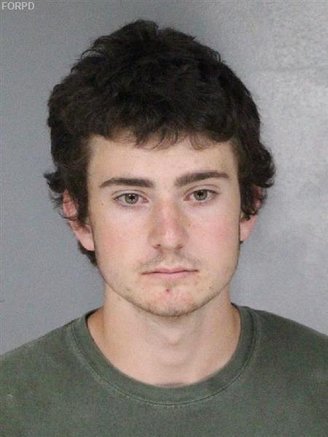
Allman.
Feeney said Allman is the type of person the state Legislature had in mind when creating the option for mental health diversion. That is, he has a mental health disorder and the disorder played a significant role in his alleged crimes.
The main criterion is whether Allman poses an unreasonable danger to public safety. Feeney believes he does not.
Allman was 18 when he sent text messages to eight members of an Episcopal youth group in summer 2019. The texts portrayed mass-shooting victims bleeding on the ground. One message showed a person having his head blown off by a bullet.
Allman was arrested but posted bail a few months later. He has been out of custody for nearly three years without further arrests. But during those years, Allman told a psychologist, he began experimenting with Xanax and nitrous oxide, consuming so much nitrous oxide that he considers himself forever changed.
At the time the texts were sent he was obsessed with mass murders, spending hundreds of hours reading about the crimes or writing about them in his journals. He idealized the Columbine High School shooters. Allman even wrote about what to wear when carrying out such killings.
During closing arguments this morning before the judge made his ruling, defense attorney Andrea Sullivan argued the text messages in question contained no comments from Allman.
“It’s not a direct threat, like ‘I’m going to do this to you,’” Sullivan said, arguing that Allman suffers from both obsessive compulsive disorder and low-level autism. He has said he has no empathy for the alleged victims, which is characteristic of autism sufferers.
[UPDATE, JULY 18, 2025: Today, Allman himself objects to his defense counsel’s argument that he is on the autism spectrum, and presents a Redwood Coast Regional Center letter from Aug. 2024 stating that he “does not have a developmental disability as defined by California law,” and that he “[does] not meet criteria for diagnosis of autism spectrum disorder.”]
“The real question,” Sullivan argued, “is does Mr. Allman present a serious threat to public safety. I don’t believe the evidence supports that.”
Deputy District Attorney Whitney Timm countered that Allman’s actions place him “on a path to violence.”
She said Kevin Kelly, a psychologist who evaluated Allman and determined he was not a threat to himself or others, acknowledged he had little experience with people obsessed with mass killings.
Timm said mass shooters start out with a grievance. In this case, Allman’s grievance went back to 2018, when he attended a church camp with the people he later texted. His grievance? The other campers had no interest in talking about mass shootings, and Allman felt they were being unfair.
Three times, Timm said, Allman tried to buy a gun on the Dark Web. Ammunition was found when officers searched his home.
“Then he went so far as to threaten the people he had a grievance with,” Timm said.
It’s typical of mass killers, Timm said, to write down their thoughts or post them online. She also pointed out Allman idealized those who committed such crimes.
“Granting diversion in this case is not in the interest of justice,” Timm argued.
Feeney listened to hours of testimony on Monday from the defense expert, forensic psychologist Kevin Kelly. He also read a report from the prosecution’s expert, along with the 108-page transcript of Allman’s preliminary hearing in December 2019.
The judge said he was struck, when reading the transcript, with the conflicting reactions of the eight alleged victims.
“They varied from being terrified, which I find understandable, to indifference,” he said. One of the group members said he hoped “the situation would result in some positive action and help and assistance for Mr. Allman.”
Outside of court attorney Ben Okin, also representing Allman, said the mental health program could last up to two years and can be a residential program. At this time no detailed program is in place. That will be discussed at the next hearing on Dec. 12. Allman remains out of custody.
If he successfully completes the diversion program, charges will be dismissed.
Psychologist Kelly testified that Allman, because of his OCD, believes he is always right. He wants all things in order and under his control. And he is obsessed.
“Mr. Allman is obsessed with death,” Kelly said under questioning by Sullivan. “He is obsessed with thoughts of suicide and his own death. He is also obsessed with notorious mass shooters in the United States and New Zealand … thoughts of death and carnage are on his mind every day for hours at a time.”
Although Allman has somewhat “reined in” the obsession with mass killings, his fascination with suicide remains.
“He flat-out says he’s going to kill himself,” Kelly said. There has been no intervention because Allman, when Kelly interviewed him on Nov. 8, had no immediate plan.
Allman expressed no desire to hurt anyone else, Kelly said.
At age 4, Allman suffered “extreme trauma” when his father killed himself during a standoff with police.
“A trauma of that nature can cause PTSD, depression and anxiety,” Kelly testified.
Although Allman is extremely intelligent, Kelly said, he’s socially immature and, in modern terms, could be described as nerdy.
As to dealing with grievances, “most people can take what life dishes out and move on,” Kelly said. But that’s not the case with people afflicted by OCD. When Allman sent the texts, he was still upset with people who didn’t want to converse about mass shootings. a year before.
“Someone with Obsessive Compulsive Disorder never lets it go … he never let that go.”
His goal in sending the messages was simply to shock the recipients, Kelly said.
Kelly said he believes Allman is treatable and could succeed in a diversion program. Allman’s trial had been scheduled to start next week.
###
PREVIOUSLY:
- Fortuna Teenager Accused of Terror Threats Against Church Youth Group Pleads Not Guilty; Bail Lowered to $50,000
- TODAY in COURT: Hearings Postponed For Fernbridge Hit-and-Run Suspect, Man Accused of Threatening Church Group Visiting HSU
- Fortuna Teenager Held to Answer on Terrorism Charges; Officer Testifies Suspect Kept Journals Referencing Mass Shootings
- TODAY in COURT: Mistake Delays Fortuna Teacher’s Preliminary Hearing on Child Molestation Charges; Mental Health Questions Hang Over Fortuna Terrorism Case, Kneeland Homicide
EARTH FLAG RESURGENT! Cervantes, Fernandez, De Loach and Ryan Easy Winners With Most Votes Counted, and It Looks Like That Earth Flag Will Hang High in Arcata
Hank Sims / Wednesday, Nov. 23, 2022 @ 10:38 a.m. / Elections

A visualization of what the Arcata flagpole will soon look like, probably, courtesy Earth Flag booster-upper Dave Meserve.
If the election office’s initial estimate was accurate, it looks like we’ve now tallied up almost all the ballots that were left untallied on election night (Nov. 8). This morning, the office released another report with another 9,279 votes recorded, which would put us somewhere in the range of 1,000 votes or so left to count.
That said, we can now definitively call some races!
In the countywide race for clerk-recorder/registrar of voters, Juan Pablo Cervantes has handily defeated his coworker, Tiffany Hunt Nielsen, by a margin (at this moment) of 55.96 percent to 44.04 percent. Bit of a turnaround from the June primary, when Nielsen finished just ahead of Cervantes.
In the Eureka City Council races, G. Mario Fernandez is a lock for the Ward 3 seat, with 52.93 percent of the vote tallied to challenger John Fullerton’s 47.07 percent. This is just the latest humiliation for old-school Eureka conservatism, which hasn’t won an election in any of the city’s wards in the last six years or so.
Meanwhile, the relatively unknown Renee Contreras de Loach has shocked Old Town businessman Nicholas Kohl in the race for the Ward 5 seat, with 53.47 percent of the vote counted. And local activist Julie Ryan, who works for Food for People, has ousted longtime conservative stalwart Alan Bongio from his seat on the board of the Humboldt Community Services District, which serves the traditionally conservative Cutten area, among other Eureka outskirts.
The come-from-behind victory of this cycle: Arcata’s Measure M, an ordinance to hang the Earth Flag at the top of city flagpoles. The “yes” tally now stands at 51.24 percent, which means that it should sail to victory. Expect a court challenge, which should be fun!
View full results here. See you in 2024!


