

OBITUARY: Peggy Bell-Hans, 1950-2022
LoCO Staff / Saturday, Sept. 10, 2022 @ 6:56 a.m. / Obits
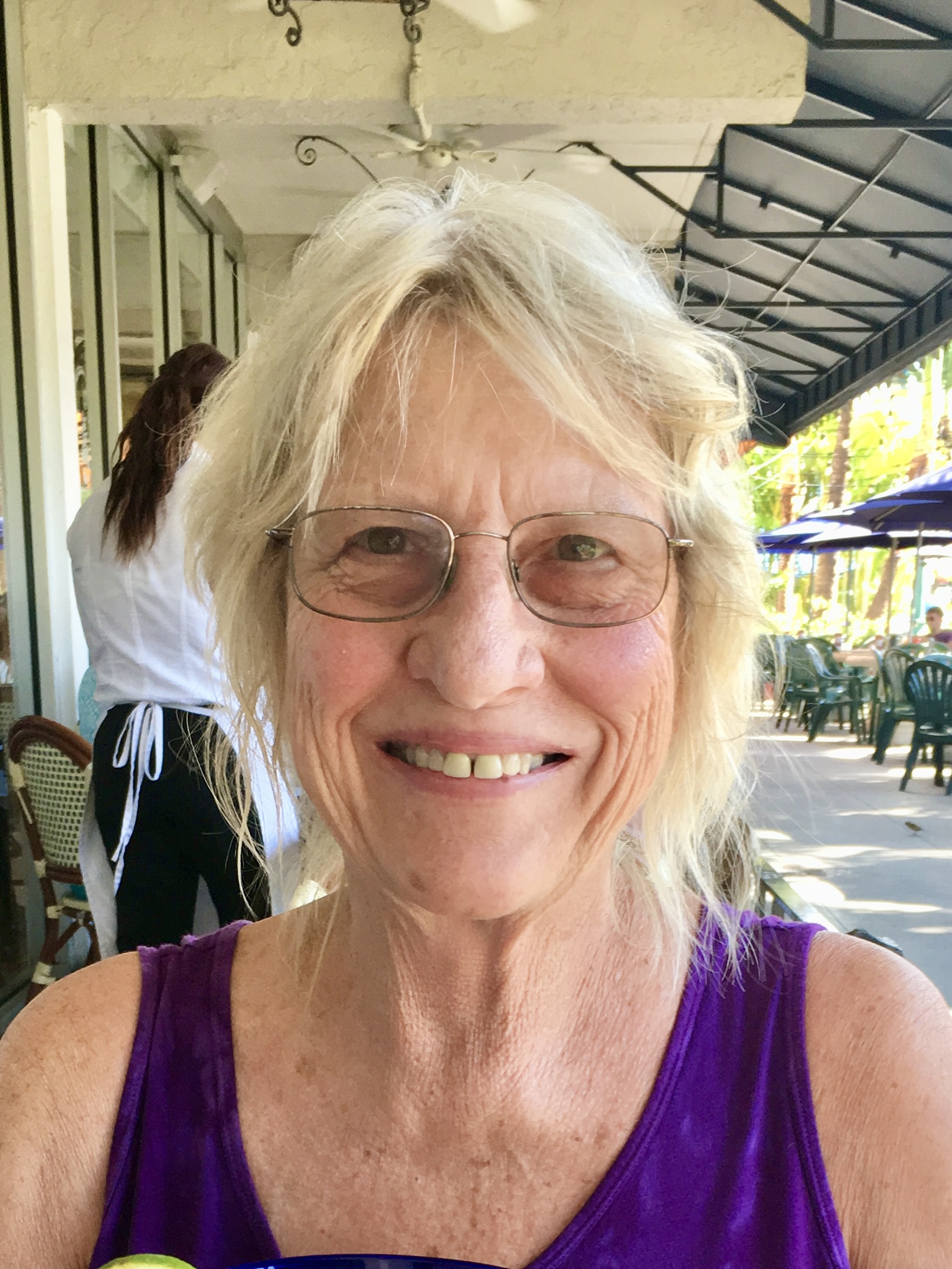
Peggy Bell-Hans passed on August 15, 2022. She was born December 4, 1950 in Sarasota, Florida to Arthur and Julia Bell. She graduated from Sarasota Florida High School and continued at University of Florida with a degree in Occupational Therapy, a “Goooo Gators!!”fan.
On July 4, 1975 Torsten Hans ‘Tars’ came into her life for keeps. They traveled extensively, finally settling in Vista, California. They built a sailboat, produced two wonderful daughters, Kaleena and Kyra. Peggy continued as an OT and helped many people to improve their lives using her ability to encourage people in a deep and positive way. Her passionate gardening and technique with any project she took on had a positive impact on anyone she came in contact with. She will be missed by many.
To celebrate Peggy we will be gathering at one of her favorite places — Deep Seeded Community Farm, which she loved to visit. It will be held on September 24, 2022 from 4 to 6 p.m. This event is to share memories of the wonderful wife/mother/friend we all knew and loved. Dress casually and in colors. There will be light beverages and desserts available, any appetizers that remind you of Peggy would be appreciated.
If you’d like to donate to a memorial bench in memory of Peggy, there will be a donation box on site, or you can send donations to Peggy Bell-Hans Memorial, 1692 Mangrove Ave #173, Chico, CA, 95926. Any excess donations will help cover the medical expenses.
###
The obituary above was submitted by Peggy Bell-Hans’ loved ones. The Lost Coast Outpost runs obituaries of Humboldt County residents at no charge. See guidelines here. Email news@lostcoastoutpost.com.
BOOKED
Today: 6 felonies, 12 misdemeanors, 0 infractions
JUDGED
Humboldt County Superior Court Calendar: Today
CHP REPORTS
0 Us101 N (HM office): Traffic Hazard
1050 MM199 S DN 10.50 (HM office): Trfc Collision-No Inj
7985 Mm101 S Hum 79.90 (HM office): Assist with Construction
Us199 / Us101 N Us199 N Con (HM office): Assist CT with Maintenance
Poppy Dr / Sherwood Rd (HM office): Closure of a Road
ELSEWHERE
KINS’s Talk Shop: Talkshop September 3rd, 2026 – William Honsal
Governor’s Office: California prioritized fighting organized retail theft, those results are paying off with 36,000 arrests and $293 million in stolen goods recovered
Mad River Union: Whistleblower calls for Miranda’s Rescue end
Mad River Union: Arcata’s petite data center only the first
Coastal Commission OKs Critical Improvements to Keep Arcata’s Wastewater Treatment Facility Up and Running; Staff Have Five Years to Develop Long-Term Strategies to Address Sea-Level Rise
Isabella Vanderheiden / Friday, Sept. 9, 2022 @ 4:02 p.m. / Environment

View looking across Butcher Slough at primary digester and generator building within Arcata’s Wastewater Treatment Plant headworks. Image via the City of Arcata.
###
The California Coastal Commission has given the City of Arcata the green light to move forward with much-needed improvements to the city’s aging Wastewater Treatment Facility.
The Arcata Wastewater Treatment Facility – the part of the Arcata Marsh that theoretically makes the city’s sewage and wastewater nontoxic enough to pump into nearby wetlands – is getting pretty old. Despite ongoing efforts to keep the aging infrastructure up and running, parts of it are failing. As a result, the Regional Water Quality Control Board has issued several violations to the city for failing to comply with state-mandated discharge requirements.
The city has been working to repair the issues and comply with the board’s discharge requirements in recent years. Now, with the Coastal Commission’s blessing and a Coastal Development Permit secured, the city can finally move forward with Phase 1 of the improvement project, including the construction of a new electrical and ultraviolet disinfection system that will replace the facility’s aging chlorination filtration system, upgrades to pump stations, installation of new electrical infrastructure throughout the facility and construction of a new outfall.
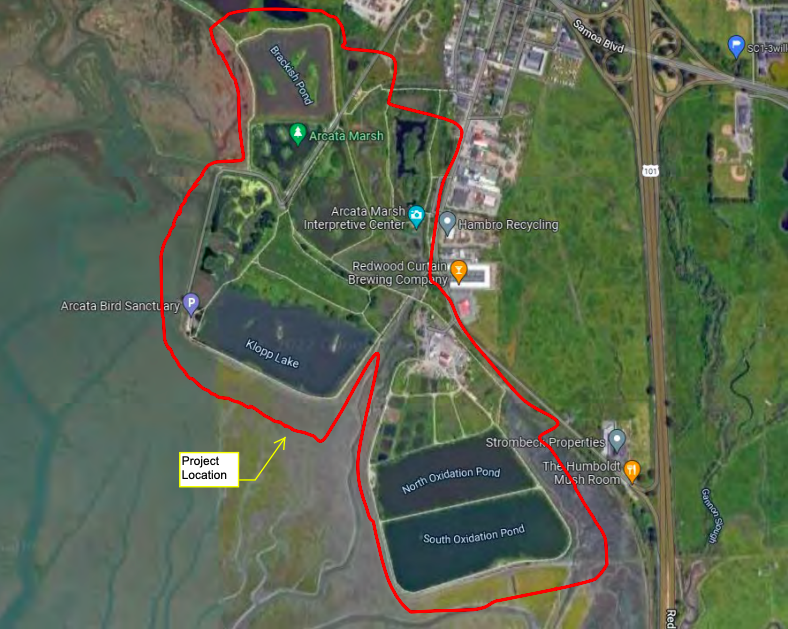
Aerial view of the Wastewater Treatment Facility. | Image via the City of Arcata.
These upgrades will keep the facility up and running in the short term, but what about long-term planning strategies?
Local coastal experts expect Humboldt Bay’s shoreline to rise by as much as three feet in the next 40 years. Rising sea levels will only exacerbate existing flood hazards, especially in the low-lying Arcata Bay area.
“The project raises important questions concerning whether it is appropriate to maintain the [facility] in an area that is increasingly vulnerable to flooding and other coastal hazards,” Tamara Gedik, program analyst at the California Coastal Commission, said during Thursday’s meeting. “There is a risk that a portion of the upgraded facility will be inundated with floodwaters which could compromise the facilities functionality and threaten public and environmental health by potentially sweeping up materials and releasing biosolids or untreated wastewater.”
Coastal Commission staff offered 10 special conditions to the permit application for long-term planning to address impending coastal hazards in the next 30 years. Condition 4, for example, stipulates that the city must complete a Coastal Hazards and Adaption Implementation Plan in place in the next five years.
Emily Benvie, deputy director of community services for the City of Arcata, noted that Phase 1 improvement efforts would help the city maintain operations during the interim while staff develop long-term strategies.
“The city has been seeking funding to design and permit a levee augmentation project around the core treatment facility to provide additional protective measures from impacts of coastal hazard impacts,” she said. “The city will implement the adaptation measures that are deemed most appropriate for given timeframes. …The city looks forward to being back before the commission in the not-too-distant future with a separate [Coastal Development Permit application] for levee augmentation.”
Speaking on behalf of the Surfrider Foundation, Humboldt Baykeeper and the North Coast Environmental Center during public comment, Mandy Sackett urged commissioners to move forward with staff’s recommendation to approve the interim permit and allow upgrades to the facility.
“They are necessary to protect Humboldt Bay,” she said. “The relative rate of sea level rise in Humboldt Bay is twice the state average due to subsidence. …The 30-year permit allows time to analyze relocation and alternatives to shoreline armoring.”
Commissioner and Third District Humboldt County Supervisor Mike Wilson requested a modification to the attached addendum, noting that everything past the first paragraph of the document “does the job” and does not necessarily need to reiterate the content of the staff report. He then made a motion to approve the proposal which was seconded by Commissioner Dayna Bochco.
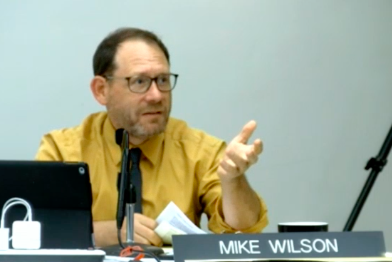
Wilson | Screenshot
Before taking a vote, Wilson took a moment to thank Arcata and Coastal Commission staff for moving the improvement project forward.
“Forty years ago this was cutting edge technology…[the facility] is just in a vulnerable location and it has to be dealt with,” he said. “I also want to shout out to myself that my thesis for my master’s in environmental systems engineering was the UV disinfection of the marsh effluent at this location which is now being implemented 30 years later. So, it takes a while.”
“We always thought Commissioner Wilson was a man before his time,” Commission Chair Donne Brownsey laughed.
The motion passed unanimously.
PREVIOUSLY:
CRUISE SHIPS INCOMING! Two Ocean Liners to Pay Call to the Port of Humboldt Bay This Month; Guests Will be Feted With a ‘Boat Parade,’ a Crafts Fair and More, City of Eureka Says
LoCO Staff / Friday, Sept. 9, 2022 @ 10:43 a.m. / Economy

Here’s the Oceania Regatta visiting Stockholm! Soon it will visit us! Photo: Kalle Id, CC BY-SA 3.0, via Wikimedia.
Press release from Eddy Alexander and the City of Eureka:
Eureka will welcome two ships this month, starting with the Regent cruise ship MS Oceania Regatta on Wednesday, September 14th at 8 a.m., followed by the Scenic cruise line’s Scenic Eclipse on Saturday, September 24th at 8 a.m. Both ships will be led into the harbor by a boat parade followed by a private welcome party at Schneider dock that will include live music, coffee, and pastries.
During the day, ship guests can enjoy Old Town or participate in excursions with Onward Groups, a California-based group tour company. The tours on the 14th include a hiking tour to Prairie Creek Redwoods, Ferndale, and the Redwood Skywalk. The tours on the 24th include a Pacific Coastline Hiking Tour provided by Pacific Outfitters, Blue Ox Millworks, Humboldt Botanical Garden, and the Redwood Skywalk. An excursion catalog being developed will inform interested cruise ships on all that Humboldt County has to offer.
On-board plaque exchange ceremonies to celebrate the inaugural call of the ships will also take place during the day.
In partnership with the City of Eureka, Humboldt Made welcomes local artisan vendors to join us to showcase their locally made products in Clarke Plaza in Eureka’s Old Town. If you are interested in participating as a vendor, please contact info@humboldtmade.com. The cruise visits and the arrival and departure receptions are a collaborative effort planned by the City of Eureka, Eureka Main Street, Humboldt County Office of Economic Development, Visit Humboldt, Humboldt Bay Harbor Recreation & Conservation District, Petrusha Pilots, Coos Bay Tugs and Zerlang and Zerlang Marine Services, with special thanks to Chet Albin, Dave Schneider and Schneider Dock.
Local citizens who would like to view the ships can watch from the Del Norte Street pier, the Park and Ride at Herrick Avenue, and the Samoa boat ramp at the north jetty. The Madaket is also planning additional cruises to view the ship and as of time of publication is still taking bookings.

Check out the hella weird-looking Scenic Eclipse cruising the Hook of Holland. It’s been to Antarctica, too! Photo: kees torn, CC BY-SA 2.0, via Wikimedia.
Facing Criticism, State Amps Up Its Climate Change Blueprint
Nadia Lopez / Friday, Sept. 9, 2022 @ 7:09 a.m. / Sacramento
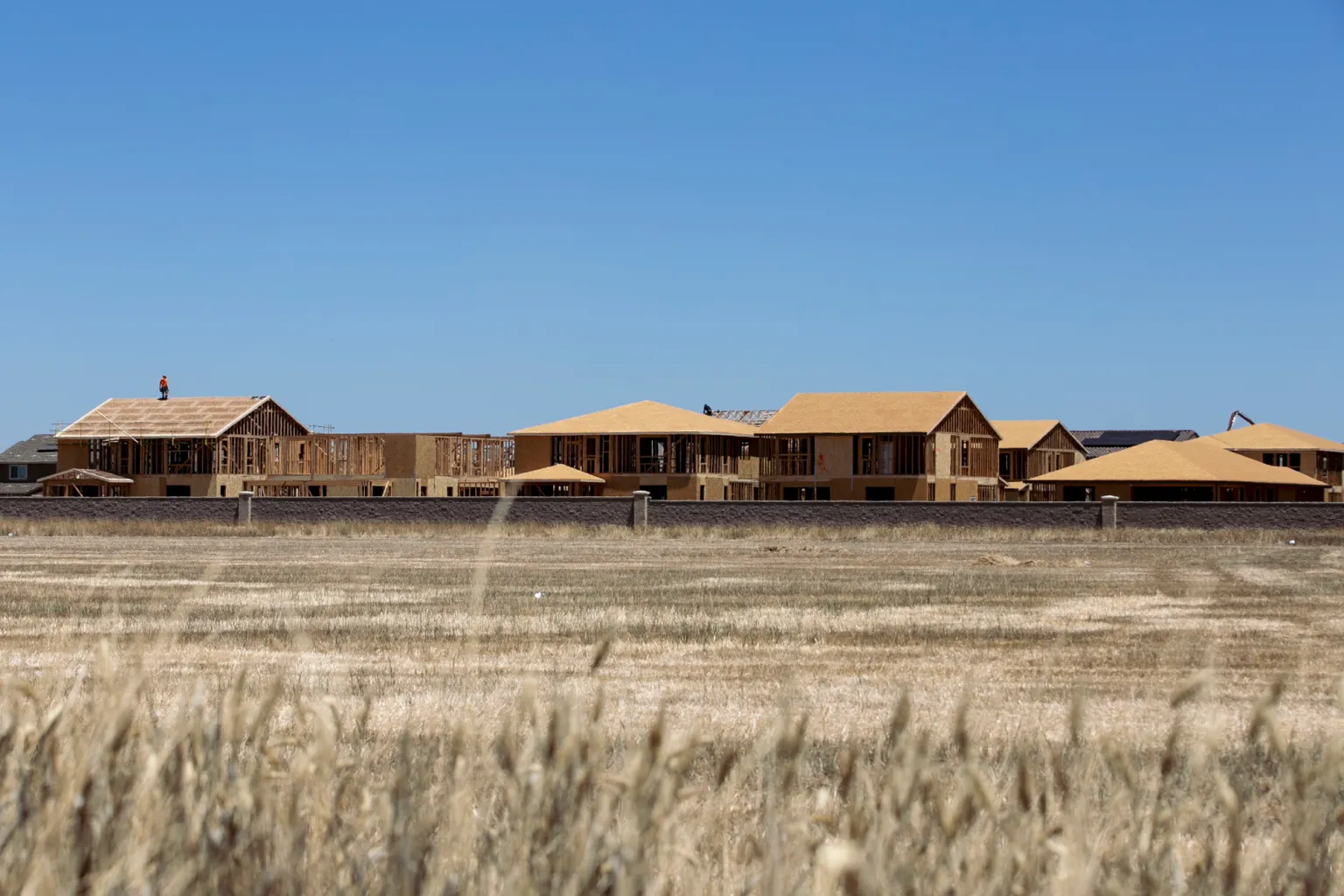
New housing under construction in a neighborhood in Elk Grove. California’s climate scoping plan includes goals for climate-friendly housing. Photo by Rahul Lal, CalMatters
###
Responding to concerns of Gov. Gavin Newsom and environmentalists, the California Air Resources Board has bolstered its climate roadmap with several new strategies, including offshore wind development, climate-friendly housing construction, cleaner aviation fuels and reducing miles traveled.
The changes to California’s proposed climate change scoping plan also include fast-tracking projects by 2030 to remove carbon dioxide from the atmosphere and from the smokestacks of polluting industries. No such projects exist in California and the practices are controversial.
Unveiled in May, California’s draft scoping plan outlines an expansive list of strategies to combat climate change and fulfill a state mandate to achieve carbon neutrality by 2045. The plan includes a bold commitment to eliminate 91% of fossil fuels. The strategies would cost an estimated $18 billion in 2035 and $27 billion in 2045.
Air board officials have delayed taking action on the plan until the end of the year, instead of later this month as scheduled. They now expect to hold a second public hearing and vote in mid-December.
A major strategy is to reduce greenhouse gases by accelerating California’s transition to renewable energy. Newsom directed the air board to include a provision that avoids the need for 10 gigawatts of new natural gas production by ramping up construction of offshore wind projects.
The goal is to scale up renewables yet stabilize the electric grid’s reliability. During this week’s prolonged heatwave, California has teetered on the edge of rolling blackouts triggered by demand for electricity surpassing supply.
The air board’s move to strengthen the scoping plan builds off Newsom’s call for more stringent climate measures that he pushed the Legislature to pass before the session ended last week. The governor’s push for more action to address climate change comes as the state faces more extreme heat, drought and wildfires.
“Achieving carbon neutrality is California’s most ambitious climate goal ever. It requires slashing…emissions and an unprecedented deployment of low-carbon technology and energy.”
— Liane Randolph, Air Resources Board Chair
“Time and time again, California has shown the world that climate action and economic growth can work hand in hand,” Newsom said in a July 22 letter to Air Resources Board Chair Liane Randolph. “We now need to take even bolder action than outlined in the draft plan. The plan will be an incredibly ambitious and actionable blueprint for climate action in our state.”
In an Aug. 29 letter to Newsom, Randolph said the air board is “fully committed” to taking the necessary steps to reduce emissions as quickly as possible.
“Achieving carbon neutrality is California’s most ambitious climate goal ever,” she said.”It requires slashing our greenhouse gas emissions and an unprecedented deployment of low-carbon technology and energy.”
Cleaner electric power and more efficient homes
Shifting away from fossil fuels is central to the state’s goal of achieving carbon neutrality. But supplementing that power source with renewables continues to face challenges.
Electricity use is expected to soar as much as 68% by 2045 California under the state’s proposed plan. That means backup dispatchable power is needed to account for energy losses when wind and solar can’t produce enough electricity.
Without major improvements and investments in clean energy, air board officials previously said California would have to keep relying on natural gas. But the air board scrapped a provision in the scoping plan that would allow for the construction of an additional 10 gigawatts of natural gas capacity to support the power grid. Instead, the governor directed air board staff to include a goal of at least 20 gigawatts of offshore wind by 2045.
Currently no offshore wind projects exist off California’s coast. But plans for future projects are under development. The California Energy Commission, the state’s primary energy agency, released a report in August setting goals to provide between 2,000 to 5,000 megawatts of offshore wind by 2030 and 25,000 megawatts by 2045 – enough electricity to power at least 3.75 million homes in 2030 and 25 million homes by 2045.
The scoping plan’s changes also include a goal of 3 million climate-friendly homes by 2030 and 7 million by 2035.
Climate-friendly homes use more energy-efficient systems, such as replacing gas appliances with electric ones and adding solar rooftop panels. The plan requires half of those investments to be installed in low-income and disadvantaged communities.
The plan also includes a goal of 6 million heat pumps in homes by 2030. A heat pump converts thermal energy from outside, “making the cool space cooler and the warm space warmer,” according to the U.S. Department of Energy. They are a more efficient alternative to furnaces and air conditioners.
Goals for cars and planes
The updated scoping plan also prioritizes the need to reduce emissions from cars, airplanes and other modes of transportation. Transportation in California is the largest contributor to the state’s greenhouse gases, accounting for about 50% of all emissions.
Cutting smog-forming pollutants and greenhouse gases from vehicles is a primary goal that prompted the air board to ban sales of all new gas cars by 2035. But reducing the number of miles people drive is also critical to cutting emissions — and that means finding ways to persuade Californians to rely less on their cars.
The state’s goals for vehicle miles traveled in California would increase from 46.8% below 1990 levels by 2030 to 50% below 1990 levels by 2030. Another important change aims to address planet-warming emissions from air travel: Increasing a clean aviation fuel target from 10% to 20% in 2045.
Michael Wara, director of the climate and energy policy program at the Stanford Woods Institute for the Environment, said the state’s transportation targets “are tremendously exciting and ambitious,” but he worries about its ability to meet them, particularly reducing miles driven.
“The new targets are quite aggressive and the question now is, will the Air Resources Board have the authority and the resources to follow through to accomplish that?” he said. “We have a history of setting VMT (vehicle miles traveled) targets in the state of California that we don’t meet. The plan is relying on something where we don’t really have a method of accomplishing the targets that are being set.”
“We have a history of setting VMT (vehicle miles traveled) targets in the state of California that we don’t meet.”
— Michael Wara, Stanford Woods Institute for the Environment
Rajinder Sahota, the Air Resources Board’s deputy executive officer for climate change and research, acknowledged that the state has failed to reduce miles driven because of inadequate public transit and car-centric urban planning.
She said the proposed changes in the plan related to miles traveled send a strong message to local planning agencies to implement policies that align with the state’s goal. She said the agency is drafting an analysis to assess uncertainties in achieving the climate targets.
Danny Cullenward, an economist and vice chair of the Independent Emissions Market Advisory Committee, a group of experts appointed by the governor and top legislators, said the state’s low-carbon fuel standard, which the air board plans on strengthening, is an important tool for decarbonizing transportation.
“We need more than triple the pace of our emission reductions to get on track,” he said. “So really, it’s the tightening of these existing policies that are going to address some of the oil and gas sector emissions.”
Removing carbon remains contentious
One highly contentious issue still divides environmentalists and state officials.
At a Sept. 1 advisory meeting, several environmentalists groups re-emphasized the importance of direct emission reductions and nature-based solutions to suck carbon out of the air. But they said the use of technologies to capture carbon emitted by industries should be eliminated from the plan altogether.
“California cannot simultaneously phase out fossil fuels and at the same time facilitate costly carbon capture projects that lock in fossil fuel infrastructure,” said Martha Dina Arguello, executive director of the nonprofit Physicians for Social Responsibility and co-chair of the Environmental Justice Advisory Committee, which advises the board on the scoping plan.
The updated draft plan now includes eliminating 100 million metric tons of carbon dioxide by 2045 using technologies to remove it from the atmosphere and capture it from smokestacks.
SB 905 — a bill Newsom is expected to sign – directs the air board to develop a program that puts guardrails on carbon capture, utilization and storage projects while streamlining the permitting process. The bill has angered some environmentalists, who say the technology is unproven, prolongs the use of fossil fuel plants and “poses risks of carbon dioxide leaks, groundwater contamination and increased air pollution,” according to Arguello.
The oil industry has largely supported the use of carbon capture and storage as a strategy to reduce emissions from oil refineries and other industrial sites, saying it is the only available technology that can decarbonize some sectors of the economy. They also say it would ease the job losses that would occur from phasing out fossil fuels.
Globally just 27 carbon capture and storage projects are operating.
Environmentalists also raised concerns about the amount of energy needed to run the projects. Removing 80 million metric tons of carbon would require about 100 terawatt-hours worth of energy, according to the air board’s estimates.
“That’s more than one third of the total electricity produced by California’s grid in 2021,” said Faraz Rizvi, campaign and policy manager at the Asian Pacific Environmental Network. “The current draft scoping plan and the governor’s targets far exceed that, calling for 100 million metric tons of carbon dioxide removal in 2045.”
The updated draft plan now includes eliminating 100 million metric tons of carbon dioxide by 2045 using technologies to remove or capture it.
Sahota of the air board said the state would beef up its renewable energy supply to provide that electricity without fossil fuels.
Sahota stressed that both natural and engineered carbon strategies are necessary. She said the state will prioritize nature-based methods first, rather than carbon capture at industrial plants.
The plan — which erroneously said carbon capture had already begun in California — was corrected to project startup in 2028.
At the urging of environmentalists, the staff added a community vulnerability metric to determine the effects that carbon capture projects would have on disadvantaged communities near polluting industries.
“Having that community vulnerability metric really adds in a missing piece of the social cost of carbon that looks at the additional burden facing some of the communities in the state,” Sahota added.
At a five-hour committee meeting last week, Randolph, the agency’s chair, also called for a more rapid advance of the phaseout of oil refining and extraction in the state.
She said forming an interagency working group that would work with local jurisdictions could expedite that goal and develop a strategy to offset the economic and job impacts.
###
CalMatters.org is a nonprofit, nonpartisan media venture explaining California policies and politics.
OBITUARY: Christopher Stewart Andrews, 1977-2022
LoCO Staff / Friday, Sept. 9, 2022 @ 6:56 a.m. / Obits

Christopher Stewart Andrews entered eternal rest on August 21, 2022,
at his home in McKinleyville. Chris was born on September 14, 1977,
in Edmonton, Alberta, Canada, to Catherine Wood Andrews and Donald
Stewart Andrews. He was the youngest of four children, joining his
siblings Rebecca, Vanessa and Sarah.
Our loved ones must choose to remember Chris in his earlier years before his mental illness became too much for him to bear and addiction seemed to be his only solace. He was a magical, loving, imaginative, intelligent child who loved to be read to. We mourn the loss of the charismatic, creative, hardworking, handsome, resourceful and devoted person he became.
Chris married Chanti Jackson in 2002 and together they welcomed his firstborn, McKenna Andrews. He later welcomed a son in 2010 with partner Alia Piehl. Chris’ children were his greatest joy, and he was a dedicated and present father for many years.
Our father enjoyed the outdoors, particularly camping, and he loved animals. He adored his children and was also a devoted owner of his dog, Rivers, who was his best friend for over 15 years.
He was a talented carpenter and had a natural ability for construction. He loved sports and was a die-hard Raiders fan, owning many pieces of merchandise for his favorite team. He had a deliciously wry sense of humor and a deep, warm laugh. He was friendly and enjoyed large gatherings and BBQs with those he cherished. Many summers were spent at the river, riding dirt bikes, watching sports and sharing beers at the local breweries with his best friends.
Although we struggle to understand the anguish he felt up until his final breath, we find comfort that he is at peace and can be happily reunited with his children one day as was intended by our Creator. The bright light of his soul has touched many individuals, and there is something to be said about that. He is saved from the suffering that stole our beautiful father, son, brother, cousin, nephew and friend away from us. May he finally be at rest until we meet again.
Chris was preceded in death by his grandparents Frank Boardman Wood and Ann Mitchell Wood, Walter Elmer Andrews, Elisa Riddell Booth and Kenneth Loring Booth, and his brother-in-law Scott Chapin Chamberlin.
He is survived by his parents, Donald Stewart Andrews and Catherine Wood Andrews; his children, daughter McKenna Macie Andrews, and son Chace Christopher Andrews; his siblings, Rebecca MacLeod Andrews, Vanessa Elizabeth Andrews and Sarah Andrews Chamberlin; his aunts and uncles, Jennifer Wood and partner Betty Hirschfeld, Mitchell Wood and wife Deborah, Kent Wood, Elizabeth and Darryl Lawrence. He is also survived by his niece and nephew, Gabriella and Julien, and his cousins Jeremy, Ryan, Maddison and Lucille and their families, as well as the mothers of his children, Chanti Jackson and Alia Piehl and numerous other family members who cherished the time they had with Chris.
Chris will be laid to rest in a private graveside service next to his grandparents Frank and Ann Wood on September 10 at Greenwood Cemetery in Arcata. Pallbearers will be Chris’ longtime friends Vince Debord, Scott Lemke, Padre Roth, Cory Frazel and Eric “Colby” Culbertson, as well as his uncles Kent Wood, Mitch Wood, and Darryl Lawrence. Following the burial there will be a Celebration of Life at 2:30 p.m. at the Redwood Lodge, at 490 Redwood Park Road in Arcata. The family asks that all those who knew and loved Chris to please come celebrate and share memories. Thank you to all those who reached out to support our family during this difficult time. Memorial contributions can be made to his children McKenna and Chace Andrews at Go Fund Me, gofund.me/3ac96aa6.
###
The obituary above was submitted by Christopher Andrews’ loved ones. The Lost Coast Outpost runs obituaries of Humboldt County residents at no charge. See guidelines here. Email news@lostcoastoutpost.com.
‘Please Help Us’: Humboldt’s Arts Community Pleads Governor to Sign Bill That Would Offer Financial Support for Theaters and Other Struggling Arts Organizations
Stephanie McGeary / Thursday, Sept. 8, 2022 @ 4:27 p.m. / Activism , Art
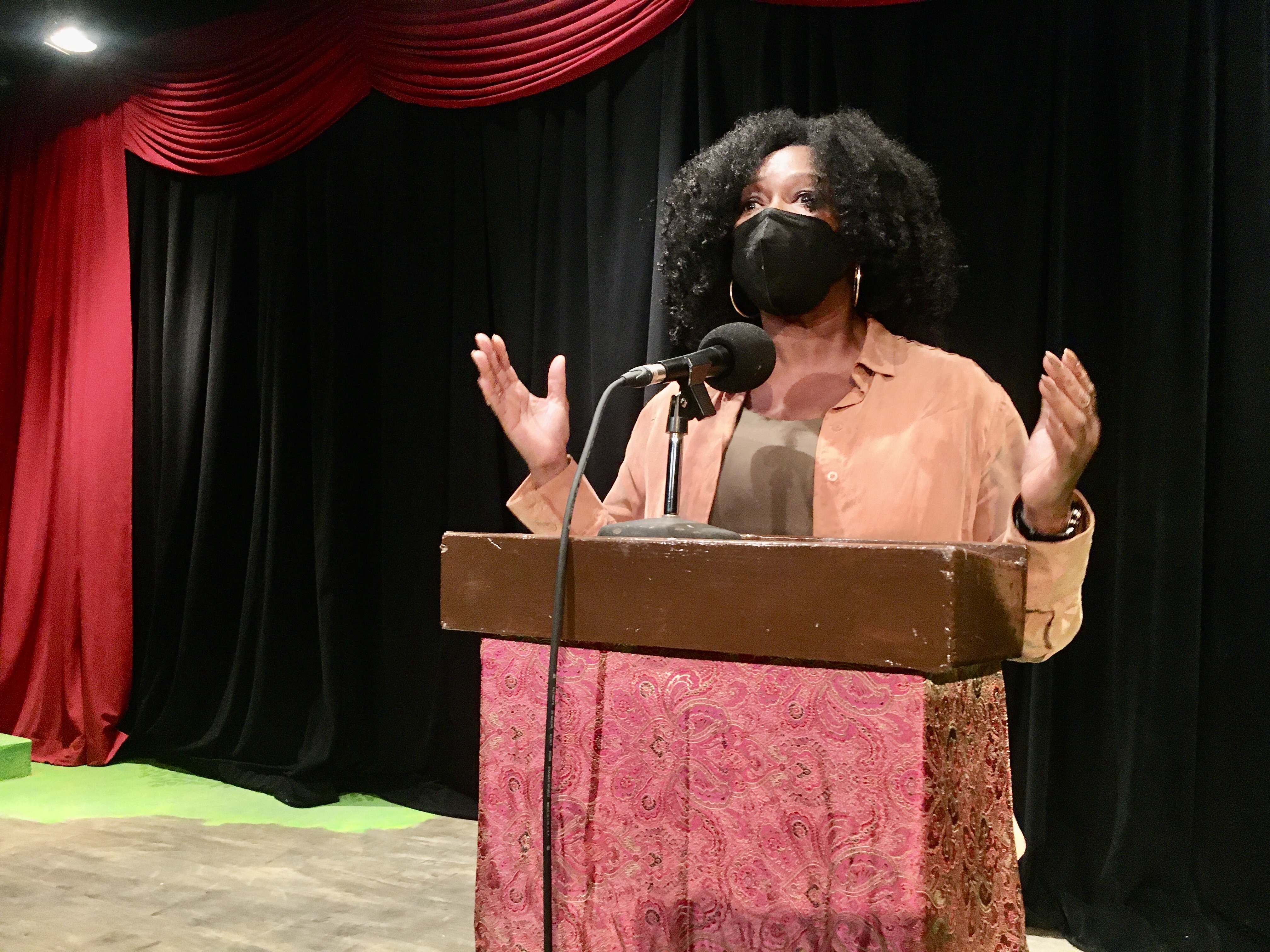
Actor Cynthia Martells speaks during rally in support of SB-1116 at NCRT | Photos: Stephanie McGeary
###
Members of Humboldt’s arts community, including actors, directors and representatives from arts-centered nonprofits, gathered at the North Coast Repertory Theatre (NCRT) on Thursday morning to urge Governor Gavin Newsom to sign SB-1116, a bill that would provide badly needed funding to performance art organizations, which are struggling to survive in the post-pandemic world.
Standing on the theater’s stage, which is currently set for A Midsummer Night’s Dream – the latest local live theater show to be canceled mid-run due to a COVID outbreak — nine speakers from different facets of the arts took turns speaking to the small crowd gathered in the theater, expressing what the arts means to them personally, to the community as a whole and how difficult it has been to continue the work they do since COVID.
Calder Johnson, managing artistic director for NCRT, kicked off the event, speaking of the financial difficulties the theater has faced from impacts of COVID on revenue, and the skyrocketing costs from inflation over the last two years.
“Make no mistake, we all know how to adapt – to make much from not a lot, to innovate, to survive,” Johnson said during the rally. “But this debt we are currently playing with is fundamentally, catastrophically stacked against us to a degree that is truly without precedent.”
SB-1116, which was drafted by California Senator Anthony Portantino, Senator Susan Rubio and Assemblymember Miguel Santiago, would establish the Equitable Payroll Fund (EPF) – a grant program that would support small nonprofit performance arts organizations and their workers by providing substantial reimbursements of payroll expenses.
“We don’t have the resources to sustain without that money coming in from our audience members to sustain the theaters, to even buy makeup, or costumes, or all the things that we need to sustain the theater, it has almost put us to a standstill,” actor Cynthia Martells said during Thursday’s event.
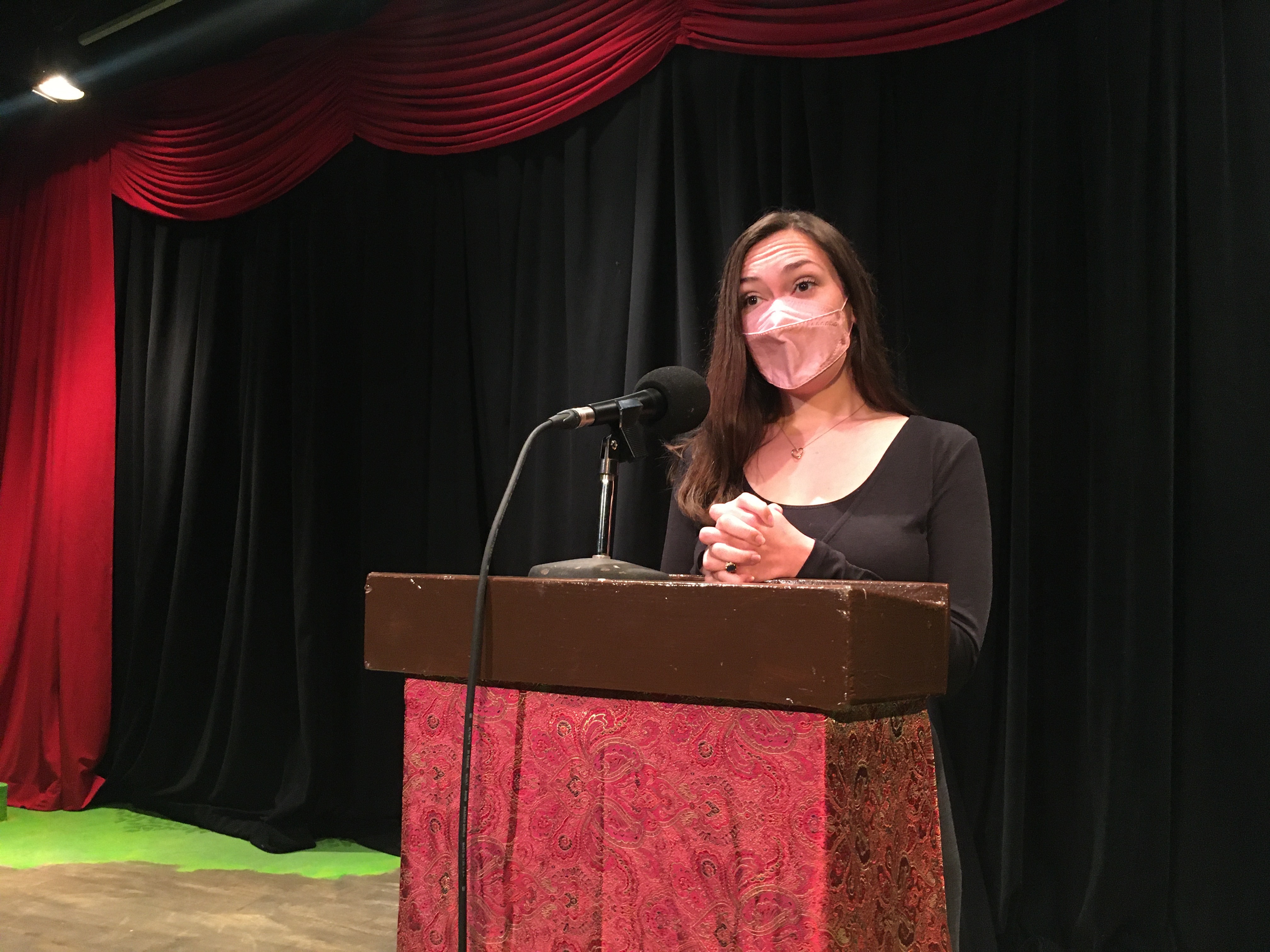
Cleo DeOrio, artistic director of Ferndale Rep.
One of the first things to shut down when COVID hit, theaters and other performance arts spaces have taken a hard financial hit over the past two years. Even as shows have been slowly returning, the audiences have often been smaller and many shows have had to be canceled due to members of the cast or crew contracting COVID. Because theaters are so reliant on ticket sales, it has been difficult for theaters to continue to pay their workers, their bills or their rent.
To give an example of how much financial strain COVID has caused local theaters, Cleo DeOrio – artistic director of Ferndale Repertory Theater – mentioned that the theater’s most recent production, The Rocky Horror Show, had to cancel two weekends of performances due to COVID outbreaks. DeOrio said that canceling those shows lost the theater about $9,000.
“Humboldt County is a really special place,” DeOrio said. “We have a lot of really amazing trained professional performers and teachers and designers and directors. And that is something that not a lot of rural communities have. And we rely on these people to teach,to produce performances, to allow the space for expression. But if these people cannot be paid, they have to go somewhere else, or stop creating art. And I don’t really think either of those is a good option.”
All of the other speakers – including Julie Fulkerson, former Humboldt County supervisor; Brenda Perez of Centro Del Pueblo Humboldt; Jackie Dandeneau, founder and executive director of Arcata Playhouse/Playhouse Arts; Carol Ryder, artistic director of the Humboldt Light Opera Company; Alyssa Hughlett, managing director of Dell’Arte International and Monica Topping of Ink People Center of the Arts – spoke of the importance of the arts to our community, not only as entertainment, but also as a means of stimulating the economy, bringing people together and providing an outlet for expression during difficult times.
“We need the passage of this bill, SB 1116, to be part of a sustainable social transformation that puts in the center the most sublime human practices,” Perez said during the event. “Artists are essential workers to [help us] survive this period of post pandemic. Art creates possibilities for us, all of us, to keep peace in this period of time.”
You can read more about SB 1116 and find out how you can help voice your support here.
HUMBOLDT BAYWATCH: Elks in Rut!
Hank Sims / Thursday, Sept. 8, 2022 @ 2:07 p.m. / Wildlife

Photo: National Parks Service.
This week Midge and Carol take an audio journey up to the Bald Hills, where it’s sexy time for the Roosevelt Elk! The bulls are strutting around and making their odd little trumpet noises and things are getting weird.
Keep your distance from these bad boys! You never want to get too close to the elk in the first place, but this an exceptionally bad time to mess up an elk’s game.
Did you know an elk’s antlers can grow as fast as an inch a day? That’s just one of the amazing and not-necessarily-rut-related facts you can learn in this week’s edition of “Humboldt Baywatch,” which you are cordially invited to listen to below. Plus: Midge plays some audio of those weird-ass elk vocalizations, and speculates about how quickly she would haul ass out of the forest if she heard that spooky sound coming through the trees.
“Humboldt Baywatch,” Sept. 8, 2022.
“Carol,” I should have said, is Carol Vander Meer of Friends of the Dunes, who is our resident Humboldt Baywatch wildlife interpreter. She knows the ways of all these creatures you see around when you go outside the house, and she’s expert in translating their interesting habits into terms we humans can understand.
“Midge” is, of course, KHUM-FM DJ Midge Martin, and she hosts these “Humboldt Baywatch” segments every Thursday. KHUM-FM is the LoCO’s sister station on the FM airwaves (104.3 and 104.7) and online too.
The elk, ladies and gentlemen! May their numbers ever increase.
PREVIOUSLY:


