
Can a Conservative Break Through for California Attorney General?
Ben Christopher / Thursday, April 21, 2022 @ 7:36 a.m. / Sacramento
The last time California voters elected a Republican to statewide office, Gavin Newsom was the youthful mayor of San Francisco, Mark Zuckerberg had just opened up Facebook to non-college students and Donald Trump was a Democratic celebrity tycoon wrapping up the sixth season of “The Apprentice.”
That was 16 years ago.
Now Newsom is the silver-haired governor running for his second term, Zuckerberg is a election-shaping tech mogul pushing middle age and Trump — well, you know all about him.
A lot has changed about politics since 2006, but not the California Democratic Party’s undefeated record for statewide office.
Republicans and conservative independents are hoping that 2022 might finally be the year they break the winning streak. And they’re pinning their hopes on the race for California attorney general.
Now it’s just a matter of picking the right candidate for the job: A conservative without a party label? A self-described “pragmatic” Republican? Or a GOP candidate from the party’s MAGA wing?
“The momentum is there,” Sacramento District Attorney Anne Marie Schubert told CalMatters reporters and editors this week. The top-funded challenger to Democratic incumbent Rob Bonta, she left the GOP in 2018 and will be listed on the ballot with “no party preference.”
“Public safety will transcend politics,” she said. “And this is the moment for that to happen.”
It’s an optimistic line echoed by Nathan Hochman, a Los Angeles lawyer and former federal prosecutor. Hochman is a Republican, but one who has so far resisted taking many specific policy positions and instead emphasizes his long and varied legal resume and his nonpartisan instincts.
Like Schubert, he predicts that, amid heightened public concern over safety, voters are “going to look beyond the party.”
Though Eric Early — who holds base-appealing views on “critical race theory,” gun control and COVID vaccine requirements — acknowledges that running against an incumbent Democrat in California is “always tough,” he is especially hopeful this year.
“If you’re going to take one statewide position, at one point in time in California, where a non-Democrat could win, it’s the attorney general position,” said Early, a Los Angeles lawyer who ran unsuccessfully for attorney general in 2018 and for Congress in 2020.
Money, incumbency and voter registration statistics still favor Bonta to keep the job. But his opponents do have a few things going for them in 2022. There’s the high price of gas, rising inflation, the low approval numbers of Democratic President Joe Biden and the electoral truism that the first midterm election after a new president is elected is almost always a bust for the party in power. Just ask any Republican running in 2018.
Those headwinds are blowing against all incumbent Democrats, but Bonta might be especially vulnerable. Crime — and public angst about it — are on the rise. Political discontent about law and order is beginning to express itself even in the liberal bastions such of San Francisco and Los Angeles, where District Attorneys Chesa Boudin and George Gascón are facing possible recalls. Bonta, a nine-year state legislator from Alameda who was appointed to the position by Newsom in 2021, has never run for statewide office and may lack broad name recognition as a result.
Three ways to take on Bonta
Schubert, Hochman and Early represent different approaches on how to unseat a sitting Democrat in California.
Hochman’s theory of the case relies on the Republican Party’s known, if admittedly unpopular, brand in California, plus its credibility on law and order. “When voters are looking at the ballot, they’re going to see ‘party preference: Republican.’ And I believe when it comes to safety and security, that’s not a negative,” he said.
So far, Hochman has also gone out of his way to skirt some of the controversies that might alienate otherwise left-leaning voters.
Early makes an even more confident argument about the GOP’s appeal this year. He predicts that concern about crime is not only going to persuade the state’s Democratic-inclined voters to overlook the party label for California attorney general, but also to embrace some of the party’s most conservative principles. “I think being a Republican might actually help.”
Neither Republican was particularly impressed with Schubert’s strategy of running with no party preference. “What does that actually stand for?” Hochman asked in his interview with CalMatters reporters.
Early was more direct: “Independents always reserve their right to basically change positions back and forth…I don’t think that that’s fair to the voters, frankly.”
But Schubert’s platform has been consistent so far. Her campaign platform may be every bit as “tough on crime” as Hochman’s, if not more so. But steering clear of a party label, she is positioning herself as a professional prosecutor outside the partisan fray. Her campaign is also a test of whether right-of-center policies can fly in California if they’re severed from the unpopular partisan label that so often accompanies them.
Schubert isn’t the first former Republican to take a shot at statewide office as an independent. In 2014, Dan Schnur, after a long career working for Republicans including former Gov. Pete Wilson and the late Arizona Sen. John McCain, ran for secretary of state with “no party preference.” He won less than 10% of the vote.
Four years later, Steve Poizner, the former Republican insurance commissioner, ran for his old position — only without the “R” next to his name. He fared quite a bit better, but despite spending more than $1.5 million of his own money, he lost to the current commissioner, Democrat Ricardo Lara.
Schnur, now a professor at USC’s Annenberg School of Communications, said he’s more optimistic about Schubert’s chances.
“Before I ran, smart people told me that an independent candidate would need two things to win a statewide race in California: An issue that people cared deeply about, and an office that they understood,” he said. “I had neither of those things. Steve Poizner had one. Schubert may have both.”
Democratic political consultant Garry South, however, remains skeptical that anyone without a “D” next to their name on the ballot has a realistic chance for statewide office.
He rattles off a few statistics: The last time a Republican was elected California attorney general was 1994. The only time a political independent made it to the November election under the top-two primary system was Poizner, a millionaire who used to hold the office he was seeking. The last time an appointed attorney general ran for election was Xavier Becerra in 2018 and the Democrat beat his Republican opponent, Steven Bailey, by 27 percentage points.
“There is just no recent history in California to suggest that a Republican can win statewide office and there is no history to suggest that an (independent) candidate has any kind of advantage,” South said. “I defy anyone to explain to me how Anne Marie Schubert escapes those bare-ass facts.”
‘It’s still California’
In a survey released this month by UC Berkeley’s Institute of Governmental Studies, 23% of registered voters named crime and public safety as their top concern. That was the third most popular pick after the cost of housing and homelessness. But the partisan breakdown was telling: Crime was far and away the first choice among GOP voters, with 39% of registered Republicans calling it their top issue. Among Democrats, it came fifth, behind housing, homelessness, climate change and gas prices.
That partisan breakdown mirrors a February poll from the Public Policy Institute of California, which found that Republican likely voters were nearly three-times as likely as Democrats to say crime, gangs and drugs should be the state government’s top priority.
But even if public safety does grow to become a more dominant and bipartisan concern, it’s not clear voters will take out their uncertainty on the incumbent California attorney general, said Dean Bonner, associate survey director at the institute.
“That’s the first connection that needs to be made: This is an incumbent and this person’s job is attached to crime,” he said. “I do wonder if the average voter would make that connection.”
Perhaps more importantly, there’s the underlying political math that has thwarted California Republicans for decades. At last count, 47% of the state’s 22 million voters are registered Democrats and most of them — time and again — vote for the Democrat. That’s compared to 24% who are Republican. That creates a “real conundrum” for right-of-center candidates who need both the GOP base and a majority of independents to overcome the power of the mostly unified Democratic voting bloc, said Mike Madrid, a Republican political consultant and vociferous critic of the GOP’s embrace of Donald Trump.
“Can it be done? It absolutely can be done. Has it been done before? No,” said Madrid. “Bonta is particularly vulnerable at this point In time, but it’s still California.”
###
CalMatters.org is a nonprofit, nonpartisan media venture explaining California policies and politics.
BOOKED
Today: 7 felonies, 6 misdemeanors, 0 infractions
JUDGED
Humboldt County Superior Court Calendar: Today
CHP REPORTS
No current incidents
ELSEWHERE
Governor’s Office: Governor Gavin Newsom on California securing massive victory for democracy
Coalition for Responsible Transportation Priorities: A Mixed Bag for Transit
RHBB: Family Searching for 25-Year-Old Man Released from Involuntary Hold at Eureka Hospital
KINS’s Talk Shop: Talkshop September 4th, 2026 – Pam Powell
OBITUARY: Nancy Marie Portalupi, 1947-2022
LoCO Staff / Thursday, April 21, 2022 @ 6:56 a.m. / Obits
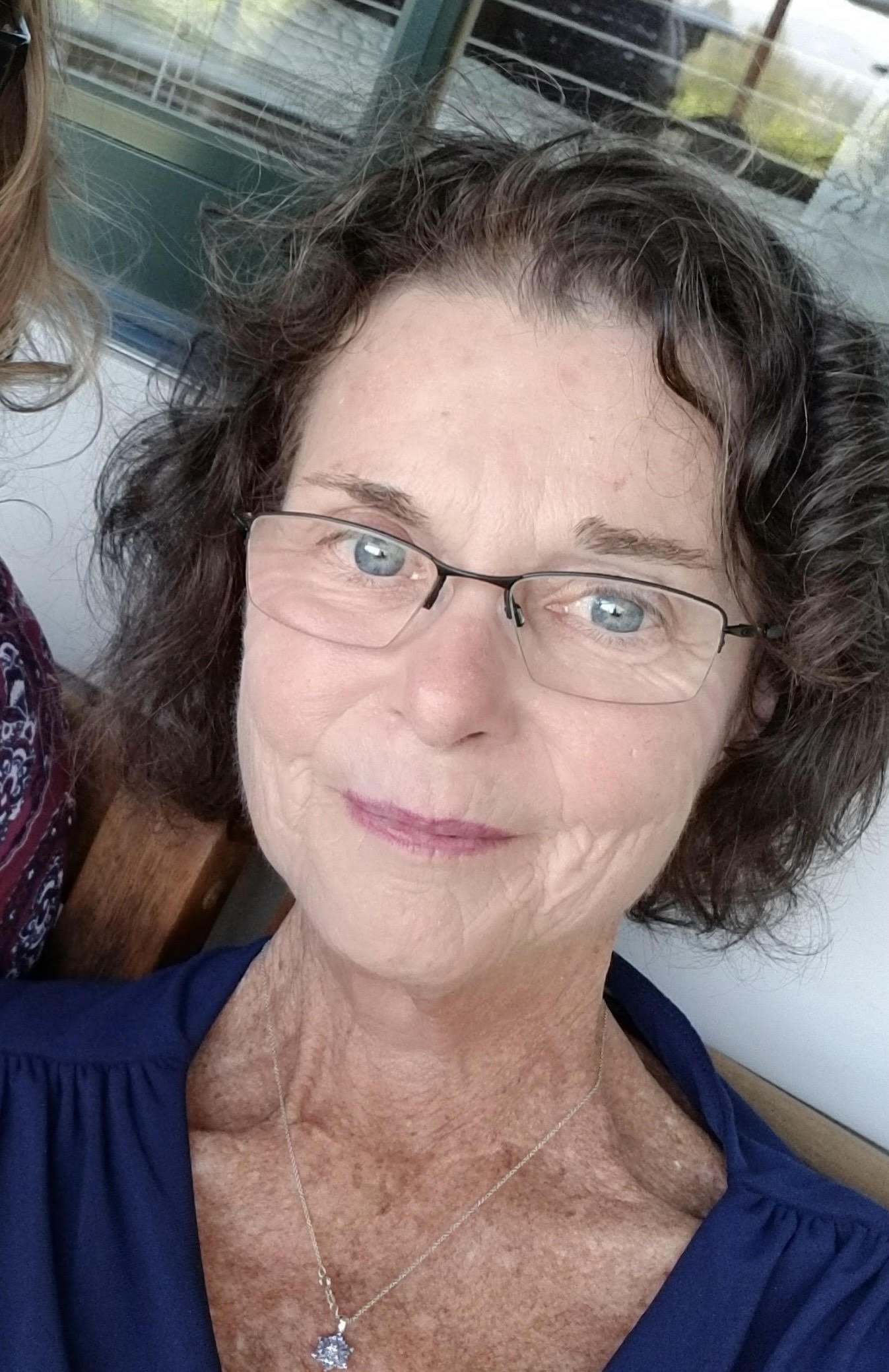
Nancy Marie Portalupi passed away after a short illness on March 27, 2022. She was born on March 3, 1947 in Arcata.
Daughter of parents Dr. Henry Celeste Portalupi (1917-1999) and Mary Elizabeth Portalupi (1920-2003), husband Louis Anthony Mihalka (1948-2019), sister Patricia Ellen Portalupi (1943-2003). She is survived by her loving daughter Chloe Jane Mihalka, granddaughter, Scarlet Elizabeth Burgess, brother Richard Henry Portalupi, (Rona) sister Jane Elizabeth Portalupi (Tim Borges) and her many nieces and nephews. Nancy was a very dedicated daughter to both Mary and Henry and was proud of the life her parents created in Arcata in their respective careers as a local Arcata physician and a nurse.
Nancy was born and raised in Arcata and lived her entire life in Humboldt County. She had a great love for the Humboldt County culture, history of the area, the Redwoods, and the ocean. She attended grammar school at CES, High School at Arcata High and college at Humboldt State University. An advocate of education, she earned her BA and Multiple Subjects Teaching credential at HSU. She then entered the Psychology department and earned a Pupil Personnel Services Credential, which included an MA in Psychology. She applied her education at the Humboldt County office of Education and was a counselor in many of the rural schools in Humboldt County. She then became the Testing Director at Humboldt State University’s testing Center and retired after 30 years of service.
Nancy met her husband, Lou, in 1972, and enjoyed over 50 years of marriage. They were soul mates on so many levels and just enjoyed being together. They were great conversationalists, supporting the same political views and often discussed politics and their mutual compassion to make the world a better place for everyone. They purchased Nancy’s father’s medical office and apartment building in downtown Arcata where Lou practiced chiropractic medicine. Nancy recently renovated the downtown building and dedicated it to the Portalupi family.
They had a passion for traveling, especially taking road trips to Seattle or Redding, and travelling through Europe. They had a special connection to Hawaii, where they were married. Nancy and Lou were very dedicated parents and grandparents to their daughter Chloe and granddaughter Scarlet. Nancy and Chloe were inseparably close and touched in with each other many times a day. Nancy encouraged Chloe to be her best and supported her through the many ups and downs from childhood to becoming a very caring, educated, and responsible young mother and adult.
Nancy had an eye for art, especially modern art, and filled her home with paintings, many of which are local artists that she supported. She had an incredible sense of style. She and Lou built a home that is an expression of her talent for great design located above Mad River with a beautiful view of the ocean that she loved to sit and gaze at. She loved the color purple and tastefully incorporated it throughout her home and in every aspect of her life.
Nancy always wanted the best for everyone both in their personal and professional life. She gave everyone the encouragement to be their very best and instilled confidence that everything is achievable. She brought out their ability to embrace their individual strength, changing many lives for the better.
Nancy was the most loyal person ever. She was a dedicated sister, aunt, and daughter. She loved nothing more than spending time with family. She had a very close circle of friends, many that spanned over her entire life. She kept her family and friends close to her heart. She was a communicator and was alwaysthere for each and every one of us. Many of us now can’t imagine not being able to pick up the phone and talk to her. We are all so sad.
We would like to say a special thank you to Dr. Gary and Chris Garcia, Jack Jones, Diane Stockness, Manny and Denise Daskalfor being there every step of the way in Nancy’s final days.
A celebration of life will be held on Saturday, September 3, at her home. Please email jane.portalupi@gmail.com if you would like to attend. In lieu of flowers, the family is requesting that gifts be made in memory of Nancy to the Student Disability Resource Center Fund, at Cal Poly Humboldt using this link.
###
The obituary above was submitted by Nancy Portalupi’s loved ones. The Lost Coast Outpost runs obituaries of Humboldt County residents at no charge. See guidelines here. Email news@lostcoastoutpost.com.
OBITUARY: Dianne Lou Hollingshead (Wyman) (Izatt), 1937-2022
LoCO Staff / Thursday, April 21, 2022 @ 6:56 a.m. / Obits
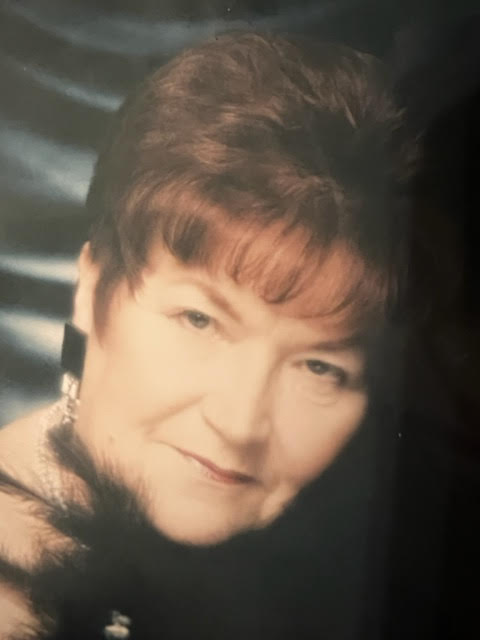
Dianne passed away on March 22, 2022 at the age of 85.
Dianne grew up in Eureka and graduated from Eureka High School, class of 1955. She was a member of the Elks Lodge and a member of her Eureka High School Class of 1955 reunion committee. She loved watching her son Mark play and coach baseball and rooting for the San Francisco Giants.
She worked at St Joseph’s in the kitchen and worked at the Elks Lodge as well as being a lifetime member. She was mostly a wife and mother who enjoyed and cheered on her son’s athletic endeavors.
Dianne is survived by her stepson Bron Hollingshead; grandsons Jacob, Stephen, Jarrod and Cameron Izatt; nieces Jean McLeod, Lisa Jette, Terri Wood and Rachelle Peterson; nephews Ron and Robert Wyman; her sister-in-law Kathy Holland; and very special friend Charlotte Rose, who was always there for her.
She was predeceased by her husband Raymond Hollingshead, her parents Richard and Maxine Wyman, her brothers Donald and Darrell Wyman, her sister Denise Petersen, her nephew Rick Wyman and her beloved sons Michael and Mark Izatt.
We would like to offer a special thanks to Mark’s friends and especially Bill Damron and Matt Cruz for looking after our Aunt Dianne after Marks passing.
In lieu of flowers please make a donation to your local youth baseball club in her name.
There are no services planned at this time.
###
The obituary above was submitted by Dianne’s loved ones. The Lost Coast Outpost runs obituaries of Humboldt County residents at no charge. See guidelines here. Email news@lostcoastoutpost.com.
It’s 420! And What Better Way to Celebrate Than By Legally Smoking Weed at Eureka’s First Indoor Cannabis Lounge?
Stephanie McGeary / Wednesday, April 20, 2022 @ 5:16 p.m. / Cannabis

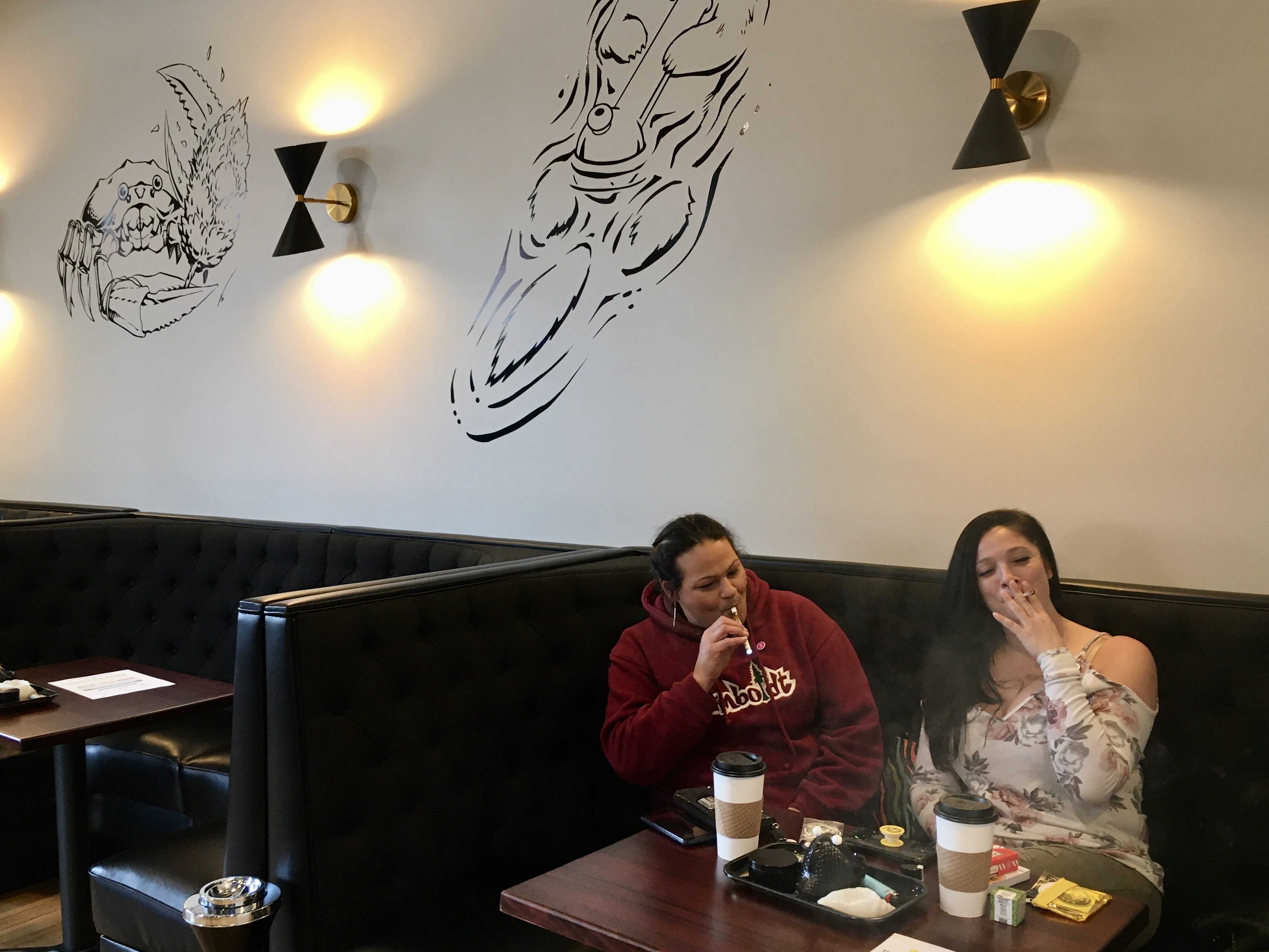
High Tide patron Sarah Martis tries out one of the gravity hookahs on 4/20 | Photos: Stephanie McGeary
###
More than three years after the City of Eureka passed an ordinance allowing cannabis smoking lounges, the city finally has its first indoor space for legally smoking weed, with High Tide Cannabis Lounge now officially open on the corner of Third and F Streets – previously home to Because Coffee – in Old Town.
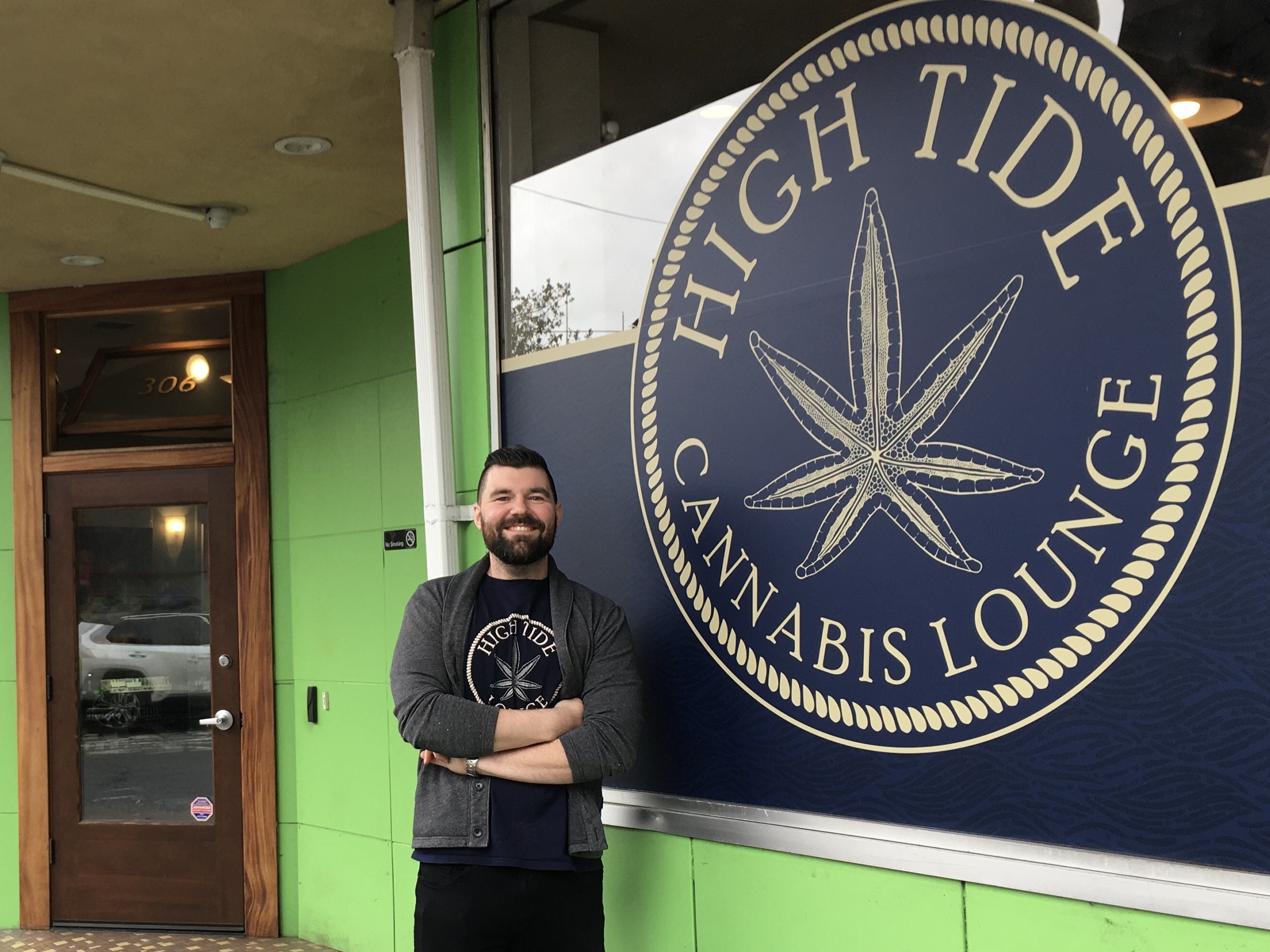
“It’s a big feeling of a weight being lifted,” Ray Markland, the company
manager, told the Outpost inside the freshly opened smoking lounge on Wednesday afternoon. After being granted the permit by the City back in 2019, Markland and his partners were just about ready to open the lounge in 2020. But when COVID hit, for obvious reasons, the project was put on hold.
So Markland is beyond thrilled that he can finally welcome folks into a place to legally and safely smoke cannabis. The lounge had a soft opening last week, with about 60 folks – friends and family of the employees – coming to try out the lounge for the first time. Markland said that so far, things are going great and people really seem to be enjoying the space and the novelty of being able to smoke indoors.
To be clear, High Tide is not the first cannabis consumption lounge to open in Eureka. Papa and Barkley Social claims that title, having opened in April, 2021 in the former Kmart off of south Broadway. However, the Papa and Barkley smoking lounge is outdoors, making Hide Tide the official first completely indoor space to spark up.

And amazingly on the afternoon of 4/20 with multiple people smoking everything from pre-rolls to hookahs, the relatively small space was not overpowered by a hazy smoke cloud. This, Markland said, is thanks to the powerful HVAC filtration system, which filters out the smoke and fills the space with completely fresh air every three minutes. Having a high-standard filtration system in place was one of the requirements from the City for the business to be able to allow indoor smoking – not only because it helps minimize the smoke inside, but also because it keeps the smell from permeating outside. The window is also covered so that the customers have privacy and passerbys cannot see the cannabis consumption going on in the space.
The business is also required to have multiple other measures in place to help ensure customer safety. For health safety, the staff cleans and sanitizes all of the smoking implements after each use. The lounge has recommended THC dosage information posted at all of the tables, and also provides public transportation and cab information, to help prevent folks from driving under the influence. All of the employees are also trained on recommended dosage and are very familiar with the products, Markland said. So before a customer consumes, the employees will ask about their history and level of cannabis use and make recommendations on which products they should use.
“Our motto is ‘go low, go slow,’” Markland told the Outpost, adding that the employees will always suggest a very small dosage level to start for those with little to no experience using cannabis.
In order to enter the smoking lounge, you must first go to the Ecocann
dispensary, where you will be asked to present your ID to the doorperson (you must be 21 or older to enter both the dispensary and the lounge). You then make your purchase, at which point the budtender will ask if you are planning to use the consumption lounge, ask about your usage history and make recommendations. You are then escorted to the lounge, where there are multiple different ways to consume your cannabis products – lighters, ashtrays, papers and gravity hookahs (yeah, that’s apparently a thing) are all provided, along with more experienced budtenders to help take care of you. The lounge also sells non-alcoholic beverages and munchies – including chips, candy and Ben and Jerry’s ice cream.
The official grand opening for High Tide, with a ribbon cutting ceremony and all that, will be sometime in May, Markland said. But the lounge is already open for business on Sunday from 11 a.m. to 8 p.m., Monday through Thursday from 10 a.m. to 9 p.m. and Friday and Saturday from 10 a.m. to 10 p.m. Moving forward Markland plans to bring in more activities and entertainment for his stoned patrons, including game nights, trivia nights, “stoner movie” nights, live music and even “stoned karaoke.”
“I think there’s a lot of potential for fun things like that,” Markland told the Outpost. “Our whole goal is to present a safe, comfortable space for people to enjoy cannabis and hopefully it will be a really good experience for people coming to Humboldt County to see that they can consume indoors.
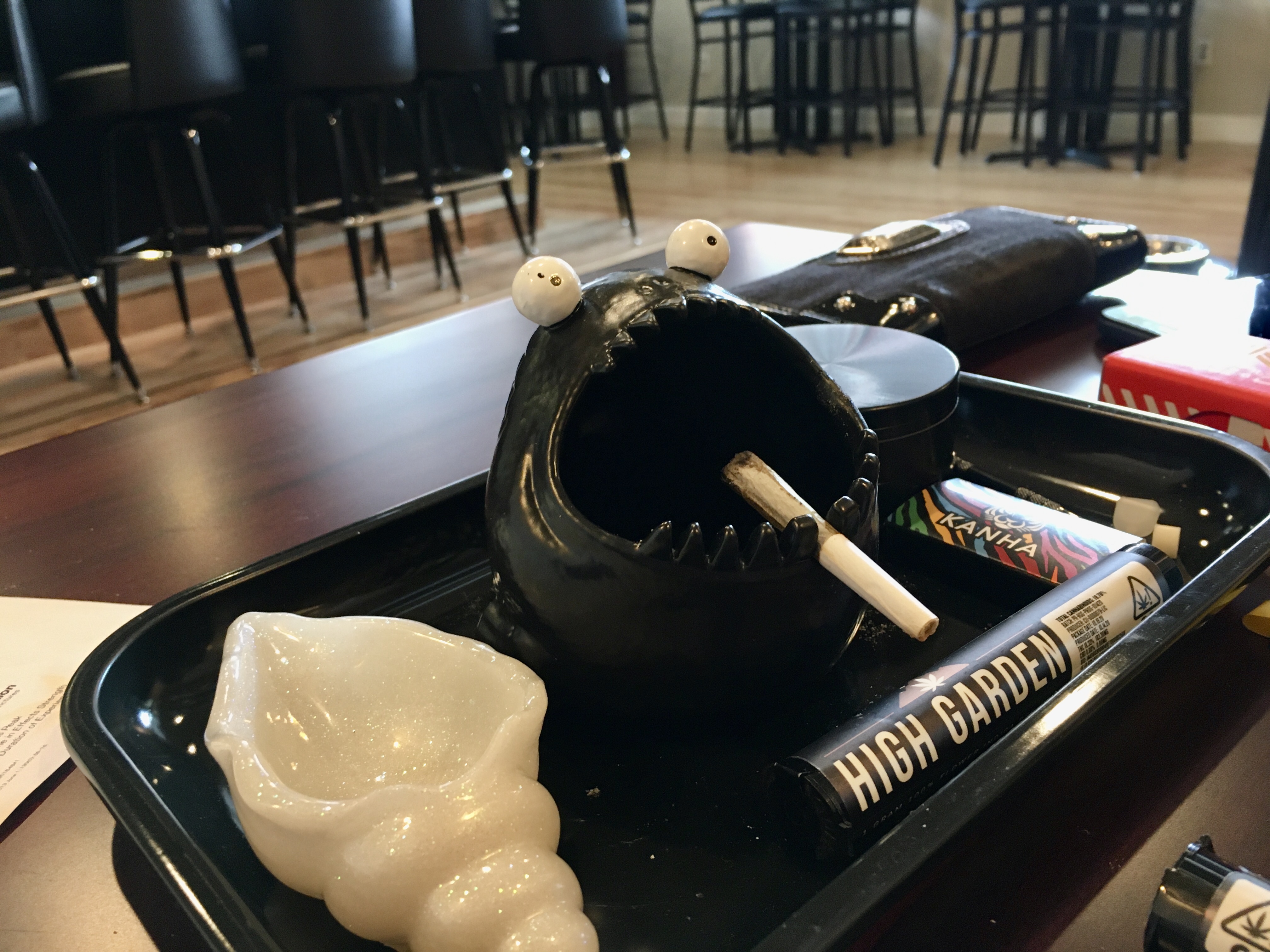
One of High Tide’s cute ashtrays

TOO MANY DRIVE-THRUS? Eureka City Council Considers Whether or How to Limit the Number of Businesses You Can Drive Through
Isabella Vanderheiden / Wednesday, April 20, 2022 @ 5:11 p.m. / Local Government
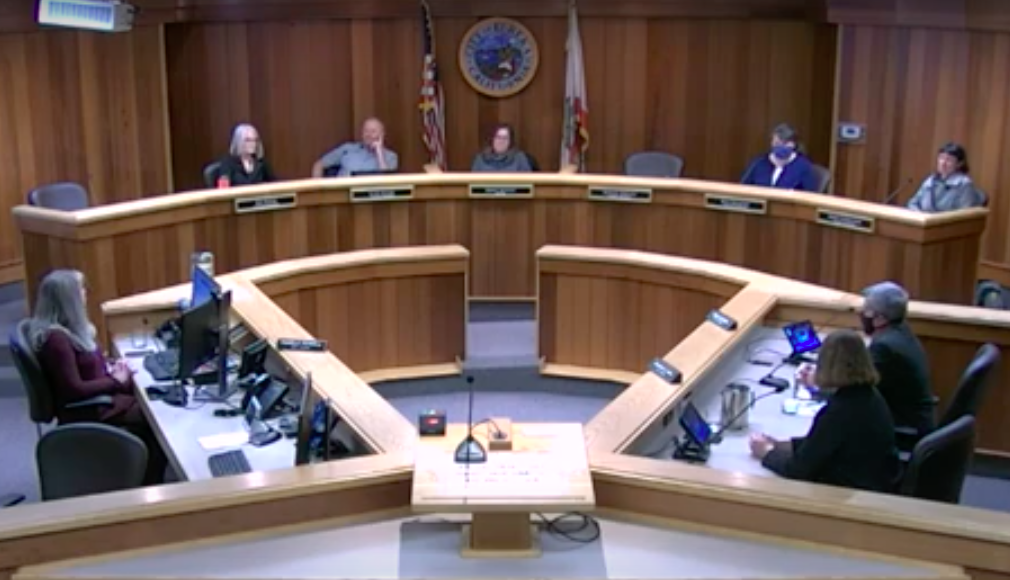
Screenshot of Tuesday’s meeting. Councilmember Natalie Arroyo attended via Zoom.
###
Should Eureka ban new drive-thrus? Should it depend on what kind of drive-thru is up for consideration, or whether or not it is a locally owned business? If not ban them entirely, should drive-thrus be restricted to certain areas of the City? These are the questions the Eureka City Council pondered while exploring drive-thru options during its regular meeting on Tuesday night.
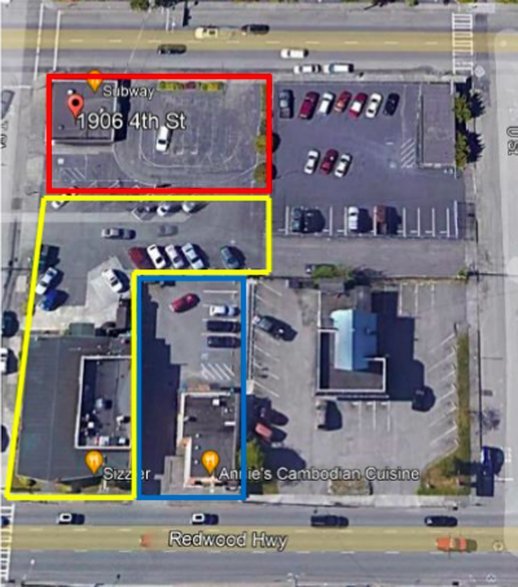
The discussion item was brought forth as a future agenda item during the council’s March 1 meeting by Councilmember Leslie Castellano just days after the Outpost reported on a development proposal to demolish Annie’s Cambodian Cuisine – located on 101 North (Fifth Street) between U and T Streets in Eureka – to make way for a drive-thru restaurant. The project referral also included plans to tear down a now-closed Subway Sandwiches at 1906 Fourth Street and the former Sizzler next to Annie’s at 1905 Fifth Street.
Castellano did not mention these sites in particular when she suggested the agenda item but noted, “There’s a number of drive-thru restaurants along the 101 corridor in Eureka and I’m interested in exploring the idea of limiting the expansion of drive-thru restaurants in Eureka and perhaps options or choices around that.”
During Tuesday’s meeting, City Principal Planner Kristen Goetz said there are 31 drive-thrus within Eureka’s city limits, 15 of which are food drive-thrus. “There are a lot of different kinds of drive-thrus here in Eureka,” she said. “We have drive-thru banks and ATMs. We have drive-thru coffee shops, pharmacies, car washes and drive-thru restaurants. In some jurisdictions [there are] drive-thru cleaners, liquor stores, even drive-thru wedding chapels.”
Eleven of the 15 food drive-thrus are “formula businesses,” which are “substantially identical to some number of other businesses in a geographic area” and are characterized by standardized service, menus, uniforms and an exterior design of the structure, similar to a “chain restaurant.”
There are also four drive-thrus in the works, including a food drive-thru where Annie’s Cambodian currently sits, a food drive-thru at Target that is awaiting a coastal development permit from the California Coastal Commission and two proposed Starbucks drive-thrus, one at the existing site of the Pine Motel on Broadway and another at the aforementioned Subway.
Eureka would certainly not be the first city to restrict drive-thrus. The City of Arcata only allows drive-thru restaurants in Valley West and, in 2002, adopted an ordinance to limit the number of formula restaurants in the City. Goetz noted that drive-thrus in Fort Bragg are conditionally permitted in the City’s central business district and only allowed at the rear of a building. In Sebastopol, drive-thrus are prohibited unless they’re in existing use.
“Reasons used [to ban drive-thrus] in other jurisdictions include, but are not limited to, reduced air pollution from idling vehicles, reduced litter and noise pollution, improved walkability in commercial areas [and] protection of small local businesses,” Goetz said, adding that there is evidence to suggest a reduction in fast food drive-thrus promotes healthier communities.
On the other hand, drive-thrus can provide services for people with limited mobility, including people who are disabled and the elderly. Drive-thrus were also critical during the pandemic when limited contact was preferred and before restaurants had implemented curbside pickups. During this same period, Goetz said seven food drive-thrus generated over $263,000 in sales tax revue for the general fund.
“There are a number of items on your menu that you could ask staff to research and return with a recommendation for appropriate action,” she said. “…We could consider maintaining the status quo and doing nothing. We could look at disallowing all new drive-thrus or maybe disallowing only a certain type. …We could consider restricting all drive-thrus to certain zones, or restricting food or beverage serving drive-thrus to certain zones.”
The council could choose to restrict the total number of drive-thrus within Eureka’s city limits, restrict proximity to other drive-thrus, or require all drive-thrus to be conditionally permitted.
Councilmember Natalie Arroyo asked whether the council had the power to change the outcome of a drive-thru that had already gone through the permitting process but had yet to be built. “We’re not talking about current applicants here. We’re talking about future applicants, right?”
“It is less than likely that we would be able to stop somebody who’s in the process, provided that their application has been deemed to complete,” Goetz said. “The four that I mentioned to you this evening have been completed.”
Similarly, Castellano asked if it would be possible to prevent any of the four aforementioned projects from moving forward.
“Target has already been approved by the City, it’s just waiting for a coastal development permit for permission,” Goetz said. “The drive-thrus at T Street are going to the planning commission at their May meeting. And the drive-thru and restaurant on Broadway [are] going to design review next week.”
Mayor Susan Seaman noted that the planning commission’s role in the approval process is to ensure the project follows the City’s guidelines. “They don’t get to really make a decision about whether they want it or not.”
Councilmembers Scott Bauer and Katie Moulton expressed interest in restricting drive-thrus in Old Town and Henderson Center but were not necessarily in favor of a citywide ban.
“I would not be in favor of restricting drive-thrus on the 101 corridor,” Moulton said. “Eureka straddles a river of money and anything we can do to snag sales tax out of all the cars that go through every day, I’m generally in favor of that. I wouldn’t want to restrict drive-thrus or most development on the corridor.”
Councilmember Kim Bergel suggested any future drive-thrus be limited to the north and south ends of Eureka along the 101 corridor.
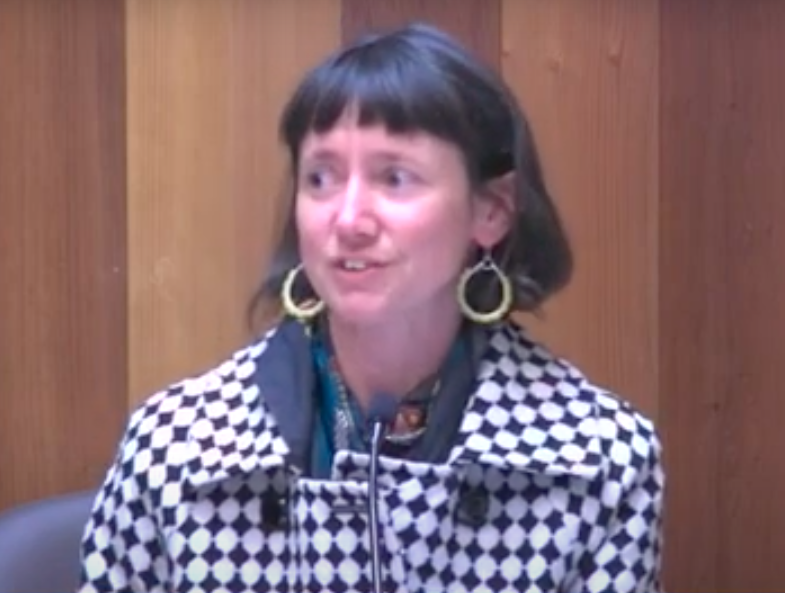
Castellano underscored that she has “little or no interest in drive-thrus” and asserted that there “are more than enough drive-thrus to meet any tourist needs.”
Arroyo acknowledged that the discussion was “partly in reaction to certain developments that are already in progress” but said it wouldn’t be fair to move the goalpost in the middle of a project that abides by current City standards.
“I had a lot of the same concerns that folks have already mentioned,” she said. “Wanting to balance the need to obtain tax revenue from passing motorists, as well as wanting to reduce idling, wanting to support local businesses and all of the things we just talked about. I think more could be accomplished by a cap on formula businesses and figuring out where the footprint of that is and could be.”
Castellano pushed back against the notion that the City would generate more sales tax revenue by allowing more drive-thru restaurants. “I don’t think we have an adequate understanding of how that affects other businesses. …I really think making a decision saying that we’re going to bring more tax revenue in the City of Eureka based on this little bit of information is a bad idea.”
Surprisingly, there were no members of the public who wished to offer public comment during the meeting.
City attorney Autumn Luna reminded the council that they did not have to vote on the item immediately and said staff would bring back additional recommendations based on the council’s conversation.
City Manager Miles Slattery suggested the council hold a workshop to come up with more specific suggestions for the council.
Mayor Seaman agreed and emphasized the need for more community engagement on the subject. “The fact that nobody’s here is surprising because this is something that I think a lot of people care about,” she said.
Paz Dominguez is Deleting Comments and Banning People From Her Campaign’s Social Media Pages. Is That Legal?
Ryan Burns / Wednesday, April 20, 2022 @ 3:44 p.m. / Government , Politics

Humboldt County Auditor-Controller Karen Paz Dominguez. | Detail of a campaign photo by Jonathan DeSoto, Facebook.
###
In the midst of a contentious re-election bid, Humboldt County Auditor-Controller Karen Paz Dominguez has been deleting critical comments and blocking users from her campaign’s social media pages, moves that critics say run counter to her stated platform values of transparency and accountability.
Three people, including two county employees, recently reported to the Outpost that Paz Dominguez had deleted comments they’d posted online — two to the Facebook page “Karen Paz Dominguez for Auditor-Controller” and one to a YouTube video posted by Paz Dominguez — and they were subsequently blocked from commenting on the Facebook page.
California’s Public Records Act requires government agencies to preserve public records regardless of physical form, and according to the California Records and Information Management Program (CalRIM), a department of the Secretary of State, most social media content, including comments, is subject to those rules.
The department notes that it can be challenging to determine whether social media content qualifies as a public record. The First Amendment prohibits public officials from excluding citizens from public forums such as city council meetings and town halls, but does Paz Dominguez’s campaign page on Facebook represent a public forum?
A guidebook produced by CalRIM says the answer to such questions hinges on content and context. It advises that any content pertaining to an organization’s official business, mission and policies should be considered a public record, along with anything that documents a controversial issue, involves prominent entities within the constituency or contains information that can’t be found elsewhere.
Some prominent court cases have tackled this issue in recent years. In 2019, for example, the U.S. Court of Appeals for the Fourth Circuit ruled in the case of Davison v. Randall that the interactive portion of a public official’s Facebook page is indeed a “public forum,” and so an official can’t block people from it simply because of the opinions they express. Former president Donald Trump was sued for blocking people from his Twitter account, and the U.S. Court of Appeals for the Second Circuit found that in doing so he violated the First Amendment.
In an email, Paz Dominguez told the Outpost that, after careful consideration, she deleted the comments in question because she didn’t want the page “to be turned ugly by incessant and obsessive misinformed attacks.”
She continued, “Those commenters could have just as easily sent me a message to share their concerns and maybe even hear my perspective but they chose not to proving that they’re not really interested in getting primary source information. Some might refer to this behavior as ‘trolling’.”
One of the people whose comment got deleted is Paul Rodrigues, a certified public accountant who previously worked as finance director for both the City of Eureka and the City of Fortuna. (He’s now working as finance director for the Bay Area city of Pittsburg.)
Rodrigues said he posted a comment on this April 3rd post, which links to a YouTube video in which Paz Dominguez mocks a 2018 independent investigation report that found she had fostered an atmosphere of retaliation, hostility and bullying while demonstrating a lack of leadership and making poor policy decisions, among other conclusions. (You can download a heavily redacted version of the 59-page report by clicking here.)
“I normally wouldn’t even have posted on her page … ,” Rodrigues said, “but I thought it was pretty egregious that she made fun of harassment that was found to be of merit.”
In the YouTube video, Paz Dominguez summarizes one employee’s complaint about being denied pizza that had been provided to other staff. Addressing the unidentified complainant with evident sarcasm, she looks into the camera and says, “I’m sorry. I hope I can make it up to you someday.”
Rodrigues said he challenged her to elaborate. “I [wrote], ‘Great, now comment on the other instances of harassment that were found to be of merit,” Rodrigues told the Outpost. His comment, posted on the morning of April 6, got deleted within 20 minutes, he said.
Believing this deletion to be illegal, Rodrigues promptly emailed a complaint to the California Fair Political Practices Commission. The agency’s enforcement division staff emailed him back, saying the FPPC only has authority to enforce the Political Reform Act, which doesn’t regulate such actions.
Regardless, Rodrigues said it was bad practice for a public official. “I just think it’s a little ironic, demanding transparency from others when she’s not being transparent herself.”
Asked via email to respond, Paz Dominguez said Rodrigues now lives in another county and “is not the authority in my field nor is he an elected official.” She added, “He and I didn’t work together and he has disclosed to me that he was asked by his friends to ‘speak up on their behalf’ so he is not speaking from direct experience but rather just adding to the counterproductive noise.”
Rodrigues, in turn said, “[T]his continues a pattern of behavior in which she characterizes anyone who disagrees with her as attacking her personally.”
Christine Messinger recently published a comment under the same Facebook post and, like Rodrigues’, it was quickly deleted. Messinger retained a screenshot of her comment, though:
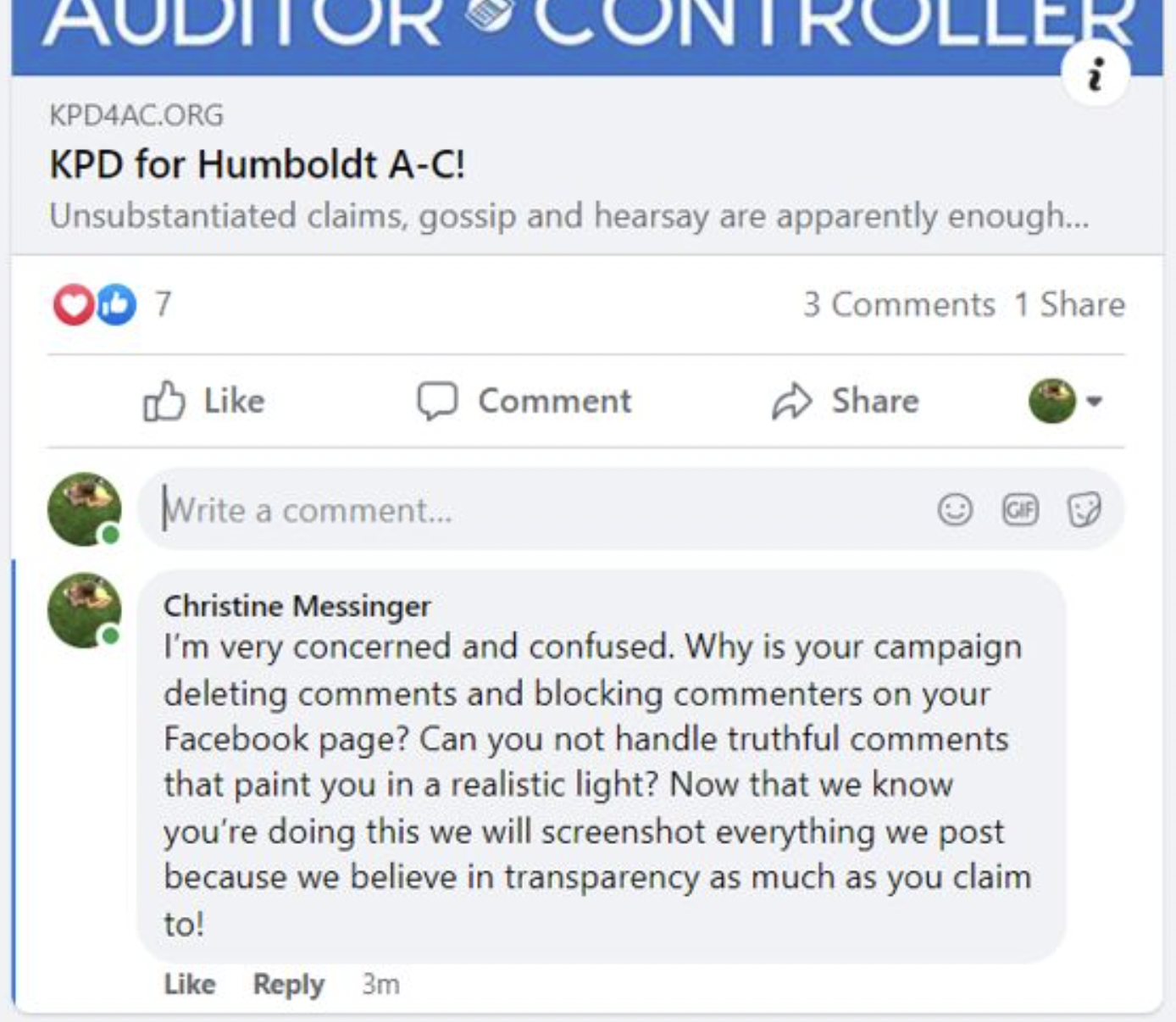
Screenshot of a since-deleted comment on the Facebook page “Karen Paz Dominguez for Auditor-Controller.”
Messinger works in the media office of the county’s Department of Health and Human Services, though she said she made the comment on her lunch break and was speaking as a private citizen. She has since been blocked from commenting on the page.
Deputy County Administrative Officer Sean Quincey posted a comment under Paz Dominguez’s YouTube video on the day it was posted, he told the Outpost. His comment was quickly deleted, though he, too, retained a screenshot, which he forwarded:
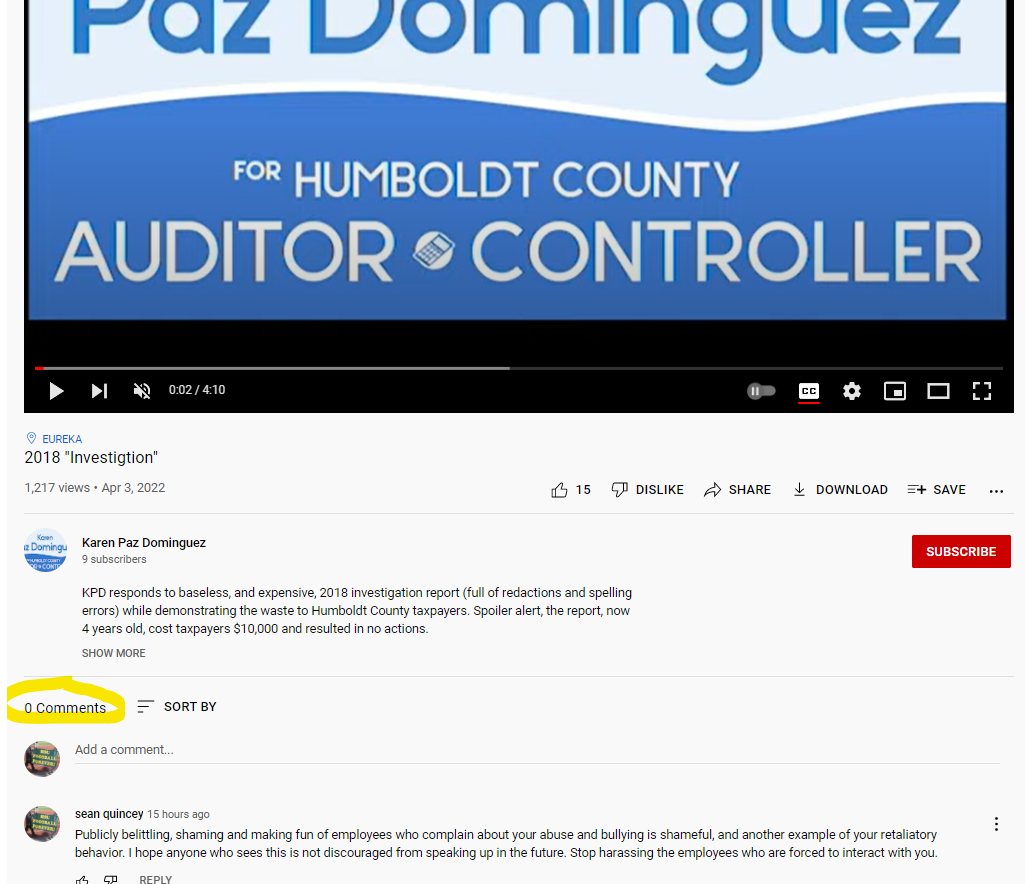
If the text in that image is too small to make out, Quincey’s comment says, “Publicly belittling, shaming and making fun of employees who complain about your abuse and bullying is shameful, and another example of your retaliatory behavior. I hope anyone who sees this is not discouraged from speaking up in the future. Stop harassing the employees who are forced to interact with you.”
At some point this week, Paz Dominguez changed the settings on her campaign Facebook page to further limit who can comment. A notice now appears under all posts:
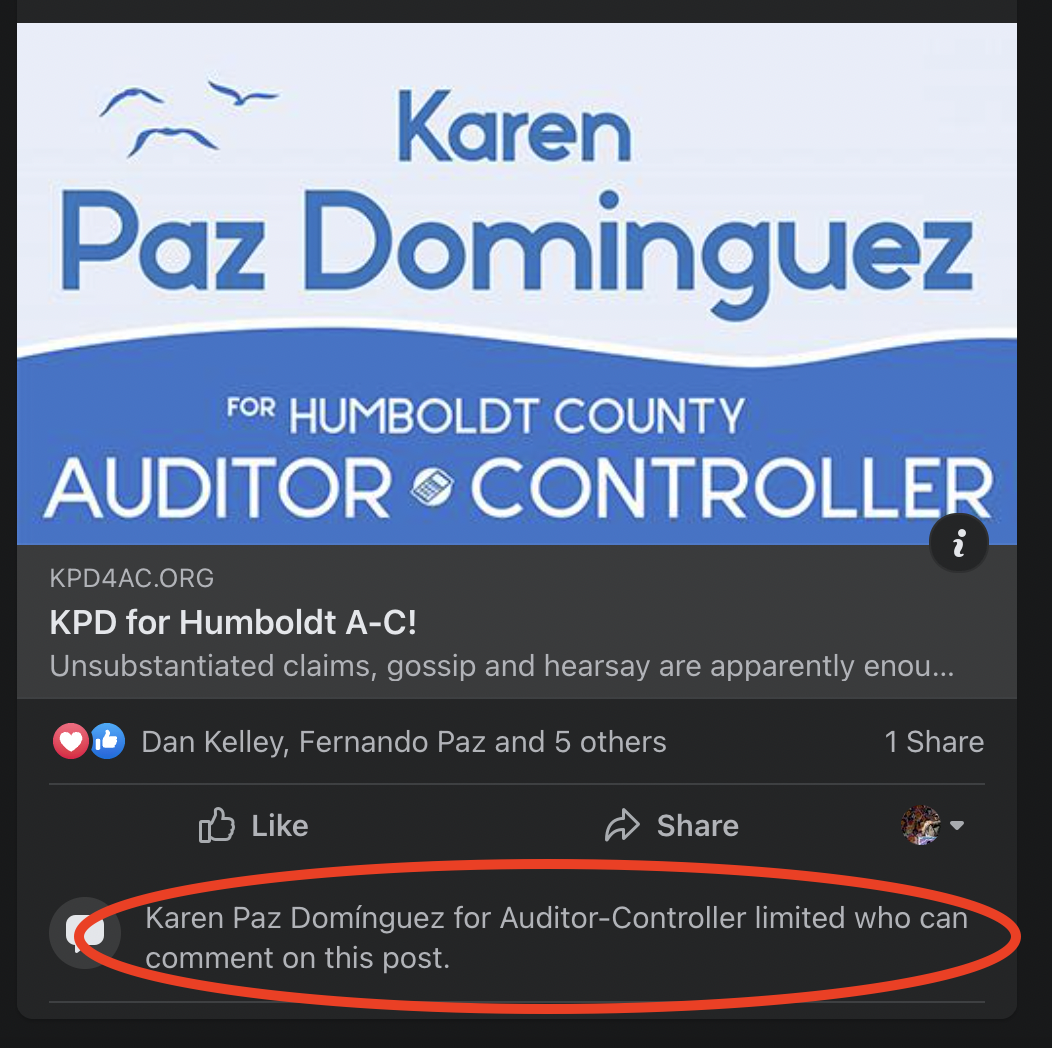
Asked about this, Paz Dominguez said, “That’s a setting option on the post itself that limits [commenting] to pages and profiles that follow the page, if I remember correctly.”
When initially asked about deleting comments and blocking users, Paz Dominguez argued that because this Facebook page is designated for a political candidate, it’s not subject to provisions in the California Public Records Act that prohibit public officials from deleting public comments and blocking people.
“My campaign page is designated as a ‘Political Candidate’ page, not as a ‘politician’ or official government page for the Auditor-Controller’s Office,” she said in an email. “I also do not perform any official work via that page and some volunteers also have administrative access.”
In scrolling back through the page history, however, the Outpost found close to a dozen posts that addressed official county business rather than political campaign activity.
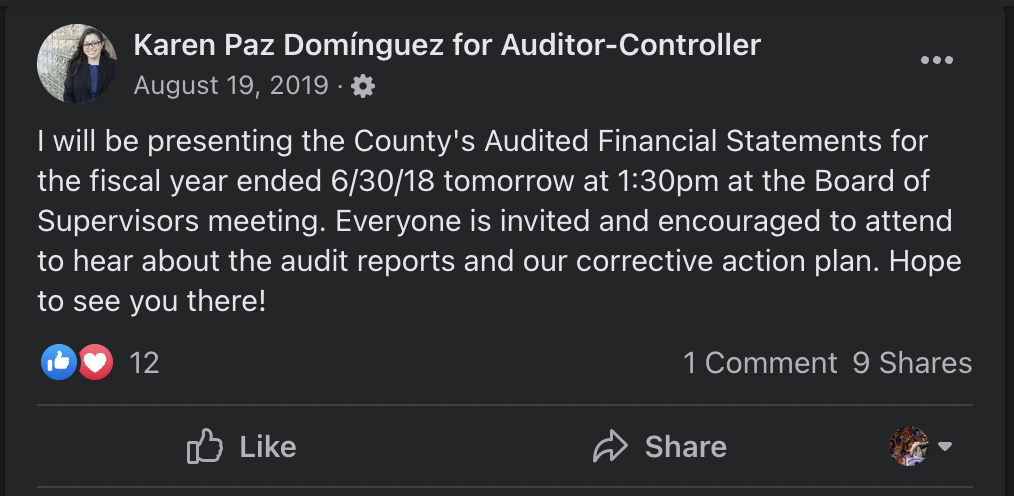
The page was created in November of 2017, roughly six months before Paz Dominguez was elected. Once she assumed office in early 2018 2019, Paz Dominguez continued to publish posts to the page, using it to communicate with the general public as well as county vendors and employees. Here, for example, is a screenshot of a post in which she invited “everyone” to attend a Board of Supervisors meeting to hear her presentation of the county’s audited financial statements.
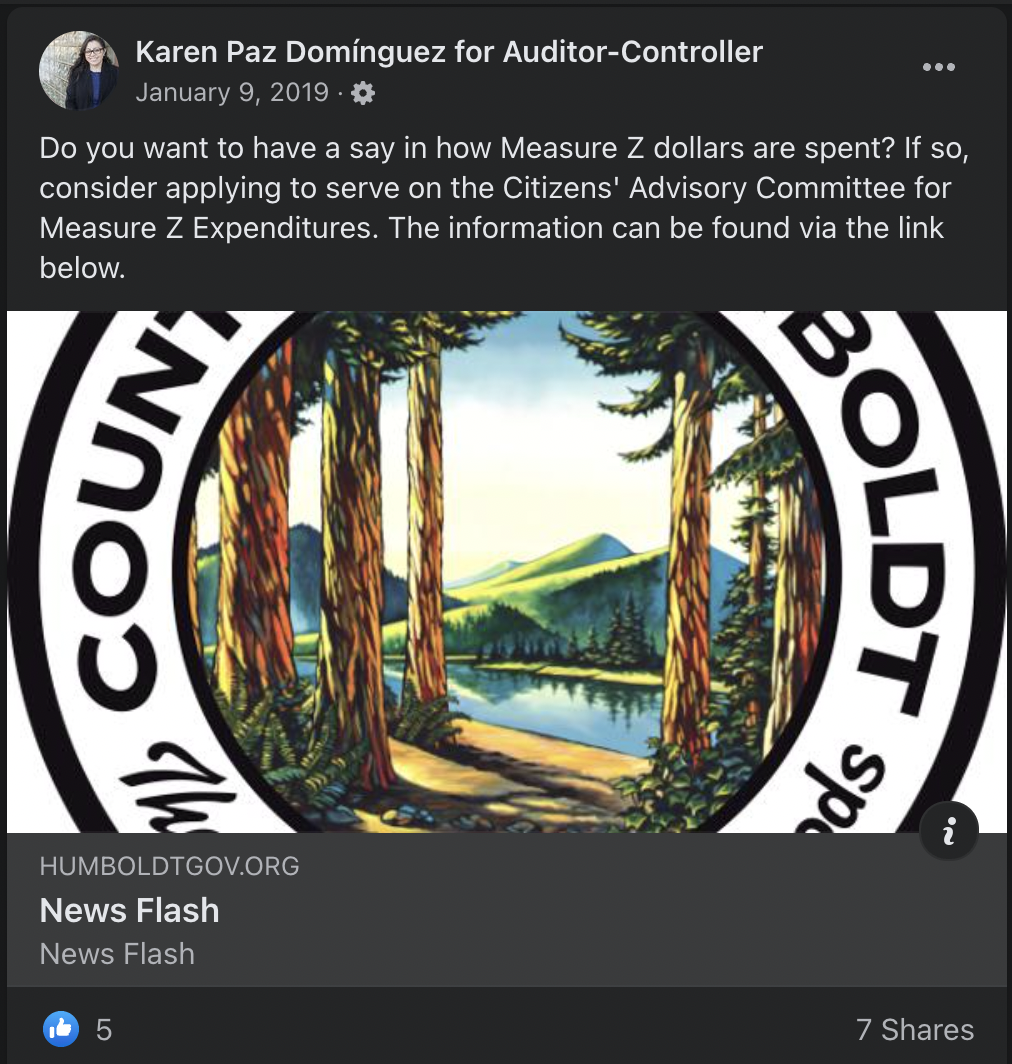
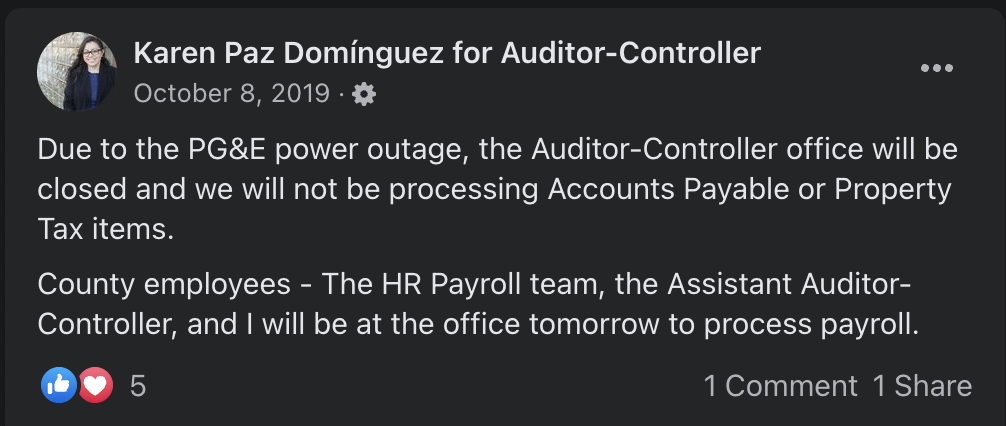
She also used the page to distribute a press release, encourage people to apply to serve on the county’s Measure Z citizen advisory committee, report on a conference of state controllers that she’d attended in Sacramento and communicate with county employees and the public following a power outage.
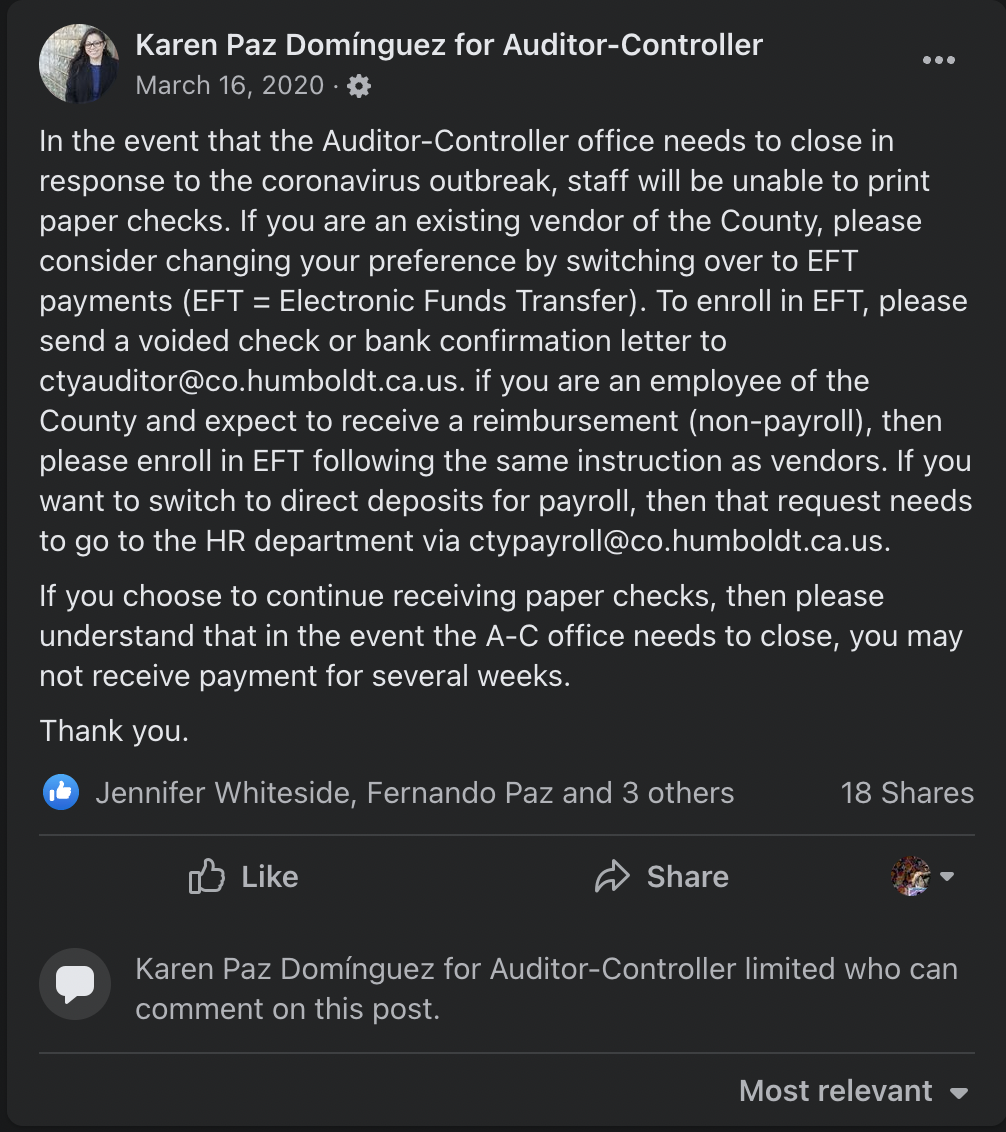
In March of 2020, at the start of the pandemic, she published a post urging county employees and vendors who receive paper checks to instead enroll in the county’s electronic funds transfer process, and she published the county email address to which they should send their requests.
Not only do these posts contradict Paz Dominguez’s claim to have never used the page for any official work; they’re also relevant to the question of whether the page should be considered a public forum.
The case of Davison v. Randall concerned the chair of a Virginia county’s board of supervisors, Phyllis Randall, who briefly blocked a critic from her official Facebook page and deleted a comment he made about her colleagues’ management of public funds. The critic sued, arguing that Randall had violated his First Amendment rights by removing him from a public forum.
In its decision, the court dove deeply into the questions of
- when a public official’s conduct amounts to state (i.e. “government”) action and
- under what circumstances a social media page constitutes a public forum.
The court’s ruling notes that while “there is no specific formula for determining whether state action is present … an official’s conduct is more likely to amount to state action when it ‘occurs in the course of performing an actual or apparent duty of his office.’”
Elaborating, the ruling states, “In the context of an alleged First Amendment violation, in particular, this Court has found that a challenged action by a governmental official is fairly attributable to the state when ‘the sole intention’ of the official in taking the action was ‘to suppress speech critical of his conduct of official duties or fitness for public office.’”
Ultimately, the court’s three-judge panel ruled that because of how Randall administered her Facebook page — using it as a tool of governance, providing information to the public, opening it up to public comments, etc. — she “acted under color of state law” in deleting the comment of a critic and blocking him from the page, thereby violating his First Amendment rights.
It’s important to note that the Fourth Circuit’s order only controls public officials and agencies in Virginia and nearby states. While other jurisdictions have yet to set precedent on the matter, public officials elsewhere in the country have stopped censoring critics after facing lawsuits.
The Outpost drew Paz Dominguez’s attention to the decision in the Randall case and noted that some might argue that her actions in deleting comments and blocking people were done under color of state law, given that she’d evidently used the page to interact with the public about official county business. We cited some of the examples noted above.
She replied via email late Tuesday night, saying, “one might argue that something is work-related even if it’s just sharing public County information.”
As for the posts that pertained to official county business, rather than campaign activity, Paz Dominguez said she’d removed them from the page entirely after receiving our inquiry.
“To avoid any further confusion about how my campaign page is used, I’ve gone ahead and removed the old posts you referenced,” she said.
Couldn’t that be considered destroying public records?
Paz Dominguez doesn’t think so. “You can rest assured that I sought the advice of legal counsel prior to doing so and received confirmation that it is appropriate,” she said in a follow-up email.
In a previous email she said that only two people had been blocked from her page, and that was “due to their abusive conduct and false accusations.” (She later said the number was three, not two.) We asked if she had retained copies of the deleted comments and, if not, if she could specify exactly how they were abusive and false.
She said she did not retain any copies of the comments, adding, “I stand [behind] our decision to not tolerate abusive and harassing comments.”
On Tuesday night, after removing many of her page’s old posts, she added a new one that says the page was created “to share information and updates about Karen Paz Dominguez as a candidate for the office of Auditor-Controller and about the election campaign itself.”
The message continues:
This page is not the official page of the Office of the Auditor-Controller and is not a public forum to discuss official County business. We must take great care when moderating posts and comments on this page as the candidate is also the current elected official. Because of this, we may need to implement additional restrictions so as to not violate the boundaries between County Official and Political Candidate.
Please note that this page is managed by the candidate, the campaign committee members, and volunteers, and we have a zero tolerance policy for abusive and harassing behaviors.
Rio Dell Man Sentenced to Four Years After Stabbing Ex-Girlfriend, District Attorney’s Office Announces
LoCO Staff / Wednesday, April 20, 2022 @ 2:50 p.m. / Courts
Press release from the District Attorney’s Office:
Today, Judge Kelly Neel sentenced 58-year-old Scott Ray Underwood of Rio Dell to four years for felony domestic violence with a prior domestic violence conviction, following his guilty pleas to those charges on March 21, 2022.
The case began on March 6, 2022, when Rio Dell Police Chief Jeff Conner responded to a 911 call regarding a woman screaming within a van who may have been stabbed. Chief Conner found Jane Doe with a stab wound to the abdomen and a facial laceration, caused by her ex-boyfriend Underwood. Mr. Underwood was on felony probation for prior domestic violence against the same victim – that case involved less serious conduct and the victim did not wish to proceed with prosecution.
Deputy District Attorneys Jessica Acosta and Emily Norgaard prosecuted the case with the assistance of victim advocate Velda Gooden. Ms. April Van Dyke represented Mr. Underwood.
The District Attorney’s Office thanks Chief Conner and the Rio Dell Police Department for their diligent and efficient work on this case.