Several Humboldt-based Verizon customers have reached out to LoCO to let us know that they’re experiencing trouble making calls. What’s up with that, they wonder?
So we decided to poll our Facebook audience to see if maybe this problem is widespread and, lo and behold, Verizon woes seem to be rampant.
And it’s not just in Humboldt, it seems. A quick glance at Twitter reveals many befuddled Verizon customers, specifically in the western United States. While Verizon has yet to issue any statement on the situation, the internet outage pros at Downdetector are following the issue, as noted in this CNET post.
[UPDATE: A Verizon spokesperson told CNET, “Our engineers are engaged and we are working quickly to identify and solve the issue.”]
All this to say, we don’t know anymore about the scale of this Verizon outage than you do, we just wanted you to know that you are not alone. We will update if we hear more. In the meantime, should you have an emergency, the Humboldt County Sheriff’s Office reminds you that you can text 911:
The last 24 hours or so have been busy ones over in LoCO Elections, the Outpost’s rolling Q&A forum for local candidates for office. Here’s a brief rundown of recent activity over there.
In response to a question from reader “HC,” Assistant District Attorney Stacey Eads — one of three candidates vying to replace retiring DA Maggie Fleming — provided a long summary of her experience as a trial lawyer. Meanwhile, in response to a question entitled “Corrupt Law Enforcement Practices,” Eads wrote that she supports the mandatory use of body-worn cameras when law enforcement agents conduct searches, and says that civilian observers during such raids are not a good idea. (Her competitors, Adrian Kamada and Michael Acosta, have already answered this question. Their answers are at the same link.)
Meanwhile, Eads’ principal challenger — former prosecutor turned public defender Adrian Kamada — comes out swinging against the current administration in a pair of answers. In the first, which asks him how many trials he’s conducted since joining the public defender’s office, his answer is simple: None. And he charges that is because the DA’s office is currently offering too many lenient plea deals and pushing questionable charges. In his second answer of the day he expounds upon that theme: “I do not despise the D.A.’s office,” he writes. “Clearly, I am not a fan of the current administration, the lack of leadership in the office, the dedication to old and inefficient ways of working, the bad charging decisions, the bad plea arrangements, the lack of transparency, and the culture of intimidation.”
Superior Court Judge candidate Ben McLaughlin answers a pair of questions: One on his history of public service and another that the asker entitles “1/4 of our judiciary in the same house?” McLaughlin lives with current Superior Court Judge Kelly Neel — what sort of complications might that cause if he is elected? Very interesting question; McLaughlin gives a thorough answer. [CORRECTION: McLaughlin and Neel are not married, as they originally stated, though they are a couple. Apologies. — Ed.]
Fourth District Supervisor candidate Kim Bergel writes on adverse childhood experiences in Humboldt County, and what she might do to improve them. (Candidate Natalie Arroyo had already written on this question.) Arroyo and Arcata City Council candidate Kimberley White run down their party endorsements.
Anyway, if you’re interested in local government, make it a point to regularly peruse LoCO Elections, and maybe contribute your own question! Lot of good stuff going on over there.
Over the past two years the Humboldt
County Drug Task Force (HCDTF), Eureka Police Department Problem
Oriented Police Team (POP), as well as Eureka Police Officers and
Humboldt County Sheriff Deputies, have responded to a problem drug
house in the 3100 block of Glen St. in Eureka multiple times for
complaints of drug sales, weapons violations, shootings, and other
criminal behavior that has terrorized the neighborhood.
Responding
to numerous neighbor complaints the HCDTF served another drug related
search warrant at the residence on Tuesday April 19. The HCDTF
located 7 people inside the residence and detained them without
incident. Agents arrested three people inside the home, and they were
booked at the Humboldt County Jail for the following charges:
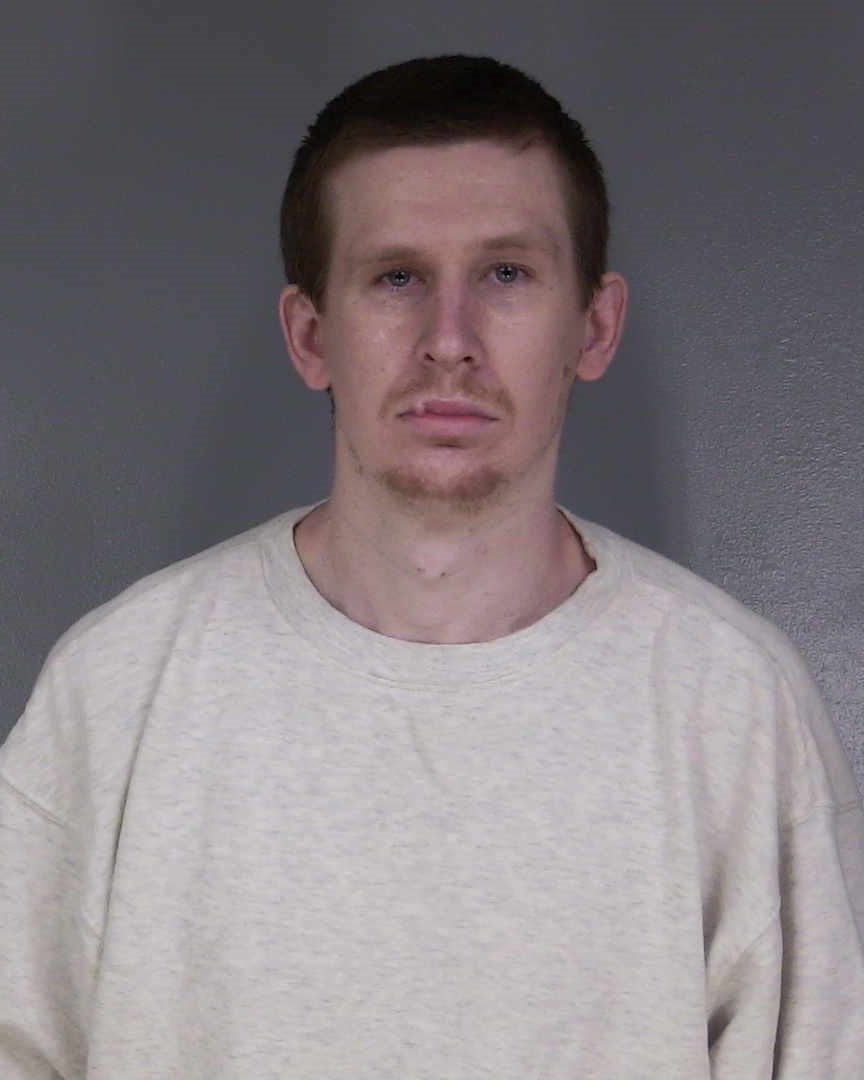
Cameron
Thompson (28 years old from
Eureka) is the home-owner and he was arrested for a felony warrant
for drug sales as well as a fresh charge of 11366 H&S (operating
or maintaining a drug house).
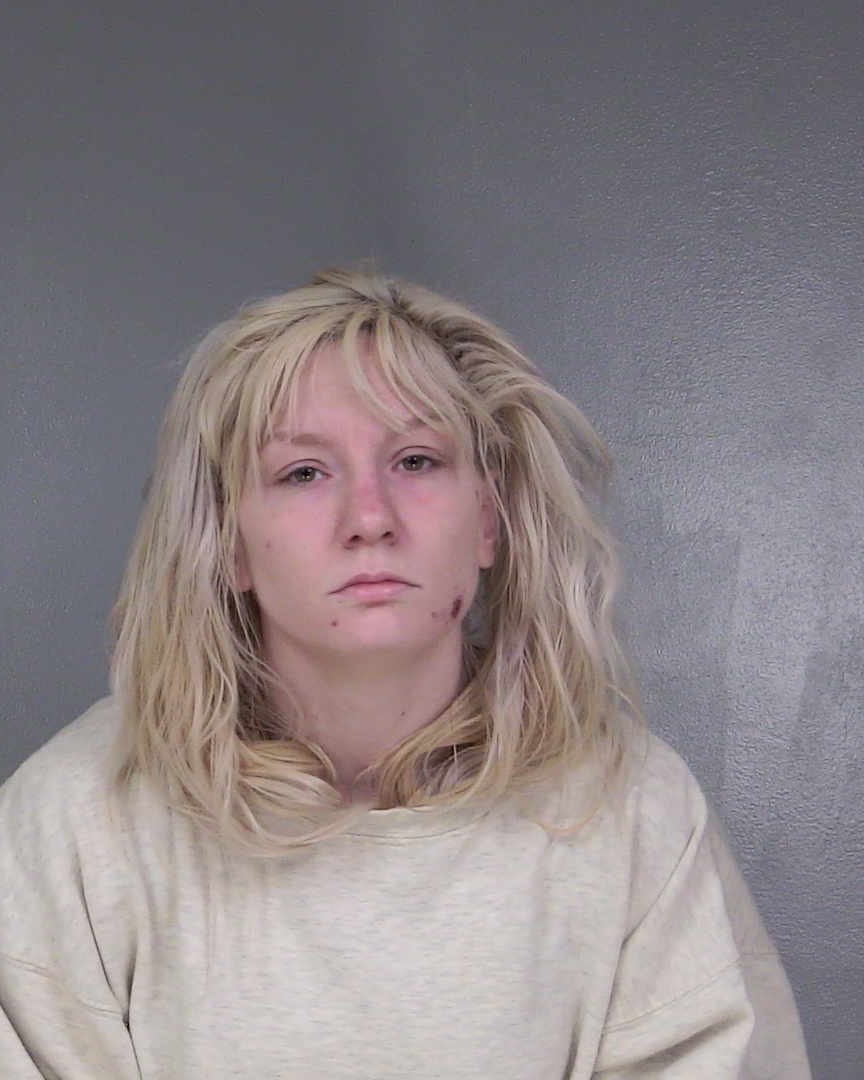
Rachael
Vetterkind (30 years old from
Eureka) lives in the residence and was arrested for a felony warrant
for drug sales as well as a fresh charge of 11366 H&S (operating
or maintaining a drug house).
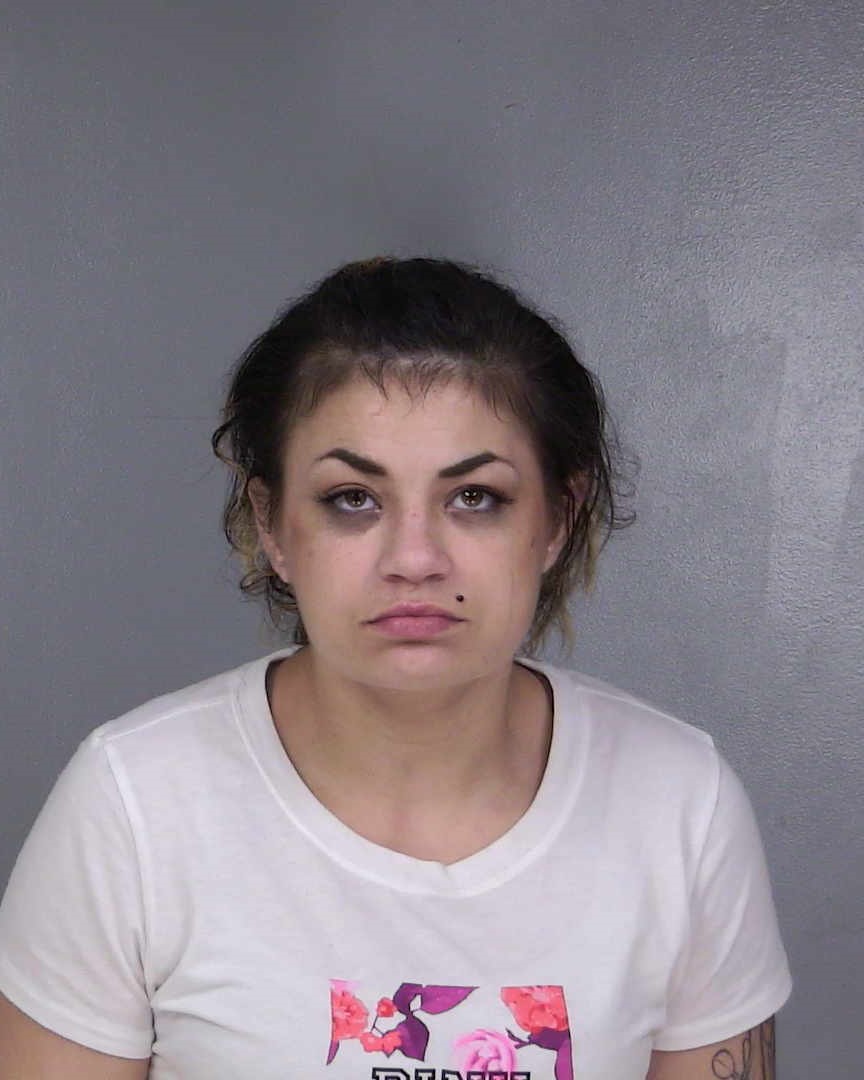
Latasha
Haslam (29 years old from
Eureka) was visiting the residence and was arrested for a felony
warrant for 10851 VC (possession of a stolen vehicle).
Agents
located several code enforcement violations on the property. The City
of Eureka Code Enforcement Unit responded to the scene and conducted
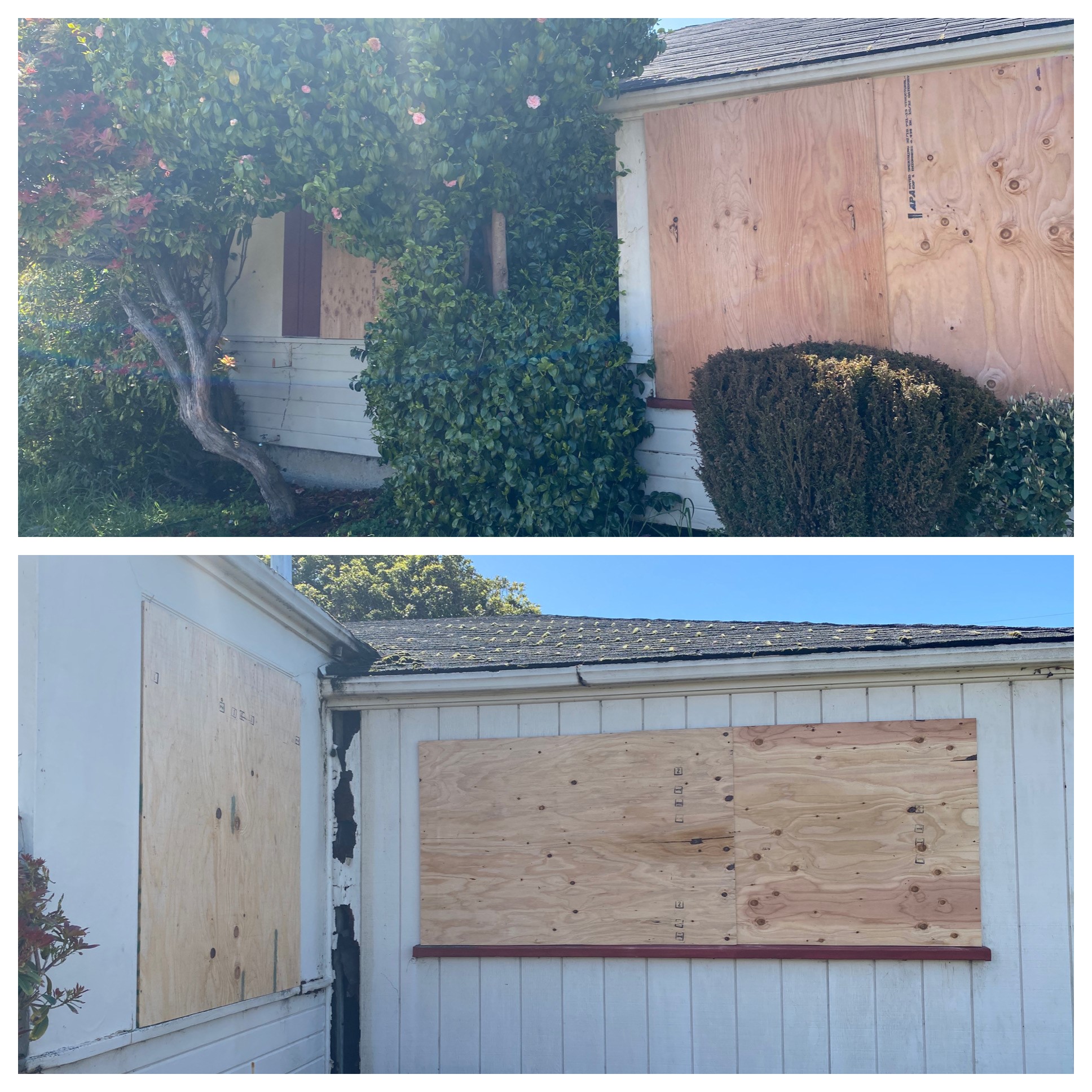
an inspection of the property. The violations were found to be severe
enough that code enforcement removed all people from the property and
secured the residence and property so nobody could enter.
The
HCDTF would like to thank the City of Eureka Code Enforcement Unit
for their assistance with this investigation. Anyone with information
related to this investigation or other narcotics related crimes are
encouraged to call the Humboldt County Drug Task Force at
707-267-9976.
Sather Gate on the campus of The University of California, Berkeley in Berkeley on March 25, 2022. Photo by Martin do Nascimento, CalMatters
California is on track to remove any reason for its public university students to take out student loans.
Known as Middle Class Scholarship 2.0, the “debt-free” program is slated to receive its first infusion of money this summer: a cool $632 million that lawmakers and Gov. Gavin Newsom promised in last year’s state budget that they said they’d fund this year.
If that money appears in the state’s budget this June, an anticipated 246,000 California State University students and 114,000 University of California students will receive this aid to help finance their educations starting this fall. Students at other California campuses, including community colleges, are ineligible.
The money will have an immediate impact on low- and middle-class students whose families generally earn less than $201,000. The exact amounts students receive will vary, but grants will range between $1,000 and just over $3,000 on average in the program’s first phase. Students in higher-income households will typically get the larger amounts to make up for the lack of aid they receive from other state and federal grants.
The awards reflect a portion of what students would get if lawmakers funded the whole $2.6 billion price tag. By committing $632 million this fall, the state is funding 24% of the program’s total cost, so each eligible student would receive 24% of the total amount they’d get were the scholarship fully funded.
Even at partial funding, those added dollars will likely lower student debt loads if lawmakers actually fund and maintain the program. Across the UC and CSU, students who borrowed federal loans and graduated in 2019-20 typically took out about $15,000, according to a CalMatters analysis of federal data. (Some students may also take out private loans or have their parents secure federal loans.)
Last year, lawmakers hailed the budget deal to fund the downpayment this year as something that will “ultimately eliminate the de facto requirement for lower- and middle-income students to rely on student loans to attend CSU and UC.”
“It will still fall short of … creating a real viable path to a debt-free, quality public degree in California,” said Jessica Thompson, vice president at the California policy group The Institute for College Access & Success.
Competing financial aid overhaul programs
While that first wave of money is likely a sure thing, it is still unclear whether the state will also expand its vaunted Cal Grant program to another 150,000 students as some lawmakers are currently seeking.
The decisions facing the Legislature and Newsom come down to somewhat competing but ultimately complementary visions of funding financial aid in California.
Expanding the Cal Grant program means another roughly 36,000 students would get their tuition fully covered at the UC and Cal States. An additional 109,000 community college students would receive non-tuition grants of $1,648, plus free tuition if they transfer to a UC or Cal State.
With the enhanced Middle Class Scholarship, which builds on an existing program, many students will definitely get something.
Several thousand students at private colleges would also get awards. The expansion, which would be made possible under Assembly Bill 1746, would effectively remove all the eligibility barriers that advocates say have plagued the Cal Grant, the state’s chief financial aid vehicle. Roughly half a million students receive the Cal Grant already.
But those extra students result in new annual Cal Grant costs that rival the price tag for the Middle Class Scholarship overhaul.
The Cal Grant expansion will cost anywhere from $250 million to $350 million for the tuition waivers and community college student grants. Then there’s another $130 million to $150 million to fund the $6,000 supplemental grant that parents who are students receive if they’re already Cal Grant recipients, among other add-ons, for a potential total of $380 million to $500 million or more. Lawmakers of the Higher Education Committee unanimously approved the bill on Tuesday. About 40 students and advocates spoke in support of the bill by phone and in person, but it still faces a long road legislatively and in the state’s budget process.
The high costs were one reason Newsom vetoed a bill expanding the program last year, though he and the Legislature did loosen eligibility requirements to allow more than 100,000 new community college students to begin receiving grants for the first time. If the goal is to eventually fully fund the Middle Class Scholarship, expanding the Cal Grant for UC and Cal State students doesn’t interfere with those aspirations. Because the Middle Class Scholarship overhaul is meant to cover the cost of attendance after all other aid is calculated, including an assumption that students raise about $8,000 by working part-time, increasing the Cal Grant program means spending less on the Middle Class Scholarship. Think of the two programs as two chunks of the same cost-of-attendance pie. The larger the Cal Grant slice, the smaller the Middle Class Scholarship slice.
But that metaphor doesn’t apply to the costs for expanding the Cal Grant to community college students. Because the Middle Class Scholarship will only apply to UC and Cal State students, any new money that goes to Cal Grant expansion for community college students will mean more financial aid spending overall for the state.
“It will still fall short of … creating a real viable path to a debt-free, quality public degree in California.” Jessica Thompson, vice president, the Institute for College Access & Success
One leading lawmaker wondered whether the state is rushing to fund the revised Middle Class Scholarship that’ll benefit a large share of middle-class students before it secured Cal Grants for all low-income college students.
“What can we as a Legislature do now to make sure that this is taken care of before we start putting in so much money into the Middle Class Scholarship Program?” asked Assembly Majority Leader Eloise Gómez Reyes, a Democrat from Colton, during a March budget subcommittee hearing.
The Senate’s top lawmaker, President Pro Tem Toni Atkins, a Democrat from San Diego, said her priority is the scholarship and last year’s Cal Grant changes.
“My colleagues and I are paying close attention to this bill’s progress (AB 1746), while our top priority continues to be on proper implementation of Cal Grant and the changes to the Middle Class Scholarship implemented last year,” she wrote in an email last Friday.The Legislative Analyst’s Office proposed something of a middle path: Before pouring money into the Middle Class Scholarship in subsequent years, the state could instead increase the grants the poorest Cal Grant recipients receive by $1,000 to $2,648. Doing so prioritizes the poorest students first while still moving the state closer to a debt-free promise.
Adding more students to the Cal Grant is also more of a fiscal commitment for lawmakers than the Middle Class Scholarship. Because it’s an entitlement, anyone eligible for the Cal Grant will get it, even during budgetary lean times — unless lawmakers expose themselves to political precarity by limiting the Cal Grant’s scope, something they didn’t do during the 2020 budget cuts spurred by the pandemic. The Middle Class Scholarship will always depend on how much money lawmakers want to send it annually.
Timing problems in Middle Class Scholarship
One flaw in the debt-free program is its timing.
Most colleges require students to commit to enrollment and put down a deposit by May 1.
That’s because the UC, Cal States and the aid commission need that time to calculate how much institutional aid and Cal Grant support is going to every student — on top of all other aid, like federal Pell grants. Only then can the aid commission tack on the Middle Class Scholarship amount.
It’s a lot of work. Every student’s cost of attendance and financial picture is different and ranges from around $24,000 to $38,000, depending on the campus. Two students with the same family incomes may also have different costs because one plans to live at home while another lives off campus, typically a more expensive option. Meanwhile, some housing markets cost more than others, another reason cost of attendance varies.
Also, the Middle Class Scholarship’s funding is determined in June (so, after May 1) — when lawmakers and the governor agree on a state budget for the next fiscal year.
That means new students won’t know their full financial aid package until after they have to commit to a Cal State or UC — a quirk that will remain in the program unless policymakers find a workaround.
“We are working with the California Student Aid Commission to resolve concerns that have arisen about the program, and are evaluating if any legislative fixes might be necessary,” Atkins said by email.
New students won’t know their full financial aid package until after they have to commit to a Cal State or UC — a quirk that will remain in the program unless policymakers find a workaround.
Typically, campuses send first-time freshmen students their preliminary financial aid packages before May 1, allowing them to determine which college or university is the most affordable. Campuses then send final letters around early June.
These may not be significant worries when the Middle Class Scholarship grants are on average $3,000 or less. But if lawmakers grow the program, those grants may get large enough to potentially affect the attendance decisions of students — especially if a private college is promising more aid initially, only for a UC or Cal State to be less expensive after the Middle Class Scholarship is calculated.
Ryan King, a UC office of the President spokesperson, wrote in an email that the system will help students “make informed decisions over the summer about the other choices they face, such as whether or not to consider a student loan.”
UC Riverside’s director of financial aid, Jose A. Aguilar, doesn’t think the delay in when students will find out they’re getting additional money will influence their enrollment patterns. That’s based on his observations administering campus scholarships. Whether students get those or not, they’ll still end up attending the school of their choice, he said.
He also notes that the delay affects all UC and Cal State campuses equally, so no public university has a competitive advantage over the other in letting students know they’re getting more financial aid.
###
CalMatters.org is a nonprofit, nonpartisan media venture explaining California policies and politics.
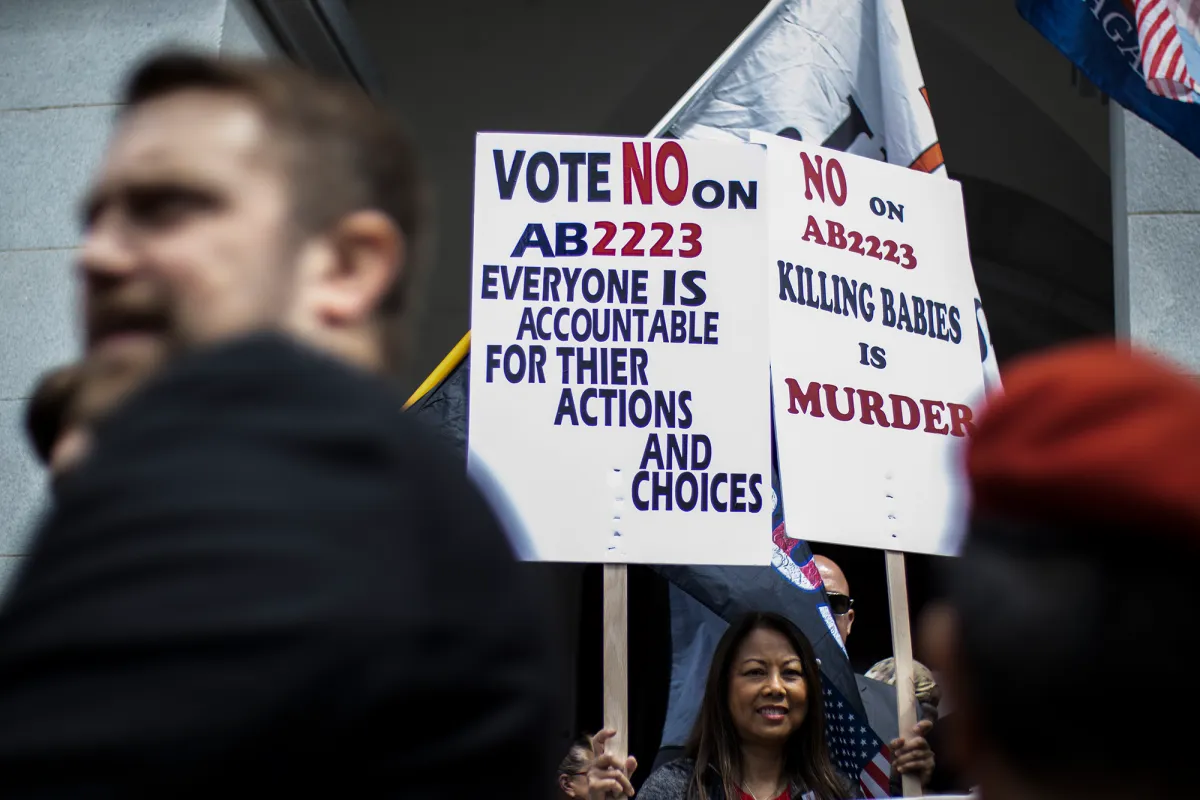
Protesters rallied against Assembly Bill 2223 at the state Capitol in Sacramento on April 19, 2022. Photo by Rahul Lal for CalMatters
A bill that would abolish the requirement that coroners investigate stillbirths passed the Assembly Health Committee on an 11-3 vote late Tuesday, while hundreds of anti-abortion activists protested against the proposed change on the Capitol steps.
Under current law, all fetal deaths at or after 20 weeks, with the exception of abortions, are treated as “unattended deaths” in California, requiring a coroner to investigate.
In 48 of 58 California counties, the sheriff is also the coroner, which means that law enforcement becomes involved and the person who is pregnant could face potential prosecution. That, say groups representing obstetricians and gynecologists, is dangerous and could make pregnant people less likely to seek medical care.
“Fear of jail or fear of having their child removed leads people to physically avoid and emotionally disengage from prenatal care,” said Sarah Roberts, a researcher at the University of California, San Francisco, testifying Tuesday in favor of the bill.
She said the application of the law is unequal. Roberts said her research shows that while white and Black people use alcohol and drugs at about the same rate during pregnancy, pregnant Black people are four to five times more likely to be reported to authorities.
The other, Adora Perez, was interviewed by a Kings County sheriff’s deputy serving as a coroner 90 minutes after her stillbirth in December 2017, according to medical records shared by her legal team with CalMatters. Her case was referred to the local police department one hour later. She was arrested as she was being discharged from the hospital.
In January, Attorney General Rob Bonta issued a legal alert instructing prosecutors and police not to pursue charges against people who miscarry or deliver stillbirths, calling out the Perez case by name.
“The loss of a pregnancy at any stage is a physically and emotionally traumatic experience that should not be exacerbated by the threat of being charged with murder,” Bonta said in January.
Kings County District Attorney Keith Fagundes, who prosecuted both Kings County women, has told CalMatters that he will continue to file murder charges against people who miscarry or deliver stillbirths and test positive for drugs if he feels the cases warrant prosecution.
Abortion rights advocates believe the Kings County cases have broad implications for abortion access in California, potentially opening the door to criminal prosecutions of people seeking to terminate pregnancies.
One aspect of the proposed bill challenged by anti-abortion activists is its treatment of perinatal infant deaths.
The Right to Life League and the California Family Council define the perinatal period as a month or more after delivery. The National Center on Health Statistics defines the perinatal period as between 28 weeks of gestation and seven days after birth.
The Right to Life League contends that one section of the bill, which exempts mothers from civil and criminal liability if an infant dies during the perinatal period “due to a pregnancy-related cause,” would essentially legalize the killing of newborn babies.
“A mother, her boyfriend or, for that matter, the babysitter, can starve or beat or shake a 3-week-old baby to death and no one can investigate because under AB 2223 it is a ‘perinatal death,’” wrote vice president of legal affairs Susan Arnall on the Right to Life League website.
It’s unclear whether any of the causes of death Arnall mentioned would be classified as “pregnancy-related.”
Assemblymember Buffy Wicks, D-Oakland, called this argument “disinformation.”
“These same groups that are trying to ban abortion across this country and imprison people for stillbirths have manufactured a disinformation campaign using disturbing and violent imagery that is not grounded in medical science or the actual text of the bill,” Wicks said.
Arnall argues that the bill would effectively nullify a 1995 law that mandates that infants born prematurely in the course of an abortion must be treated the same as infants delivered in a live birth.
She also criticized the bill’s proposed $25,000 fine for a person who violates the proposed law, or “aids, incites, or conspires in that denial,” saying that instruction would have a chilling effect on investigations of fetal deaths.
“This is a hill for moral people to die on,” said Jack Hibbs, pastor of Calvary Chapel Chino Hills, testifying against the bill on Tuesday. “As citizens, we must hold you accountable.”
###
CalMatters.org is a nonprofit, nonpartisan media venture explaining California policies and politics.
There’s nobody better than Stillman She lives on an Arcata hill, man Done Council and Mayor She’s fair but not square She’s totally fitting the bill, man.
— Rick St. Charles
Arcata’s needs surely are strong And none of the runners are wrong But one stands out clear She’ll lend you her ear Vote Stillman to take us along
— Bob Felter
District Attorney
Strong as an armada Yet friendly as a posada In fighting for justice He has much practice Vote for Adrian Kamada!
— Shannon Townsend-Bettis
If the crime in Humboldt’s a calamity And repeating mistakes is insanity Then I tell you you oughta’ Vote for Kamada ‘Cuz anything else is inanity.
— J.D. Rosenfeld
A strong DA here for our needs With politeness and thought she proceeds You question the rest Please vote for the best Our one DA hopeful is EADS
— Bob Felter
Fifth District Supervisor
Please join me in voting for Larry. Humboldt County’s next dignitary. Madrone’s no straight arrow. His focus too narrow. Four more years of him is too scary.
Larry loves Humboldt there is no doubt. Madrone’s too self-focused, has no clout. Humboldt needs leadership. Someone to give a rip. Vote for Larry and kick the bum out.
— Mike Vina
There once was a man named Sungnome Who now goes by the name Steve Madrone Hard working for his constituents He deserves our commitment to reelect him to office Unlike the guy named Doss
— Barbara Rincon
Huge signs should elicit some heed Big money will serve their own need For community health Beware of the stealth Vote Madrone, the right man to lead
— Bob Felter
Fourth District Supervisor
Natalie for District 4, a Limerick
In Eureka there’s councilor Arroyo She works hard to make folks say “Oh boy oh We’ll give her our vote Cuz we know she won’t gloat As supervisor she’ll serve us with joy-o.”
— Tess Yinger
Rutabaga Queen of our Hearts
Vote Natalie Arroyo to supervise District 4 in our county of rainy skies A choice you’ll be proud That you made for the crowd Of folks who like politicians wise
— Tess Yinger
With Bass on her way out the door Our hopes for the future do soar. A fresh voice is needed, We hope she is seated, Arroyo for District Four!
— David Demant
There once was a candidate named Natalie, She ran for Board of Supes with vitality, When the votes came in, (to other’s chagrin), She had the winning plurality!
— Sheila Evans
Clerk/Recorder/Registrar
Our Juan doesn’t hail from Nantucket. He’d not stash our votes in a bucket. I am so sure, that he is so pure, he’d never say “Oh well, just f**k it.”
— Steve Martin
There’s a county employee named Ben His knowledge of voting is Zen He wants to be leader He’ll never be a cheater He’ll make sure every vote counts with a grin
— Ed Reagan
###
Or, I dunno, do you want to keep this going? It’s up to you! Send your great or terrible limerick in support of your favorite local candidate for office to news@lostcoastoutpost.com, and put the words “Election Limerick” in the subject line.
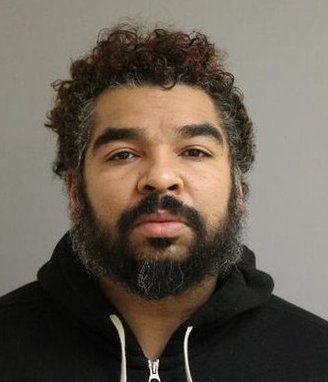
As he loudly proclaimed that he is the real victim here, convicted murderer Demetrius Donald Dee Coleman was sentenced today to life in prison without possibility of parole.
Judge Kelly Neel, dismissing Coleman’s claims of innocence, handed him life without possibility of parole for the August 2019 drive-by shooting of 26-year-old Johnny Mack Renfro. The Texas man was shot as he stood near his car on a street in Rio Dell. Neel also sentenced Coleman to 25 years to life for the crime of personally discharging a firearm. She added five more years because Coleman, 41, was previously convicted of a serious felony.
“Johnny Renfro is not my responsibility,” Coleman declared before he was sentenced. “I don’t know Johnny Renfro. I feel for his family, but where’s the real killer?”
The real killer, Coleman testified during his trial, was a Jamaican man named “Dred” who drove Coleman’s sedan to Rio Dell and shot Renfro as Coleman (a very large man) managed to conceal himself in the back seat.
Now Coleman says one fellow inmate at Humboldt County Correctional Facility swore he heard another fellow inmate bragging about killing Renfro. There is no corroboration that someone else committed the murder. Also, none of the new witnesses is available now.
This new evidence, along with complaints about the first trial, was the basis for defense attorney Zack Curtis’s motion for new trial.
“It should be before a jury,” Curtis said.
Coleman fired his trial attorney, Andrea Sullivan, after the jury convicted him of all charges. Today Coleman complained about Sullivan, claiming she gave him bad advice and even encouraged him to speak in “Eubonics” when he testified.
Today’s sentencing was at times chaotic. Coleman was ranting about the miscarriage of justice. Meanwhile, his toddler son was babbling in the audience. And his girlfriend, Alma Ahumada-Mendoza, was kicked out of the courtroom when she hollered out something about being threatened.
“Out! Out!” said the bailiff as she left, carrying the toddler.
Deputy District Attorney Carolyn Schaffer, the trial prosecutor, said none of the so-called new evidence was credible. Coleman continues to “fabricate details,” she said, just as he did at trial.
Schaffer read letters written by three members of Renfro’s family, including his mother.
“I can’t imagine what was going on in my son’s mind when he was shot that beautiful day,” the mother wrote.
As for the killer, “ I don’t like to look down on people. But if that person does wrong then he needs to pay.”
Another family member described Renfro as artistic, creative and a talented musician. His family will never forget his infectious smile.
“He had much to offer this world,” one of the family members said.
Coleman responded with “What about the real killer?”
In sentencing Coleman, Neel told him he was making false statements and she believed he killed Renfro.
“He had a mama and a daddy who loved him and you took that away,” the judge said.
“I didn’t take nothin’ away,” Coleman said.
Initially Ahumada-Mendoza and Coleman were both charged with murder. Judge Timothy Canning dismissed Ahumada-Mendoza’s charges at the preliminary hearing.
The prosecution’s theory was that Coleman killed Renfro because he believed he was one of three men who robbed Coleman of marijuana in Eureka.
Weeks after the shooting, Ahumada-Mendoza and Coleman were tracked down and arrested in North Dakota.
Outside the courtroom, Schaffer credited the Rio Dell Police Department for the outcome today.
“The Rio Dell Police Department worked tirelessly to solve this case,” Schaffer said, “and investigate all leads and possible defenses. This was the result of their work.”