

OBITUARY: Mychal W. ‘Rambo’ Evenson, 1961-2022
LoCO Staff / Thursday, March 10, 2022 @ 6:56 a.m. / Obits
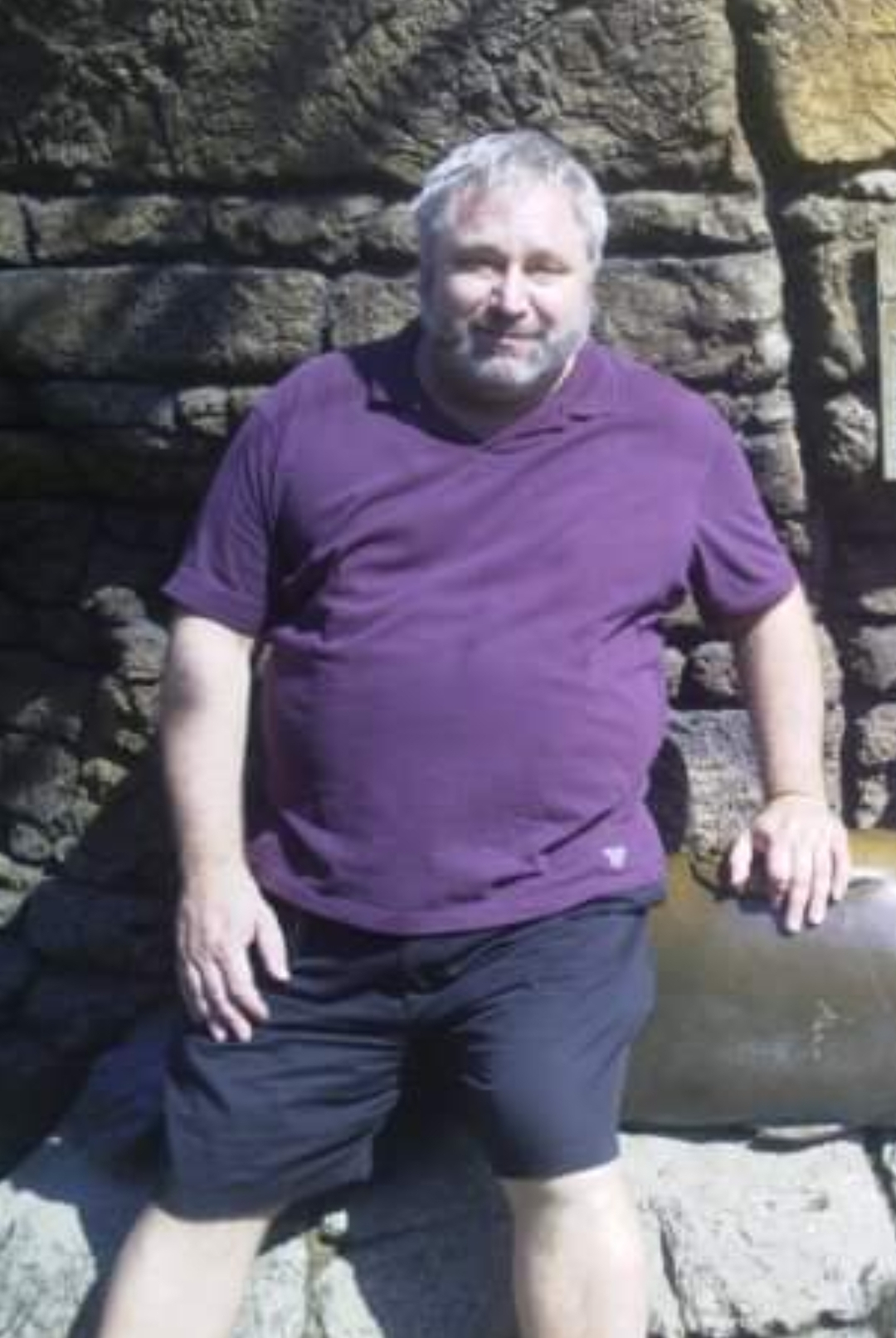
Mychal W. “Rambo” Evenson
Born September 14,
1961
Passed March 1st,
2022
Mychal passed away in his home on March 1, 2022, at the age of 60.
He was born to Penny Evenson and William “Bill” Kohler and later adopted by William “Bill” Evenson. He is preceded in death by his father, Bill Evenson, ex-wife Debbie Gilmore, and his beloved grandparents Michael and Lucile Pelroy. He is survived by his daughter Tynnese (RuBen) Mein, son Mychal (Tasheena) Evenson, granddaughter Lisa Mein, former stepdaughter Traci Gilmore, his siblings — Willie, Glen, Betty-Gale, Tammy, Christopher, Kim, and Brian — ex-wife Tammie Marsh, mother Penny Evenson, birth father Bill Kohler, and many nieces and nephews.
He enjoyed riding motorcycles, hiking and basketball in his younger years. While playing basketball, he got the nickname “Rambo.” In 1982, Mychal and his friend Jimmy Arnold raced in the Kinetic Grand Championship. Mychal earned the Fickle Fate Award for an accident in which the chain slipped off the sprocket; Mychal reached down to fix the chain, and his weight tipped the machine over. He fell out of the machine, which subsequently ran him over. He recovered overnight and returned the next day, and finished the race.
In 1986 Mychal ran another Kinetic Sculpture Race with friend LeRoy Marsh Jr. During the race, his then-wife was rushed to the hospital for an emergency related to her second pregnancy. The result of the emergency was the birth of their second child and son. As of that race, this was the only known event of a racer leaving the race and returning after a child’s birth. He had to provide photo proof that he had a new baby to return to the race.
The family would like to extend a special “thank you” to Guy and Judy Luther for all the support they gave to Mychal in his last years.
###
The obituary above was submitted on behalf of Mychal Evenson’s loved ones. The Lost Coast Outpost runs obituaries of Humboldt County residents at no charge. See guidelines here.
BOOKED
Yesterday: 7 felonies, 17 misdemeanors, 0 infractions
JUDGED
Humboldt County Superior Court Calendar: Friday, Sept. 4
CHP REPORTS
420 Mm101 S Dn R4.20 (HM office): Trfc Collision-Unkn Inj
6000 Mm101 N Men 60.00 (HM office): Trfc Collision-No Inj
6183 Mm101 N Men 61.80 (HM office): Trfc Collision-No Inj
ELSEWHERE
RHBB: CDPH Issues Immunization Recommendations for 2026-27 Respiratory Virus Season
RHBB: Redway Transfer Station to Close an Extra Day for Construction
RHBB: Dows Prairie Road to Close for Two Months for Culvert Repair
Fortuna City Council Directs Staff to Send Letter Expressing ‘No Confidence’ in Auditor-Controller Karen Paz Dominguez
Ryan Burns / Wednesday, March 9, 2022 @ 3:14 p.m. / Local Government
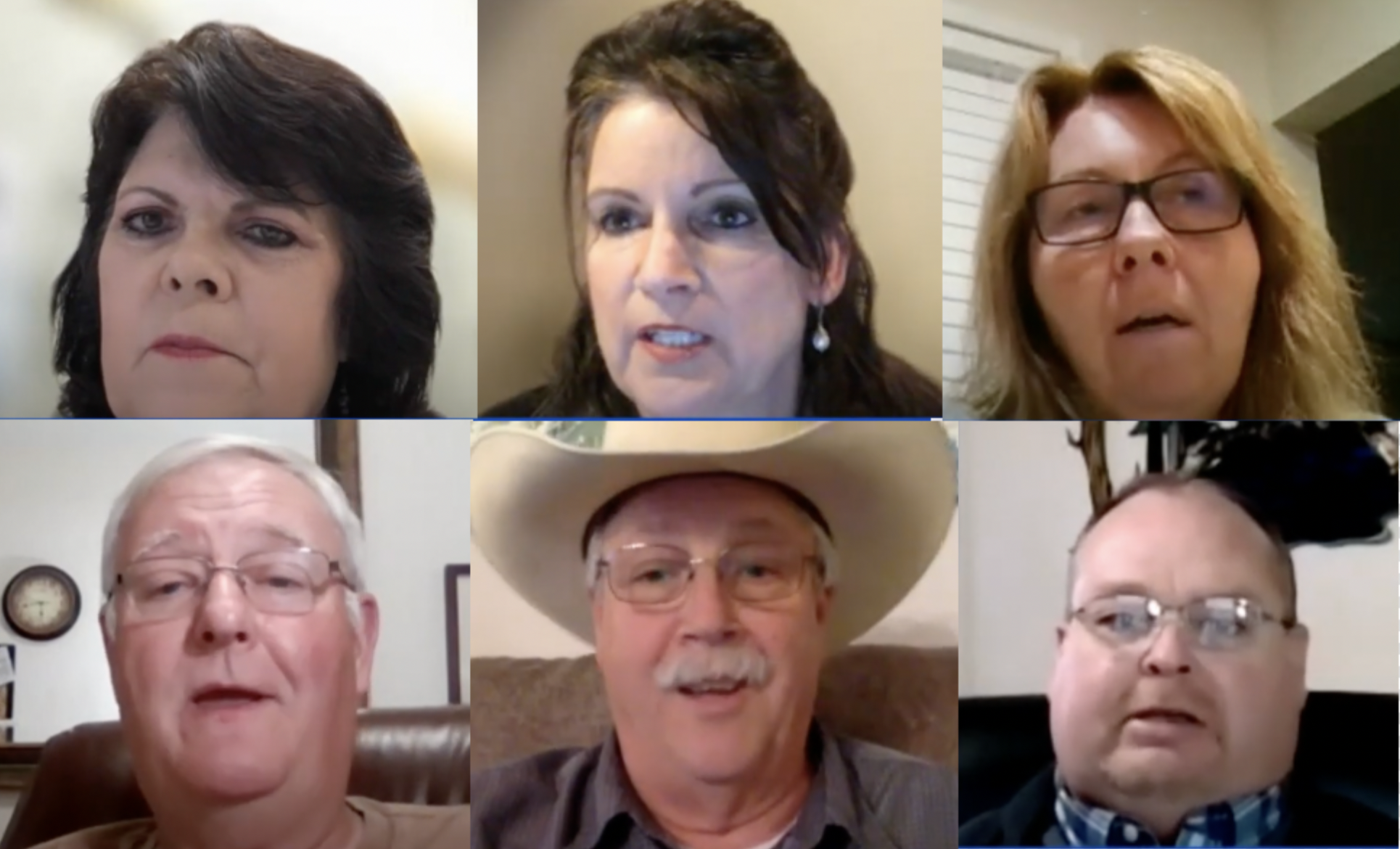
Screenshots from Monday’s meeting (clockwise from top left): Fortuna Mayor Sue Long, Mayor Pro Tem Tami Trent, Humboldt County Supervisor Michelle Bushnell and council members Jeremy Stanfield, Mike Johnson and Mike Losey.
###
After describing a pattern of poor communication, delinquent reports and chronically late fund distribution, the Fortuna City Council on Monday unanimously directed staff to send a letter to Humboldt County Auditor-Controller Karen Paz Dominguez expressing “no confidence” in her job performance.
“I know that this has been an issue throughout the county, and I think Fortuna’s voice needs to be heard as well so that our Fortuna voters understand the severity of the position not being efficient,” Mayor Sue Long said upon introducing the agenda item.
City Manager Merritt Perry gave the council a slideshow presentation summarizing impacts to the City of Fortuna — as well as local schools — from the alleged shortcomings of the Auditor-Controller’s Office, which handles a variety of fiscal operations for local cities.
Perry said the city has not received its interest apportionment or investment reports since 2020. The former limits the city’s ability to use interest earnings on city projects while the latter delays the city’s ability to complete annual audits.
The Auditor-Controller’s Office has also been chronically late with property tax allocation and distribution payments, Perry said, and the county’s late submission of Fortuna’s Redevelopment Property Tax Trust Fund Distribution Report jeopardized somewhere between $200,000 and $300,000 $400,000 in redevelopment funds.
Perry said that latter report has now been submitted, though he said the city hasn’t yet received notice that it has been accepted. He added that overdue reporting is impacting cash flow at the Fortuna Union High School District as well as the Fortuna Elementary School District.
Long said the Fortuna Veterans, VFW Post 2207, “have had a really tough time getting their money, and they said every time they get a check it’s because [Second District] Supervisor [Michelle] Bushnell ran interference and got them paid.”
That organization operates on a shoestring budget, she added, “and to see them struggle is just frustrating.”
Fortuna Finance Director Aaron Felmlee said it has been difficult to get questions answered directly by Paz Dominguez. Staff in the office is usually “responsive and helpful,” he said, but he’s had “very limited or no direct communication” with the auditor-controller herself.
Bushnell, who represents the Fortuna-surrounding Second District on the Board of Supervisors, Zoomed in to the meeting and offered the council a timeline from her own perspective. She told the council about the board’s own November 22 vote of “no confidence” in Paz Dominguez, which passed by a vote of 3-2, as well as the Fortuna Union High School’s “no confidence” vote in the auditor-controller.
“I really do believe a lot of the issues stem from the lack of communication,” Bushnell said.
Councilmember Mike Losey referenced a recent message to Paz Dominguez from the California Attorney General’s Office regarding a long-overdue Financial Transactions Report.
“I really think that it’s pretty clear that the auditor-controller’s abilities are substantially lacking, and the issues are not because of a conflict of personality, a personal grudge or miscommunication,” Losey said.
Fellow councilmember Mike Johnson agreed, saying he was in favor of sending a letter of “no confidence.”
Mayor Pro Tem Tami Trent said some Fortuna residents who work for the county haven’t received their paychecks on time. “I definitely think we should go forward with this [letter] also,” she said.
Ultimately, all five board members expressed the same opinion, and they directed Perry to draft the letter and send it as soon as possible.
Reached via email on Tuesday, Paz Dominguez said she didn’t have any comment on the vote in Fortuna, though she added, “Should any Fortuna City Councilpeople wish to communicate or work with the A-C office, they are welcome to.”
Department of Cannabis Control Seeks Public Input on Proposed Regulatory Changes
Isabella Vanderheiden / Wednesday, March 9, 2022 @ 2:33 p.m. / Cannabis

###
The Department of Cannabis Control (DCC) is looking for feedback from the cannabis community about proposed changes to California’s cannabis regulatory framework.
The proposal seeks to simplify and clarify emergency regulations that were adopted by the DCC in September 2021 after the state consolidated cannabis regulation into a single agency.
Previously, cannabis oversight was split among three state agencies. The California Department of Food and Agriculture regulated cultivation, the Department of Public Health regulated manufacturing, and the Bureau of Cannabis Control regulated retail, distribution and testing.
During an informational webinar last week, Christina Dempsey, Deputy Director of Policy and Research for the DCC, said there are two types of changes in the proposal.
“The first is the regulation package which incorporates, through the regular rulemaking process, any changes that we made during the emergency regulation process in the fall,” she said. “The regulation package that the department adopted as emergency in September needs to be adopted through the regular rulemaking process so that it doesn’t expire. …There are also additional changes that we’ve incorporated that serve to simplify, streamline and further strengthen the cannabis regulatory framework in California.”
The newly released regulatory modifications focus on cannabis cultivation, distribution, manufacturing, retail, events and testing laboratories.
“I think probably the biggest thing that jumped out to me in the DCC’s proposal are some of the changes to track and trace,” Ross Gordon, policy director at the Humboldt County Growers Alliance (HCGA) and policy chair at the Origins Council, told the Outpost. “The way track and trace has been implemented is definitely a big thorn in the side for a lot of farmers, particularly the requirement to tag every single cannabis plant. …On average, we think it probably takes five people three to four days of labor to tag a half an acre farm.”
The proposal would allow the weight of the total harvest batch to be entered in track and trace rather than requiring individual plant weights.
“Rather than having to weigh every single plant individually, they can now weigh those plants collectively which is something that a lot of people are going to be happy to see,” Gordon said. “We’re glad to see that but we’d like to see it go further.”
He also raised concern for plastic waste associated with track and trace. “Putting a plastic tag on every plant [generates] about 71 tons of plastic waste per year and that’s effectively non-recyclable.”
The proposal would also loosen up rules surrounding cannabis events by allowing cannabis goods to be displayed by all participating licensees and removing the requirement for specific retail employees to be identified prior to the event, according to the DCC.
“We were pretty happy to see some change to the regulatory rules around events and clarifying that farmers are able to display their own product at events and able to show those directly to consumers,” Gordon said. “The regulations don’t allow farmers to sell their product directly to consumers at events. We’re still working on legislation to address that…but at the very least there are improvements to clarify that it’s possible to display those products.”
AB 2691, introduced by North Coast Assemblymember Jim Wood (D-Santa Rosa) in February, would authorize the DCC to issue temporary event retail licenses that would open the door for cannabis cultivators to sell their product directly to consumers at cannabis events like the Emerald Cup. As it stands, small-scale cultivators can participate in such events, but they cannot sell directly to the buyer.
“It’s important to keep in mind that there are certain things which can be addressed through regulation by the DCC, and then there are other things that have to be addressed by the state legislature,” Gordon noted. “The DCC doesn’t have the power, for example, to change tax rates. The legislature needs to take leadership on that.”
State Senator Mike McGuire (D-Healdsburg) introduced legislation last month to eliminate the state cannabis cultivation tax which increased from $154.40 per flower per dry-weight pound to $161.28 at the beginning of this year, according to the state Department of Tax and Fee Administration.
SB 1074 would discontinue the cultivation tax and, instead, increase the state excise tax – a 15% tax imposed upon retail purchasers of cannabis or cannabis products – in an attempt to reduce the disproportionate impact to small farmers. “The bill would increase, from July 1, 2025, until July 1, 2026, the excise tax by an additional percentage that the Department of Finance estimates will generate half the amount of revenue that would have been collected pursuant to the cultivation tax…” according to the text of the bill.
While this is good news for struggling cannabis farmers, Gordon said he had hoped the proposed regulations would offer more leniency for farmers looking to temporarily scale back their crop or take a year off of farming altogether.
“That’s something that in any other form of agriculture is very common when you have a market crash like we have in cannabis or when you have drought conditions which we’re likely to continue to see in 2022,” he said. “…Farmers either have to renew their license for a year and pay their full licensing fee or, if they don’t renew their license, they essentially permanently forfeit their license and if they want to get it back they have to reapply from square one.”
All comments on the proposed regulations must be received by April 19, 2022, at 5 p.m. It is anticipated that the proposed regulations will become effective in fall 2022 if approved.
“Please be specific and share a suggestion or alternative,” Dempsey said. “Often we hear people say they don’t like what we’ve proposed, but they then don’t go on to tell us what another option would be. That information is really important for us.”
Comments can be emailed to publiccomment@cannabis.ca.gov or sent by mail to DCC Legal Affairs Division, 2920 Kilgore Road, Rancho Cordova, CA 95670.
More information on the proposed regulations can be found here.
(PHOTOS) IN WITH THE NEW! The ‘Cal Poly Humboldt’ Name is Now Affixed to the University Signs
Stephanie McGeary / Wednesday, March 9, 2022 @ 1:52 p.m. / Cal Poly Humboldt

Look at those snazzy, new letters! Cal Poly Humboldt sign on LK Wood Blvd and Sunset Ave | Photos: Stephanie McGeary
###
More than a month after the university formerly known as Humboldt State officially became California Polytechnic University, Humboldt – or “Cal Poly Humboldt” for short – the branding is finally catching up with the name, with the majority of the campus entrance signs now displaying the new moniker.
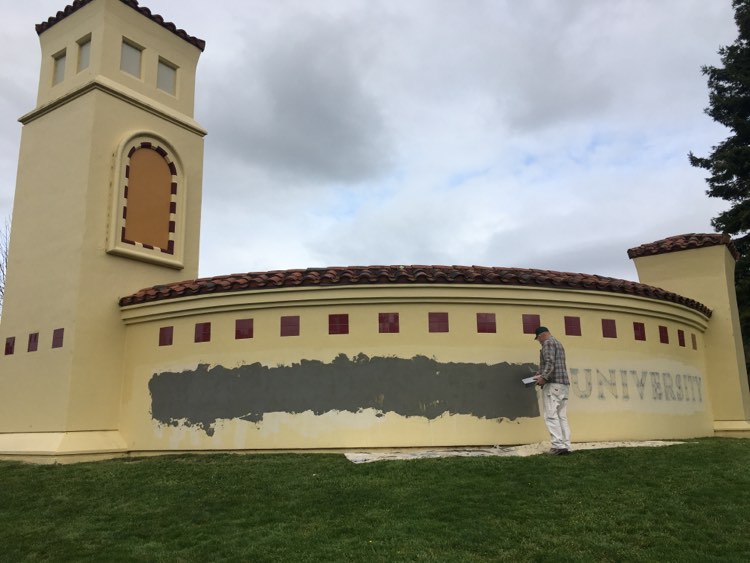
Two of the university’s painters have been working since last week to update the signs, removing the outdated letters, spackling and painting over the old letter markings and attaching the new name. Since the full name is a little long, the university opted to go with the “Cal Poly Humboldt” version.

So far, the two signs on 14th and B Streets, the one on LK Wood Boulevard and Sunset Avenue and the sign on LK Wood and Granite Avenue have all been completed. Still unfinished is the main gate on LK Wood and 14th Street. The painters were still hard at work Wednesday morning, prepping the gateway signs for the new letters, which will surely be placed in the next couple of days.
Whether this latest development fills you with awe, pride or overwhelming nostalgia, (or maybe you don’t really care at all), we can at least agree that it will be less confusing for new students or visiting parents searching for the school. And maybe it will it make it a little easier for us locals to get used to calling it “Cal Poly Humboldt” instead of HSU.
Check out more photos of the progress below.

The other sign on 14th and B Streets

The corner of LK Wood and Granite Ave

A university painter working on the sign late last week
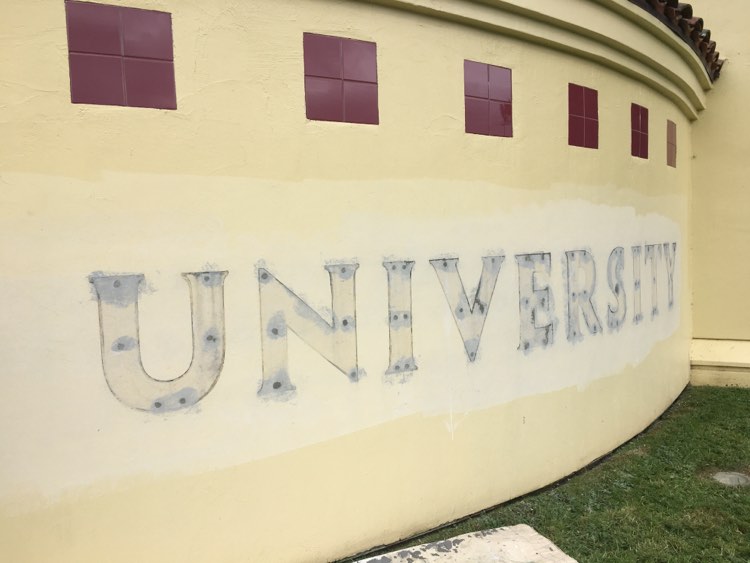
The ghost letters
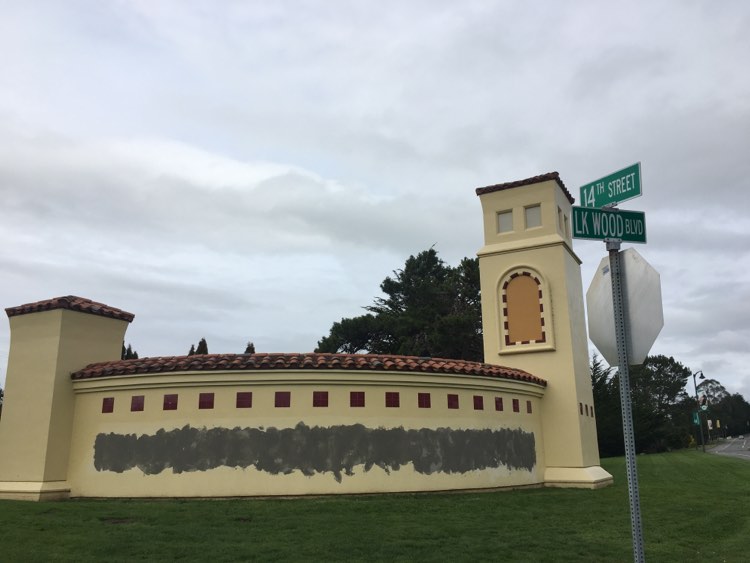
The still incomplete sign at the main gate
Officers Justified in Shooting Gun-Wielding Man in the Arcata Bottoms Last Year, District Attorney Rules
LoCO Staff / Wednesday, March 9, 2022 @ 8:37 a.m. / Crime
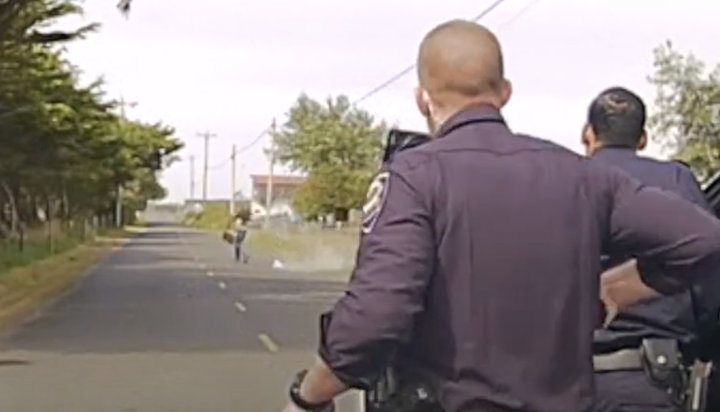
Screenshot from video released by law enforcement of the Sept. 9, 2021 shooting of 35-year-old Eureka resident Charles Chivrell on Mad River Road near Arcata.
PREVIOUSLY:
- Victim and Officer Identified in Last Week’s Officer-Involved Shooting in Arcata Bottoms
- (VIDEO) Bodycam Footage of Last Month’s Fatal Arcata Officer-Involved Shooting Released
- TOP 25 of 2021! Here Are the Most Clicked-Upon Posts of the Last Year. BONUS: The Most Deeply Read Stories of the Year!
- California Highway Patrol Lags Local Police, Other States in Officer Body Cams. Could They Have Helped Us Understand a Shooting in the Arcata Bottoms?
###
From the District Attorney’s Office:
DA Maggie Fleming has completed her review of the investigation regarding the September 9, 2021 California Highway Patrol (CHP) Officer-involved shooting of 35-year-old Charles David Chivrell. A Humboldt County Critical Incident Team, with members from the Eureka Police Department, Humboldt County District Attorney’s Office, Humboldt County Sheriff’s Department, Arcata Police Department (APD), CHP, and Ferndale Police Department, conducted the investigation. The Humboldt County Coroner’s Office and the California Department of Justice (DOJ) – Bureau of Forensic Services also contributed to the investigation.
The investigation revealed that the incident began at approximately 10:47 am when a citizen called 911 to report a man walking with a firearm and a briefcase in the roadway near the intersection of Heindon Road and Miller Lane.
CHP and APD officers responded to that area and began looking for the man described in the call. CHP Officers Griffin and Cornejo, traveling in one vehicle, located Mr. Chivrell on Miller Lane. As the officers first approached Mr. Chivrell, they observed a pistol in a holster on his right thigh. Their vehicle’s camera recorded their initial interaction with him. Using the vehicle’s loudspeaker, one of the CHP officers asked Mr. Chivrell to stop walking and speak with them. Mr. Chivrell refused to comply and continued to walk away. At various points he turned to face the CHP vehicle, sometimes raising his hands, but then again walking away. The officers repeatedly ordered Mr. Chivrell to drop what he carried and come to the patrol vehicle. At one point, Mr. Chivrell removed his leather jacket, dropped it and continued walking and carrying his briefcase. The officers repeatedly ordered him to show his hands. This interaction continued for more than 10 minutes. During that time, Mr. Chivrell stated he was going to McKinleyville “…to the only motel and run out the *expletive* Mexicans that are running the show and spending all the money.” When Officer Cornejo responded by saying “We just want to talk,” Mr. Chivrell yelled to him, “Hey go back to Mexico, you don’t have papers here.”
At another point he yelled and simulated drawing his gun. While following him at a distance the officers saw other vehicles and people in the area. At one point they saw a person talking with someone parked in a car and motioned for them to get out of the area. After a bicyclist went by the officers discussed concerns for public safety. Given the safety concerns that included nearby houses, the loss of visibility that an upcoming curve would create, and Mr. Chivrell’s threatening statements and erratic behavior, the officers chose to deploy a pepperball launcher in a straight section of road. By using the pepperball launcher, the officers sought to incapacitate Mr. Chivrellso that he could be safely apprehended: the contents of the pepperballs cause irritation of the eyes, nose and throat. Because officers could not safely approach Mr. Chivrell, the pepperball launcher was the only non-lethal option.
Multiple officers reported the following sequence of subsequent events. APD Sergeant Hoffman - who had earlier moved to the CHP patrol vehicle - exited the vehicle to deploy the pepperball launcher. Standing next to the front passenger seat with the vehicle door open, he fired pepperballs at Mr. Chivrell; several pepperballs hit Chivrell’s back and legs. Sergeant Hoffman heard an officer say that the man was drawing his gun and looked to see the man raising his right arm while turning his body towards the officers. He then heard a gunshot and heard the bullet go past his head. Sergeant Hoffman was aware that the CHP officer to his right then fired his rifle and he observed Mr. Chivrell go to the ground.
Officer Cornejo stated that Sergeant Hoffman exited to fire the pepperball launcher and Officer Griffin stood nearby to provide cover with his rifle. As Sergeant Hoffman fired pepperballs, Officer Cornejo exited the driver’s side of the CHP vehicle and saw the pepperballs hit Mr. Chivrell, and then saw Mr. Chivrell reach for, and draw his pistol from a holster. Officer Cornejo heard a shot and moved for cover. He then saw Mr. Chivrell on the ground.
Officer Griffin described the entire sequence of events in the same way. When pepperballs hit Mr. Chivrell, Officer Griffin saw Mr. Chivrell reach down, draw the pistol and raise it toward the officers. Officer Griffin fired one round from his rifle and saw the man fall to the ground. Officer Griffin said he fired his rifle because he believed the man would shoot them.
APD Officer Rodes also described following in his patrol vehicle behind the CHP vehicle and the ongoing efforts to engage Mr. Chivrell. As officers followed Mr. Chivrell for about a mile, several times officers got out of their vehicles and spoke to Mr. Chivrell when he stopped walking, but then resumed their slow pursuit by vehicle when he resumed walking. When the opportunity arose to deploy the pepperball launcher, Officer Rodes - who was directly next to Officer Cornejo on the driver’s side of the CHP vehicle - saw the pepperballs strike Mr. Chivrell, saw Mr. Chivrell remove his pistol from the holster, level the pistol at the officers and fire one round that Officer Rodes heard “whiz” nearby. Very close in time, he heard a second round fired from the direction of the right-hand side of the CHP vehicle and then saw Mr. Chivrell go to the ground.
Officers ordered Mr. Chivrell to show his hands, then approached him and saw his revolver immediately on his right. Officers then began life-saving efforts including CPR. Medical personnel arrived and continued life-saving measures while transporting Mr. Chivrell to Mad River Hospital, where he was pronounced deceased on arrival.
In an analysis of the firearm recovered near Mr. Chivrell, a DOJ Senior Criminalist found the hammer down on one expended cartridge case and 5 intact cartridges in the remaining chambers. DOJ’s examination of the CHP patrol vehicle revealed a single bullet strike to the left-hand side of the windshield in front of the driver’s seat and glass fragments on the dashboard. DOJ also found in the pasture next to the roadway a single expended cartridge that the Senior Criminalist determined had been fired from the rifle used by the CHP officer.
An autopsy by Dr. Olson on September 11 revealed Mr. Chivrell died from a single bullet wound that entered the left side of his face below his eye and exited the right side of his neck. The bullet path is consistent with the observations of the officers that Mr. Chivrell turned as he drew his weapon and fired at them. A toxicology screen revealed that Mr. Chivrell had methamphetamine and THC in his system. Investigators also found methamphetamine in the briefcase Mr. Chivrell carried during the incident.
The California Penal Code describes justifiable homicide at Section 196:
Homicide is justifiable when committed by peace officers and those acting by their command in their aid and assistance, under either of the following circumstances:
(a)In obedience to any judgment of a competent court.
(b)When the homicide results from a peace officer’s use of force that is in compliance with Section 835a.
The California State Legislature made significant additions to Penal Code Section 835a in 2019 (Assembly Bill 392) which now states:
Section 835a. Reasonable force to effect arrest; Resistance
(a) The Legislature finds and declares all of the following:
(1) That the authority to use physical force, conferred on peace officers by this section, is a serious responsibility that shall be exercised judiciously and with respect for human rights and dignity and for the sanctity of every human life. The Legislature further finds and declares that every person has a right to be free from excessive use of force by officers acting under color of law.
(2) As set forth below, it is the intent of the Legislature that peace officers use deadly force only when necessary in defense of human life. In determining whether deadly force is necessary, officers shall evaluate each situation in light of the particular circumstances of each case, and shall use other available resources and techniques if reasonably safe and feasible to an objectively reasonable officer.
(3) That the decision by a peace officer to use force shall be evaluated carefully and thoroughly, in a manner that reflects the gravity of that authority and the serious consequences of the use of force by peace officers, in order to ensure that officers use force consistent with law and agency policies.
(4) That the decision by a peace officer to use force shall be evaluated from the perspective of a reasonable officer in the same situation, based on the totality of the circumstances known to or perceived by the officer at the time, rather than with the benefit of hindsight, and that the totality of the circumstances shall account for occasions when officers may be forced to make quick judgments about using force.
(5) That individuals with physical, mental health, developmental, or intellectual disabilities are significantly more likely to experience greater levels of physical force during police interactions, as their disability may affect their ability to understand or comply with commands from peace officers. It is estimated that individuals with disabilities are involved in between one-third and one- half of all fatal encounters with law enforcement.
(b) Any peace officer who has reasonable cause to believe that the person to be arrested has committed a public offense may use objectively reasonable force to effect the arrest, to prevent escape, or to overcome resistance.
(c)(1) Notwithstanding subdivision (b), a peace officer is justified in using deadly force upon another person only when the officer reasonably believes, based on the totality of the circumstances, that such force is necessary for either of the following reasons:
(A) To defend against an imminent threat of death or serious bodily injury to the officer or to another person.
(B) To apprehend a fleeing person for any felony that threatened or resulted in death or serious bodily injury, if the officer reasonably believes that the person will cause death or serious bodily injury to another unless immediately apprehended. Where feasible, a peace officer shall, prior to the use of force, make reasonable efforts to identify themselves as a peace officer and to warn that deadly force may be used, unless the officer has objectively reasonable grounds to believe the person is aware of those facts.
(2) A peace officer shall not use deadly force against a person based on the danger that person poses to themselves, if an objectively reasonable officer would believe the person does not pose an imminent threat of death or serious bodily injury to the peace officer or to another person.
(d) A peace officer who makes or attempts to make an arrest need not retreat or desist from their efforts by reason of the resistance or threatened resistance of the person being arrested. A peace officer shall not be deemed an aggressor or lose the right to self-defense by the use of objectively reasonable force in compliance with subdivisions (b) and (c) to effect the arrest or to prevent escape or to overcome resistance. For the purposes of this subdivision, “retreat” does not mean tactical repositioning or other de-escalation tactics.
(e) For purposes of this section, the following definitions shall apply:
(1) “Deadly force” means any use of force that creates a substantial risk of causing death or serious bodily injury, including, but not limited to, the discharge of a firearm.
(2) A threat of death or serious bodily injury is “imminent” when, based on the totality of the circumstances, a reasonable officer in the same situation would believe that a person has the present ability, opportunity, and apparent intent to immediately cause death or serious bodily injury to the peace officer or another person. An imminent harm is not merely a fear of future harm, no matter how great the fear and no matter how great the likelihood of the harm, but is one that, from appearances, must be instantly confronted and addressed.
(3) “Totality of the circumstances” means all facts known to the peace officer at the time, including the conduct of the officer and the subject leading up to the use of deadly force.
The District Attorney has concluded the shooting was legally justified, in that the officers’ actions complied with California Penal Code Section 835a. Once Mr. Chivrell pointed and fired his gun at them, the officers reasonably believed they were in imminent danger of being killed or suffering great bodily injury.
The District Attorney has notified Mr. Chivrell’s family of her decision.
‘I Want to Provide a Fresh Set of Eyes on This Police Department’: Interim Chief of Police Todd Jarvis Talks Goals and Challenges at EPD
Isabella Vanderheiden / Wednesday, March 9, 2022 @ 7:51 a.m. / @Eureka
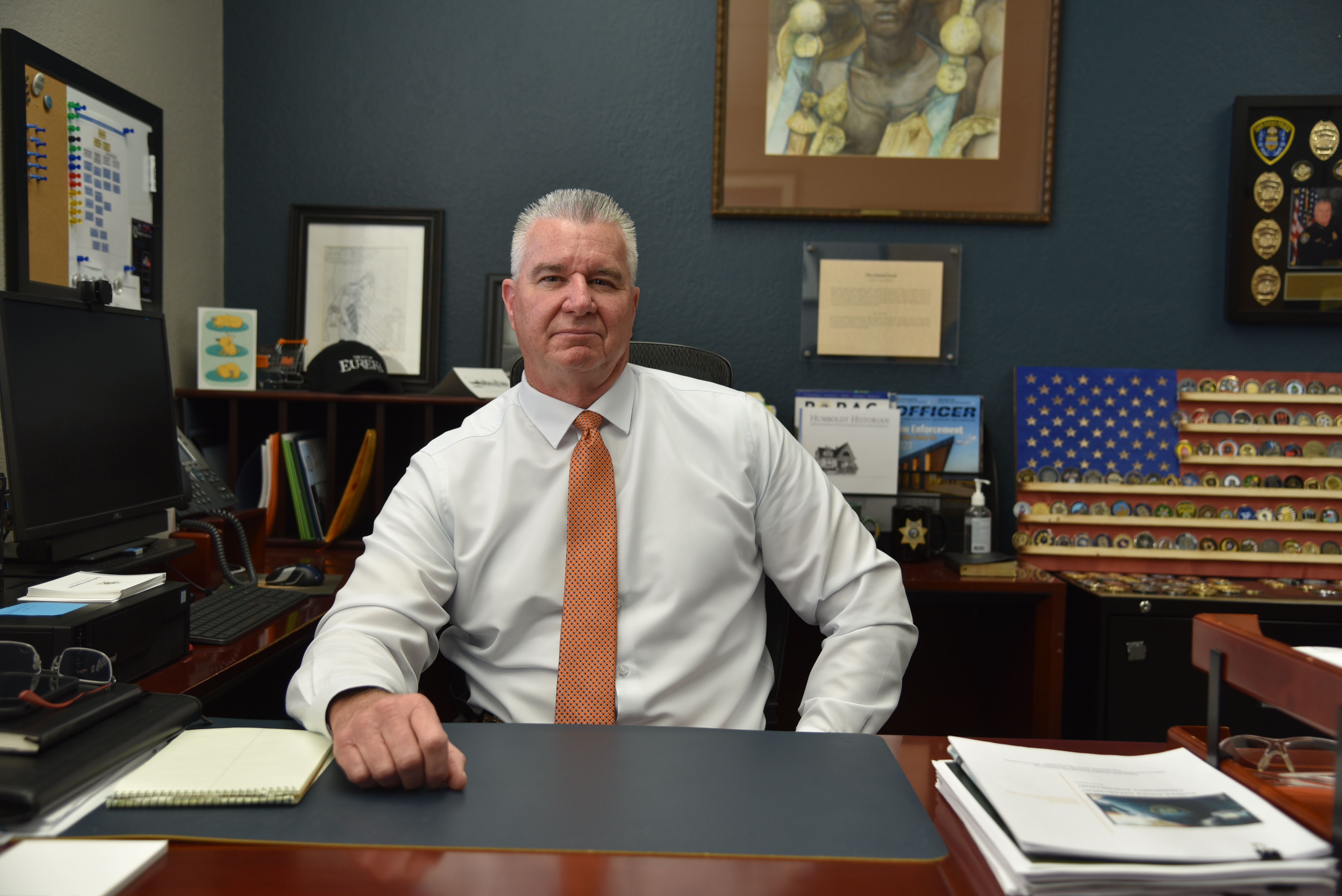
Interim Eureka Chief of Police Todd Jarvis | Isabella Vanderheiden
After about two months on the job, Eureka’s interim chief of police, Todd Jarvis, sat down for an interview with the Outpost to talk about goals, challenges and the future of the Eureka Police Department.
Jarvis took on the role of interim chief of police in January following the retirement of Chief Steve Watson last November after nearly 17 years with the department, four of them as chief. Captain Brian Stephens briefly stepped in as acting chief of police before Jarvis took the job.
Before our interview Tuesday morning, Jarvis made it clear that he would not comment on the ongoing investigation into a series of vile text messages sent within a squad of six Eureka police officers roughly one year ago. “It is not appropriate to talk about right now. It is an ongoing investigation,” he said.
The conversation below has been lightly edited for length and clarity.
###
Can you tell me a little bit about yourself and your experience in law enforcement?
I was born and raised in San Diego, California, and I joined the San Diego Police Department (SDPD) at age 20 to be a community service officer. I grew up in the [SDPD] as my father [worked and] retired from there. I spent about eight months investigating collisions as a community service officer and then – once I became old enough – I was hired as a recruit and then went on in my sworn law enforcement career. I eventually retired in November of 2019 as the executive assistant chief of police which is the number two position of that department and responsible for running the daily operations of the [SDPD].
Throughout my career – I was there 35 and a half years – I had the opportunity to work just about every aspect of law enforcement, from patrol, traffic investigations, to administration training. I’ve been blessed to have a very broad base career. I never expected when I started that career that I would go to the FBI Academy and spend 10 weeks with law enforcement leaders and professionals from around the world to learn from them and to teach with them. I’ve been blessed. I’ve had a great career.
I was pretty happily retired, quite frankly, when I got a call from former Eureka Police Chief Andy Mills, who was a colleague at [SPD] and a longtime friend. …I was splitting my time between San Diego and a little vacation place on the Colorado River in Arizona and I was out in Arizona when I got a text from Chief Mills that said, “Hey, would you be interested in an interim job?” I said that I’d be interested in talking to someone. I talked to Eureka City Manager Miles Slattery within a few minutes and a couple days later I was going through the process to come up here.
As I said, I retired in November of 2019 and we all know what happened a couple of months later when the COVID pandemic hit our country. A few months after that, the murder of George Floyd in Minneapolis, Minnesota. I started getting text messages from a lot of people that I had worked with [at SDPD] and from people from other departments around the country saying, “Chief, you’re so lucky to be retired,” but I didn’t feel that way. I felt like I have all this experience and passion for this profession and I’m sitting on the couch watching my city and other cities burn. I kind of knew then that I wasn’t done with this calling, I was just waiting for the right direction. Little did I know it would be in Eureka, California. …
How are you liking Eureka so far?
I like it. I like outdoor activities and there’s plenty to do here as far as exploring the county’s natural beauty. It’s amazing.
The people have been very welcoming. I’ve met so many nice people already internally here in the department and in the community. It seems like everywhere I go people are stopping and we’re talking. Whether it’s a clerk at a department store to people I’ve met on the street, everybody’s just a different level friendly here. I’ve appreciated that very much coming from a bigger city and after having lived in San Diego for the majority of my life.
What are some of the challenges the Eureka Police Department is currently facing? What are some of the department’s strengths?
Probably the biggest challenge that I’ve been faced with from the day I arrived is staffing. We are down 11 officer positions right now. We have three in the academy, but they don’t graduate until June and then we need to train them in the field. Best case scenario, they’re not going to be in the field until October.
[The staffing challenges] weigh heavily on the people that are out doing the job. We’ve gone to a different shift structure and they’re working a lot, they’re having to work overtime, and people are getting tired. One of my main priorities is trying to get some relief for them. We’re looking for some immediate relief with lateral officers who are looking to get out of the big city but still want to do big city type policing – which we definitely have the opportunity for here – who also want to raise their families or live in a different environment. …But staffing is probably the biggest challenge we have right now and everything else just kind of segues from that.
The strength of this department comes from the dedication of the people that work here. …A lot of our staff are from here, they grew up here, they have friends here, a lot of them know everyone by name and that is a big plus. …
I came from a big police department where I was responsible for 3,000-plus employees, and I will tell you that I am working just as hard here with 70 employees as I was with 3,000. I found that everyone here is wearing four or five hats and they are very well versed in department operations because they have four or five collateral duties, whereas in a larger department you generally have one. And so what I’m finding [here] is a whole new level of commitment. The people that are working here, this core group that’s still here that hasn’t left in the last year, are here because they want to be here and because they are dedicated to this community and this department.
I understand you worked closely with the San Diego Citizens Advisory Board on Police/Community Relations. Can you tell me about that experience?
There are two boards in San Diego, and I think you might be asking more about the review board who looked at complaints and things, but there is also a Citizens Advisory Board on Community Relations and that reports back to the mayor and I was a liaison to that board. …
I had a great experience while I was there. By attending the meetings every other Tuesday, I was then able to sit down with the chief of police on Wednesday morning and talk about the issues that were discussed the previous night. Often we were able to make immediate course corrections or changes or recommendations before they even had to go through a whole process to get to the mayor. …I think it allowed us to be very responsive to the community, much faster than I think they thought, because we kind of took some of the work away by getting it done so quickly.
The other board that I sat in on alternate Tuesdays was the Community Review Board on Police Practices [which] worked closely with our internal affairs unit and reviewed all the citizen complaints that came in. They had several different teams and each team would be assigned different complaints. They would do a thorough review, they would have all the same information that the internal affairs sergeant who investigated the complaint would have, they would have access to the same evidence, all the interviews, and then they would present to their board in closed session about what they had learned and make a recommendation on whether to accept the findings. …
It gave me a great opportunity to work very closely with some very dedicated volunteers. We did not always agree and, quite frankly, some of those meetings were pretty long because we get people with agendas and it’s not necessarily an unbiased, impartial review of police reporting. That was one thing that I talked about at the Eureka City Council meeting a few weeks ago. It’s very important as we move into that process here in Eureka that the people that sit on that board are there for the right reason. We are committed as a profession to do the right thing and we need independent civilian oversight to be a legitimate profession. I truly believe that and I said that many, many times in the meetings in San Diego and I said it at council here. I welcome it, but let’s include people who genuinely want to make this a better place, not those who have an ax to grind against law enforcement because it’s not productive.
Can you expand on how you will apply that knowledge to policing here in Eureka and what has your experience been in working with Eureka’s Citizen’s Advisory Board thus far?
I’ll take every bit of that experience that I had and try to apply it here in the most positive way. I have already been able to provide quite a bit of input to the city manager and the assistant city manager as they were beginning to draft this process and I saw a few things that I said, “Oh, maybe we can do this a little differently based on lessons I’ve already learned and experience that I had.” They were very receptive to that.
Drug use is a big issue in Eureka, specifically the rise of fentanyl use. [The Outpost] ran a story recently about the tremendous uptick in fentanyl-related overdose deaths in Humboldt County in 2021. What is EPD doing to tackle this international crisis locally?
It is an international issue but it affects everyone in this country and particularly in this county. …We still have an officer assigned to the drug task force as a special agent. That’s a force multiplier for us because it brings agents from all over the county and into Eureka when need be. We have officers in this department who are very well versed in narcotics enforcement and doing the daily.
We had 44 Narcan deployments last year. I was unable to get the number [for this timeframe last year] but I know it’s going to be a higher percentage this year already. …Thank goodness that we have it and that our officers are trained and they are aware of what’s happening. I understand a lot of our officers are even carrying it off-duty because they’re seeing people [overdosing] at the mall or wherever they are out with their families and making some saves.
We are relentlessly – as our resources allow – trying to get fentanyl in particular off the streets of Eureka because we’ve seen the damage that it does. But it’s not just a police problem, it’s a societal problem. I’m not as well versed yet in all the resources available in Eureka but I know there are a lot of dedicated people working on the addiction side of it. We’re doing our part to take as much of it off the streets as we can, and we’re making a dent, but it’s a lot. …
Was there anything else related to the prevalence of drug use that you wanted to touch on?
It’s amazingly visible here. I mean, I can’t walk into the gym without smelling marijuana. It’s a different culture up here for sure. It’s really what I would expect in a society that has less strict repercussions. It’s harder on us to get help for people when there aren’t repercussions. It doesn’t surprise me when I see people lighting up a pipe when I’m driving down the street in a police car because they know that repercussions are pretty minimal right now. …We’re working within the laws that are provided by the legislature, and I think within that vein, officers are doing everything they possibly can, but it’s a different culture up here in Humboldt County.
Another local issue is homelessness. Many of the homeless folks living in Eureka are struggling with mental illness and/or addiction. Can you talk about the strategies EPD is taking and will take to work with other local organizations to alleviate and address homelessness in Eureka?
The strategies that we’re employing right now have been going on for a bit with [EPD’s Community Safety Engagement Team] (CSET). We are asking for a little extra funding out of Measure Z to get a clinical psychologist or caseworker working with us because that’s a pretty common model in California. …
I’m very happy with the progress that has been made here and I’m impressed by the things that are happening here with some of the outreach. Having an officer assigned to the mental illness aspect of this is quite a commitment when you look at our staffing, but it’s been very beneficial when you look at the number of commitments and contacts that are made by CSET. … Right now I’m really focusing on building those relationships internally.
I’m soon going to be focusing externally on meeting with community stakeholders and finding out exactly what their expectations are of us. …I do have a lot of experience in dealing with homelessness, mental illness, and the addiction side of it in San Diego. As the Executive Assistant Chief of Police, I recommended and implemented an entire division to deal with homelessness and quality of life. We took all the officers from around the city that were working on this and we put them under one roof and we centralized the response. I learned a lot doing that and there’s some of that that we can do here on a smaller scale.
As you just said, you are still getting to know this community, but can you talk more about what you would like to contribute to this community? What is your favorite aspect of policing?
What I want to do for this community is provide leadership and direction for a very strong professional police department. I want to provide a fresh set of eyes on this police department, on this community, issues that we face and bring some of the experience that I was blessed to gain throughout my career to Eureka. What I don’t want to do is try to turn Eureka into a big city. That’s not why I’m here. The experience I had in a big city can help me here but it has to be done in a small-town manner that is acceptable by the department and the citizens we serve.
I want to bring that voice of reason to the community and I want to be a strong role model for the people that work here. I feel very, very strongly the police officers are here to serve and that’s one of the reasons I am so happy to be here. …There have been a lot of strong leaders in this department that have started programs that people probably take for granted by now because it’s always been there, but they’re making a difference. Things could definitely be a lot worse. …
You ask what my favorite part of my profession is and sometimes that really changes day to day. As a younger man, I loved being out in the field and chasing bad guys. As I progressed in my career, I really enjoyed the lifelong learning and the leadership part of it. I love leading people and trying to make people’s day better, as well as treating people with empathy and being out in the community. I think one of my favorite parts of policing right now is just getting out and meeting people and talking to people. Letting them see police professionals, not as the evil that maybe they’re seeing on the evening news every night, but human beings that care and are here for a reason.
I don’t want this to sound overly dramatic…but the “Thin Blue Line” has become a symbol of hate, unfortunately, because of some people carrying that flag, but to me, that Thin Blue Line is really those of us who have chosen this profession to stand in between good people and people that will do them harm. …It’s a noble profession and I’m honored to be back in it. …It’s important to me for people to understand that [our officers are] risking their lives every day they walk out this door and I want them to feel appreciated.
Is there anything else you’d like to add or share with our community?
I want to thank the community for not only the welcoming I’ve had here but for the way that the police department here feels supported. Not a day goes by that someone doesn’t pop in and bring something to share with the officers. Whether it’s doughnuts or a box of cookies — that means a lot to us.
I want the community to know that I have expectations of all of us, not only in law enforcement, but it’s a shared responsibility. I would really like to challenge the community to step up and to help us. If you see something wrong, let us know. I can’t fix something if I don’t know what’s broken. I’ve met a lot of people who have just popped in to meet the chief, and if I can fit them in I’m happy to do that.
Do you plan to apply for the permanent position of police chief?
There has not been an announcement. I would certainly be interested in continuing that conversation with the city manager. I’ve really fallen in love with the department and the people in this community. Let’s keep the conversation going.
What to Know About the State of the State Speech by Gov. Gavin Newsom
Alexei Koseff / Wednesday, March 9, 2022 @ 7:26 a.m. / Sacramento

Gov. Gavin Newsom speaks during his State of the State speech in Sacramento on March 8, 2022. Photo by Miguel Gutierrez Jr., CalMatters
Even as the coronavirus pandemic finally appears to be receding, Californians are in a funk.
They are nearly evenly split on whether the state is headed in the right direction, according to a survey released last month by the Public Policy Institute of California, and gave poor marks to Gov. Gavin Newsom on almost every policy issue, from wildfires to crime to homelessness, in another poll published a few weeks later by the UC Berkeley Institute of Governmental Studies.
So on Tuesday evening, Newsom turned his annual State of the State address into a defiant pep talk, assuring wary residents that, in a world unmoored by autocratic leaders and attacks on voting and abortion rights, the “California way” is still a beacon.
“People have always looked to California for inspiration,” he said. “Now, in the midst of so much turmoil, with the stacking of stresses and dramatic social and economic change, California is doing what we have done for generations: lighting out the territory ahead of the rest, expanding the horizon of what’s possible.”
Newsom touted better job creation and lower coronavirus death rates than other states, an ongoing expansion of pre-kindergarten to all four-year-olds and billions of dollars in additional funding for homelessness services during his administration.
But there’s only so much comfort to be found in troubled times.
In an 18-minute speech — uncharacteristically brief for Newsom — the governor could not entirely ignore the unfolding war in Ukraine, which he noted at the top of his remarks mattered far more to most people than anything he had to say, or looming challenges such as rising public anxiety over crime.
The only new policy announcement came during an acknowledgment of spiraling gas prices, which have recently surpassed an average of $5 per gallon in California.
After previously calling in January to pause the annual increase to the state gas tax scheduled for July, Newsom pledged to work with legislative leadership on a plan for a tax rebate for drivers.
“Now it’s clear we have to go farther,” he said, though he rejected calls from the oil industry and some lawmakers to ramp up oil drilling in the state.
The governor provided no further details about who would receive financial relief or how much. At a post-event press conference, Dee Dee Myers, the governor’s top economic adviser, said the plan, which is not yet complete, would likely distribute billions of dollars to California residents who had registered their cars with the state.
“We want to make sure that the money gets into the hands and pockets of the people who are paying these gas prices, and not into the hands of companies who might take advantage of a moment to increase profits,” she said.
The speech in the auditorium of the California Natural Resources Agency, where Newsom unveiled his budget proposal in January, was a far cry from last year’s slicky-produced kickoff of his recall defense at Dodger Stadium — or even the usual pomp and circumstance of an annual event that is typically held in the majestic Assembly chamber at the state Capitol.
A bipartisan phalanx of legislators and other state officials filled the auditorium, which had been lightly decorated for the occasion with live plants onstage — native California species, naturally. Attendees were required to show proof of vaccination and test negative for COVID, but with a statewide indoor mask requirement recently dropped, face coverings were sparse.
Republicans, before and after the event, put out a series of videos and statements on the “real state of the state,” slamming Newsom and fellow Democrats for policies that they said had made California unsafe and unaffordable.
Seeming to anticipate those criticisms, Newsom nodded a handful of times to the issues that voters have consistently ranked as the most pressing in the state, including homelessness and public safety. He touted his commitment to violence-prevention programs and a recent proposal to establish county mental health courts, among other solutions that he said would not repeat the failures of the past.
But his focus was largely on the grander scheme. He repeatedly presented California as an alternative to the anger and fear dividing not just the country, but the planet.
“California does democracy like nowhere else in the world. No other place offers opportunity to so many from so many different backgrounds,” Newsom said. “The California way means rejecting old binaries and finding new solutions to big problems.”
His best hope at overcoming those “binaries” in the near future may be his rebate proposal, which follows weeks of loud pleas by Republican legislators to suspend the state gas tax.
Their early reaction was muted, however. GOP leaders said they were willing to work with the governor on the policy while also dismissing it as another half-baked plan from a man with lots of ideas and not enough follow-through.
Senate Republican Leader Scott Wilk of Santa Clarita said it was “humorous” to hear Newsom speak loftily of democracy and inclusiveness during the State of the State.
“He just completely forgoed all the realities of what’s happening in this state,” Wilk said. “He is not addressing the needs of everyday Californians.”
Democrats, who hold a supermajority in both houses of the Legislature and could act without any Republican votes, were more receptive to Newsom’s proposal on relief for gas prices, applauding loudly when he announced it during his speech.
Senate President Pro Tem Toni Atkins of San Diego and Assembly Speaker Anthony Rendon of Lakewood, who have been cold on the governor’s pitch to suspend the gas tax increase, released a joint statement after the event promising to “put the state’s robust revenue growth to work by returning substantial tax relief to families and small businesses as fast as possible.”
In an election year where the sour mood could be a significant liability for Newsom and fellow Democrats across the ballot, the rebate is potentially a major political gift. For all of Newsom’s attempts to cheer up gloomy Californians on Tuesday evening, the biggest serotonin boost was likely experienced by members of his own party.
###
CALmatters.org is a nonprofit, nonpartisan media venture explaining California policies and politics.


