

With Just One Day Left Before the Candidate Filing Deadline, Here’s Where County Races Stand
Ryan Burns / Thursday, March 10, 2022 @ 3:52 p.m. / Politics

Seeking Your Vote: All these people (and more)!
Election time approacheth!
California’s June 7th primary is less than three months off, and here in Humboldt County, incumbents and aspiring candidates have until Friday at 5 p.m. to file their candidacy papers with the county’s elections office — that is unless the incumbent in any given office doesn’t file, in which case the deadline gets extended by one week. [CORRECTION: Actually,it gets extended by five days — so the deadline is Wednesday, in such cases.]
So where do things stand? Well, there’s no shortage of intrigue! Let’s take a look.

Karen v. Mychal
Auditor-Controller
This office has been the source of much public drama of late, so we’ll start here. Incumbent Karen Paz Dominguez, who has clashed with county department heads, fiscal staff and even the State Controller’s Office over delinquent fiscal reporting and communication issues, filed her initial candidate intention statement on Tuesday, officially signaling her aim to seek re-election.
Assuming she qualifies — candidates for this office must pay a filing fee of $1,328.08 or gather 2,704 signatures by the March 11 deadline — she’ll face off against challenger Mychal Evenson, an administrative analyst in the Department of Health and Human Services and former member of the county’s audit committee.
Natalie v. Kim v. Mike
Fourth District Supervisor
After a dozen years in office, Virginia Bass will not seek a fourth term, leaving the county’s Fourth District race wide open.
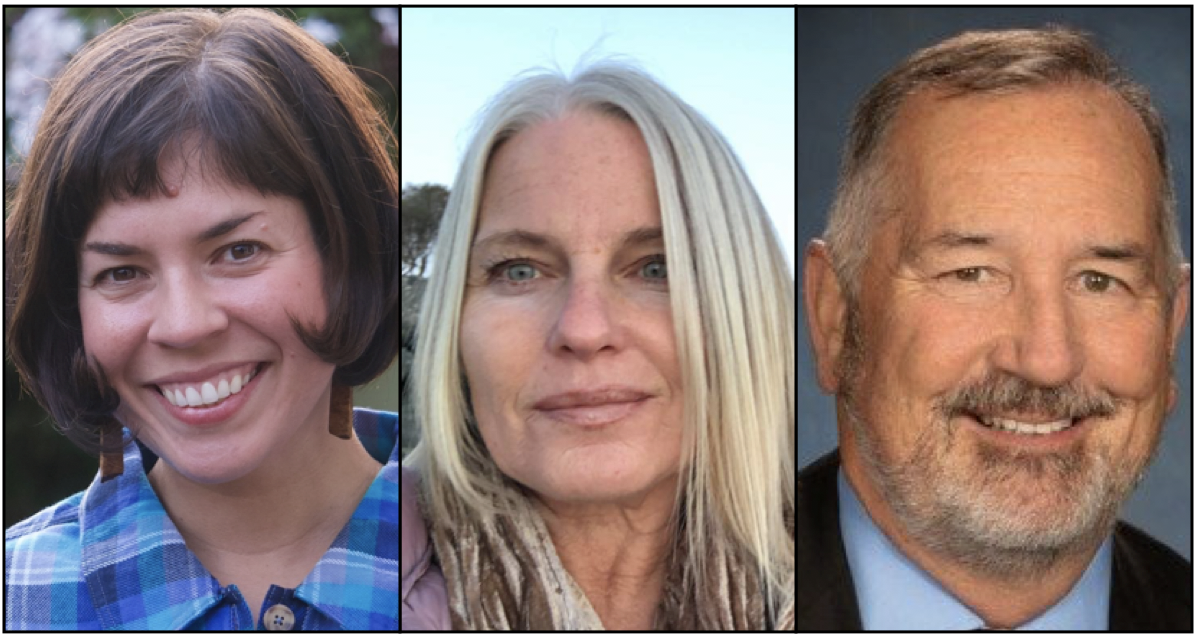
Three candidates — all current or former members of the Eureka City Council — have thrown their hats in the ring:
First to announce was Natalie Arroyo, a Coast Guard Reserve officer, Cal Poly Humboldt instructor and resources manager with Redwood Community Action Agency. She has served on the council since 2014. Her campaign thus far has focused on economic growth, good governance, housing and environmental stewardship.
Fellow lefty councilmember Kim Bergel announced in October that she’d be joining the race, and in a brief interview she told the Outpost that, if elected, she’d devote attention to addressing local houseless residents experiencing suffer mental health issues. Bergel is an instructional assistant at Eureka City Schools and has served on the Eureka City Council since 2014.
In January, the man Bergel narrowly unseated on the council, Mike Newman, became the third candidate to enter the race. An insurance agent by trade and Bass’s appointee to the Humboldt County planning commission, Newman has long been a proponent of business development, including the Terra-Gen wind energy project that was later rejected by the Board of Supervisors.

Steve v. Larry
Fifth District Supervisor
Incumbent Steve Madrone, seeking his second term in office, kicked off his re-election campaign last month at McKinleyville’s Pierson Park. The event was attended by Democratic bigwigs including Rep. Jared Huffman, state Senator Mike McGuire and former state Assemblymember Wesley Chesbro. With a master’s degree in watershed management, Madrone has worked on a variety of natural resource, land use planning and trail projects.
His only challenger thus far is Larry Doss, a realtor and former member of the Harbor District’s board of commissioners. Doss moved from Eureka to Orick to qualify for the race. According to his campaign website, Doss has visited with many Fifth District residents and learned of several of their concerns, including public safety, wildfires, water, roads and shelter insecurity.

Stacey v. Adrian
District Attorney
While there have been rumors of other candidates, so far it’s a two-person race to succeed Maggie Fleming as the county’s DA.
Assistant District Attorney Stacey Eads has been endorsed by her boss, Fleming, and in her 20 years of experience she says she’s prosecuted “nearly every type of criminal case.” She spent more than a decade working in juvenile justice and ran the DA office’s Sexual Assault & Child Abuse Crimes prosecution team.
Adrian Kamada, meanwhile, worked as a deputy DA, prosecuting homicide cases, before joining the Humboldt County Public Defender’s Office in 2020. He was selected as the 2017 Wildlife Prosecutor of the Year by the California Fish and Game Commission and the California Department of Fish and Wildlife.
Clerk-Recorder/Registrar of Voters
The Outpost wrote briefly last month about each of the three candidates to file for this office thus far. You can find that post here.
- Juan Pablo Cervantes’s campaign website
- Tiffany Hunt Nielsen’s campaign Facebook page
- Benjamin Hershberger does not appear to have a campaign website up and running yet.
Judge
As of this writing, two candidates have filed to run for the one judge seat (bench?) up for grabs this cycle.
Deputy District Attorney Steven Steward graduated from HSU with a bachelor’s in political science and earned his law degree from the Columbus School of Law in Washington D.C.
Ben McLaughlin says that in his 17-year law career, he has worked as a prosecutor and criminal defense attorney in roughly equal parts. A criminal law attorney, McLaughlin says on his campaign website that he has worked for several years as a civil litigator, giving him experience in both branches of the superior court.
- Steven Steward’s campaign website
- Ben McLaughlin’s campaign website [Note: at the time of this writing, the website appeared to be down.]
Assessor
Longtime incumbent Mari Wilson recently told the Outpost that she hadn’t yet decided whether or not she’ll seek re-election. Her deputy, Howard LaHaie, is so far the only candidate to file for the position.
Treasurer-Tax Collector
Similarly, incumbent John Bartholomew recently said he, too, had yet to reach a decision on whether he’d seek re-election. And, similarly, the No. 2 in that office, Assistant Treasurer-Tax Collector Amy Christensen, is the only person thus far to file for the office.
Billy v. Nobody
Sheriff
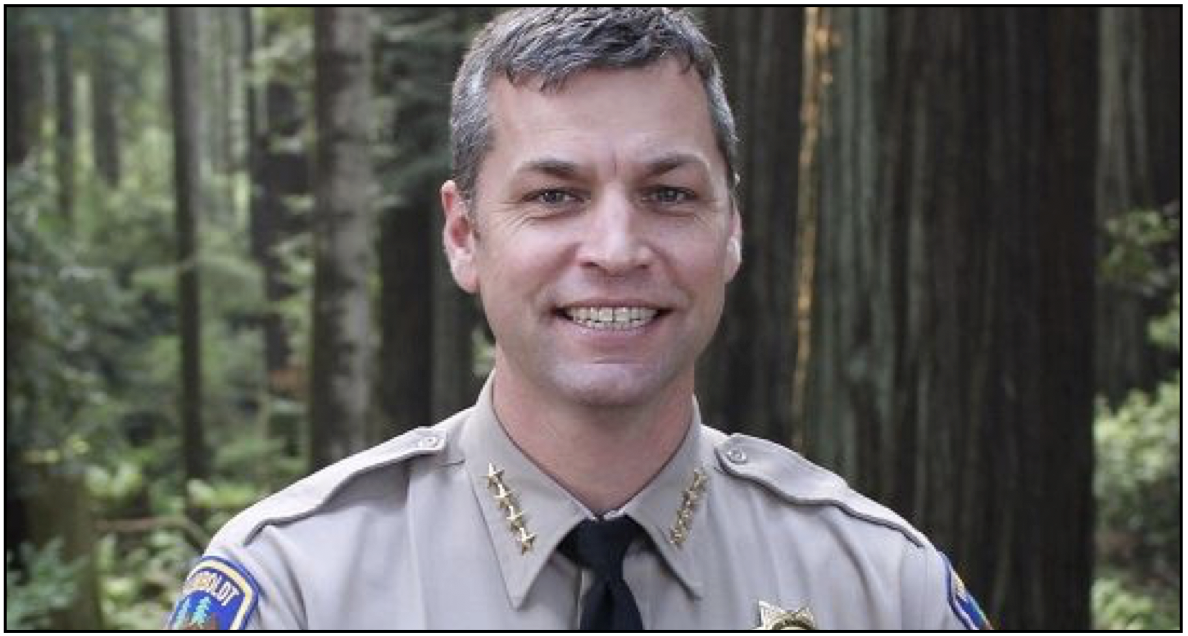
Incumbent William “Billy” Honsal is thus far running unopposed.
###
ADDENDUM, March 11, 2022: Oops, forgot one!
Superintendent of Schools
Michael Davies-Hughes, the incumbent, is the only candidate thus far.
BOOKED
Yesterday: 7 felonies, 17 misdemeanors, 0 infractions
JUDGED
Humboldt County Superior Court Calendar: Friday, Sept. 4
CHP REPORTS
420 Mm101 S Dn R4.20 (HM office): Trfc Collision-Unkn Inj
0 Deerlick Springs Rd (RD office): Trfc Collision-No Inj
6000 Mm101 N Men 60.00 (HM office): Trfc Collision-No Inj
6183 Mm101 N Men 61.80 (HM office): Trfc Collision-No Inj
ELSEWHERE
RHBB: CDPH Issues Immunization Recommendations for 2026-27 Respiratory Virus Season
RHBB: Redway Transfer Station to Close an Extra Day for Construction
RHBB: Dows Prairie Road to Close for Two Months for Culvert Repair
Live in Valley West? Here’s Your Chance to Decide How $15,000 Will Be Spent on Improving Your Neighborhood
Stephanie McGeary / Thursday, March 10, 2022 @ 2:48 p.m. / Community

The Red Roof Inn in Valley West. Go there tonight to vote on your favortie Valley West project proposals! | File photo
###
Home to most of Arcata’s cheap motels and fast food chains, Valley West is seen by many as disconnected from the rest of town and lacking the same character and charm of other Arcata neighborhoods. Now Valley West residents have the opportunity to decide what they would like to change about the area by voting on several proposed Valley West improvement projects.
Voting will take place at a Participatory Budgeting event tonight hosted by Comunidad Unida del Norte de Arcata (CUNA) – a local group formed through Cooperation Humboldt to focus on improving the Valley West neighborhood. The City of Arcata has been partnering with CUNA on its efforts and recently allocated $15,000 in American Rescue Plan Act (ARPA) funds to the group to use for projects focusing on beatification and community connectivity. CUNA wants Valley West residents to directly decide how that money is spent by selecting projects from a list of 12 proposals.
Kimberly White, a program coordinator for CUNA and a planning commissioner for the City of Arcata, told the Outpost that CUNA compiled the list of potential projects after conducting public outreach and holding several brainstorming sessions. White and other members of CUNA would talk to people at the local parks, outside the grocery store and even went door-to-door, asking residents what they would like to see in terms of beautification and connectivity in Valley West.
“The ones we chose were the most popular,” White told the Outpost. “Any [idea] that would repeat itself or seemed to be an ongoing issue, we put in there.”
The list of proposed projects for
Valley West includes weekend theater classes for kids, weekend dance
classes for adults and teens, the creation of an artisan market/flea
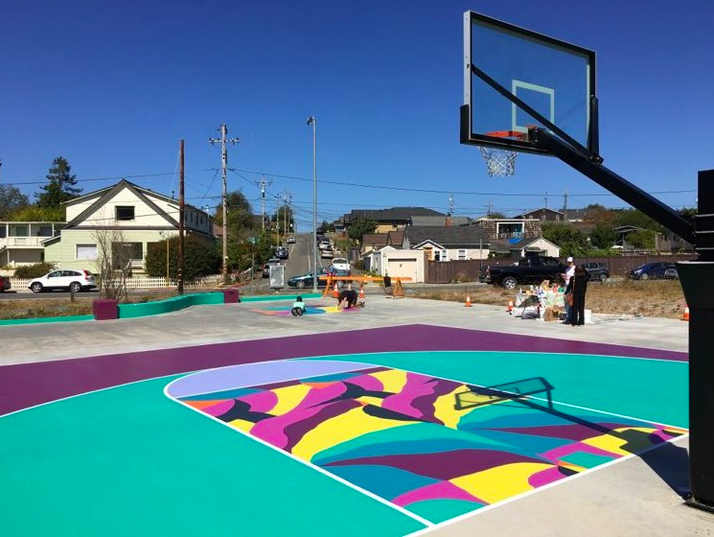
market, the installation of a kiosk message board and the printing and mailing of a Valley West newsletter. There are also several proposals focused on the improvement of Valley West Park and the basketball court on Hallen Drive, including planting fruit trees near the Valley West Park playground, installing a picnic bench and outdoor grill, commissioning local artist Ben Goulart to install five murals at the park, and commissioning the Rebound project to add a mural to the basketball court. Estimated costs for the different projects range from $400 to $5,000.
Voters are allowed to choose as many of the projects as they like, and will be asked to rank their choices in order of preference. Once the votes are tallied, CUNA will then select the projects starting with the community’s top choice and working down the list until the $15,000 budget has been exhausted. After the top projects have been selected, CUNA will compile them into an official proposal and submit it to the Arcata City Council for approval. White was not sure how soon the proposal will go before the council, but said it should be within the next couple of months.
These projects are just a part of CUNA’s ongoing efforts to improve the Valley West neighborhood. The group also hosts regular community cleanup days, has been working with the City on plans to makeover Carlson Park and is working toward establishing a Valley West community center. In addition to the $15,000 for community improvement projects, the City allocated $217,500 in ARPA funds to help fund the group’s operations. The money, White said, is going towards three years of salary for one full-time employee and the purchase of supplies to help with the group’s cleanup and community outreach efforts.
CUNA is also very focused on involving Valley West’s robust Latinx community, White said, and to encourage participation all of the group’s events are bilingual, provide free food and on-site childcare.
Residents can vote on the projects in-person tonight (Thursday, March 10) between 5 and 8 p.m. at the Red Roof Inn – 4975 Valley West Blvd. After voting, participants can stick around for free music, food and children’s activities. CUNA requests that only residents of Valley West vote on the projects, but anyone is welcome to attend to observe the process and enjoy the event.
For those who cannot make it in-person, you can also vote online anytime over the weekend. The online voting will be open until Monday, March 14.
For anyone interested in making Valley West a better place to be, White said that CUNA is currently seeking volunteers. You can call White at (707) 633-3867 or email cuna@cooperationhumboldt.com. You can also join CUNA’s monthly cleanup at Carlson Park, held on the second to last Sunday of each month from 11 a.m. to 1 p.m.
Been Wondering How You Can Financially Support Journalism in Humboldt While Also Scoring a Bangin’ Coffee Mug? LoCO is Eager to Help You Help Us Help You With That
LoCO Staff / Thursday, March 10, 2022 @ 2 p.m. / Housekeeping

A calming Humboldt sunset to put you at ease ahead of what’s coming…
Eleven years, baby. As of this month, that’s how long the Lost Coast Outpost has been supplying you, our faithful and spirited readers, with news, color and information to hopefully help you better understand this crazy little thing called Humboldt. With news being almost exclusively consumed online these days, you’d be forgiven for forgetting that LoCO was an ambitious and scrappy experiment when it started out. But nearly half a billion pageviews later, we think it’s going quite well! Thanks for honoring us with your eyeballs as much as you have, Humboldt. We are fond of almost all of you.
One aspect of LoCO you’ve surely appreciated over its lifespan that’s actually pretty important to us too: The site has always been free to click and read. And if those of us who toil here each week have our druthers, that will always be the case. Never will you ever have to figure out how to sneak past a LoCO paywall. Those things are dumb. You’re smart. You’d figure it out. So we’re not gonna go there.
Having said that, it should be important to all of us that Humboldt continue to overachieve in its support of local journalism. Seriously, for a far-flung, rural region, we’ve actually long-enjoyed way better coverage of local issues and goings-on than we probably should. LoCO wants to be an integral part of keeping that tradition going. So! If you’ve appreciated anything we’ve done here these past years and you’d like to know you did something to ensure that we continue pluggin’ away in the future, we have a proposal for you.
(OK. Poise. Confidence. They already like you. You can do this…)
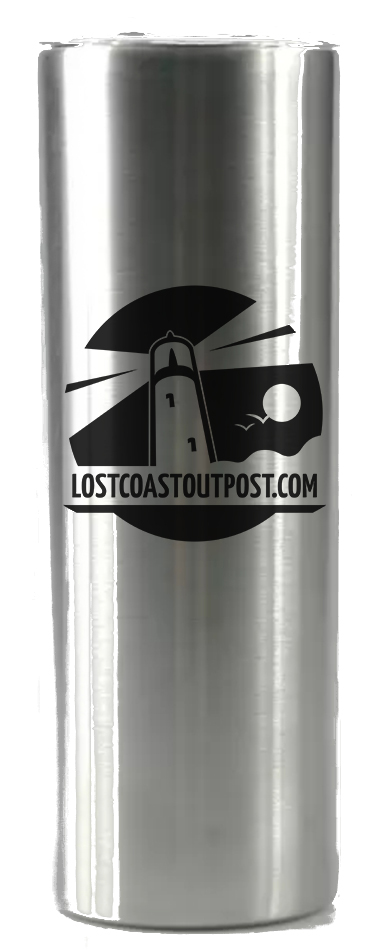
Join our LoCO support team, please! Today we are launching several ways you can “subscribe” to the Outpost, in a loose sense. Click on over to the LoCO Support page and browse options for how you can financially help us keep hummin’ along. You will note that some of the plans will score you entry into monthly raffles for local stuff and/or a sleek, shiny LoCO travel mug. Stuff! Mug! You love it!
Your decision to toss a few bucks LoCO’s way will make us feel significantly more warm and fuzzy than we felt prior to your generous gesture. We thank you in advance. Go, us! Go, you!
Permit System to Limit Number of Cars Entering Fern Canyon and Gold Bluffs Beach During Peak Months; Entrance Fee Increased
John Ross Ferrara / Thursday, March 10, 2022 @ 1:35 p.m. / Local Government , Nature

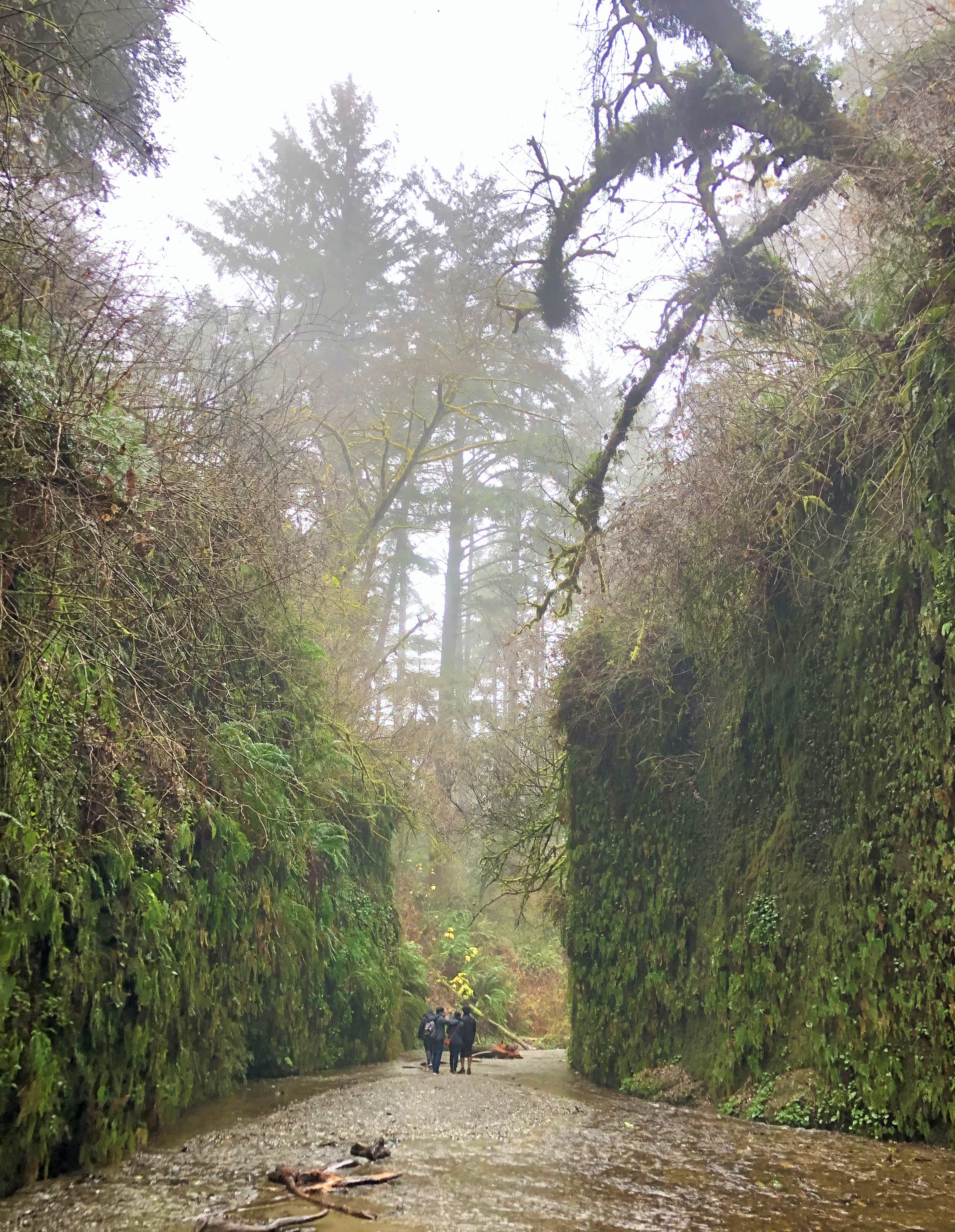
Fern Canyon. | Outpost file photo by John Ferrara
On May 1, Redwood National and State Parks will introduce a free parking permit system for Fern Canyon and Gold Bluffs Beach, in an effort to preserve the park’s natural beauty, give visitors a less-crowded experience and make the area more accessible to emergency personnel.
Supervising ranger for Sue-Meg and Prairie Creek Redwoods State Parks Keven Harder told the Outpost that the pilot program will allow for a maximum of 110 cars to access the parking lot each day between May 1 and Sept. 30, annually. This includes 35 morning permits (8 a.m. to noon), 35 afternoon permits (1 p.m. to close), 20-all day permits for both locations, and 20 permits strictly for Gold Bluffs Beach day-access.
“In the last few years, we’ve run into issues where [emergency personnel] can’t even access places because there is so much congestion back there,” Harder said. “The sheer number of people and cars is taking a toll on the actual resource that’s bringing people there in the first place. If you stress something, natural or anything else, it’s going to degrade.”
To prevent a loss in revenue caused by the impending restrictions, Redwood National and State Parks will also increase the Fern Canyon and Gold Bluffs Beach entry fee from $8 to $12 per vehicle. Visitors can pay the $12 fee in cash or check. America the Beautiful and California State Park annual passes are also accepted.
“The increase was designed because we realized that 600 cars aren’t going to be there on any given day now — and that’s a good thing,” Harder said.
Park visitors can apply for their permit of choice through the Redwood Parks Conservancy website. Using the “Gold Bluffs Beach Day-Use & Fern Canyon Permits” webpage, applicants are presented with various permit and time frame options. This selection is followed by a series of questions, including: the applicant’s name, email, party size, state-issued ID number and license plate number.
Once a reservation is made, visitors can access the parking lot by providing a park employee at the Davison Road kiosk with a cell phone picture or physical printout of their permit. The employee will then compare the applicant’s state-issued ID number or license plate number with the permit before granting access to the park.
Permits can be reserved in advance or for same-day use before 1 p.m. Park visitors with a current Gold Bluffs Beach Campground reservation do not need to apply for parking permits.
Fern Canyon can still be accessed without a permit year round by hiking the James Irvine Trail from the Prairie Creek Visitor Center (12 miles roundtrip). Permits will not be required between Oct. 1 and April 30, annually.
“We’re trying to make this a more pleasant and unique experience for people that go to Fern Canyon and Gold Bluff,” Harder said. “You can probably relate to showing up to a place like this and being shoulder-to-shoulder with with everybody else. It wasn’t the experience that people were hoping it was. In the long run, we feel like this is going to be a move in the right direction.”

A bug caught in tree sap near Fern Canyon in 2016. | John Ferrara
State Energy Commission Approves $10.5M Grant to Prepare Port of Humboldt Bay for Offshore Wind
LoCO Staff / Thursday, March 10, 2022 @ 9:58 a.m. / Energy , Government

Rampion offshore wind farm in the U.K. | Photo by Nicholas Doherty on Unsplash
Press release from the California Energy Commission:
[On Wednesday], the California Energy Commission (CEC) approved a $10.5 million grant for renovations at the Port of Humboldt Bay to support offshore wind activities in an area designated for development on the north coast. Once renovated, the new Humboldt Bay Offshore Wind Heavy Lift Marine Terminal will be capable of handling large heavy cargo vessels, offshore wind floating platform development and integration and decommissioning, and other maritime activities.
Investing in offshore wind port infrastructure is critical to opening the opportunity for offshore wind development in California, which is home to some of the best offshore wind resources in the world. The terminal is expected to initially support the development of up to 1.6 gigawatts (GW) of offshore wind in the Humboldt call area, enough electricity to power up to 1.6 million California homes.
“I’m excited by the opportunity to partner with the Humboldt Bay Harbor, Recreation, and Conservation District in their pursuit of revitalizing their port to support the necessary infrastructure for deploying ocean based clean energy resources that will benefit Californians,” said CEC Commissioner Kourtney Vaccaro. “Offshore wind is an important part of the state’s clean electricity future, providing critical supply at night to complement our abundant solar resources.”
The project is expected to revitalize the waterfront industry in Humboldt County and provide living wage jobs to nearby communities. An economic assessment found that the terminal could generate as many as 830 local jobs and more than $130 million in industry output over a five-year period.
“Humboldt Bay has the optimal conditions to serve as the primary port for the offshore wind industry for the entire West Coast,” said Harbor District board president Greg Dale. “We are fully dedicated to prepare our port for this remarkable opportunity and we are honored to be working with the California Energy Commission to launch California into the future of energy production.”
Activities funded by this grant include completing preliminary engineering and design work, conducting site surveys and special studies, preparing necessary environmental impact assessments, implementing early construction, and initiating environmental mitigation measures. The funds may also be used to attract matching funds from Federal grants and to contribute towards project construction.
The funding was approved as part of the 2021–2022 state budget. Governor Newsom’s 2022–23 budget proposal builds on this effort and proposes $45 million for additional investments to prepare waterfront facilities in California to support floating offshore wind energy development in federal waters off the California coast.
The CEC recently kicked off a process to create a strategic plan for offshore wind energy in federal waters as directed by Assembly Bill (AB) 525. The legislation requires the CEC to evaluate and quantify the maximum feasible capacity of offshore wind to achieve reliability, ratepayer, employment, and decarbonization benefits and establish megawatt offshore wind planning goals for 2030 and 2045 by June 2022 and submit the strategic plan to the Legislature in June 2023.
As part of developing the strategic plan, the CEC in coordination with relevant state and local agencies, is required to develop a plan to improve waterfront facilities that could support a range of floating offshore wind energy development activities, including construction and staging of foundations, manufacturing of components, final assembly, and long-term operations and maintenance facilities.
Newsom, Unions Eye $50k Bonuses for Juvenile Prison Workers
Byrhonda Lyons / Thursday, March 10, 2022 @ 7 a.m. / Sacramento
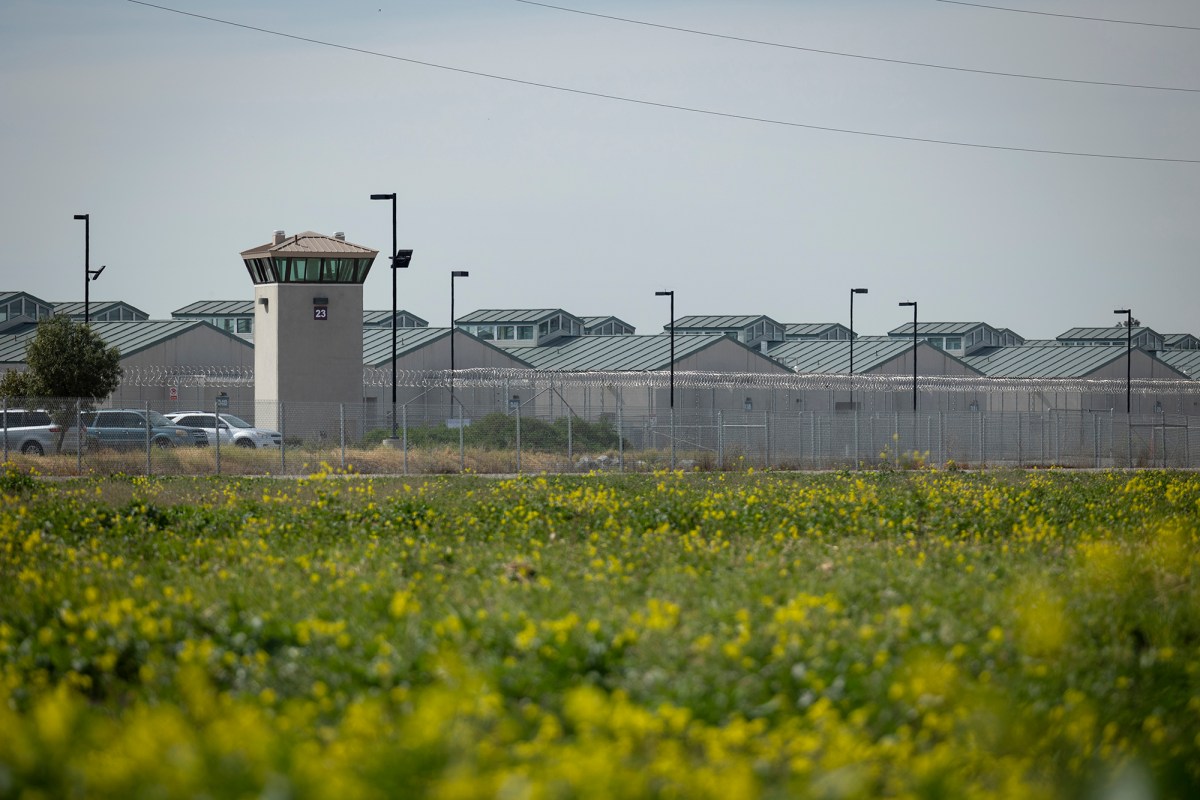
A guard tower at the N. A. Chaderjian Youth Correctional Facility in Stockton on March 2, 2022. Miguel Gutierrez Jr., CalMatters.
###
The Newsom administration is proposing large bonuses to retain juvenile prison employees as the system prepares to close next year.
As the state prepares to close its youth prisons, workers for the Division of Juvenile Justice could receive up to $50,000 bonuses to stay on the job until then, CalMatters has learned.
If approved, the bonus appears to be among the largest offered by the state to retain a group of employees.
Gov. Gavin Newsom’s administration and at least six unions are negotiating the pay bumps, hoping the large incentives will keep the youth facilities staffed until their June 30, 2023, closures.
Since Newsom announced closure plans, employees have started leaving the division for new jobs, fueling a worker shortage.
Under a draft plan obtained by CalMatters, direct care employees — youth prison guards, plumbers, teachers and chaplains — are among the hundreds of Division of Juvenile Justice employees who’d receive up to $50,000 in additional pay. Non-direct care employees, who mostly work for headquarters in Sacramento — deputy directors, executive assistants and nursing consultants, for instance — could receive up to $25,000.
Past retention bonuses for state prison workers have typically hovered between $2,400 and $5,000, according to documents on the California Department of Human Resources’ website.
“Negotiations are still active on this topic, we do not comment on active labor negotiations,” wrote CalHR spokesperson Camille Travis in an email response to CalMatters. “Once the negotiations are completed, the agreements will be posted to the CalHR website.”
According to the State Controller’s Office, 775 people worked at youth facilities as of Jan. 31, 2022. If all of them qualify for the full lump sum, it could cost California more than $38 million. By law, if the agreement is more than $1 million in net costs, the Legislature would have to approve it.
All of the unions representing youth corrections employees in the bonus negotiations donated to stop Newsom from being recalled in last year’s election. The largest contributor was the California Correctional Peace Officers Association, which gave $1.75 million, according to the Secretary of State’s website.
The governor’s office did not respond Wednesday to a request for comment, with a spokesperson citing ongoing negotiations.
This is the second time in two years the state has proposed bonuses for juvenile justice employees. Last year, the state offered a limited group of employees $5,000 annually, which totaled $12,500 if employees stuck around. The new proposal would sweeten the deal, extending the bonuses to more Division of Juvenile Justice workers and quadrupling the maximum amount.
The taxable bonuses would be prorated, according to the draft agreement.
The Division of Juvenile Justice employees would be eligible for all or part of the proposed bonuses, said agency spokesperson Mike Sicilia in an email to CalMatters.
“Recruitment and retention efforts aim to retain our valued staff to ensure our facilities are properly operating, and that DJJ is able to continue giving the youth in our charge the best education and rehabilitative opportunities before the planned closure next year,” wrote Sicilia.
According to the Department of Finance, the state has about 1,000 permanent positions authorized between the four juvenile institutions. Roughly 23% of those positions are vacant, according to a CalMatters analysis of the budget report and data from the Controller’s Office.
N.A. Chaderjian and O. H. Close Youth Correctional Facilities, both in Stockton, have the highest vacancy rates, around 26%. In addition, about 20% of budgeted permanent positions at Pine Grove Conservation Camp and Ventura Youth Correctional Facility are unfilled.
“Recruitment and retention efforts aim to retain our valued staff to ensure our facilities are properly operating.”
— spokesperson for the Division of Juvenile Justice
Contracts with correctional unions are often controversial for their costs. Last year, amid the pandemic, the California Correctional Peace Officers Association negotiated a new contract that faced criticism from the Legislative Analyst’s Office, California’s nonpartisan budget and policy experts.
The office dinged the administration for increasing prison guards’ compensations “without clear justification.” In addition, they noted that the large contract did not address one of the biggest changes facing the Department of Corrections and Rehabilitation: impending adult and youth prison closures.
“Depending on how and when the DJJ facilities close, employees could be affected directly, either through relocation to other assignments … or through job loss,” the analyst’s office wrote last year.
“There could be various issues related to the closure of DJJ … that could be topics at the bargaining table. The new agreement does not appear to contain any provisions related to these issues.”
After the analysis, the Legislature overwhelmingly approved the new contract between the state and the union.
Now, the Legislature may have to decide on another financial package for youth prison employees.
The division spokesperson would not say how many staffers would be laid off during the transition. But according to its website, the division is trying to place juvenile employees in other jobs inside the department.
The state is negotiating the final agreement.
California has offered significant incentives in the past to keep state workers from leaving.
In 2003, prison psychiatrists and doctors received an “extra $2,200 a month as a recruitment and retention bonus,” according to a San Francisco Chronicle story. More recently, in 2020, nurses for the Schools of the Blind and Deaf were approved for a monthly bonus of 5% of their normal salary, up to $589.55.
Effort to retain youth corrections employees could cost more than $38 million
The Division of Juvenile Justice plans to close all youth facilities by June 30, 2023. Gov. Gavin Newsom’s administration and several unions are negotiating pay bonuses to help retain employees within the division. Under a draft plan, as many as 775 employees could see bonuses up to $50,000 based on their job titles, which could cost more than $38 million if implemented. Below is a sample of affected job titles.
DIRECT CARE EMPLOYEES
up to $50,000 bonus
- Youth Correctional Officer
- Automobile Mechanic
- Lead Groundskeeper
- School Psychologist
- Teacher (Elementary-Multiple Subjects)
- Substitute Academic Teacher
- Locksmith I
- Chief Engineer I
- Lieutenant, Youth Authority
- Captain, Youth Authority
NON-DIRECT CARE EMPLOYEES
up to $25,000 bonus
- Youthful Offender Parole Board Representative
- Research Data Specialist III
- Vocational Instructor (Computer And Related Technologies)
- Office Technician (Typing)
- Supervisor Of Vocational Instruction
- Career Executive Assignment (Deputy Director)
- Treatment Team Supervisor
- Administrative Assistant I
- Associate Governmental Program Analyst
- Executive Assistant
###
CALmatters.org is a nonprofit, nonpartisan media venture explaining California policies and politics.
OBITUARY: Alfred ‘Steven’ Thompson, 1947-2022
LoCO Staff / Thursday, March 10, 2022 @ 6:56 a.m. / Obits

Steve was born on February 10, 1947 as the first and only child of Al
and Betty Thompson. As you might expect for the only child of two
wonderful people, Steve was both adored and appropriately spoiled by
his parents. As a kid, Steve fell in love with Roy Rogers and would
often be seen sporting a big cowboy hat and two toy six-guns in
deference to his childhood idol. From that point on, his dad would
forever call him Roy.
Steve grew up in the best place and in the best time possible. He spent his high school years at Torrance’s South High where his outgoing and charismatic personality allowed him to make friends effortlessly. Everybody loved Steve and Steve loved everybody. That’s how it’s always been. It was during those years that surfing took off in California and Steve was totally into it! Every weekend and every day during the summer, he would meet, surf, and hang out with his buddies at Torrance Beach where the infamous parking lot became “the place” to hit when the surf was bad. It was in that lot that Steve loved to show off the actual record player he had installed in his ’57 Ford by endlessly blasting Elvis “45s” at full volume. It was fabulous.
Steve’s love of both surfing and Elvis never waned. His collection of surfing memorabilia was always on full display as were the tremendous number of Elvis collectibles that he had amassed. Anyone who has ever experienced the always-expanding Elvis Room and the Surfing Room at his Fields Landing pad will understand. But Steve’s excellent taste didn’t stop there. He developed quite a fondness for classic wristwatches and Cadillacs. His crowning automotive achievement was the completion of a lengthy, ground-up restoration of “Stephanie” – a beautiful 1957 Caddie that Steve loved and owned for too many years to count.
But if there was anything that Steve loved more than Elvis and surfing, it was having fun and partying. And he turned doing that into a fine art! His Fourth of July parties at his childhood home in So. Cal. were legendary. They were exceeded only by the twenty-five or so annual extravaganzas he hosted up north known as “The ‘Thon”. People routinely came from far and wide to attend those events, for which he was subsequently immortalized in print as “Big Jake”, the recognized and undisputed master of ceremonies.
At six-foot-five (or as Steve liked to say…five-foot-seventeen, or 4-foot-twenty-nine, depending) Steve was a big guy. But he was big in many ways. He could be boisterous, bold, and brash. Everyone always knew when Big Steve rolled in! “Rip it up!” Yet he was also gentle and bodacious (one of Steve’s favorite words) in compassion, generosity, and kindness to family and friends alike throughout his entire life.
Steve left us far too early. It doesn’t seem right. It doesn’t seem fair. But it does seem selfish to look at it that way. We were all blessed to have known Alfred Steven Thompson for the years that we did. Friendships like that are rare. We should remember and savor the time, the moments, that we shared with him, and robustly celebrate them. Because that’s for sure what Big Steve would want.
###
The obituary above was submitted on behalf of Steve Thompson’s loved ones. The Lost Coast Outpost runs obituaries of Humboldt County residents at no charge. See guidelines here.


