
Yoga Classes, Therapy and 401(k)s: California Businesses Beefing Up Benefits to Attract Workers
Grace Gedye / Wednesday, Aug. 11, 2021 @ 7:32 a.m. / Sacramento
The plea went out on Instagram: Cultura Comida y Bebida was short staffed. The Carmel-by-the-Sea restaurant could no longer offer its Oaxacan-inspired lunch and might have to cut one evening of dinner service if it wasn’t able to hire more kitchen staff within the week. So, the owners opened up a referral bonus program to the entire community. Anyone who introduced them to someone they eventually hired would receive a $200 gift card. The new employee would, too.
“Literally if one more person leaves,” Sarah Kabat-Marcy, one of the restaurant’s managing partners, said. “I don’t know what we’re going to do.”
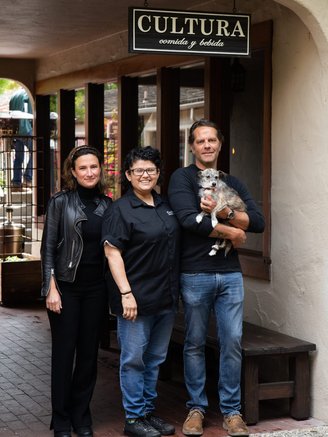
Managing partners, Sarah-Kabat Marcy and Michael Marcy with and Chef Michelle Estigoy, center, pose outside their restaurant Cultura Comida y Bebida in Carmel-By-The-Sea, on August 6, 2021. Photo by Carlos Rene Castro for CalMatters
After five years of little turnover, the restaurant lost several employees in the past couple of months to larger operations, including luxury hotel restaurants that could pay kitchen staff $37 per hour, Kabat-Marcy says. She and her husband Michael Marcy, who is also a managing partner, increased their kitchen staff’s pay by 20%. They deserve it, she said, and the cost of living is high in the coastal city. But there’s no way they could match the wages of larger operations, she said. The profit margins are too thin; the restaurant would go under.
In the meantime, hostesses and servers have volunteered to help out in the kitchen. The head chef’s retired parents have even come in and helped make tortillas. The restaurant has slimmed down its menu based on conversations with the kitchen staff about which dishes were easiest to prepare. Neither Kabat-Marcy nor her husband have drawn paychecks from Cultura in over a year. Kabat-Marcy took a second job during the pandemic so that the couple could pay their bills.
“We’re just on the hairs edge of staff totally burning out,” she said.
Labor shortage across California
Businesses across the state are rebounding, but are struggling to fill job openings, especially in the service industry. Several factors may be at play, including enhanced unemployment benefits, uncertainty around child care and concerns about COVID-19 exposure. Workers may also be trying to launch new careers or shift to jobs with more regular hours, better working conditions and better pay. But the gap is there. According to state data, employment increased by just 24,500 in June even though employers added roughly 73,500 non-farm jobs, meaning thousands of positions were left open.
That’s translated into a boon for workers. Over the past three months, wages for Californian workers in the leisure and hospitality sector have risen much faster than wages for all private employees. Between March and May, the most recent period for which data is available, average wages for private employees rose by 1.2%, while wages for leisure and hospitality workers increased by 5.7% according to the U.S. Bureau of Labor Statistics.
Still, service sector workers are paid much less than workers in many other industries. Average weekly pay for Californian leisure and hospitality workers in June, for example, was around $600, according to the Bureau of Labor Statistics. For all private workers, it was almost $1,250.
Dara Maleki, owner of The Pizza Press, a chain of newspaper-themed pizza restaurants that has 15 locations in California, says for every applicant he gets, “there’s five employers going after the same person.”
That’s a sharp turnaround from last year when the statewide shelter-in-place order and subsequent pandemic restrictions caused mass layoffs in the service sector. In April 2020, the U.S. hospitality industry lost approximately 7.7 million jobs, or about half of the workforce, according to federal data. California saw a similar loss. In April 2020, the number of people working in hospitality and leisure dropped by more than 45%, according to state data.
Now, employers are scrambling to rehire those workers. Some are competing for applicants by increasing wages, dangling incentives and adding benefits that haven’t typically been offered in the food and service industry.
Hiring incentives
Reign Free, founder and CEO of Red Door Catering in Oakland, has been struggling to fill about 15 roles. One challenge, she says, is that part-time on-call staff can actually make more money from unemployment benefits.
Free already offered her staff health benefits, vision and dental coverage, unlimited time off and free lunch every day. Now she’s considering extending employees’ mental health coverage and bringing a yoga instructor on site for class once a week.
Larry Cromwell, who owns Maribou salons, a chain of four salons in Folsom and Roseville, says he had always wanted to let stylists own shares of the company. When he saw salons shutting down and stylists leaving the industry during the pandemic, he knew he had to have a competitive employment package.
Cromwell raised the price of salon services twice, which translated into higher pay for Maribou’s stylists. He also launched a program that allowed stylists to buy 1.6% of the company’s stock if they meet several benchmarks — pegged to the number of clients they see in a month, for example, and their rebooking rate — and if they exhibit leadership qualities. They receive quarterly dividends, and as the company grows the value of the stylists’ shares grows too. Right now, the chain has five stylists who are shareholders and is trying to motivate more to qualify and join the program.
Another edge Cromwell had over many salons when competing for new applicants is a 401(k) program he launched in January 2020. More than half of the stylists are enrolled in the program, which Maribou matches at 4%.
Employers are increasingly offering 401(k) matching programs and retirement plans, says Vinny Catalano, senior vice president of employee benefits at Lockton Companies LLC, a large insurance brokerage. He says that younger workers express a lot of interest in being able to plan financially for their future. “Employers are starting to respond to that.”
Eventually, Cromwell hopes to add healthcare coverage for his employees. “That’s a tough one,” he says, because costs have gone up so much.
“It’s like the Holy Grail. If I could do it, I’d be in heaven.”
Cromwell said that adding health benefits now would swallow up what remains of his slim profit margin. But he still hopes to make it work sometime in the future. “If it’s one of the last things I ever do I’m going to get it.”
Retention and work flexibility
The difficulty with hiring isn’t concentrated in one region or one industry.
It’s the number one issue that Scott Miller, CEO of the Fresno Chamber of Commerce, says he’s hearing about from member businesses. Some are doing standing daily interviews, where people can walk up and interview for jobs on the spot without having applied — something Miller says he’s never seen before in his career.
Up in Redding, businesses are facing a similar situation, says Michelle Nystrom, regional director for O2 Employment Services, a staffing company. Hiring has become so difficult that she’s been pushing the employers she works with to focus on retaining their current employees with additional compensation.
She’s also seeing workers, including those in manufacturing, demand flexibility or express interest in working from home. “For some industries, COVID showed them how flexible they can be. For other industries it showed them how hard it is to be flexible,” Nystrom says.
Some manufacturers are looking at offering alternative work weeks, like four 10-hour days, or half days on Fridays. Others are considering offering their employees paid volunteer hours that they can use on approved activities, including helping out at their kids’ schools.
“For positions like manufacturing, they’ve never had the luxury of going to their kids’ daytime performances or field trips,” Nystrom said. “That’s kind of a big deal.”
Signing bonuses
Mitchell Sjerven, who owns bouchon, an upscale restaurant in downtown Santa Barbara, had to shut down his restaurant twice during the pandemic, and each time laid off staff. The first time, in the spring of 2020, he was able to hire all of his staff back. After the second shutdown and layoff, some staff had moved on to different jobs. Now he’s short three staff out of 26.
To fill those positions, Sjerven increased wages by 20%, and in some cases 30%. He started offering $100 as a signing bonus. Then he bumped it up to $250, and then to $500. Now he’s offering a $1,000 signing bonus for line cooks. But, he says, the incentives haven’t worked as he hoped they would; they’ve mainly resulted in workers switching between restaurants rather than drawing more workers to the industry.
In the meantime, he says, the majority of new restaurants he’s seeing succeed have decreased their labor costs, by offering counter service, for example, or focusing on takeout. He believes bouchon might be on the tail end of the success of the full-service dining model.
“I’m not going to put iPads on the table for you to order so you don’t have a waiter,” Sjerven says. “I’m not going to put robots in the kitchen to cook the duck.”
As wages go up in the industry, Sjerven hopes customers will understand their food — and the pleasures of interacting with humans — will come with a higher price tag.
###
CALmatters.org is a nonprofit, nonpartisan media venture explaining California policies and politics.
BOOKED
Yesterday: 3 felonies, 8 misdemeanors, 0 infractions
JUDGED
Humboldt County Superior Court Calendar: Today
CHP REPORTS
No current incidents
ELSEWHERE
RHBB: Planning for Sea Level Rise Splits Humboldt Commission
RHBB: Burning Starting Today on Vegetation Management Project West of Redding
OBITUARY: George Thode, 1930-2021
LoCO Staff / Wednesday, Aug. 11, 2021 @ 6:56 a.m. / Obits
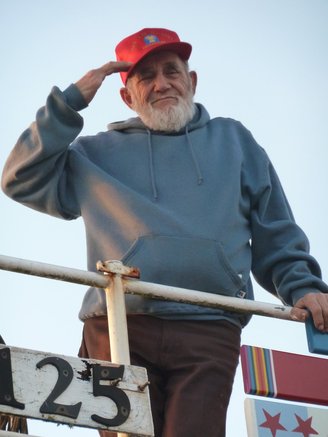
George
Thode passed away at home on June 18, 2021 after a brief illness,
with his family around him. He was 91 years old.
George was born on April 11, 1930 in Denmark. He had a lifetime love of the ocean and left Denmark at 16 on a merchant marine ship, embarking on an amazing and adventurous life. Throughout his life he traveled the world, even spending a year in Antarctica with the National Weather Service where he had an island named after him there. He came to the United States through Baltimore, then New York, and became an American citizen and served in the Army. George met Roberta “Bobbie” Hickman on a blind date in New York. They had been pen pals while he was still on ship, as Roberta worked in a secretary pool with a girlfriend of George’s shipmate. George and Bobbie married and built a life of love, family and dear friends over their 68 years together.
George had many varied talents and interests. He taught martial arts and held black belts in both Judo and Aikido. He had artistic and inventive ideas, or as his family lovingly called them, “Thode Specials”, which are seen throughout the house he built by himself. If he couldn’t buy it, he would make it with whatever he had on hand. So generous with his time and talents, there was nothing George wouldn’t do for his family and friends. The life lessons he taught us are never-ending and we will miss our “Pop-Pop” forever.
George was preceded in death by his dear wife Bobbie in 2020, and beloved daughter Shelle Abernathy in 2019.
He is survived by his children: Carl (Judy) Thode and Cheryl (Dolph) Swift; his grandchildren: David (Lindsey) Scotti, Michael (Tabatha) Scotti, Madeline (Scott Mandell) Thode and Megan Thode; and great-grandchildren: Hunter and Haylee Scotti, and James Mandell. A memorial service is pending at a later date.
###
The obituary above was submitted on behalf of George Thode’s loved ones. The Lost Coast Outpost runs obituaries of Humboldt County residents at no charge. See guidelines here.
OBITUARY: William H. Hiscox, Jr., 1928-2021
LoCO Staff / Wednesday, Aug. 11, 2021 @ 6:56 a.m. / Obits
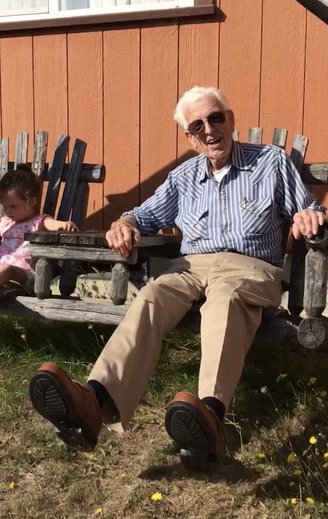
William H. Hiscox, Jr. was born April 8, 1928 (Easter Sunday) in Eureka to parents William H (Bill) Hiscox, Sr and Agnes Doreen (Nancy) Jess Hiscox.
He attended elementary school in Grass Valley and Eureka, attended Eureka Junior High School, and earned a diploma from Eureka Senior High School. He also attended Humboldt State University in the field of engineering.
As a youth, Bill worked at the Eureka whaling station. Later he worked at jobs as a mechanic at Elgars in Blue Lake, and as forest service road maintenance crew member in the Lake Tahoe region.
As a young man, he joined his father in the home construction business for William (Bill) Hiscox and Son. While there he designed homes, built custom cabinetry, and constructed many homes in Humboldt County.
On July 21, 1948, Bill married a young lady named Dorene Johnson. They would remain married until his death - two days short of 72 years.
Later in Bill’s career he became a construction superintendent for several large commercial construction companies, where he built many public buildings and public works projects in Humboldt county, including the Eureka waterfront, CalTrans shops, Eureka High shop buildings, the Naval base at Centerville, and many large housing complexes.
He also ran his companies Tip Top Rock company and Tip Top Logging Company, to make use of the resources on his ranch in Fieldbrook.
Throughout his life he was a dedicated public servant. He worked tirelessly to improve the communities he lived in, seeking neither recognition nor reward. He served during World War II in the US Merchant Marines, on troop and supply carriers in the Pacific theater. He was instrumental in founding the Fieldbrook Volunteer Fire Department and the Fieldbrook Community Services District, serving in many roles including Fire Chief and Assistant Chief. He was a member of the Grange, and served as Grangemaster. Later he was appointed a Board Member of the Gasquet water district, and was volunteer dispatcher with the Gasquet Fire Department.
Bill worked with and for various local politicians and planning professionals as a respected consultant on community or construction issues. One such project was the Fieldbrook Road extension, connecting Fieldbrook to McKinleyville, to which he also donated land for the roadway.
After retirement from construction, Bill became a Real Estate agent, focused on country properties and ranches, enabling him to enjoy hiking in the country, and using his creative mind to help customers envision a ranch or homestead on the raw land he was showing.
In later life, Bill helped form the Humboldt Bay Chapter of the Merchant Marine Veterans organization, and joined the Lions Club, participating in order to continue his service to public and social causes.
For rest and relaxation, Bill enjoyed the outdoors, and could often be found in his jeep driving through backcountry. He was a dedicated game hunter, a sometimes fisherman, and maintained various vegetable gardens wherever he lived. He was an amatuer historian, and due to his photographic memory, was able to research and make many connections regarding Humboldt County history. He was very much a “Do It Yourself” man, before the phrase was coined. When in company, whether family, friends, or acquaintances, Bill loved to tell a good story, and had much in his life on which to base them. He could tell of great history or grand adventures, for as long as one had time to listen.
Bill died peacefully in his sleep, at home in McKinleyville, on July 19, 2021 at the age of 93. He follows his parents Bill and Nancy Hiscox, his Brothers Sam Hiscox, Cecil Hiscox, and John Hiscox, and his sisters Margaret Lefils and Nancy Meeker.
Bill leaves behind a legacy of integrity, honesty, hard work, public service, dedication to family, and of course, classic storytelling.
He is survived by his wife of 72 years, Dorene Hiscox, and his children Barbara Jones, Sandra Abedi, Bill Hiscox, and Tom Hiscox, along with 14 grandchildren, numerous great grandchildren, and even a few great-great grandchildren.
Bill was interned on Friday, August 6 in the Veterans Garden at Ocean View Cemetery in Eureka, with veteran’s honors, in a private family ceremony.
###
The obituary above was submitted on behalf of Bill Hiscox’s loved ones. The Lost Coast Outpost runs obituaries of Humboldt County residents at no charge. See guidelines here.
OBITUARY: David Paul Rhoby, 1954-2021
LoCO Staff / Wednesday, Aug. 11, 2021 @ 6:56 a.m. / Obits
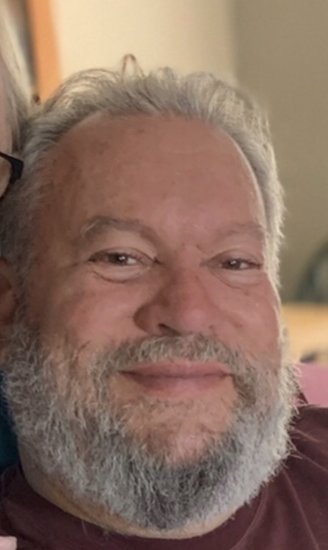
David Paul Rhoby was born in Sacramento on July 3, 1954. He passed on July 6, 2021 at age 67 in an automobile accident with his beloved dog, Lego.
David was a 1972 graduate of Placer High School in Auburn. He worked most of his adult life at Reynolds Metals West Coast End Plant in Rocklin.
David was passionate about family, fishing and recycling (and not always in that order).
David was preceded in death by his parents Dusty and Delores Rhoby and his sister Nancy Pomeroy.
David is survived by his wife of 42 years, Glenna, as well as his daughters, Christie Pape (James) Trisha Cor (Omur) and Debralyn Young (Justin) He is also survived by his brother Rick Rhoby (Bev) and sister Linda Sheldon (Jeff)
David was known at times to friends and family as David Paul or Calvin. To his ten grandchildren and his great-grandson, he was known as ‘Papa.’ David was loved dearly and will be greatly missed. A celebration of life will be announced at a later date.
###
The obituary above was submitted on behalf of David Rhoby’s loved ones. The Lost Coast Outpost runs obituaries of Humboldt County residents at no charge. See guidelines here.
Biden Cabinet Member Joins Huffman, White House Official and Others to Highlight Offshore Wind Developments Planned Off the Humboldt County Coast
Ryan Burns / Tuesday, Aug. 10, 2021 @ 5:13 p.m. / Energy , Government
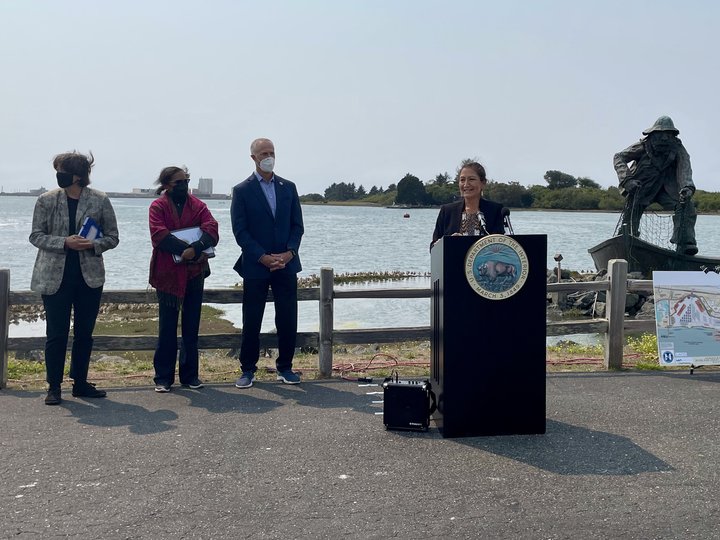
U.S. Secretary of the Interior Deb Haaland speaks at Tuesday’s media event on Woodley Island. She was joined by (from left) California Energy Commissioner Karen Douglas, White House Council on Environmental Quality Chair Brenda Mallory and U.S. Rep. Jared Huffman. | Photo by Ryan Burns.
###
It’s not every day that a presidential cabinet member, a White House official and the state’s energy commissioner come to town, and Rep. Jared Huffman wanted to underline that point Tuesday afternoon during a media availability on Woodley Island, where the powerful officials gathered to highlight offshore wind energy development plans.
“It is a big deal that today on Humboldt Bay we are being visited by two of the top environmental officials in the United States of America,” Huffman said.
U.S. Secretary of the Interior Deb Haaland and White House Council on Environmental Quality Chair Brenda Mallory were joined by Huffman and California Energy Commissioner Karen Douglas. The foursome stood in front of the fisherman statue, with Humboldt Bay at their backs and a breeze blowing in from offshore.
“Since the first days of this administration, President Biden has been committed to confronting climate change, creating thousands of good-paying union jobs and paving the way for the nation’s transition to a cleaner energy future,” Haaland said, adding that offshore wind is a critical component of that agenda.
Back in March, the White House announced an ambitious target to deploy 30 gigawatts of offshore wind capacity by 2030. Haaland said meeting this goal will create 80,000 jobs while triggering more than $12 billion per year in capital investments. Wind energy projects on both shores would generate enough power for 10 million American homes a year and avoid 78 million metric tons of carbon dioxide emissions, she said.
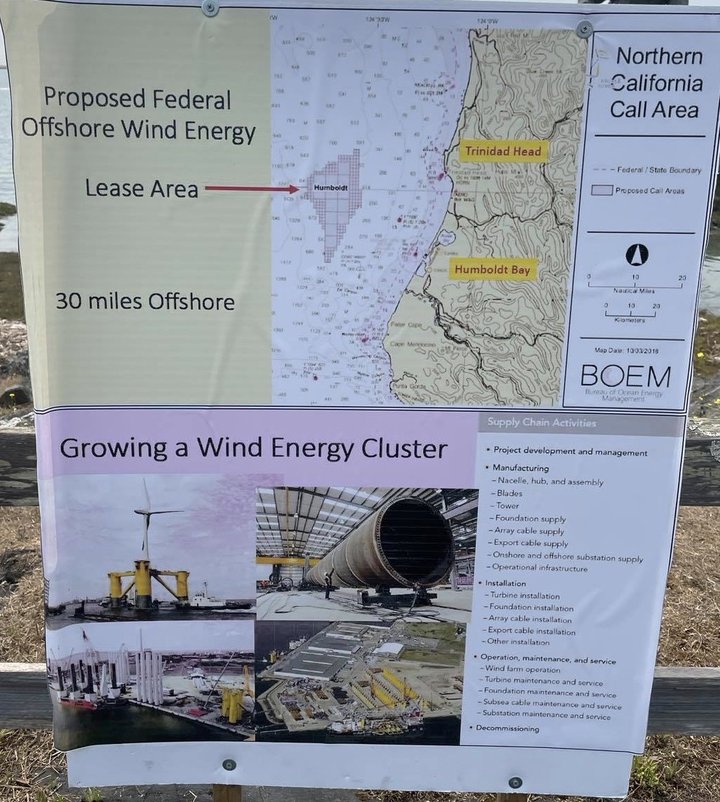
Here in California, the state and federal governments have agreed to advance enough area to develop at least 4.6 gigawatts of offshore wind. A key component of that endeavor is the designation of the Humboldt Wind Energy Area, which the Bureau of Ocean Energy Management finalized last month.
Douglas said there’s a good reason for that.
“This region has the best offshore wind potential, really, in the country,” she said at Tuesday’s event. “It is very complimentary [with] solar, which we have in abundance in California, because the wind picks up especially in the late afternoon and evening when the sun goes down but when all of us are going into our houses and turning on our appliances and charging our cell phone and charging our electric cars. And so we need that.”
The government officials also emphasized the seriousness of the climate crisis, making specific mention of the Intergovernmental Panel on Climate Change report published Monday and the wildfires raging across California.
“We are in a climate emergency,” Douglass said. “We are experiencing these heat waves, wildfires, drought and the compounding effects of these events on our electricity system on so many aspects of our way of life.”
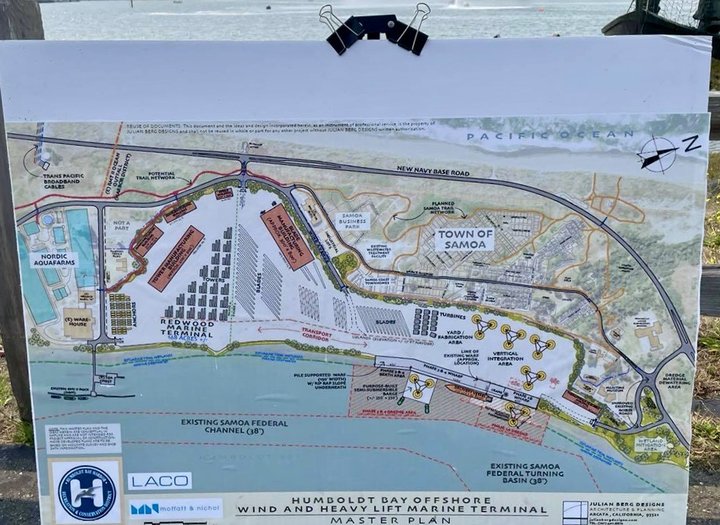
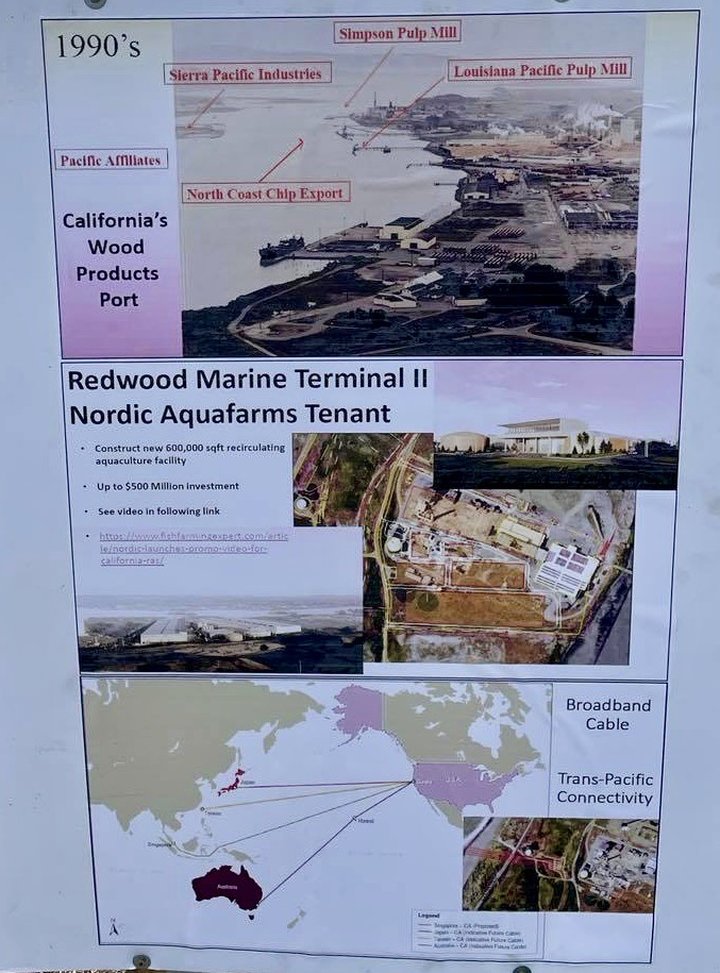
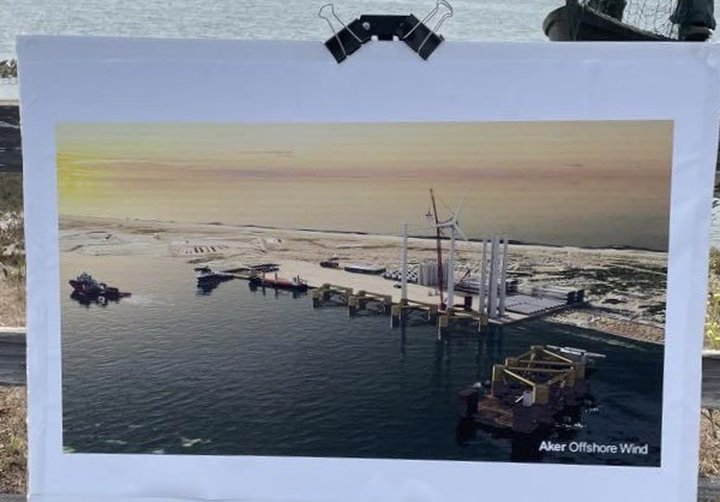
Below are a few photos of posters that were displayed during the media event, followed by a press release from the U.S. Department of the Interior.
###
Press release:
EUREKA, Calif. — Secretary of the Interior Deb Haaland and White House Council on Environmental Quality Chair Brenda Mallory were in Eureka, Calif., today with U.S. Representative Jared Huffman, California Energy Commissioner Karen Douglas, Tribal leaders and community officials to discuss offshore wind opportunities that will create jobs and strengthen the local economy.
Secretary Haaland and the group toured the Port of Humboldt Bay, the largest deepwater port between San Francisco and Coos Bay, Ore., which is being upgraded and retrofitted to meet anticipated needs of future floating offshore wind projects. The port is adjacent to an area under active evaluation by the Interior Department for future offshore wind leasing activity.
“Offshore wind will play a key role in transitioning to an equitable clean energy future. With rapid technological advances, falling costs and tremendous economic potential, offshore wind will be instrumental in the fight to combat climate change and create good-paying union jobs,” said Secretary Haaland. “Today’s visit offered a great opportunity to learn about the state’s leadership in investing in the offshore wind industry and the domestic supply chain, and the ongoing local collaboration and community partnership here in Humboldt County.”
“President Biden is taking bold action to build America’s clean energy future, and Secretary Haaland is leading the way forward on offshore wind,” said Chair Mallory. “Groundbreaking renewable energy projects like those here in Humboldt County will not only power American homes with affordable energy, but will create good-paying union jobs. While this is a step in the right direction, there is still much more work to be done to tackle the climate crisis, which is why it is so important to move forward with President Biden’s Build Back Better Agenda and the Bipartisan Infrastructure Deal.”
The leaders discussed the needs of California’s offshore wind industry, planned port upgrades, workforce training and community and Tribal engagement.
Open-air port terminal space and high lift capacities will be necessary for the staging, construction and deployment of floating offshore wind turbines off California’s north coast. Ports such as Humboldt Bay, and others throughout the United States, will help attract the offshore wind supply chain, create good-paying jobs and attract economic development in the local area.
Today’s event reflects the Biden-Harris administration’s commitment to develop 30 gigawatts (GW) of offshore wind energy by 2030, which will create an estimated 80,000 jobs. It also builds on the May 2021 agreement by the Departments of the Interior, Defense and the State of California to accelerate wind energy offshore the central and northern coasts of California. It comes as the Intergovernmental Panel on Climate Change (IPCC)’s recent report found that climate change is impacting the planet in unprecedented ways, with a call for urgent action across the globe.
In July 2021, DOI’s Bureau of Ocean Energy Management (BOEM) announced the designation of the Humboldt Wind Energy Area (WEA), a nearly 132,369-acre (206 square mile) area and is now undertaking environmental analysis for future leasing and site assessment activities. BOEM is also moving forward with government-to-government Tribal consultation.
The Humboldt WEA is approximately 275 miles north of San Francisco and begins at 21 miles offshore the City of Eureka, extending seaward out to 35 miles offshore. The WEA can support generation of 1.6 GW of offshore wind energy, enough to power more than 500,000 homes. Additional information on the Humboldt WEA can be found on BOEM’s California Activities website.
###
PREVIOUSLY:
- Stakeholders Voice Concerns and Cautious Optimism About Offshore Wind Energy at McGuire-Hosted Hearing
- Schatz Lab Locks Downs Grants to Study the Potential of Wind Energy Farms off the Humboldt Coast
- Harbor District Exploring Major Port Redesign to Support Proposed Offshore Wind Energy Project
- Newsom’s Budget Includes $11M for Port of Humboldt Bay Development to Support Emerging Offshore Wind Industry
- ECONEWS REPORT: Charting a Course for Offshore Wind
CLAM ON! After Five-Year Closure Due to Dread Domoic Acid, Local Razor Clams are Again Ready to Be Dug
LoCO Staff / Tuesday, Aug. 10, 2021 @ 1:31 p.m. / Fish

Fair game. Photo: CDFW.
###
From the California Department of Fish and Wildlife:
The California Department of Fish and Wildlife (CDFW) Director has opened the recreational razor clam fishery in Humboldt County (PDF) (Open in new window)(opens in new tab) following a recommendation from state health agencies that the consumption of razor clams in the area no longer poses a significant threat for domoic acid exposure. Testing of razor clams at Clam Beach, Humboldt County in June and July 2021, indicated all clams were below the federal action level for domoic acid of 20 parts per million. This announcement arrives several months after the fishery opened in Del Norte County. With the opening of Humboldt County, no domoic acid closures remain in effect for razor clams.
Domoic acid is produced by a naturally occurring marine alga, Pseudo-nitzschia, that was responsible for a massive bloom that occurred off the California coast in late 2015. The recreational razor clam fishery closed in April 2016 after a recommendation from health agencies. Domoic acid poisoning in humans may occur within minutes to hours after consumption of affected seafood and can result in signs and symptoms ranging from vomiting and diarrhea to permanent loss of short-term memory (Amnesic Shellfish Poisoning), coma or death. There is no way to prepare clams that will remove the toxin – cooking and freezing have no effect.
CDFW reminds clammers that the daily bag limit for razor clams is 20 and the first 20 clams dug must be retained regardless of size or condition. During odd-numbered years, Clam Beach (also known as Little River Beach) in Humboldt County, is only open between Moonstone Beach and north of the boundary line due west from the Clam Beach south parking lot trailhead (40° 59.67’ N. lat.). Effective March 8, 2021, each person is required to keep a separate container for their clams and is not allowed to commingle their take with another person when digging and transporting clams to shore.
For more information, please refer to the California Recreational Ocean Fishing Regulations Section 29.20 Clams General and Section 29.45 for specific razor clam regulations.
For more information on any fishery closure information or health advisories, please visit this link.
To get the latest information on current fishing season closures related to domoic acid, please call CDFW’s Domoic Acid Fishery Closure Information Line at (831) 649-2883.
For the latest consumption warnings, please call CDPH’s Biotoxin information Line at (510) 412-4643 or toll-free at (800) 553-4133.
EVENTS UPDATE: Hops in Humboldt Canceled; Humboldt County Fair a Go With Masks
Andrew Goff / Tuesday, Aug. 10, 2021 @ 12:29 p.m. / COVID-19 and Humboldt
Gathering with your neighbors is becoming increasingly difficult again. Humboldt County continues to see a rise in COVID-19 cases and hospitalizations causing local event organizer to scramble as they try to plan against ever-changing public health conditions.

Quite a few local events have already been canceled as a result of the surge. Joining those ranks: For the second straight year organizers of Hops in Humboldt, Fortuna’s annual outdoor beer festival, have announced that they’ve made the tough decision not to hold their event originally scheduled for Aug. 18 in Rohner Park.
Organizers explained their decision on the event’s Facebook page. “This year we thought we were slowly coming away from the pandemic as we quietly sat back and watched California open back up,” the post reads. “After June 15th, Hops made the decision to scale the event back to a quarter of attendees and plan a VIP only event with low attendance that we felt we could pull off safely. We jumped in with both feet and started planning like crazy and, well folks, we almost made it.”
Elsewhere, Humboldt County Fair Association board members voted to proceed with this year’s fair, scheduled to take place over 12 days from Aug. 18-29 in Ferndale, but said that they are upping their safety protocols.
“Masks will be required,” fair officials announced Monday. “So bring one with you.” Carnival rides will be wiped down and sanitized between riders and guests will be asked to eat in a food court where mask removal will be allowed. There will also be a vaccination clinic onsite for folks who’ve yet to get their jab.


