

Humboldt County’s Unemployment Rate Drops for the Sixth Straight Month
Ryan Burns / Friday, Nov. 20, 2020 @ 2:08 p.m. / Economy , News
While the pandemic erupts to unprecedented levels across the country, the state and here locally, more and more people are heading back to work.
Humboldt County’s unemployment rate dropped for the sixth straight month in October, landing at a provisional mark of 6.6 percent. That’s the lowest it’s been since April when the COVID-19 outbreak sent the rate skyrocketing to nearly 14 percent.
Note: October values are provisional.
The drop is even more impressive considering that Humboldt County’s labor force increased last month by an estimated 2,000 workers, according to provisional data from the California Employment Development Department (EDD).
There were 61,500 workers in the county in October, according to the early data. That’s the highest mark since April.
So who has been hiring? Well, state and local government, for one. That sector added 500 jobs in Humboldt County last month, an increase of 4.1 percent over September’s figure. However, that sector still has 10.6 percent fewer workers than it did a year ago, with 12,600 employees compared to 14,100 in October 2019.
The county also added about 100 state government jobs in education (Humboldt State University and College of the Redwoods), but that sector is still down a whopping 26 percent from last October.
Humboldt County’s unemployment rate matches the nationwide level, and it remains well below the state rate, which dropped to single digits for the first time since March. The state appears to be recovering somewhat from the COVID recession. Employers added 145,500 jobs across California, which represents the third-highest single-month job gain in at least 30 years, according to the EDD.
In a press release the agency said, “California has now regained nearly 44 percent of the 2,615,800 non-farm jobs that were lost due to the COVID-19 pandemic in March and April.”
BOOKED
Yesterday: 14 felonies, 6 misdemeanors, 0 infractions
JUDGED
Humboldt County Superior Court Calendar: Today
CHP REPORTS
1656 Union St (HM office): Missing Indigenous
ELSEWHERE
Mad River Union: Sunny Brae Porchfest 2026
Mad River Union: Miranda case outcry brings county response
Mad River Union: McK Ace adds greenhouses, lumber, parking, wetlands
Mad River Union: Candidates talk at Blue Lake forum
Law Enforcement Looking For Suspect in Eureka Stabbing, Who Had Been Released From Jail
Rhonda Parker / Friday, Nov. 20, 2020 @ 10:46 a.m. / Courts
PREVIOUSLY:
###
Law enforcement is on the hunt for a 27-year-old Arcata man charged with the premeditated attempted murder of a man who was stabbed multiple times as he slept on a Eureka street.
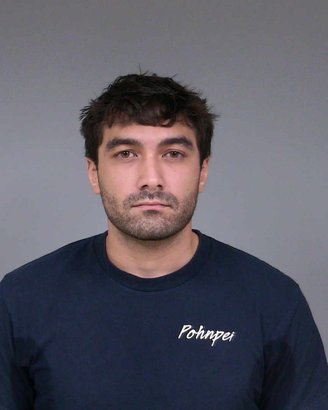
An arrest warrant was issued Tuesday for Tory Tasi Parker Mamea, suspected of attacking the 50-year-old man in the early morning hours of Sept. 24. Eureka police, after viewing video surveillance and conducting a weeks-long investigation, arrested Mamea at his Arcata home on Nov. 4.
Mamea, who also has two unrelated cases pending, was held in Humboldt County Correctional Facility until Nov. 12. But because no charges had been filed in the stabbing case, he was freed that day on supervised release.
The District Attorney’s Office filed the attempted-murder charge on Tuesday, Nov. 17, and a warrant was issued that afternoon.
“Charges have been filed against him for attempted homicide and Eureka PD is the investigating agency,” district attorney’s Chief Investigator Wayne Cox said in an e-mail this morning. “I am of the understanding that they are actively attempting to locate and arrest him for these charges.”
On Thursday morning, Mamea was scheduled for a hearing on the two prior cases. Deputy Public Defender Jessica Bennett appeared on his behalf and was taken by surprise when Judge Larry Killoran told her a new case had been filed.
At that time Killoran apparently was unaware that a warrant had been issued for Mamea’s arrest two days earlier.
“We need to do something about this today,” the judge said. “The complaint is for premeditated attempted murder.”
Killoran rescheduled the hearing for Thursday afternoon, but Mamea’s cases were never called.
Premeditated attempted murder carries a maximum penalty of life in prison.
When Mamea was arrested on Nov. 4, EPD issued a news release stating that the suspect in the stabbing fled the scene in an older-model white Ford Ranger.
The victim was “in stable condition and recovering” from multiple serious stab wounds, EPD said.
Local UFC Fighter Louis Cosce Looks to Defend Perfect Record Tomorrow at UFC 255; Brother Orion Scratched From Contest Due to Injury
John Ross Ferrara / Friday, Nov. 20, 2020 @ 10:30 a.m. / LoCO Sports!

Louis Cosce. | Photos provided by the Cosce brothers.
Local MMA fighter Louis Cosce will step into the octagon tomorrow to defend his perfect 7-0 record at UFC 255 in Las Vegas.
Cosce will face off against the 5-2 Sasha Palatnikov in his first UFC card.
“He’s a stand-up fighter, looks like a tough, durable guy,” Cosce said. “He’ll be a little bit taller, so I imagine he’s gonna try to play the distance game, probably will try to use angles, feints. I’m sure he’ll be game because it’s his debut too.”
170.0 🦍 pic.twitter.com/el1GMqGMvo
— Louis Cosce (@louiscosce707) November 20, 2020
Louis Cosce at this morning’s weigh-in.
Louis Cosce and his brother Orion Cosce, who grew up in Weitchpec as members of the Yurok Tribe, were both awarded UFC contracts after winning their bouts at Dana White’s Contender Series in August. Both brothers were also set to fight at UFC 255. However, Orion Cosce has since been scratched form the card due to an unfortunate neck injury.

Orion Cosce.
“Training too hard,” Orion Cosce said about the cause of his injury. “MRI results showed I had damage for a long time that I need to let heal.”
Louis Cosce’s matchup is scheduled to be the first fight on the event and will be held during the early prelims at 3:30 p.m.
Cosce said that the fight will air live on UFC Fight Pass, ESPN+ and ESPN2.
###
PREVIOUSLY:
- MMA Bros From Weitchpec Invited to Compete in ‘Dana White’s Contender Series’ for Shot at UFC Contracts
- (VIDEO) UFC President Dana White Hypes Humboldt’s Louis Cosce on Social Media in Anticipation of Tonight’s ‘Contender Series’ Matchups
- (VIDEO) Cosce Brothers Awarded UFC Contracts By Dana White After TKOing Opponents, Remain Undefeated
State Mandates Emergency Workplace COVID-19 Protections, Less Crowding for Guest Farmworkers
Jackie Botts / Friday, Nov. 20, 2020 @ 7:08 a.m. / Sacramento
California’s businesses must follow new rules to protect workers from getting coronavirus on the job, while harvesting companies must minimize overcrowding in guest farmworker housing following a California Divide investigation that uncovered rampant coronavirus outbreaks this summer among a low-wage workforce putting fresh produce on America’s kitchen table.
The rulemaking body for the state’s workplace safety agency voted unanimously today to approve the requirements as part of a broader package of protections aimed at protecting millions of workers from getting coronavirus on the job. The California Division of Occupational Safety and Health’s emergency standard is expected to take effect within 10 days and may be extended for up to 14 months.
Citing a joint investigation by CalMatters and The Salinas Californian for the California Divide that uncovered outbreaks among farmworkers brought from other countries, housed in crowded motel rooms and bussed to and from work by the dozen, Cal/OSHA wrote “there has been an overrepresentation of migrant temporary farmworkers testing positive for COVID-19.” Under the new standards, workers must be housed in disinfected rooms with beds spaced six feet apart and sit at least three feet apart when transported to farm fields. Employers must do their best to keep workers in stable pods who sleep, bus and work together to minimize outbreaks.
“There is no room for complacency.”
— Attorney General Xavier Becerra
Sandra Aguila of California Rural Legal Assistance in Santa Maria said the more than one hundred known COVID cases among guest workers there were “not isolated events.”
“In Santa Maria, you often see 30 H-2A workers being housed in a small 1200 square feet single family home, or as many as six workers housed in one motel room,” Aguila said. “Adopting the proposed regulations will reduce the risk of future deaths.”
The standards also require that employers identify and fix COVID-19 hazards with the help of workers, notify all potentially exposed employees and offer them testing, pay workers while they are quarantined, and report all outbreaks to local health departments — provisions that Cal/OSHA wrote were “necessary to combat the spread of COVID-19 in California workers.”
Though some employers worried the new rules were confusing and burdensome, workers and labor advocates lauded the new rules as crucial to slowing the spread of coronavirus among essential workforces and the communities they go home to after work, as California cases soar. During the pandemic, Cal/OSHA has conducted nearly 500 inspections into work-related COVID accidents, including 187 deaths.
The new rules also drew the backing of California’s top prosecutor.
“There is no room for complacency,” Attorney General Xavier Becerra stated. “This temporary emergency standard will help clarify what needs to be done to protect workers and ensure that local authorities have the tools they need to take action.”
Over the summer, Cal/OSHA published dozens of industry-specific COVID guidelines, but they are not mandatory. Since August, Cal/OSHA has issued over $1.5 million in COVID-19 related citations to businesses that did not implement an effective Illness and Injury Prevention Plan or follow California’s aerosol disease standard for certain health-related workplaces.
The new emergency standard gets much more specific about the health and safety precautions that employers must take — or face penalties from Cal/OSHA.
New protections for guest workers
In August, CalMatters and the Salinas Californian uncovered reports of six outbreaks at seven companies that employ guest agricultural workers in four counties across the state, sickening more than 350.
Guest workers brought to the U.S. on H-2A visas are uniquely vulnerable to the virus because they sleep five to a room, on average. They usually depend on their employer for legal entry, wages, housing, transportation and food, making it especially challenging for guest workers to speak out against unsafe conditions.
In a legislative hearing on Tuesday, Cal/OSHA Chief Doug Parker highlighted “these particularly high-risk situations.”
“Especially important will be the new clear standards on employer-provided housing and transportation that we’ve proposed in that emergency standard, these are issues most common in agriculture, to help reduce COVID-19 transmission,” Parker said.
California is not the first state to regulate employer-provided housing and transport. Oregon OSHA first adopted similar protections for employer-provided housing in April, which Governor Kate Brown recently extended. Washington issued its own rule in May, which it expanded in September. Following California Divide’s investigation, Santa Barbara County announced its own public health order to protect guest workers from the virus.
The risk of coronavirus spreading quickly among the over 25,000 H-2A workers in California persists.
Since the California Divide investigation was published, outbreaks in H-2A housing in Santa Barbara County swelled to at least 33 employees of Rancho Nuevo Harvesting and at least 104 employees of Alco Harvesting, including one death of a domestic worker. A new outbreak ensnared 10 workers at Buenaventura Ranch, including three guest workers on an H-2A visa.
According to Fresno public health officials, as many as 3% of workers at Prima Wawona packing facilities, which employs domestic and H-2A workers, have been diagnosed with COVID-19.
There may be more outbreaks among H-2A workers that counties simply aren’t tracking or making public.
Too rushed or not soon enough?
Labor advocates first petitioned for the new COVID-specific regulations in May, but Cal/OSHA didn’t vote to develop them until September, and didn’t publish the draft language until a week ago. Since then, at least 10 other states have enacted COVID workplace safety regulations, according to Deborah Berkowitz, worker health and safety program director for National Employment Law Project.
“California should have done this six months ago. They didn’t,” said Berkowitz. “I’m glad they’re doing it now.”
Business advocates lined up today to argue that the process for developing the rules was dangerously hasty and lacked public input. They pleaded for more revision and participation before it goes into effect.
“Six feet between beds is rigid and seems arbitrary.”
— Matt Rogers, H-2A employer
Matt Rogers, general manager of AgSocio, a labor contractor that was certified to employ 72 H-2A workers in Salinas this year, said his company has taken extensive safety precautions and successfully contained two positive cases. But, he said, the standard would hurt his business by cutting in half the number of workers they could house.
“Six feet between beds is rigid and seems arbitrary,” Roger said. “I really don’t think there’s any difference between six feet between beds and five when these folks are sharing a living space.”
Rob Moutrie, a lobbyist for the California Chamber of Commerce, said the new rules may be too cumbersome for businesses to implement within a few weeks. He pointed to the requirement for employers to pay employees the entire time they are quarantined — a big labor law change that would usually be hammered out in the legislative process, not by a state agency.
Maggie Robbins, an occupational and environmental health specialist at Worksafe, which first called for the emergency standard in May, had a different take: “This is a really important way to provide workers the ability to say, ‘No I really can’t come in to work, I’m sick.’”
###
Kate Cimini with The Salinas Californian contributed to this report. This article is part of The California Divide, a collaboration among newsrooms examining income inequality and economic survival in California. CALmatters.org is a nonprofit, nonpartisan media venture explaining California policies and politics.
Now That the Results Are In, Did Big Political Spenders Get What They Paid For?
Ben Christopher / Friday, Nov. 20, 2020 @ 7 a.m. / Sacramento

Illustration by Anne Wernikoff for CalMatters
###
You can’t always get what you want, but for special interests in California politics, spending $34 million sure does help.

That’s the amount of unrestricted political spending that industries and unions with regular business in the capitol pumped into Legislative races across the state this year.
As CalMatters reported before Election Day, the oil industry, public sector unions and Realtors were the top dispensers of “independent expenditure” in the lead-up to Nov. 3. Unlike donors who contribute directly to candidates, these groups can spend as much as they like propping up or slinging mud at the candidates of their choice, so long as they do so independently of the politicians who benefit.
Most of this year’s legislative cash dump was ladled on just a handful of competitive Assembly and state Senate districts. Of that $34 million total, about $27 million — or 79% — wound up benefiting just 15 candidates.
No surprise, most of those candidates won their respective races. That’s an enviable return on investment for the state’s biggest-spending interest groups. Or maybe all that spending on mailers, phone banking and attack ads did little to actually steer the outcome in those districts and the big spenders just know how to pick a winner.
Either way, now that most of the close contests have been called, it’s time to see how those multi-million dollar bets paid off.
Oil, gas and utilities:
- Total spending: $7.4 million
- Win/Loss rate in top five races: 4 out of 5
Oil and gas drillers and refiners and the state’s gas and electric utilities spread their money around this year, dropping independent expenditure into 23 races. But 92% of that was spent supporting just five candidates.
GOP Sen. Ling Ling Chang, the top beneficiary of oil and gas money — and of independent expenditures overall — lost to former Democratic state Sen. Josh Newman in Orange County. That was a rare disappointment for the petroleum industry in what was overwise a very good election season for the industry. Carlos Villapudua eked out a victory for the Stockton Assembly seat, beating a more green-friendly fellow Democrat in Kathy Miller. And two Republicans, Sen. Scott Wilk in Simi Valley and Rosilicie Ochoa Bogh, a Realtor who sits on the Yucaipa school board, won their respective senate races.
Prison Guards:
- Total spending: $4 million
- Win/Loss rate in top five races: 4 out of 5
After a lengthy period of electoral hibernation, the guards came roaring back this year, aiming their independent expenditure faucet at two Southern California races.
In Orange County, they spent nearly $1.5 million to alternately support Democrat Dave Min and hammer Republican incumbent and regular public sector union-foe Sen. John Moorlach, a Republican. Min will be going to Sacramento next month.
But the prison guards’ other big play — and one that engendered more controversy — didn’t pan out quite so well. The guards spent more than $1 million supporting Efren Martinez, a little-known Democrat hoping to unseat progressive incumbent and public safety committee chairperson Reggie Jones-Sawyer in south Los Angeles. Martinez had the support of the guards, dialysis companies, pro-charter school groups and police unions. Jones-Sawyer won.
Teachers:
- Total spending: $2.6 million
- Win/Loss rate in top five races: 5 out of 5
California’s teachers’ unions diversified their political investments this cycle, putting money into 66 legislative campaigns. But of the top five, where half of that spending ended up, it was a clean sweep.
Dave Cortese, the labor favorite in a Dem-on-Dem contest in Silicon Valley, beat his challenger Ann Ravel. Democrat Min unseated Moorlach in Orange County and Jones-Sawyer fended off Martinez.
The fifth biggest beneficiary of teacher union cash this cycle was the leader of the Senate, San Diego Democrat Toni Atkins. She isn’t listed in the top 15 because her race wasn’t particularly competitive. But yes, she won too.
Realtors:
- Total spending: $2.5 million
- Win/Loss rate in top five races: 4 out of 5
Among the most important lobbying groups on housing policy in California, the Realtors spent the bulk of their 2020 election cash protecting incumbents or building out the capitol’s bullpen of development-friendly lawmakers.
In San Francisco, the group rallied to the defense of Democrat Scott Wiener, one of the Senate’s most influential housing supply boosters who faced a surprisingly strong challenge from Democratic Socialist Jackie Fielder. Down the peninsula, the Realtors backed Cortese, a former developer who has said he supports zoning reform to allow for denser development.
Both Wiener and Cortese won. So did two of the Realtor’s top GOP favorites — Wilk in Simi Valley and Assemblymember Phillip Chen in Diamond Bar. But like the oil industry, the Realtors weren’t able to save incumbent moderate Republican Sen. Chang, who will be replaced by Newman.
###
Via the Post It, CalMatters political reporter Ben Christopher shares frequent updates from the (socially distanced) 2020 campaign trail. CALmatters.org is a nonprofit, nonpartisan media venture explaining California policies and politics.
OBITUARY: Raymond E. Kimberling, 1951-2020
LoCO Staff / Friday, Nov. 20, 2020 @ 6:56 a.m. / Obits
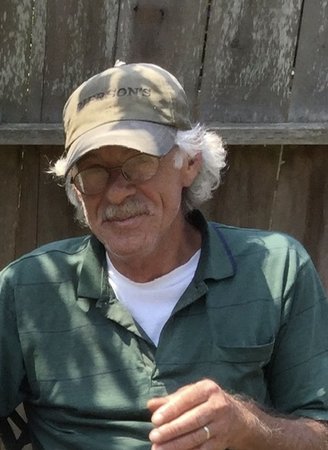
On
Sunday, November 1, 2020, Raymond E. Kimberling, husband and father of
two children, passed away at the age of 69.
Ray was born on July 26, 1951 in Eureka to Richard and Rachel (Smith) Kimberling. He spent much of his youth surfing with friends. He graduated from Eureka High School in 1971. After high school Ray was drafted into the US Navy. He served aboard the ammunition carrier USS Kilauea until 1975. He went on to work at Pierson Building Center for almost 40 years. They became like family to him. He married Mary Lou Hastings in 1980, recently celebrating their 40th wedding anniversary. Together they raised a son, Ryan, and a daughter, Emily.
Ray loved to go fishing in his free time — that is, until his son introduced him to golf. It became an instant passion of his. He started in his 40’s and never looked back. He never missed his 6:30 a.m. tee time with his golfing buddies Pete, Greg and Bob. His afternoons were often spent shooting pool with friends. Ray also had a great talent for art. His drawings were loved by many friends at Piersons and he instilled the gift of art in his son Ryan. He and his daughter enjoyed backpacking together in the summers. He loved carving walking sticks, tending his year round garden, BBQing his famous ribs and spending time with his wife and two grandchildren.
Ray was preceded in death by his father, Richard Kimberling, and his mother, Rachel Kimberling. He is survived by his wife, Mary Lou Kimberling; his two children, Ryan Kimberling and Emily (Kimberling) Pulitano; his son-in-law, Dustin Pulitano; his grandchildren, Julian Pulitano and Avery Pulitano; his brothers, Rick Kimberling and Ron Kimberling; and many nieces and nephews.
###
The obituary above was submitted on behalf of Ray Kimberling’s loved ones. The Lost Coast Outpost runs obituaries of Humboldt County residents at no charge. See guidelines here.
OBITUARY: Jesse William Dalrymple, 1952-2020
LoCO Staff / Friday, Nov. 20, 2020 @ 6:56 a.m. / Obits
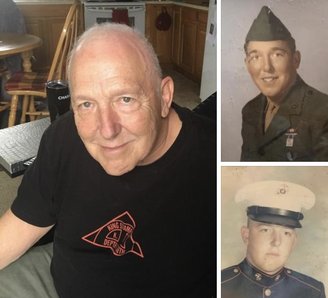
Jesse William Dalrymple of Willow Creek died of lung cancer on
November 11, 2020. He was born September 23, 1952 in Dunkirk, N.Y. to
Bill and Betty Dalrymple. He grew up in Fredonia, NY with his two
sisters Arlene and Darlene.
Jesse joined the Marine Corps in 1969 honorably serving four years stationed in North Carolina. It is fitting that he passed on Veteran’s Day as he was honored and proud to have served his country. After his time in service, he married Lynne Cronk and moved to Fresno to pursue a degree in forest management. Upon completion of his degree, he moved to Somes Bar, working with the forest service for several years.
His career at the forest service was cut short due to a back injury. He remained in the Orleans/Somes Bar area for 15 years doing odd jobs. It was at this time that he fell in love with the mountains and rivers. In particular, he loved rock hunting, gold panning, fishing and mushrooming.
In 1995, after his divorce from Lynne, he relocated to Willow Creek area with the love of his life, Carol Davis. He continued to be an outdoors man and avid mushroomer. His passion for mushroom hunting led him to be locally known as the Mushroom King, a title he help proudly.
He is survived by his two sisters, Arlene and Darlene, four children, Aja Dalrymple, Lucy Szostkiewicz, Kyle Dalrymple, Carly Dalrymple, and two step children, Becky Davis and James Davis. He was preceded in death by his parents Bill and Betty Darlymple.
###
The obituary above was submitted on behalf of Jesse Dalrymple’s loved ones. The Lost Coast Outpost runs obituaries of Humboldt County residents at no charge. See guidelines here.


