Sheriff’s Office Solves Mysterious 25-Year-Old Case, Finally Identifies Human Remains Found in the Eel River Near Cock Robin Island Through DNA Technology

LoCO Staff / Thursday, March 2, 2023 @ 4:55 p.m. / Crime

Press release from the Humboldt County Sheriff’s Office:

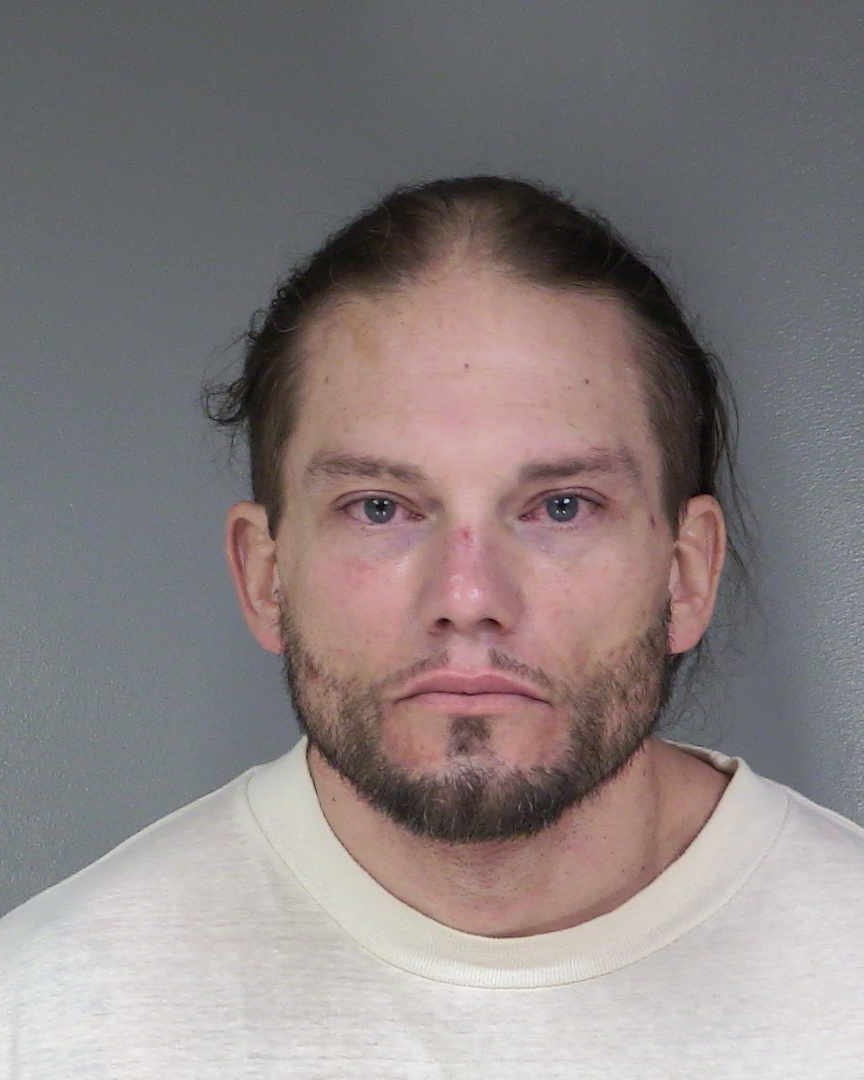
The identity of a man located deceased in the Eel River has finally been determined after 25 years through DNA, thanks to a partnership between the Humboldt County Sheriff’s Office’s Cold Case Unit, the California Department of Justice (CA DOJ) and Othram Inc.

In March of 1998, a Loleta resident and his father were searching the Eel River by boat for driftwood when they located what appeared to be human remains in the river near Cock Robin Island. Sheriff’s deputies responded via jetboat and recovered the remains. The decedent was found to be partially clothed and in advanced stages of decomposition. No identification was located.

Following this recovery, an autopsy was conducted, and it was determined the remains had been in the water for approximately one month. The decedent’s cause of death was listed as possible drowning. The deceased was described by investigators only as being a white male adult, 5 foot 10 inches tall, about 170 pounds, and likely 35-45 years old. This description did not match any reported missing persons from Northern California.

During the investigation, the CA DOJ was able to recover one latent fingerprint which was ran through the Automated Latent Print System but received no matches. A forensic dental examination was completed by a local dentist. A DNA sample was obtained and entered into both the California Missing Persons DNA Database and the National Unidentified Persons DNA Index. The DNA profile was routinely searched against profiles from both missing persons and other human remains in the Combined Index System (CODIS). No profile matches were ever made.   

Missing persons cases stay open until solved. In December of 2022, the HCSO and the CA DOJ partnered with Othram Inc., a forensic genealogy lab, to determine if advanced forensic DNA testing could help establish an identity for the unidentified man or a close relative. With funding provided by Roads to Justice, the CA DOJ sent Othram a DNA extract from the unknown man’s remains. Othram scientists used forensic genome sequencing to build a comprehensive DNA profile for the man. Once the profile was built, Othram’s in-house genealogy team used forensic genetic genealogy to produce investigate leads.

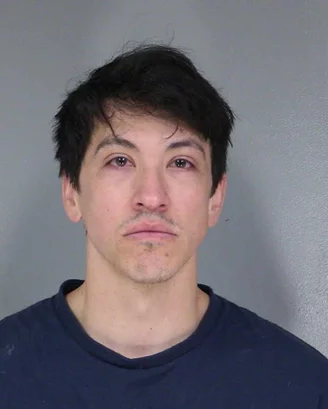
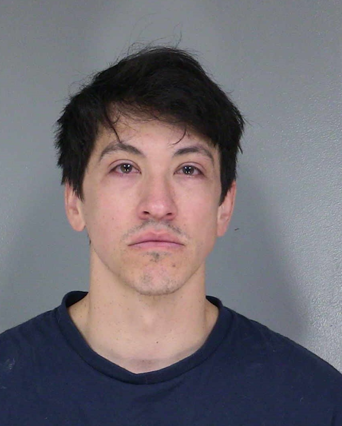
Sydow

In mid-February of 2023, the HCSO received the Othram report indicating the DNA profile may belong to Jeffery Todd Sydow, born in 1963. The report included several genetic relatives, including a possible sister named Shirl from Missouri. HCSO Investigators were able to contact Shirl, who confirmed that she did have a brother named Jeffery Todd Sydow. Shirl told investigators that for unknown reasons Jeffery stopped communicating with family members. Their last contact with him was in the mid-1990s. Over the years Shirl had tried to reach out to Jeffery but could not locate him. As family was not sure whether the loss of contact was intentional, Jeffery was never reported as a missing person. The DOJ was able to compare the one latent print with fingerprints known to be Jeffery’s and got a positive match.  

Family members are making arrangements with the Humboldt County Coroner’s Office to have Jeffery’s remains released for burial with other deceased family members.  

We’d like to thank the California Department of Justice DNA Lab and Othram for their outstanding work and assistance in solving this case and providing the Sydow family some closure for their missing loved one. The HCSO is continuing its partnership with the CA DOJ and Othram, and is reviewing several of our missing persons investigations for the use of this latest DNA technology.

Anyone with information regarding Sydow and his last known activities or whereabouts prior to his death, or information that may assist in the investigation of any open missing persons cases, is asked to contact HCSO Cold Case Investigator Mike Fridley at 707-441-3024.


MORE →


HUMBOLDT TODAY with John Kennedy O’Connor | March 2, 2023

LoCO Staff / Thursday, March 2, 2023 @ 4:51 p.m. / Humboldt Today

HUMBOLDT TODAY: Humboldt gets a little break from the extreme weather before heading back into the yuck, the Yurok Tribe is excited about a new partnership, plus a dreamer on a solar-powered bike rolls through Eureka as part of his world tour. Those stories and more in today’s newscast with John Kennedy O’Connor.

FURTHER READING:

HUMBOLDT TODAY can be viewed on LoCO’s homepage each night starting at 6 p.m.

Want to LISTEN to HUMBOLDT TODAY? Subscribe to the podcast version here.


GATEWAY AREA PLAN: Fearing that the Community is Growing Restless, Arcata City Council Discusses Ways to Boost Public Engagement

Stephanie McGeary / Thursday, March 2, 2023 @ 4:45 p.m. / Local Government

Arcata City Councilmembers Meredith Mathews, Sarah Schaefer and Kimberly White discuss the Gateway Area Plan during a council meeting on Mar. 1 | Screenshot from online meeting video

###

You’ve likely been reading about (and hopefully attending) workshops and meetings surrounding Arcata’s Gateway Area Plan – that section of the city’s general plan that aims to rezone 138 acres near the downtown area to facilitate the development of high-density housing – for a few years now. And at this point, you’re probably wondering when the heck you will see some of these changes that you’ve been hearing so much about. 

Well, that was exactly the topic of discussion at Wednesday night’s Arcata City Council meeting, during which the council discussed the controversial plan, specifically the public engagement process and the timeline for the plan’s adoption moving forward. David Loya, Arcata’s community development director said that if everything goes smoothly, the plan should be adopted about one year from now. 

Loya began by providing councilmembers Sarah Schaefer, Meredith Matthews and Kimberly White with an overview on what the public engagement process has looked like so far, mentioning that the city has held more than 120 meetings and workshops on the Gateway Plan since 2018. Councilmembers Stacy Atkins-Salazar and Alex Stillman both recused themselves from the discussion (and likely will be from all future Gateway Plan meetings) because they both own property within 100 feet of the Gateway Area. 

Map of the Gateway Area in Arcata

Since the beginning of 2023, public engagement and the Arcata Planning Commission meetings have been primarily focused on establishing the framework for the form-based code the city will use to rezone the Gateway Area and guide future development. Once a month the city has held a public workshop on one specific topic of the code, followed by a Planning Commission study session to consider the public’s feedback and make recommendations.

The most recent of these public workshops, held on Feb. 23,  focused on streetscapes, parking and open space. The Planning Commission will hold a study session focused on the same topics on Mar. 18. There will be another workshop on Mar. 30, followed by a Planning Commission study session on Apr. 22. After that, all of the commission’s recommendations will be used to guide a draft of the form based code by the end of this June. 

But some councilmembers and community members were concerned that as workshops and meetings continue that public participation has declined, and become less diverse and less representative of the community. 

“I am worried that as process has gone on with more public meetings and no final decisions, I’ve seen public participation decline, and become less diverse and representative,” Arcata resident Melodie Meyer said over Zoom during the public comment period. 

Fred Weis – an Arcata resident who frequently speaks at Gateway meetings and started the Gateway Plan-focused website arcata1.com – also spoke during public comment, urging the council to make some sort of tangible decision related to the plan, adding that he thinks “people are upset that nothing seems to be happening.”  Weis also suggested that the city host more walking tours of the Gateway Area because many people couldn’t attend the tours held previously, due to COVID.  

Councilmember Meredith Matthews mentioned that groups and individuals can contact city staff or the council to request a walking tour of the gateway area at any time during this process. 

The council also discussed ways the city might be able to increase outreach to Arcata’s underrepresented groups, particularly the Latinx community. Mayor Sarah Schaefer mentioned that the City has held some Spanish speaking meetings, but they have not been well-attended. Schaefer said that the City is working with Equity Arcata to find ways to conduct more outreach to the Latinx population and other people of color in Arcata to help them be more involved in the public conversation around the Gateway Area Plan.

The council also felt that one of the best ways to bolster community engagement would be to complete a written draft of the form-based code as soon as possible, so that the public will have something to review when providing feedback. Loya said that Ben Noble, the City’s design consultant, is working very hard to meet the deadline of June 30, when drafts of the form based code, and the General Plan Update should be complete. (To be clear, the Gateway Area Plan is a component of the City’s General Plan.) 

Timeline for Gateway Plan milestones | Screenshot from Arcata City Council meeting

The City plans to release the draft Environmental Impact Report (EIR) for the General Plan. After the plan has circulated for six months,  received comments and any necessary adjustments have been made, the city should be able to adopt the EIR, the form-based code and the General Plan Update – including the Gateway Plan – by March 30, 2024.

###

PREVIOUSLY:


Humboldt Area Foundation/Wild Rivers Community Foundation Sets Aside $1.2M for Rio Dell Earthquake Recovery

LoCO Staff / Thursday, March 2, 2023 @ 4:08 p.m. / News

A collapsed brick fireplace and chimney from the Dec. 20 earthquake in Rio Dell. | File photo.

# # #

Press release from the Humboldt Area Foundation and Wild Rivers Community Foundation:

The Humboldt Area Foundation and Wild Rivers Community Foundation (HAF+WRCF) has set aside at least $1.2 million for nonprofit organization, tribes and government entities helping residents of Rio Dell and surroundings areas displaced by December’s 6.4-magnitude quake.

“These funds will continue to help with immediate assistance provision and build a more resilient community going forward,” said Michelle Carrillo, HAF+WRCF’s Director of Strategy, Programs and Community Solutions.

The $1.2 million is in addition to the nearly $500,000 that HAF+WRCF directed to recovery efforts led by incredible volunteers and organizations active on the ground. The money came from generous contributions from the foundation’s donors and philanthropic partners, Carrillo said.

In light of this disaster not reaching the FEMA threshold for public aid, HAF+WRCF and the broader philanthropic network recognized early on how critical philanthropic dollars would be to response and recovery for Rio Dell and the surrounding Eel River Valley,” Carrillo said.

“We are committed to working with local community groups, tribes and governmental entities to support a healthy recovery process, particularly for those who might be especially vulnerable to the long-term impacts of displacement, trauma and housing insecurity,” she said.

While HAF+WRCF does not grant funds to individuals, it does distribute grants via its Disaster Response & Resilience Fund to qualifying community entities. The foundation has partnered with the city of Rio Dell and the County of Humboldt to determine how best to serve displaced residents struggling to find adequate shelter, food and supplies.

“The City of Rio Dell’s collaborative partnerships with the county, state, and community organizations like HAF+WRCF are crucial to moving our recovery efforts forward,” said Rio Dell City Manager Kyle Knopp. “Our top priority is to end earthquake-related displacement for our residents, and these funds will bring much-needed relief to help displaced residents rebuild or find acceptable alternate accommodations.”

Humboldt County 2nd District Supervisor Michelle Bushnell said. “With no federal disaster relief funds coming to move our recovery efforts forward, funds provided by HAF+WRCF are critical to help Rio Dell and the county meet our collective goal to end earthquake-related displacement. I want to extend my heartfelt thanks to HAF+WRCF and their philanthropic partners for their partnership and generosity.”

To administer the funds, the foundation has assigned Senior Program Officer Ali O. Lee to work with community partners and the foundation’s Community Response Team to allocate those resources.

Where the funds come from
In the days and weeks since the quake struck, HAF+WRCF’s new and existing donors responded by contributing to the foundation’s Disaster Response & Resilience Fund. Most contributions came from large, non-local foundations and donors, which HAF+WRCF is leveraging to meet local needs across its four-county service region.  

The partners include Sierra Health Foundation, The James Irvine Foundation, California Wellness Foundation, National Philanthropic Trust, Silicon Valley Community Foundation, Marin Community Foundation, Sacramento Region Community Foundation, Humboldt Health Foundation, Amalgamated Foundation and The California Endowment.

Organizations that helped elevate the need for support include Northern California Grantmakers, The Mendocino Community Foundation, and the League of California Community Foundations. They were joined by the Governor’s Office of Emergency Services and Social Innovation team with support from Senator McGuire.

To learn more about HAF+WRCF’s Disaster Response & Resilience Fund and to submit a grant application, visit hafoundation.org/Giving/DisasterFund. Contact HAF+WRCF at grants@hafoundation.org or call 707-442-2993.


(VIDEO) Demolition of the Lloyd Building is Under Way

Ryan Burns / Thursday, March 2, 2023 @ 2:48 p.m. / @Eureka

# # #

Well, it’s not happening as quickly as we expected, nor is it quite as dramatic as we’d hoped. But demolition has begun on the dilapidated and earthquake-damaged Lloyd Building in downtown Eureka.

Today workers could be seen removing the uppermost bricks from the Lloyd’s south-facing facade, which was built nearly 108 years ago. Those interested in the history of the building (named after the late actor Lloyd Bridges, father to Jeff and Beau!) can revisit our 2015 story on that exact topic. 

Anyone hoping for an epic explosion or a big, swinging wrecking ball is out of luck, unfortunately. Brian Gerving, the City of Eureka’s public works director, said he expects this systematic deconstruction process to take several weeks to complete. 


Habitat for Humanity is Coming to Help Repair Earthquake-Damaged Homes, Says Office of Emergency Services

LoCO Staff / Thursday, March 2, 2023 @ 1:51 p.m. / Crime

Press release from the Humboldt County Office of Emergency Services:

Additional help is on the horizon for Humboldt County residents displaced due to the recent earthquakes. The County of Humboldt has now formalized an agreement with Habitat for Humanity Yuba/Sutter to assist residents whose homes need extensive repair.

“We are providing much-needed assistance to displaced residents while continuing to explore every resource available to help our communities rebuild,” Humboldt County 2nd District Supervisor Michelle Bushnell said. “The most important thing we can do is to get people back in their homes, so we have been working to establish partnerships with organizations who have significant experience with rebuilding homes following a disaster.”

The Sheriff’s Office of Emergency Services has been working in partnership with the City of Rio Dell and the Governor’s Office of Emergency Services (Cal OES) to identify and coordinate partnerships with nonprofit agencies that have experience in disaster recovery, including repairing and rebuilding homes. Habitat for Humanity is a global nonprofit housing organization working in local communities across all 50 states in the United States and in approximately 70 countries. Through their Disaster Risk Reduction and Response program, Habitat for Humanity will provide management and oversight services related to home rebuilding and rehabilitation for low to very low-income homeowners and residents who have been displaced, or whose homes have sustained significant damage, as a result of the recent earthquakes.

“Through our experience with disaster relief, the one thing we have learned is that every disaster is unique,” said Joseph Hale, Habitat for Humanity Yuba/Sutter CEO. “However, what is similar are the struggles families face with being displaced. Our goal at Habitat is to not forget the compassion that goes along with this work as we coordinate with the Office of Emergency Services (OES), the County of Humboldt, and the City of Rio Dell in serving those in need by creating a fast-moving streamlined process.”

Since the December 20 and January 1 earthquakes, building inspectors have designated approximately 91 structures as “red-tagged,” or unsafe to occupy, and over 300 structures “yellow-tagged,” or requiring various safety repairs. Humboldt County’s Earthquake Recovery and Assistance Program has provided approximately 104 disaster-related displaced households with temporary sheltering as residents have worked to make necessary safety repairs to their homes or find alternate accommodations. 

The Sheriff’s Office of Emergency Services’ Recovery Operations Center and local nonprofits continue to work to facilitate the organization of disaster case management services for Rio Dell residents who have been affected by the earthquake. These case management services will connect incident-related displaced residents with Habitat for Humanity, other nonprofits, as well as appropriate state and federal funding sources which may be available to qualifying residents. 

“Rebuilding will take time, and this partnership with Habitat for Humanity will bring the City of Rio Dell closer to our goal of ending earthquake-related displacement in our city,” said Rio Dell City Manager Kyle Knopp. “I want to thank the county for their work to bring these resources to Rio Dell. I also want to thank the team from Habitat for Humanity for their willingness to assist our community in our time of need.”

More information on earthquake case management services and the agreement with Habitat for Humanity Yuba/Sutter will be provided at the Earthquake Recovery Town Hall happing this evening, Thursday, March 2 at 6:30 p.m.

This virtual Town Hall will be opened by Senate Majority Leader Mike McGuire. State and local leaders will then discuss on-going actions being taken to move long-term recovery efforts forward and provide a comprehensive briefing on services that may be available for low-income households experiencing earthquake related displacement.

WHAT: Earthquake Recovery Town Hall

WHEN: Thursday, March 2, at 6:30 p.m.

HOW TO ATTEND:  Watch the Town Hall live at: tinyurl.com/HumTownHall or on YouTube at youtube.com/@countyofhumboldt9418 or dial in to listen by phone at 1-669-444-9171 and enter the Webinar ID: 851 9955 4680

RSVP and ask a question in advance for the Town Hall presenters at: https://us02web.zoom.us/webinar/register/WN_AIpaDCQWTe6cqGpD6uhAVw

For more information on Habitat for Humanity, visit yubasutterhabitat.org. To make a donation to Habitat for Humanity’s earthquake response in Humboldt County, please visit Habitat’s Humboldt Disaster Recovery Donation link.

For updated information and available resources regarding earthquake recovery, visit humboldtsheriff.org/emergency.


Yurok Tribe Joins Redwood Coast Energy Authority, Aiming to Increase Access to Clean, Renewable Energy

LoCO Staff / Thursday, March 2, 2023 @ 10:47 a.m. / Energy , Tribes

Press release from the Yurok Tribe:

Yurok Vice Chair Frankie Myers | Submitted

The Yurok Tribe is the first sovereign tribal government to become a member of the Redwood Coast Energy Authority.

“We joined RCEA because its mission to implement initiatives that increase access to affordable, clean energy aligns with our core values,” said Yurok Vice Chairman Frankie Myers. “As an RCEA member, the Tribe will be able to participate at the government-to-government level in the planning and development of long-term renewable energy projects. We strongly believe the transition to sustainable energy sources is essential to the long-term health and prosperity of our community.”

“It is exciting to have the Yurok Tribe joining RCEA,” said RCEA Executive Director Matthew Marshall. “Over RCEA’s 20 years of serving Humboldt County we’ve worked with the Tribe on many projects, and we are very much looking forward to building on that relationship and having Tribal representation on our governing board.”

RCEA’s Board of Directors and the Yurok Tribal Council passed separate resolutions approving a joint powers agreement, which made the Tribe an agency member. “The Yurok Tribe wishes to provide input on the development of secure, sustainable, clean, and affordable energy resources, and participate as a stakeholder,” according to the Yurok resolution.

The Redwood Coast Energy Authority is a local government Joint Powers Agency. The agency was established to develop and implement sustainable energy initiatives that reduce energy demand, increase energy efficiency, and advance the use of clean, efficient and renewable resources available in the region.  RCEA members include: the County of Humboldt; the Cities of Arcata, Blue Lake, Eureka, Ferndale, Fortuna, Rio Dell, and Trinidad; and the Humboldt Bay Municipal Water District and the Yurok Tribe.

Yurok Vice Chairman Frankie Myers will represent the Tribe on the RCEA’s Board of Directors. Vice Chairman Myers has decades of experience in natural resources management, community development and cultural preservation. In addition to serving on the Yurok Tribal Council, he is the president of the Prey-go-neesh Construction Corporation, which performs infrastructure-building projects all over the United States. He is also leading the Tribe’s effort to equitably engage in the prospective floating offshore wind energy projects along California’s North Coast.

Last December, the Bureau of Ocean Energy Management (BOEM) auctioned the development rights to 130,000 acres off the Humboldt coast for offshore wind energy production. Earlier this month, the Yurok Tribe, Cal Poly Humboldt and College of the Redwoods announced plans to prepare a local workforce to take advantage of future jobs in the new industry. This unique collaboration provides potential floating offshore wind developers an opportunity to support local workforce training.