Gov. Gavin Newsom speaks to the press during a visit to Ruby Bridges Elementary School in Alameda on March 16, 2021. He suddenly announced today he won’t attend the U.N. climate change conference. Photo by Anne Wernikoff, CalMatters
###
Gov. Gavin Newsom will no longer be leading California’s delegation to the United Nations Climate Change Conference, “due to family obligations,” his office announced today.
Newsom announced Monday that he planned to attend the international summit in Glasgow next week. Now, the California contingent will be led by Lt. Gov. Eleni Kounalakis, though Newsom will be participating virtually and “focusing on California’s landmark climate change policies,” communications director Erin Mellon said in a statement.
No further details were made available by Newsom’s office. Lawmakers and environmental advocates had mixed reactions to the abrupt change in plans.
“While I wish he was able to attend because being in the room with world delegates really makes an impression, all the secretaries and legislative leaders will join with the (Lieutenant Governor) to put our best foot forward,” said state Sen. Bob Wieckowski, a Democrat from Fremont who will be attending the conference.
RL Miller, a member of the Democratic National Committee and president of Climate Hawks Vote, said Newsom’s actions in California matter more than his attendance in Scotland.
“I think Newsom still has a chance to be a transformative leader in terms of shutting down and phasing out the oil industry in California. I am more interested in practical policies that bring short-term results than in speeches,” Miller said. “He’s capable of making a fine speech in Scotland or in Sacramento.”
Before Newsom announced that he would no longer be attending, Neena Mohan, climate justice manager for the California Environmental Justice Alliance, called on Newsom to champion “California’s bold actions towards an oil and gas phaseout and end to neighborhood drilling, while sharing the lessons learned from the failures” of California’s carbon market.
Even if Newsom isn’t attending in person, Mohan said today, “our main message and hope for the Newsom administration remains the same.”
About 190 world leaders and tens of thousands of others are expected to attend the conference, called the Conference of the Parties to the United Nations Framework Convention on Climate Change, or COP26.
Similar to “a trade association meeting,” as former Air Resources Board chairperson Mary Nichols called it, it’s where national leaders hash out the details of an international treaty tackling climate change and others in the climate world mingle and exchange ideas.
“It’s very good that Governor Newsom is there showing the flag for California, and encouraging others. But as I say, the underlying fact is that the world is losing ground, not gaining ground,” former Gov. Jerry Brown said on Wednesday, before Newsom announced that he would no longer be attending.
Newsom had been scheduled to lead a 23-member California contingent, including documentary filmmaker and first-partner Jennifer Siebel Newsom, California Environmental Protection Agency Secretary Jared Blumenfeld, and California Air Resources Board Chairperson Liane Randolph.
###
CALmatters.org is a nonprofit, nonpartisan media venture explaining California policies and politics.
Press release from the Humboldt County Sheriff’s Office:
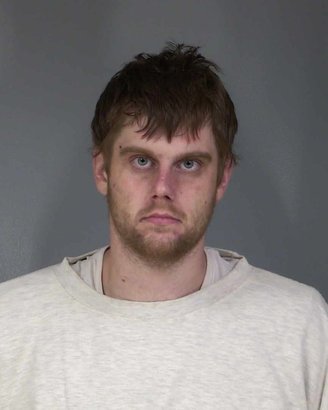
On Oct. 29, 2021, at about 1:05 a.m., Humboldt County Sheriff’s deputies on patrol in the area of Highway 101 near School Road observed a motorcycle that had been reported stolen out of Arcata.
Deputies conducted a traffic stop on the motorcycle on the 1700 block of Anderson Road in McKinleyville. The driver, 26-year-old Brandon Wade Breslin, was taken into custody for possession of the stolen motorcycle. During a search of Breslin incident to arrest, deputies located pepper spray.
Breslin was booked into the Humboldt County Correctional Facility on charges of possession of a stolen vehicle (PC 496D(A)) and felon in possession of tear gas (PC 22810(A)), in addition to warrant charges of inflicting corporal injury on a spouse (PC 273.5(A)) and violation of probation.
Anyone with information about this case or related criminal activity is encouraged to call the Humboldt County Sheriff’s Office at (707) 445-7251 or the Sheriff’s Office Crime Tip line at (707) 268-2539.
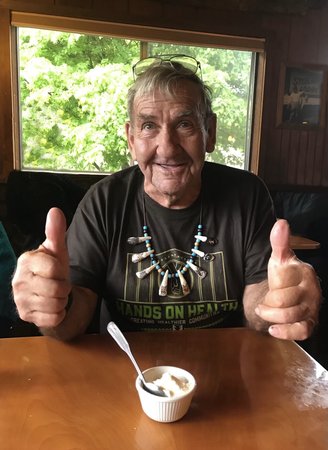
Donald W. Duclo was born on
April 28, 1941 in Vermont, the son of Donald and Emma Duclo. Donald
passed away peacefully in his sleep during the evening of October 17,
2021, in his home in Loleta.
He
was born in Ludlow, Vermont and moved with his family to California
when he was seven years old. To his sisters, he was known as “bug”
because he was always bugging them. He joined the Army as a teen and
served in Germany in 1959. As a young man, he worked hard in lumber
mills from Scotia to Orick. Don was later employed by the Eureka City
School District as a groundskeeper, where he and his wife Melva
worked together for 18 years until their retirement.
Honest,
hard work was a way of life for Don. And when he wasn’t working, he
enjoyed many outdoor activities from hunting deer, elk and ducks to
fishing, eeling and crabbing. Don also loved harvesting abalone in
Shelter Cove and Fort Bragg. He thought the world of teaching his
girls how to harvest abalone since they were not interested in
shooting animals that had eyes that stared back at them. He also
worked along side his daughter Lee Ann harvesting wild berries for
her Oceanside Jam business.
While
most people slow down after retirement, Don spent his golden years
carving redwood fence posts and grape stakes by hand, cutting
firewood, and maintaining his property. He was always ready to help
his family and friends in any way he could. He volunteered at the
annual Inter-Tribal Gathering & Elders Dinner, Loleta Craft Fair and Swauger’s Station Days.
Donald
also enjoyed working in the Oceanside Jam booth at many of the Eureka
and Fortuna area events and craft fairs with his daughter Lee Ann and
her husband Gary. He loved seeing people he had not seen in years and
delighted in telling them his numerous berry-picking stories. Always
the kidder, when people would ask what his favorite berry was, he
always said, “Strawberry,” with a grin, “it’s the only kind I
don’t have to pick.”
Without
Donald’s drive and dedication to his family, Oceanside Jams would be
a hobby and not the business it has become today. Donald was
instrumental in growing the business as he harvested wild berries on
a daily basis throughout Humboldt and Del Norte Counties from April
to October each year. He harvested more and more berries as the
business grew so everyone can enjoy the bounties of our area. He was
so proud of how the jam business developed and the satisfaction and
memories it provided to customers as well as himself. We often
received letters, emails and phone calls encouraging us to continue
because our Wild Berry products reminded them of their mothers,
grandmothers, aunties and others jams they had when they grew up.
The countless miles of walking, stinging nettles, poison oak, rugged
terrain and ticks never foiled Don’s berry picking!
Don
and Melva were married in 1961 and celebrated their 60-year wedding
anniversary on July 31, 2021, with a BBQ at his daughter’s house in
Eureka. Don really enjoyed the opportunity to see all his friends and
family, never missing an opportunity to tell a joke or funny story.
Don
and Melva had their first child, Lee Ann in 1962, and their second
child Donnell in 1963. Lee Ann is retiring from Oceanside Jams and a
Program Budget Analyst at HSU. Donnell is retired from the
California State Auditor’s Office in Sacramento. Don was so proud of
his “girls.”
Don
is survived by his wife Melva, his daughters Lee Ann Duclo Moore and
Donnell Duclo, grandchildren Joshua and Lindsey Abernathy, sisters
Joanne Machado and Margie Hooker, and many beloved extended family
members and friends. He was predeceased by his sisters Shirley Nunes
and Rosalie Johnson.
In
his passing, Don didn’t want anyone to stand around grieving for
him and requested that no funeral services be held. Instead, he
wished for people to remember him as they visit Table Bluff beach,
enjoy fresh cooked crab or salmon. He spent a lot of his time on
that beach, that was his happy place.
If
you would like to make a donation on behalf of Donald Duclo, please
send donations to the Loleta Volunteer Fire Department, PO Box 766,
Loleta, CA 95551. Don could often be found burning brush on his
property, and several times had the privilege of the Loleta Volunteer
Fire Department assisting in extinguishing those fires.
###
The obituary above was submitted on behalf of Don Duclo’s loved ones. The Lost Coast Outpost runs obituaries of Humboldt County residents at no charge. See guidelines here.
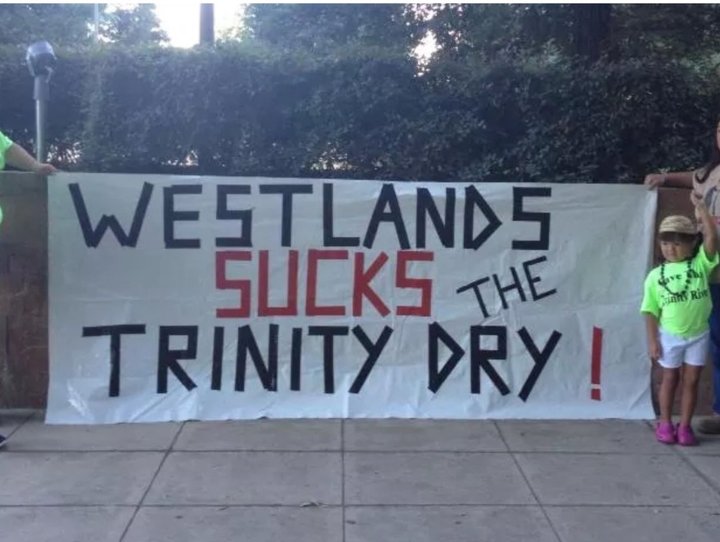
Today, a Fresno County Court shocked industrial agricultural interests in California’s Central Valley by
disapproving the massive Westlands Water District’s federal contract for water from the Central Valley
Project.
Federal law requires state courts to ensure public review of contracts between water districts and the
Bureau of Reclamation. Without a decree from the Fresno court, the contract could not bind Reclamation
to its terms.
Westlands filed a document it said was a contract with the Fresno court in October 2019. But the
“contract” had no signatures and was missing essential financial terms. Among the missing terms is
repayment of $400 million in costs including those contractors owe for environmental restoration of the
damage caused by 80 years of Central Valley Project water and power use.
In the 1992 Central Valley Project Improvement Act (CVPIA), Congress made environmental restoration
a CVP purpose and payment for restoration a cost of doing business for the contractors. Without cost
collection from the contractors, the restoration will likely fail.
Another version of the contract was signed by Westlands and Reclamation four months later, in February
2020. But that was too late for the Fresno court because Westlands had not given the public notice
required by California Law of the second document or an opportunity for public review.
Neither version of the contract required payment of Westlands’ share of the $400 million CVPIA
environmental restoration obligation.
The court found that by using an incomplete contract, Westlands, and by implication other Central Valley
water contractors, and the federal Bureau of Reclamation, had withheld key financial terms from public
review.
“The Hoopa Valley Tribe’s Trinity River fishery is one of the CVP’s victims,” said Hoopa Valley Tribal
Chairman Joe Davis. “But the contractors never wanted to pay the costs of restoration that Congress made
a condition of future water delivers in the CVPIA.”
“Westlands led the charge against paying and has opposed Trinity restoration for decades,” said Hoopa
Fisheries Director Michael Orcutt.
“But Westlands wouldn’t exist without Trinity River water being taken from our fishery,” added Vice-
Chairman, Everett Colegrove Jr. “And that transfer of wealth has generated billions for Westlands and
other CVP contractors, with devastating impacts to Hoopa’s economy, culture, and community.”
For more than ten years, Hoopa tried to get Reclamation to charge the contractors for Trinity
Restoration costs. “It’s no secret that the Westlands Water Corporation sells the Trinity River water for
hefty profits. Yet, we could never get a straight answer on the accounting from Reclamation,” said Orcutt.
“But we knew that these CVP contracts were going to be permanent, and it was our last chance to make
sure Reclamation collected the money.”
“It turns out that the missing Trinity River fishery restoration collections were the tip of the financial
iceberg,” said Chairman Davis. “The Bureau wasn’t charging any contractor for the full cost of
restoration throughout the entire CVP service area.”
As these contracts were being negotiated, Reclamation made clear to Hoopa that it would ignore the
financial accounting Hoopa sought and the law required. “Hoopa decided that it had no choice but to sue
its federal trustee, the Federal Interior Department, said Orcutt. “We have been in federal court since
August 2020.”
“Hoopa has documented the Trump Administration’s financial misconduct and submitted its evidence to
Secretary Haaland, the Biden Administration’s Office of Management and Budget, and Congress,” said
Colegrove.
“In August, I met with Secretary Haaland and explained what Reclamation had done and how it was
destroying Hoopa’s fishery, which the government holds in trust for us,” said Davis. “The Secretary
instructed her staff to work with us to settle our case. I am confident that Secretary Haaland will fulfill her
commitment to environmental justice and our rights by requiring amendment of these contracts now that
the court has given her the opportunity to do so.”
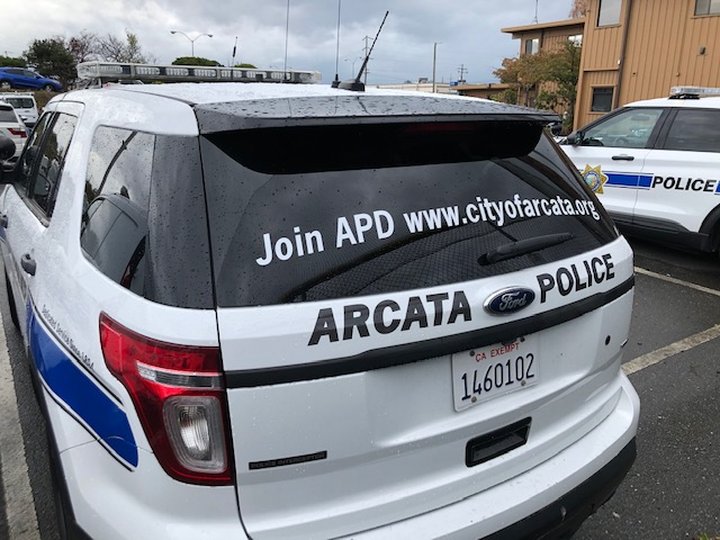
APD steps up its recruitment efforts by adding ‘Join APD’ stickers to its patrol cars. | APD
The Arcata Police Department is facing a serious staffing crisis as it struggles to replace officers at the same rate they are leaving.
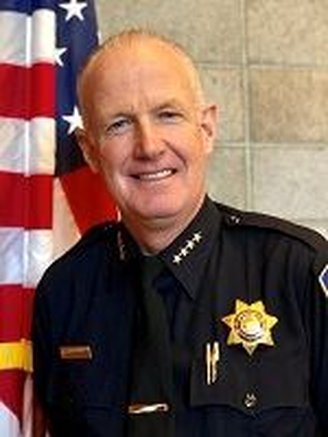
APD Chief Brian Ahearn told the Outpost that his already-depleted department recently lost three employees to other local agencies: One sergeant to the Fortuna Police Department, one officer to the Eureka Police Department and another officer to the Humboldt County Sheriff’s Office. To make matters worse, three more officers appear to be on their way out.
Chief Brian Ahearn. | APD
“Two years ago, we had 29 sworn officers, now we’re at 20,” Ahearn said. “We have three pending departures that have been relayed to me by our officers. If we get down to 17, that will be unprecedented territory for us.”
Ahearn attributed the problem to a number of economic, political and social issues affecting police agencies across the country.
“To get six [replacement officers] in a department of our size in a rural area is very challenging given the very competitive environment for law enforcement positions,” he said. “There’s also a significant reduction in people who are interested in the positions. The divisiveness throughout the country and labor shortages throughout so many sectors gives us a very low applicant pool. People are also reprioritizing their lives and making choices that are keeping them out of the workforce, or they are no longer considering a career in law enforcement.”
In order to keep up with the staffing shortage, Ahearn said that he’s moved both of APD’s detectives to standard police patrol. If the staff gets any thinner, the chief said he may have work patrol duty himself.
“[Investigations Commander Lt. Todd Dokweiler] and myself are the next safety blanket in terms of staffing patrol,” he said. “If we continue to lose officers and are not able to hire, the investigative commander and myself will be staffing patrol beats by 2022.”
The Outpost reached out to Sheriff Honsal about the ethics of recruiting officers from other local agencies also experiencing staffing issues. Honsal was not available for comment. However, the sheriff did sit down with local news anchor Nazy Javid last month to discuss how the HCSO is dealing with its own staffing shortage.
North Coast News anchor Nazy Javid talks staffing shortages with Sheriff Honsal.
“The only way to attract and retain people is going to be through our salary and benefits,” Honsal told North Coast News. “There are people hiring all over this country for qualified deputy sheriffs and they are recruiting out of sheriff’s offices like [ours] because we have quality people here. [HCSO deputies] are going elsewhere because they’re getting paid more, there’s better opportunities, better working conditions.”
Meanwhile, at APD, Ahearn said that he’s losing officers to lower paying positions with other agencies.
“Every person has a different story,” Ahearn said. “I can only speak to those that have shared with me why they’re leaving, because they don’t have to provide that information. They seem to be leaving for personal reasons: family, commuting to and from work, where their kids are in their lives, what they’re trying to accomplish in law enforcement.”
He added that many officers are also leaving patrol positions due to the scrutiny they face on the job.
“When you look at the intense scrutiny police are facing, especially patrol officers — wearing body cameras and being evaluated for every word and action taken,” he said. “Over the course of the last few years there has been this expectation that we are perfect every time out. We’re human beings. And yet we’re scrutinized for every call we go to.”
While community members continue to push for higher standards for police, Ahearn said that interested job seekers don’t have to have a perfect past to work in law enforcement.
“We recruit people who have made mistakes in their lives,” he said. “We have all made mistakes and people think our standards are unobtainable. [Peoples’ past mistakes] might not be a game changer at all. Failure makes you a better person. Adversity breeds strength. I’m not looking for perfection, I’m looking for people with life experience who want to be part of what’s happening here in Arcata, which is: really good change. We’re going to continue to traject upward.”
Currently APD has one trainee in the local police academy that is expected to graduate next month, and could be ready for independent patrol by March of 2022. However, Ahearn said that there are more positions to fill.
“We need them to fill these gaps pretty quickly,” he said.
And although the chief would prefer to hire field-trained officers from other California agencies, who could fill patrol shifts almost immediately, he said that the city is also willing to train local residents interested in a career in law enforcement.
“We would accelerate the process, simply because we need people and we need ‘em now,” he said. “First and foremost, we are focusing our recruiting efforts laterally on other California agencies. With a modified field training program of several weeks, they can become an officer and fill these vacancies.”
The city hopes to attract these candidates by streamlining the hiring process, offering signing bonuses and increasing salaries and benefits.
“Our second target is local people here in Humboldt County,” Ahearn said. “I don’t actively recruit people from other agencies here in Humboldt. I don’t believe in that. They are in just as difficult a situation as we are. For Humboldt County people, it’s an application process. They can get an application form the city. It’s fairly simple. It could be completed and submitted within one day. We would conduct an interview. If they passed, we would immediately begin the background process. We could have that background completed within a month if most of their life experience is here in the county.”
From application to background check, Ahearn said interested candidates could receive a job offer within four months. Once an offer has been extended, those applicants would be paid as cadets while training in the local police academy at College of the Redwoods.
“They will get salary and benefits as they’re going through the academy and the city will pay for their equipment,” Ahearn said. “I feel that we are very competitive locally and statewide. Being in a rural community, we’re trying to make a splash and get the attention of the rest of the state and get people to consider coming up to Humboldt County.”
In hopes of getting the word out locally, APD has resorted to placing large recruitment stickers on the windows of its patrol vehicles. The department has also started placing flyers on local businesses promoting the wages and benefits its officers receive.
“It’s a noble profession,” Ahearn said. “You can literally save peoples’ lives. Officers can go home, look at themselves in the mirror and know they made a difference. There’s no more noble cause and we’re looking for people who want to answer that call.”
A recruitment brochure created by the Arcata Police Department. | APD
More than seven months after a Sacramento Bee story revealed a string of vile text messages within a squad of Eureka police officers, Bay Area attorney Todd Simonson has concluded his independent investigation into the matter, though Eureka City Manager Miles Slattery says the city’s legal team must finish its review of the findings before any information can be released to the public.
Slattery is frustrated by the delay, saying he has tried and failed to get the legal team to say when the whole process will be wrapped up.
“It’s just very important that we do this correctly — dot all the i’s and cross the t’s,” he said. “Doing it right is better than doing it quickly.”
He hastened to add that one thing can be said with absolute clarity: “The chief’s retirement has nothing to do with this investigation,” Slattery said.
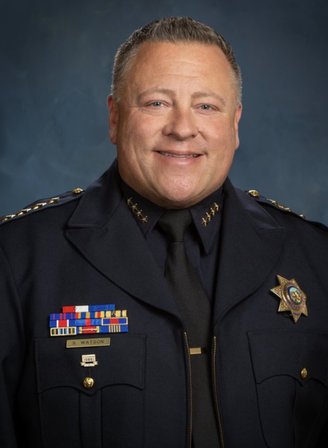
Given public interest in the texting scandal and the timing of Eureka Police Chief Steve Watson’s unexpected retirement announcement yesterday, there were bound to be questions about whether the two were related.
“Absolutely not,” Watson said, echoing Slattery’s statements. “If anything, that would be a motivation for me to stay longer.”
Watson
The investigation and review process has dragged on longer than he would have wanted, but Watson has read the report and believes he may still have time to wrap things up before he leaves office at the end of November.
“I have a month and I am hopeful that we’ll be able to take the next steps while I’m here,” he said. “I want to be as transparent as possible to the public within what the law allows. I know this is a topic of great public interest.”
Slattery said even he was surprised by Watson’s decision, which he learned about not long before the public. “We talk weekly, if not more; this [topic] never came up,” he said. But he quickly pivoted to how much he appreciates Watson’s service to the city, noting that during their time working together they helped develop such progressive programs as UPLIFT Eureka and the Community Safety Engagement Team (CSET).
“We’ll make sure the new leadership continues to be progressive and transparent,” Slattery said.
City staff is now working on naming an interim chief to serve for the next six months at least, he said. After the interim is named, the city will start searching for a new full-time chief.
“We do want to go nationwide,” he said regarding the search, but he was quick to head off any criticism about relying on outside hires. “Humboldt County is considered part of the nation,” he said. “We will be looking locally as well.”
As for Watson’s future, the chief said he first plans to complete his master of science degree in law enforcement and public safety leadership from the University of San Diego.
“I’ve still got a lot of fire in my belly,” he said, noting that he may wind up teaching at a law enforcement academy or college or possibly working as a law enforcement consultant. He’s excited but a bit apprehensive about transitioning into a new phase in his life.
“My entire identity has been focused on being law a enforcement leader for a quarter century,” he said. “I have a great sense of meaning in what I do, but as a chief you’re never disconnected for a second of your life from what you do for the community.”
He was forced to cut short a family vacation last year due to an officer-involved shooting that occurred shortly after protests broke out nationwide — including in Eureka — in response to the murder of George Floyd by a Minneapolis police officer.
The job is just “nonstop texts, phone calls, emails — waking up in the middle of the night worried about the safety of the community,” he said. “It’s just always there, and chiefs accept that weight. But I’ll appreciate the time to really be present with my family. It’s hard when a large percentage of your emotional and mental bandwidth is tied up with the obligations of the job.”
Watson feels he’s leaving the department in good shape, even with the nationwide staffing crisis.
“I truly believe the department has a strong foundation and the pieces in place with the right people,” he said. “There has been a ton of culture change here.” That kind of change is dictated in large part by who you hire and who you promote, he added. “I’ve been very attentive. We would be fully staffed right now if I lowered the standard. But you’ve got to hire those who reflect values of not only the department but the community who we serve. We’ve promoted some fantastic people, and others are ready to take the next step. I’m sad I won’t be here to make those [promotions] myself.”
Yesterday
afternoon, the county’s Redistricting Advisory Committee picked the
least fraught option before it: It decided to give a thumbs-down to
all the maps produced under its direction so far, and instead left
the Board of Supervisors to figure out the county’s new political
maps for itself.
The decision followed more
than an hour of public testimony, nearly all of which asked the
committee to reject
both
the
draft maps we wrote about earlier in this week, and most particularly
to
reject Draft
Map
A2, the one that split off Old Town, downtown and the northwest
corner of Eureka and joined them with the Arcata-based Third
District. Most
of 25 or so members of the public who spoke said that it the
committee felt that it had to pick a map, then Draft Map C2 was the
better option.
The
committee eventually voted 4-0 – with committee chair Brian
Mitchell absent at the end of the meeting – to forward neither map to the Board of Supervisors.
One
thing that became particularly clear by the end of Wednesday’s
meeting: Almost all the momentum that was behind defining West Eureka
and Arcata as a singular “community of interest” that should have
its own supervisorial district came from people who lived in neither
place. That is, people from outside those communities were attempting
to tell people
who lived inside
what their “communties of
interest” were.
One
of the few people who spoke in favor of
Draft Map A2, who went by the name of “Patrick,” said that he was
a long-time resident of Eureka’s West Side, but the majority of the
people who spoke of the benefits of linking Eureka and Arcata up in
this fashion live outside the area. Among them were Ryan Rice,
president of the Humboldt Prosperity Alliance and a Hydesville
resident, and Sonja Sundberg of
Fieldbrook.
Most
importantly, one member of the advisory committee – Lisa Russ, of
the Elk River area – continuously pushed for Draft Map A2 to remain
in the mix of options to forward to the Board of Supervisors, and was
not shy about stating her reasoning.
“The
landscape of Humboldt County is almost entirely rural,” Russ said
at one point. Cramming as many urban dwellers as possible into two
geographically small districts, no matter how oddly shaped, would
leave that rural landscape with a larger voice in the other three.
After the public comment, Russ put forward a motion that would have
forwarded both Draft Plan A2
and Draft Plan C2 to the Humboldt County Board of Supervisors for a
vote. The motion died for lack of a second. Later, she joined the
other three commissioners who were still at the meeting – Camilla
Zapata of Arcata, Lisa Dugan of McKinleyville and Roman Rubalcava of
Loleta – in voting to forward neither
plan to the board.
But Russ had one more opportunity to register her support for the
idea of cleaving off part of Eureka and tacking it onto Arcata’s
Third District. That came when the committee considered a motion
that, in the absence of specific maps to consider, would provide some
guidance to the Board of Supervisors as it sets out to make a new map
of its own.
After batting around some ideas, committee members came up with a
list of five recommendations based on what they had learned at the
end of their months of considering the question:
1. Provide data that breaks down the Native American population,
which had been missing in the committee’s mapping attempts.
2. Try to put
Glendale and Blue Lake in the same district.
3. Do not split Eureka into east and west parts.
4. In general, make minimal changes to the 2010 map.
5.
Review
the community of interest testimony the committee has received.
Russ
declined to vote in support of this list if it contained item number
3. The Board was perfectly capable of reviewing the record that the
committee had received on its own, she said, and she was not
convinced that the record supported the third conclusion, in any
case. So the committee voted 3-1 in support of the five
recommendations, with Russ dissenting.
The
Humboldt County Board of Supervisors will discuss its first steps at
its next meeting, on Tuesday, Nov. 2. It
seems likely that it will move forward with a 2020 map based largely
if not completely on existing lines.