Humboldt County Office of the District Attorney press release:
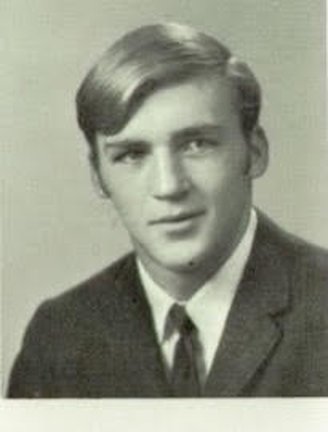
Wednesday, a Humboldt County jury convicted 64-year-old Michael Dennis Flowers of all charges brought against him by the District Attorney: rape, forcible sexual penetration, and acquiring a person for purposes of prostitution.
On March 9 of last year, 24-year-old Jane Doe, with the support of a friend, reported to Rio Dell Police Officer Crystal Landry and Chief Jeff Conner that she had been raped by Flowers. Her report motivated a multi-agency investigation led by Chief Conner. The investigation revealed that on February 21, 2020, Doe was driven to the residence of Flowers in the King Salmon area of Eureka by Fortuna resident George C. Feack, who abandoned Doe alone with Flowers. Ultimately, Flowers raped, forcibly sodomized and sexually penetrated Doe with his hand. Feack reportedly received $100 from Flowers for delivering Doe. A forensic exam conducted on March 10, 2020 by Registered Nurse Kristen Hansen of the Sexual Assault Response Team provided evidence consistent with Doe’s description of the assault. At trial, Doe testified she was fearful of both Flowers and Feack, and she submitted to the sexual abuse by Flowers in part due to what she had been told of his past.
Flowers was sentenced in Tuolumne County in January 1994 to serve 50 years in prison for committing three counts of continuous sexual abuse of a child (involving three of his step-daughters), and the attempted murder of Flowers’ then wife, who took her children’s reports of sexual abuse by Flowers to law enforcement. Tuolumne County court records further indicate that charges of sexual molestation of his fourth stepdaughter and arson of an inhabited dwelling were dismissed as part of the negotiated plea. Flowers was released on parole to Humboldt County in 2018.
Jane Doe was the key witness in the trial just completed. Women sexually abused by Flowers during their childhood also provided testimony, as did Flowers’ former wife, who he attempted to murder. District Attorney Maggie Fleming commented that: “The fortitude of Flowers’ victims in facing the defendant and describing their experiences has enhanced public safety and allowed a measure of justice to be achieved. Our County owes them a debt of gratitude.”
Assistant District Attorney Stacey Eads prosecuted the case with the assistance of Chief Investigator Kyla Baxley and Victim Witness Advocate Keosha Chambers. Attorney Russ Clanton represented Flowers.
Flowers is scheduled to be sentenced on May 25 at 8:30 a.m. by Judge Wilson, who presided over the trial. Judge Wilson could sentence Flowers to more than 25-years-to-life in prison.
From the Humboldt County Joint Information Center:
All
Humboldt County residents age 16 and over can now sign up for
COVID-19 vaccination appointments through My Turn. This includes
people with or without medical conditions and from all sectors and
occupations.
Residents
age 18 and over can go to MyTurn.ca.gov
to schedule an appointment. Public Health officials encourage people
to sign up quickly for the first appointment available. Hundreds of
weekend appointments that were available as of 9 a.m. today filled by
noon.
Humboldt
County Public Health Director Michele Stephens said, “We are so
thankful to those members of our community who waited for their turn,
and now it’s here. We encourage everyone to get vaccinated as soon
as possible, so we can all spend time with friends and loved ones
safely and protect those under 16 who can’t yet get vaccinated.”
The
only vaccine approved for 16- and 17-year-olds is made by Pfizer. My
Turn is not currently designed to screen clinics based on age, so
residents must select a Pfizer clinic when registering. The next
Pfizer clinic is scheduled for Wednesday, April 14.
Additional
requirements for 16- and 17-year-olds to receive COVID-19 vaccination
include the following:
A
parent or guardian must accompany the vaccine recipient to the
clinic and sign a consent form in person.
Proof
of age is required. Vaccine recipients must be at least 16 years old
at the time of vaccination.
Those
who are unable to meet these requirements will be turned away from
clinic sites.
Stephens
emphasized that prevention measures like masking and avoiding large
gatherings should continue following vaccination, adding that, “We
still need more people vaccinated to reduce spread of the virus
locally.” Anyone who develops symptoms of COVID-19, regardless of
vaccination status, should get tested and contact a medical provider.
Some
Safeway, CVS Pharmacy, Rite Aid, Walgreen’s and Walmart locations
are offering COVID-19 vaccination appointments. Learn who is eligible
for vaccination and see if there are appointments available for your
age group or sector at one of these locations by clicking on the
links below.
Greenhouses at Sun Valley Floral Farms, which owns the property where Arcata Land Co. has proposed an industrial-scale cannabis cultivation operation. | File photo by Andrew Goff.
Arcata Land Company (ALC) has listened carefully to the concerns of the community related to its proposed cannabis cultivation project. After thoughtful consideration, ALC has voluntarily agreed to reduce its project from approximately 23 acres of cultivation to 8 acres. Even though the original project included measures to fully mitigate its potential impacts, ALC believes that this scaled-down project will further address neighbors’ concerns regarding the potential for odors, noise, traffic, water, and energy use.
This scaled-down project also responds to Humboldt County Grower Alliance (HCGA)’s concerns. HCGA indicated in two letters to the County that it would formally withdraw its opposition to a reduced scale project of 8 acres or less. In an April 5 communication to ALC President Lane DeVries, HCGA Executive Director Natalynne DeLapp stated that ALC’s commitment to the reduced-scale project was a valuable gesture, and that HCGA would submit a letter withdrawing its opposition. ALC, as landowner, and Headwaters as the project operator, both look forward to working with HCGA and continuing to foster a collaborative relationship.
ALC has made multiple attempts to set up a meeting with neighbors to no avail and continues to welcome a meeting with neighbors with constructive dialogue regarding the project.
###
Natalynne DeLapp, executive director of the Humboldt County Growers Alliance, sent the following statement in response to the above release:
Arcata Land Company’s revised project description, 8-acres of new commercial cannabis cultivation, appears to conform to the legal standards held within Humboldt County’s two cannabis land use ordinances.
###
The Humboldt County Planning Commission will hold a special meeting on April 22 at 6 p.m. to continue its public hearing on this project.
Here’s how to watch and/or participate remotely:
Listen or Watch the live stream of the Planning Commission Meeting in three ways:
Call in via telephone at 346 248-7799, enter meeting id 953 6742 2487 Password: 581379
A live stream of the meeting can be found by using the following link:
https://humboldt.legistar.com or by watching Access Humboldt on cable channel 10
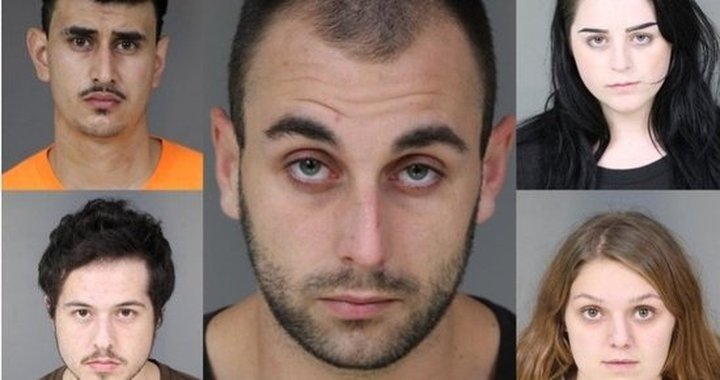
Clockwise from upper left: Valenzuela, Mitchell, Fode, Thomson, Godoy-Standley
###
The five people responsible for the December 2016 carjacking and killing of 20-year-old Tyson Eduardo Claros will be ordered to pay thousands of dollars in restitution to his grieving parents, Judge Christopher Wilson said in a tentative ruling issued this morning.
Wilson denied only one request, which was for reimbursement for funeral jewelry and keepsakes. On two issues he made no ruling because of insufficient information: $23,000 in counseling fees for Claros’s biological mother, Christina Dennison; and an unspecified amount in counseling fees for Claros’s half-brother, who is Dennison’s son.
In both cases, Wilson said, he would like to see verification that the counseling was specifically related to “this unfortunate tragic event.”
As Wilson noted, the most contentious issue in the case was the claim that Claros’s father, Vladimir “Eddie” Claros, lost wages at the rate of $169 per hour. Claros owns a wood stove business, and it was established that his service rate is indeed $169 hourly.
But to award the full amount requested, the judge said, one would have to assume that every time Claros attended court, met with someone from the District Attorney’s Office or drove Tyson Claros’s half-sister to counseling sessions, he would have been working instead.
Wilson said it was reasonable to award Eddie Claros half his lost wages, a total of $12,168.
Claros’s wife Cami Claros, Tyson’s stepmother, earns $18 hourly and was reimbursed fully for her wages. District Attorney Carolyn Schaffer said today she believes Cami Claros works at a school.
Finally, Wilson agreed to full reimbursement for Michael Dennison, Claros’s stepfather, for lost wages and travel expenses from San Jose to Eureka.
The judge said Michael Dennison did an excellent job of providing documented specifics: 30 days of lost wages totaling $22,590, and traveling expenses — including gasoline and hotel rooms — of $4,520.
The five defendants also will be responsible to Dennison for $1,447 for cremation and urns, $8,400 for a niche in a mausoleum and $84 for death certificates.
The cause of death was multiple gunshot wounds fired by Brandon James Mitchell, who is serving a prison term of 27 years. Defendant Cesar Octavio Valenzuela is also serving a prison sentence. Three other defendants were sentenced to state prison but as of now remain in Humboldt County Correctional Facility.
Two of them — Catherine Fode and Nicole Thomson — watched the hearing today from the jail’s video room. Hector Godoy-Standley did not view the proceedings.
At the time of the shooting, Fode and Mitchell suspected Claros of molesting their 3-year-old daughter. That claim was investigated but no charges were filed.
With all the defendants in custody for years, it’s possible it could be a long while before the Dennison and Claros families receive any money.
Valenzuela was sentenced to 13 years, Thomson to 14 years, Fode to seven years and Godoy-Standley to four years. Fode pleaded guilty to manslaughter early on and agreed to testify against the other four, but the case resolved before trial.
Press release from the Humboldt County Sheriff’s Office:
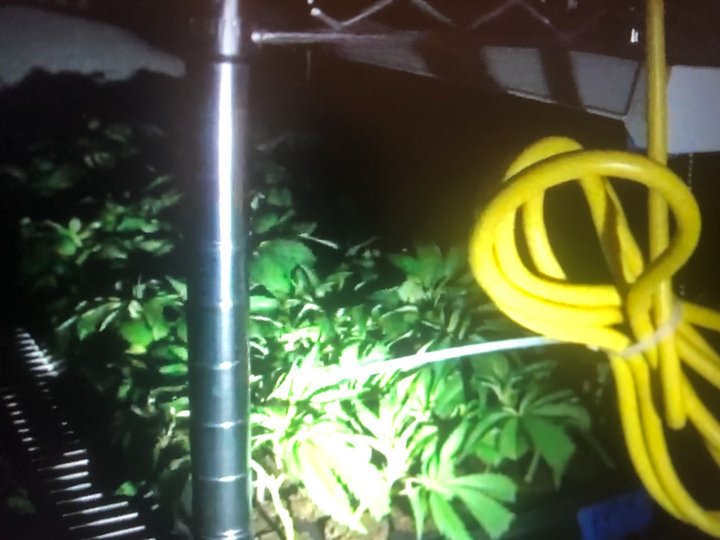
On April 8, 2021, deputies with the Humboldt County Sheriff’s Office Marijuana Enforcement Team (MET) served one search warrant to investigate illegal cannabis cultivation and utility theft at a residence on the 700 block of Fickle Hill Road in Arcata.
One parcel was investigated during the service of the warrant. The parcel did not possess the required county permit and state license to cultivate cannabis commercially.
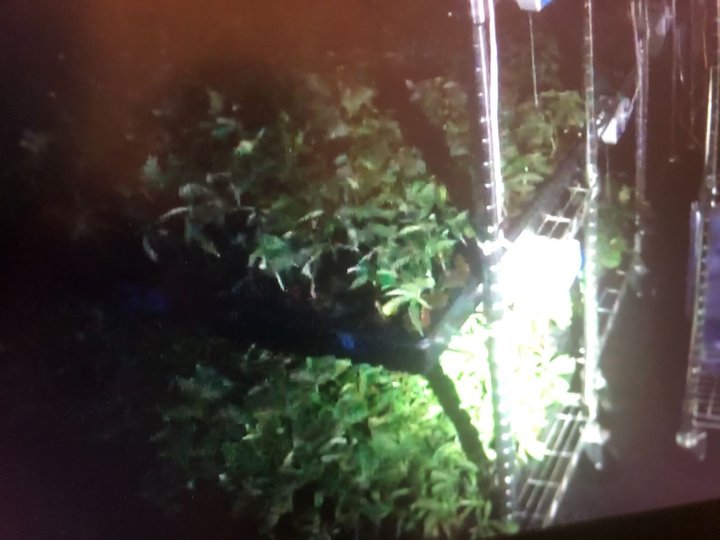
During the service of the warrant, deputies located a large-scale indoor cultivation operation with all bedrooms of the residence converted to facilitate the cultivation of cannabis. Deputies eradicated approximately 12,854 growing cannabis plants. Additionally, deputies found evidence of utility theft occurring to power the operation.
No arrests were made during the service of this warrant. Sheriff’s deputies will be requesting an arrest warrant be issued by the District Attorney’s Office for the individual responsible for this operation on charges of utility theft (PC 498(D)), maintaining a residence for the purpose of unlawfully manufacturing, storing, or distributing a controlled substance for sale or distribution (HS 11366) and cannabis cultivation (HS 11358(c)).
Anyone with information about this case or related criminal activity is encouraged to call the Humboldt County Sheriff’s Office at (707) 445-7251 or the Sheriff’s Office Crime Tip line at (707) 268-2539.
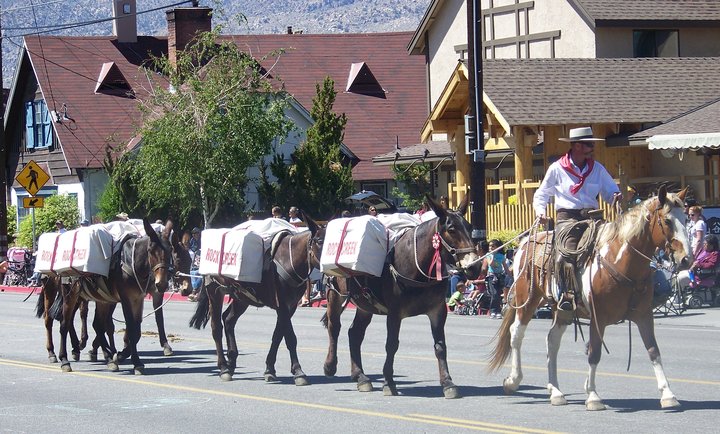
Every year, tens of thousands of equine aficionados gather in the streets of Bishop for one of the biggest events in the Eastern Sierra: Mule Days.
Touting “the world’s longest mule parade,” as well as an array of riding competitions and other festivities, the multi-day event leading up to Memorial Day brings Inyo County a surge of millions of tourism dollars.
Last year’s event — which would have been Bishop’s 51st — was cancelled as COVID-19 forced widespread shutdowns. And now this year’s quirky celebration, billed as “a world-class equestrian event promoting the legacy, heritage and talents of the mule,” is at risk, too.
Inyo County is one of only two California counties that remain in the state’s most restrictive tier for reopening — the daunting purple. That means strict limitations on live events and retail, as well as no open bars or indoor dining, which would all put a damper on next month’s Mule Days.
Whether the region will move forward with Mule Days, which attracts 30,000 visitors and more than 700 mules, or which activities it can schedule remains up in the air. There likely will be no indoor activities or the usual concert, barbecues and dances.
The extent and size of Mule Days could depend on whether Inyo County can lower its infection rate and move down two or three tiers to orange or yellow, allowing more spectators.
“This is a huge deal for our community,” said Tawni Thomson, executive director of the Bishop Chamber of Commerce. The question now is: “Do they (event organizers) spend the money in planning not knowing what’s going to happen six weeks from now?”
Merced is the only other county left in the purple tier. California’s 56 other counties have all moved to red, orange or even yellow, which have far fewer restrictions on businesses.
California’s intricate, colored tier system has frustrated many local officials. Merced County supervisors are concerned data lags will hold them back. In Inyo, a county with about 18,000 people, officials say the tiered system isn’t really designed for less populous counties, making it harder for them to move forward.
Last week, Inyo County’s COVID-19 case rate hovered just slightly above the 10 cases per 100,000 people threshold needed to advance to red. This week, its rate dropped to 2.3 cases, but counties need two weeks of low metrics before advancing.
Inyo County could move into the red tier on Tuesday, but that still carries strict rules for businesses and live events. Moving to lighter tiers could happen no sooner than May 4 for the orange tier (which requires fewer than six cases per 100,000 people); for yellow, it would be May 25 — opening day of Mule Days.
Meanwhile, Merced County’s adjusted case rate as of Tuesday was 11.7 cases per 100,000 people, likely meaning it will be stuck at least two more weeks in purple.
Earlier this week, Gov. Gavin Newsom and state health officials announced that if vaccine supply holds up and cases and hospitalizations remain stable, California will chuck its colored tier system and reopen statewide on June 15. State officials will continue to track local data and will intervene if numbers surge.
But at least for the next two months, limits on restaurants, shopping and events will continue to be determined by the state’s blueprint of colored tiers.
Bishop, the biggest town in Inyo, is trying to make its case with the state, asking health officials to re-examine the criteria for small counties moving to less-restrictive tiers.
The state already has an alternative framework for counties with fewer than 106,000 residents, recognizing that a very small number of cases can easily swing counties back to stricter tiers. But that workaround only protects small counties from moving back a tier too easily; it doesn’t help them move forward, said Bishop Mayor Stephen Muchovej.
Because of its smaller population, for Inyo County to move out of purple, it needs 12 or fewer new COVID-19 cases a week. It’s been close — two weeks ago the county had 13 new cases, bumping up its case rate for the following week’s tiering, so the clock had to reset.
“That’s why you see Inyo perpetually stuck in purple, because one case makes a huge difference,” Muchovej said. “That’s 12 cases spread over 10,000 square miles.”
Once Inyo does make it to the red tier, it can tally up to 35 new cases per week before having to move back to purple, according to the small county framework.
Larger Merced County has been stuck in purple for 20 weeks now, while all of its neighbors have moved forward. County supervisors were expecting to get closer to the red tier this week, but were surprised to see their case rate remained well in purple territory.
As of Wednesday, only about 14% of Merced County’s population had been fully vaccinated, compared to 25% statewide. About 60% of Merced County’s 278,000 residents are Latino, and about 17% live under the poverty line, according to Census data.
Merced County’s public health department did not answer CalMatters’ questions about the county’s status, but a spokesperson for the California Department of Public Health said state health officials are working with Merced to identify its drivers of transmission.
“At this point in the COVID response, vaccinating individuals residing in the most disadvantaged communities while staying vigilant and continue with masking and sector specific restrictions remains crucial,” an email from a state health official said.
One Merced County supervisor said he feels they have been doing all of that and more.
“We’re doing the right things. There’s an effort to get vaccines out, we’re doing clinics to get our agricultural workers vaccinated, and we continue to test people,” said County Supervisor Scott Silveira.
Counties with more than 106,000 people get credit for testing and vaccinating people in low-income ZIP codes.
Merced may continue to struggle to improve its numbers. One pending concern is a recent “data dump” that could affect next week’s outcome.
Tier assignments have a week lag, meaning this week’s status is based on data from the week of March 21. The county’s case tracker shows that on April 3, the county tallied 164 cases, significantly above the usual number of cases the county has been seeing on any given day. Silveira said the lag in data from test providers means cases that should have been spread across several days, and possibly weeks, are now lumped into one day.
“That’s going to skew our numbers,” Silveira said. The county, he said, is addressing this issue with the state.
“It’s been very frustrating, the formula is not that simple,” he said.
Silveira represents the west side of Merced County. It’s typical for his constituents to travel or commute into San Jose and other parts of the Bay Area, so they are able to do more activities in Santa Clara County, which drives business away from Merced.
Merced County is home to wineries, an air museum and other businesses that have been hurting during the shutdown.
The tier restrictions also are harming the economies of small Eastern Sierra towns that rely on tourism. Mammoth Lakes is a popular recreation destination, and Death Valley attracted more than 1.7 million people in 2019, although about half that number visited last year. These visitors often drive through Bishop and other small Inyo County towns, but business owners are not allowed to accommodate them like they’re used to.
Desperate, some business owners have defied state rules and continued operating indoors or at larger capacities, said Thomson, the head of Bishop’s Chamber of Commerce.
“But that pits them against their neighbors who are following the rules, and sadly it’s dividing our community,” she said. “We are very much looking forward to June 15.”
###
CALmatters.org is a nonprofit, nonpartisan media venture explaining California policies and politics.
Hurley was born in Eureka, and, from the age of four, spent most of his life in the Fieldbrook home he grew up in. He attended Fieldbrook Elementary School and Arcata High where countless lifelong friendships were formed.
Like many young northern California men of his generation, he began working in the lumber industry out of high school, first at Simpson Lumber and later in the woods. His one and only marriage was to Sally Dupree and together they welcomed a son, Jason, and a daughter, Heather, into the world before eventually divorcing.
Hurley was a quiet, soft-spoken man, but those traits belied a deeper, more complex side. To know him on a personal level was to know a well-read, intelligent, insightful man who could speak knowledgeably on most any subject. He had a generous, sensitive heart and would give away nearly anything he owned to a friend who needed it more. While his two sisters would describe him as a pesky little pain in the butt as a little boy, even they now concede that he grew up to be the gentle and kind soul his friends speak of today.
Hurley was never a man of wealth in traditional terms, his wealth was in a commodity of much greater value: that of respect and friendship by the multitude of lives he touched in his short 68 years on earth. He will be dearly missed by his family and friends.
Hurley was preceded in death by is parents, Louis and Velma Miller, a niece, Shana Pringle, and her two year old son Noah. He is survived by his two children, Jason Miller of Fieldbrook, and Heather Ferrel of McAlester, Okla., six grandchildren as well as two sisters, Linda Pringle of Orangevale and Lyla Swales of Eagle, Idaho.
In lieu of a memorial service, his friends hope to organize a Celebration of Life gathering in his honor.
Hurley’s cremains will be scattered in places he frequented and loved the most throughout his life, with special emphasis on his home of Fieldbrook. It seems only fitting that Fieldbrook literally be Hurley’s “forever” home”.
Rest in peace baby brother. Hopefully you always knew how very much your sisters loved you, in spite of the miles between us. You will live in our memory for the rest of our lives and we will remain forever grateful for the time on earth we had with you.
###
The obituary above was submitted on behalf of Hurley Miller’s loved ones. The Lost Coast Outpost runs obituaries of Humboldt County residents at no charge. See guidelines here.