

Arcata Land Company Agrees to Reduce the Size of Its Arcata Bottoms Cannabis Grow From 23 Acres to 8
LoCO Staff / Friday, April 9, 2021 @ 1:04 p.m. / Business , Cannabis

Greenhouses at Sun Valley Floral Farms, which owns the property where Arcata Land Co. has proposed an industrial-scale cannabis cultivation operation. | File photo by Andrew Goff.
PREVIOUSLY:
- With Flower Business Struggling, Sun Valley Plans 23 Acres of Cannabis Cultivation in Arcata Bottoms
- Arcata Land Company Offers to Dramatically Reduce the Size of Its Proposed 23-Acre Cannabis Project
###
Press release from the Arcata Land Company:
Arcata Land Company (ALC) has listened carefully to the concerns of the community related to its proposed cannabis cultivation project. After thoughtful consideration, ALC has voluntarily agreed to reduce its project from approximately 23 acres of cultivation to 8 acres. Even though the original project included measures to fully mitigate its potential impacts, ALC believes that this scaled-down project will further address neighbors’ concerns regarding the potential for odors, noise, traffic, water, and energy use.
This scaled-down project also responds to Humboldt County Grower Alliance (HCGA)’s concerns. HCGA indicated in two letters to the County that it would formally withdraw its opposition to a reduced scale project of 8 acres or less. In an April 5 communication to ALC President Lane DeVries, HCGA Executive Director Natalynne DeLapp stated that ALC’s commitment to the reduced-scale project was a valuable gesture, and that HCGA would submit a letter withdrawing its opposition. ALC, as landowner, and Headwaters as the project operator, both look forward to working with HCGA and continuing to foster a collaborative relationship.
ALC has made multiple attempts to set up a meeting with neighbors to no avail and continues to welcome a meeting with neighbors with constructive dialogue regarding the project.
###
Natalynne DeLapp, executive director of the Humboldt County Growers Alliance, sent the following statement in response to the above release:
Arcata Land Company’s revised project description, 8-acres of new commercial cannabis cultivation, appears to conform to the legal standards held within Humboldt County’s two cannabis land use ordinances.
###
The Humboldt County Planning Commission will hold a special meeting on April 22 at 6 p.m. to continue its public hearing on this project.
Here’s how to watch and/or participate remotely:
Listen or Watch the live stream of the Planning Commission Meeting in three ways:
- https://zoom.us/j/95367422487 Password: 581379
- Call in via telephone at 346 248-7799, enter meeting id 953 6742 2487 Password: 581379
- A live stream of the meeting can be found by using the following link: https://humboldt.legistar.com or by watching Access Humboldt on cable channel 10
BOOKED
Yesterday: 7 felonies, 9 misdemeanors, 0 infractions
JUDGED
Humboldt County Superior Court Calendar: Today
CHP REPORTS
No current incidents
ELSEWHERE
Mad River Union: Flight Path
Mad River Union: McK not-a-tree cell tower project bumped
Mad River Union: Arcata council decides this, decides that
Mad River Union: Porchfest 3 evolves with new prep, participation
Conspirators in ‘Manila Five’ Murder Ordered to Pay Thousands of Dollars to Parents of Victim
Rhonda Parker / Friday, April 9, 2021 @ 11:26 a.m. / Courts

Clockwise from upper left: Valenzuela, Mitchell, Fode, Thomson, Godoy-Standley
###
The five people responsible for the December 2016 carjacking and killing of 20-year-old Tyson Eduardo Claros will be ordered to pay thousands of dollars in restitution to his grieving parents, Judge Christopher Wilson said in a tentative ruling issued this morning.
Wilson denied only one request, which was for reimbursement for funeral jewelry and keepsakes. On two issues he made no ruling because of insufficient information: $23,000 in counseling fees for Claros’s biological mother, Christina Dennison; and an unspecified amount in counseling fees for Claros’s half-brother, who is Dennison’s son.
In both cases, Wilson said, he would like to see verification that the counseling was specifically related to “this unfortunate tragic event.”
As Wilson noted, the most contentious issue in the case was the claim that Claros’s father, Vladimir “Eddie” Claros, lost wages at the rate of $169 per hour. Claros owns a wood stove business, and it was established that his service rate is indeed $169 hourly.
But to award the full amount requested, the judge said, one would have to assume that every time Claros attended court, met with someone from the District Attorney’s Office or drove Tyson Claros’s half-sister to counseling sessions, he would have been working instead.
Wilson said it was reasonable to award Eddie Claros half his lost wages, a total of $12,168.
Claros’s wife Cami Claros, Tyson’s stepmother, earns $18 hourly and was reimbursed fully for her wages. District Attorney Carolyn Schaffer said today she believes Cami Claros works at a school.
Finally, Wilson agreed to full reimbursement for Michael Dennison, Claros’s stepfather, for lost wages and travel expenses from San Jose to Eureka.
The judge said Michael Dennison did an excellent job of providing documented specifics: 30 days of lost wages totaling $22,590, and traveling expenses — including gasoline and hotel rooms — of $4,520.
The five defendants also will be responsible to Dennison for $1,447 for cremation and urns, $8,400 for a niche in a mausoleum and $84 for death certificates.
The cause of death was multiple gunshot wounds fired by Brandon James Mitchell, who is serving a prison term of 27 years. Defendant Cesar Octavio Valenzuela is also serving a prison sentence. Three other defendants were sentenced to state prison but as of now remain in Humboldt County Correctional Facility.
Two of them — Catherine Fode and Nicole Thomson — watched the hearing today from the jail’s video room. Hector Godoy-Standley did not view the proceedings.
At the time of the shooting, Fode and Mitchell suspected Claros of molesting their 3-year-old daughter. That claim was investigated but no charges were filed.
With all the defendants in custody for years, it’s possible it could be a long while before the Dennison and Claros families receive any money.
Valenzuela was sentenced to 13 years, Thomson to 14 years, Fode to seven years and Godoy-Standley to four years. Fode pleaded guilty to manslaughter early on and agreed to testify against the other four, but the case resolved before trial.
Remember Grow Houses? Old-Fashioned Unpermitted Weed Op Taken Down on Fickle Hill Road, Says HCSO Marijuana Enforcement Team
LoCO Staff / Friday, April 9, 2021 @ 10:40 a.m. / Crime
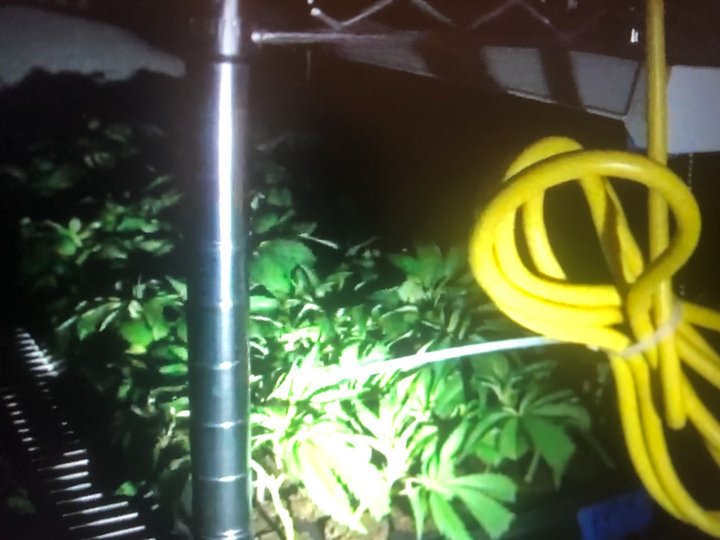
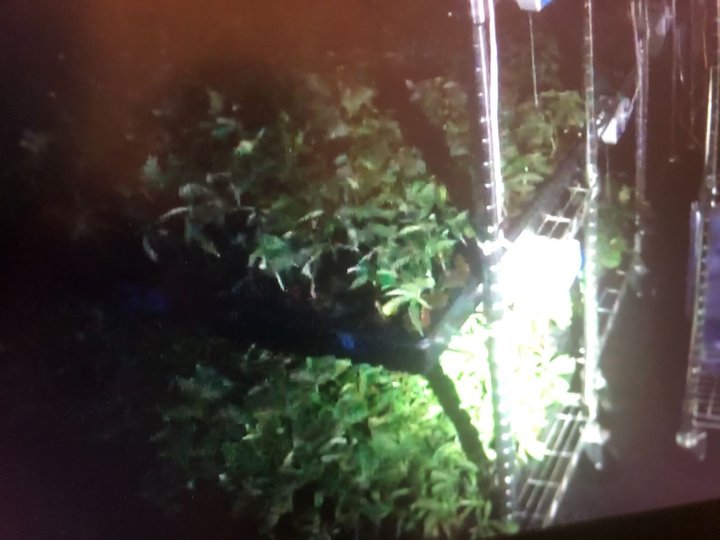
Photos: HCSO.
Press release from the Humboldt County Sheriff’s Office:
On April 8, 2021, deputies with the Humboldt County Sheriff’s Office Marijuana Enforcement Team (MET) served one search warrant to investigate illegal cannabis cultivation and utility theft at a residence on the 700 block of Fickle Hill Road in Arcata.
One parcel was investigated during the service of the warrant. The parcel did not possess the required county permit and state license to cultivate cannabis commercially.
During the service of the warrant, deputies located a large-scale indoor cultivation operation with all bedrooms of the residence converted to facilitate the cultivation of cannabis. Deputies eradicated approximately 12,854 growing cannabis plants. Additionally, deputies found evidence of utility theft occurring to power the operation.
No arrests were made during the service of this warrant. Sheriff’s deputies will be requesting an arrest warrant be issued by the District Attorney’s Office for the individual responsible for this operation on charges of utility theft (PC 498(D)), maintaining a residence for the purpose of unlawfully manufacturing, storing, or distributing a controlled substance for sale or distribution (HS 11366) and cannabis cultivation (HS 11358(c)).
Anyone with information about this case or related criminal activity is encouraged to call the Humboldt County Sheriff’s Office at (707) 445-7251 or the Sheriff’s Office Crime Tip line at (707) 268-2539.
And Then There Were Two: Inyo and Merced Stuck in Strictest Tier
Ana B. Ibarra / Friday, April 9, 2021 @ 7 a.m. / Sacramento

Mule Days in Bishop. Photo: Jim Heaphy, via Wikimedia. Creative Commons license.
###
Every year, tens of thousands of equine aficionados gather in the streets of Bishop for one of the biggest events in the Eastern Sierra: Mule Days.
Touting “the world’s longest mule parade,” as well as an array of riding competitions and other festivities, the multi-day event leading up to Memorial Day brings Inyo County a surge of millions of tourism dollars.
Last year’s event — which would have been Bishop’s 51st — was cancelled as COVID-19 forced widespread shutdowns. And now this year’s quirky celebration, billed as “a world-class equestrian event promoting the legacy, heritage and talents of the mule,” is at risk, too.
Inyo County is one of only two California counties that remain in the state’s most restrictive tier for reopening — the daunting purple. That means strict limitations on live events and retail, as well as no open bars or indoor dining, which would all put a damper on next month’s Mule Days.
Whether the region will move forward with Mule Days, which attracts 30,000 visitors and more than 700 mules, or which activities it can schedule remains up in the air. There likely will be no indoor activities or the usual concert, barbecues and dances.
The extent and size of Mule Days could depend on whether Inyo County can lower its infection rate and move down two or three tiers to orange or yellow, allowing more spectators.
“This is a huge deal for our community,” said Tawni Thomson, executive director of the Bishop Chamber of Commerce. The question now is: “Do they (event organizers) spend the money in planning not knowing what’s going to happen six weeks from now?”
Merced is the only other county left in the purple tier. California’s 56 other counties have all moved to red, orange or even yellow, which have far fewer restrictions on businesses.
California’s intricate, colored tier system has frustrated many local officials. Merced County supervisors are concerned data lags will hold them back. In Inyo, a county with about 18,000 people, officials say the tiered system isn’t really designed for less populous counties, making it harder for them to move forward.
Last week, Inyo County’s COVID-19 case rate hovered just slightly above the 10 cases per 100,000 people threshold needed to advance to red. This week, its rate dropped to 2.3 cases, but counties need two weeks of low metrics before advancing.
Inyo County could move into the red tier on Tuesday, but that still carries strict rules for businesses and live events. Moving to lighter tiers could happen no sooner than May 4 for the orange tier (which requires fewer than six cases per 100,000 people); for yellow, it would be May 25 — opening day of Mule Days.
Meanwhile, Merced County’s adjusted case rate as of Tuesday was 11.7 cases per 100,000 people, likely meaning it will be stuck at least two more weeks in purple.
Earlier this week, Gov. Gavin Newsom and state health officials announced that if vaccine supply holds up and cases and hospitalizations remain stable, California will chuck its colored tier system and reopen statewide on June 15. State officials will continue to track local data and will intervene if numbers surge.
But at least for the next two months, limits on restaurants, shopping and events will continue to be determined by the state’s blueprint of colored tiers.
Bishop, the biggest town in Inyo, is trying to make its case with the state, asking health officials to re-examine the criteria for small counties moving to less-restrictive tiers.
The state already has an alternative framework for counties with fewer than 106,000 residents, recognizing that a very small number of cases can easily swing counties back to stricter tiers. But that workaround only protects small counties from moving back a tier too easily; it doesn’t help them move forward, said Bishop Mayor Stephen Muchovej.
Because of its smaller population, for Inyo County to move out of purple, it needs 12 or fewer new COVID-19 cases a week. It’s been close — two weeks ago the county had 13 new cases, bumping up its case rate for the following week’s tiering, so the clock had to reset.
“That’s why you see Inyo perpetually stuck in purple, because one case makes a huge difference,” Muchovej said. “That’s 12 cases spread over 10,000 square miles.”
Once Inyo does make it to the red tier, it can tally up to 35 new cases per week before having to move back to purple, according to the small county framework.
Larger Merced County has been stuck in purple for 20 weeks now, while all of its neighbors have moved forward. County supervisors were expecting to get closer to the red tier this week, but were surprised to see their case rate remained well in purple territory.
As of Wednesday, only about 14% of Merced County’s population had been fully vaccinated, compared to 25% statewide. About 60% of Merced County’s 278,000 residents are Latino, and about 17% live under the poverty line, according to Census data.
Merced County’s public health department did not answer CalMatters’ questions about the county’s status, but a spokesperson for the California Department of Public Health said state health officials are working with Merced to identify its drivers of transmission.
“At this point in the COVID response, vaccinating individuals residing in the most disadvantaged communities while staying vigilant and continue with masking and sector specific restrictions remains crucial,” an email from a state health official said.
One Merced County supervisor said he feels they have been doing all of that and more.
“We’re doing the right things. There’s an effort to get vaccines out, we’re doing clinics to get our agricultural workers vaccinated, and we continue to test people,” said County Supervisor Scott Silveira.
Counties with more than 106,000 people get credit for testing and vaccinating people in low-income ZIP codes.
Merced may continue to struggle to improve its numbers. One pending concern is a recent “data dump” that could affect next week’s outcome.
Tier assignments have a week lag, meaning this week’s status is based on data from the week of March 21. The county’s case tracker shows that on April 3, the county tallied 164 cases, significantly above the usual number of cases the county has been seeing on any given day. Silveira said the lag in data from test providers means cases that should have been spread across several days, and possibly weeks, are now lumped into one day.
“That’s going to skew our numbers,” Silveira said. The county, he said, is addressing this issue with the state.
“It’s been very frustrating, the formula is not that simple,” he said.
Silveira represents the west side of Merced County. It’s typical for his constituents to travel or commute into San Jose and other parts of the Bay Area, so they are able to do more activities in Santa Clara County, which drives business away from Merced.
Merced County is home to wineries, an air museum and other businesses that have been hurting during the shutdown.
The tier restrictions also are harming the economies of small Eastern Sierra towns that rely on tourism. Mammoth Lakes is a popular recreation destination, and Death Valley attracted more than 1.7 million people in 2019, although about half that number visited last year. These visitors often drive through Bishop and other small Inyo County towns, but business owners are not allowed to accommodate them like they’re used to.
Desperate, some business owners have defied state rules and continued operating indoors or at larger capacities, said Thomson, the head of Bishop’s Chamber of Commerce.
“But that pits them against their neighbors who are following the rules, and sadly it’s dividing our community,” she said. “We are very much looking forward to June 15.”
###
CALmatters.org is a nonprofit, nonpartisan media venture explaining California policies and politics.
OBITUARY: Hurley Gene Miller, 1952-2021
LoCO Staff / Friday, April 9, 2021 @ 6:56 a.m. / Obits

Hurley Gene Miller
July 20, 1952 — March 25, 2021
Hurley was born in Eureka, and, from the age of four, spent most of his life in the Fieldbrook home he grew up in. He attended Fieldbrook Elementary School and Arcata High where countless lifelong friendships were formed.
Like many young northern California men of his generation, he began working in the lumber industry out of high school, first at Simpson Lumber and later in the woods. His one and only marriage was to Sally Dupree and together they welcomed a son, Jason, and a daughter, Heather, into the world before eventually divorcing. Hurley was a quiet, soft-spoken man, but those traits belied a deeper, more complex side. To know him on a personal level was to know a well-read, intelligent, insightful man who could speak knowledgeably on most any subject. He had a generous, sensitive heart and would give away nearly anything he owned to a friend who needed it more. While his two sisters would describe him as a pesky little pain in the butt as a little boy, even they now concede that he grew up to be the gentle and kind soul his friends speak of today.
Hurley was never a man of wealth in traditional terms, his wealth was in a commodity of much greater value: that of respect and friendship by the multitude of lives he touched in his short 68 years on earth. He will be dearly missed by his family and friends.
Hurley was preceded in death by is parents, Louis and Velma Miller, a niece, Shana Pringle, and her two year old son Noah. He is survived by his two children, Jason Miller of Fieldbrook, and Heather Ferrel of McAlester, Okla., six grandchildren as well as two sisters, Linda Pringle of Orangevale and Lyla Swales of Eagle, Idaho.
In lieu of a memorial service, his friends hope to organize a Celebration of Life gathering in his honor.
Hurley’s cremains will be scattered in places he frequented and loved the most throughout his life, with special emphasis on his home of Fieldbrook. It seems only fitting that Fieldbrook literally be Hurley’s “forever” home”.
Rest in peace baby brother. Hopefully you always knew how very much your sisters loved you, in spite of the miles between us. You will live in our memory for the rest of our lives and we will remain forever grateful for the time on earth we had with you.
###
The obituary above was submitted on behalf of Hurley Miller’s loved ones. The Lost Coast Outpost runs obituaries of Humboldt County residents at no charge. See guidelines here.
OBITUARY: Frank Joseph Cerny, 1923-2021
LoCO Staff / Friday, April 9, 2021 @ 6:56 a.m. / Obits
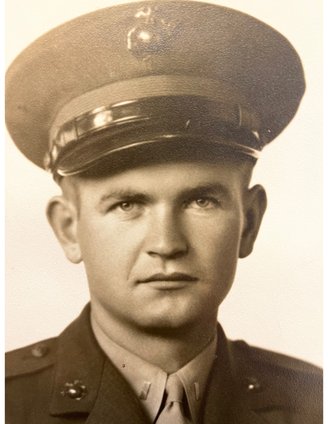
Frank Joseph Cerny
February 9, 1923 - April 5, 2021
Frank Joseph Cerny, Sr. was born February 9, 1923 the son of Josef and Karolina Cerny of Eureka. Both parents were originally from Czechoslovakia.
During preschool he lived on the logging camps at Camp 20 above Crannell and Fieldbrook, where his father was a lumberjack. Later on, growing up, he lived in Cutten, attending Cutten Elementary School, then Eureka Junior and Senior High Schools. He attended Humboldt State College for two years then was called to active duty in the Navy V-12 Program, reporting to duty at the College of the Pacific in Stockton, CA Marine Corp unit, then Parris Island, Camp Lejeune and Quantico training resulted in being commissioned a second lieutenant.
He served in the occupation of Japan at the Yokuska Naval Base. Returning home he graduated from Humboldt State in June 1947. He married Libby Gabriel in 1948 and lived in Samoa and was called back to active duty by the Marine Corps in 1951. He took his wife and two-year-old son, Frank Jr. while stationed at Quantico. Shortly thereafter he was flown to Korea, serving as the company commander in the First Division of the Marine Corps Signal Battalion.
In 1952 returned home to his family, where he was employed with the Hammond Lumber Company. Son Tony was added to the family in 1953. Frank built and moved the family to their new Eureka home in 1956. He was a practicing CPA in Eureka for over 40 years.
Frank was a charter and life member of the Six Rivers Detachment, Marine Corps League, American Legion, Veterans of Foreign Wars. He belonged to the Baywood Golf and Country Club for thirty five years being an avid golfer.
Frank is survived by his wife Libby Cerny, son Tony and his wife Janice Cerny, nephews Bart Christen, Mark and his wife Tina Christen and their children Frankie, Hannah and AJ.; niece Susan and husband Steve Aherns. He was preceded in death by his father Joseph, mother Karolina, and son Frank Cerny, Jr. and sister Mary Peterson; sister-in-law Toni and her husband Al Christen.
Frank loved to play golf and enjoyed his life with his wife Libby of 72 years. Frank was residing at the Ida Emerson Hospice House for just about two years. No services are planned, however donations may be made to Hospice of Humboldt who provide dignified and amazing loving care.
###
The obituary above was submitted on behalf of Frank Cerny’s loved ones. The Lost Coast Outpost runs obituaries of Humboldt County residents at no charge. See guidelines here.
The Agency Running Humboldt County’s Workforce Services is Ready to Bail Over Chronically Late Payments
Ryan Burns / Thursday, April 8, 2021 @ 4:50 p.m. / Local Government

Humboldt County Economic Development Director Scott Adair speaking at Tuesday’s Board of Supervisors meeting via Zoom. | Screenshot.
###
For months now county officials have been warning that delayed financial transactions, including chronically late payments to vendors, could have “massive implications” for county government, including devastating losses in funding and key services.
A rather dry-sounding agenda item from Tuesday’s Board of Supervisors meeting suggests that this dire prophecy may now be coming true, even as the reasons for the county’s ongoing fiscal snafus remain a matter of bitter internal debate.
Speaking via Zoom, Scott Adair, the county’s economic development director, described the agenda item as “an opportunity” to enhance and improve the county’s workforce development efforts. These efforts, which are overseen by the board-appointed Workforce Development Board, involve a variety of partner agencies offering job training and education, employer hiring incentives, recruiting, interviewing and more.
Arguably, no partner agency is more vital to the county’s current workforce development efforts than the Smart Business Resource Center, a 42-year-old nonprofit based in Redding. Smart currently serves the counties of Del Norte, Humboldt, Shasta, Siskiyou and Trinity.
Eventually, Adair got around to mentioning the reason for Humboldt County’s sudden “opportunity” to reevaluate its business development strategy: Smart is about ready to quit us.
On March 15, Smart CEO Wendy Zanotelli sent a letter to county officials saying, “After careful consideration, the Smart Business Resource Center regrets to inform you of our intent to terminate all contracts with County of Humboldt.”
Why? The letter cited ongoing issues, including chronically late contracts and payments.
“Despite multiple communications and meetings between Smart and Humboldt County administration over the past two years … the issues have not been rectified and, in some cases, continue to escalate,” the letter states. Smart plans to provide services to Humboldt County through June 30.
Reached by phone on Wednesday, Zanotelli said her agency really doesn’t want to stop serving Humboldt, but the ongoing financial hardship on her agency has proved too much to bear.
“For over a year we’ve been trying to get timely payment,” she said. Yet those payments have been chronically late.
Most of Smart’s funding comes via the Workforce Innovation and Opportunity Act (WIOA), a federal law that funnels grants to state and local jurisdictions for economic development programs. Since Humboldt County partners with Smart to provide those services, the WIOA dollars must go through the county before reaching the nonprofit, and Zanotelli said that despite sending timely and thorough invoices, the county has been late paying its bill time after time.
“We were managing well until the payments [from Humboldt County] got to be 90 days late and we were carrying $400,000 in arrears,” she said. “It finally got down to the point where we needed weekly payments.”
In a December amendment to the county’s contract with Smart, signed by County Administrative Officer Amy Nilsen, the county agreed to start making weekly advance payments of more than $7,500, with a plan to settle any billing discrepancies at the end of the year.
But a tense Board of Supervisors meeting the following month brought out the bitter infighting that’s been a recurring feature of county fiscal management over the last two or three years. Auditor-Controller Karen Paz Dominguez, who has frequently been the focal point of these disputes, objected to making these weekly payments, saying the invoices she’d been provided lacked sufficient detail.
“I’m being asked to issue a payment for services that are not corroborated with evidence,” she said to the board. Later in the discussion she added, “I can’t support the idea of weekly advances without weekly documentation, especially because I answer to [external] auditors.”
She also questioned whether Nilsen was even authorized to sign a contract amendment that had yet to be approved by the board.
First District Supervisor Rex Bohn, whose frustration with Paz Dominguez has frequently boiled over, asked why other counties served by Smart aren’t having problems sending payments in on time.
Fifth District Supervisor Steve Madrone stood up for Paz Dominguez, saying Smart simply needs to provide more information in their invoices.
“The detail needs to be there,” he said. “Details matter. This goes to the core of the conflict between parts of the county and Auditor-Controller’s Office.”
But Zanotelli told the Outpost that’s not the problem — at least not from her end.
“At no time in any of this have we ever been asked for additional documentation,” she said.
So where are things going wrong? It depends on whom you ask.
“I don’t want to throw anyone under the bus because we could do with less of that around here,” Paz Dominguez told the Outpost on Wednesday. But she said her office is merely “the middleman” between vendors and the various county departments. In this case, she said, “Invoices that the vendor says they’ve been sending weren’t finding their way to us.”
She noted that there has been a lot of staff turnover in the Economic Development Division, causing frequent miscommunication and, in some cases, a lack of proper follow-through and documentation.
Paz Dominguez said she didn’t hear anything about delayed payments to Smart until last fall, “and our records show that when an invoice gets submitted to us in a complete format, we issue payment.”
She suggested that the county government’s sheer size and diffuse structure can cause communication problems. “This is a decentralized organization,” she said. “We get a lot of emails [from vendors] saying, ‘Hey, we’re waiting for payment,’ and we have to say, ‘Sorry, I don’t have a request to pay you.’ A lot of miscommunication is the cause of a lot of this grief all over the place.”
Adair, reached briefly between meetings Wednesday morning, acknowledged that there are a lot of steps in the county’s billing and payment processes, with vendor invoices going first to a program coordinator, then to the administration for approval, then the purchasing department, then the Auditor-Controller’s Office … . There are probably 10 people involved before a check goes out in the mail, he said.
Fourth District Supervisor Virginia Bass, who has arranged meetings between county staffers and Smart employees in hopes of resolving the issues, remained diplomatically neutral in her assessment.
“I think we have to look at it as a systems failure and work to figure out where it went wrong without pointing any fingers,” she told the Outpost via phone from the parking lot of Open Door’s North Country Clinic, where she’d just received her second dose of the COVID vaccine.
Paz Dominguez, for her part, said she’s now confident that Smart will be getting its weekly payments on time, largely because her team has spent time training Economic Development personnel the proper steps to take when forwarding invoices.
An email sent to Adair Thursday morning seeking comment on Paz Dominguez’s take was not returned by the time of publication. But regardless of whether matters get smoothed over with Smart, the county will proceed with reevaluating its workforce development strategies.
During his presentation Tuesday, Adair told the board that while the county has historically been focused on programs funded through the Workforce Innovation and Opportunity Act, there are other sources of grant money for those purposes, including the U.S. Department of Agriculture and the Community Development Block Grant.
He also noted that of the 15 designated labor regions in the state, Humboldt County is one of just three operating as a single-county standalone region. (The other two, Orange County and Ventura County, have much larger populations.) Adair suggested that the county should explore the option of joining with another region, such as the Northern Rural Training and Employment Consortium (NoRTEC) or the Workforce Alliance of the North Bay (WANB).
Adair told the Outpost there would be advantages and disadvantages to abandoning our autonomy in favor of joining a regional workforce consortium.
”There certainly is a compelling business case as to why the majority of counties thought it’s better to merge with other regions, because you’re able to have greater command over the leverage of resources,” he said.” It’s similar to if a group of merchants decide to work together to buy a product they need. You can get better pricing — or sometimes better service — as an alliance.”
Not everyone agrees. At Tuesday’s meeting, Kerry Venegas, the executive director of Changing Tides Family Services and a member of the county’s Workforce Development Board, called in with a dissenting opinion.
“I find it critically important that we retain local control,” Venegas said. “Keep those dollars flowing to us.”
County staff plans to explore a variety of options for the structure of its workforce development apparatus, and the county will be issuing a request for proposals from other agencies that could potentially take the place of Smart by offering services funded through the Workforce Innovation and Opportunity Act.
Adair — or potentially someone else from the county’s Economic Development Division — is slated to come back before the board on May 24 to report on staff’s findings.


