Yesterday, Dr. Josh Ennis, Humboldt County’s deputy health officer, took loads of media questions on the state of the pandemic — and particularly on the recent surge of cases in Humboldt County and nationwide.
Video above, rough transcript below.
###
Good afternoon, thank you for being with us today, would you like to start by addressing
the community?
Yeah, I’d like to take this opportunity to talk a little bit about
where we’re at and how the tier framework might be able to adapt to certain situations.
So right now across the state as well as our own county we’re seeing unprecedented growth the
volume is of concern but even more than that is the acceleration, so how quickly that volume has
taken off. Just two weeks ago we had far fewer cases, on the order of very low
single digits per day, and now we have days where we’re consistently in the double digits.
The tier system looks at a couple different things, but one of them that many people
can understand, is the case rate, so how many new cases per 100,000 people we see every day.
The state looks at that every Tuesday and they’re looking at data that’s
17 to 10 days old, okay so there is a substantial lag in the period of time that they’re looking at,
and on top of that, they are looking at that data and looking for increases
spanning two consecutive weeks.
So really, movement within the state’s tier framework is
two-and-a-half, three weeks later, so naturally you can see if we’ve sped up dramatically
during that lag period time, intervention is coming really way too late.
So to bring it back home to our own county, the acceleration has been quite dramatic, this prior
week we saw that we stayed within the yellow tier by the skin of our teeth and come next week that
could look very different when the state looks at our metrics.
I’d also like to mention that
within all this framework, within all the guidances, the state has allowed the county
the opportunity to exercise some amount of local control, to be more restrictive than the state,
and that is something that many folks outside of our own county, in local health jurisdictions,
as well as folks even within the state, are discussing given the very concerning trends
with acceleration of the cases as well as the volume and what we’re seeing happen across the
entire nation that is beginning to threaten some of the health care systems in in many of these
other states.
The Redheaded Blackbelt asks,
“Reader-submitted question: Because of the discomfort with the swab test,
why is the county not using the spit tube process used by major league baseball and other sports?
does this have something to do with the cost of the test?”
First, I’ll just I’ll clarify that there are two different type of nasal tests that
are commonly used in our county. One is the nasopharyngeal swab or NP swab for short, and
this is the very deep nasal swab. There are some sites such as the Optumserve site
that is a state-contracted entity that has their own decision making and so
we cannot determine what type of swap they use.
The county, on the other hand, where we can
exercise more control or make recommendations to local organizations, has adopted the position of
recommending that an anterior nare swab can be used, this is the very front of the nose,
it is far more comfortable than that very deep nasal swab. And that is the one that
we have generally supported, it’s the one that we accept and compliance with it is far more
acceptable than the deep nasal swab.
Now for the spit test, the jury was still out very early on,
it seems that it is proving to be reliable enough that you can probably use it. Now, the FDA issues
emergency use authorization for these different testing platforms with very specific restrictions
to what what type of specimen collection it can be, and I can say that amongst all the
testing platforms we have in the county none of them have FDA emergency use authorization
for use with saliva, so from a very practical standpoint we can’t use those specimens quite yet,
that could change in the future but we do we don’t have permission at this time from the FDA.
The Redheaded Blackbelt asks, “As the holiday season ramps up large gatherings are
normal. Can you describe the process that happens if someone calls into the COVID Joint Information
Center at 707-441-5000 with a concern about a large gathering they know is being planned?”
So, our JIC is still receiving concerns and complaints about this and I’ll remind folks
that this is forwarded on to the appropriate jurisdiction for which they’re received.
Ultimately I’m gonna again ask that we maintain some amount of social responsibility here,
that people in light of what’s happening across the country, in our county,
really question if they need to bring multiple households together,
especially across state lines, in a time when we’re seeing unprecedented rates of growth
of disease that is truly stretching health care systems.
So again this is about social
responsibility to some degree and so I’m asking folks, now is the time to really question if you
should be bringing people together and whether the travel that that you’re pursuing in the future,
is really worth taking the risk of overwhelming our own local health care capacity.
KMUD News asks, “What are the chances Humboldt will be required to phase back down into greater
restrictions again? Can you predict if and when that could happen?”
I cannot predict it, because
throughout the coarse of tracing as well as a case investigation we learn more and more information
and it changes something we call the episode date. So cases may fall into one reporting week and then
they may get moved into another reporting week and so for that reason, we can only produce best
estimates of the data that the state is going to be producing and looking at come each Tuesday.
That being said, with what we’re seeing across the state, is that many counties are being moved into
more restrictive tiers. Just last week many of the Northern California counties were in the yellow.
This week almost all of them are at least in the orange and some in even more restrictive
tiers. I think that it is very likely that we as a county will be moved into more restrictive tier.
Again I’ll note though, that the lag is very significant
between what the state framework requires and what we’re actually seeing on the ground.
If we had our original alert level system we likely would move well in advance of the state
requiring that movement because three weeks late, it is really too late to be intervening.
Thank you.
KMUD News asks, “What symptoms are common in patients
who more recently tested positive? Has the colder weather altered how COVID-19 affects people?”
The symptoms of COVID-19 span a huge spectrum, asymptomatic at one end, fever, cough,
headache, body aches at the at the other end requiring oxygen, ICU level care.
I’d encourage you to go on our website and you can actually see what percentage of symptoms
folks within Humboldt County have had.
Now I will point out that there is one symptom in particular
that seems to be fairly specific to this and that’s loss of sense of smell and taste. Now
I’ll use this question as an opportunity to ask people if you are symptomatic, if you have new
symptoms that are abnormal that are on that list, you need to act on that, please seek out a test
and stay at home until you get those test results. We are seeing far too many people who seek a test
at least a week in the symptoms, it takes a few days to get results, and now we’ve lost our
opportunity to break that chain of transmission.
So please, if you’re having new symptoms,
believe that they’re symptoms, stay at home, get a test and help us to break the chain of
transmission.
The Senior News asks, “Public health officials in the Bay Area are
recommending two-week quarantines for people who travel outside their home county once they return.
Is that also the recommendation for Humboldt? And what about people traveling into Humboldt from
places with higher infection rates, whether another California county or out of state?
Should those people self quarantine when they get here?”
So, we are actively revising our own travel guidance and we have yet to release the new
travel guidance but I’ll go ahead and say it here. If people travel out of county,
if they travel out of state, if they’re bringing people from out of state, we recommend
the safest option as a 14-day quarantine. I said this up front, but I’ll say it again. Half
of all our new cases are being driven by travel and in most cases it’s travel out of the state.
If we look at community transmission as well, that is starting to tick up as well, and so
it’s really folks who don’t know that they’re actually infected or don’t know that they’ve
been exposed, they’re picking it up in places that we’re not capable of following through
contact tracing, and that is the biggest concern to me.
So really ask yourself if you should bring
households together, ask yourself if you really need to travel right now. We’re seeing
unprecedented levels of disease across the entire country.
The Times-Standard asks, “How many contact tracers does the county currently employ?
What is the maximum number of cases the entire tracing team could track in a single day?
What daily challenges face the tracing team? How would you describe the public’s willingness to
cooperate with tracers?”
Giving an exact number to our contact tracers is difficult because we
have a number of folks who volunteer for the position, they come in and out of availability,
and so I think I could generalize and say that it’s on the order of low to mid teens
at any given time. Above these tracers though you should keep in mind that we have investigators,
these are all public health nurses and they typically have a couple tracers underneath them,
above them we have what we call task force leaders, they’re capable of doing any amount of
investigation and tracing as well, and so we have a fairly large operation at this point.
It’s hard
to pinpoint the maximum number of cases that we could track at any one given time and it’s because
50, if they’re all related to community transmission and they’re all
individual cases that aren’t related to one another, is very different than 50 that are
entirely related to a single cluster. And so it’s really difficult to give a number.
I will tell you though that the current volume is a challenge at this time. We are staying on
top of it but if case growth continues at the pace it is we may have to consider dramatically
reorganizing how we do things.
And we are not alone in this, other counties have done this
in a very different way and they have pulled back months ago, but make no question of it — the
reason we’ve done so well is because we’ve been supporting intensive investigation and tracing
up until this point.
The Times-Standard asks, “Would you recommend Georgia Tech’s COVID
risk assessment tool to the public? Do you think the website offers help for people looking to
determine risk factors and holding gatherings with the holiday season approaching?”
This risk
assessment tool is I think a fantastic resource.
I think what you need to know though is that
it, just like our own state’s tier framework, has a significant lag. It’s pulling data
that’s made available publicly which tends to have quite a bit of a lag to it.
I think when we’re talking about the idea of gatherings during the holidays,
people need to know that almost the entire nation has significant burden of disease,
we are seeing it tick up faster than it ever has before, and this is now our third wave and this is
far more concerning than the prior two when it comes to looking at Humboldt County alone.
So I’d really encourage you to think about whether you should bring those folks from out of the
county, from out of state, and whether it is worth taking that risk right now. It is very likely at
this point that people coming from elsewhere by virtue of where they live or the convenience of
travel may have been exposed to COVID-19 and they may not know it when they first show up.
The North Coast News asks, “With a huge increase in COVID-19 cases this week,
how close are we to falling back into the orange tier?”
I think I spoke to this earlier somewhat, the case rate is certainly very concerning and I think it’s
very likely that our numbers will fall well within that range, but again because episode dates move,
I don’t know that we can say for certain at this time. Thank you.
The North Coast News asks,
“If we were to have a large influx in cases what is the emergency room capacity locally
how many cases could the county handle at once before our system would become overwhelmed?”
Looking at emergency room capacity is is probably not where we should be looking for talking about
health care capacity, but the essence of this question is talking about the health care system.
Our health care system is somewhat of an island here. We have four hospitals across
the county and the next nearest are quite a ways away. We’ve looked at how many beds we
have across the four facilities, we’ve looked at the ICU beds, the ventilator
capacity, and we know that because we’re an island, we have to work hard to make
sure we can take care of our own, because when we see a surge in hospitalized cases,
it’s very likely that the normal receiving hospitals around us are going to be in similar
scenarios. So we really need to work hard to make sure we can manage whatever happens here locally.
We’re paying very close attention to this right now.
I would say that our hospital system is
well prepared because we’ve had many months to prepare for this
and what we are seeing as one of the biggest risks here is our health care workforce capacity. We
have enough disease within the community that they are, cases are starting to intersect with
some of our health care workers and that is going to impact our ability to be able to grow the
number of beds, ICU beds and vented patients that we can take care of at any one time.
The North Coast News asks, “Do you think the announcement of the vaccine this week
led to a decreased caution around preventative safety measures because people were feeling more
hopeful?”
I’m not really sure that the vaccine contributed in large part to the decreased
caution. I think people are very tired of the pandemic. I think that this has been ongoing
with changes in behavior for weeks, and so I would speculate that it had little to do with it.
I’ll remind everyone that the vaccine does not have an expected launch date, it’s going to be in
extremely short supply for weeks if not months, so I think that it had very little to do with this.
The North Coast News asks, “What do you have to say to the community about the holiday
season with this new increase in cases we are seeing?”
I’ve spoken about this in several other
questions, I spoke about it up front, again ask yourself if you should really be bringing together
several different households from different areas. We’re seeing that as contributing to driving
increases and right now the most concerning features how quickly the growth is occurring. So
I know we’re asking for a lot but really ask yourself if now is the time to be doing that.
The North Coast Journal asks, “It seems the virus is currently moving
faster in Humboldt County than the tier system engineered by the state
to slow its spread. Do you expect Humboldt County to be moved into the orange tier
by the state Tuesday and is there a chance it could skip orange and be moved into red due
to what seems to be markedly increased virus activity?”
I’ve spoken about the tier system
and how there is some uncertainty going into the date that they make the tier level assessment.
For that reason i can’t say that we are definitely going to be in one tier versus the other.
I’ve already said that i do expect that in the near future we will land more restrictive tiers.
In regards to particular colors again it really relies upon the case rates,
I only have estimates at this time so I would not be able to give more detail than that.
The North Coast Journal asks, “Based on what you are seeing regarding
virus activity locally do you think there are any arguments to be made that mitigating factors
support keeping Humboldt County in the yellow tier moving forward?”
I’ve mentioned that we barely eked by, staying in the yellow tier this past week, clearly there’s
been a dramatic uptick in the number of cases. Because it’s so different this time around,
because like I said, more than half the cases are due to travel or community transmission,
each one of those represents a new case that has no relation to any of the ongoing investigations.
That to me is much more concerning than anything we’ve seen in the past, and so any argument to
potentially stay in the yellow at this point, I think does not have legs to stand upon.
The North Coast Journal asks, “Because of the lag between on the ground conditions and
the state triggers for tighter restrictions, are there circumstances you think should prompt
counties to proactively implement restrictions beyond what’s under the state’s framework?”
So I think I’ve answered this to some degree, there’s a significant lag to this state’s tiered
framework. It’s unable to adapt quite as quickly. Our own county alert level assessment tool
prior to adopting the states probably would have seen movement prior then, so yes I think there
are circumstances which warrant consideration of moving in advance of the state requiring it.
The North Coast Journal asks, “Currently what’s the state of hospital
capacity locally? The state database shows two local COVID-19 hospitalizations
with another two suspected. But taking into account all non-COVID-19 hospitalizations as well,
is Humboldt County prepared for a potential spike in hospitalizations should one follow
this recent increase in cases?”
I’m unsure when the COVID-19 hospitalization data was accessed
or pulled, but we have seen at least two more hospitalizations that we reported out yesterday
and I’d like to remind folks that we will not see hospitalizations increase
for at least two weeks prior to the spike in case counts. And so there’s going to be a lag there.
As I’ve mentioned already the hospital system is healthy at this point but
we do not have the capacity across the county to absorb a huge increase. We would be reliant upon
house hospitals around us to some degree if we had a dramatic increase in cases.
I
don’t want to alarm anyone. We have looked at the supplies that are required for caring
for the sickest of the sick, that includes ICU vents, sorry ICU beds as well as vents,
and we are well within the ability to continue to care for the sick, but if the current trend
continues on the order of weeks, just looking at the percentages of people who end up getting sick,
who end up in the hospital, that could start to threaten the health care system capacity at some
point in the future.
The North Coast Journal asks, “You mentioned Tuesday that our
current increase in cases is unlike what we saw in August because that spike was largely attributable
to a handful of large case clusters linked to gatherings or travel, while current conditions
are seeing many small clusters of cases. How many unlinked chains of transmission
or unlinked virus clusters has Humboldt County identified over the past 14 days?”
So to give you a better idea of this I can go back to that number that I’ve already mentioned,
the the number of either travel or travel related or community
transmission cases, is around 55 percent. To put that in context, if we look back
several months, we have not had a number anywhere near that great for at least since very early
on in the pandemic. Now keep in mind that very early on in pandemic our numbers were very low,
they’re nothing like the volume now. Now that might give you a sense that this is
truly different this time, it is spread out across many different sectors, many different settings,
we have no one large cluster that’s driving these numbers, it is very different this time.
The North Coast Journal asks, “While test results from the
Humboldt County public health laboratory seem to be reported at a consistent flow,
it seems there is great variation in how results are reported from corporate laboratories.
Can you discuss generally how the county is notified of these results?
Do they come in large batches or a steady stream? What is the current lag time between
a sample being taken and a result returned? How much variation are you seeing in that lag time?”
When a test is performed in a commercial lab
there are a few different ways that we at Public Health can be notified.
For Optum Serve we’ve worked a parallel reporting system that’s more direct to us but its fallback
is CalREDIE and then for most of these other labs such as say CVS or PALCO pharmacy,
we generally receive results through CalREDIE, so that’s kind of the backstop reporting system.
Sometimes we’ll notice that there are true data dumps within that system. We may get
a flurry of new positives that aren’t really commensurate with the pace of testing, meaning
that they’re all concentrated in a short period of time, but they may span you know several days
over which those specimens were collected. Currently there’s there’s a big range,
it’s between two days and seven days after collection the specimen that we’re receiving
the results. In general it’s been about three days and as of yesterday you know many of the
specimens were right at that mark, about 72 hours later that we find out about it.
David
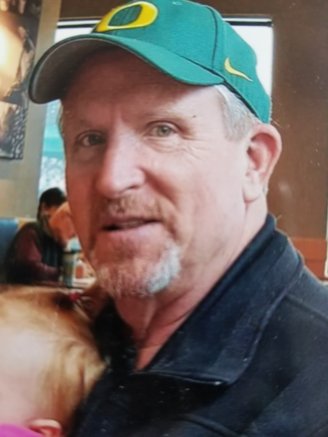
Elwood Ball was born in Eureka on August 24, 1950, and went to be
with the Lord on November 5, 2020 in McKinleyville. Dave was the son
of Stanley Gordon Ball and Colleen Rosemary Staff. Dave was full of
life and those he touched will remember his quick wit and sense of
humor, his love of animals and his generosity and giving nature to
others.
Dave
attended Franklin Elementary School, Eureka Junior High School, and
then to Eureka High School where he graduated in 1968. As a youth,
Dave played various sports with many good friends. He participated in
track and was a member of the successful 1968 football team at Eureka
High School. Sports were a passion, but his family and friendships
were most important.
A
good part of Dave’s youth was spent at Richardson’s Grove and
French’s Camp in Southern Humboldt. These were family vacations but
friends were always in attendance, as well. Swimming, hiking, nightly
barn dances, and just exploring while getting in to mischief with
friends was a big part of the fun. These friendships grew over the
years and became lifelong friendships. Duck hunting through junior
high school and high school was a favorite pastime. Many of these
friends became owners of Volkswagen Bugs and it was a sight to see a
bunch of different colored “Bugs” at many of their gatherings
such as the first Friday of every month card games. It would be
nothing for these friends to load up and take off for Lake Tahoe on a
Friday afternoon, arrive late Friday night, play all weekend, and
then leave late Sunday to get back home for school or work the next
week. If not Tahoe, then to the Bay Area to take in a Giants game on
Saturday and a doubleheader on Sunday. Enjoying the games and other
activities the Bay Area had to offer often led to a nap during the
second game of the doubleheader before driving home after the game to
again prepare for the following week.
In
the late 1960s, Dave’s parents purchased an acre of property in
Willow Creek, built a home, and eventually added a nice swimming
pool. Dave with his family and friends spent a lot of time around the
pool. Besides pool games and barbecues, Dave and his friends broke in
the Willow Creek Golf Course. Great times were had in Willow Creek.
After
high school, Dave went to College of the Redwoods and then on to
Humboldt State University. While attending HSU, four of his friends
lived in a house in Sunny Brae while attending the university. They
attended classes but also had a good time in Sunny Brae. An
illustration of this good time was through a picture that Dave shared
with others that showed the roommates posing behind empty cases of
beer bottles on the front porch. The bonds that Dave made with these
friends lasted for the entirety of his life. Whether it be through
trips together, playing softball for Dale Edge Construction, or
getting together for a nice dinner, Dave’s friendships were
important for him.
After
graduating from Humboldt State, Dave spent time in Oregon where he
became an avid “Ducks” fan. 49ers, Giants, Warriors, and now the
Ducks were sports team he followed and pulled for. He also loved the
horse races, and this was another friend interaction he was fond of.
Of course, it was always better when he won, but regardless, he
enjoyed the races in Ferndale, betting on the horses, laughing with
his friends, and going to dinner afterward at the Ivanhoe.
Throughout
his life, Dave had pets. Dogs and cats were important to him. He
loved his animals and cared for them as if they were his children. In
fact, they were his children. He had a dog named Peeze that was
special for him. It was a short-legged dog that Dave would refer to
as a miniature lab. He would get a chuckle when those who he told
that to said, “Really?” Family pictures show many instances where
Dave is with his animals and many more where he is napping and one of
his dogs or cats are snuggled up to him napping as well. They loved
him as much as he loved them.
Dave
was an avid photographer. He took beautiful pictures of landscapes.
Ocean beaches, the redwood forests, and mountain scenery’s and
lakes, were a few of the landscapes he captured. He loved these areas
and taking photos of them. He ended up giving away more of these
beautiful pictures than he sold because he wanted people to have
them. A testament to his good heart.
After
returning from Oregon, Dave went back to HSU and received his
Physical Therapy Certification and he began a career that was near
and dear to him. He worked for numerous Physical Therapy Clinics in
the Northern Humboldt area and later in Anderson, Calif. It was a
passion. He loved being able to help others with their health. He was
perfect in this role. He had the demeanor to talk with his clients
and gain their trust — a combination of his humor and warm
personality. His patients knew that he cared for them and that they
were in good hands. He stated many times that his time as the
Athletic Trainer at McKinleyville High School were his best times. He
generated many friendships with staff at the school and spent time
with them at athletic events and other school activities. Even though
he was a part time trainer on loan from one of the clinics, Dave was
part of the team at MHS. He put in more than double or triple the
amount of time that he was being paid for because he cared about what
he was doing and wanted to do the best that he could. He was the
trainer, but also was a coach at times, a van driver, a counselor,
and basically whatever needed to be done. He was a Panther.
But
most important were the student-athletes. Dave helped so many
student-athletes with their injuries and life issues. He forged
friendships, as he always has, that continue to this day. He wanted
the best for these young men and women and worked hard for their
benefit. He often asked those in the know how individual athletes
were doing in their lives. The feelings were mutual. Many of these
former student-athletes are forever indebted to Dave for his care for
them. One athlete stated, “I don’t even have words to begin to
explain the gratefulness I feel in my heart for you. You made one of
the worst times of my life something I look at fondly because of all
the things you taught me…” Mentoring our youth is an important
responsibility. Dave took it seriously and helped make many MHS
Students successful adults. They appreciate him for that.
During
his time at McKinleyville High School, other good things were
happening for Dave. He met his future wife, Kathy, and they were
married on June 23, 2002. They shared many of the traditions of
Dave’s youth. They were married at Richardson’s Grove. They
bought a time share in Tahoe where they spent a lot of time having
fun in the sun. He especially liked being on the Lake in Tahoe and
other lakes on his Sea-doo. Kathy and Dave traveled to many Giants’ games and enjoyed many of the opportunities found in the San
Francisco Bay Area. Traveling in general were favorite times for
Kathy and Dave. They spent a lot of time together exploring places
they had not been before. They moved to Shingletown for a few years
where they enjoyed weather that was different than what they were
accustomed to in Humboldt County. Many new friendships were forged
and memories made in the Redding area.
Dave
and Kathy just enjoyed spending time with each other, with family,
and with friends. One of their favorite destinations was the Ivanhoe
Hotel and Restaurant in Ferndale. Family celebrations, birthdays, or
just a night out with good friends was the norm. Even when they moved
to Shingletown, a trip to the Ivanhoe during a visit to the coast was
a must. They often said that the Ivanhoe was the best restaurant in
Northern California.
Dave
and Kathy were a perfect match. They were ideal soul mates for their
travels together, but also were a great support for one another
during times of difficulty. When their respective families faced
adversity, the other was a great support to lean on. When either one
of them had their own health issues, the other was a rock. Their love
and support were a bond that was a strength for them. Dave served as
a supportive son-in-law for Ethel and supported Kathy’s children
Nicole and Shana. As seemed to be a theme in his life, he had an
affinity for youth. Shana’s children were his grandchildren. When
they were mentioned, a smile always crossed his face. Dave was proud
of his tee-shirt that said, “My favorite people call me Grandpa.”
His family and friends will dearly miss Dave Ball.
Dave
is survived by his wife Kathy, his step-daughters Nicole and Shana,
her husband Josh, and their children Shyanne and Jacob, Dave’s
grandchildren. He is also survived by his brother Dan Ball and his
wife Moselle, their children Stacey Elliott and her husband Mike, and
Darin Ball and his wife Angelina and their sons Jordan and Ethan.
Dave
was preceded in death by his parents Stanley and Colleen Ball and his
mother-in-law, Ethel Dygert.
Kathy
and her family would like to thank Hospice of Humboldt and Timber
Ridge in McKinleyville for their care of Dave. He felt comfortable
with their assistance.
A Celebration
of Life will be held at a later date when it is appropriate to do so.
###
The obituary above was submitted on behalf of David Ball’s loved ones. The Lost Coast Outpost runs obituaries of Humboldt County residents at no charge. See guidelines here.
Raldon
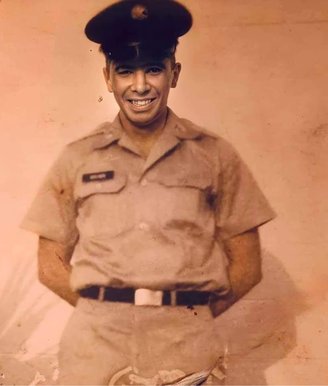
Fredrick Brown Sr. (Beetle) was born June 23, 1947 in Hoopa to the
late Frederick and Dorothy Brown. Beetle passed way November 10, 2020
at the age of 73. He was a member of the Hoopa Valley Tribe, where he
lived most of his life until he moved to Central Point, Oregon to be
with his wife.
Throughout
his life Beetle enjoyed hunting, fishing, woodcutting, playing co-ed
softball, going to hydroplane boat races, doing puzzles and watching
sports, especially football, with his friends and family. He was an
avid San Francisco 49er’s fan.
He
worked as a millworker for many years, and also at the Tismil Gas
Station in Hoopa.
Beetle
was also a proud member of the United States Army. During his term he
served in the Vietnam War.
Beetle
was truly an all-around guy who was loved by all, as he was a
brother, father, grandfather, uncle and a friend.
Beetle
is survived by his siblings, Sylvester (Flabs) Brown, Oscar (O.B.)
and Lori Brown Sr.,Katherine (Tuni) and Gaylord (Gunga) Hescock, Doug
Brown, Deborah (Debbie) and Matt Moore, and Frederick (Freddy) Brown;
his loving wifes, Diane Doty-Brown, Robin Martin-Brown; his children,
Raldon (Ralph) and (Mia) Brown, Leanna and (Larry) Martin, Ladonna
Brown, Lynnette and (Terry) Wilkie, Arlen, Christie, Kimberly, Ashley
& Bruce Brown; stepchildren Donald and Mike Williams, & Eric
Doty Sr. Beetle; and his loving grandchildren Travis Brown, Trevor
and (Jessica) Brown, Kayla Brown, Kyle and (Callista ) Brown,
Savannah an Arlen Brown, Nevaeh Abbott-Brown, James Jr., Joshua,
Jacob, Jimmy, Jordan, & Jasmine Marshall, Kendra, Kaylee, Dustin
Jr., & Dakota Stotler; step-grandchildren Chad, Christopher, Eric
Jr. and TaShanna Doty. However there are a few other grandchildren
names unknown , and one great-granddaughter Erica Brown. His nieces
and nephews include: Michael, Houston, Oscar, and Naomi Brown, Chris
and (Pamela) Heath, Lucy Heath, Bernardine Jackson, Ian Moore, Darcy
Brown, and numerous great-nieces and nephews.
He
is preceded in death by his parents Fredrick and Dorothy Brown, his
first wife Betty Linder, siblings Wally and Arlen Brown and nephews
Joseph Jackson and Waylon Brown.
Beetle’s
viewing will be held at Paul’s Chapel: 1070 H ST. Arcata,
California 95521 from 3 p.m. to 5 p.m. on Friday, November 13,2020
Graveside
services: 11 a.m. on Saturday, November 14, 2020 at the Brown’s Cemetery
Honorary pallbearers include:
Denny
Kane, George Moon, Leonard Masten, Thomas Masten Sr., Ed Masten Sr.
John Marshall, Timothy Casey, Timothy Bussell Sr., Robbie Moon, and
Bob Borden.
Pallbearers:
Travis,
Trevor, & Kyle Brown, Michael, Houston, & Oscar Brown, Chris
Heath, Ian Moore, Bill & Dan McCovey, William (Pecos) Carpenter,
Troy (Horse) Branham.
###
The obituary above was submitted on behalf of Beetle Brown’s loved ones. The Lost Coast Outpost runs obituaries of Humboldt County residents at no charge. See guidelines here.
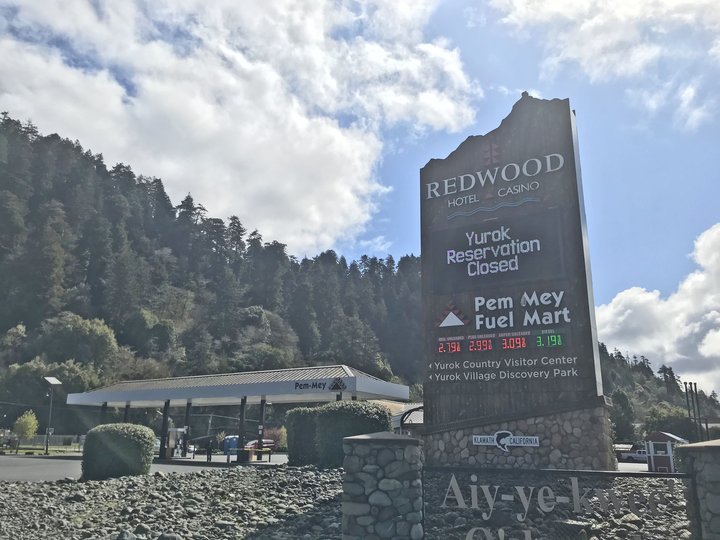
The Yurok Office of Emergency Services and Humboldt County health representatives are currently collaborating on the implementation of a comprehensive contact tracing investigation, following the confirmation of the first two COVID-19 cases on the Yurok Reservation.
The first case involved a nonresident who is currently receiving treatment at a local hospital. The second individual is experiencing mild symptoms and will quarantine at home for 14 days. To reduce the potential for additional COVID-19 transmissions, the joint contact tracing team is reaching out to a small number of people who have been in close proximity to the two individuals during the last two weeks. They will also be required to quarantine for two weeks. Yurok OES has offered resources to the individuals in isolation. There does not appear to be a link between the cases. In order to safeguard the confidentially of personal health records, the Yurok Tribe will not disclose any further details about either case.
“I would like to thank Humboldt County for assisting us with the contract-tracing investigation. We are working hard to restrict the spread of the virus and keep the community safe,” said Serene Hayden, the Yurok Tribe’s Incident Commander. “It is critically important for everyone to remain consistent in practicing all personal safety measures. I want to remind everyone that COVID-19 testing is available multiple times per week on both sides of the reservation.”
The COVID-19 virus has been circulating in the counties surrounding the reservation since March. The slow spread of the illness on the reservation is a testament to the Tribe’s early activation of the Incident Command Team and the enactment of several safety orders, which are intended to keep the community safe. Yurok Reservation residents’ devotion to practicing all of the recommended personal safety strategies has played an equally valuable role in this effort and is critical to its continued success.
Residents can find up-to-date information about the Tribe’s response to this crisis by visiting Yurokoes.org. Community members in need of assistance are encouraged to call the COVID-19 hotline at 1-888-225-8952.
The Yurok Office of Emergency Services strongly encourages residents to follow all personal safety recommendations:
Maintain a minimum of 6-feet of personal space from individuals outside of the household
Always wear a face covering outside of the home (Wash reusable mask frequently, only use single-use masks once)
Do not attend gatherings large or small, including visiting extended family and friends
Avoid all contact with anyone exhibiting COVID-19 symptoms
Disinfect common touch points in the home
Practice cough and sneeze etiquette (cover your sneezes and coughs with your arm. Wash hands immediately after cough or sneeze for additional protection)
Perform frequent handwashing – Wash hands every two hours for 20-30 seconds with water and soap)
If you feel ill, please self-isolate and contact your medical provider
Reminder: If you feel slightly unwell and have one or more of the common symptoms of COVID-19, it is advised to stay home from work
On November 13th, 2020 special agents
with the Humboldt County Drug Task Force (HCDTF), with the assistance
of the Arcata Police Department, Humboldt County Sheriff’s
Department, and Humboldt County District Attorney’s Office served a
search warrant on a residence in the 1900 block of Elm Ave. in
Mckinleyville. The search warrant was written for suspected drug
sales and firearms violations by the residents. Upon arrival agents
detained five people inside the residence without incident.
A search of the residence was conducted.
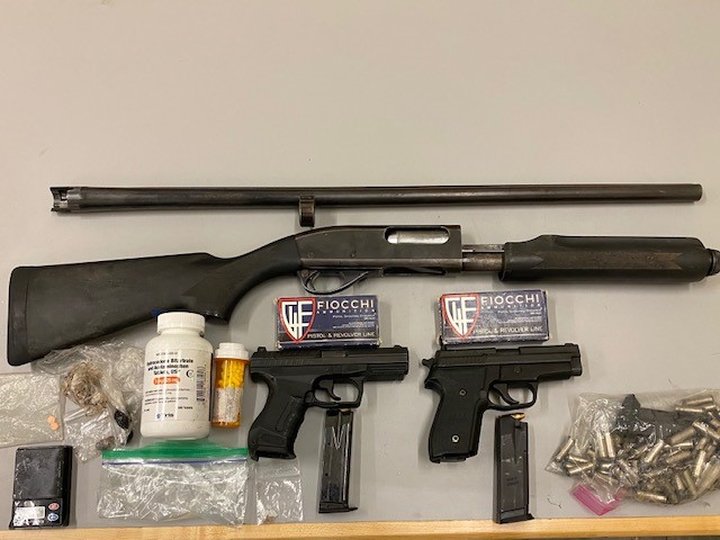
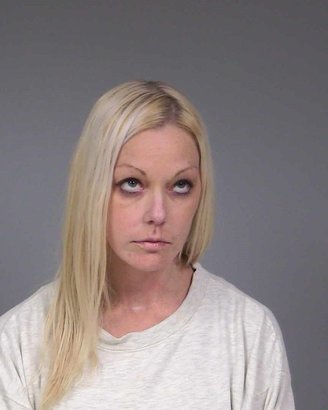
In the master bedroom, belonging to Brittany
Bryan (35 years old), agents
located a loaded Smith & Wesson 9mm handgun with the serial
number removed. Also located in the room was approx. 10 grams of
methamphetamine, 500 Hydrocodone pills, 100 Tramadol Hydrochloride
pills, and a pay/owe sheet. Under a couch cushion in the living room
agents located a loaded Sig Sauer 9mm handgun. Agents also located a
Remington 870 12 gauge shotgun and a digital scale in the trunk of
Bryan’s vehicle in the driveway. Bryan claimed ownership of all
three guns. Bryan was transported to the Humboldt County Jail where
she was booked for the following charges:
H&S 113701.1 Possession of
controlled substance while armed
H&S 11351 Possession for sale of
controlled substances
PC 23900 Possession of firearm with
serial number removed
H&S 11377 Possession of
methamphetamine
Agents
had to force entry into a locked bedroom for a resident that was not
home. Agents located a safe in the bedroom and were able to gain
access into the safe. Agents located ammunition and approx. 6 grams
of heroin inside the safe as well as two digital scales. The resident
of this room, Carter Daniels
(39 years old) is a convicted felon who is not allowed to possess
ammunition. Daniels was not located therefore agents will forward a
case with a warrant declaration to the Humboldt County District
Attorney requesting the following charges be filed against Daniels:
PC 30305(a) Felon in possession of
ammunition
H&S 11350 Possession of heroin
Anyone
with information related to this investigation or other narcotics
related crimes are encouraged to call the Humboldt County Drug Task
Force at 707-267-9976.
The Humboldt County Office of Elections just released its second post-election report, and here’s the big news:
SUPERVISOR, DISTRICT TWO
ESTELLE FENNELL
4,991
49.83%
MICHELLE BUSHNELL
5,025
50.17%
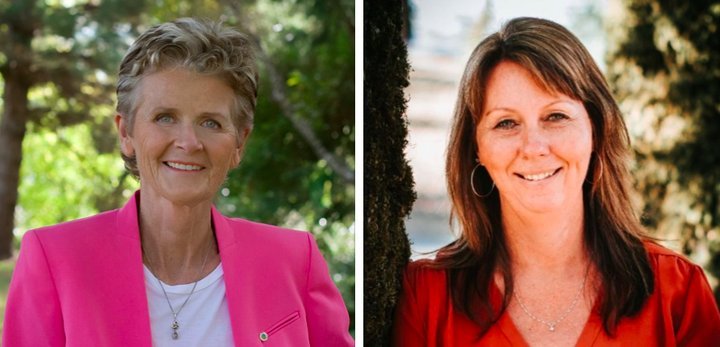
That’s right: Challenger Michelle Bushnell has taken a very narrow 34-vote lead over incumbent Second District Supervisor Estelle Fennell.
There are still about 12,500 ballots yet to be counted countywide, according to Humboldt County Registrar of Voters Kelly Sanders, so this thing could conceivably flip back the other way before all is said and done. However, the trend is headed in the opposite direction.
On Election Night, Bushnell trailed Fennell by 239 votes, out of a total of 7,171 ballots cast in the Second District race. Two days later, in the first post-election report, another 998 votes had been tallied and Fennell’s lead had shrunk to less than 200 votes:
SUPERVISOR, DISTRICT TWO
ESTELLE FENNELL
4,183
51.21%
MICHELLE BUSHNELL
3,986
48.79%
With today’s report we got what the TV pundits call “a big dump” of new votes — 1,847 in the Second District alone — and Bushnell took about 56 percent of them. Unless the outstanding votes break back toward Fennell, then Humboldt County will have a new supervisor in the Second District.
###
Elsewhere, what do we see? Up in Arcata, where three seats are up for grabs on the City Council, the top three spots remain the same, with incumbent councilmembers Michael Winkler and Paul Pitino on the outside looking in. In a wide field of candidates, Stacy Atkins-Salazar remains the top vote-getter with about 16.8 percent of the total. She’s followed by fellow newcomers Emily Grace Goldstein (14.6 percent) and Sarah Schaefer (13.96 percent).
Oh, and Measure F, a special tax to fund the Arcata Fire Protection District, is still passing with flying colors, with more than 75 percent approval on a measure that required just a simple majority a two-thirds vote to pass.
###
Likewise in Eureka, the frontrunners remain the frontrunners. Scott Bauer still has more than double the vote tally of his closest competitor in Ward 4, so I think it’s safe to call the race for him. And in Ward 2, Kati Moulton has a quite comfortable 16.8 percent lead over her nearest competitor, Dot Jager-Wentworth. Let’s go ahead and call that one, too.
And Measure H, which would replace the city’s existing half-percent sales tax with a 1.25 percent sales tax within city limits, is going to pass. It’s leading, 66 percent to 34 percent.
###
What else is notable? Longtime Fortuna City Councilmember and far-right conspiracy theory enthusiast Dean Glaser is headed for defeat, with incumbent Tami Trent and former councilmember/challenger Mike Losey way out in front for the two available seats.
On Saturday evening, Fortuna Union High School District Superintendent Glen Senestraro emailed the following press release:
The health and safety of our students and staff are our top priority.
Fortuna High School is reporting that another student has tested positive for COVID-19. We have had a total of two
(2) students test positive this week. These COVID transmissions did not occur at the high school.
Following our mitigation plan, the three classes affected by the two positive cases have been moved to distance
learning through the quarantine period. The students and teachers in the affected classes were contacted and are in
quarantine. The school is collaborating with Humboldt County Public Health.
The principal has notified the parents of the students in the classes affected by these cases.
We would like to thank Humboldt County Public Health for their swift response and guidance to assure the safety and
well-being of our community.
Glen Senestraro
Superintendent
###
Original post:
Fortuna High School
###
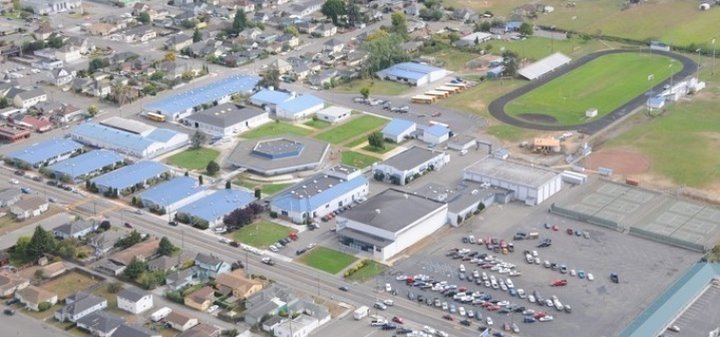
An untold number of students and staff members at Fortuna High School have been told to quarantine and some classes switched to distance learning today after a student tested positive for COVID-19.
Parents of Fortuna High School students learned of the infection Thursday evening from school administrators. Many received a recorded phone message from Principal Clinton Duey, who said administrators were informed of the positive test around 6 p.m. by the Public Health Branch of the Humboldt County Department of Health and Human Services.
Phone messages left for Fortuna Union High School District Superintendent Glen Senestraro had not been returned by the time this post was published. Nor had an email to the district office.
In the voicemail left for parents, Duey says the health and safety of students and staff are the top priority at Fortuna High. The message, which you can listen to below, goes on to say,
This call is to inform you that a student at Fortuna High tested positive for COVID-19 today. … If your child was exposed, you would have already been contacted by myself or Mr. [Dustin] Rossman, dean of students. Some class periods, staff and students have been quarantined and put on distance learning.
While most schools in the county have opted for distance learning or a hybrid between remote and in-person instruction, the public schools in Fortuna and nearby Ferndale have chosen to hold classes entirely on campus, despite objections from some parents, staff members and teachers.
According to county data, people between the ages of 10 and 19 represent nearly 12 percent of the positive COVID-19 cases in Humboldt County to date.