
TODAY in COURT: Bear River Triple-Murderer’s Sentencing Delayed; Double-Murder Trial Over SoHum Couple’s 2018 Deaths Scheduled to Start Next Week
Rhonda Parker / Friday, Jan. 14, 2022 @ 5:29 p.m. / Courts
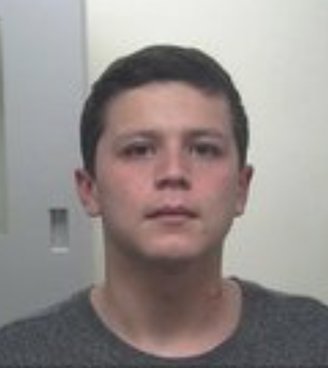
Johnson
Sentencing for triple-murderer Mauricio Johnson has been delayed by nearly four weeks because the Probation Department failed to provide a pre-sentence report in time.
Today Judge Timothy Canning set sentencing for Feb. 16 after defense attorney Andrea Sullivan said she has received no report from probation. The report is supposed to be available at least five days before sentencing. The sentencing, which could take a full day, had been set for Jan. 21.
Deputy District Attorney Roger Rees, the prosecutor in the case, said it was his understanding the report was done but “is waiting for final approval by a (Probation Department) supervisor.”
Johnson, 19, shot three people to death in February 2021 at Bear River Rancheria. He was arrested the day after the killings while driving through Utah.
Johnson has pleaded guilty to three counts of murder.
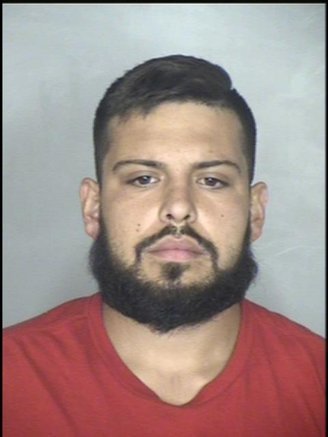
Rodriguez
On Feb. 16 Sullivan may be in trial in the case of double-murder suspect Ulisses Rodriguez. Canning assured her that the Johnson sentencing will take precedence, even if the Rodriguez trial has to go dark for a day.
As for Rodriguez, his jury trial is scheduled to begin Tuesday. He is charged with the 2018 murders of a Southern Humboldt couple who he suspected of stealing marijuana from his grow site.
Today Sullivan and Deputy District Attorney Luke Bernthal were scheduled to argue a defense motion that the jury be allowed to hear information — such as criminal history — about witnesses expected to testify for the prosecution. That was put off because the trial judge, Gregory Elvine-Kreis, has been out all week. Judge Kaleb Cockrum, who presided over the hearing today, said he hasn’t been told why Elvine-Kreis is out.
As far as Cockrum knew, Elvine-Kreis will be back on the job next week.
If Rodriguez does go to trial as scheduled, he is facing much higher stakes. Bernthal recently filed a special-circumstance allegation of multiple victims, meaning if convicted Rodriguez could be sentenced to life without parole.
Outside of court Bernthal said he expects to call about 30 witnesses.
It’s alleged Rodriguez shot the couple, then placed the bodies in a vehicle and set it on fire. He was arrested a few days later at his home in Chico.
BOOKED
Today: 12 felonies, 16 misdemeanors, 0 infractions
JUDGED
Humboldt County Superior Court Calendar: Friday, Sept. 4
CHP REPORTS
Central Ave / Hiller Rd (HM office): Trfc Collision-Unkn Inj
ELSEWHERE
RHBB: CDPH Issues Immunization Recommendations for 2026-27 Respiratory Virus Season
RHBB: Redway Transfer Station to Close an Extra Day for Construction
RHBB: Dows Prairie Road to Close for Two Months for Culvert Repair
Two Candidates for District Attorney: Deputy DA Stacey Eads and Public Defender Adrian Kamada File Paperwork
Ryan Burns / Friday, Jan. 14, 2022 @ 5:05 p.m. / Elections
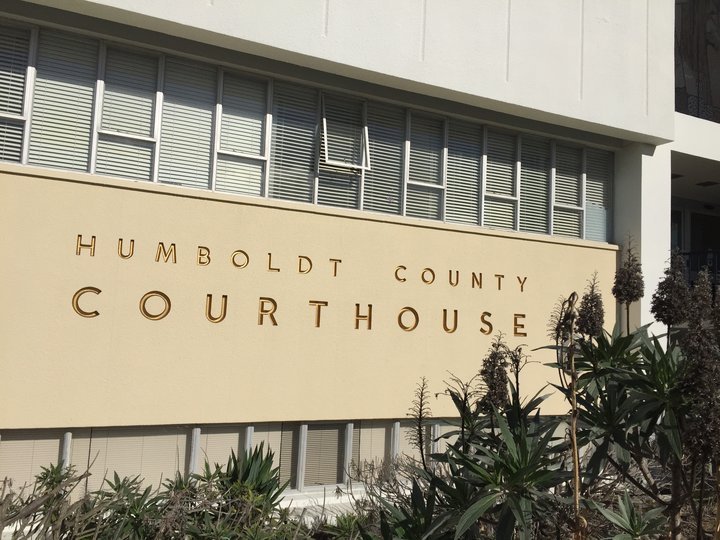
File photo.
###
With the news that incumbent Maggie Fleming will not seek a third term in office, the race to become Humboldt County’s next district attorney appears wide open.
Earlier this week, two contenders threw their hats into the ring, filing candidate intention statements with the Humboldt County Elections Office: Stacey Eads, a longtime deputy district attorney, and Adrian Kamada, a former deputy DA now working in the Humboldt County Public Defender’s Office.
Eads has worked as a Humboldt County deputy DA for two decades, having been hired by former DA Terry Farmer. She’s been the senior deputy DA since 2019, according to data compiled by Transparent California.
Eads litigated in such high-profile cases as the Gary Lee Bullock trial for the brutal murder of St. Bernard’s Catholic Church Pastor Eric Freed and the Marci Kitchen case, in which the Fortuna mom eventually pleaded guilty to vehicular manslaughter in the deaths of two 14-year-old girls, including her own daughter.
In a recent interview on local radio station KINS, Eads said Fleming was the first DA to really take her under her wing and added, “[I]n her decision to not run in the next election cycle, Maggie asked of me whether I would consider running for district attorney, and I’ve made the well-thought-out decision that yes, I will.”
Kamada worked as a deputy DA here in Humboldt from 2014 through 2019, according to Transparent California, and is now a deputy public defender, per the county’s staff directory.
He was selected as the 2017 Wildlife Prosecutor of the Year by the California Fish and Game Commission and the California Department of Fish and Wildlife. A press release from the latter agency lists some of his accomplishments, including the formation, in 2015, of the Humboldt County Environmental Crimes Task Force.
Phone messages left for both Eads and Kamada Friday afternoon were not immediately returned, but you can expect a lot more coverage of this race as election season draws closer.
The statewide primary election is scheduled for June 7.
(VIDEO) Massive Herd of Roosevelt Elk Crosses Snowy Ridge, Then Changes Its Collective Mind, Heads Back
Ryan Burns / Friday, Jan. 14, 2022 @ 2:28 p.m. / Wildlife
###
Local resident Bill Clem and his family were on a drive across the Bald Hills of northern Humboldt County late last month when they came across a remarkable sight: hundreds of Roosevelt elk in a herd migrating across a snow-dappled ridge.
Clem stopped the car and began filming as dozens (hundreds?) of the majestic mammals flowed across hillside toward a lower elevation. In the video, he and his family can ben heard marveling at the spectacle.
“There’s more coming.”
“They’re still comin’.”
”Still more comin’!”
“There’s one more!”
“Wow, thats … how many is that?”
Partway through the footage the front of the pack comes to a halt, and then the leading elk reverse course, heading back up the hill.
“They smelled somethin’,” Clem says in the video. “Now they’re turning around and going back.”
It’s unclear from the footage what the elk saw, heard or smelled to convince them to change course. Clem, who allowed the Outpost to reproduce his video, said he was just grateful to have seen it.
“It was a beautiful sight,” he said. “We were lucky to be in right spot at the right time.”
Redway Man Arrested on Numerous Felony Charges After Allegedly Brandishing Firearm on Highway 101
LoCO Staff / Friday, Jan. 14, 2022 @ 9:12 a.m. / Crime
From the California Highway Patrol:
On 1/13/22 at 0913 hours, Garberville CHP units received a call from Humboldt Communications Center regarding a 417 PC (brandishing a firearm) on US-101 near Dean Creek Road. The reporting party was able to provide a description of the suspect, suspect vehicle, direction of travel, and described the weapon brandished as a black pistol.
Garberville units responded to the area and located the suspect and vehicle matching the description (black BMW 7 series) from the broadcasted information.
The suspect was located in front of his residence at the Dean Creek RV Park, standing next to the BMW that was reported earlier by the victim. The suspect was identified as a Redway resident, Kenneth Swafford.
Upon contacting Swafford, a pistol was observed in plain view in the driver’s compartment of the BMW. Additional firearms were observed in plain view through the open door of the residence and a stolen enclosed cargo trailer was located parked, in front of the residence. Swafford was detained and a search warrant was obtained for the BMW and Swafford’s residence.
Upon service of the search warrant, numerous illegal items were located. It was determined Swafford was a felon in possession of firearms (1 pistol, 2 shotguns), ammunition, controlled substance, drug paraphernalia, billy clubs, bear mace, and a high capacity magazine. Additionally, the firearm located in the BMW was determined to be a non-serialized pistol, known as a “ghost” gun.
The stolen cargo trailer was recovered and Swafford was booked at the Humboldt County Jail for numerous felony charges related to this investigation.
Here’s What’s Changed as California’s Revised COVID Workplace Rules Go Into Effect
Grace Gedye / Friday, Jan. 14, 2022 @ 7 a.m. / Sacramento
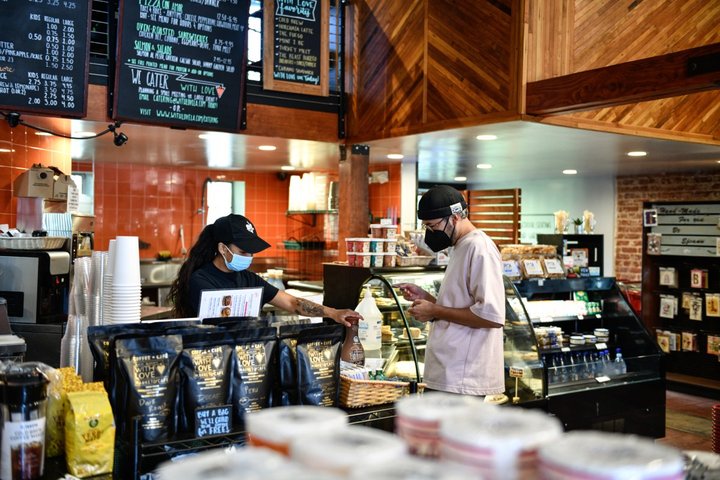
Natalie Linares, a barista at With Love Market & Cafe, helps Abraham Rivas-Valle with a transaction in Los Angeles, on August 4, 2021. Photo by Pablo Unzueta for CalMatters
###
Today, as COVID-19 case rates in California have jumped to their highest levels yet — more than six times the peak of the delta variant wave — updated workplace rules are kicking in to better help protect workers vaccinated against COVID-19.
The revised rules come from the California Division of Safety and Health — also known as Cal/OSHA — which regulates health and safety in California workplaces.
Changes include:
Testing: If there’s an outbreak at work, employers need to make FDA-approved COVID tests available to exposed employees at no cost, during paid time — and now that also goes for vaccinated, asymptomatic workers who were exposed.
Tests can no longer be self-administered and self-read. In other words, workers can’t take a test at home by themselves. Tests that are processed by a lab, or observed by a medical professional during a telehealth appointment, or administered and observed by medical professionals or an employer are still okay.
Who gets sent home after exposure: Previously, if a fully vaccinated person had close contact with a COVID-positive person, but didn’t develop symptoms, they didn’t need to be sent home from work. Now, vaccinated asymptomatic people need to be sent home from work unless they wear a mask and maintain 6 feet of distance from others for two weeks.
Updating what counts as a mask: If workers choose to wear a fabric mask, rather than a surgical or medical one, the new rules clarify that it needs to be sufficiently thick and tightly woven to not let light pass through it when held up to a light source.
The rules also require employers to ensure workers wear masks as required by California’s public health department. On Dec. 15, a new statewide mask mandate that includes workplaces went into effect, and it’s slated to remain in place until Feb. 15. Workers need to wear masks indoors, but if a worker is alone in a room with a closed door, or if the workplace is a single person operation, masks aren’t needed.
Now, vaccinated asymptomatic people need to be sent home from work unless they wear a mask and maintain 6 feet of distance from others for two weeks.
Right now, employers aren’t required to offer workers additional sick leave for COVID. In March, Gov. Gavin Newsom signed a law requiring employers with 25 or more workers to offer up to 80 hours of supplemental paid leave for COVID. But that law expired in September, leaving some workers without the ability to take days off to recover from the virus, or to quarantine if they were exposed. Federal guidelines recommend that anyone who tests positive for the virus quarantine for five days. But without any additional COVID sick leave, workers in California are legally entitled to just three days of paid sick leave annually.
Some legislators are pushing to bring back supplemental COVID sick leave in 2022, and the governor said working on sick leave was a “top priority” for him when he rolled out his budget proposal in early January.
Business pushes back on California COVID rules
Business and industry advocates protested the new rules at a public meeting in mid-December. Melissa Patack, vice president of state government affairs for the Motion Picture Association, said the new rules requiring asymptomatic, vaccinated workers who were exposed to maintain 6 feet of distance would be challenging for her industry.
“Those who work closely with actors such as those who style hair, those who apply makeup…cannot maintain six feet of distance from the actor when doing their work,” she said.
Robert Moutrie, a policy advocate with the California Chamber of Commerce, pointed out that the changes mean employers are on the hook for providing even more tests to employees, and tests are in short supply.
What comes next
During that December meeting, business advocates critiqued the system of updating temporary rules every few months, saying it was hard for employers to keep up.
The new rules are set to expire in mid-April. Originally, regulators were going to be forced to come up with a longer term solution at that point, but just hours after the new temporary rules were approved in December, Gov. Newsom issued an executive order allowing regulators to do one more temporary revision and extension of the rules.
How, exactly, are employers supposed to ensure workers’ fabric masks meet the new standard of not letting light pass through? And what are companies supposed to do if they can’t acquire enough COVID tests? As the revised rules go into effect, figuring out how to follow them may be no simple task.
###
CALmatters.org is a nonprofit, nonpartisan media venture explaining California policies and politics.
Free Tests? As COVID Surges, Rapid Results Cost Up to $300
Ana B. Ibarra / Friday, Jan. 14, 2022 @ 7 a.m. / Sacramento
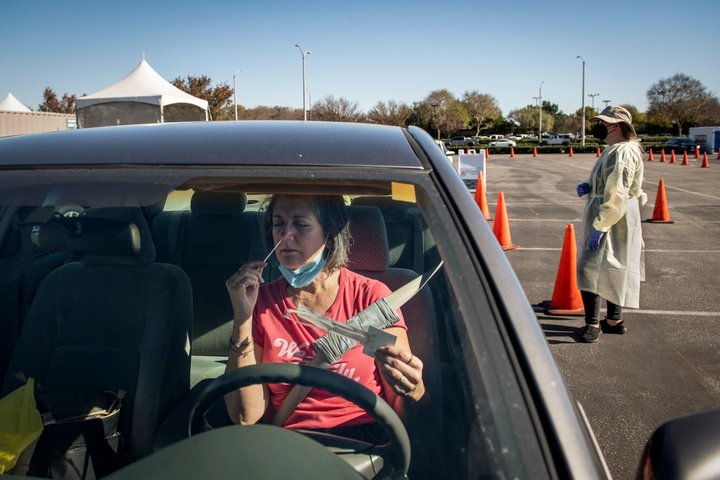
Diane Ahern swabs herself for COVID-19 at a testing site at the Long Beach Airport in Long Beach on Jan. 11, 2022. “I need to get tested every three days to be able to visit my parents at their retirement home,” Ahern said. “I’m nervous.” Photo by Pablo Unzueta for CalMatters.
###
When Rebecca Santucci of Lakewood learned that her sister, Stacy, may have been exposed to COVID-19, she set out to look for a rapid test. She needed to know quickly whether their 88-year-old father was at risk.
Pharmacies had been wiped out of home test kits, and testing clinics were booked solid for at least two weeks. On Amazon, she found a set of two at-home tests for $38, but they wouldn’t arrive until next month. And anything that required waiting hours in line wouldn’t work for her sister, who has Down syndrome and anxiety.
Eventually she found a slot for a rapid antigen test at a private drive-thru clinic on the city of Lakewood’s website. But it was five days after Stacy learned of her potential exposure.
The price tag for the test: $129.
“We ended up paying the money but it killed me to do it,” Rebecca said. Stacy tested negative, so at least they finally got some peace of mind.
With the explosion of the highly transmissible omicron variant, more Californians find themselves seeking tests wherever they can find them. State and local testing sites offer free COVID-19 tests but they are swamped, forcing people to seek private pop-up clinics.
Quick results often come with hefty upfront costs: Some clinics charge nearly $300 for a rapid PCR test.
Although state and federal regulations require COVID tests to be free or covered by health insurance, people often have to pay upfront, and the amount is unaffordable for many Californians.
Those who can’t afford to pay will often have to wait hours in line at local and state free testing sites, and then sometimes wait days for the lab results.
“There is a requirement that testing be free, but there is no requirement of how fast those test results need to be returned,” said Shira Shafir, a UCLA professor of epidemiology. “With this omicron surge, some people are again waiting four to five days for those lab results and at that point those results are essentially useless.”
“With rapid tests, what people may be paying for is the guarantee of quick results.”
— Shira Shafir, UCLA professor of epidemiology
Adding to the demand for quick results is that certain places demand proof of testing within a time frame of 24 to 72 hours. People need them to visit nursing and senior homes, return to daycare programs or board flights to Hawaii or overseas.
Pop-up sites at California’s international airports charge upfront. At San Francisco International Airport, a rapid test is $275. At Los Angeles International Airport, a rapid PCR test with results in one hour costs $199. According to one LAX provider, Clarity Mobile Venture, debit or credit card payments are required, although a receipt is provided for insurance reimbursement. At San Diego International Airport, the cost is $135 to $165, and at Long Beach Airport, a test with 1.5-hour results costs $250.
At the Lakewood clinic where Santucci went, costs range from $129 for a rapid antigen test with one-hour results to $299 for a PCR test with two-hour results. The clinic also advertises a free standard PCR test with results in two or more days.
“With rapid tests, what people may be paying for is the guarantee of quick results,” said Shafir. “The test site is not always pitching it that way.”
PCR and antigen tests are both used to diagnose COVID-19; antigen tests can yield faster results but PCR tests are more sensitive to detecting the virus so they are considered more accurate.
Health experts say getting results quickly is vital to protecting people and avoiding long quarantines, but rapid tests have long been in short supply.
Save your receipts
Californians have an array of places where they can be tested: a hodgepodge of pharmacies, community clinics, government mass-testing sites and private pop-up sites. Many of these are free, but they are booked for weeks. Some pop-up testing sites charge upfront, creating confusion as to why, since testing is supposed to be free.
At most pharmacies and doctor offices, providers do not charge people directly. Instead, they collect insurance information so they can be paid. But some private testing clinics charge individuals, who are then responsible for seeking reimbursement from an insurer. Claims can be filed online or sent to the insurer by mail.
But it’s not always a guarantee that they’ll get their money back.
Stacy Santucci is covered by Medicare, which covers people with disabilities. Rebecca said she did not receive a receipt after her sister’s test, but she had an email confirmation from the testing provider, Covid Clinic. When Rebecca called her sister’s Medicare plan, she was advised to print the email and send it in by snail mail, but there was no assurance she’d be reimbursed because the printed email might not suffice.
Trying to get a COVID test is ridiculous. We need to get my sis with Down Syndrome tested
— Becka (@16thkid) January 7, 2022
There are no home tests unless you want to pay through the nose & they won’t arrive in time anyways
And its impossible to get an appointment for a test that won’t be expensive#Testing
Experts recommend checking receipts for extra service charges, such as a fee for expedited results.
Charging an extra fee for rapid results is deceptive, said state Sen. Richard Pan, a Democrat from Sacramento, who last year authored a bill, SB 510, that clarified rules around free testing. The law, which went into effect Jan. 1, codifies federal rules into state law, requiring insurance companies to cover testing without any cost sharing such as copays or deductibles.
Pan said his office is looking into cases of providers who are tacking on extra charges to a test — they’ll provide a procedure code for the test itself that patients can then submit to their insurer for repayment, but they won’t provide a reimbursement code for the mysterious extra charge.
“Trying to splice the bill in a way that continues to have a cost to the patient is certainly not in the spirit of the law,” Pan said.
The law also doesn’t address the issue of having to pay upfront. The challenge is that new test sites don’t usually have existing relationships with insurers, so instead they charge the individual, Pan said.
“They (testing clinics) just want to get paid, to them it doesn’t matter where that payment comes from,” Shafir said.
It’s been a pattern throughout the pandemic that those with less resources are less likely to access testing.
Upfront costs and long lines can deter people from getting tested and worsen health disparities, experts say. People without insurance don’t have the option to seek reimbursement. And testing requires free time or a flexible job, and sometimes the physical ability to stand in line or car ownership.
State is reviewing complaints
The California Department of Public Health told CalMatters in an unsigned email that it is aware of complaints regarding pop-up sites, including concerns around business practices related to pricing, but also the validity of tests and sample handling.
The health department urges residents to look for verified testing sites on its website where there are no out-of-pocket costs, regardless of their insurance situation.
In recent press conferences, Gov. Gavin Newsom has touted the more than 6,200 verified testing locations in the state. About 90% of Californians are within a 30-minute drive of a verified testing site, according to the state health department.
“While that’s impressive, we recognize it’s not good enough, nor is the fact that there are lines appearing at sites like this all across the state,” Newsom said from a testing location in Paramount on Wednesday.
In response, Newsom has tapped the National Guard to help administer testing and introduced a $2.7 billion COVID relief package that includes dollars to increase capacity, staffing and hours at testing sites, as well as expand the number of COVID-19 antigen tests being sent to local health departments, community clinics and county offices of education and schools.
#LACounty residents have options when it comes to #CovidTesting 👇🏼 pic.twitter.com/4PcYjPX4T4
— LACountyBOS (@LACountyBOS) January 13, 2022
Testing sites are likely to be in high demand for several more weeks, especially as at-home test kits are still hard to come by.
For those who can find at-home tests, a new state order will add some protections for what they pay. Newsom signed an executive order to protect people from price gouging of at-home test kits. The order prohibits the sale of test kits at a price that is more than 10% of the price the seller was charging on Dec. 1. New sellers may not charge a price greater than 50% of what they paid for the test kit.
Starting Saturday, a new federal rule will allow people who purchase at-home tests to get reimbursed from their insurer for up to eight at-home coronavirus tests per person per month. Again, the trick is finding those tests.
###
CALmatters.org is a nonprofit, nonpartisan media venture explaining California policies and politics.
OBITUARY: Canyon Hodge, 1977-2022
LoCO Staff / Friday, Jan. 14, 2022 @ 6:56 a.m. / Obits
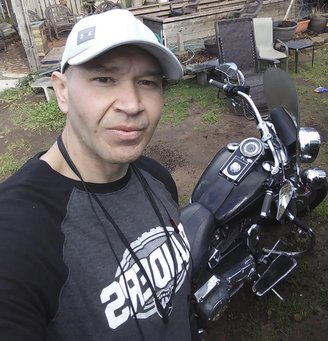
Canyon Hodge was
born on November 13, 1977 and went to be with Creator on January 3,
2022. Canyon was born and raised in Hoopa. He attended school in
Hoopa, Happy Camp and Eureka. Canyon was a very kind giving person
and was loved by all. He was there for his family when they were in
need and loved them greatly. He was a loyal friend and he will be
very missed by all those that called him a friend or family. He was
very handy and loved to work with his hands to do works of art like
drawing, building, fishing, and hunting. He was very passionate about
his guns and his lady, Halli Pole.
Canyon is survived by his mother Evonne Downs, father Robert Hodge Sr, siblings Robert Hodge Jr, Michelle Hodge, Kelly Burns, and Robert “Chucker” McCovey, grandmother Ethel Garcia, Aunt Anna(Dwayne) Myers, Uncle Tim(Marcy) Casey, nieces and nephews; Ashley Allen, Natasha Boulby, Roger McCovey, Robert Hodge Jr., Jacob Hodge and Dereck Hodge and many many cousins. But his children had a very special place in his heart. Savannah Hodge, Aviannah Triniity Hodge, and Melony Miller. They shared many great memories together and it is a huge loss for his beautiful girls.
Canyon is preceded in death by his grandparents Otto and Alice Hodge, siblings William Hodge, Pricilla Hodge and Stacy Hodge. His Uncles Clifford “Ben” Casey, John Casey and Aunt Joy Ingram-Casey.
Pallbearers are Robert Hodge Jr., Chucker McCovey, Kelly Burns, Julian Shaffer, Arthur Jones, Sam Jones, Marshall McConnell, Robert Colegrove, Ben Nick, Gorge McCovey, Rick Racer, Perry Sanderson, Keith Hostler, Philly O’Rourke, Timothy “Gooby” Perry Sr., Willie Lamebear, Andrew Myers and Josh Trimble.
Services will be held at St. Kateri Catholic Church in Hoopa on January 15, 2022 at 1 p.m. Masks and Social distancing are mandatory. Mortuary is Paul’s Chapel in Arcata.
###
The obituary above was submitted on behalf of Canyon Hodge’s loved ones. The Lost Coast Outpost runs obituaries of Humboldt County residents at no charge. See guidelines here.


