On December 21st, 2020 special agents
with the Humboldt County Drug Task Force (HCDTF) served a search
warrant on a residence in the 20700 block of Highway 36 in the Swains
Flat area of Humboldt County. This search warrant was authored for
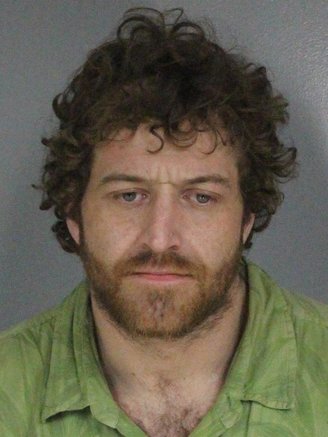
illegal weapons possession by the resident Nathan
Waldenburg (36 years old from Carlotta).
An
agent from the HCDTF made a traffic stop and detained Waldenburg as
he drove away from the residence. Waldenburg was found to have a
concealed loaded gun in an ankle holster and a usable amount of
methamphetamine in his pocket. Under the driver’s seat of the
vehicle agents found an additional container of methamphetamine.
Agents
searched the residence and located an additional 62 firearms that
consisted of illegal assault rifles, guns with silencers, and guns
with short barrels. In total 63 guns were located during the search
warrant.
In
a shop behind the house agents located a fully functional closed loop
butane honey oil (BHO) lab. Agents also located 33 pounds of
processed marijuana and over 100 pounds of marijuana shake. The
Humboldt County Sheriff’s Office Marijuana Eradication Team (MET)
responded to the residence and safely dismantled the BHO lab.
Waldenburg
was transported to the Humboldt County Jail where he was booked for
the following charges:
H&S 11370.1 Possession of
controlled substance while armed
H&S 11379.6 Manufacturing a
controlled substance
H&S 11359(a) Possession of cannabis
for sale
H&S 11377 Possession of
methamphetamine
PC 25400(a)(2) Carrying a concealed
firearm
PC 30605(a) Possession of an assault
weapon
PC 33215 Possession of a short-barreled
rifle or shotgun
PC 33410 Possession of a silencer
Anyone
with information related to this investigation or other narcotics
related crimes are encouraged to call the Humboldt County Drug Task
Force at 707-267-9976.
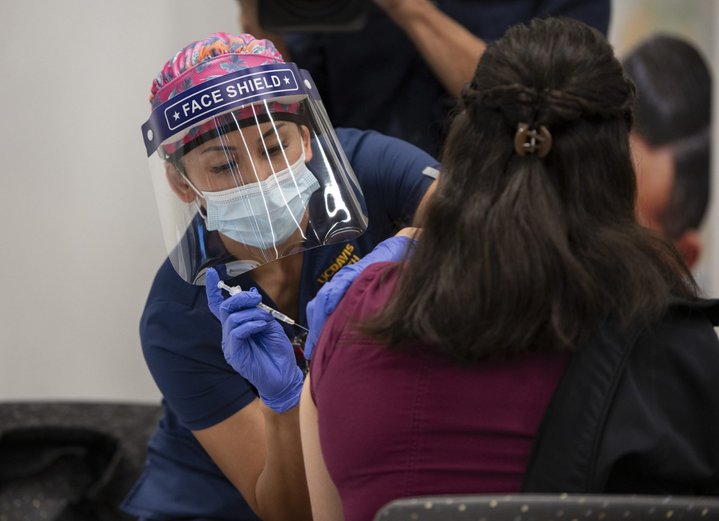
Registered Nurse Reanne Takara administers the Pfizer COVID-19 vaccine to frontline health workers at UC Davis Medical Center on Dec. 15, 2020. Photo courtesy of UC Davis Health
###
Californians largely agree that frontline health care workers and folks in nursing homes should be the first to get the new COVID-19 vaccines. There’s far less consensus over who should come next.
The federal Advisory Committee on Immunization Practices recently recommended the second priority group should include frontline essential workers and people over 75. In doing so, the panel tried to balance the competing interests of keeping society functioning, by protecting essential workers, and saving lives, by protecting elderly Americans who are most likely to die if infected.
Most states, including California, have signaled that they’ll largely abide by the federal panel’s guidance. But states are allowed to set their own priorities. On Monday, Gov. Gavin Newsom said more than 70,000 first doses of the Pfizer vaccine were given last week and that the state expects more than 560,000 doses to be delivered before the end of the year. Newsom also announced that 672,600 doses of the newly authorized Moderna vaccine is expected to be delivered this week.
Last week, California’s own expert advisory panel presented its preliminary recommendations for who should get the vaccine next, suggesting education and childcare workers, first responders such as police officers and firefighters, and food and agricultural workers including grocery and restaurant workers. Older Californians, unless they fall into one of these essential worker categories, were not included in the working group’s highest priority within the second group to be vaccinated.
The California panel is expected to issue its final guidance for the second vaccine priority group this month. Once that happens, state and county officials are expected to abide by that guidance in distributing still-scarce vaccine doses. But in a state as large and diverse as California, individual counties will have some leeway in arranging the line. That has sparked a lot of lobbying by unions and other interest groups who argue their workers are more essential than others.
Uber and Lyft, for example, have asked state governors to prioritize its drivers. Other groups are advocating to prioritize teachers and migrant workers. Still other advocates want to elevate more vulnerable people, including prisoners, the homeless and the disabled.
How will counties decide who’s most important to vaccinate first?
Might an agricultural county like Fresno, for example, place farmworkers disproportionately infected with COVID-19 ahead of teachers while vaccine supplies remain limited? Could Orange County, thinking of tax revenues, push Disneyland workers ahead of teachers?
A handful of elected officials told CalMatters that for now, they’re planning to abide by priorities set by state and local public health officials, but they’re not yet being pressured by interest groups.
Some health advocates say they’re worried that individual county decisions might create a patchwork of priorities that will be difficult to monitor. People might travel to another county that considers them higher priority than their home county.
“I’m concerned that counties are making their own decisions (during) this period of time … where we have some vaccine but not enough,” said Anthony Wright, executive director of the advocacy group Health Access, at last week’s meeting of the state’s Community Vaccine Advisory Committee. “Once people think that other people are cutting the line, that dissolves the social compact we’re all in, and that really scares me.”
At a briefing last week, Newsom said that the state “sets the tone” and recommends who should get priority, but allows counties discretion within the guidelines. California’s top health official, Dr. Mark Ghaly, added that the state public health department is coordinating with counties to move in the same direction.
Some labor groups have already begun outreach to county health departments — asking how closely they plan to follow the state’s guidelines but also asking them to keep its members in mind.
“The county systems have their ear on the ground, they can determine where they need to see stuff happen fast. They could decide to follow the state’s recommendations or take a different route,” said Matthew Maldonado, director of internal operations with United Domestic Workers, which represents about 140,000 child care workers and home health aides in the state.
Los Angeles County public health officials will consult with the county’s board of supervisors, but supervisors will not vote on the plan, a supervisor’s aide said.
In Placer County, Supervisor Kirk Uhler said he has not yet been lobbied to prioritize certain groups, but he said he would defer to the county’s health department on vaccine priorities. “We’re going to leave that up to our health care professions,” he said. Still, he said he hopes people over 65 will be first in line.
Assemblymember Jordan Cunningham said he doesn’t think counties will have the flexibility to stray too much from the state’s recommendations. The San Luis Obispo Republican recently sent a letter to Dr. Mark Ghaly’s Health and Human Services office asking that teachers be next in line so that children can go back to school.
“But if counties do have enough say,” Cunningham said, “the first call I’ll make will be to my two (local) public health directors to prioritize teachers and educators.”
Max Arias, executive director with SEIU 99, which represents school employees including cafeteria staff, janitors and teacher aides, said his union has not lobbied counties. Most of its members would fall in line in the same group as teachers. You need them all to make a school function, Arias said.
His more immediate concern is providing education to his union’s members around vaccine safety.
“There is a lot of fear based on mistrust,” Arias said. “In some cases, the fear for the vaccine is as much as the fear for COVID,” he said.
###
CALmatters.org is a nonprofit, nonpartisan media venture explaining California policies and politics.
A year from now, what will your Monday morning look like?
After your umpteenth consecutive weekend hugging your mother, your friends and complete strangers in poorly ventilated spaces, do you picture yourself pouring coffee in your thermos to begin your bleary-eyed commute into work? Or are you about to begin your bleary-eyed all-staff on the morning Zoom?
The answers to those questions will depend on your job, your income level, your employer and, if you’re lucky enough, your preference. They will also dictate whether the next decade of California’s housing affordability crisis looks radically different from the last.
Within a matter of months, the pandemic-necessitated rise in teleworking has inverted parts of the state’s real estate market in ways housing economists never imagined possible. The median rent in San Francisco has dropped nearly 25% since stay-at-home orders began in March. Oakland, Los Angeles and San Diego have also seen rents drop or at least taper, instantly flattening a decade-long spike.
As younger professionals flee overcrowded and overpriced apartments in urban cores, rents and home prices in many suburbs, exurbs and mid-size cities have shot up significantly.
Fresno, Bakersfield and Chula Vista, a San Diego suburb, have seen some of the biggest post-pandemic rent increases in the country. The median price of a single family home in California set an all-time-high of over $700,000 four months ago, with some of the steepest increases in the Inland Empire and Central Valley.
With the prospect of widespread vaccination on the horizon, private employers, local governments, urban planners and state officials are reluctantly playing the role of housing crisis Nostradamus: Is what we’re seeing in 2020 an aberration or a new normal?
“The long term piece, that’s the million if not billion dollar question,” said Jeff Bellisario, executive director of the Bay Area Council Economic Institute.
Nobody really knows the answer. But here are our best guesses.
Ok, so just how prevalent will remote work be in the future? Are companies really going to let people do this forever?
Probably pretty prevalent. The number of days California workers can stay home in sweatpants will likely rise even after the water cooler is no longer a potential superspreader site.
Right now, an astounding 40% of the U.S. labor force is working remotely full time. Firms, nonprofits and even some government agencies have generally discovered productivity has not dipped, and that workers for the most part prefer complaining about Slack and Zoom to complaining about their hour-long commutes. Plus, companies can save on office space and other expenses.
A national survey from the Federal Reserve Bank of Atlanta found that employers expect the number of work from home days to triple after the pandemic. That shift is likely to be more acute in California than in other parts of the country because the state’s industry mix (e.g. tech and professional services) is generally more adaptable to remote work. Facebook and Google have said they plan to offer more flexible work from home arrangements through 2021 and beyond. Twitter said it will allow staff to work from home permanently if they wish.
But while more and more California companies will compete for talent by offering work-from-home perks, it’s unlikely a huge chunk of the workforce will be completely untethered from the office. Google just bought more office space in several cities, and many firms believe some employee to employee interaction to be essential. Plus, many office tenants are locked into long-term commercial leases.
“All of these tech companies have built these campuses to try to maximize interaction, and they expect to grow their employee head counts,” said Bellisario.
Other California-based companies have seized on remote working to simply relocate their headquarters out of state entirely. In the last nine months Oracle, Hewlett Packard and perhaps most symbolically commercial real estate company CBRE have trumpeted plans to jump to Texas.
Companies that have helped fueled the jobs-housing imbalance besetting California cities could have a much smaller California footprint post pandemic
Won’t people just work from home more in cities once bars and restaurants and the other great things about cities open again?
Louis Mirante, legislative director for California YIMBY (Yes In My Backyard), thinks so.
While he acknowledges there may be some marginal out-migration from denser urban centers because of telecommuting, he argues Californians will still want to live in apartments in major cities because of the professional and social benefits conferred by urban life.
“If you use price as a signal as to where people want to live, it’s still in places like San Francisco or Oakland,” said Mirante. “If you look at where price is telling economists where folks want to live, it’s still dense, urban areas.”
Even after the post-pandemic price drop, at $2,377 for a two-bedroom the median rent in San Francisco is still the most expensive of any major city in the country, according to Apartment List.
But while urbanists like Mirante remain confident that demand for denser housing environments will rebound once people aren’t scared to share apartment building elevators anymore, there is evidence to suggest that the pandemic has unleashed a desire for more space that will outlast the virus.
Many of the homebuyers sending single-family-home prices across the state skyrocketing are millennials who, now in their 30s, are taking advantage of record-low interest rates to finally buy a house. While the suddenly pressing need for a backyard where a COVID puppy can happily frolick is the proximate reason, younger would-be homebuyers are also looking for the spare bedroom they can convert to a home office when telecommuting more frequently in the future.
“You’re now seeing many of the millennials getting to the age where they’re getting married and starting a family, and you see the coronavirus hit and it gives them a reason to move out to the suburbs,” said Oscar Wei, an economist with the California Association of Realtors. “You’re seeing a little more demand there for suburban homes.”
The rise of remote work could forever expand what “suburb” really means. If you only need to come to San Francisco once a week, Sacramento — a two hour plus train and bus ride away — is a feasible and much cheaper place to call home. If you only need to reach downtown Los Angeles once a month, the thought of living in Bakersfield is more palatable. It’s not surprising home prices and rentals are spiking where affordable single-family homes are within a long but ultimately doable drive of a major job center, as long as the drive is rare enough.
What about people who can’t work from home?
Workers in jobs that are more likely to offer telecommuting in the future skew higher income. Workers without that luxury tend to skew lower on the income ladder, and are more likely to be Black or Latino.
Despite the dramatic dip in median rent in places like San Francisco and Los Angeles, experts say the rental market in lower income communities has only softened slightly. While rents may not be rising as much as they used to, the housing crisis for these households is in many ways more dire as the pandemic-induced recession has caused widespread job losses and wage reductions: Even if your rent drops 5%, you’re in bad shape if your income drops by 50%.
“Let’s keep in mind there’s a whole segment of the housing market that won’t see a big change in rent,” said Gloria Bruce, executive director of the East Bay Housing Collaborative. “I don’t really think remote work does much for people who are overcrowded, where they were already spending 50% of their income on rent.”
Ironically, Bruce says it’s possible the rise of remote work could unleash a new wave of gentrification in the far-flung suburbs lower income households have fled to over the past two decades. Places like Vallejo in the Bay Area, or Palmdale and Landcaster in Southern California, could see an acceleration of a pre-pandemic trend: an influx of higher-income remote workers searching for more space.
“People of color and poorer people keep being the ones who have to make room for the housing market desires of those who are higher up the income scale,” said Bruce. “It’s just another version of what we’ve been seeing in various ways for decades.”
“I don’t really think remote work does much for people who are overcrowded, where they were already spending 50% of their income on rent.” — Gloria Bruce, executive director, the East Bay Housing Collaborative
What about carbon emissions?
It sounds like anathema for urban planners: Surging demand for larger homes farther and farther away from cities, the very definition of sprawl. For the past 50 years, California has primarily built new single family housing beyond its suburbs instead of apartments closer to its cities, resulting in horrific commutes and rising greenhouse gas emissions.
But is sprawl really sprawl if you’re working from home half the time?
“I think (remote work) is probably the single most important emission dropping factor if we got serious about it, next to (building energy) efficiency,” said Dean Florez, a member of the California Air Resources Board, the agency in charge of meeting the state’s ambitious emission goals.
Florez points to the remarkable drop in driving that occurred in the weeks following the March stay at home order. A UC Berkeley study found that in the Bay Area alone, regional carbon dioxide emissions dropped by 25%, mostly due to less road traffic. The Metropolitan Transportation Commission, the Bay Area’s regional public transit governing body, recently voted to mandate large employers keep 60% of their workers away from the office to meet greenhouse gas goals.
Incentivizing remote work via tax credits or other policy instruments may also be an easier sell to state lawmakers than forcing cities to allow more apartment buildings near transit, an approach that has generated a whirlwind of backlash in recent years.
While a drop in greenhouse gas emissions seems like a natural benefit of more telework, research suggests it’s not the silver bullet it may appear initially. When employees work from home, residential energy use goes up substantially, and large single-family homes tend to be significantly less energy efficient than modern office buildings.
Should the state change its approach to housing because more workers will be remote?
If you believe remote work will only have a marginal effect on where current and future Californians want to live, you’re in the governor’s camp.
Jason Elliott, senior counselor to Gov. Gavin Newsom on housing and homelessness, doesn’t think telework will permanently blunt demand to live in the state’s denser, urban environments.
“When life returns to whatever our new normal is, people are still going to want to be in cities for the same reason they wanted to be in cities in January 2020,” said Elliot on Gimme Shelter, the California Housing Crisis Podcast. “Fundamentally our human nature to be connected hasn’t changed.”
Elliott also argues that shifting state housing policy away from building more densely near transit and towards accommodating telework in the suburbs is fundamentally unfair to lower income workers without the option to work from home.
But if Elliott is wrong, the rise in telework presents new winners and losers in the state’s housing crisis, depending on who you are and where you live.
“If somebody’s selling you remote work as a solution to California’s housing crisis, they’re selling you snake oil.” — Louis Mirante, legislative director, California YIMBY
For middle and higher income earners stymied by years of high rent in costly urban centers (think San Francisco, Silicon Valley, L.A. and San Diego), the telework revolution will be a boon. If you choose to stay in your city, rents will be cheaper. If you choose to buy a home, you can expand the geographic radius of your home search to incorporate more affordable markets.
For renters and would-be homebuyers in places that used to be considered too far to commute from (think Sacramento, Bakersfield, Fresno), the news is not so good. Rents and home prices will continue to rise, barring an unlikely boom in new homebuilding.
And for those at the bottom of the income ladder — about 1.3 million Californians — the constant pressure to find a more affordable place to live will intensify in places it was already threatening.
“If somebody’s selling you remote work as a solution to California’s housing crisis, they’re selling you snake oil,” said Mirante. “And everyone should be on the same page about that.”
###
CALmatters.org is a nonprofit, nonpartisan media venture explaining California policies and politics.
The Humboldt County Joint Information Center (JIC) sent out a pair of videos Monday afternoon following the staggering count of 113 new cases and one new fatality reported since Friday.
In one, Humboldt County Health Officer Dr. Ian Hoffman discusses the local vaccine rollout, noting that doses of the Pfizer-BioNTech vaccine have been doled out to four hospitals.
The rollout will be done in three phases, each of which has three tiers, Hoffman says. We’re currently in phase 1-A, in which doses are administered to hospital workers, especially front-line workers, as well as staff and residents at skilled nursing facilities, emergency medical personnel and dialysis workers.
“We recognize there are a lot of challenges still,” Hoffman says.
In the other video, below, Humboldt County Department of Health & Human Services Public Health Branch Director Michele Stephens addresses “the extraordinary amount of cases” that the county has seen over the past several weeks. “They are not Granada-driven,” she says in reference to the outbreak in a Eureka skilled nursing home.
Stephens says behavior over the Thanksgiving holiday is likely responsible for this spike. “And with the Christmas holiday this week, we really want to implore everyone to not gather with loved ones that are outside of your household.”
Witnesses
not interviewed. Fingerprints not taken. Tire tracks not analyzed.
Today
Brandon Head, lead detective in the Ryan Anthony Tanner murder case,
spent hours being grilled by defense attorney Russ Clanton on
perceived errors and omissions in the investigation that led to
Tanner’s arrest.
Tanner.
Although
some of the issues were minor, such as law enforcement not searching
for murder victim Jason Todd Garrett’s dog, Head admitted under
cross-examination that no evidence was found showing Garrett was ever
in Tanner’s house. The detective also said that although
information he received from eyewitness Christopher Champagne had
turned out to be trustworthy, Champagne’s testimony during the
preliminary hearing was troubling.
“Did
his testimony cause you to doubt his reliability?” Clanton asked.
“Yes.”
Among
other astonishing statements he made on the witness stand, Champagne
said the cabin where Tanner shot Garrett to death had been
transformed into a torture chamber. He also testified he saw Tanner
shoot six police officers and set their bodies on fire.
Champagne
says he saw Tanner set fire to the van Garrett had been living in
with his friend Natalie Pierce, then kidnap Garrett, cut his throat
and shoot him with an AK-47 rifle. Garrett’s body was found buried
under a water tank on Tanner’s property. Champagne provided law
enforcement with the locations of the cabin where Garrett was killed
and the site where he was buried.
Today
Clanton brought up an episode in which Champagne arrived at the home
of neighbor Howard “Trey” Wease and presented him with a knife.
Champagne then informed Wease the knife had been used to stab
someone. Wease told law enforcement he threw the knife out of a
window of his house, and it was found later by a woman, “Rose,”
who asked if she could keep it.
Head
acknowledged no effort had been made to track Rose down. He said
Wease had told him he was going to try finding her.
Problem
is, at the time of the murder and Tanner’s arrest, Head was not the
lead investigator and was just taking orders from superiors. He has
been the lead investigator for only two months, replacing the former
detective who had the job. No details were given about the personnel
change.
Another
item Clanton asked about today was the piece of clear plastic found
wrapped around Garrett’s body. Champagne has said Tanner forced him
to wrap the body in a shower curtain. Head testified today he
believed the plastic remained with the body when it was placed in a
body bag. But he doesn’t know where it is now and says it was never
examined.
Also,
in the cabin where Garrett was killed, investigators found a
7.62-caliber shell casing. Ammo of the same caliber was found in
Tanner’s house, but no comparisons were done. The cabin was burned
to the ground shortly after the killing. Investigators found a fuel
tank and a gasoline can on nearby property, but they were not taken
as evidence.
Also
testifying today was sheriff’s Deputy Justin Pryor, who was one of
the first officers to interview Champagne. Pryor’s account of what
Champagne told him was similar to Champagne’s testimony during the
hearing, minus the torture chamber and the officers being killed and
burned.
One
aspect that differed, though, was the throat-cutting incident. During
his testimony, Champagne said blood was squirting from Garrett’s
neck and his Adam’s apple was dangling out. But he told Pryor that
Tanner slashed Garrett’s throat on the left side, and while the
wound was not bleeding copiously, there was enough blood to stain his
shirt.
That
version makes more sense, given that after his throat was cut Garrett
reportedly ate, conversed and watched a movie at Tanner’s house.
Tanner
was reportedly enraged about people stealing from houses in the
neighborhood. One of the chief suspects in Tanner’s mind was
Natalie Pierce. She and Garrett were stranded in the rural area
because her van had flat tires.
According
to what Champagne told the deputy, when he and Tanner drove up to the
van, Tanner said he didn’t believe Garrett was a thief “but we
should kill him anyway.”
Garrett,
26, reportedly was killed Feb. 12 in a cabin on Crooked Prairie Road
in the Ettersburg area. The 33-year-old Tanner was arrested by SWAT
six days later.
Testimony
is expected to continue Tuesday morning before Judge John Feeney.
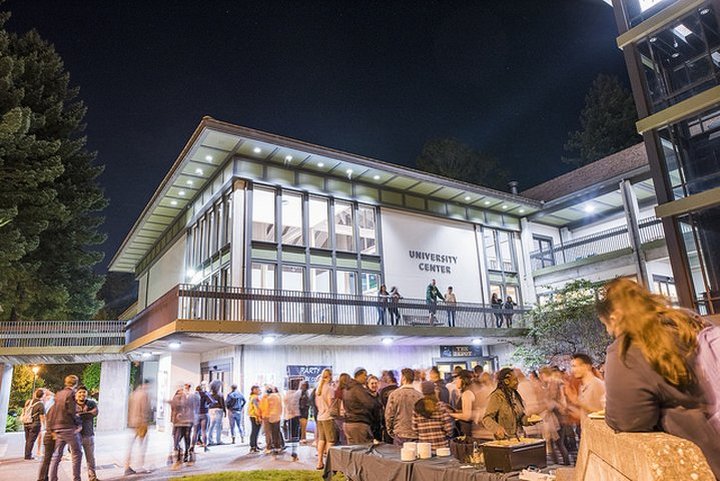
After careful consideration, the California State University and Humboldt State University have decided to formally end the CSU’s operating agreement with University Center.
All services provided by University Center will continue under the direction of HSU as of the close of business on January 8, 2021. At this time, the functions of the University Center will transition to HSU under the oversight of the Division of Enrollment Management and the Intercollegiate Athletics & Recreational Sports Department.
In this transition, it is immediately important to prioritize continuity of dining services for students. HSU is a member of a competitively bid cooperative agreement, and is utilizing that to enter into a short-term agreement for dining services with Chartwells Higher Education through June 2022. Chartwells is committed to working with University Center employees and local vendors, sustainable business practices, and evolving the dining program in alignment with CSU’s and HSU’s vision for the highest quality of services to HSU students.
The University is working to preserve a significant number of UC employees, and it is committed to retaining all student employees who desire to continue working. Chartwells will offer positions to UC Dining employees conditional upon a background check. Associates will be offered compensation and benefits equal to or better than what they currently have. Chartwells will also look to honor existing partnerships with local vendors.
The University is focused on continuity of service and making this transition as easy and seamless as possible for employees and students.
Anticipated annual operational savings associated with the transfer of functions back to HSU will be directed to improved student services and student-serving facilities. Numerous improvements directly impacting the student experience are planned for the Spring semester and, especially, for the Fall semester with the anticipated return to full in-person learning.
HSU has entered into a short-term agreement with Chartwells to ensure continuity of dining services through June 2022. A vendor will be sought before then for a longer-term partnership to deliver dining services. Chartwells will offer positions to University Center dining employees and will honor existing partnerships with local vendors.
The HSU Bookstore will continue to be managed in partnership with Follett, with oversight from the Division of Enrollment Management. There will be no changes or interruptions in services.
CenterArts and oversight of the University-owned student union building will be moved to Enrollment Management. Priorities will include expanding campus programming and events, enhancing the quality and responsiveness of student services, and continuing to offer engaging community programming.
Center Activities and oversight of the Student Recreation Center, Humboldt Bay Aquatics Center and the Recreational & Wellness Center will be moved to Intercollegiate Athletics & Recreational Sports. These areas will benefit from enhanced offerings to students as well as enhanced operational efficiencies and compliance.
Today’s letter to the University Center Board reiterates six serious breaches that CSU and HSU previously outlined in a letter to the University Center Board in September. It says that just two of these breaches were addressed in a satisfactory way, making it necessary to end the operating agreement with the University Center.
“The CSU has carefully weighed the options available to it and considered the longstanding relationship between the UC, HSU, and the CSU,” the letter states. “HSU has entrusted the UC to provide critical functions to the HSU community and its students, including dining, recreation and wellness services, and performing arts.
The CSU regrets its conclusion that the requisite trust necessary between campus and auxiliary has been irreparably broken through the UC’s breaches of the Operating Agreement, failure to cure, and failure to perform. These recent breaches also do not appear to be isolated incidents of mismanagement within the UC. The UC continues to suffer from a number of operational deficiencies that expose the UC, and by extension HSU, to potential liability. These gaps include control issues that have been raised with the UC in prior audits, yet remained unaddressed.”
The letter also makes clear that CSU and HSU made the decision with reluctance, and that the University Center’s work over many years was appreciated. “We extend our deep and sincere gratitude to the University Center administrators, staff, student employees, vendors, and partners for their years of service, commitment, and dedication to the campus community and beyond.”
After spending nearly two crucial weeks practicing at Redwood Bowl in October due to Santa Clara County’s COVID-19 restrictions, San Jose State football is headed to the Arizona Bowl with an impressive 13-0 record.
The undefeated Spartans, who obviously benefited from Humboldt’s fresh air and fine football facilities, were awarded a bowl game matchup with Ball State after defeating Boise State 34-20 in the Mountain West conference championship on Saturday.
“San Jose State University is proud to represent the Mountain West as its conference champion and accept the invitation to play in the 2020 Arizona Bowl in Tucson, Ariz,” San Jose State University Athletics Director Marie Tuite is quoted as saying in a statement released by the university yesterday. “Our season is one which is a ‘touch point’ for everyone connected with our wonderful university and one we will remember the rest of our lives. We look forward to arriving in Tucson, participating in all the pregame events, and playing the Mid-American Conference champion Ball State in this year’s Arizona Bowl.”
The Arizona Bowl will kick off at 11 a.m. on Dec. 31 in Arizona Stadium and will air live on CBS.