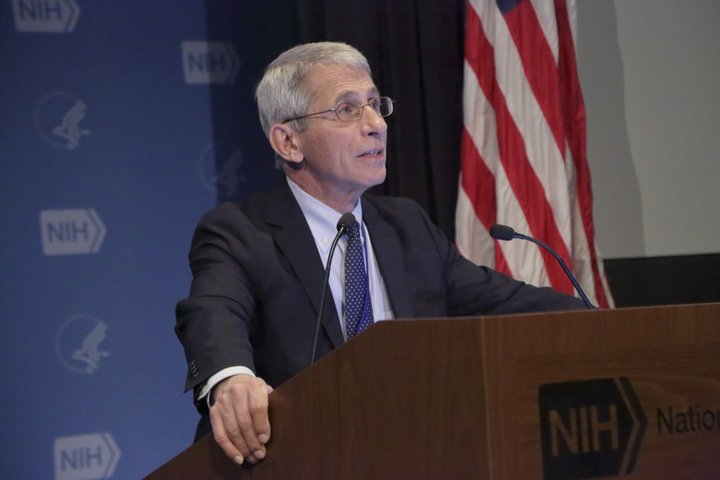
Dr. Anthony Fauci, who has served as the nation’s top infectious disease expert during the coronavirus pandemic, will stay on when President-elect Joseph Biden takes office. Photo by NIAID via Creative Commons
###
While coronavirus cases are surging across California and overwhelming intensive care units, the country’s top infectious disease expert said Friday he’s “cautiously optimistic” that college students can return to campus in the fall.
Dr. Anthony Fauci, director of the National Institute of Allergy and Infectious Diseases, said he anticipates that COVID-19 vaccines will begin to become widely available to the general public in March and April, and that immunization combined with aggressive testing of students would bode well for an in-person school year.
“If we do that efficiently, and the doses of vaccine come in… by the time we get to April, May, June, July, August, we can get the overwhelming majority of the people in this country vaccinated so that by the time we get to the 2021-2022 term, I think we could be in good shape,” Fauci said.
“While we are currently going through a very difficult surge in the pandemic, there is light at the end of the tunnel,” White said in announcing the plan.
As President-elect Joe Biden’s selected chief medical adviser, Fauci will work with the Biden administration to prioritize vaccinating teachers and doing surveillance testing at K-12 schools and universities to hasten the return to in-person learning, he said.
No decision has been made on whether the CSU system will require students or professors to receive a COVID-19 vaccination or what role campus health centers might play in vaccine distribution, CSU spokesperson Mike Uhlenkamp wrote in an email. However, there is precedent for colleges to require students to be vaccinated. The CSU system currently requires that students show proof they’ve been inoculated against measles, mumps and rubella, hepatitis, and several other diseases.
The best COVID-19 prevention results on campuses have come from a combination of testing students prior to their return to campus, conducting intermittent surveillance testing, and providing a separate floor or dorm to house infected students, Fauci said.
Surveillance testing — monitoring the entire student population to find outbreaks and isolating those who test positive — has been made easier due to the development of rapid antigen testing, which can yield results within 15 minutes. They are “not as sensitive (as regular COVID-19 tests), but can give you a considerable amount of important information,” Fauci said.
Uhlenkamp said the CSU will continue to let each campus design its own testing policy. “We have encouraged them to review their respective plans and reassess in light of the recent surges throughout the state,” he said.
Asked how schools and universities can combat the misinformation and distrust of science that has helped fuel the virus’s spread, Fauci said his approach is not to be confrontational, but instead to point out examples of how science has been helpful in the past.
“If you look at and point out to them examples of the important fruits of science and what science has brought to us, I think that we can convince a substantial proportion of the people — who for one reason or another have established an anti-science approach — that we can win them back,” he said.
###
Beck is a fellow with the CalMatters College Journalism Network, a collaboration between CalMatters and student journalists from across California. This story and other higher education coverage are supported by the College Futures Foundation. Follow the College Journalism Network on Twitter at @collegebeatca.
CALmatters.org is a nonprofit, nonpartisan media venture explaining California policies and politics.
Today, Humboldt County’s Health Officer — Dr. Ian Hoffman — took questions from the media about the first week of vaccinations in Humboldt County, and what he expects to see from the vaccination program in the coming weeks and months.
No transcript this time, but here are the questions asked with a timestamp corresponding to their place in the video above.
###
(0:15) The North Coast Journal asks… The county reported earlier this week that it received 975 doses of the Pfizer vaccine. Do you know how many of those have been administered to date and what the local process is for determining exactly how the line forms to receive those under the state’s tiered system? Do hospitals and health care providers get to prioritize which members of their staffs get vaccinated first?
(2:30) The North Coast Journal asks… What oversight or transparency will there be in this local process to ensure it’s not abused and, for example, hospital administrators or board members aren’t prioritized ahead of front-line workers who are at the greatest risk?
(4:20) The Lost Coast Outpost asks… Lindsey Mendez said in her media availability Wednesday that the county will be receiving 975 Pfizer doses per week. To what extent can we be sure of these shipments? How long are we contracted to receive shipments on this schedule?
(6:15) The Lost Coast Outpost asks… How many citizens have been vaccinated so far? Is it possible to regularly release vaccination statistics on the county’s dashboard?
(7:20) The North Coast News asks… It seems like this vaccine came quickly since the start of the pandemic. But, there’s obviously a lot of work before this. What is a realistic timeline for how long it’s taken to get this vaccine up and running?
(8:55) The North Coast News asks… We understand summer 2021 is a more realistic timeline for mass amounts of people to get vaccinated. What is the most realistic timeline for Humboldt County specifically to have the general public vaccinated?
(10:30) The Times-Standard asks… How many people have been vaccinated so far and when does the county expect to exhaust its current supply of vaccines?
(11:05) The Times-Standard asks… At a virtual town hall last night, the state OES deputy director of planning, preparedness and prevention, Lori Nezhura, said the allotment of vaccines was reduced for most states, including California. How will this impact Humboldt County?
(11:50) The Times-Standard asks… Is the county concerned about whether people might be reluctant to get the vaccine? How would this impact the development of herd immunity?
(12:35) The Redheaded Blackbelt asks… Have there been any instances where a healthcare worker locally declines to take the vaccine in favor of a later option, or to take wait to get a different vaccine? Or declined to take it for any reason?
(13:05) The Redheaded Blackbelt asks… Are staff members at Grenada being considered for vaccinations?
(13:50) The Redheaded Blackbelt asks… Can you talk about why or why not it would make sense to vaccinate a facility’s staff and members during the midst of an outbreak if in some theoretical world we had all the vaccine we needed?
On Feb. 18, Sheriff’s Detective Brandon Head had the unpleasant duty of being at the scene as another investigator unearthed the body of murder victim Jason Todd Garrett.
“Investigator (Jennifer) Taylor had a shovel,” Head testified today, “and she began exploring.”
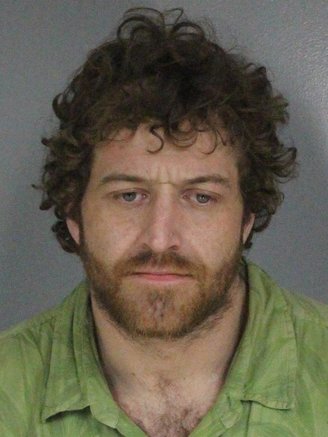
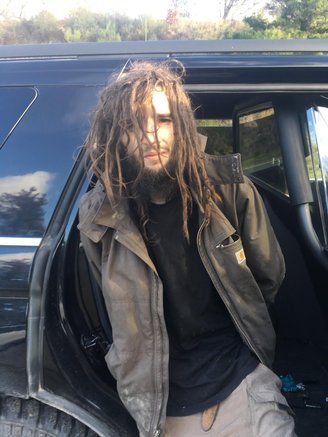
Tanner.
The officers were digging under a water tank at 5700 Crooked Prairie Road near Ettersburg, on property belonging to murder suspect Ryan Anthony Tanner. Eyewitness Christopher Champagne had told law enforcement Garrett was buried there on Feb. 12 after Tanner first cut his throat, then shot him with an assault rifle.
About a foot under the muddy surface, Taylor saw something that at first, just looked like “an object wrapped in clear plastic,” Head testified under questioning by Deputy District Attorney Whitney Timm. Then Taylor looked through the plastic and saw hair.
Head said the body was clothed and partially wrapped in the plastic. Champagne testified earlier in the hearing that Tanner forced him to wrap the corpse in a shower curtain.
“There was duct tape in the hole with the body as well,” Head recalled.
According to Champagne, he wrapped Garrett’s slit throat with cloth and duct tape.
Head also participated in a search of the cabin, owned by Ryan Tanner’s father, where Tanner allegedly forced Garrett into a bathtub and shot him in the head with an AK-47. At some point after the killing, the cabin was burned to the ground.
“We sifted through remnants of the cabin,” Head said. They focused on the bathroom area, where a burned clawfoot bathtub was still standing.
“After quite a long time sifting,” the detective said, they spotted a shell casing about 10 feet from the tub. The casing was associated “with what would be referred to as an assault rifle.”
Tanner’s father, James Tanner, also owned a larger house on the property. He was not living there at the time. When officers searched the area around the house, they found a gasoline can in the driveway and a white pickup truck in the garage. Ryan Tanner drove a white Chevy pickup.
Head said he spoke with Howard “Trey” Weece, who lives in the Ettersburg area, and Weece said Champagne, not long after the homicide occurred, showed up and presented him and his girlfriend with a knife. After they accepted the gift, Weece told the detective, Champagne said it had been used to stab someone.
They didn’t take Champagne seriously, as he was known for making “outlandish statements.” But after learning about Garrett’s killing, Weece threw the knife out a window and into a creek on his property. Later a woman found the knife, and Weece told her she could keep it.
There was also testimony today about two rifles that may have been involved in the crime. Head said he met with Weece at an attorney’s office in Eureka, and Weece showed him a rifle someone had found off China Creek Road in the Ettersburg area. The rifle had passed through many hands, and Weece eventually tracked it down and bought it, specifically to turn it over to law enforcement.
“He said he didn’t like the energy in the neighborhood when Ryan Taylor was living out there,” Head said.
Also, Fortuna police Cpl. Thomas MacLeod testified today that he retrieved as assault rifle found by a garbage collection company in Fortuna. The facility manager told MacLeod that judging by which shipment the rifle was in, it came from Shelter Cove and was picked up on either Feb. 14 or Feb. 17.
Champagne testified he threw away some trash from Tanner’s truck when they were in Shelter Cove.
Tanner was arrested Feb. 18 and remains in custody. He is present in the courtroom, but because of Covid 19 concerns he sits in the jury box and wears a mask and gloves.
Testimony is expected to continue Monday morning, with Head being cross-examined by defense attorney Russ Clanton.
Timm told Judge John Feeney she has “a number of witnesses” to call, but all are law enforcement officers whose testimony should be brief. She expects to wrap up her case by Wednesday.
In Humboldt County, California’s 33-year-old recycling buy-back program has completely fallen apart. A decade ago, the county had close to a dozen CRV [California Redemption Value] recycling centers — places where you could haul your empties and trade them in for cash. By the start of this year only five remained. Now, amid the COVID-19 pandemic and the continuing collapse of scrap material values on the international market, none are left.
The Eureka Recycling Center (operated by the Humboldt Waste Management Authority), Humboldt Sanitation in McKinleyville and Recology Eel River in both Fortuna and Redway have all stopped operating their CRV programs. You can still drop off your recycling; you just won’t get money for it. And curbside recycling continues in many parts of the county, with customers paying for the privilege.
With no more redemption centers in the county, local retailers are being told they must either operate their own consumer recycling operations — which would require hauling the collected empties to the nearest state-certified recycling buyback center, in Crescent City — or else they’ll have to pay daily fees to the California Department of Resources Recycling and Recovery, aka CalRecycle.
The letters started arriving about a month and a half ago. In late October, liquor stores, convenience stores and grocery stores scattered across Humboldt County received notices in the mail from CalRecycle. Follow-up notices arrived a month later.
“Your store has been identified as a beverage dealer that is located within a convenience zone that does not contain a certified recycling center … ,” the notices read. A “convenience zone,” the letters explain, is any area within a half-mile radius of a supermarket. “This means that people who shop in your area do not have a convenient location to return their beverage containers for CRV [California Redemption Value].”
Store owners were informed that unless a state-certified recycling center gets up and running in their convenience zone in the next 60 days, they’ll be left with two options: either pay consumers the five- or 10-cent refund for all CRV beverage containers they bring in, or start paying CalRecycle $100 per day, billed monthly. (The letters insist that this a “fee,” not a fine, but the effect is the same.)
Jeremy Fugate, manager of The Liquor Still in Arcata, was among those who received notices from CalRecycle, as were the two gas station convenience stores up the street. And Fugate said there’s simply no way his store could start operating a buy-back program by early January, as the state is demanding.
“We’re a business that only has one person employed at any moment,” he told the Outpost in a phone interview earlier this week. “We have no man hours, no scale to weigh CRV materials.” So instead, The Liquor Still plans to pay the fees.
“I’m definitely going to have to raise the price on a few items in the store by a couple cents apiece,” Fugate said. “I’m hoping it’s not going to put us out of business.” Clearly frustrated by the situation, he said, “It’s asinine for CalRecycle to get richer just because we don’t have a recycling center nearby. … It’s gonna put the hurt on some small businesses.”
Aaron Gottschalk, general manager of Wildberries Marketplace in Arcata, said they’ll pay the fee, too. “We can’t operate a redemption center,” he said. “There’s no reasoning with CalRecycle, because [during the pandemic] we’ve all been saying that you’re not supposed to introduce personal items [into the store]. We’re limiting customers, and you’re going to force us to help more people with their recycling? And introduce who knows what pathogens, germs, viruses … the whole thing is just out there. I’ve written some pointed letters — ‘Are you all living on this planet?’ — but CalRecycle is powerless. They’re bound by the legislature.”
Assemblymember Jim Wood agrees. “For me it’s frustrating because the system is not working the way it was designed,” he said in a recent phone interview. “I look at Humboldt County as really kind of the cradle of recycling, and here we are now and we don’t have anything. The economics don’t work.”
California’s refund system has been in place since 1987, and for many years it worked well. Until the past decade or so, most beverage containers were made of glass or aluminum — valuable materials on the commodities market that ensured healthy financial returns for participants. Recycling centers proliferated, and as a result, retailers in rural areas like Humboldt County were granted exemptions from participating in the CRV buy-back program.
The economic model began to fall apart in recent years, largely due to plummeting commodity scrap values on the international market. The stream of materials is now clogged with cheap and mostly worthless plastic; China, which had been a major buyer of America’s recycling materials, implemented new restrictions on imports of certain recyclables, including mixed paper and most plastics. Suddenly, recycling centers were operating at a loss, and they began to shut down.
When HWMA’s Eureka Recycling Center briefly resumed its CRV buy-back program in September, the pent-up demand was so huge that the line of vehicles quickly backed up onto Broadway, causing traffic safety concerns and forcing the facility to shut down again just two days later. HWMA Executive Director Jill Duffy told the Outpost that if CalRecycle would simply let her agency make appointments, allowing customers to drop off their materials in an orderly fashion, they could resume operations. But the state agency won’t allow it.
“All we need is appointments; that’s all we’re asking for,” she said. “But we can’t get the bureaucracy to bend a little bit or work with the state legislature.”
This lack of flexibility is a big part of the problem, according to Wood, though he believes the whole system is a mess. “This is one of those really, really complicated issues,” he said. “I was talking with my staff about this … and even we continue to be somewhat confused and befuddled by the complexity of what’s going on.”
The CRV system is actually working pretty well in most of the state’s major metropolitan areas. There have been multiple legislative attempts to fix the problems in rural areas, but they’ve all run into a snag somewhere along the line, Wood said. That’s partly because legislators from more urban regions have no motive to vote for such bills.
“The bottom line here is that the bill that was passed in 1986 [the California Beverage Container Recycling and Litter Reduction Act] has never really been changed,” Wood said. “The guidelines are very, very strict and CalRecycle doesn’t believe they have the flexibility to even grant temporary relief. That’s hugely frustrating.”
Wood recently helped organize and host a forum via Zoom in which local retailers, including employees of the North Coast Co-op, Wildberries, Murphy’s Markets and more, spoke with officials from CalRecycle in hopes of finding a solution. But despite a robust airing of grievances, officials with the agency reiterated that the letter of the law is clear: Without any state-certified recycling buyback centers in the region, retailers must offer that service themselves — or pay in excess of $36,000 a year in fees.
The Outpost reached out to CalRecycle for more information, and in response a spokesperson emailed a boilerplate summary of the rules outlined above.
“To the best of my understanding, that’s the lack of flexibility in the law. There is no mechanism for relief,” Wood said. “That’s where I’m frustrated. For crying out loud, if you’re in court a judge has discretion over things. But apparently, the way I understand it, there is no discretion here.”
Duffy said it’s all the more frustrating because the state agency has been seeing increased profits as the system fails rural Californians — and consumers are coming out on the short end. An investigation from Liza Tucker with the nonprofit Consumer Watchdog found that, “For every nickel bottle deposit that California consumers pay in the checkout line, they only get back 2.65 cents.”
The CRV program was designed to recover 80 percent of CRV containers, but the amount that actually gets recycled has been steadily declining. According to Duffy, the latest report showed that only 58 percent of the empties were getting redeemed. All the while, “people are continuing to pay their five cents, and the state now has more than half a billion [dollars] in unredeemed money. …They’re getting their money, more than ever!It makes your head hurt.”
Duffy said she feels bad that the burden is now falling on local retailers. Back in October she told the Board of Supervisors about a pilot program that HWMA was pursuing in collaboration with Humboldt Sanitation and Recology Eel River. The hope was that they could develop a more sustainable system locally, possibly one that incorporated “reverse vending machines” like the ones used in Oregon, where the bottle deposit system reached a 90 percent redemption rate last year.
But two days before HWMA’s Nov. 12 board meeting, the state informed Duffy and her staff that the final available slot in CalRecycle’s pilot program had just been filled, so there was no reason to even submit their proposal.
“I kinda feel like we got played, honestly,” Duffy said.
She’s still exploring options with local stakeholders, including grocers, in hopes of developing a regional solution. It will be essential to have multiple locations where people can redeem containers so no one spot is overwhelmed by the demand, she said.
Wood, meanwhile, is hoping that a legislative fix might be possible in 2021. Senator Bob Wieckowski (D-Fremont) has introduced a bill that could transform the state’s recycling system, and while it doesn’t directly address the problems facing Humboldt County, Wood said, “This will be a pretty comprehensive bill, [and] my hope is we can tuck a rural fix in there.”
Wood is also hopeful about CalRecycle’s new director, Rachel Wagoner, with whom he has worked on wildfire issues. Appointed by Gov. Gavin Newsom, she’s due to be seated next month.
“There has been a lot of work on this over the last two or three years,” Wood said, “but ultimately we need the [governor’s] administration to engage with us on this — the earlier the better.”
Duffy is concerned that with all the news about problems with the CRV system, people will give up on recycling altogether.
“Recycling is not dead!” she said. People can still place their empties into the blue bins for curbside recycling, where available, or bring their containers in for processing at a recycling center. “While there won’t be a direct nickel back in their pocket, whatever moneys the processors are able to receive via repayment, those moneys then offset the overall costs,” which helps stabilize and potentially lower the annual costs for curbside pickup, she said.
And then there’s the original motivation: It’s better for the planet.
On December 17th, 2020, Special Agents with the Humboldt County Drug Task Force (HCDTF), with
assistance from the Eureka Police Department (EPD) POP Unit, the Humboldt County Sheriff’s Office
(HCSO), and the Fortuna Police Department (FoPD), served three unrelated search warrants throughout
Humboldt County.
Search Warrant #1:
At approximately 1100 hours, Special Agents from HCDTF with assistance from the EPD POP Unit served
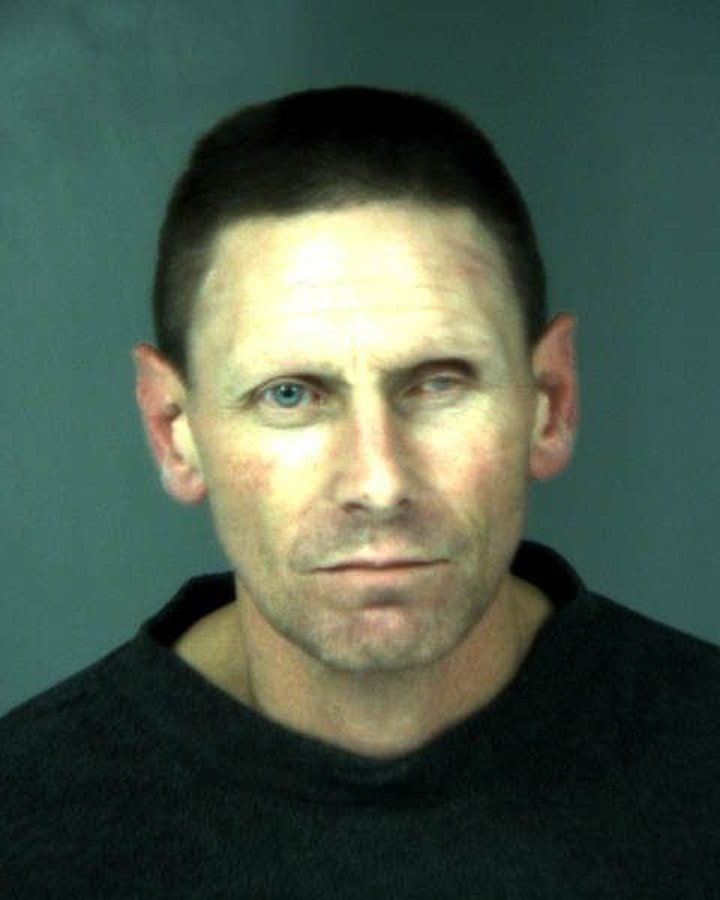
a search warrant in the 1300 block of 4th Street in Eureka. Agents located Aaron Anthony Nelson (58
years old from Eureka). Nelson is a repeat offender known to HCDTF Agents for selling and
transporting narcotics throughout Humboldt County. Agents located packaged heroin and
methamphetamine as well as a loaded stolen firearm in Nelson’s vehicle. At the time of this search
warrant, Nelson was out on bail for previous narcotic and firearm related offenses.
Nelson was booked at the Humboldt County Correctional Facility on the following charges:
HS11370.17(a) Possession of Controlled Substances while Armed
HS11378 Possession of Controlled Substances for Sales
PC29800(A) Convicted Felon in Possession of a Firearm
PC496(A) Buy/Receive Stolen Property
PC30305(a) Felon in Possession of Ammunition
PC25400(a)(1) Concealed Weapon in Vehicle
PC25850(a) Carry Loaded Firearm in Public Place
Search Warrant #2:
At approximately 1400 hours, Special Agents from HCDTF with assistance from HCSO Deputies, served a
search warrant on the residence of Samuel Burwell Glenny (27 years old from New York) in
Garberville. HCDTF Agents had information that Glenny was selling narcotics in the Southern Humboldt
area. Agents located approximately two ounces of methamphetamine.
Glenny was interviewed at the scene and a case will be forwarded to the Humboldt County District
Attorney’s office requesting the following charge be filed:
HS11378 Possession of Controlled Substances for Sales
Search Warrant #3:
A third and final search warrant was served at approximately 1530 hours in a room in the 800 block of
Main Street in Fortuna. HCDTF Agents were assisted by Officers from the Fortuna Police Department.
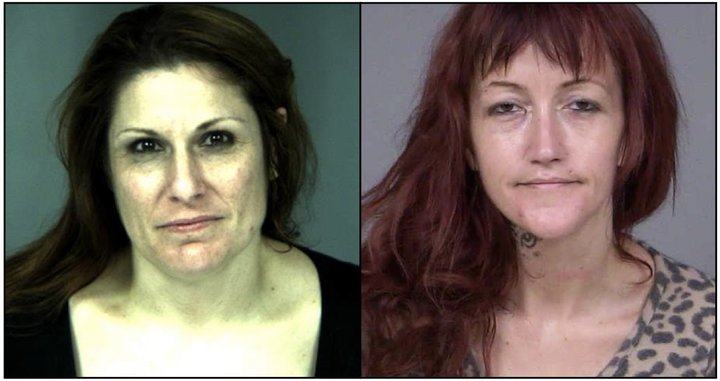
Agents located Arlene Lennox (42 years old) and Heather Taylor (AKA: Heather Jaynes; 39 years
old).
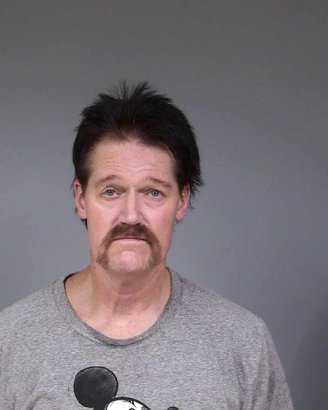
Lennox and Taylor
Taylor was found to be in possession of a loaded firearm, and packaged methamphetamine for sales. Also
located in the room was a high volume of prescription narcotics, a small amount of heroin and
methamphetamine, packaging materials, and scales.
Heather Taylor was booked at the Humboldt County Correctional Facility on the following charges:
HS11370.1(a) Possession of Controlled Substances while Armed
HS11378 Possession of Controlled Substances for Sales
HS11379(a) Transportation/Sell of Controlled Substances
Arlene Lennox was released at the scene due to medical reasons and a case will be forwarded to the
Humboldt County District Attorney’s Office requesting the following charges be filed:
HS11378 Possession of Controlled Substances for Sales
HS11379(a) Transportation/Sell of Controlled Substances
Anyone with information related to these investigations or other narcotics related crimes are encouraged
to call the Humboldt County Drug Task Force at 707-267-9976.
Today’s “COVID Minute,” with deputy health officer Josh Ennis.
Two weeks ago, in the face of rapidly rising COVID-19 cases and the prospect of holiday gatherings spawning an even faster spread of the virus, the state of California instituted a new stay-at-home order that would be triggered by intensive care unit capacity in five newly defined regions of the state.
Counties maintained the ability to enact these new orders on their own, even if their region had not yet fallen below the state-defined threshold of 15 percent of ICU beds free and available for patients. Several Bay Area counties did just that.
Live chart of regional ICU availability by CalMatters.
Nevertheless, this week the Bay Area did fall beneath 15 percent ICU availability. As of yesterday — only 13 percent of ICU beds in the region were unoccupied — meaning that four of the state’s five regions have automatically fallen under the state’s new stay-at-home order. The situation is especially dire in Southern California and the San Joaquin Valley, where ICU capacity is at or approaching zero.
The only region that still has enough ICU capacity is our own. As of yesterday, the Northern California region — which includes Mendocino and Lake counties to our south, and Shasta and Lassen counties to our east — still has about a quarter of its ICU beds available.
Nevertheless, in today’s “COVID Minute” — a video feature published regularly by the county’s Joint Information Center — Deputy Health Officer Josh Ennis warns that our own “region” is not an island. COVID patients from Northern California are regularly treated by hospitals in other regions, or even in other states, and the ICU crunch in those places will likely impact our own management of the crisis as well.
“[I]f we wait too long and don’t acknowledge what’s happening around us the dominos can begin to fall, and then we may end up in a more dire situation as a result,” Ennis says.
Transcript of today’s “COVID Minute”:
I’m Dr. Josh Ennis, Deputy Health Officer of Public Health, and this is your COVID Minute.
I’m here today to talk about the ICU capacity metric. As you know, it applies to northern California region and 15% with trigger our regions again the stay at home order.
I want to talk a little bit about how health care patients might move through the hospital system. As you know, ours go south to the Bay Area or to Sacramento. Other parts of region may send to other states, like Reno, Nevada or even southern Oregon.
So if we look at what’s happening in these surrounding regions that receive our patients — the Bay Area, Sacramento Valley — they are already to the point of being below 15%, and some of these jurisdictions are refusing ICU patients. And so if we wait too long and don’t acknowledge what’s happening around us the dominos can begin to fall, and then we may end up in a more dire situation as a result.
So understanding this metric on a regional basis requires knowing what’s happening around us. This has been your COVID Minute.
Press release from the Humboldt County Sheriff’s Office:
The Humboldt County Sheriff’s Office needs the public’s help to locate missing person Sean Lance Hawkins, aka “Hawkeye,” age 48 , of McKinleyville. Hawkins is missing under unknown circumstances.
Hawkins was reported missing by a family member on Dec. 14, 2020 at about 9:30 p.m. Hawkins was last seen on December 4 at about 10 a.m. in Eureka. His vehicle was later located unoccupied in a wooded area near Clam Beach Road and Dows Prairie Road in McKinleyville.
Hawkins is described as a white male adult, approximately 6 feet tall and 185 pounds, with short brown hair and blue eyes. He was last seen wearing a brown sweater, blue jeans, black hat and tennis shoes.
Anyone with information for the Sheriff’s Office regarding Hawkins’ possible whereabouts should call the Humboldt County Sheriff’s Office at (707) 445-7251.