In Humboldt County, California’s 33-year-old recycling buy-back program has completely fallen apart. A decade ago, the county had close to a dozen CRV [California Redemption Value] recycling centers — places where you could haul your empties and trade them in for cash. By the start of this year only five remained. Now, amid the COVID-19 pandemic and the continuing collapse of scrap material values on the international market, none are left.
The Eureka Recycling Center (operated by the Humboldt Waste Management Authority), Humboldt Sanitation in McKinleyville and Recology Eel River in both Fortuna and Redway have all stopped operating their CRV programs. You can still drop off your recycling; you just won’t get money for it. And curbside recycling continues in many parts of the county, with customers paying for the privilege.
With no more redemption centers in the county, local retailers are being told they must either operate their own consumer recycling operations — which would require hauling the collected empties to the nearest state-certified recycling buyback center, in Crescent City — or else they’ll have to pay daily fees to the California Department of Resources Recycling and Recovery, aka CalRecycle.
The letters started arriving about a month and a half ago. In late October, liquor stores, convenience stores and grocery stores scattered across Humboldt County received notices in the mail from CalRecycle. Follow-up notices arrived a month later.
“Your store has been identified as a beverage dealer that is located within a convenience zone that does not contain a certified recycling center … ,” the notices read. A “convenience zone,” the letters explain, is any area within a half-mile radius of a supermarket. “This means that people who shop in your area do not have a convenient location to return their beverage containers for CRV [California Redemption Value].”
Store owners were informed that unless a state-certified recycling center gets up and running in their convenience zone in the next 60 days, they’ll be left with two options: either pay consumers the five- or 10-cent refund for all CRV beverage containers they bring in, or start paying CalRecycle $100 per day, billed monthly. (The letters insist that this a “fee,” not a fine, but the effect is the same.)
Jeremy Fugate, manager of The Liquor Still in Arcata, was among those who received notices from CalRecycle, as were the two gas station convenience stores up the street. And Fugate said there’s simply no way his store could start operating a buy-back program by early January, as the state is demanding.
“We’re a business that only has one person employed at any moment,” he told the Outpost in a phone interview earlier this week. “We have no man hours, no scale to weigh CRV materials.” So instead, The Liquor Still plans to pay the fees.
“I’m definitely going to have to raise the price on a few items in the store by a couple cents apiece,” Fugate said. “I’m hoping it’s not going to put us out of business.” Clearly frustrated by the situation, he said, “It’s asinine for CalRecycle to get richer just because we don’t have a recycling center nearby. … It’s gonna put the hurt on some small businesses.”
Aaron Gottschalk, general manager of Wildberries Marketplace in Arcata, said they’ll pay the fee, too. “We can’t operate a redemption center,” he said. “There’s no reasoning with CalRecycle, because [during the pandemic] we’ve all been saying that you’re not supposed to introduce personal items [into the store]. We’re limiting customers, and you’re going to force us to help more people with their recycling? And introduce who knows what pathogens, germs, viruses … the whole thing is just out there. I’ve written some pointed letters — ‘Are you all living on this planet?’ — but CalRecycle is powerless. They’re bound by the legislature.”
Assemblymember Jim Wood agrees. “For me it’s frustrating because the system is not working the way it was designed,” he said in a recent phone interview. “I look at Humboldt County as really kind of the cradle of recycling, and here we are now and we don’t have anything. The economics don’t work.”
California’s refund system has been in place since 1987, and for many years it worked well. Until the past decade or so, most beverage containers were made of glass or aluminum — valuable materials on the commodities market that ensured healthy financial returns for participants. Recycling centers proliferated, and as a result, retailers in rural areas like Humboldt County were granted exemptions from participating in the CRV buy-back program.
The economic model began to fall apart in recent years, largely due to plummeting commodity scrap values on the international market. The stream of materials is now clogged with cheap and mostly worthless plastic; China, which had been a major buyer of America’s recycling materials, implemented new restrictions on imports of certain recyclables, including mixed paper and most plastics. Suddenly, recycling centers were operating at a loss, and they began to shut down.
When HWMA’s Eureka Recycling Center briefly resumed its CRV buy-back program in September, the pent-up demand was so huge that the line of vehicles quickly backed up onto Broadway, causing traffic safety concerns and forcing the facility to shut down again just two days later. HWMA Executive Director Jill Duffy told the Outpost that if CalRecycle would simply let her agency make appointments, allowing customers to drop off their materials in an orderly fashion, they could resume operations. But the state agency won’t allow it.
“All we need is appointments; that’s all we’re asking for,” she said. “But we can’t get the bureaucracy to bend a little bit or work with the state legislature.”
This lack of flexibility is a big part of the problem, according to Wood, though he believes the whole system is a mess. “This is one of those really, really complicated issues,” he said. “I was talking with my staff about this … and even we continue to be somewhat confused and befuddled by the complexity of what’s going on.”
The CRV system is actually working pretty well in most of the state’s major metropolitan areas. There have been multiple legislative attempts to fix the problems in rural areas, but they’ve all run into a snag somewhere along the line, Wood said. That’s partly because legislators from more urban regions have no motive to vote for such bills.
“The bottom line here is that the bill that was passed in 1986 [the California Beverage Container Recycling and Litter Reduction Act] has never really been changed,” Wood said. “The guidelines are very, very strict and CalRecycle doesn’t believe they have the flexibility to even grant temporary relief. That’s hugely frustrating.”
Wood recently helped organize and host a forum via Zoom in which local retailers, including employees of the North Coast Co-op, Wildberries, Murphy’s Markets and more, spoke with officials from CalRecycle in hopes of finding a solution. But despite a robust airing of grievances, officials with the agency reiterated that the letter of the law is clear: Without any state-certified recycling buyback centers in the region, retailers must offer that service themselves — or pay in excess of $36,000 a year in fees.
The Outpost reached out to CalRecycle for more information, and in response a spokesperson emailed a boilerplate summary of the rules outlined above.
“To the best of my understanding, that’s the lack of flexibility in the law. There is no mechanism for relief,” Wood said. “That’s where I’m frustrated. For crying out loud, if you’re in court a judge has discretion over things. But apparently, the way I understand it, there is no discretion here.”
Duffy said it’s all the more frustrating because the state agency has been seeing increased profits as the system fails rural Californians — and consumers are coming out on the short end. An investigation from Liza Tucker with the nonprofit Consumer Watchdog found that, “For every nickel bottle deposit that California consumers pay in the checkout line, they only get back 2.65 cents.”
The CRV program was designed to recover 80 percent of CRV containers, but the amount that actually gets recycled has been steadily declining. According to Duffy, the latest report showed that only 58 percent of the empties were getting redeemed. All the while, “people are continuing to pay their five cents, and the state now has more than half a billion [dollars] in unredeemed money. …They’re getting their money, more than ever!It makes your head hurt.”
Duffy said she feels bad that the burden is now falling on local retailers. Back in October she told the Board of Supervisors about a pilot program that HWMA was pursuing in collaboration with Humboldt Sanitation and Recology Eel River. The hope was that they could develop a more sustainable system locally, possibly one that incorporated “reverse vending machines” like the ones used in Oregon, where the bottle deposit system reached a 90 percent redemption rate last year.
But two days before HWMA’s Nov. 12 board meeting, the state informed Duffy and her staff that the final available slot in CalRecycle’s pilot program had just been filled, so there was no reason to even submit their proposal.
“I kinda feel like we got played, honestly,” Duffy said.
She’s still exploring options with local stakeholders, including grocers, in hopes of developing a regional solution. It will be essential to have multiple locations where people can redeem containers so no one spot is overwhelmed by the demand, she said.
Wood, meanwhile, is hoping that a legislative fix might be possible in 2021. Senator Bob Wieckowski (D-Fremont) has introduced a bill that could transform the state’s recycling system, and while it doesn’t directly address the problems facing Humboldt County, Wood said, “This will be a pretty comprehensive bill, [and] my hope is we can tuck a rural fix in there.”
Wood is also hopeful about CalRecycle’s new director, Rachel Wagoner, with whom he has worked on wildfire issues. Appointed by Gov. Gavin Newsom, she’s due to be seated next month.
“There has been a lot of work on this over the last two or three years,” Wood said, “but ultimately we need the [governor’s] administration to engage with us on this — the earlier the better.”
Duffy is concerned that with all the news about problems with the CRV system, people will give up on recycling altogether.
“Recycling is not dead!” she said. People can still place their empties into the blue bins for curbside recycling, where available, or bring their containers in for processing at a recycling center. “While there won’t be a direct nickel back in their pocket, whatever moneys the processors are able to receive via repayment, those moneys then offset the overall costs,” which helps stabilize and potentially lower the annual costs for curbside pickup, she said.
And then there’s the original motivation: It’s better for the planet.
On December 17th, 2020, Special Agents with the Humboldt County Drug Task Force (HCDTF), with
assistance from the Eureka Police Department (EPD) POP Unit, the Humboldt County Sheriff’s Office
(HCSO), and the Fortuna Police Department (FoPD), served three unrelated search warrants throughout
Humboldt County.
Search Warrant #1:
At approximately 1100 hours, Special Agents from HCDTF with assistance from the EPD POP Unit served
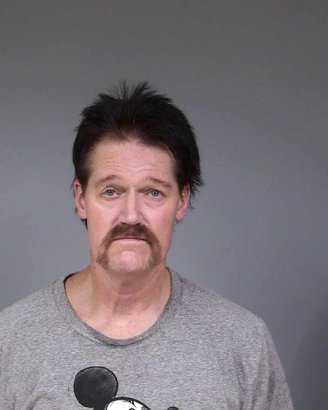
a search warrant in the 1300 block of 4th Street in Eureka. Agents located Aaron Anthony Nelson (58
years old from Eureka). Nelson is a repeat offender known to HCDTF Agents for selling and
transporting narcotics throughout Humboldt County. Agents located packaged heroin and
methamphetamine as well as a loaded stolen firearm in Nelson’s vehicle. At the time of this search
warrant, Nelson was out on bail for previous narcotic and firearm related offenses.
Nelson was booked at the Humboldt County Correctional Facility on the following charges:
HS11370.17(a) Possession of Controlled Substances while Armed
HS11378 Possession of Controlled Substances for Sales
PC29800(A) Convicted Felon in Possession of a Firearm
PC496(A) Buy/Receive Stolen Property
PC30305(a) Felon in Possession of Ammunition
PC25400(a)(1) Concealed Weapon in Vehicle
PC25850(a) Carry Loaded Firearm in Public Place
Search Warrant #2:
At approximately 1400 hours, Special Agents from HCDTF with assistance from HCSO Deputies, served a
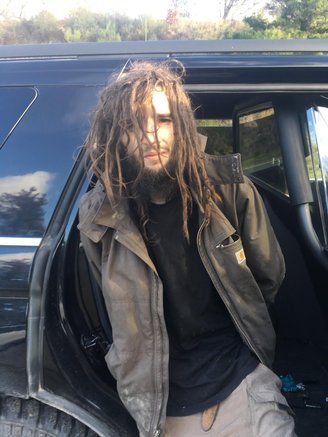
search warrant on the residence of Samuel Burwell Glenny (27 years old from New York) in
Garberville. HCDTF Agents had information that Glenny was selling narcotics in the Southern Humboldt
area. Agents located approximately two ounces of methamphetamine.
Glenny was interviewed at the scene and a case will be forwarded to the Humboldt County District
Attorney’s office requesting the following charge be filed:
HS11378 Possession of Controlled Substances for Sales
Search Warrant #3:
A third and final search warrant was served at approximately 1530 hours in a room in the 800 block of
Main Street in Fortuna. HCDTF Agents were assisted by Officers from the Fortuna Police Department.
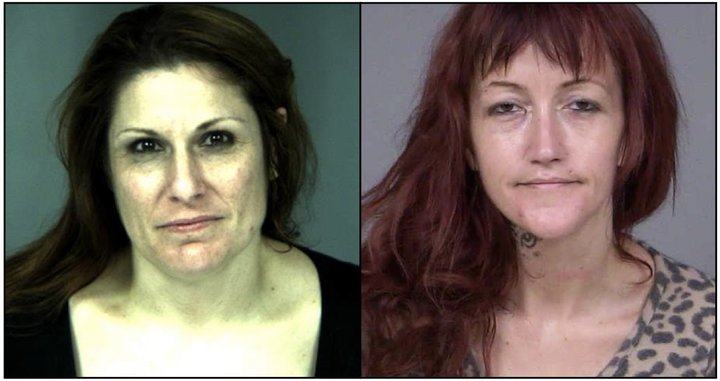
Agents located Arlene Lennox (42 years old) and Heather Taylor (AKA: Heather Jaynes; 39 years
old).
Lennox and Taylor
Taylor was found to be in possession of a loaded firearm, and packaged methamphetamine for sales. Also
located in the room was a high volume of prescription narcotics, a small amount of heroin and
methamphetamine, packaging materials, and scales.
Heather Taylor was booked at the Humboldt County Correctional Facility on the following charges:
HS11370.1(a) Possession of Controlled Substances while Armed
HS11378 Possession of Controlled Substances for Sales
HS11379(a) Transportation/Sell of Controlled Substances
Arlene Lennox was released at the scene due to medical reasons and a case will be forwarded to the
Humboldt County District Attorney’s Office requesting the following charges be filed:
HS11378 Possession of Controlled Substances for Sales
HS11379(a) Transportation/Sell of Controlled Substances
Anyone with information related to these investigations or other narcotics related crimes are encouraged
to call the Humboldt County Drug Task Force at 707-267-9976.
Today’s “COVID Minute,” with deputy health officer Josh Ennis.
Two weeks ago, in the face of rapidly rising COVID-19 cases and the prospect of holiday gatherings spawning an even faster spread of the virus, the state of California instituted a new stay-at-home order that would be triggered by intensive care unit capacity in five newly defined regions of the state.
Counties maintained the ability to enact these new orders on their own, even if their region had not yet fallen below the state-defined threshold of 15 percent of ICU beds free and available for patients. Several Bay Area counties did just that.
Live chart of regional ICU availability by CalMatters.
Nevertheless, this week the Bay Area did fall beneath 15 percent ICU availability. As of yesterday — only 13 percent of ICU beds in the region were unoccupied — meaning that four of the state’s five regions have automatically fallen under the state’s new stay-at-home order. The situation is especially dire in Southern California and the San Joaquin Valley, where ICU capacity is at or approaching zero.
The only region that still has enough ICU capacity is our own. As of yesterday, the Northern California region — which includes Mendocino and Lake counties to our south, and Shasta and Lassen counties to our east — still has about a quarter of its ICU beds available.
Nevertheless, in today’s “COVID Minute” — a video feature published regularly by the county’s Joint Information Center — Deputy Health Officer Josh Ennis warns that our own “region” is not an island. COVID patients from Northern California are regularly treated by hospitals in other regions, or even in other states, and the ICU crunch in those places will likely impact our own management of the crisis as well.
“[I]f we wait too long and don’t acknowledge what’s happening around us the dominos can begin to fall, and then we may end up in a more dire situation as a result,” Ennis says.
Transcript of today’s “COVID Minute”:
I’m Dr. Josh Ennis, Deputy Health Officer of Public Health, and this is your COVID Minute.
I’m here today to talk about the ICU capacity metric. As you know, it applies to northern California region and 15% with trigger our regions again the stay at home order.
I want to talk a little bit about how health care patients might move through the hospital system. As you know, ours go south to the Bay Area or to Sacramento. Other parts of region may send to other states, like Reno, Nevada or even southern Oregon.
So if we look at what’s happening in these surrounding regions that receive our patients — the Bay Area, Sacramento Valley — they are already to the point of being below 15%, and some of these jurisdictions are refusing ICU patients. And so if we wait too long and don’t acknowledge what’s happening around us the dominos can begin to fall, and then we may end up in a more dire situation as a result.
So understanding this metric on a regional basis requires knowing what’s happening around us. This has been your COVID Minute.
Press release from the Humboldt County Sheriff’s Office:
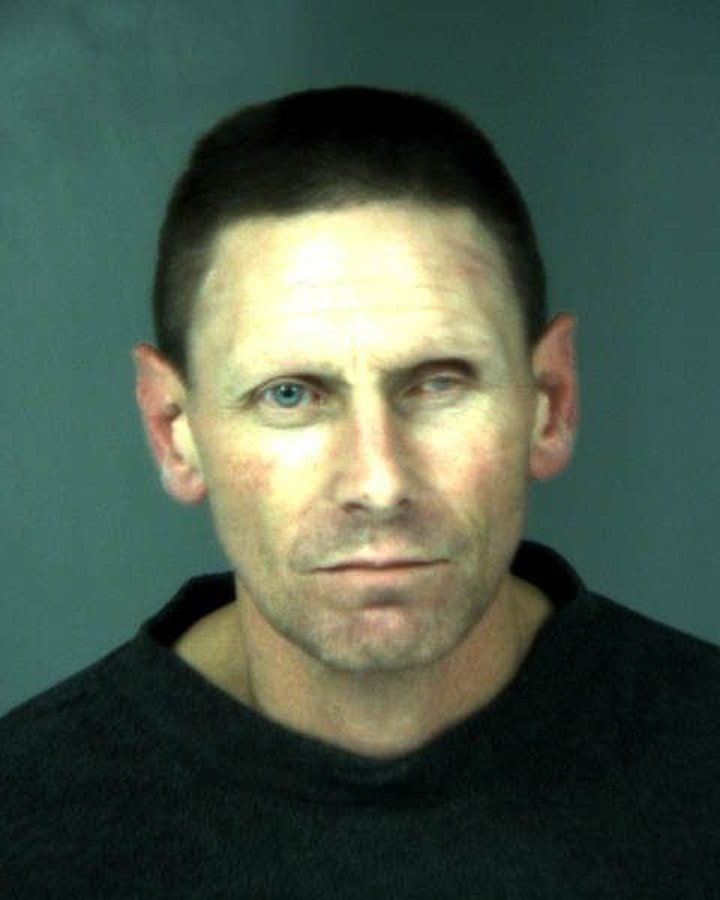
The Humboldt County Sheriff’s Office needs the public’s help to locate missing person Sean Lance Hawkins, aka “Hawkeye,” age 48 , of McKinleyville. Hawkins is missing under unknown circumstances.
Hawkins was reported missing by a family member on Dec. 14, 2020 at about 9:30 p.m. Hawkins was last seen on December 4 at about 10 a.m. in Eureka. His vehicle was later located unoccupied in a wooded area near Clam Beach Road and Dows Prairie Road in McKinleyville.
Hawkins is described as a white male adult, approximately 6 feet tall and 185 pounds, with short brown hair and blue eyes. He was last seen wearing a brown sweater, blue jeans, black hat and tennis shoes.
Anyone with information for the Sheriff’s Office regarding Hawkins’ possible whereabouts should call the Humboldt County Sheriff’s Office at (707) 445-7251.
Last week the California Natural Resources Agency announced
successful grant applications, including awarding $3,877,928 to
create the McKinleyville Community Forest.
Secretary
for Natural Resources Wade Crowfoot said “We are excited to
award these grants to support organizations and local governments
that are committed to expanding and improving access to the
outdoors.”
The
funds for this grant were made available thanks to Proposition 68,
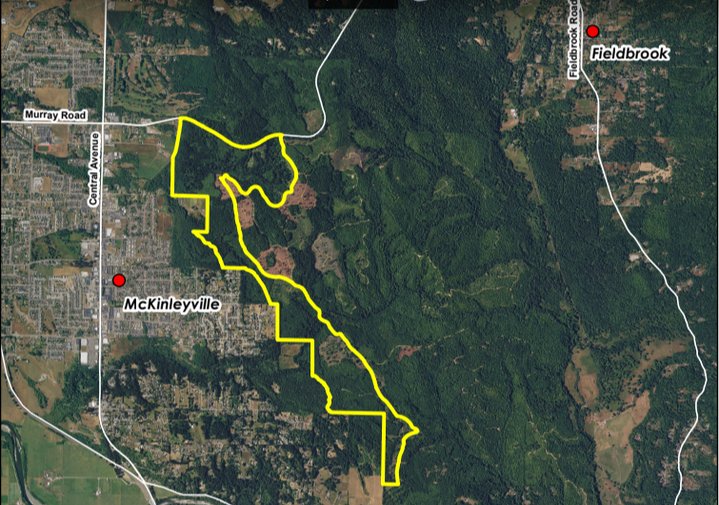
which was passed by voters in 2018. The 553-acre tract is
located along the eastern boundary of McKinleyville and lies south of
Murray Road, extending to near Hunts Drive. The property is
currently owned by Green Diamond Resource Company.
“We
are very excited that we received the grant for the community forest.
This will be a wonderful asset for the enjoyment of our residents.
Much thanks to our staff that worked with The Trust for Public Land
and Green Diamond to make this happen,” said former MCSD President
Mary Burke.
Pat
Kaspari, MCSD General Manager added there is still more work to be
done. “We will need to finalize the purchase agreement with The
Trust for Public Land and will be working with adjacent landowners to
secure additional access points and parking areas. We look forward
to engaging with the community to help design the trail system and
address the other challenges of this exciting project.”
This
project started in 2015 and the purchase is expected to be completed
in late 2021 or early 2022. The grant application was coordinated by
The Trust for Public Land on behalf of the MCSD.
The
Trust for Public Land’s California Senior Project Manager John
Bernstein noted: “The Trust for Public Land has helped create
community forests across the country and this project builds on that
legacy and will provide McKinleyville with access to parks, forests
and open spaces, while ensuring the property will be preserved and
protected from development. The Proposition 68 grant process is
highly competitive and we are grateful for the state’s investment
and are thankful to MCSD and Green Diamond for their partnership in
making this project a reality.”
The
tract is currently commercial timberland and has been actively
managed by Green Diamond. “We recognize this tract serves as the
backdrop to the McKinleyville community and is uniquely situated to
provide recreational opportunities for hiking, biking and horse
trails immediately adjacent to the center of McKinleyville. There is
also the opportunity for continued forest management by the Services
District on portions of the property,” said Jason Carlson, General
Manager and Vice President for Green Diamond. Carlson also noted
that Green Diamond is continuing to work with The Trust for Public
Land to secure a conservation easement on the majority of the
remainder of the McKinleyville Tract that would prevent any future
subdivision of the property.
Aboutthe Trustfor Public Land
The
Trust for Public Land creates parks and protects land for people,
ensuring healthy, livable communities for generations to come.
Millions of people live within a 10-minute walk of a Trust for Public
Land park, garden or natural area, and millions more visit these
sites every year. To support The Trust for Public Land and share why
nature matters to you, visit
www.tpl.org.
According
to Robert Norris, all was fine and dandy the night Jason Todd Garrett
had his throat cut and then got shot in the head by an AK-47 assault
rifle.
Norris,
an obviously reluctant witness for the prosecution, testified
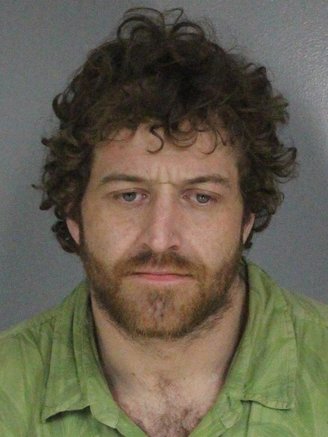
Thursday during the preliminary hearing for murder suspect Ryan
Anthony Tanner. He was at Tanner’s house for several hours with
Tanner, Garrett and Christopher Champagne. This was after Tanner
allegedly slit Garrett’s throat and Champagne wrapped the wound
with cloth and duct tape.
Tanner.
Norris,
under questioning by Deputy District Attorney Jessica Acosta, said he
saw no wound and saw no blood. Champagne had testified earlier in the
hearing that the cut was so deep he could see Garrett’s Adam’s
apple hanging out.
Norris
insisted everyone was behaving normally, and the only thing Garrett
was upset about was some kind of trouble with his friend Natalie
Pierce. He and Pierce had been hanging out together in her van. The
vehicle has been variously described as a van, a truck, a bread truck
and an ice cream truck.
“He
was griping about the girl in the truck,” Norris said. “He was
upset about the lady not helping him with the truck.”
According
to Champagne, Pierce and Garrett were stranded in the back woods
because the truck’s tires were flat. Champagne said Tanner set the
vehicle on fire and kidnapped Garrett. Pierce had run away. Norris
had been living and working at Tanner’s place for about three
weeks. He denied he’d been hired as a marijuana trimmer, saying he
was just there to clean up around the house so Tanner “wouldn’t
get an abatement letter.”
About
40 minutes after Tanner, Champagne and Garrett arrived that night,
Norris said, Champagne and Tanner left for a couple of hours. Norris
said Tanner told him “Keep an eye on that guy,” referring to
Garrett.
“I
didn’t take him seriously,” Norris said. “We were in the middle
of nowhere in the middle of the night. Where would (Garrett) go?”
He
and Garrett ate some oatmeal and watched a movie, Norris testified.
He lay down on the living room couch, and Garrett was on a mattress
in the corner.
About
midnight Tanner and Champagne returned, with Tanner announcing they
were going to take Garrett to “the end of the road,” meaning
where the dirt road ended and pavement began.
“(Garrett)
said ‘Great! Right on!’ Norris recalled. “That’s where he
wanted to go.”
All this time Garrett was accompanied by his
dog, Leonard.
Prosecutor
Acosta asked whether Garrett had also said he didn’t want to be
there. Norris said no.
According
to Champagne, Garrett was driven to another residence, where Tanner
forced him into a bathtub and shot him, killing both Garrett and the
dog. Champagne said Garrett and Leonard were buried under a water
tank on Tanner’s property.
But
Norris said that the following morning, he saw Leonard “pop up”
from the bed of Tanner’s truck. Norris left the property when he
realized Tanner and Champagne were gone and he was locked out of the
house.
“I
figured I wasn’t going to get paid so I walked out,” Norris
said.
With
Leonard following him, Norris walked and hitch-hiked to Redway. He
stayed for a few days with a friend, Angie. Eventually someone who
wanted a dog came and got Leonard.
Norris denied a series of
statements he allegedly made to law enforcement and to people in
Redway. One example: Garrett had an ice pick sticking out of his
neck.
“I
never said that.”
He
also denied telling anyone that when Tanner left with Garrett, he
turned to drive up the hill, not down to the end of the road.
And
he said it wasn’t true that he heard Garrett mumbling under his
breath to the dog, saying “Someone will come and everything will be
all right.”
At
one point, Acosta asked “Mr. Norris, are you afraid of Ryan
Tanner?”
“No.”
Both
Acosta and co-prosecutor Whitney Timm asked it be noted for the court
record that Norris nodded to Tanner while entering the courtroom.
Testimony
was expected to continue this morning before Judge John Feeney, who
will eventually rule on whether enough evidence has been presented to
order a jury trial for Tanner.
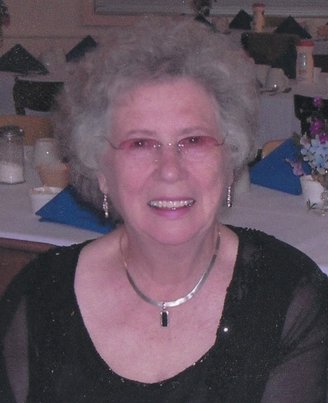
Edna
Juanita ‘Nita’ Guglielmina-Monson December
22, 1935 – December 12, 2020
Nita
was born on Dec.
22, 1935
to Robert and Alice Hancock in Lincoln, Arkansas. In 1939 Nita and
her family moved from Arkansas to California. They resided in various
places in the Watsonville/Lodi area until Nita finished high school.
After high school Nita moved to Humboldt County, where she met Norman
Cushing. Nita and Norman were married for 16 years.
During
this time she went back to school and received her LVN license, then
worked as a surgical prep nurse at St Joseph’s Hospital in Eureka.
In
1971, Nita married Elmer Guglielmina and the two moved to Loleta
where they remained for 29 years. After Elmer’s passing in 2000,
she moved to Eureka, where she met Alfred Monson. Nita and Al were
married in 2006, and they spent the next 14 years traveling and
cruising everywhere their hearts desired.
Nita
passed away in her home in Eureka on Dec.
12, 2020
at the age of 84, with her husband, Al, and fur-baby Sophie, at her
side.
Nita
is survived by her husband Al Monson of Eureka, sister Bobbie Parker
of McKinleyville, son Edward Cushing (Melissa) of Hydesville,
daughter Emily McCall (Kenneth) of Eureka, granddaughter Kathleen
McCall of California, and numerous other aunts, uncles, nieces,
nephews and cousins.
Per
Nita’s request, there will be no services or viewing. In lieu of
flowers, donations can be made in her name to Hospice of Humboldt.
###
The obituary above was submitted on behalf of Nita Monson’s loved ones. The Lost Coast Outpost runs obituaries of Humboldt County residents at no charge. See guidelines here.