

OBITUARY: Melva Duclo, 1943-2021
LoCO Staff / Saturday, Nov. 6, 2021 @ 6:56 a.m. / Obits
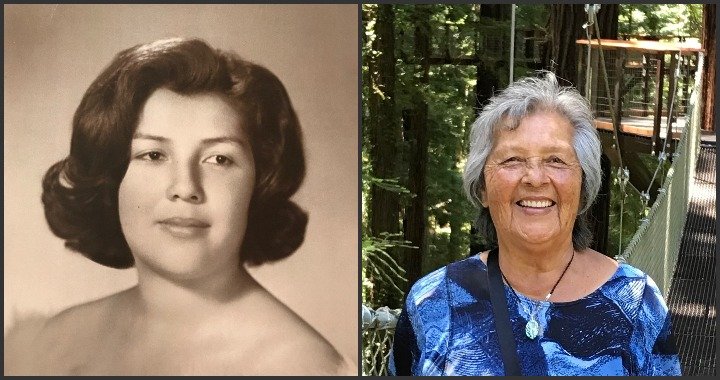
Melva Duclo passed away peacefully at her home in Loleta on the morning of November 4, 2021, with her loving daughters by her side.
Melva was born to William and Loreta Seidner on June 21,1943 in Fortuna. She married Donald Duclo in 1961 and together, enjoyed raising their two daughters, Lee Ann and Donnell. Donald and Melva recently celebrated their 60th wedding anniversary this past summer with at BBQ in Eureka surrounded by family and friends. Melva and Don worked for the Eureka City School District in the building and grounds maintenance department for 18 years until both retired.
Always the eager traveler, Melva rarely passed up an opportunity to visit new places, even on short notice. In a matter of minutes, she could be packed and ready to head out the door. Over the years, she enjoyed going on numerous cruises, taking short weekend trips and visiting far away destinations like Ireland, Great Britain, Canada, Mexico, Alaska, and many East Coast cities. Melva also enjoyed traveling to Sacramento as often as possible to visit her daughter Donnell and two grandchildren, Joshua and Lindsey Abernathy.
In addition to travel, quilting and gardening were Melva’s passions. She was a member of both the Eel River Valley Quilt Guild and the Redwood Empire Quilters Guild. She loved to volunteer at quilt shows and enjoyed sharing her love of quilting with her friends and like-minded quilters from everywhere. Over the years, Melva donated many of her quilts to the Sutter Breast Cancer Quilt Auction in Sacramento, California.
Melva took great pleasure in gardening. She had a natural gift when it came to cultivating fruits and vegetables and making just about any kind of plant flourish. A couple of small fishponds were nestled amongst her plants, and she would spend hours tending to the garden and caring for her fish. She was a member of the Humboldt Botanical Garden and often volunteered at their fundraising events. One of the member’s benefits is a reciprocal membership in over 300 botanical gardens across the country. That gave Melva a chance to do two of her favorite things – travel and visit beautiful gardens.
When she wasn’t traveling, quilting or gardening, Melva also enjoyed meeting and talking to people at many of the events she attended with Lee Ann and Gary Moore of Oceanside Jams. It was a great way for her to catch up with people she hadn’t seen in a while.
Melva is survived by her daughters, Lee Ann Duclo-Moore, Donnell Duclo, grandchildren Joshua and Lindsey Abernathy, sisters Leona Wilkinson, Marian Seidner and Cheryl Seidner, and many beloved extended family members and friends.
She is preceded in death by her parents William and Loreta Seidner, brother William Seidner and husband Donald Duclo (October 17, 2021).
A special thank you to Hospice of Humboldt for their outstanding care of our mother. Her end of life journey was handled with compassion and dignity.
Melva requested a graveside service only and wished that all her family and friends could attend. The service will be held at the Table Bluff Cemetery in Loleta on Thursday, November 11, at 1 p.m. The address is 2293-2399 Singley Hill Road, Loleta.
In lieu of flowers, contributions can be made to the Humboldt Botanical Gardens at PO Box 6117, Eureka, CA 95502 on behalf of Melva Duclo.
###
The obituary above was submitted on behalf of Melva Duclo’s loved ones. The Lost Coast Outpost runs obituaries of Humboldt County residents at no charge. See guidelines here.
BOOKED
Yesterday: 12 felonies, 16 misdemeanors, 0 infractions
JUDGED
Humboldt County Superior Court Calendar: Today
CHP REPORTS
Us101 / Sr162 (HM office): Live or Dead Animal
ELSEWHERE
100% Humboldt, with Scott Hammond: #129. You Don’t Have to Be Wealthy to Give Back | Sara Dronkers
RHBB: Trinity County Marks 25th Anniversary of September 11 with First Responder Commemoration Ceremony
RHBB: CDPH Issues Immunization Recommendations for 2026-27 Respiratory Virus Season
RHBB: Redway Transfer Station to Close an Extra Day for Construction
OBITUARY: Betty Comfort, 1927-2021
LoCO Staff / Saturday, Nov. 6, 2021 @ 6:56 a.m. / Obits
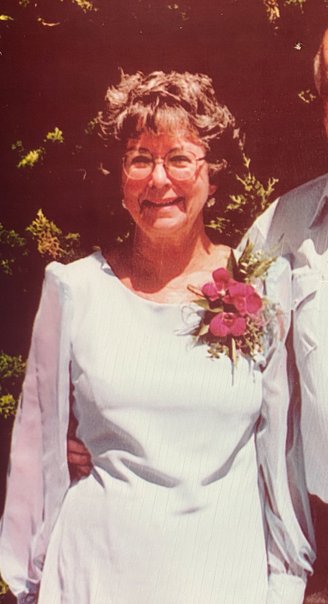
Betty
Comfort, dearly beloved wife of Jerry Comfort, was a beautiful woman
and a very special person. She was loved very much by all her family,
and will be greatly missed.
Betty was born at the Scotia Hospital on August 23, 1927. She has lived in Humboldt County all her life and grew up on the family ranch in Hydesville. Betty loved the ranch and idolized her grandfather “Baba,” who she followed around almost constantly. When she was very little she couldn’t say grandfather or papa, so she called him Baba.
Betty met her husband Jerry in high school, and it was love at first sight for both of them. They have been married for 74 wonderful years. Betty and Jerry enjoyed traveling and saw much of the United States. They went to Alaska, the Caribbean on several cruises, and visited many of the islands of the Caribbean. They also loved Hawaii, going to the islands many times. They liked all of the Hawaiian Islands, but especially Maui and Kauai. Betty and Jerry have lived in Eureka most of their adult lives, and most of their children and grandchildren now still live in Humboldt County.
Betty loved going out to the ranch, and she and Jerry often went out there to spend a few days. She enjoyed taking care of the ranch, which she and Jerry did for many years. Betty was a housewife for most of her life, but once her children were raised she became a teacher’s aide for about fifteen years in the local elementary schools.
Betty had many interests and talents. She was an excellent cook, and learned to cook as a young girl for the hay crews on the ranch. She really enjoyed gardening and working with flowers (especially daisies!), and being outside in the warm sunshine and the beauty of nature. Betty was a member of the TMN club, a group of close friends who would meet every Third Monday Night. She also loved to dance, and was a great and fun-filled dancer. At home, she loved to decorate. She would always decorate for holidays and was such a good decorator she could have been an interior designer. Betty also loved Redway. She and Jerry were given a lot on the Eel River in Redway by Jerry’s father as a wedding present. Betty and Jerry would spend most of their summers at the cabin, surrounded by their family. They spent much of their time on the deck with a beautiful view of the river, along with nights spent around the bonfire.
Betty was a wonderful lady. She was beautiful both on the inside and out. She was kind, gentle, and loving, and she was always the first to forgive; one of her friends had just said she was the sweetest person. Betty was a real trooper – she went through a lot in life, but she was always caring and thinking of others. She had a heart of gold. She always had a smile for everyone and had the cutest sense of humor. There are special people in this world who make this world a better place, and Betty was one of them. She was asked what her secret to a long life was, and without hesitation she said “my family.” We are so very proud of her. She was an extra special person, and we love her with all of our hearts – and we always will.
Betty is preceded in death by her sister Joan Figone, parents Leslie and Dorothy Rocha, and son-in-law John Aveggio. She is survived by her loving husband Jerry Comfort; their son and daughter-in-law Jace and Lorraine Comfort; granddaughter Kimberly Rose and great grandson Parker Rose; grandson Jared Comfort, great grandson Jacey Comfort, Jared’s fiancé Christina and her daughters Malorie and Jaelyn; son Bob Comfort and his wife Lisa; granddaughters Leanne and Ashley Comfort; daughter Candy Aveggio; granddaughter Casey Aveggio; and her nephew Craig Figone, as well as numerous other nieces, nephews, cousins, and friends.
The family would like to invite everyone to a memorial service for Betty that will be held on Sunday, November 14 at 1 p.m. at the Fortuna Monday Club, located at 610 Main Street, Fortuna.
###
The obituary above was submitted on behalf of Betty Comfort’s loved ones. The Lost Coast Outpost runs obituaries of Humboldt County residents at no charge. See guidelines here.
County Employees Threaten Legal Action Over ‘Failures’ of Auditor-Controller; Workforce Board Pursues ‘No Confidence’ Vote
Ryan Burns / Friday, Nov. 5, 2021 @ 4:42 p.m. / Local Government

Paz Dominguez. | File photo/screenshot.
###
A letter arrived at the County Administrative Office on Wednesday. The signatories all go by John or Jane Doe, though they identify themselves as county employees, including two department heads, two deputy directors, a division director and an unspecified number of other staffers.
These anonymous employees say they’ve been organizing in their off hours and are writing in hopes that county officials “understand the severe and critical nature of the growing and looming fiscal crisis which threatens the county organization.”
It goes on to say that the county’s inability to resolve its own fiscal problems “threaten[s] the organization, its employees and Humboldt County residents as a whole.” These problems, the letter asserts, “are a result of failures and financial missteps caused by the County Auditor Controller, Karen Paz Dominguez, as well as tolerance of her behaviors by the Board [of Supervisors].”
The signatories say they’re exploring a variety of options, including filing “further” grievances, organizing a protest or even taking legal action against the county, the Board of Supervisors or elected officials.
“To avoid retribution or undue attention we hereby execute this document in anonymity and will make our identities known at the proper time,” the letter reads.
Real cloak-and-dagger stuff, though after the letter was sent the Outpost briefly spoke with one of the signatories, a division director who verified the letter’s authenticity. You can read the full thing here.
In the absence of names and more specifics, it’s hard to know just how seriously to take this letter, though the county appears to be taking it seriously. The agenda for next week’s Board of Supervisors meeting indicates that they will discuss it in closed session, and in an unusual move, a link to the letter was posted in the agenda.
Regardless, it’s no secret that Paz Dominguez, the county’s first-term auditor-controller, has found herself at the center of numerous controversies and inter-departmental conflicts during — and even before — her tenure in office.
Lately, the turmoil seems to be picking up steam and there are signs that matters could be coming to a head. At a recent meeting of the First 5 Humboldt Commission, two county supervisors voiced dismay over systemic problems with the Auditor-Controller’s Office, and former employees have begun speaking out about their grievances with Paz Dominguez personally.
The Outpost learned just this morning that the executive committee of the county’s Workforce Development Board yesterday voted unanimously, with one abstention, to pursue a vote of “no confidence” against Paz Dominguez at its next meeting, scheduled for Nov. 19.
Scott Adair, the county’s director of economic development, says in an email to county officials that this dramatic move was made after hearing from the State Employment Development Division regarding the county’s Fiscal Year 2019/20 single audit, a comprehensive year-end financial report that was due more than six months ago.
“As you are likely already aware,” Adair writes in his email, “completion of the County’s Single Audit is required in order for the County to qualify for (and receive) state and federal workforce WIOA [Workforce Innovation and Opportunity Act] funding.”
That funding is now in jeopardy as a direct result of the county’s failure to complete the Single Audit, according to Adair. The state could issue a compliance finding, potentially triggering a program freeze and claw-back of existing funds. “Such an outcome would put the County’s current workforce programs, vendors, and program beneficiaries at jeopardy,” Adair writes.
Meanwhile, county departments say they’ve already lost hundreds of thousands of dollars in state and federal revenues as a result of the Auditor-Controller’s Office’s delays in closing the books over the last two fiscal years. Outside agencies and county employees also say they’ve had trouble even getting in touch with Paz Dominguez. Emails and phone calls go unreturned for weeks and months at a time.
Connie Beck, director of the county’s Department of Health and Human Services (DHHS), sent an email Wednesday to the Board of Supervisors, County Administrative Officer Elishia Hayes and County Counsel Jefferson Billingsley. “DHHS continues to be impacted by the inability to get any information on the work that is required from the Auditor or that office,” Beck writes. “The financial issues continue to get worse, more federal and state programs and funds are in jeopardy, and staff are feeling quite hopeless.”
With her email, Beck forwarded her department’s latest attempt to reach Paz Dominguez — a letter sent to her and the county’s Audit Committee from Trevis Green, DHHS’s deputy director of finance.
“Departments need to know the status of the year end to effectively plan,” Green writes. “Why are you continuing to not communicate with all of us on where you are in your process and when you will finish?”
He goes on to say that the Public Health division of DHHS was unable to claim more than $350,000 as a result of late fiscal reporting, and another state allocation was cut by nearly $60,000 partly due to such delays.
“The fiscal year-end process only seems to be getting worse not better as time goes on,” Green writes, noting that millions more hangs in the balance with new fiscal reporting deadlines looming. “DHHS is extremely concerned that the way things are going, the department will lose the ability to claim even more reimbursements, see more allocation cuts and suffer through even more cash flow issues as we move forward.”
Reached by the Outpost, Green elaborated on the cash flow issues, saying the department’s year-end balances from Fiscal Year 2019/20 have yet to be rolled forward into the 2020/21, even though that year ended more than three months ago.
“That’s made it so our Public Health Department cannot accurately determine how much funding we have,” which is interfering with plans to expand the county’s public health laboratory, Green said. “Because we can’t look at the county’s accounting system and know with accuracy what our fund balances are, we can’t adequately tell [developers] how much money we have for this expansion.”
Other departments are being affected, too. The Public Works Department, for example, has been compiling a spreadsheet of lost revenues. It includes more than $657,000 in overhead costs that the county can no longer claim from CalTrans “because the single audit is not done and the projects are now closed,” according to Deputy County Administrative Officer Sean Quincey. (Paz Dominguez disputes this, as you’ll read below.)
The previous year’s audit remains a point of contention, too. Paz Dominguez has assured officials that the books are closed on Fiscal Year 2019/20, but Quincey says, “It appears there may still be more work that needs to be done: between August and early October, more than $100M in additional transactions [from that year] were posted to the General Ledger.”
He added, “Getting the audit done is critically important to the county and other agencies in Humboldt, and we stand ready to help in any way we can.”
Professional accounting firm CliftonLarsonAllen (CLA) was engaged by the county to conduct last year’s single audit, but in September the firm disengaged from the process citing “difficulties” including blown deadlines, a failure to submit necessary account balances and a lack of communication from the Auditor-Controller’s Office.
“We have reached out to the County through email and telephone and by submitting our requests and selections through the portal established for the Auditor-Controller’s Office,” the firm said in a letter to the county. “As of September 10, 2021, we still have not been able to formalize a plan with the County for completing the audit.”
The firm said it will come back to finish work on the overdue audit in early February, assuming the county has submitted the necessary information by then.
When Paz Dominguez first took office in 2018, her department was allocated 11 full-time employee positions, which she argued was woefully inadequate. She has since has lobbied successfully for extra help. As of the current fiscal year, the Auditor-Controller’s Office is allocated 19 full-time positions, an increase of 73 percent.
Last month, employees with outside accounting firm MGO performed about 295 hours of work for the Auditor-Controller’s Office, according to the County Administrative Office.
However, short-staffing problems persist. The Auditor Controller’s Office currently has nine vacancies, some due to fairly recent departures. For example, former assistant payroll services manager Kara Fales left in March, and in a recent interview she said she quit after 14 years with the county because of disputes with Paz Dominguez, whom she described as controlling and vindictive.
“I couldn’t do it anymore. I just couldn’t do it anymore,” Fales said. “And I literally feel like I ran away. Even the last day of my 14 years felt like a blur.”
Fales said the entire payroll staff has quit except Payroll Services Manager Katherine Lourenzo, who is out on sick leave. Reached by the Outpost, Lourenzo said she’s out on extended stress leave because of “the toxic workplace that Karen has created.”
Lisa Dugan, the county’s former director of child support services, said she, too, left county employment earlier than she’d planned, and constant fights with Paz Dominguez were part of the reason.
“It’s horrible, I have to tell you,” she said. “The county is being torn apart and it makes me sad.”
Torn apart by the auditor-controller?
“It hugely has to do with that office,” she responded. Dugan said she is aligned with Paz Dominguez’s progressive politics and was rooting for her to succeed but quickly grew frustrated with her micromanaging of details at the expense of government functions — “seeing the trees but not the forest, paying attention to minutia and not understanding the big picture.”
###
Another example of the building frustration: At a commission meeting of First 5 Humboldt last Friday, Executive Director Mary Ann Hansen and her fellow commissioners gathered via Zoom to discuss an urgent issue. The organization’s own annual audit was due with the State Controller’s Office that very day, but Hansen said they’d been unable to complete it due to the county’s late reporting.
She explained that her organization, an independent government entity supporting young child development with cigarette tax dollars, never received beginning balances for Fiscal Year 2020/21, and so all of its ending balances were incorrect.
“We have been requesting a response from the Auditor-Controller for a couple months and haven’t gotten any answer until just yesterday, which does not leave our independent auditor any time to complete the audit,” Hansen said. She added that she didn’t get a reply to emails on the matter until she send one that cc’d county counsel and supervisors.
She had reached out to the State Controller’s Office to ask for a deadline extension but was clearly distressed about missing the reporting deadline.
“Never in our 20 years have we failed to meet that fiscal, fiduciary requirement until now,” she said, later adding, “As a caretaker agency administering taxpayer funds, this is highly, highly frustrating that we can’t meet that basic public trust.”
Humboldt County Supervisor Michelle Bushnell is the board appointee to the First 5 Commission, and fellow Supervisor Virginia Bass is an alternate. Both were present at Friday’s meeting.
“This is a bigger issue that‘s endemic to our auditor’s office,” Bass said. She noted that some people don’t believe the issues in that office are as bad as people say. “This is a real life example of how people’s lives can be turned upside down,” she said.
Bushnell added, “On behalf of the county, I’m extremely sorry this added stress has been added to your plate.” She apologized to Hansen — again, on behalf of the county — for the lack of communication.
Bass, who is a member of the county’s Audit Committee, said the matter could potentially be addressed at the next meeting, though they’ve had trouble scheduling one.
“We’ve planned many, but every time [Paz Dominguez] says she’s not available,” Bass said. “We’ve had a hard time getting the auditor there. I think we can’t wait very much longer.”
Reached by phone after the meeting, Hansen was still upset.
“It’s shocking to me, it’s just shocking that we don’t have our basic account balances for the year that ended 16 months ago,” she said. “I can’t do my job when [Paz Dominguez] won’t respond to emails or post how much money we have in the bank, for crying out loud. How is it responsible for us to spend money when it looks like we don’t have any money in our accounts?”
On Monday, Hansen updated us via email, saying Paz Dominguez was working to reconcile the issues in the county fund where First 5 moneys reside and “looking at options … to provide the information requested.” She said Paz Dominguez anticipates being able to do so by the end of the week.
The Outpost reached out to Paz Dominguez on Monday and asked for an interview. She responded via text, saying she was “knee-deep in payroll” until at least Thursday and suggested we talk Friday. (The county’s payroll function, as some readers may remember, was moved out of the Auditor-Controller’s Office and into Human Resources about three years ago, shortly after Paz Dominguez was elected, but in August the county agreed to move it back despite serious concerns voiced by employees.)
We wound up emailing a list of questions to Paz Dominguez, and late Friday morning she sent back responses to some, but not all, questions along with attachments containing supporting documents.
Regarding the First 5 situation, Paz Dominguez said she was surprised to hear about Hansen’s comments at last week’s meeting “as it is our experience that we have provided responses as soon as we have been able to and have received expressions of gratitude in return.”
She forwarded a number of email exchanges between her office and First 5 Humboldt staff, dating back to July 2019. All the exchanges were friendly, though most were unrelated to First 5’s audit. Those that were related are from late last week, as Hansen attested.
Paz Dominguez added that she and her team value the work done by First 5, and she is personally grateful for the agency’s help when she was a new mother. She said she’ll try to attend the agency’s next meeting to answer questions.
Regarding other county departments’ reports of lost revenues caused by delays in her office, Paz Dominguez said such statements are merely “unsubstantiated claims,” and she asked the Outpost to send any proof or evidence of their veracity to her so she can address it.
“It is a disservice to the public I/we serve to continue to misinform with false claims of lost funds,” she said. “If departments are choosing to not claim known expenditures for reimbursements, then that is a separate concerning issue that should be addressed by the Board of Supervisors.”
Regarding allegations that she is overly focused on details, missing the forest for the trees, Paz Dominguez said the purpose of the Auditor-Controller’s Office is to protect taxpayer dollars. “It is because of our diligent attention to detail that we are able to identify overpayments” and other errors, she said.
“We will continue tending to the trees and pulling out weeds in order for the forest to thrive,” she added. “I believe we all have a different function to serve in this County organization and ours as accountants and auditors is to make sure we are all complying with policies put in place to protect public funds.”
Paz Dominguez’s responses included a lengthy defense of her team. She said she’s tremendously proud of the work they’ve done in the face of recent challenges and limited support.
“We continue to do the best we can as fast as we can with limited resources and can take pride in the improvements we’ve made in automation and increased efficiency,” she wrote. “… We are extremely aware of the need for all departments, partner agencies, and vendors to get paid timely and we are proud to report that we are caught up to our standard 2-week processing time with invoices submitted to our office.”
Getting necessary funding to local programs is her staff’s “highest priority,” she says, vowing, “we will continue to do our best!”
She adds: “We also hope that the County’s current endeavor to improve our ‘work culture’ will be successful to reduce the current dysfunction and miscommunication present within this organization. It took a team many years to get here and it will take a team to get us to a better place.”
After learning about the Workforce Development Board’s upcoming “no confidence” vote via a forwarded copy of Adair’s email, we asked Paz Dominguez to respond. We’ve posted her response in full below:
Thank you so much for sending this over and giving me a chance to address it. I have not yet learned of this issue from the Workforce Development Board, Economic Development, the CAO, or Chair Bass nor has this item been agendized for the public so I hope you’ll forgive this brief response.
I will be happy to attend the WDB meeting on 11/19 should they choose to send me an invite.
The 19/20 audit is currently in the hands of our external auditors. The A-C Office has provided everything it has available to provide and it is my understanding that the remaining inquiries were already addressed by the respective departments (Aviation, Planning & Building, and DHHS). Our County was delayed in closing 19/20 due to several factors (delays in departments, covid, staff turnover, etc). Those factors continue to exist and the progress we’ve made as a County is not the progress we all would have hoped to have made. However, there has not been one day that work has not been done to continue making progress.
State agencies are aware of the situation experienced in our County and have expressed their willingness to help. Some (like the agency working with Planning & Building) have said they will accept a statement from the County describing when the audit will be complete rather than penalizing the County by withholding any funds for not having a published audit. Our external auditors have also continued to work diligently on our audit as well as their other numerous responsibilities. The 19/20 audit will be published by our external auditors within the next three months (I say three months generously as I don’t anticipate it would take them that long and I’m being considerate of the upcoming holiday season).
It is unfortunate that the challenges we are all facing is impacting processes but it is also due time that we recognize, as a County, that these are not normal times, things are not how they used to be nor will they likely ever be again, and continuing to scapegoat individuals for things outside of their control will not make anything better. I believe that we are all doing the best we can considering the limited resources available. From my part, I am committed to continue working every day to support the A-C team and the community we serve.
Thank you,
Karen Paz Domínguez
Auditor-Controller
###
An addendum: In the midst of our email exchanges with Paz Dominguez today, a DHHS administrative analyst named Mychal Evenson, who previously served on the county’s Audit Committee, announced his intention to challenge Karen Paz-Dominguez for the Auditor-Controller’s office next year.
###
PREVIOUSLY:
- The Auditor-Controller’s Ongoing Beef With Other County Departments is Getting Ugly
- Supes Call Special Meeting, Say County at ‘Serious Risk of Losing Millions’; Auditor-Controller Says She’s Being Asked to Cut Corners
- County Department Heads and Local Agency Leaders Voice Frustration, Concern With Auditor-Controller
- In Ongoing Conflict With Its Own Auditor-Controller, County Opens Investigation, Looks to Outsource Some Fiscal Oversight Duties; A-C Asks to Retain Outside Counsel
- ‘Nobody is Outsourcing the Auditor’: County Administrative Office Responds to Claims By and About Paz Dominguez
- TODAY in SUPES: Board Agrees to Appoint Outside Attorney for Auditor-Controller, But Not the One She Picked
- State Suspends County’s Purchasing Account for Overdue Payment; Auditor-Controller Takes Responsibility
- County Abandons Investigation Into Fiscal Management Delays, Having Never Interviewed the Auditor-Controller
- TODAY in SUPES: Board Approves ‘Audit Committee’ in Hopes of Solving the Ongoing ‘Dysfunction’ Surrounding Financial Transactions
- The Agency Running Humboldt County’s Workforce Services is Ready to Bail Over Chronically Late Payments
- Board Approves Creation of Chief Financial Officer Position as Staff Emphasizes Distinctions From Auditor-Controller
- Humboldt County Audit Committee Held Its First Meeting … and the Auditor-Controller was Absent
- Board Agrees to Spend Another Half-Million Dollars Trying to Fix Its Ongoing Fiscal Shitshow
- An Embarrassing About-Face on an Expensive Non-Solution to Our Payroll Problems
- As County’s Fiscal Fiascoes Mount, Feds Impose Tax Liens, Contractors Plead for Their Money and Department Heads Sound the Alarm
- In Latest Audit Committee Meeting, Paz Dominguez Asks for Help and Gets It
- County Moves Payroll Back Under Auditor-Controller’s Office Despite Serious Concerns Voiced by Employees
A Race for Auditor-Controller: Public Health Administrative Analyst Mychal Evenson Announces He Will Challenge Karen Paz-Dominguez for the Office Next Year
LoCO Staff / Friday, Nov. 5, 2021 @ 1:36 p.m. / Elections
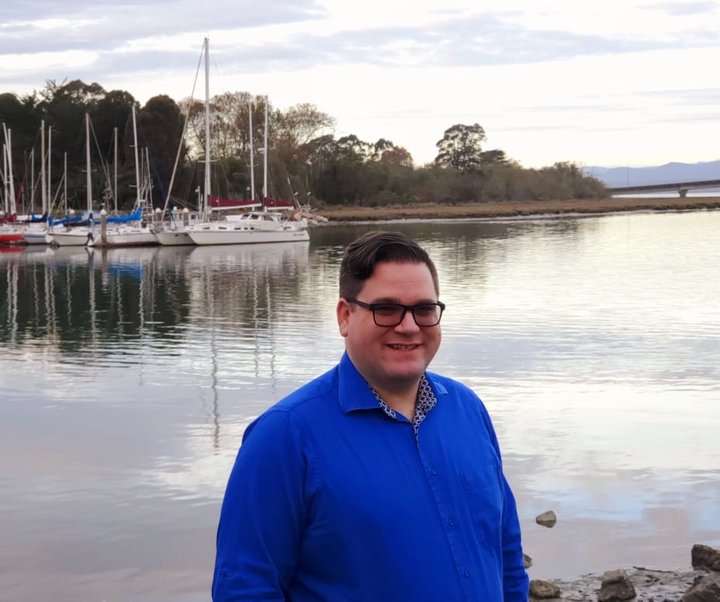
Photo courtesy Mychal Evenson.
Mychal Evenson, who has worked as an administrative analyst for the County of Humboldt since 2017, has announced his intention to challenge Karen Paz-Dominguez for the Auditor-Controller’s office next June.
Evenson works in the Public Health division of the Department of Health and Human Services. He holds a master’s degree in governmental accounting from Rutgers University, and was formerly a member of the county’s Audit Committee.
Press release from Mychal Evenson:
In response to the frequent and growing failures of the current Auditor-Controller, Mychal Evenson has decided to run for Auditor-Controller in the 2022 election. These are the reasons Mychal is running for Auditor-Controller:
Communications Failures – The current Auditor-Controller has proven incapable of timely and effective communication and does not take responsibility for the office’s communication failures. Having one method of communication (email) for County departments to contact the office has severely hindered the County’s financial operations. The result is lost revenue and months of delays for essential functions.
Constant Delays – The office is significantly behind on all mandatory reporting. Given thirteen (13) months to complete the annual financial statements to meet the deadlines provided by the State of California, the office was unable to meet the deadlines. This failure places up to 56% of the County’s budget ($334 million) at risk. Most funding providers require that the County’s financial statements be up-to-date and on record. At least one funding agency has already informed the County of this risk in an audit finding.
Maladministration – The current Auditor-Controller does not know how to delegate. Micromanaging staff and refusing to modernize business practices makes the office inflexible, slow, and wasteful. It harms relationships with other County departments and community partners, and makes the office difficult to staff. The public expects and deserves better from its government.
Why Mychal?
Mychal believes in staff empowerment, effective communication, and leveraging 21st-century tools. Mychal holds a Master’s degree in Government Accounting, he is knowledgeable in IT after an eight-year-long career in the industry, and he is a skilled communicator. Resolving the communication failures will eliminate the office’s issues meeting deadlines and lift the significant risks on grant funding caused by missed deadlines. Mychal served on the Audit Committee and submitted his resignation on November 04, 2021.
###
PREVIOUSLY:
Here’s What California Could Do to Fix the Supply Chain
Grace Gedye / Friday, Nov. 5, 2021 @ 7:24 a.m. / Sacramento
If you’ve never really thought about California’s ports or the global supply chain before the past month, that’s normal. But they’re having problems now, driven by the pandemic, and it’s causing a shortage of everything from computer chips to kitchen supplies.
California’s problem is a national one, too: The ports of Los Angeles and Long Beach together bring in 40% of all goods shipped to the U.S. by water. So now everyone from port directors to President Biden is interested in fixing the situation.
The backlog’s origin story is complicated. Early in the pandemic, factories had to shut down or reduce their output. Shipping companies reduced their schedules, assuming people would be buying less stuff. Protective gear was sent to locations across the globe that don’t export many goods, so some of those shipping containers didn’t get returned.
Then, people did buy stuff — a lot of stuff. Warehouses struggled to hire enough workers to keep up with demand and they started getting backed up, leaving containers full of new goods at the ports, where they started to create traffic jams, said Chris Tang, a professor at UCLA’s Anderson School of Management who studies supply chain issues.
This week, California lawmakers talked with experts and stakeholders about what the state could do in the near term to resolve the backlog, and in the longer term, to prevent similar backups in the future.
“I mean, the simple answer to this crisis is that people stop buying stuff, but that’s not going to happen,” said Assemblymember Patrick O’Donnell, a Democrat whose district includes both the ports of Los Angeles and Long Beach. “So we need to respond, and we need to respond quickly.”
Already, federal, state, and local policy makers have taken action. On Oct. 13th, President Joe Biden announced the Port of LA would operate around the clock, a decision that came after the Port of Long Beach also decided to extend its hours. A week later, Democratic Gov. Gavin Newsom signed an executive order directing state agencies to look for land that could be used as temporary storage, identify freight routes that should be exempted from vehicle weight limits and identify training partnerships with private industry for port and logistics workers. In late October, the federal Department of Transportation said it would offer billions of dollars in loans to shore up California’s port and supply chain infrastructure. At the local level, authorities have allowed containers to be stacked four high, rather than the usual two, and said companies would be fined for leaving containers too long at the ports.
But, experts say the backlog may not be resolved until sometime next year. In the meantime, loitering ships are causing pollution and businesses across the country are facing shortages.
“It has become clear that this is a multifaceted problem, and it will require multifaceted action,” said O’Donnell at the hearing. “There is not one switch you can flip.”
So what can the state of California actually do to help?
Find land that can temporarily store containers
Dee Dee Myers, director of the Governor’s Office of Business and Economic Development, said the solution she’d heard most frequently is for the state to identify parcels of land, either inside or outside port complexes, that can be used as additional temporary storage for containers.
Myers said the agency now has a list of several dozen potential sites, though there are complications for each. The government has a deadline of Dec. 15th to complete its survey, though they may be done sooner, Myers added.
Using other locations as temporary storage is something that private marine terminal operators have been doing for some time, says Robert Leachman, a professor in UC Berkeley’s Industrial Relations and Operations Research program. It makes sense, he said, as a short-term solution.
But leaving goods strewn across Southern California could create new problems, such as how best to retrieve them later and negotiate with communities opposed to having a ton of big rigs coming and going, experts said.
Grow the truck driving workforce
Contributing to the backup is a shortage of truck drivers. Truck drivers are independent contractors and are paid per delivery rather than by the hour, Leachman said. When they’re stuck waiting at the ports for hours to get their container, it means they’re working more hours for the same take home pay. Fewer drivers are willing to take that deal.
There’s also a shortage of warehouse workers. “The jobs are hopelessly unattractive so we can’t get enough people to fill them,” Leachman said. He thinks wages will need to rise to fill those positions.
California transportation secretary David Kim said he’s met with the White House, the Governor’s Office of Business and Economic Development, California’s Labor and Workforce Development Agency, and the Department of Food and Agriculture to discuss driver recruitment and retention. The federal transportation department will also be working with state DMVs to expedite the licensing process for truck drivers.
“The jobs are hopelessly unattractive so we can’t get enough people to fill them.”
— Robert Leachman, professor in UC Berkeley’s Industrial Relations and Operations Research program
The state can work with universities and community colleges to provide technical training and build the pipeline of people prepared for trucking and logistics jobs, said Nick Vyas, a professor at the University of Southern California’s Marshall School of Business. But in the longer term, if it’s hard to interest enough workers in these kinds of jobs, automation may be part of the solution, he said.
Tang agrees. In the short run, there’s a huge need for truck drivers, but, says Tang, “I think that the long term prospects for truck drivers (are) not good.”
Suspend regulations and laws
A coalition of more than a dozen business groups sent Newsom a letter requesting that he suspend several regulations and laws to help solve the supply chain issues. Among their proposals:
- Suspend a variety of environmental regulations and pollution laws;
- Suspend the state’s landmark worker status law passed in 2019 that reclassified many independent contractors as employees;
- Suspend a new law passed this year which requires warehouses to disclose to workers any quotas or work speed standards.
A quick response came from Assemblymember Lorena Gonzalez, the San Diego Democrat who introduced both worker laws. She pointed out that the independent contractor law does not currently apply to truck drivers; a battle over an exemption for the drivers is currently wending its way through the legal system. Additionally, the warehouse law isn’t slated to go into effect until January of 2022, leading Gonzalez to call the proposals “deceptive.” She also said the shortage of truck drivers has been decades in the making, driven by deregulation of the industry and decreasing working conditions.
“Instead of offering good-faith proposals that address the underlying problems contributing to labor shortages and congestion at our ports, the industry-backed proposal is a thinly veiled attempt to cut costs on the backs of essential workers and skirt future enforcement efforts,” she wrote.
When asked if the administration would reconsider laws regulating warehouses, Myers didn’t offer a conclusive response. “I think we’re willing to look broadly; I think there’s some things that we won’t be willing to change,” she said. She also said the administration may relax regulations such as some weight limits for trucks.
“The industry-backed proposal is a thinly veiled attempt to cut costs on the backs of essential workers and skirt future enforcement efforts.”
— Assemblymember Lorena Gonzalez, D-San Diego
An inland port?
Another, longer term solution suggested was the creation of an inland port — sometimes called a dry port — to function as a distribution point for incoming goods. Inland ports are connected to sea ports by road or rail.
“An inland port in the Central Valley would do wonders in terms of relieving choke points, and facilitating the movement of cargo from the San Pedro Bay ports up to northern and central California by truck or rail,” said Transportation Secretary Kim at the hearing. He said a proposal is currently being developed by the Fresno Council of Governments, who have secured a $1 million grant from the US Department of Transportation to study the idea.
This would alleviate some of the pressure at water ports, Vyas said.
But Leachman is dubious of the value of a new inland port. It would require building additional terminals for cranes to unload containers, he said, which is costly. He thinks those investments could be better made elsewhere. If a new inland port was built somewhere in the middle of the state, like Fresno, it could result in a lot of extra miles for truck drivers. Most of the distribution facilities are in the Inland Empire and near Southern California the ports.
“If you end up needing to go to those warehouses anyways, it’s sort of wasted miles right? You go to Fresno, they’re going to have to double back to Ontario or Pomona,” Leachman said.
So how much can the state really do?
In short, not a lot, Vyas said. The California ports are just one point in the very long supply chain, stretching from manufacturers across the globe, to consumers in small midwest towns and large east coast cities. California’s state government has limited influence on the international actors involved, and the millions of consumers across the U.S. who order goods. There aren’t quick fixes for growing the warehouse and truck driving workforces.
But the issues could be resolved before too long anyway: Tang expects things will calm down by February or March of 2022.
###
CALmatters.org is a nonprofit, nonpartisan media venture explaining California policies and politics.
As UN Tackles Twin Climate Threats, California Struggles With Them, Too
Rachel Becker and Julie Cart / Friday, Nov. 5, 2021 @ 7:20 a.m. / Sacramento
Nations around the globe this week have pledged to tackle two thorny and critical threats to Earth’s climate: methane, which is the most potent planet-warming pollutant, and widespread destruction of forests.
Both of these are major contributors to climate change that California has tried — yet struggled — to address.
More than 100 countries inched toward progress on tackling climate change by signing an international pledge, launched Tuesday at the United Nations’ climate conference in Glasgow, Scotland, to slash methane pollution by nearly a third over the next ten years.
The nations also promised to end worldwide deforestation — a widespread practice that warms the planet — in the same time period, an ambitious goal that would be backed by nearly $20 billion in public and private funds.
President Joe Biden paired the pledges with an announcement of an expansive strategy to cut methane, following the lead of states, including California, that began crafting policies to stop it from seeping into the atmosphere years before.
“It was remarkable to be able to already have a great outline of a methane action plan,” National Climate Advisor Gina McCarthy said at the international summit. “We can do this because of the work that has been done by everyone else.”
California has long-standing rules tackling methane from landfills, the oil and gas industry, dairies and other major sources. But it’s also home to a large natural gas storage facility that had a major leak starting in 2015. State officials voted today to increase natural gas storage at the facility while they evaluate how to shut it down.
“The role of nature has been underappreciated as a part of our climate solution.”
— Wade Crowfoot, California Resource Secretary
California’s methane emissions largely haven’t increased over the past decade, but they also haven’t dropped significantly — signaling the challenge ahead for governments that signed on to the pledge.
The pledge from the UN nations “is sort of the lowest common denominator that you could get everyone to agree to,” said Arvind Ravikumar, a research associate professor at the University of Texas at Austin. “That said, 30% does not mean it’s easy.”
When it comes to forests, California is losing the ability of its trees to store planet-warming carbon. The state’s forests are no longer burned or razed to clear land for agriculture, as is common in the developing world, but large tracts are burning nonetheless — from wildfires.
“The role of nature has been underappreciated as a part of our climate solution,” California Resource Secretary Wade Crowfoot said in an interview.
“The world’s forests are burning up,” he said. “In the Southern Hemisphere it’s through a policy of land clearing, in California our forests are burning as a result of climate change or forest management.”
Cows and landfills
Methane, the key ingredient in natural gas, is a shorter-lived but more powerful greenhouse gas than the more-infamous carbon dioxide. It makes up about 10% of greenhouse gases that people pump out across the United States, but accounts for about 30% of today’s warming.
It’s largely regulated by the federal government, except where states have stepped in.
Biden’s new plans include proposing a rule under the Clean Air Act to cut methane pollution from new and existing oil and gas facilities, and finalizing another that would increase oversight of certain natural gas pipelines. The White House also said state agencies would ramp up incentives and other efforts to curb methane from landfills and agriculture.
The Environmental Protection Agency’s draft oil and gas rule, expected to be finalized by the end 2022, is one more example of the regulatory whiplash that industries have faced over the past five years.
No sooner had President Barack Obama finalized in 2016 the first-ever federal rules to directly regulate methane from new and modified oil and gas sources, than President Donald Trump’s administration began trying to undo them. Congress undid the Trump administration’s rollbacks this year, and now even more stringent rules are set to take their place.
“On methane, specifically for oil and gas companies, they have seen quite a bit of change in Washington,” Lauren Sanchez, senior advisor to Gov. Gavin Newsom on climate, told CalMatters from Scotland. “What California brings is kind of a consistency in message and, for them, consistency in business direction.”
The California Air Resources Board is still figuring out how the federal proposal and California’s existing methane rules overlap, said Carolyn Lozo, who leads the air board’s oil and gas and greenhouse gas mitigation branch.
“In many ways, the state methane rule has very similar controls to what the EPA proposal has,” said Lozo.
Since the landmark California Global Warming Solutions Act passed in 2006, the state has adopted a number of methane policies — rolling out requirements for methane capture at landfills, increasing oversight and monitoring to prevent leaks in natural gas pipelines and storage facilities, and setting a statewide target to cut methane pollution 40% below 2013 levels by 2030.
“We need to dig down a little deeper and see, is there a delta? Is there a place that we need to shore up the state regulation?”
— Carolyn Lozo, California Air Resources Board
The air board adopted regulations in 2017 requiring regular monitoring, leak detection and repair at both new and existing oil and gas facilities, and set emissions standards and other requirements for certain oil and gas equipment. The rules expanded on a patchwork of existing policies to prevent toxic compounds and gases escaping from wells enacted by some air districts, which can also reduce methane emissions, Lozo said.
“We need to dig down a little deeper and see, is there a delta? Is there a place that we need to shore up the state regulation?” Lozo said.
Kevin Slagle, a spokesperson for the influential Western States Petroleum Association, said it’s too soon to contrast California’s program and the yet-to-be finalized EPA rules, which he said they will review.
Echoing the American Petroleum Institute, he said, “we support the direct regulation of methane from new and existing sources and are committed to building on the progress we have achieved in reducing methane emissions.”
More controversial is California’s approach to regulating methane from the dairy industry, which accounted for nearly half of the state’s methane emissions in 2013. California’s regulators tackle those emissions entirely with incentive programs, funding efforts to harness and convert methane emissions from manure into fuel.
Environmental justice groups say these incentives encourage the persistence of large-scale farming operations near communities.
“The state has pumped hundreds of millions of dollars of taxpayer and ratepayer money into programs that benefit the factory farm and gas industries and that do not address either the air quality or water quality or climate crises impacting San Joaquin Valley residents,” said Phoebe Seaton, co-executive director of Leadership Counsel for Justice and Accountability. “It’s past time to take our dairy problem seriously.”
The Biden administration is “failing to learn from the mistakes that California has made over the last decade.”
— Jamie Katz, the Leadership Counsel for Justice and Accountability
Like California, the Biden administration’s plans rely largely on voluntary incentive programs for agriculture.
“USDA does not regulate greenhouse gas emissions from the agriculture sector,” said Mirvat Sewadeh, a spokesperson for the United States Department of Agriculture. “Our climate strategy is farmer, rancher and landowner-led and will ensure that rural America plays a key role in our transition to cleaner sources of energy.”
That’s a problem, said Jamie Katz, staff attorney at the Leadership Counsel for Justice and Accountability. The Biden administration is “failing to learn from the mistakes that California has made over the last decade.”
And methane pollution continues. Cows’ digestive tracts produce methane, and the gas released by their belches is unregulated in California, which could hinder future methane reductions. And an aerial survey reported massive plumes of methane released by some landfills.
Still, California’s climate regulators say there’s more progress ahead. State law requires diverting 75% of all rotting, methane-spewing organic waste from landfills by 2025. California’s air board announced a collaborative plan to launch a flock of carbon-sniffing satellites to detect methane and other gases. More incentive-funded manure-digesters are expected to come online, and scientists are working to crack the problem of bovine belches.
“What we need to do is really deploy more dairy digesters, cap more fugitive methane emissions, move off of fossil natural gas — which will hopefully reduce our fossil fugitive methane emissions as well,” said Matthew Botill, chief of the air board’s Industrial Strategies Division. “And doing that, over this next decade, is really pivotal.”
Protecting forests to protect climate
Assemblymember Ash Kalra, a Democrat from San Jose, says the state hasn’t gone far enough to address deforestation, including on an international scale. He sponsored a bill that would have required companies doing business with the state to certify their products were not harvested from areas where tropical deforestation occurred.
The legislation passed but was vetoed by Newsom last month. Kalra said he welcomes the international pledges to end deforestation and attention to the problem, but said, “we can do more.”
“A lot of countries make pledges, and you don’t see much follow up. I’m not interested in pledges, I’m interested in action to save this planet.”
Land use practices, including agriculture and burning forests for development, account for about 23% of total annual greenhouse gas emissions, according to the U.N. Intergovernmental Panel on Climate Change.
It’s a circular problem: Burning forests to clear land releases carbon. And losing trees means losing their ability to pull carbon from the atmosphere.
California policy makers came to the same conclusion. An executive order signed by Newsom last year made it a priority to harness natural landscapes to promote biodiversity and “accelerate natural removal of carbon and build climate resilience in our forests…”
The initiative is still in draft form but much of the focus is on forest loss through wildfires and will set goals for carbon storage in forests and soils.
The state has increased its measurements of both carbon stored – or sequestered – in California’s forests and the alarming increase in emissions from severe fires.
“Our challenge in California is to restore the health of our forests to enable them to be carbon sinks instead of carbon sources,” Crowfoot said.
“A lot of countries make pledges, and you don’t see much follow up. I’m not interested in pledges, I’m interested in action to save this planet.”
— Assemblymember Ash Kalra, D-San Jose
Matthew D. Hurteau of University of New Mexico has been studying forests in the southern Sierra Nevada, measuring climate change and fire and their impact on healthy forest function. His research has been used as the underpinning for much of California’s forest and fire management policy.
“California has a forest loss problem,” he said. “These significant tree-killing wildfire events are happening in the context of ongoing drought and high temperatures. It impedes the ability of new trees to grow.”
He modeled historical, low-severity burns that occurred every 17 years. Those moderate fires took out smaller trees and emitted carbon, but that was offset by the surviving larger trees, which absorbed the carbon from the fires.
“The big trees are where the carbon uptake happens,” Hurteau said.
He said the practice by fire agencies of thinning forests with low-intensity burns that target the removal of smaller trees achieves the twin goals of making forests more fire-resistant and maintaining their ability to store carbon.
Using forests and other lands to address the climate crisis is overdue, he said.
“We’ve paid lip service to the role of natural systems in helping to regulate the climate,” he said.
###
CALmatters.org is a nonprofit, nonpartisan media venture explaining California policies and politics.
OBITUARY: James Edward (Sonny) Jackson III, 1951-2021
LoCO Staff / Friday, Nov. 5, 2021 @ 6:56 a.m. / Obits
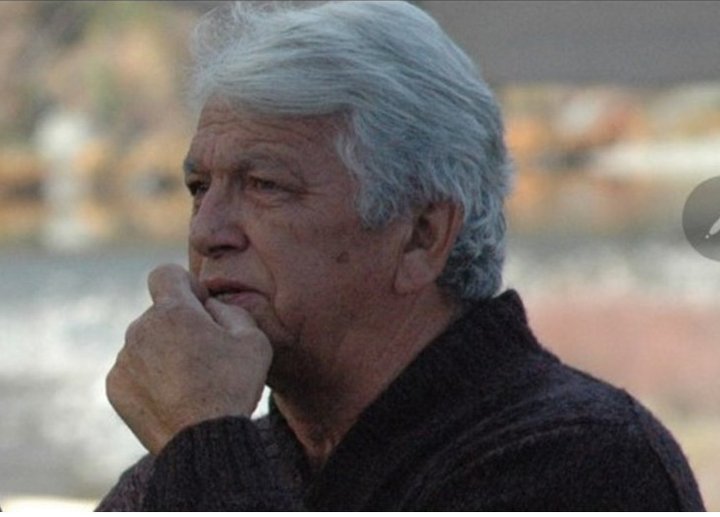
James Edward (Sonny) Jackson III was born in the old Indian Health Service Hospital in Hoopa on January 26, 1951, and started his journey to the other side on October 26, 2021, due to Covid complications, in Bakersfield.
Sonny was an enrolled member of the Hoopa Valley Tribe and ran for chairman in the most recent election, where he thought big and outside the box for economic development in the valley. Sonny had a vibrant, energetic, outgoing personality coupled with a knack for striking up conversations with others that made him many life-time friends. He had many talents, including being a mechanic working on and restoring classic cars, boat motors, tractors, and heavy equipment. He was also a carpenter, handyman, farmer, and businessman developing the Jackson Farms at his home in Hoopa and renovating houses in Bakersfield. He and his wife owned and operated Custom RV & Boat Sales & Repair for years in Bakersfield. He most recently was working on boat propellers and fan blades inventing a more powerful and efficient design.
Sonny was a veteran of the Vietnam War having served in the Air Force at Da Nang Air Force base. During his time in Vietnam, he was sprayed with Agent Orange many times leading later to health issues and diabetes.
Hydroplane Boat Racing was a lifetime hobby for Sonny. He started racing hydros right out of high school, joining his brothers Zane and John with the Cal-Ore River Racing Association. He raced for many years, winning in Willow Creek, and several second places in Grants Pass. In 1989 he was the High Points racing champion. Sonny and his good friend Jeff Lewis went to Modesto in 1979 and set the F-Hydro outboard speed record at 114 mph. They also set the On Alkey Hydro speed record at 150+ mph, also in Modesto, and they went on to compete at various venues across the United States. This past year, Sonny founded the Klamath-Trinity River Racer Association and he served as the president bringing the racing club back to our area.
Sonny and his long-time friend Tom Weir restored and renovated a 1946 Gar Wood run about wooden antique mahogany boat. On August 11, 2001, the boat — named Small World — was entered in the Concours d’elegance competition in Lake Tahoe winning a third-place trophy. This project was documented in a booklet titled Big Dream, Small World that is available online. They also made the cover of the Sept/Oct 2001 Classic Boating magazine.
Sonny was preceded in death by his mother, Kathryn Waldner Jackson; his father, James (Jimmie) Jackson II; his grandparents, Ned and Louisa Jackson, John W. Waldner, and Marjorie Shipley; his sister Leona Jackson Lente; his brothers, John Jackson, Leonard Jackson, Leroy Jackson, Frank Grant III; and brother-in-law, Mervin George Sr.
He is survived by his loving wife Melody Jackson and by his children: Jennifer Jackson Diaz, Kodi Sun Jackson Shinn, Chanti Jackson, James (AJ) Jackson IV (Star), Stephanie McKindley (Matt), and Chrissy Hooper (Kameron, Tyler, Jaxson); his grandchildren: Jeremy Diaz, Josh Diaz, Byrdie Shinn, McKenna Andrews, James Jackson V, Neo McKindley , and Millenia McKindley. He is also survived by his siblings: Zane Grant Sr. (Nita), Lincoln Jackson (Janet), Laura Lee George, Lillian Hostler, Laura Ferris, and Lila Gerstner (Jay D); his sisters/brothers-in-law: Carole Grant, Leslie Jackson, Debbie Arviso (Bobby), Lorraine Reese, Esther Williams (Joe), Howard (Debbie) Smith, and Ray (Joanne) Harrison.
Sonny’s wishes were to be cremated and placed alongside his brother John, mother, and grandfather in Hoopa. A Celebration of Sonny’s Life will be held on May 7, 2022, in Hoopa in conjunction with the white-water hydroplane boat races that he so enjoyed and loved.
###
The obituary above was submitted on behalf of Amanda Ring’s loved ones. The Lost Coast Outpost runs obituaries of Humboldt County residents at no charge. See guidelines here.


