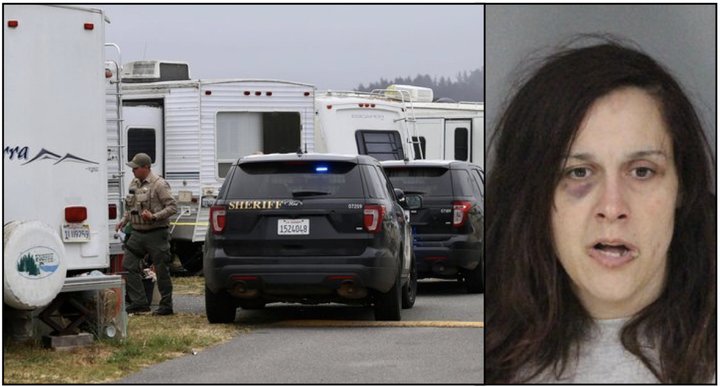
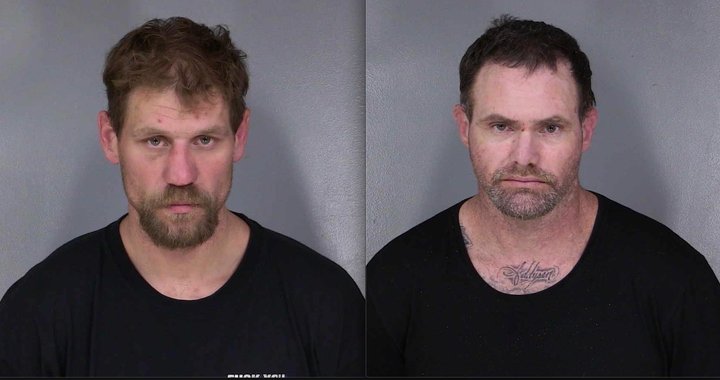
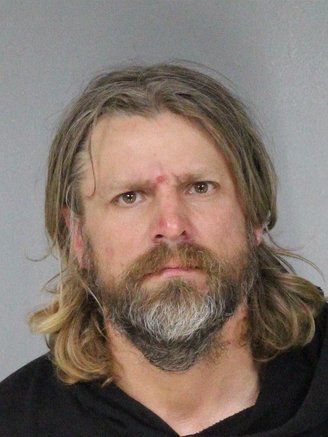
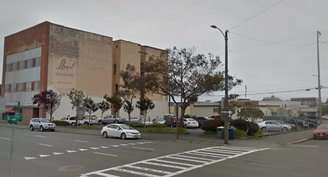
Officers at the scene of the crime in King Salmon where Daisy Leen (pictured at right in a 2020 mugshot) is charged with stabbing her two young children
Today Judge John Feeney suspended the case against 29-year-old Daisy Mae Opal Leen after her attorney, Deputy Conflict Counsel R.J. Loehner, expressed doubt that she is mentally competent to stand trial. Leen, who has been in jail since the day of the stabbing, did not appear for the hearing this morning.
Feeney appointed Dr. Jennifer Wilson to evaluate Leen for competency. Wilson’s report is due later this month.
Leen allegedly stabbed the boys, ages 7 and 11, then got a ride to Eureka and began brandishing a knife at a gas station. Both children are expected to survive, although one had to be flown out of the area for medical treatment.
Leen is charged with two counts of attempted murder, felony child abuse and use of a deadly weapon during the commission of a felony.
From left: Emma Sundberg, Aliesha Brown, Lisa Sundberg and Kayla Maulson at the Frybread Love stand. Photo by Jennifer Fumiko Cahill
###
Watching
frybread go from a fist of pale dough pulled from a bucket to its
final form, cumulus in shape and caramel in color, is like watching
up-close magic. In a straw hat with a kitchen towel hanging from her
shoulder, Lisa Sundberg pats, then pulls the dough with practiced
hands, turning it to stretch under its own weight, pinching a few
holes and laying it gently into the hot vegetable oil, where it
bubbles and puffs, the oil shush-ing
like distant applause.
Frybread
itself is a feat of metamorphosis. In Native communities across the
U.S., frybread is a staple and a comfort food born from displacement
and the destruction of traditional resources and foodways that were
replaced by government commodity foods, dating back to the Navajo
people’s “Long Walk” from their homelands to New Mexico. “The
government made us make frybread,” says Kayla Maulson, Sundberg’s
daughter and owner of the Frybread Love stand newly opened outside
Cher-Ae Heights Casino. “We were only given commodities … my dad
said he grew up on commodities; they were given powdered milk, sugar,
flour, salt.” From those rations came what Sundberg calls “a
delicacy,” a base for a hearty chili taco, a jam-schmeared treat
crispier and chewier than doughnuts, a satisfying comfort eaten plain
and warm.
Lisa Sundberg shapes dough before frying, while her daughter Kayla Maulson ladles out chili for Indian tacos. Photo by Jennifer Fumiko Cahill
“It
really is the shared experience across Indian country,” says
Sundberg, who is Yurok.
Maulson,
who studied childhood development and American Indian education, as
well as business at Humboldt State University, was looking for
something she could do while staying home with her two kids after the
pandemic hit. Finally, the urgings of old rugby teammates and
coworkers who’d been eating her family’s frybread for years got
through and she started Frybread Love with help from her family,
including her mother, her sister Aliesha Brown and cousin Emma
Sundberg. By the time they packed up the tent the first night in
front of the Cher-Ae Heights Casino, Maulson estimates they’d sold
200 orders. The next night it was triple that. Now, along with nights
at the casino, she’s arranged a spot at the McKinleyville Farmers
Market and is working on Arcata.
The
ingredient list is short: flour, salt, sugar, baking powder and
water. Maulson says her first try at frybread was making it for her
father when her mother was out of town and she was 8 or 9. She’d
mistakenly added cups of sugar rather than teaspoons. “But I was so
happy he still ate it.” She’s got it down now but her mother
remains the go-to frybread person in the family.
“I
can finally accept that title,” says Sundberg. “I remember my
first roll at fry bread … it was like the bottom of a shoe.”
Technique,
Sundberg says, is everything. Working in the gaming industry helping
design cash access systems, she traveled to Native-owned casinos all
over the country, sampling frybread and asking questions. Mixing,
emulsifying and kneading methods were a little different everywhere,
with some regions using yeast or shaping the dough differently.
Sundberg
and Maulson worked with Rhonda Wiedenbeck of Beck’s Bakery to source
freshly stone-milled flour with higher amounts of gluten and protein.
When allowed to rise for two hours, the result is a delicate
chewiness, crisp exterior and fluffy center.
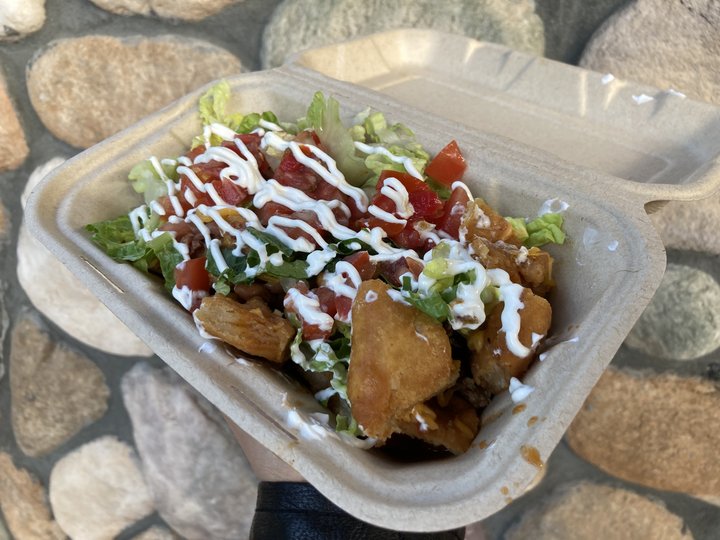
Frybread Love’s Indian taco. Photo by Jennifer Fumiko Cahill
The
printed menu has an Indian taco with chili, cheese, lettuce and
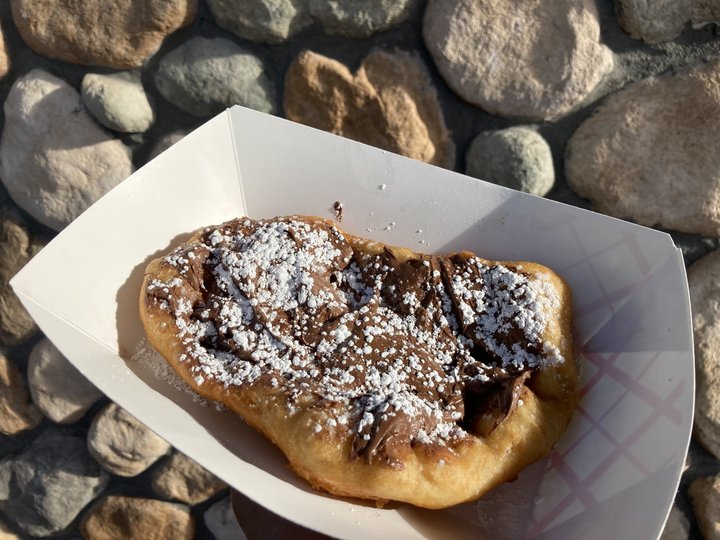
tomato, and a couple of sweet options, Nutella and powdered sugar.
Both curious first-timers and those who grew up eating it order the
plain bread. “It’s just a cherry on top having anything else with
it,” says Maulson. She herself loves peanut butter and jelly. But
the women are batting around all kinds of additions. Maulson, who’s
also Ojibwe, notes that in the Midwest, frybread is sometimes served
with wild rice and chicken soup. Her mother had served pork sliders
with apple slaw on frybread and they’re hoping to work with local
farmers on ingredients like blackberries and huckleberries.
According
to Maulson and Sundberg, frybread isn’t something you make unless
you’re serving 15 people. At Maulson’s grandmother’s family
gatherings, 100 pieces, enough for dinner and dessert, would be
standard. But a big gathering isn’t hard to come by for her family.
“We have Grandma next door, we have Uncle down the hill, so we’re
making it for at least 20 people. … You want to share it all,
you’ve got a big huge pot of chili you’re making it with. You
bring all your cousins or your aunties over. ‘Come over for a
barbecue, we’re making frybread.’”
Hot frybread with Nutella. Photo by Jennifer Fumiko Cahill
Maulson
and Sundberg’s family is among those who provide food for cultural
events and ceremonies, too, like the annual Sumeg Brush Dance. There,
community members share traditional foods like eel, acorn, salmon and
frybread. They bring enough to feed the dancers, attendees and
campers, sometimes up to 300 people. “I think that’s what
everyone’s missed this past year,” says Maulson. “I really do
miss the dances and staying up all night with the girls and hearing
the songs.” They also cook for the recently revived girls’ Flower
Dance coming-of-age ceremony, in which Maulson was among the first
participants after its decades of dormancy.
Those ceremonies have been absent from
local Native life since the COVID-19 pandemic put gatherings on hold.
But the frybread is a taste of those days and dinners when people
could come together to share traditions and meals that carry their
shared history.
“We
love frybread,” says Sundberg. “We love feeding people and we
need that love to spread, to use frybread as a seed of love to reach
out and hopefully bring us together again.”
###
Jennifer
Fumiko Cahill (she/her) is the arts and features editor at the
Journal.
Reach her at 442-1400, extension 320, or
jennifer@northcoastjournal.com. Follow her on Twitter @JFumikoCahill.
The
Community Voices Coalition is a project funded by Humboldt Area
Foundation and Wild Rivers Community Foundation to support local
journalism. This story was produced by the North
Coast Journal
newsroom with full editorial independence and control
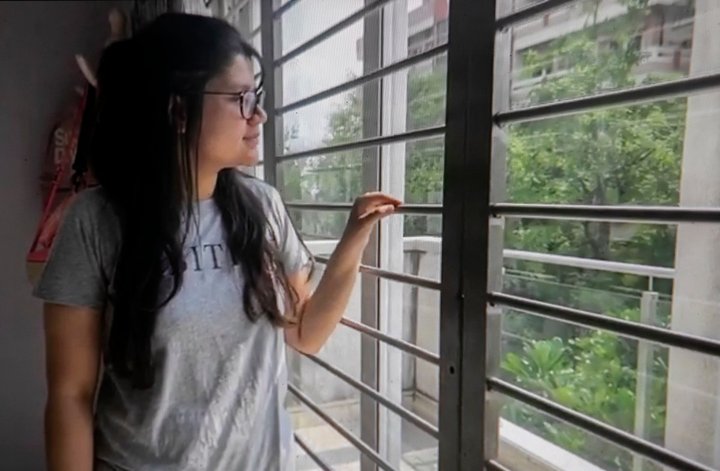
IIncoming UC Irvine student Yutika Khemka photographed via Zoom in her bedroom in Kolkata. Khemka isn’t certain if the vaccines currently available in India will qualify her to return to campus in the fall but she says she will take whichever vaccine she can get. Photo by Anne Wernikoff, CalMatters
###
A growing list of California colleges will require students to get COVID-19 vaccinations as classes largely resume in-person this fall. For the roughly 160,000 international college students enrolled in California, the mandate introduces a new layer of complexity: Will the vaccines offered in their home countries be accepted in the Golden State?
The policy at the California State University, the system of choice for about 13,000 international students, is still under development, said spokesperson Toni Molle. Stanford University said the same.
The CSU, UC and USC all say they’ll begin requiring a vaccine for in-person activities once one is formally approved by the Food and Drug Administration. Right now all three vaccines in the U.S are being administered under an emergency provision. Stanford made no mention of waiting for that emergency-use authorization to lift.
COVID-19 has led to a 14% drop in international college student enrollment in the U.S. between 2019 and 2020, and an even sharper decrease among new international students.
In addition to the three U.S. vaccines approved for emergency use, guidance to American colleges says they can accept other vaccines approved by the World Health Organization. But of the five vaccines so far approved by the organization, so far none are ones that are produced in China, from which 44% of all international students in California come. India, another top sender of international students, has a vaccine accepted by the World Health Organization, but is experiencing a scarcity that may last months, the chief executive of a main vaccine manufacturer said.
Yutika Khemka, an incoming UC Irvine student from Kolkata, India, said that given the vaccine shortage in her country, she would take whatever vaccine is available to her. She’s more anxious at the prospect of flying halfway across the world unvaccinated. “I don’t think we are in a position to choose,” she said.
Easing the path for international students to get to the U.S. helps staunch some of the enrollment shedding due to COVID-19, which has led to a 14% drop in international college student enrollment in the U.S. between 2019 and 2020 and an even sharper decrease among new international students. Some public colleges have also become increasingly reliant on revenue from international students who pay several times more in tuition than domestic students.
Students from countries offering vaccines without final approval from the World Health Organization shouldn’t be discouraged, said Dr. Sarah Van Orman, chief health officer at USC.
“We’re encouraging everyone whether they’re in the U.S. or another country to get the vaccine that’s available to them,” said Van Orman, who is also a member of the COVID-19 taskforce for the American Health College Association. The organization of college health leaders is advising campuses to accept vaccines approved by the World Health Organization, mirroring guidance from the U.S. Centers for Disease Control and Prevention.
Students arriving to the U.S. inoculated with vaccines that aren’t approved by the U.S. or the World Health Organization may be revaccinated, according to current guidance from the Centers for Disease Control. However, the same guidance says that no “data are available on the safety or efficacy” of receiving an authorized vaccine after receiving one that isn’t.
While noting there’s no data on the practice, the UC is also proposing to require revaccination for students who are partially vaccinated or with innoculations outside the approval of the U.S. and World Health Organization. Students would receive approved vaccinations at least 28 days after they last received their other international shot, the UC said.
“I don’t think people should be concerned about revaccination at this point,” Van Orman said. “What we don’t want to see is students who are in other countries delaying vaccination because they may need to be revaccinated when they arrive.”
But the unknowns about revaccination are “probably the biggest concern” among students, said senior Rex Zhang, a UC Berkeley international student living in China who represents international students on the campus senate.
A college providing vaccines to international students is enticing to Matchamon (Nam) Pianapitham, an incoming UC Berkeley student who lives in Bangkok, Thailand.
“I’d rather get Pfizer, Moderna, or Johnson & Johnson,” she said, listing the three vaccines available in the U.S. While the Thai government has approved two vaccines that are also accepted by the FDA and World Health Organization, Pianapitham doubts she’d secure inoculation in her home country. “We’re creating new records every day,” she said, “so I think they are vaccinating the more vulnerable people.”
Nam Pianapitham, an incoming UC Berkeley student currently living in Thailand, is hoping to get one of the three COVID-19 vaccines available in the U.S. Courtesy photo
Fall term is several months away, and more vaccines may be approved by then, including those from China. If students still arrive without vaccines or unrecognized ones, colleges should provide them, the association of health colleges said. That’s what USC will do for free, Van Orman said.
The policy applies not just to international students, but to anyone arriving without a vaccine, such as U.S. students who couldn’t access one or whose parents didn’t believe in one.
The point is to vaccinate as many students as possible to tame the virus and keep the campus community safe. “Outbreaks have happened everywhere to everyone,” she said. Associating a disease with a group of people, “not only is it discriminatory but it’s bad public health.”
The Centers for Disease Control also requires all travelers coming from abroad to board their flights with proof of a negative COVID-19 test.
Students with permitted exemptions from receiving vaccines due to health or religious reasons may be tested regularly for COVID-19, USC said, echoing advice from the college health association.
Not every college requiring vaccines is sticking to only those approved by the U.S. and World Health Organization. Pomona College told CalMatters it’ll accept any vaccines offered abroad.
Complicating things further for international students is the COVID-19-induced backlog of visa applications at U.S. consulates and embassies around the globe after more than a year of reduced operations. The problem is particularly pronounced in China, where only 160 student visas were processed last summer compared to more than 70,000 the previous three summers, according to reporting by Open Campus.
“My concern for our students is really, are they going to be able to get a visa to arrive on time.” — Anna Wimberly, UC Irvine’s director of international student services
The most common student visa, the F-1, typically is issued for five years, so the backlog isn’t affecting students who already acquired visas before the pandemic struck. But first-time students admitted for this fall and last will be in a race against time to secure visas before the 2021-22 academic year begins late summer.
UC Irvine, which enrolled the fifth most international students of California institutions last academic year, has 1,116 students enrolled in 2020 living abroad — and 899 of those students are in China.
“My concern for our students is really, are they going to be able to get a visa to arrive on time,” said Anna Wimberly, UC Irvine’s director of international student services.
A U.S. State Department spokesperson said interviews for student visa applications in China will begin opening this week.
It could have been worse. Last week the Biden administration lifted travel restrictions affecting students in Brazil, China, Iran and South Africa. The administration is blocking most travel from India starting Tuesday, but clarified the ban doesn’t apply to students with visas entering the U.S.
That’s still a problem for Khemka. She had originally planned to have her parents help her settle in at UC Irvine. But now, she’ll be traveling alone — if she can even get a visa in time.
She said that the U.S. Embassy and consulates in India will be shut down until mid-May, and she likely won’t be able to get a visa appointment until August. That’s just a few weeks before she’s supposed to start classes.
Khemka said she’s coping with the uncertainty around vaccines, visas and travel by taking it day to day: “If we continuously think about what’s going to happen in six months, it is very anxiety inducing.”
###
CALmatters.org is a nonprofit, nonpartisan media venture explaining California policies and politics.
On May 5, 2021, Detectives with the Eureka Police Department’s Problem Oriented
Policing Team (POP) responded to a residence on the 1000 block of 4th St in Eureka to
serve a search warrant after receiving information that 41-year-old Gordon Briggs of
Eureka was selling narcotics and was in possession of firearms. Briggs is a convicted
felon and is prohibited from owning or possessing firearms and ammunition.
Briggs and two other occupants were detained inside the residence. During the search,
detectives located a .22 caliber pistol and ammunition. A records search showed the
pistol had been reported as lost to the Humboldt County Sheriff’s Office in 2020.
Briggs was found to be in possession of a small amount of methamphetamine on his
person.
One of the occupants in the residence was identified as 36-year-old Dennis Kanen of
Tehama County. Kanen was found to have a felony arrest warrant for vehicle burglary.
Kanen was also found to be in possession of 10 grams of methamphetamine.
Through the course of the investigation it was determined that Briggs did not have
knowledge of the pistol which had been located in a safe in the residence but the
ammunition was determined to be his.
Briggs was booked into the Humboldt County Correctional Facility for felon in
possession of ammunition and possession of methamphetamine. Kanen was booked for
the arrest warrant and for possession of methamphetamine.
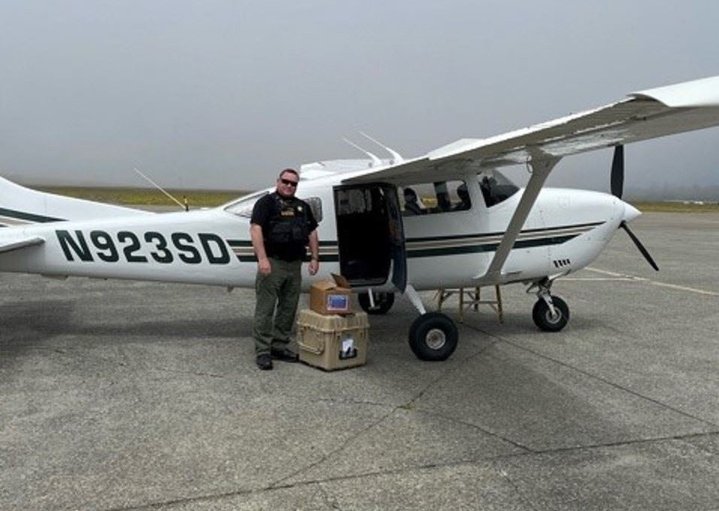
Humboldt County Sheriff’s Office Lt. Kevin Miller receives the vaccine delivery from Fresno County. | Photo courtesy County of Humboldt.
###
Three cheers for Fresno, everybody!
Press release from the Humboldt County Joint Information Center:
More than 2,300 doses of COVID-19 were flown into Humboldt from Fresno County after Public Health identified a shortage of vaccine for this week’s clinics.
This week’s allocation of COVID-19 vaccine failed to arrive in Humboldt County due to a shipping error. Humboldt County Public Health worked with the state to find extra doses and found two trays — or 2,340 doses — of Pfizer vaccine at a medical office in Fresno County. When transporting those doses presented an additional challenge, Fresno County Sheriff Margaret Mims responded immediately, tasking her Sheriff’s Air Support Unit with delivery. Following a plane ride, all doses safely arrived in Humboldt this morning and were delivered to Public Health.
Humboldt County Sheriff William Honsal extended his gratitude to Sheriff Mims and the entire Fresno County Sheriff’s Office. “When our county was in need of support for its vaccination efforts, Sheriff Mims stepped up,” he said. “This is another example of neighbors helping neighbors, and I want to thank everyone involved for their work to keep our community healthy.”
Humboldt County District Attorney’s Office press release:
On May 5, 2021, a Humboldt County jury found Jason Ryan Barnes, age 48, of Eureka, guilty of one count of involuntary manslaughter for the homicide of Bernhard “Ben” Bertain and two felony counts of assault with a deadly weapon. The jury also found true the special allegations that Mr. Barnes personally caused great bodily injury or death and personally used a deadly weapon.
Barnes had been charged with second degree murder. Prior to jury deliberations, Judge Timothy Canning acquitted Mr. Barnes of that charge and the lesser included charge of voluntary manslaughter. Thus, the jurors returned guilty verdicts on the most serious charges they were allowed to consider.
The case arose from an incident at the Burre Center Laundromat in Eureka on December 22, 2018. An employee of the laundromat intervened when she saw and heard the defendant screaming at a woman in the parking lot who was asking to be left alone. After the laundromat employee placed herself between Barnes and the woman, Mr. Bertain came over from his parked car to stand with the laundromat employee. At that point the defendant swung a skateboard at both the employee and Mr. Bertain; -the employee evaded the attack but the skateboard struck Mr. Bertain. The defendant then hit Mr. Bertain with the skateboard two more times.
Mr. Bertain declined medical attention immediately after the incident, but later told friends and family members that it felt like his ribs were broken when he was struck by the skateboard. Mr. Bertain called 911 in distress three days later but could not communicate when paramedics arrived. Mr. Bertain died during a flight to Queen of the Valley Medical Center in Napa. An autopsy by Napa County Forensic Pathologist Joseph Cohen determined that Mr. Bertain’s spleen had ruptured due to an expanding hematoma caused by blunt force trauma to the torso.
Eureka Police Department (EPD) Detective Corrie Watson led the investigation into Mr. Bertain’s death. Officers and evidence technicians from both EPD and the Arcata Police Department also contributed to the investigation.
Deputy District Attorney Roger C. Rees prosecuted the case with assistance from District Attorney Investigator Marvin Kirkpatrick, and victim advocates Marybeth Bian and Caitlyn LaHaie. Deputy Public Defender David Celli represented Mr. Barnes.
Mr. Barnes is scheduled for sentencing on June 14, 2021. He faces a maximum of 8 years in state prison. Mr. Barnes’s offenses qualify as violent crimes under California’s Three Strikes Law, and he will be required to serve at least 85% of any sentence imposed.
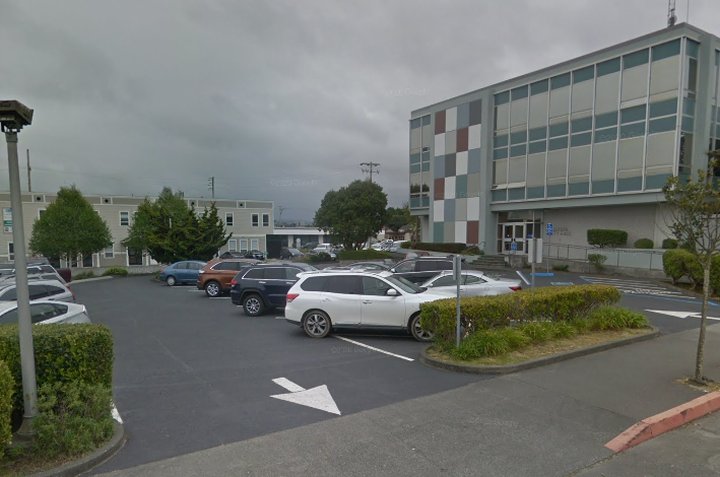
This next batch of parking lots includes both of City Hall’s parking lots — one on 5th and K and one on 6th and L — and another at the corner of 5th and G Streets. Eureka City Manager Miles Slattery told the Outpost that initially the City planned to include the parking lots at 4th and G Streets — across from the Arkley Center — and on 3rd and E — right next to the Sea Grill — as part of this round, but decided to postpone the release of those lots until next year, due to community concerns.
As a part of the process, the City is holding public meetings to give the community a chance to ask questions and voice some of their concerns. The first meeting was held on Monday and the next meetings will be tonight (Wednesday) and Thursday. Over 50 people attended Monday’s virtual meeting, many of them voicing worries over the projects, including the impact on parking — particularly at the 3rd Street parking lot, which was initially planned to be the focus of the meeting.
The city-owned parking lot on 5th and G Streets | Screenshot from Google maps
Mike Newman, a broker at George Peterson Insurance and a former Eureka City Council member, said that the parking lot at his business is always full, adding that he was worried that taking that parking away would have a negative impact on the Sea Grill’s business. Newman also felt that the City didn’t make enough effort to notify the community about this meeting. “I would urge for in the future that there be a little more outreach to neighboring businesses,” he said.
Newman was not the only one concerned about the City’s outreach efforts and many people mentioned feeling perturbed about the previously approved project — three housing developments to be built on parking lots at Sunny and Myrtle Avenue, 8th and G Streets and the other at 6th and M Streets by Linc Housing — which some people said they had heard nothing about until recently.
The next three city-owned parking lots the council is talking about converting to housing.
Former Eureka Planning Commission Chair Jeff Ragan — who recently resigned in reaction to the Linc Housing project — again spoke up about his issues with the City’s process, which he feels is “moving too fast.” Ragan also commented on the fact that the housing will be low-income, saying that, although the Planning Commission had approved the plan to convert all of these city parking lots into housing — which was approved as a part of the Housing Element of the City’s General Plan update — Ragan said that the plans he approved proposed “penthouse options” and some “high-end rates.”
“We really need to slow this way down,” Ragan said during the meeting. “We need to do much, much more vigorous reaching out to not only neighbors of the property, but the city as a whole.”
Slattery said, responding to the concerns during the meeting, that each of these projects will be required to have a parking plan that will have to either keep all or most of the parking (depending on the usage of the lot) or replace it within 300 feet of the site. Slattery also said that the City has made great effort to engage the public in this process, which is why staff is holding these meetings. He did, however, want to take those concerns into consideration and said that the City is making a greater effort to notify the public about meetings moving forward.
As far as Ragan’s concerns over the housing developments being low-income instead of mixed, Slattery told the Outpost that the RFQ (request for quotation) released by the City for the first three parking lots did encourage mixed occupancy, but that the City just didn’t receive any proposals that met that request.
“Unfortunately, none of the proposals had the inclusion of more diverse housing opportunities,” Slattery wrote in a follow up email to the Outpost. “We have had many discussions with Chris Dart [of] Danco, on how we can incentivize this more in future RFQs. He has been clear that, from a financial standpoint, this is extremely difficult. However, we will continue to strive to meet the intent. Hopefully the properties in Old Town will provide for more opportunities to mix in commercial uses with the developments.”
The City will hold two meetings about building housing on the city-owned parking lots — tonight and Thursday at 6:00 p.m, via Zoom. You can find the flyer with information on how to attend at this link.
After the City has gathered community feedback, staff will finalize the RFQ, which will then come before the City Council for approval, most likely in July, Slattery said. After the RFQ is sent out and staff chooses a recommended proposal, the project will again come before City Council for approval.