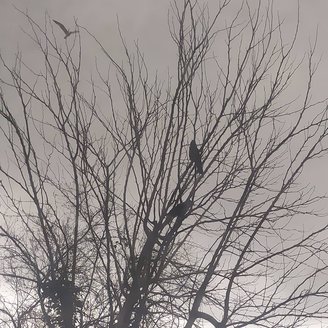
The winter returned this past week. It’s a measure of the size of the city that some parts reported snow, while others, including our neighborhood on the Asian side, did not. Still, it was miserable. After weeks of sunshine and warmth, and the long walks we were able to take with Leo, the return of the cold weather was rather hard to take, especially since like everybody we already spend too much time indoors.
The return of winter got me thinking about other winters. I thought about my first winter in Prague. It was called “the Russian winter” by the Czechs that year, with Siberian winds blasting the whole of central and eastern Europe. It was so cold that he penguins at the Prague Zoo were brought inside to keep them warm, which I thought rather strange. They were penguins, after all.
“Well, they are not real penguins, they’re Czech penguins,” a student remarked. Ah, Czech humor.
On a more serious note, the city also set up Army tents in Letna Park for the homeless, as temperatures dropped well into the minus. It was not a good time for anybody to be outside.
The winter was long, the snow lasting until late April or early May. Having come from California, where on the coast we mostly saw just rain most winters, it was a particularly long winter for me. I was living in Roztoky, a village just outside Prague. Every morning I’d get up, dress in the few warm clothes I had and, since the buses only ran once every hour, walk the lonely road into the city to catch the metro at Device to the center for my first lesson of the day. It was about a thirty-minute walk, still dark out, the road to the city silent except for the occasional car, the woods on each side of the road heavy and damp with packed snow. I’d walk in the cold, silent dawn feeling very far away from California.
Once in town, I’d rush to the metro station, down the steps to where it was heated, and hurry down the escalator to catch the first metro to Strasnice, a district on the other side of town, for my morning class. The class was at a Swedish cosmetics firm. I’d stand outside the company shivering until my students, Jitka and Marketa arrived. After we went inside, they’d go and get me a hot cup of coffee before the start of the lesson. After the lesson, I’d take the tram to the city center, and walk over to Bohemia Bagel for a good American breakfast of eggs, bacon, hashbrowns and toast. I’d eat breakfast, drink bottomless cups of coffee, then sit and read or write for a couple of hours, stopping now and again to see if it was snowing outside or not. I’d wait for it to clear before heading out.
Walking carefully over the cobblestones, which were slippery and treacherous. I’d teach in the afternoons and sometimes the early evenings as well, where depended on which day of the week. There were lessons at Maersk, the Holland-based shipping company, which had offices in Prague and in Melnik, a town about an hour north of Prague. I taught at both offices, and took a bus to Melnik on Wednesdays.
After work, I’d catch the bus at Dejvice back out to the village. There was a small neighborhood pub called Aj Movka that I usually went in the evening. They served good local beer for 15 crowns (less than a dollar) and the manager cooked a decent goulash served with rohliky, the Czech rolls. Towards the end of each month, when I was low on money, I’d buy canned goulash from the potraviny and rohliky for 1 crown apiece, and spend the evening in my room reading books, the worlds of Kundera, Remarque, Hemingway, Dostoevsky, et al, helping warm the room and make the winter seem faraway.
I always found the writing went well in the winter, when you were more isolated and there was little else to do. In the spring, the great Prague springs that always came, you wanted to be outside, at the beer gardens at Riegrove sady and Letna, sitting at picnic tables under the pleasant trees and sipping pints of cold beer. I remember surviving that long Russian winter, and feeling quite proud of the fact that I’d managed to make it through on my own in a faraway land, and knowing that I could in one way or another, scrape by in the city after that.
The best part of that year was, when the spring finally came, I’d found a room share in Nusle, a neighborhood in the city. I was back in Prague, just in time for spring. All along the Vltava River, the trees were in blossom, the people had returned. Later, in the summer the beer gardens were full every night as everyone gathered to watch the World Cup on big screens. It was a hot, languid summer and the long Russian winter became a thing of the past. I stayed four more years, and fortunately the winters after that first one were very mild.
###
The first full winter I spent in Istanbul was also not too bad. That was around the time of the global financial crisis, so maybe the fact that I was working, with a steady income and roof over my head, made all other things relative. There were a few snow days, but the climate was more Mediterranean, not unlike Northern Cal. I was used to that kind of winter. Or so I thought. The main thing was that while Turkey is near the Med, and gets some of its mild winters, it is also near the Black Sea, to the north. So it also gets its share of Russian winds from time to time, as I found out later, especially the winter of 2011-12.
But that first winter was not so bad. I was living in Cicekci, a neighborhood on a hilltop overlooking the Bosphorus on the Asian side of the city. There was not much to do in Cicekci, since it is mostly residential, but it’s equadistant between Kadikoy and Uskudar. Some weekends I went to Kadikoy and others I ventured down the hill to Uskudar, depending on the traffic and my mood.
Talk about a tale of two neighborhoods. Kadikoy was colorful, cosmopolitan, with lots of young people, many of them foreign, lots of bars and cool cafes; in contrast, Uskudar was traditional, conservative, with most women wearing headscarves, and there were coffee shops in the shadows of the great mosques.
On cold, rainy Saturday mornings, if I’d chosen Kadikoy, I’d head along busy waterfront over to the Arem Café, nestled on a backstreet near the fish market. They served a modest omelette, and generous cups of hot Turkish tea. Best of all, nobody went there in the mornings, so I had the back section, which was a kind of enclosed terrace, all to myself. I’d bring along a book and notepad, read and write for a while, until the garcon brought the omelette and refreshed the tea. There were always cats who came in from the street and lounged in one of the empty seats, or else sauntered up to the fireplace for a nap. Next to the fireplace stacks of freshly cut wood were arranged neatly, ready for use. For some reason, the sight of the firewood was always reassuring, even more so than the softly crackling fire itself.
Later I’d stick the book I was reading and the notepad into my bag, pay the bill, then go up to Barlar Sokak, or Bar Street, which was only a few minutes’ away. Usually I went to Hera, a bar located in what used to be a large Greek-style summer house. Most of those old places have long-since been sold and broken up into shops, bars and apartments, as Kadikoy was absorbed into the ever-growing city. All the new yalis along the Bosphorus are very expensive and much more extravagant. At Hera, the interior is spacious, also with a fireplace in winter, with the same reassuring stack of firewood. You wonder which room of the house it was when the house itself existed. Maybe it was a bedroom, or perhaps a sitting room, or study. The terrace has comfortable booths and a view of the street. I’d order a few drafts of Tuborg, read and look out at the rain and the people passing in the wet streets.
On other Saturdays, I chose to go to Uskudar. There was only one place that served alcohol, a seedy bar hidden on a narrow street off the main thoroughfare. It was kept of the way from respectable folk, I suppose. I’d found it by accident while wandering the back streets one day. The bar was full of old locals, men who liked to read newspapers and watch the horse racing on a TV that was placed on a wall opposite the bar.
I was the only yabanci who ever went there, and the other patrons ignored me, while the garcon, young local guys, brought small glasses of beer and placed them on the table with scarcely a word, other than “Boyrun,” (here you are). The beer was cheap, and the atmosphere was quiet, so it also was a good place to write because you felt far away, and the odd familiarity of the bar was comforting. You could be left alone, and yet stimulated at the same time.
Later on, in other winters, I found new places to go, and other places to write. After I married and settle down, it was not so easy to just get away like that, disappear for whole mornings and afternoons, and coming home smelling of beer. If one is happily married, and wishes to remain so, one learns that time must be spent together. One time, shortly after we met, I took my wife Ozge to the old seedy place in Uskudar, just to sort of share the places I’d been. We didn’t stay long. “You used to hang out here?” she asked, and as she looked around warily I couldn’t help notice how forlorn, borderline disreputable, the placed was. I’d never really noticed before. But it was hard to explain that in my early Istanbul days, the old bar had been a strange, curious but comforting place to while away a solitary Saturday afternoon, and that it had even given me some good stories. But then again, it is important to change your venue from time to time, and after that I never went to the old bar anymore, figuring it had probably given me what was to be given. The same went for the Arem Café. One day, my wife and I were walking past, and I noticed the café had been demolished. Eventually a bar was built in its place, and I figured, well, that’s it for the Arem too. Then a few months later, my wife and I recognized the owner of the Arem at another location a few blocks away. He saw me too and smiled brightly. “Hos geldiniz!” he said, remembering me. But we just nodded, congratulated him on his new place and walked on.
###
The return of the winter this past week got me thinking about the other winters, those first ones in Prague and Istanbul, how the winters seemed colder then because I was adapting to a new city, a new culture, a new way of living, and finding my way. This winter, which marked the one-year anniversary of the coronavirus entering our lives, has been quite different. We have a one-year-old son, Leo, and with the restrictions and precautions, there are no weekend sojourns through backstreets, no long days in the bars and cafes. Of course, as my wife would say, “If only you had worse things to worry about!” in her usual wise way.
We took Leo to the park on Thursday. It was the first time the sun had been out for several days. We let Leo use the swing and the slide in the park, while the older kids brushed him aside easily, showing him how it’s really done. Afterward, we let him walk on his own, with Ozge monitoring carefully, down the street to the farmers’ market. The farmers are all decent, modest, hard-working fellows. They know us and when they saw Leo walking on his own, all bundled up, they greeted him kindly and encouragingly. One of the farmers, an older man with a weathered face and white moustache, gave us a cucumber for free, to give to Leo to help him grow. We thanked him, and he put the rest of our produce into the bags. I carried all the shopping we’d done and pushed the stroller down the street, the Bosphorus in the distance, while my wife watched as Leo, his eyes full of pride and wonder, waddled down the street, gazing out at the winter world. He saw me further ahead and pointed, smiling and feeling pretty impressed with himself, while Ozge stood ready behind him should he suddenly fall. We were a family heading home, the sun still shining but more cold weather on the way. The good news is that it’s supposed to warm up a bit at the weekend. We can perhaps go to Kuzguncuk and let Leo walk around in the park. There are always new places to go, and things to write about, no matter the season, no matter the city, no matter the weather.
###
James Tressler, a former Lost Coast resident, is a writer and teacher.
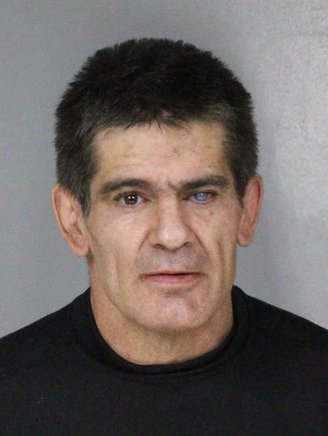
Testimony ended Friday in the trial of hit-and-run suspect Jeffry Lee
Tsarnas, with attorneys expected to present their closing arguments to
the jury on Monday morning.
Tsarnas.
The final witnesses called by the defense were California Highway Patrol
Sgt. Matthew Harvey, who already testified in person and appeared this
morning via Zoom; and Jaime Hansen, who saw a woman on Fernbridge the
night of the hit-and-run but can’t remember any details. Hansen’s son
was driving at the time.
After jurors left the courtroom this afternoon, defense attorney April
Van Dyke wanted to put on the court record that Judge Timothy Canning
denied her request to recall Sgt. Harvey for a third time. She wanted
Harvey to testify about what Hansen told the CHP the night of the
accident, as she can’t recall it now.
Apparently, Hansen’s son told his mother a woman was lying on the
bridge, as though trying to commit suicide. Van Dyke thought the jury
should hear that.
“This could be the difference between Mr. Tsarnas being convicted and
Mr. Tsarnas being acquitted,” Van Dyke said.
But Canning said there were
“hearsay” problems with the requested testimony, not to mention a drain
on court resources and Harvey’s time. The officer is out on bereavement
leave.
While questioning Harvey via Zoom, Van Dyke played tape-recordings of
his interviews with Tsarnas and his then-girlfriend Barbara Craft, who
came to the CHP office the day after the incident to say Tsarnas was the
driver. Harvey did not smell alcohol in the vehicle, and he didn’t
remember whether he had opened the car door.
The tape recordings show Harvey did open the car door briefly. Today he
said he obviously did open the door, though he has no independent
recollection, and he did not note in his report that he smelled liquor.
Craft, who testified during the trial, said Tsarnas told her he was
drinking milk and brandy while driving, and the drink spilled when he
hit something on the bridge.
Under cross-examination by Deputy District Attorney Steven Steward,
Harvey said Tsarnas wasn’t a DUI suspect when he came to the CHP office.
It had been about 22 hours since the collision on the bridge.
After Tsarnas’s car hit Kelley, he continued on to the nearby casino. One witness estimated the car that struck Kelley was traveling 60 mph,
and she saw no brake lights after the collision.
“Do you frequently encounter a situation where after an accident, if
someone has been driving under the influence, they flee the scene?”
Steward asked the officer. Van Dyke objected and Harvey was not allowed to answer the question.
Probably the key issue in the trial is whether Craft’s testimony was
credible. The couple broke up within a few days of the hit-and-run. She
initially was supportive of Tsarnas, but then began revealing
incriminating information.
For example, she said Tsarnas was drinking while driving. And she said
that after he came home from the casino, he said at one point: “Oh God,
what if I hit a person.” Craft had never mentioned such a statement
before.
She also claimed Tsarnas told her he knew he hit a person, but “I’m not going to tell (police) that.”
Transportation
planning: that’s what we are talking about on this
week’s EcoNews Report. How people and goods move throughout
Humboldt County is something that we all experience on a daily basis,
whether you are a bicycle commuter navigating potholes and cars, a
long-haul trucker cruising up the 101, or just out to grab your
morning iced chai latte (with oatmilk, please). The routine and
ever-present engagement with our transportation infrastructure can
obscure the fact that all of this was planned. Our transportation
planning choices today will have long-standing impacts on our lives
into the future, whether it is reducing road-related fatalities or
how we can reduce greenhouse gases from our transportation network
(Humboldt’s #1 category of emissions).
The
Humboldt County Association of Governments (HCAOG) is hard at work on
an update to the “Regional Transportation Plan,” a
blueprint for our current and future transportation needs. Oona
Smith, Senior Planner with HCAOG joins Gang Green to talk about how
good planning helps all road users and how the Regional
Transportation Plan will shape our transportation investments in the
future.
To submit a locally-filmed (or produced) video, upload it to YouTube and email the link to News@LostCoastOutpost.com with your name, a brief description of your work and “TRL” in the subject line. Please do not submit videos containing any form of violence, racism, illegal activity, pornographic material, bullying or harassment. Also, no advertisements or duplicated submissions please.
“I Survived” - Iron Rain
Iron Rain has been in Humboldt County since 1996 and started producing videos for its music in 2020. If you’re a fan, rejoice! The band is recording new music again.
“Sunshine” - Spencer Frankel
“I’m a rapper/producer from Trinidad,” Frankel said. “This song is dedicated to those sunny, not-always-so-warm Humboldt days.”
“Labyrinthine Matador” - Mookielaka
Mookielaka describes this animated music video as a “premier, incoming, initial, first-up, inaugural, introductory, original, pioneer, debut presentation visual for the future number one hit-single Labyrinthine Matador.”
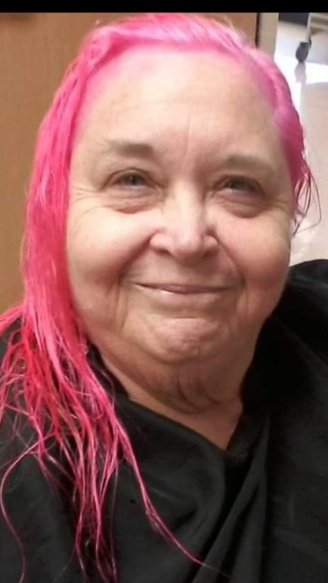
Kathrine Alice O’Neill Hernandez, a child of God and servant for Christ, passed away unexpectedly on March 2, 2021 at the age of 69 while at UCSF. She was there recovering from a successful brain surgery. Complications from necessary medications that led to infection, took her home to be with Jesus.
Kathrine, known by Kathy to her loved ones, is survived by her children, Mary and James O’Neill; her beautiful grandchildren, Michael, Alicia, Francis, Jasmin, Alani and Orion; her siblings Debra, Daniel, Lee and Jay; her niece and nephews, Clayton Jr., Justin and Rachel; and her great niece and nephews, D’Andre, Joel and Arianna. Kathrine was excited and awaiting the arrival of her first great grandchild (great grandson) expected to be born in May 2021 to her granddaughter Francis. Kathy has many non-biological loved ones that she claimed as family as well. There are so many, but to name a few, Lillian, Kristen, Tasia and her children Makai, Antonio Jr., and Airianna; LeighAnne and her son Jason, La”nayjah, Chavez and Terrell. Kathy was predeceased by her parents, Jay and Alice McCann, her husband, William O’Neill and grandson James O’Neill Jr.
Kathrine was born in Sonoma, California on November 14, 1951 and lived a happy childhood, helping to take care of her siblings, as she was the firstborn child. She was always in the field of helping others. She worked in both Sonoma and Crescent City over the years in laundry services and skilled nursing facilities.
After marrying her husband William, she moved to Hoopa as a Preachers wife. She took great joy in the Children’s Ministry that she led alongside her husband. Later, Kathy became a bus driver for the Hoopa Valley Tribal Preschool and Headstart, and also drove the Activity Route for the Klamath Trinity Joint Unified School District. Kathy just loved watching the kids grow up while driving the buses and sharing the love of Christ with all she came in contact with.
In 2018, after losing her home to a fire, Kathrine went to the Eureka Rescue Mission Women’s and Children’s Shelter in Eureka. She came to the door expecting to be turned away due to her physical disabilities, as many other organizations had previously done. This is when she met Kristen Freeman, the Director. Kristen and Kathrine had a short conversation, and Kristen told Kathy to gather some of her belongings and come back for an intake. Kathy broke down in tears of joy and gratitude. Although there were many different barriers to overcome for her intake, Kristen and the staff quickly got to work in making a nonexistent handicap accessible room available for her. She returned just hours later to find her blessing ready and waiting for her to have a temporary place to call home. With the help of Kristen and her wonderful staff members, as well as the loving ladies at the shelter, Kathy found love, peace and stability.
Kathrine’s medical conditions continued to become more serious, and was more than the shelter was capable of, so Kristen moved Kathrine into her family home. She spent a short period of time there before being readmitted to the hospital, and starting the process for the brain surgery. It was a hard hit, when she succumbed to infection from the necessary medications after a successful, major surgery. We stand in the faith of knowing that God doesn’t make mistakes and He has called His good and faithful servant into the Kingdom of Heaven.
A special thanks to Kristen Freeman and her family for embracing and loving her as one of their own, and to her care providers Lori Burnside, Tanya Thomas, Tasia Homer, La’Nayjah Wilson and Kristen Freeman. Thank you to the Doctors and Nurses at Providence St. Joseph Hospital in Eureka and UCSF in San Francisco.
Absent in body, means present with the Lord. Kathrine is free and alive with Jesus.
###
The obituary above was submitted on behalf of Kathy Hernandez’s loved ones. The Lost Coast Outpost runs obituaries of Humboldt County residents at no charge. See guidelines here.
For the many Humboldt residents who are still awaiting a COVID-19 vaccine, you’ve probably heard that vaccines are only available to people 65 and older, or those who have jobs or health conditions that qualify them. But the Outpost was surprised to learn today that Open Door Community Health Centers have already begun vaccinating patients who are 55 and over.
Reached by the phone this afternoon, Arielle Manoli — office manager for Open Door Community Health Centers — confirmed that the clinics made COVID-19 vaccines available to patients age 55 and up starting on Wednesday.
If you are an Open Door patient, you may have already heard this news — notifications were sent out through MyChart on Wednesday, Manoli said, and staff is currently in the process of contacting eligible patients by phone.
So, how is this vaccine expansion possible? The answer is pretty simple. Open Door currently has more vaccines available than it has patients 65+, who have still not been vaccinated. Manoli said that as more vaccines have become available through pharmacies or through mass vaccine clinics, Open Door staff was finding that many of their patients had already been vaccinated someplace else.
“As we were moving through the 65 and up tier, we were actually having a hard time filling the spots,” Manoli said. “We communicated [to Public Health] that we had enough supply and enough availability to offer to another population and their recommendation was to drop down to 55 and up.”
Manoli said that it will probably take some time for Open Door to contact all the eligible patients, so if you’re seeing this and you are over 55, then you should call your home clinic to book an appointment. Open Door is currently administering the vaccines at three of its locations: the NorthCountry Clinic in Arcata, the Telehealth & Visiting Specialist Center in Eureka and the Fortuna Community Health Center.
With the state recently announcing an increase in vaccine supply and plans to distribute vaccinations to 50+ individuals starting April 1 and everyone over 16 shortly thereafter, many people are hopeful that they won’t have to wait much longer. But, Manoli said, this does not necessarily mean that Humboldt County will see that expansion right away, depending on how quickly Public Health receives vaccine supply.
“It’s a balancing act between what the CDC is allowing and the amount of vaccines that are coming into the county,” she said.
And if you’re an Open Door patient who is not in one of the eligible groups, you don’t need to just sit around and wait for a vaccine. Manoli encourages you to call and be put on the waitlist. If Open Door has extra doses, staff will contact people from that list, so that doses don’t go to waste.
Feel like maybe the information you’ve seen about vaccines is a little inconsistent? Well, Manoli says you’re not alone. “Open Door is as transparent as we can be, but it is hard,” she said. “It feels like you can get a lot of different information, depending on where you look. I would encourage people to call their primary care provider if they have any questions.”
Press release from the Humboldt County Sheriff’s Office:
On March 25, 2021, at about 7 a.m., Humboldt County Sheriff’s deputies were dispatched to the area of Little Pond Street and Winchester Avenue in McKinleyville for the report of a car prowler.
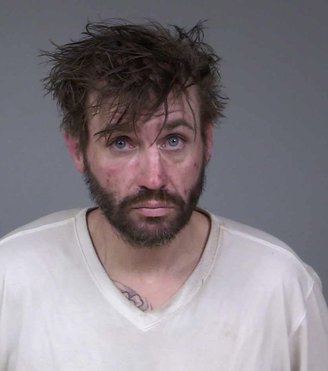
According to the reporting party, the prowler, later identified as 37-year-old Thomas Manuel Prince, was captured on home surveillance video checking car doors and in possession of burglary tools. A short time later, the reporting party observed Prince at a neighbor’s residence reportedly setting items down near a travel trailer.
Deputies arrived in the area and located Prince walking on Winchester Avenue near Killdeer Road. During a search of Prince, deputies located stolen items, burglary tools and pepper spray. Additionally, deputies determined that the items set near the travel trailer had also been stolen from a nearby residence.
Prince was arrested and booked into the Humboldt County Correctional Facility on charges of possession of burglary tools (PC 466) and felon in possession of tear gas (PC 22810(a)), in addition to warrant charges of vandalism (PC 594(b)(1)), possession of a narcotic controlled substance (HS 11350(a)), driving with a suspended license (VC 14601.2) andfailure to provide proof of insurance (VC 16028(a)).
This case is still under investigation. Anyone with information about this case or related criminal activity is encouraged to call the Humboldt County Sheriff’s Office at (707) 445-7251 or the Sheriff’s Office Crime Tip line at (707) 268-2539.
Car prowl, also known as theft from vehicles, is a crime of opportunity. An offender makes a decision to break into a vehicle based on a perception that there are items of value inside the vehicle, which makes the potential payoff worth the risk. A car prowl can be completed in a minute or less, and a significant number of these crimes occur between the hours of 10 p.m. and 4 a.m.
Car prowl is one of the easiest crimes to prevent with increased awareness and a change in habits. The following steps will reduce the chances that your vehicle will be targeted:
Keep the interior of your vehicle “showroom” clean. Never leave valuables in plain view. Offenders often break into vehicles for items such as gym bags because they assume there are electronic devices or other items inside.
Hide chargers and accessories that indicate a GPS, mobile phone or other devices that support electronics.
Remove garage door openers, key cards, and house or work keys from your car.
Park your car in a well-lit area. Trim back trees and bushes that block the view of your vehicle from your house.
Always lock your vehicle, even if you are home.
To report a vehicle burglary, car prowler or related criminal activity, please contact the Humboldt County Sheriff’s Office at (707) 445-7251.