If by some sort of miracle, the clouds part and the moon is clearly visible late tonight/ early Friday morning, then Humboldt County residents will have the opportunity to view a significant celestial event — an almost total lunar eclipse will take place starting at approximately 10 p.m. Thursday and will reach its peak at about 1 a.m. on Friday.
Should we be lucky enough to see it, there are a couple of things that make this eclipse special: For one thing, this particular eclipse will be best viewed in North America (that’s where Humboldt is!), with the entire continent getting a glimpse of the event, weather permitting. The eclipse will also be visible from parts of South America, Polynesia, eastern Australia and northeastern Asia. Secondly, this will be the longest partial lunar eclipse in 581 years! NASA reports that the eclipse’s duration will clock in at an impressive 3 hours, 28 minutes and 23 seconds.
“There hasn’t been a longer partial lunar eclipse since February 18, 1440 (3 hours, 28 minutes, 46 seconds) and it will remain the longest partial lunar eclipse for 648 years until February 8, 2669 (3 hours, 30 minutes, and 2 seconds),” NASA reports on its website. “There will be a longer total lunar eclipse on November 8, 2022.”
You probably already understand at least a little bit about how eclipses work and have likely even seen a lunar eclipse before. But, just in case you have not, LoCO will do its best to sum up the science behind this extraordinary event. Lunar eclipses occur when the Earth is positioned directly between the sun and the moon, causing the Earth’s shadow — or umbra — to fall across the surface of the moon. This turns the moon a striking and sort of eerie red color, gaining it the nickname “blood moon.” The November full moon is referred to as the “beaver moon,” so tonight the beaver moon will become a blood moon.
This cool video from NASA shows how tonight’s eclipse will happen:
Although this is technically only a partial lunar eclipse, the moon will be more than 99 percent blanketed by the Earth’s umbra at the eclipse’s peak, which is pretty darn close to a “full eclipse.” Suffice to say, if the weather does decide to turn in our favor, it might be worth staying up or setting your alarm clocks to view this special event.
And if the weather stays crappy, then, as NASA notes, there will be a full eclipse in November 2022, and Humboldt falls well within the part of Earth that will be able to view that eclipse too. So, maybe we will have better luck next year.
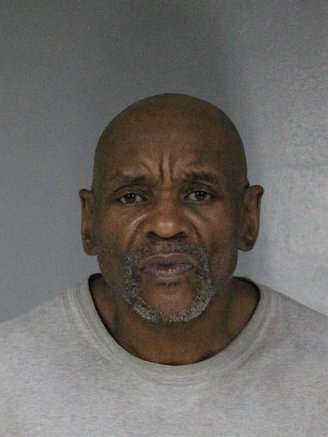
Eureka resident Albert Durant Kress was sentenced this morning to 12 years in state prison for the grisly killing of 62-year-old Raymond Prudhomme, found dead in his Old Town apartment in February 2019.
Kress, 50, was originally charged with murder but pleaded guilty last month to voluntary manslaughter and agreed to the 12-year term. Judge Christopher Wilson sentenced him to the maximum of 11 years for voluntary manslaughter and one year for use of a knife.
Prudhomme was found with his throat slashed on Feb. 22, 2019. It’s believed Kress killed him during an altercation a week earlier.
Prudhomme’s daughter and daughter-in-law both spoke at the sentencing today, saying their lives will never be the same.
“I am Ray Prudhomme’s only child,” Stella Fontenot said. “I have three children and one grandchild. They will never see their grandfather again … Mr. Kress took away everything.”
When Kress was interviewed by a probation officer for his pre-sentencing report, he acknowledged his crime and said he was sorry. Fontenot was not impressed.
“I don’t want your sorry,” she told Kress, who stood in the jury box. “I think he’s sorry he got caught.”
She called 12 years in prison “a slap on the wrist.”
No one saw the stabbing, but one witness told Eureka police Kress lunged at Prudhomme with a knife in his hand. She hid in the bathroom, listening to thumping and scuffling sounds, and when she came out in a few minutes Prudhomme was lying in a pool of blood.
Roxie Achane-Prudhomme, who is married to Prudhomme’s brother, said Kress “took a lot from us.”
“(Ray) always came by,” she said. “All the kids loved Uncle Ray.”
Addressing Kress, she told him “I think what you did was pretty weak, to say the least.”
Family holidays will never be the same without Ray, she said.
“As a matter of fact there’s a holiday coming up. And that’s all we’re going to be talking about. (The killing) took a lot out of my husband; I thought I was going to lose him too.”
She later added she wanted the court to know how much her brother-in-law was loved. A funeral was held in Prudhomme’s home state of Louisiana, “and the turnout was enormous.”
As part of his plea agreement Kress gave up most of the credits earned in nearly three years behind bars. He must serve 85 percent of his term before he is eligible for parole.
Deputy Public Defender Wade Orbelian represented Kress, with Deputy District Attorney Trent Timm in court for the prosecution.
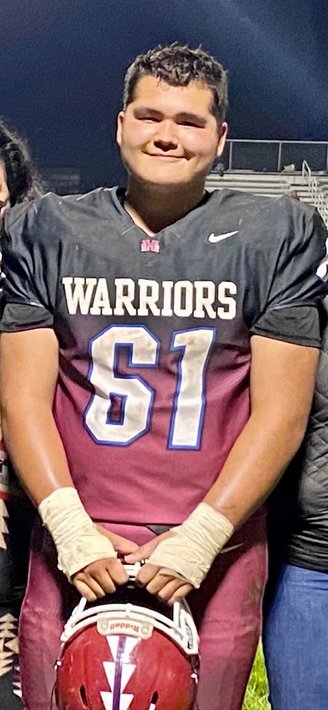
Everett “Bronc” Colegrove, a senior at Hoopa High School
with academic honors, was selected to play in the Third Annual Indigenous Bowl on Sunday, Dec. 5, 2021, in Minneapolis at U.S. Bank
Stadium — where the Minnesota Vikings play their home games.
Bronc is the son
of Everett “Muss” and Keduescha “Josie”
Colegrove. The Grandson of Everett “Tweet” and Majorie
Colegrove, Walt “Blacksnake” and Callie Lara. Bronc is a
great student, and the family is very proud of his accomplishments
both on and off the field.
This season the
Hoopa High School Warriors football team struggled and was
short-handed at the start of the season because of COVID protocols.
Bronc often had to play on both offense and defense, but a powerful
protective instinct makes him a force on the field. He displays
excellent leadership and is an outstanding blocker in running and
passing situations.
Colegrove, a
member of the Hoopa Valley Tribe, helped the Warriors football team
bounce back from a few early losses and incredibly post three
shutouts in just eight days to earn an NCS playoff spot.
“Just being
able to represent my tribe and community means so much to me,”
said Colegrove. “And I am taking this wonderful opportunity very
seriously.”
The Indigenous
Bowl creates opportunities for the next seven generations of Native
leaders through education, athletics, culture, and real-world
support.
This year’s event
is created by a partnership between the NFL, Minnesota Vikings, and
the 7G Foundation.
“The NFL is pleased to support the third annual
Indigenous Bowl, and we thank the Minnesota Vikings for hosting this
year’s game. The game of football provides important life skills of
teamwork, leadership, and hard work that will benefit these young men
for years to come. Working with the 7G Foundation to build upon these
values, the 2021 Indigenous Bowl will provide an opportunity for
these players to showcase their skills as they become the next
generation of Native American leaders,” Brian McCarthy, NFL Vice
President of Corporate Communications, said in a statement.
First played in
2017, the Indigenous Bowl is open to high school seniors of Native
American descent who have not yet enrolled full-time in college. The
event is an opportunity for young indigenous athletes to showcase
their talent on the football field, compete at a high level, work
with coaches and mentors, and develop the skills necessary to move to
the next level of competition.
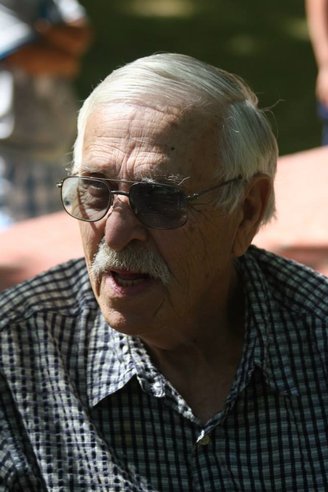
Donald Earl Badgley, aka: Badger, passed away on October 26, 2021,
after a lengthy battle with cancer and heart disease. Badger was born
February 23, 1932, in McCleary, Washington. He moved to the Hoopa
Indian Reservation in the early 1950’s where he met the love of his
life, Louise “Gettz” Badgley. Badger was the sole provider for
Gettz, her mother, Louisa and children Edgar “Goose,” Polly and
Carol. Badger’s children Kim and Mark Badgley, and stepdaughter
Sherry, stayed behind in Washington but he maintained a relationship
with them from a distance. Most recently, Kim resided with Badger to
help care for him.
Badger received
his initiation into logging when his brother-in-law, Pete Jackson,
gave him his first job as a hook tender. Badger showed up on the
landing, his first day, wearing slacks and dress boots. From then on,
his crew teased him by asking him if he was going to a dance or
working in the woods. His career in the woods did not come without
misfortune. Early in his career, Badger escaped death when a large
log rolled over his entire body. After several months of
rehabilitation, Badger decided he would prefer to drive truck instead
of buck logs. Eventually, he became an excellent, long-time log truck
driver. He and his wife were the owner/operator of Louise Badgley
Trucking. Friends and family knew Badger as the “hardest working,
dirtiest truck driver” there was. He would return home at the end
of each day covered in dirt. Badger’s loving wife was sure to
remind him that is was her name on the log truck door and not to
forget it. For a short time, Badger had a passenger in his truck,
Kitty Kenworth. She was a black cat that loved riding with him.
Badger was
stationed in the Navy as a young man. It is unknown, by the family,
how long he served or where he was deployed.
Badger was an avid Forty Niner fan, and rooted for the Seattle
Seahawks occasionally. He loved gambling and he and Gettz often
played in casinos. Their favorite place to visit was Reno. Badger
spent a good amount of time in the Hoopa Casino and if you saw him,
he always had a toothpick in his mouth. Badger had a huge heart and
would help anyone in need.
Badger is
preceded in death by: Louise “Gettz” Badgley, loving wife; Louise
Jackson, mother-in-law; Ned Jackson, father-in-law; brother’s-in-law,
James Jackson, Peter Jackson; sister’s-in-law, Charlotte Colegrove,
Minnie McWilliams; son, Edgar Norton Jr., granddaughter, Natalie
Norton Wright.
Badger is
survived by his children; Polly and Tom Van Bergen, Carol Courtney,
Kim Badgley, Mark Badgley and Sherry Roberts. He has several
grandchildren that adored him, Nanette, Ke’nes, Karl, Alan, Pete,
Autes, David Cheyenne, Cassaundra and John. Great grandchildren,
Phylecia, Duane, Sage, Kyle, Carli, Mugsie, Omar, Valentina, Minnie,
Kaylee, Cash and Arianna. Badger had many more friends, family and
loved ones.
Graveside service
is scheduled for December 11, 2021, at 11 a.m. at Brown’s Family
Cemetery on Pine Creek Road, Hoopa. A celebration of life
is scheduled to begin at 12 p.m. until 3 p.m., the same day, at the
Tswenaldin Inn conference room. Please bring a potluck dish to share.
###
The obituary above was submitted on behalf of Don Badgley’s loved ones. The Lost Coast Outpost runs obituaries of Humboldt County residents at no charge. See guidelines here.
Press release from the Center for Biological Diversity:
After a two-and-a-half-year effort and with support from private donors, volunteers, state agencies, partner organizations and elected leaders, The Wildlands Conservancy, a California nonprofit, has secured the 29,600-acre Lone Pine Ranch ― which will be known as the Eel River Canyon Preserve.
The property includes fantastic geology, 18 miles of river frontage, carbon sequestering forests, herds of Roosevelt elk and significant wetlands.
Today’s acquisition includes 21,600-acres acquired by TWC and roughly 8,000 acres acquired by national nonprofit The Conservation Fund, in a unique and collaborative conservation victory.
“This acquisition continues our focused effort to protect the National Wild and Scenic Eel River, with a vision of free public access along the future Great Redwood Trail.” says David Myers, The Wildlands Conservancy’s president, “We’re grateful to the Witter family for entrusting us with their legacy, and for our partners’ support in bringing this acquisition to fruition.”
Purchased in World War II by celebrated California financial broker Dean Witter, the land has been cared for by the Witter family ever since, leaving a legacy that will now be permanently conserved and opened to the public for passive recreation.
“Our family is incredibly grateful to be passing this precious property on to The Wildlands Conservancy,” says Brooks Witter, who is representing the family. “At every step of this process, we grew increasingly confident in their vision and capacity to preserve this place for future generations. It is an honor to know that the Lone Pine will serve a key role in protecting the vitality and health of the whole watershed.”
The Conservation Fund, a national leader in land conservation, is taking a primary role in the project, acquiring 8,086 acres of the preserve. The Fund will serve as an interim holder of this portion of the property for up to three years while final acquisition funds are sought by the Conservancy.
“The Lone Pine Ranch is one of California’s gems, and today’s victory is a critical step in the protection of its recreational resources, ecological importance, and stunning scenic beauty,” said Steve Hobbs, California state director at The Conservation Fund. “Our partial acquisition of Lone Pine Ranch is an exciting addition to The Conservation Fund’s portfolio of impactful land conservation in California and we’re honored to be a part of it.”
Generous support from the David and Lucile Packard Foundation made this acquisition a reality, as did funding from the California State Coastal Conservancy and the Wildlife Conservation Board.
The Center for Biological Diversity contributed key funds and support throughout the campaign and has been a tireless defender of California’s ecological diversity. The Center’s contribution used funds designated in a recent settlement with Placer Ranch, Inc. for the permanent protection of biologically important land.
“Protecting 30,000 acres at the heart of the Eel River corridor is one of the most important conservation actions in recent California history,” said Peter Galvin, cofounder and director of programs at the Center. “This historic conservation purchase will ensure permanent protection for one of the most wild and scenic river stretches in the western United States. The ‘Grand Canyon of the Eel River’ is home to dozens of endangered species and rare wildlife. The Wildlands Conservancy’s heroic and visionary efforts to restore the Eel River and California’s wildlands will be appreciated by generations to come.”
A resolute champion for the Eel River, California State Senator Mike McGuire (D-Healdsburg) has catalyzed the creation of a Great Redwoods Trail, following the route of the abandoned Northwestern Pacific Railroad for 320 miles and linking the San Francisco and Humboldt Bays. The Trail will serve as a gateway to the scenic countryside and wild backcountry of the Eel and Russian River watersheds.
“The Eel River Canyon is like no other place in the west, and it will be the crown jewel of the Great Redwood Trail,” Sen. Mike McGuire said. “The $10 million that we were able to secure this year helped The Wildlands Conservancy acquire this spectacular piece of earth, Lone Pine Ranch. This amazing property will be opening to the public soon and will feature a breathtaking twelve miles of trail along the Eel River with a total of 18 miles of riverfront. We couldn’t be more thrilled.”
In 2019 The Wildlands Conservancy used private donations to purchase the first 3,000 acres of the Eel River Canyon Preserve fronting 3.5 miles of the Eel River. This acquisition secured a two-year option to purchase the remaining 26,600 acres for $25 million, which is being completed in four separate transactions.
The Eel River Canyon Preserve acquisition is part of Eel River Emerald Necklace conservation project, which links a system of preserves spanning the Grand Canyon of the Eel to the estuary. The Preserve is a day’s paddling journey downstream from The Wildlands Conservancy’s Spyrock Reserve, which has five miles of frontage on the Eel and is located 80 miles upstream from the Conservancy’s Eel River Estuary Preserve where the river meets the Pacific Ocean.
The Wildlands Conservancy owns and operates California’s largest nonprofit nature preserve system, including the 93,000-acre Wind Wolves Preserve in Kern County, the largest nonprofit preserve on the West Coast. Open to the public free of charge, these preserves offer free hiking, camping, and access to nature. The Wildlands Conservancy recently led the campaign to have land it previously donated to the U.S. Interior Department designated as the 1.6 million-acre Mojave Trails National Monument, one of the largest national monuments in the lower 48 states.
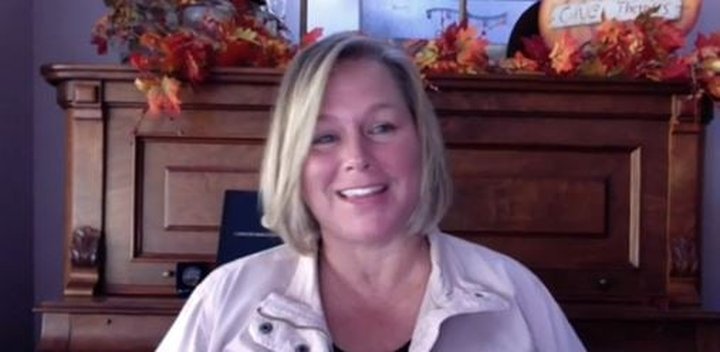
Hiedi Johnston as she appeared via Zoom during Tuesday’s Humboldt County Board of Supervisors meeting
Release from the County of Humboldt:
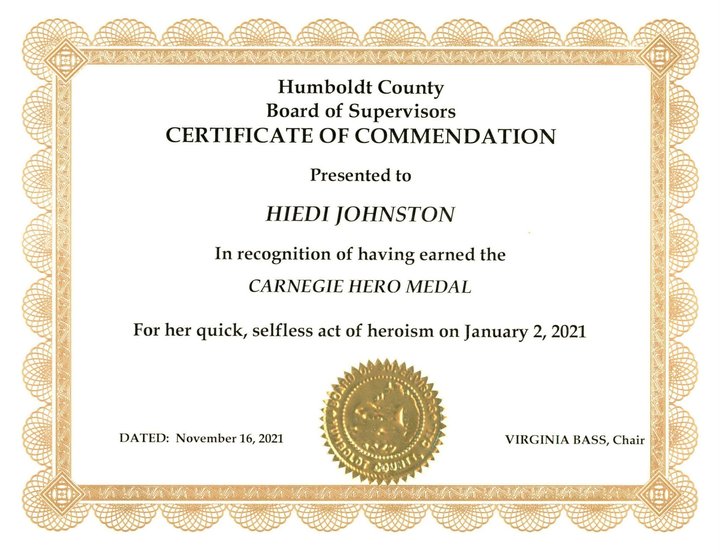
The Humboldt County Board of Supervisors recognize Willow Creek resident Hiedi Johnston with a Certificate of Commendation, for her receiving the Carnegie Hero Medal.
Johnston acted without hesitation after she saw a pickup truck speed into Humboldt Bay in the afternoon of Jan. 2, 2021. The truck entered the 51-degree water and drifted away from shore with the outgoing tide. Hiedi Johnston climbed down the rocky shore, waded, and then swam to the truck. After the driver’s window was lowered, Johnston hoisted herself partially through the opening and released the seat belt of the unresponsive 78-year-old driver. She then grasped the man’s vest with both hands and pulled him out of the truck. Shortly the truck submerged completely, and Hiedi, with one arm around the man’s upper body, stabilized herself on top of the truck’s front end. A man swam out and joined her at the scene, helping to keep the driver afloat. Another man piloting a boat responded to the scene, helped all three aboard, and took them to safety.
Ms. Johnston was awarded the Carnegie Hero Medal in September as one of eighteen recipients this year for her heroic efforts. The Carnegie Hero Medal is given throughout the United States and Canada to those who risk their lives to an extraordinary degree saving or attempting to save the lives of others. Carnegie Hero Medal is North America’s highest honor for civilian heroism.
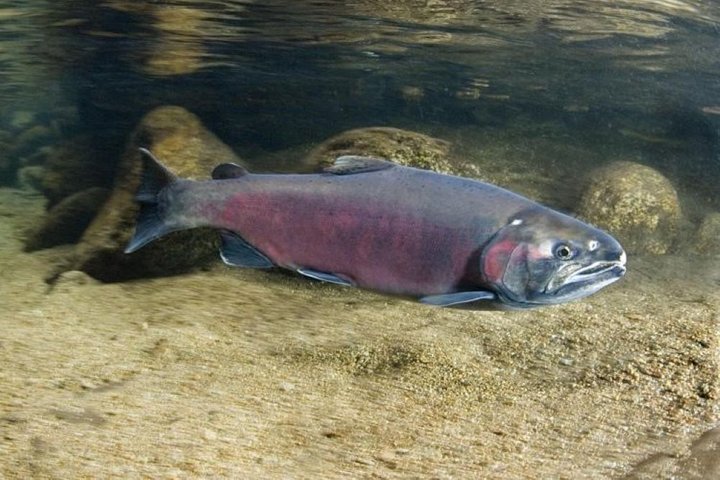
Coho salmon | Photo courtesy of National Oceanic and Atmospheric Administration.
The U.S. Bureau of Reclamation announced this week that an additional $2.7 million will be pledged toward restoring threatened coho salmon populations and their habitat in the Klamath River basin.
The 2021-2024 Klamath River Coho Restoration Grant Program funds will be administered by the National Fish and Wildlife Foundation in an effort to improve the species’ survival and recovery in Northern California and Southern Oregon.
“Reclamation, along with our partners, is taking significant steps to restore habitat and coho salmon populations in the lower Klamath Basin,” Klamath Basin Area Office Acting Area Manager Jared Bottcher was quoted as saying in a press release. “We are pleased to provide additional funds to this important grant program to continue our efforts. Through implementation of the grant program, Reclamation has reaffirmed its commitment to restoring resilient coho salmon populations and their habitat in the Basin.”
The main projects funded by the grant include riverbank and instream habitat restoration and improvements, fish barrier modifications and passage improvements, fish screens and water conservation. These efforts will be focused on the main stem of the Klamath and its tributaries from the river’s mouth to 190 miles inland.
The Bureau of Reclamation said it plans to award $1.2 Million of the grant during the 2021 fiscal year, and as much as $500,000 per year between 2022 and 2024. Eligible applicants for these funds include local, state, federal, and tribal governments and agencies, special districts, non-profit organizations, schools and universities.