
DHHS Calls Attorney General’s Pursuit of More Child Welfare Services Oversight a ‘Waste of Taxpayer Money’
LoCO Staff / Wednesday, Dec. 23, 2020 @ 5:08 p.m. / Local Government
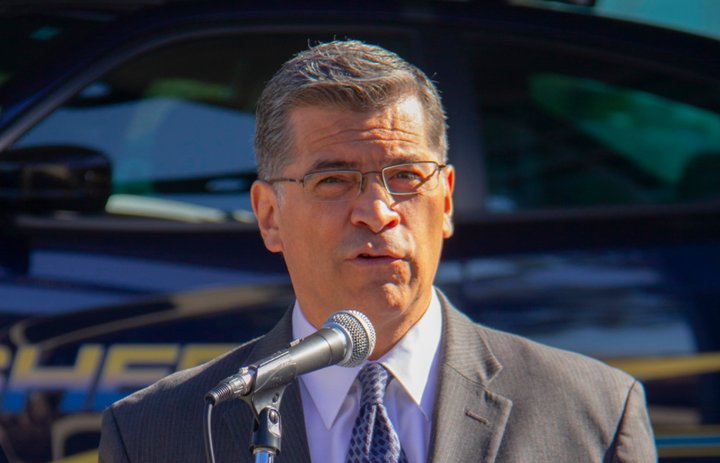
Outgoing California Attorney General Xavier Becerra.
###
PREVIOUSLY:
- California AG Investigation Concludes With Agreement Requiring Sweeping Changes to Humboldt Child Welfare Services
- Flaws in County System for Reporting Child Abuse and Neglect Triggered a State Investigation. Here’s What’s Changing As a Result.
- Once Drowning in Unresolved Reports of Abuse and Neglect, Local Child Welfare Services Department Says It’s Clearing Out Backlogged Cases
- State Attorney General Pursuing a Court Order to Compel County’s Compliance With 2018 Child Welfare Judgment
###
The following statement from both the Humboldt County Department of Health and Human Services (DHHS) and Sheriff William Honsal was issued Wednesday evening in response to this press release from California Attorney General Xavier Becerra, in which he announced that his office is seeking a court order to require DHHS’s Child Welfare Services Division (CWS) and the Humboldt County Sheriff’s Office to take steps to fully comply with a judgment secured by the California Department of Justice (DOJ) in 2018:
The Humboldt County Department of Health & Human Services (DHHS) is aware of the Attorney General’s press release today regarding his office’s intent to pursue an extended monitoring period and for the imposition of additional terms and requirements to the existing Stipulated Final Judgment.
To be clear, the current dispute between the parties does not involve any current or existing violations of the Child Abuse and Neglect Reporting Act (CANRA), but rather the state’s desire to waste taxpayer money on unnecessary consultants and monitors. DHHS has already offered to stipulate to an additional one-year monitoring period in which we would report directly to the Attorney General’s Office, with continued oversight by the California Department of Social Services (CDSS). Indeed, CDSS already conducts this exact type of monitoring activity for all 58 California counties and also disseminates guidelines and regulations that DHHS, and each of the other 57 counties, must comply with and follow.
Additionally, DHHS is already required to submit a System Improvement Plan to CDSS, which incorporates and aligns with the Stipulated Final Judgment. Yet despite this, and despite spending more than $1.5 million in third party monitors and consultants and despite that the issues which gave rise to the Attorney General’s intervention have already been corrected, the Attorney General continues to insist that our community pay for an additional two years of monitors and consultants who have no actual or specific experience in California child welfare laws and practices. This is fiscally irresponsible to do so, particularly in the middle of a global pandemic and amid an economic downturn. DHHS remains committed to protecting children and families in Humboldt County, but simply desires the flexibility to identify and retain monitors and consultants who will benefit our community long after the Attorney General moves on to its next project.
Humboldt County Department of Health & Human Services Director Connie Beck said, “The investigation happened in 2015, and since 2018, when the Attorney General’s judgement was filed, we have increased staffing by 30% and have implemented numerous program strategies to assist staff to do the work necessary in our community. We’ve made tremendous strides and stand behind our staff, and we will continue to do the good work that we are doing in collaboration with the Sheriff’s Office and work in partnership with our community, law enforcement and tribes to keep children safe.”
Humboldt County Sheriff William Honsal said, “The Sheriff’s Office and CWS work closely to protect county children which is our top priority. Through our refined systems and protocols, we have continued to ensure that mandated reports of child abuse and neglect are quickly investigated and that children are protected.”
BOOKED
Today: 4 felonies, 7 misdemeanors, 0 infractions
JUDGED
Humboldt County Superior Court Calendar: Today
CHP REPORTS
No current incidents
ELSEWHERE
RHBB: New Fire Near French Gulch Grows Rapidly in First 45 Minutes
KINS’s Talk Shop: Talkshop October 5th, 2026 – Brian Stephens
RHBB: Redcrest’s Hayle Gibson-Stillwell Rides into the NFR as the One to Beat
Governor’s Office: California’s economy continues to dominate — topping $4.5 T in economic output, and remains the world’s fourth largest economy
72-Year-Old Eureka Man Named as Victim of Sunday’s Fatal Highway 36 Crash
LoCO Staff / Wednesday, Dec. 23, 2020 @ 3:55 p.m. / Traffic
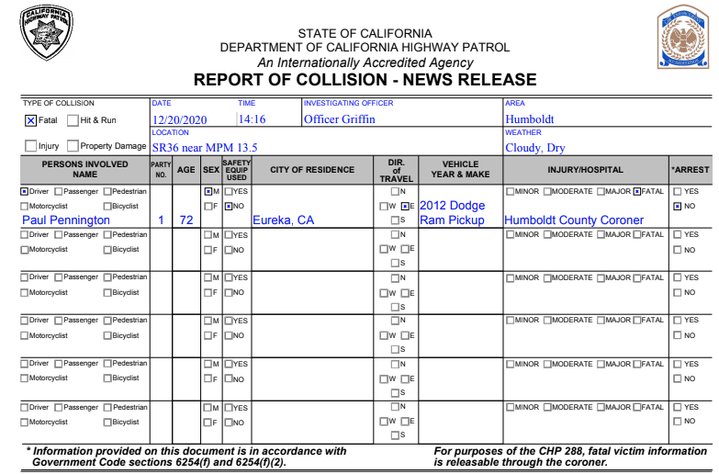
CHP collision report. | CHP
California Highway Patrol press release:
On 12-20-2020, at approximately 2:15 p.m., the Humboldt Area CHP received a call of a single vehicle collision on SR-36 near Mile Post Marker 13.5, east of the Bernard Hemenway Memorial Bridge.
Emergency medical personnel responded to the scene and provided life-saving efforts to the sole occupant of the vehicle, 72-year-old Paul Pennington of Eureka. However, Mr. Pennington succumbed to his injuries at the scene.
The Humboldt County Coroner’s office responded to the scene and subsequently made notification to the next of kin.
Alcohol is not considered to be a factor and the CHP Humboldt Area office is continuing its investigation to determine the cause of this collision.
Anyone who may have information is asked to contact the Humboldt Area CHP Office at 707-822-5981.
###
PREVIOUSLY: Fatal Car Crash on Highway 36 Near Swimmer’s Delight
State Attorney General Pursuing a Court Order to Compel County’s Compliance With 2018 Child Welfare Judgment
LoCO Staff / Wednesday, Dec. 23, 2020 @ 1:41 p.m. / News
PREVIOUSLY:
- California AG Investigation Concludes With Agreement Requiring Sweeping Changes to Humboldt Child Welfare Services
- Flaws in County System for Reporting Child Abuse and Neglect Triggered a State Investigation. Here’s What’s Changing As a Result.
- Once Drowning in Unresolved Reports of Abuse and Neglect, Local Child Welfare Services Department Says It’s Clearing Out Backlogged Cases
###
UPDATE, 5:09 p.m.: County officials issued a statement, which can be found here.
###
Press release from the office of California Attorney General Xavier Becerra:
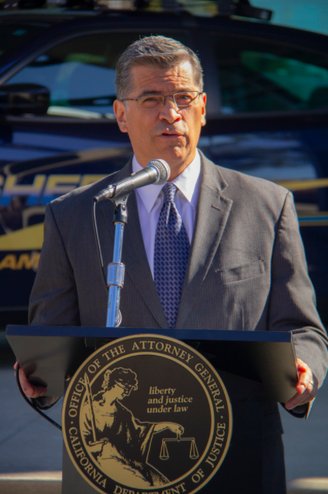
Attorney General Xavier Becerra
SACRAMENTO – California Attorney General Xavier Becerra today announced seeking a court order to require the Humboldt County Department of Health and Human Services Child Welfare Services Division (CWS) and the Humboldt County Sheriff’s Office to take steps to fully comply with a judgment secured by the California Department of Justice (DOJ) in 2018.
Despite varying levels of progress, DOJ remains concerned with CWS’ implementation of and compliance with provisions of the 2018 judgment, which was entered after a DOJ investigation uncovered systemic noncompliance with California’s Child Abuse and Neglect Reporting Act (CANRA) and Welfare and Institutions Code. As a result, the Attorney General’s Office is taking action to extend the judgment’s corrective measures and monitoring of the county for an additional two years.
“There’s no room for half-measures when it comes to protecting our children against potential abuse or neglect,” said Attorney General Becerra. “Our local child welfare and law enforcement agencies must respond quickly, effectively, and appropriately. If they come up short, we have to be clear-eyed about the path forward and we owe it to the children of California to act decisively to get it fixed. Our filing is about doing just that for the children of Humboldt County. At the California Department of Justice, we’ll keep standing up for our state’s child safety laws and doing what we can to ensure those on the ground have the right tools to protect vulnerable children.”
Under CANRA, local child welfare and law enforcement agencies are required to accept all reports of abuse and neglect involving children and ensure that every single one is screened, cross-reported, coordinated, and investigated in a timely manner. A DOJ investigation initiated in 2015 revealed that Humboldt County authorities had not been complying with their legal duties to respond to reports of child abuse and neglect, resulting in reports falling through the cracks and an inadequate assessment of child safety risk. Additionally, CWS was not collaborating with local tribes as required by law. Each of these deficiencies created widespread distrust within the community, leaving children at greater risk of harm.
In order to resolve these issues, CWS and the Sheriff’s Office agreed to a comprehensive set of corrective actions in 2018 aimed at ensuring compliance with state laws and protecting the well-being of all children in the county, including those who are members or eligible for membership of a tribe. As part of the settlement, the county agreed to the entry of a judgment that included a three-year monitoring period, permitting DOJ to seek orders and extensions as necessary or appropriate to ensure compliance with the judgment’s requirements. To date, those requirements have not been fully met, necessitating the action announced today.
DOJ is now seeking to extend the judgment and monitoring period to require ongoing and further affirmative corrective action, including with regards to provisions from the judgment with which the county agencies have failed to comply or consistently implement, such as:
- Emergency Response System, complying with statutory investigation completion timeline requirements, or extensions to exceed, as developed in policy and procedure in 95% of cases;
- Workforce Development Plan, developing and implementing a plan for maintaining, recruiting, employing, and supporting a high quality and stable workforce;
- Tribal Collaboration, taking additional steps to demonstrate compliance with requirements outlined in the judgment, including notice regarding referrals within 24 hours to the appropriate tribe for cases involving a child who is a member or eligible for membership of a tribe; and
- Child Fatality Review Process, ensuring a robust review of child welfare practices related to each child who dies in Humboldt County due to abuse or neglect or who previously received child welfare services.
Attorney General Becerra is committed to protecting the rights of youth in California and across the country. In August, the Attorney General secured settlements with school districts in Barstow and Oroville to address discriminatory treatment of students based on race and disability status. He also announced a $600,000 settlement with an online special education services provider aimed at protecting schools and students with learning disabilities.
In July, following troubling reports of discrimination and retaliation, Attorney General Becerra announced a wide-ranging settlement with the Mojave Unified School District. Last year, the Attorney General obtained a historic desegregation agreement with the Sausalito Marin City School District. He also reached an agreement with the Stockton Unified School District and its police department to address discriminatory treatment of minority students and students with disabilities.
In addition, Attorney General Becerra issued an alert to all school districts in the state reminding school leaders of their obligation to protect the civil rights of students, especially in the face of reports indicating that implicit bias among school administrators leads to students of color and those with disabilities being disproportionately subjected to disciplinary action.
Attorney General Becerra encourages those with information regarding suspected practices in violation of state or federal law involving systems that support children in California to report them to the DOJ’s Bureau of Children’s Justice, through the online complaint form located at https://oag.ca.gov/bcj/complaint, or by email at bcj@doj.ca.gov.
A copy of DOJ’s motion requesting the court order is available here. A copy of the proposed supplemental judgment is available here.
ETTERSBURG MURDER CASE: Prosecutors Play Jailhouse Phone Tapes for the Judge; Medical Examiner Testifies
Rhonda Parker / Wednesday, Dec. 23, 2020 @ 7:59 a.m. / Courts
Murder victim Jason Todd Garrett was killed by a bullet that entered his left eye and exited the back of his neck, district attorney’s Investigator Marvin Kirkpatrick testified Tuesday during the preliminary hearing for alleged killer Ryan Anthony Tanner.
Kirkpatrick attended the autopsy for Garrett on Feb. 22, one week after the 26-year-old was shot to death in a cabin on Crooked Prairie Road in the Ettersburg area. On Tuesday he read from a report by Dr. Mark Super, the forensic pathologist who performed the examination. Regarding the often-mentioned cutting of Garrett’s throat, Kirkpatrick said the wound wasn’t much more than a scratch: a 3-inch cut “that barely broke the skin.”
The wound was covered with strips of duct tape, Kirkpatrick said, confirming eyewitness Christopher Champagne’s statement that he wrapped Garrett’s neck with duct tape after Tanner slashed him with a knife. But Champagne also testified blood was squirting from Garrett’s neck, and his Adam’s apple was dangling out.
Kirkpatrick, under questioning by Deputy District Attorney Whitney Timm, also discussed some recorded phone calls between Tanner, who was in custody, and his father, James Tanner.
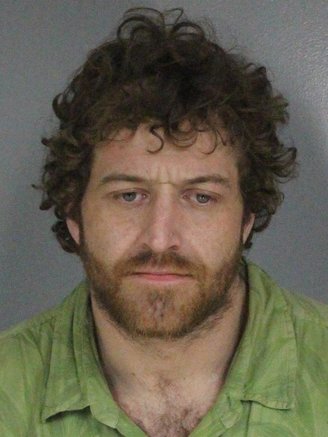
Ryan Tanner.
The
father said that with Ryan Tanner in custody, “at least you can’t
kill me.”
Ryan Tanner denied ever threatening James Tanner’s life, and he responded “Yes, you did.” In another recorded phone call with a man named Jeff Harnisch, Harnisch said something to the effect of “I’ll take care of it for you,” and then mentioned “gun.”
Kirkpatrick said Tanner responded with silence, then started talking about something else. Prosecutors have been calling a series of law enforcement officers to testify, with some of them confirming testimony from Champagne. His story was that Tanner kidnapped Garrett from the bread van where he’d been staying with a woman named Natalie Pierce. Champagne and Tanner set fire to the bread van and drove to a nearby property where Tanner cut Garrett’s throat.
Then, Garrett and his dog were taken to Tanner’s house, remaining there for a couple of hours before Garrett was driven to a cabin on James Tanner’s property. Champagne says Garrett was forced into a bathtub and shot in the head. His body was buried under a water tank on Ryan Tanner’s land. Investigators found the body where Champagne told them it was. Many of Champagne’s statements turned out to be true. But after several days on the witness stand he began spinning wild tales, which cast doubt on all his testimony.
As to Garrett’s dog, Leonard, Champagne said the dog was killed by the same shot that struck Garrett. But then another witness, Robert Norris, said the dog was still alive and followed him into Redway. It was clarified Tuesday that Garrett’s family came and picked up Leonard.
On Tuesday another witness, sheriff’s Investigator Mark Peterson, testified about his interview with Tanner after the arrest. When told he was charged with false imprisonment, auto theft and murder, Tanner wanted to know about the false imprisonment charge. He also “spoke at length” about the history of the Toyota 4-runner he allegedly stole from a neighbor.
“He said he didn’t know anything about a murder,” Peterson said.
Tanner also denied owning any firearms, although a large quantity of assault rifle ammunition was found in his house. And there were numerous shell casings all over his property.
Tanner explained that Champagne, who was the son of Tanner’s girlfriend Vanessa Womack, had an SKS rifle and shot it on his property.
After the killing, the cabin where Garrett died was burned to the ground. The old clawfoot bathtub was still intact, though full of fire debris and badly damaged. No bullet was ever found. One shell casing was lying about 10 feet from the foot of the tub.
The cabin remnants were still smoldering when officers searched the area around the time Tanner was arrested.
Testimony was expected to continue this morning, with the prosecution calling six more witnesses.
###
PREVIOUSLY:
- HOMICIDE IN ETTERSBURG: Sheriff’s Office Arrests One After SWAT Operation Yesterday
- Investigators Locate Ettersburg Suspected Homicide Victim’s Remains
- Ettersburg Murder Suspect Enters Not Guilty Plea; Also Charged With Assaulting Two Other Men With AK-47
- Suspect in Homicide Near Ettersburg is Sane Enough to Face Charges, Judge Rules
- Witness Describes Execution-Style Murder of a Man and Dog in a Bathtub During Ryan Tanner Prelim Hearing
- Main Prosecution Witness Garbles Testimony
- Witness Provides Gruesome, Hallucinatory Testimony in Ettersburg Murder Trial
- Girlfriend of the Accused Testifies That He Abused Her and Threatened Her With Death
- Another Neighbor Testifies That the Accused Had Been on a Paranoid, Violent Rampage for Weeks Before the Killing
- Police Investigators Testify to the Discovery of the Body and Possible Murder Weapons
- ETTERSBURG MURDER CASE: Defense Attorney Grills Lead Detective, Attempts to Cast Doubt on Witnesses, Evidence, Investigation
Who Will Pay for All of California’s Unemployment Fraud?
Lauren Hepler and Stephen Council / Wednesday, Dec. 23, 2020 @ 7 a.m. / Sacramento
A 1-year-old in Fresno raking in $167 a week. An ex-state employee stealing $200,000 from California’s unemployment system, some by impersonating Sen. Dianne Feinstein. Another $1.2 million swindled by a rapper who bragged about it on YouTube, $1 billion drained in the name of state prisoners, and $2 billion in jobless benefits siphoned off state-issued debit cards.
If doing the math on unemployment fraud in California during the pandemic isn’t dizzying enough, add the untold numbers of workers still fighting for funds that they say were stolen in unauthorized transactions at faraway ATMs, casinos and convenience stores.
“You’ve already been robbed once, and now it feels like they’re doing it again,” said Kori Chase, a 60-year-old housekeeper in Humboldt County living in her car while she tries to claw back more than $3,000 from state unemployment payment contractor Bank of America. “I feel like I’ve been thrown in the sewer, pretty much.”
The state is just beginning to tally how much of the $110 billion paid out in unemployment since March has disappeared in what law enforcement officials say is the biggest fraud investigation in California history. As the state’s own unemployment fund falls deeper into debt and Congress finalizes a new stimulus bill to restart $300-a-week supplemental payments, a battle is already underway over whether taxpayers might ultimately be asked to pick up the tab for fraud.
Some argue that the fraud panic has already swung too far toward criminalizing out-of-work Californians caught up in crackdowns this fall, when the state Employment Development Department temporarily stopped processing claims and some 350,000 debit cards were cutoff. But federal officials warn that 1 in 10 unemployment insurance dollars paid during the pandemic could be linked to fraud, which in California would total some $11 billion — more than the state spends annually on community colleges, workforce development and homelessness.
“About 10% of UI payments are improper under the best of times,” Scott Dahl, former inspector general of the U.S. Department of Labor, told Congress this summer. “And we are in the worst of times.”
Now, fraud losses are poised to collide with a state unemployment system in financial free fall. In less than a year, California’s Unemployment Insurance fund bankrolled by employer payroll taxes has gone from a surplus of $3 billion to a projected $48 billion deficit by 2021. That’s even after the federal government stepped in during the pandemic to fund benefits for contract workers and provide temporary $600 and $300 weekly supplemental payments.
With the new stimulus bill in Washington poised to flood the strained system with more cash, the coming weeks will test whether the state can strike a balance between paying benefits out quickly and securely. It’s a challenge that increasingly pits the Employment Development Department against its own payment contractor, Bank of America. Experts say any state missteps could prove costly for the public, despite a 2010 contract with the bank that states that the agency “shall not be liable for overdrafts, fraud, misuse, and lost or stolen debit cards.”
“If it turns out that California should not have approved all these claims,” said Mason Wilder, a research specialist at the Association of Certified Fraud Examiners, “then regardless of what their agreement says with Bank of America about debit cards, I would think that ultimately the taxpayers are going to be on the hook for California’s errors.”
A web of fraud
Unemployment fraud is not new. “Imposter fraud,” or using someone else’s personal information to apply for benefits, has been a threat since the days when unemployment was paid out of cash boxes at local field offices. From the 1960s to 2010, paper checks had their own vulnerabilities. With California’s current system almost solely reliant on prepaid Bank of America debit cards, officials must keep up with a widening array of fraud: forged online applications, large batches of debit cards ordered to central drop houses, intercepted mail, social media scams, debit card skimming and more.
In recent years, the state’s “improper payment” rate has hovered around 8%. Much of the fraud anxiety in the COVID-19 era revolves around the Pandemic Unemployment Assistance program, better known as PUA, created by the federal government’s $2 trillion spring stimulus package. The program aimed to quickly establish a safety net for self-employed and contract workers shut out of traditional unemployment, but its rushed application process relied on applicants self-certifying their eligibility.
“Thieves took advantage of a desperate situation and exploited it beyond belief,” said Sacramento District Attorney Anne Marie Schubert.
Last month, a new law enforcement task force chaired by Schubert warned Gov. Gavin Newsom that fraud linked to state inmates alone may hit $1 billion. The task force is now attempting to curb fraud by working with the Employment Development Department, which employs only 17 dedicated investigators, plus the California Department of Corrections and other state agencies brought into the fold by Newsom. “The only way to get our hands around this in an efficient way is to do something like this,” Schubert said.
Law enforcement officials and security consultants emphasize potential links between unemployment fraud and organized rings looking to bankroll serious crimes like human trafficking, drug dealing or gun smuggling. But other analysts say it’s important to keep out-of-work claimants from being overshadowed by fraud, and to distinguish less sophisticated identity theft that could be detected relatively easily by better monitoring social media, foreign IP addresses and identity documents submitted by unemployment applicants. A September report by a governor-appointed “strike team” criticized the Employment Development Department’s “culture of allowing fear for fraud to trump all other considerations,” while still failing to catch fraud.
“This is an unprecedented period for benefit fraud activity across the country,” the employment agency said in a statement. “At this time, we are unable to provide any estimates on total fraud activity during this pandemic due to an analysis effort still underway to verify identities on suspect claims.”
The new stimulus bill would give states discretion in how to distribute additional federal benefits. A provision grants states authority to claw back pandemic aid, but at the same time, waives repayment if fraud wasn’t the recipient’s fault. Ultimately, the buck stops with Newsom, who will be judged on how he steers the state through its unemployment crisis.
A financial battle begins
While fraud targeting state unemployment enrollment systems is a widespread concern, it doesn’t explain the problems of people like Kori Chase, who have experienced issues directly with their state-issued debit cards.
Up until October, she thought the odd charges she’d seen over the summer at places she hadn’t visited had been resolved, since the money was credited to her account. But just before Chase paid her October rent, her balance plummeted to negative $3,000. Bank of America had reversed the fraud credit, she said, leaving her unable to pay $530 for her room in McKinleyville. She hasn’t been able to get the money back since.

“How long do they expect you to just be out here in limbo?” Chase said in mid-December from the silver Chrysler she now shares with her chihuahua. “Don’t they get it? I mean, it’s survival.”
Bank of America declined to comment on how many California unemployment accounts have seen fraud credits reversed, though dozens have shared similar stories and documentation with CalMatters. A spokesman said the bank has unfrozen some 54,000 accounts after jobless cardholders appealed disputes, and that the “vast majority” of fraud appears related to state enrollment processes. The Employment Development Department told CalMatters that “Bank of America assesses potential fraudulent charges” involving debit cards.
At the state Capitol, some staffers attempting to remedy constituents’ unemployment woes have grown frustrated with what they say is a lack of cooperation from the bank, aside from a five-page letter sent in response to a letter to Bank of America CEO Brian Moynihan from more than 50 state lawmakers. They question how the bank is flagging accounts for fraud, and whether there are parallels between problems in California and other states with Bank of America unemployment payment contracts, including Arizona and Maryland.
Overhauling unemployment?
The more than 17 million unemployment claims that California’s Employment Development Department has processed since March far exceeds the demand for benefits the state has seen in any other recession. Still, security pitfalls weren’t hard to see coming. The state auditor reported last month that the agency mailed some 38 million letters with Social Security numbers during the pandemic, despite previous calls to stop.
The vulnerabilities have been compounded during the pandemic by large infusions of federal cash with PUA payments and $300-600 weekly supplements. Though many workers badly need the money, it’s doubled as a lure for fraud that could undermine the future of the state’s cash-strapped unemployment fund.
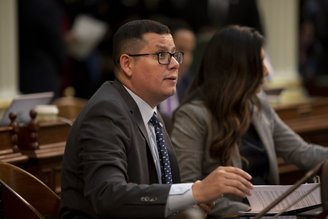
Assemblyman Rudy Salas on the floor on September 12, 2019. Photo by Anne Wernikoff for CalMatters
Assemblymember Rudy Salas, a Democrat from Bakersfield, said lawmakers don’t yet know how much unemployment money is missing, let alone whether it came from state or federal coffers. He’s awaiting a broader state audit in January, then will come the tougher question: “How do we backfill that?” said Salas, who has introduced one of several unemployment reform bills, AB 56, that the Legislature is set to take up next year.
As new virus closures once again swell the state’s unemployment backlog, competing priorities are emerging in the onslaught of new reform bills. Republicans have seized on unemployment dysfunction to rail against bureaucratic mismanagement and Newsom’s leadership, while Democrats are introducing more incremental bills to tweak the system.
“We’ve got a lot of messes to clean up,” said Democratic Assemblymember Lorena Gonzalez, who introduced bill AB 47 to require the state to offer a direct deposit option for unemployment, in line with 47 other states. “Ultimately, we do have to make people whole.”
Assemblymember Jim Patterson, a Republican from Fresno, describes the employment agency as a “rats nest of incompetence.” Patterson made the remark in a press conference where he attacked the state’s much-touted new ID.me automated verification system, citing constituents still stuck waiting months for benefits after promised improvements.
In the meantime, states like Washington have already recovered hundreds of millions of dollars after fraud — something Wilder of the Association of Certified Fraud Examiners said could prove much more difficult with California’s scattershot fraud issues.
“Especially if it’s just one-off cases, a bunch of individuals, that means you can’t find somebody that put through a thousand fraudulent claims,” Wilder said. “That’s a thousand separate investigations that the state is going to have to deal with.”
###
CALmatters.org is a nonprofit, nonpartisan media venture explaining California policies and politics.
Looking For a Christmas Meal? Here’s a List of Places Providing Free Food For Those in Need This Holiday
Stephanie McGeary / Tuesday, Dec. 22, 2020 @ 6 p.m. / Community , Food , Homelessness
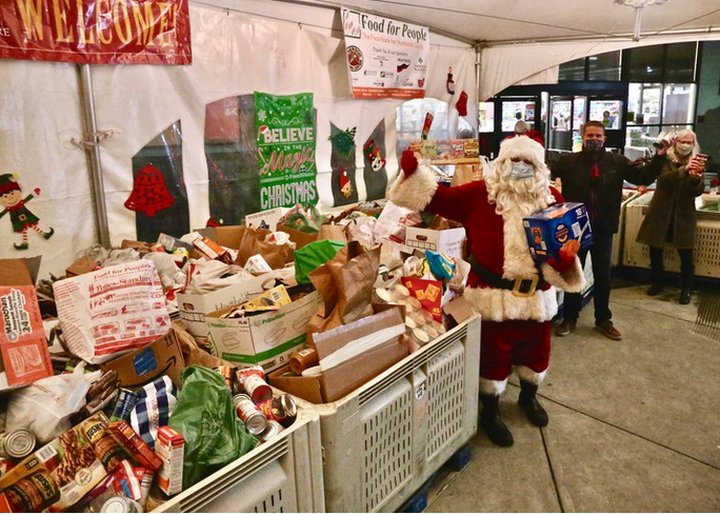
Humboldt Holiday Food Drive earlier this month | File photo
A lot has changed this year and although indoor gatherings are not on the table, many of our local nonprofits are making sure that folks in need will still have access to a free meal over the holidays. And with an extra need for access to free food this year, many of these organizations are also looking for donations or volunteers.
So whether you are in need of a meal, or wanting to help others, here’s a list of the places in Humboldt that will be supplying free food this Christmas season.
St. Vincent DePaul — 35 W. 3rd Street, Eureka
Free Christmas meal starting at 11 a.m. It is rumored that Santa Claus will be in attendance.
Humboldt Center Area For Harm Reduction (HACHR) — 1522 3rd Street, Eureka
HACHR will be serving a free meal beginning at 11:00 a.m. on Christmas Eve, Thursday, Dec. 24. Food will be first come, first served and will continue until the food runs out. So, make sure to get there early! Participants can line up outside to be handed a hot meal in a prepacked container.
HACHR Executive Director Lasara Firefox Allen wanted to mention that the free meal is available to anyone in need, and they do not need to be a regular recipient of HACHR’s services.
If you’re looking to help out, HACHR is accepting donations and is in need of blankets, sleeping bags, camping gear, grab-and-go food items, drinks (sports drinks, water, juice), socks, underwear, and warm clothing items.
You can drop off donations at the Third Street center on Christmas eve or during any of HACHR’s regular hours: Mondays 11:00 a.m to 1:00 p.m., Tuesday’s and Thursday’s from 10:00 a.m. to 2:00 p.m.
Eureka Rescue Mission — 110 2nd Street, Eureka
The rescue Mission will also be serving free meals on Christmas Eve from 12:00 to 2:00 p.m. Food will be served to-go for folks to eat outside.
The mission is also giving out 100 food boxes this year, which will include a turkey or ham, some mashed potatoes, gravy packets and some other holiday items. To reserve a food box, call 707-443-4551.
As always, the mission is accepting food donations at its Second Street location, open 24 hours a day. To donate, simply show up, or you can call the above number for more information.
Fortuna Veterans Hall — 1426 Main Street, Fortuna
The River Life Foundation will be holding its annual free Christmas feast on Friday, Dec. 25 from 1:00 to 3:00 p.m. This year food will be served drive through style, with prepacked meals including roast beef, turkey, scalloped potatoes, green bean casserole a roll and Christmas cookies!
Need your meal delivered? The foundation will also deliver to residents within the City of Fortuna. To arrange a delivery call Ginny before 1:00 p.m. on Christmas day at 707-601-6526.
And if you’re looking to lend a hand, River Life is taking volunteers to help serve or drive deliveries. Cal Ginny at the above number to volunteer.
Food For People — Eureka, Arcata, Blue Lake
The Eureka food pantry — 2112 Broadway — will be open for regular food box distribution on Wednesday, Dec. 23, from 11:00 a.m. to 3:00 p.m., but will be closed on Christmas Eve and Christmas Day. Food boxes will include extra holiday goodies, including a turkey, chicken or ham and some folks will receive $25 gift cards to local grocery stores (while supplies last.)
The Arcata pantry at the Trinity Baptist Church — 2450 Alliance Road — will be open and providing the same service on Wednesday from 3:00 to 6:00 p.m.
Food for People’s mobile produce pantry will also be open on Wednesday from 10 a.m. to 2:00 p.m. at the Blue Lake Community Resource Center — 111 Greenwood Ave, Blue Lake.
If you would like to donate non-perishable items to Food For People, there are donation barrels at Eureka Natural Foods and the Eureka and Arcata CO-OP. Donations will be accepted through the end of December.
Betty Kwan Chinn Foundation — 133 7th St, Eureka
The Betty Chinn Foundation has already been so busy this week, distributing 300 food boxes on Monday and handing out free toys on Tuesday, and this nonprofit will also be cooking a free prime rib dinner for those in need on Christmas Day.
If you need a meal, call the foundation at 707-407-3833 by noon on Christmas, and Betty Chinn will take care of you.
“No one should go hungry” Chinn told the Outpost.
###
If you know of somewhere we missed, feel free to email the information to news@lostcoastoutpost.com
(VIDEO) Humboldt Redwoods State Park Naturalist ‘Griff’ is Back With a Holiday Special on Christmas Trees
John Ross Ferrara / Tuesday, Dec. 22, 2020 @ 4:05 p.m. / Nature
Merry Griff-mas, Humboldt. Your favorite nature guide John “Griff” Griffith has returned with another informative video.
In today’s episode, Griff riffs about the history of Christmas trees and explains how to identify the kind of tree that may be in your home.
“A lot of your Christmas trees are actually conifers,” Griff says in the video. “Conifers should be called cone-ifers because they’re cone-bearing evergreen trees.”
Griff also talks about how conifers can lead to biodiversity loss in California’s oak woodlands. Watch the full discussion in the video embedded at the top of this story.


