

THE ECONEWS REPORT: What’s Next for Eel River Dams?
The EcoNews Report / Saturday, Feb. 12, 2022 @ 10 a.m. / Environment
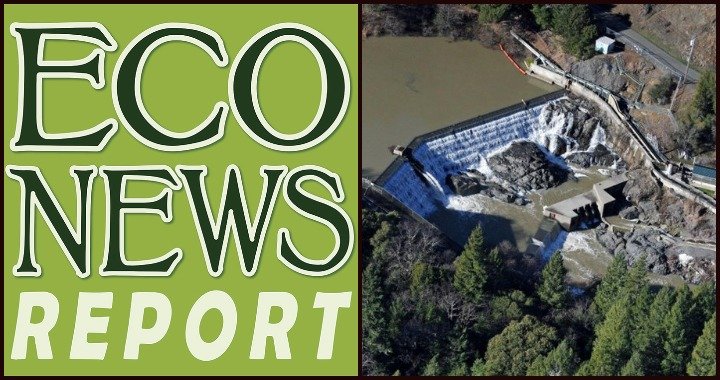
Cape Horn Dam at Van Arsdale Reservoir. Photo: PG&E.
###
On this week’s edition of the Econews Report, Friends of the Eel River discuss developments in the thrilling drama of Eel River dam removal. It’s a story of injustice and opportunity— a 100-year-old water diversion that takes from one watershed to give to another, and the chance to correct the harms by returning salmon and steelhead to excellent cold-water habitat locked behind the dams.
Starring characters like the charismatic Northern California summer steelhead, the most athletic and endangered fish in the watershed; Congressman Huffman, who is working diligently to arrive at a win-win solution; and countless stakeholders all taking part in a process which will see the Eel River become the longest free-flowing river in the state.
AUDIO:
“The EcoNews Report,” Feb. 12, 2022.
REQUIRED READING:
”Action Alert: Ask FERC to Initiate License Surrender for Eel River Dams,” Friends of the Eel.
BOOKED
Today: 12 felonies, 16 misdemeanors, 0 infractions
JUDGED
Humboldt County Superior Court Calendar: Friday, Sept. 4
CHP REPORTS
1718 Mm36 E Hum 17.20 (HM office): Trfc Collision-Unkn Inj
ELSEWHERE
RHBB: CDPH Issues Immunization Recommendations for 2026-27 Respiratory Virus Season
RHBB: Redway Transfer Station to Close an Extra Day for Construction
RHBB: Dows Prairie Road to Close for Two Months for Culvert Repair
THE CANNABIS CONVERSATION: Team Building
Jesse Duncan / Saturday, Feb. 12, 2022 @ 7:30 a.m. / Cannabis

###
I kicked off the farming season last week and began prepping for the year alongside an amazing team. The stakes are high for cannabis farms and other businesses here in Humboldt, and for many of us, this year is the most important of our careers. Team performance will play a deciding factor in who continues in business and who closes their doors.
In the cannabis industry specifically, legalization has fragmented the attention of owners. They can no longer focus primarily on growing and sales. Owners must now navigate compliance, Human Resources, labor laws, marketing in a highly competitive space, environmental protection/remediation and a host of other business issues.
As many farm owners have spent less time in the dirt and more time on these other matters, quality and performance have suffered in some cases. Farms, much like other industries, now have an increased reliance on the performance of their teams. For this reason and in light of challenging market conditions, team building is of paramount importance.
Whether a cannabis business or any other here in Humboldt, attracting and retaining quality people is critical. This column will share my thoughts on the issue and hopefully help you create the team your business needs to thrive.
Honoring and Valuing Employees as Humans
Employees are more than a number or a means to an end. Showing employees you value and appreciate them is critical. Getting to know them as people, creating an atmosphere where they can come to you with life issues, expressing thanks and gratitude and simply spending time with your people creates relationship and a sense of community, while drastically improving commitment, loyalty and performance.
Employees who feel honored and valued tend to go the extra mile as they derive more personal and professional satisfaction from their careers. While maintaining some professional distance from employees can be advisable, treating them with basic human values like dignity, respect and compassion will create a positive work environment that people can excel in. Through seeking to understand and direct employees, rather than dictate to them, relationship can be built and your workforce can thrive.
Provide Adequate Training
Equipping your employees with the training and tools to succeed is also critical to the success of your operation. Even within the same industry, processes and operating procedures can vary significantly between companies. Taking the time to thoroughly and meticulously train employees in your process is of paramount importance.
In cannabis, like in other industries, experienced employees often have existing ideas and an existing approach with regard to workflow. That approach may or may not coincide or jive well with your operational plan, so ensuring all parties are on the same page will help prevent problems, miscommunication and dissatisfaction. Training should also account for the individual learning style of your employees. Some people are visual learners, some are auditory, and others learn best with a hands-on approach. Creating a training protocol incorporating this understanding is more inclusive and will help optimize results.
Accountability and Communication
Whether on the pot farm or in a corporate setting, accountability and communication are vital for your business. Accountability is about being trusted and reliable. Do management and employees do what they are asked and what they say they will do? With greater business complexity and with more delegation of tasks, accountability for all team members becomes increasingly important. If one individual fails to tow the line, negative ramifications for the company can be extreme.
Similarly, open, caring and direct communication within a company is a must. When communication breaks down or is lacking, problems can occur and workflow can suffer. Morale can slip, as can employee performance. Without continuous dialog within your company, opportunities for growth, development, deeper relationship and performance improvements are hampered.
Opportunities for Advancement
Providing opportunities for advancement, or upward mobility among your workforce is another great way to build a high-performance team. When employees know and understand that hard work, commitment, dedication and mastery of skills can lead to more responsibility and higher compensation, they tend to outperform.
While many companies hire management-level positions through human resources or placement agencies, promoting from within can be a more productive strategy. In cannabis, like in other industries, promoting individuals with a strong work ethic, a love and a deep understanding of the company can lead to better results than hiring a strong resume from the outside. As we are seeing in cannabis, folks who were strong executives in other industries have not generally shown the same aptitude in the cannabis space.
Inspiration, Purpose and Meaning
Inspiring employees and providing them a real sense of purpose and meaning can help supercharge the results of your team. Regardless of industry, sharing your mission and vision with employees and empowering them to live those out each and every day creates a sense of ownership and increases job satisfaction.
In my line of work, creating an artisanal, competition-level product that saves and improves lives gives me the motivation to push hard day after day. I find that sharing this with teammates creates the passion, focus and drive necessary to differentiate ourselves in a crowded space. Love and enthusiasm are infectious, as are toxicity and burnout. Employees key in on the energy of management and ownership, so being an inspirational, vibrant member of the team is a must. When owners share their love, passion and values with employees, and rub elbows with them on projects, relationships deepen and performance improves.
Compensation
Fair compensation and, where appropriate, a performance-based bonus system will solidify your team and keep employees happily and gainfully engaged with your company and its projects. When employees see the fruits of their labor transition into a year-end bonus, for example, they are excited to roll into the new year with you and will be less likely to shop jobs.
A well compensated team will display greater loyalty and will be far more willing to go the extra mile for you and the fulfillment of your company’s mission. Conversely, teams who grumble about being undercompensated rarely perform at the highest level.
In cannabis, like in other industries, an engaged, motivated workforce will work harder, take more ownership and radically improve the success of your operation. As the cannabis industry and Humboldt’s economy face near-term uncertainty, now more than ever, is time to honor and value your people. Coming together, working toward shared objectives and striving to be our best each day can help our businesses survive lean times and be well-positioned to capitalize on brighter days ahead.
When times are tough, communication, accountability, community and mutual respect are more important than ever. As we face what looks to be a challenging year, we need to come together, support one another and remember that love, friendship and empathy are powerful motivators. Like it or not, challenging economic times separate winners from losers. Organizations with a clear focus, strong teams, sound business processes and amazing products will survive. Others will not.
I love my lifelong community dearly and am rooting for us all. Let’s go Humboldt!!
###
Jesse Duncan is a lifelong Humboldt County resident, a father of six, a retired financial advisor, and a full-time commercial cannabis grower. He is also the creator of NorCal Financial and Cannabis Consulting, a no-cost platform that helps small farmers improve their cultivation, business, and financial skills. Please check out his blog at, his Instagram at jesse_duncann, and connect with him on Linkedin.
Eureka Police Release Body Cam Footage From the Dec. 30 Shooting Behind the Red Lion
Hank Sims / Friday, Feb. 11, 2022 @ 2:16 p.m. / Crime
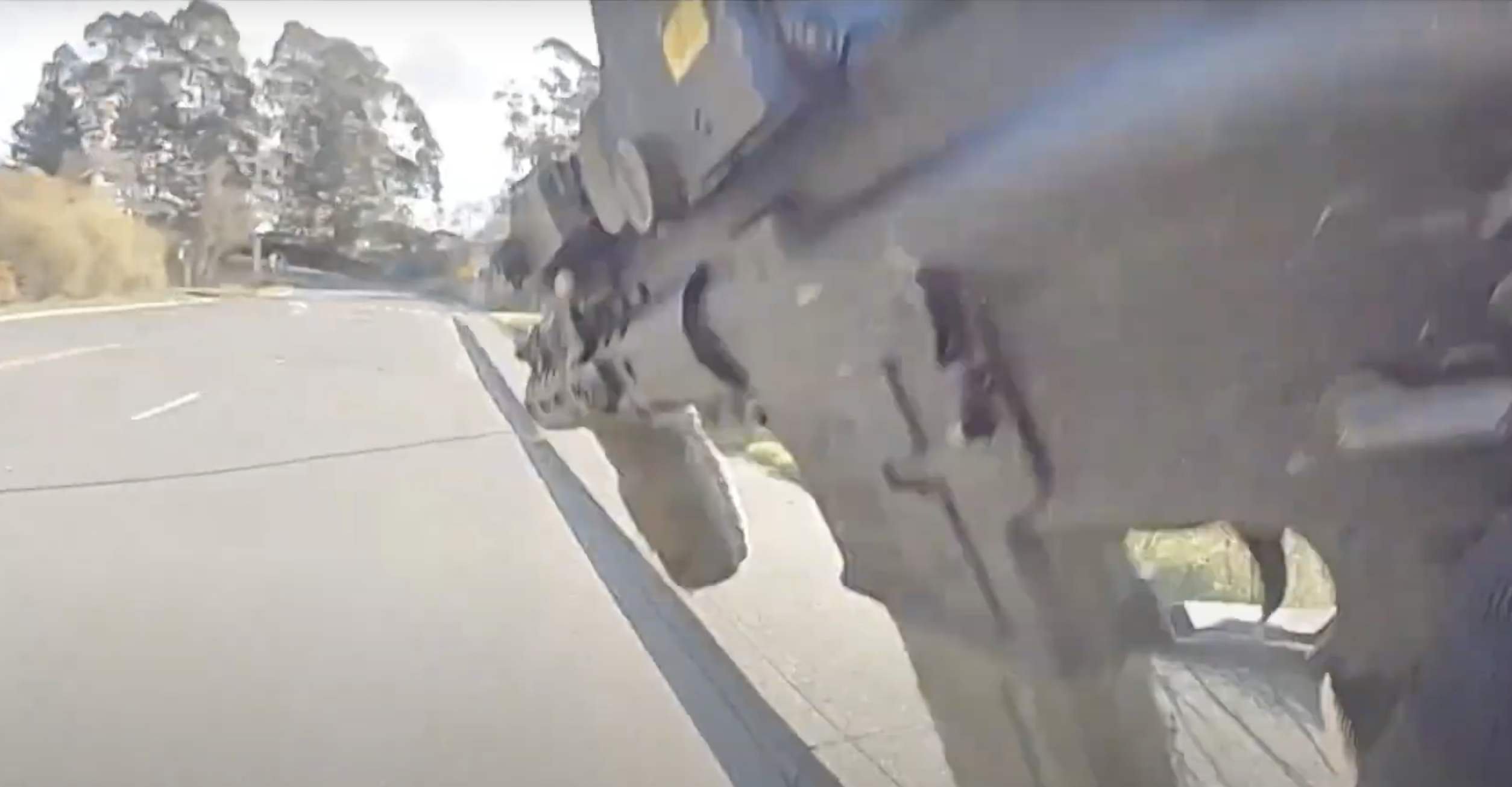
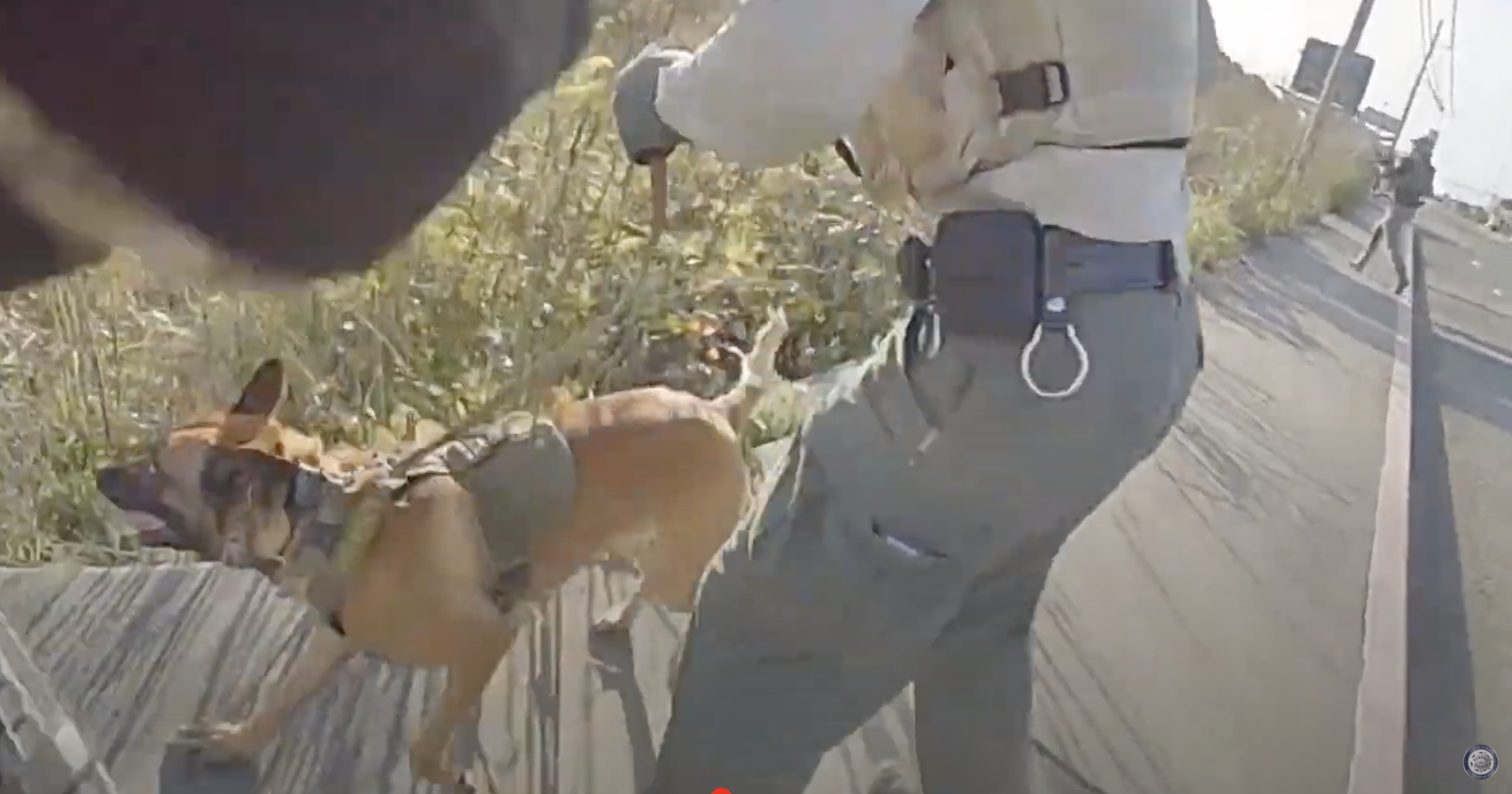
The Eureka Police Department today released footage of the police shooting of Little Eagle Moon behind the Red Lion Inn on Dec. 30, as a task force attempted to take him into custody.
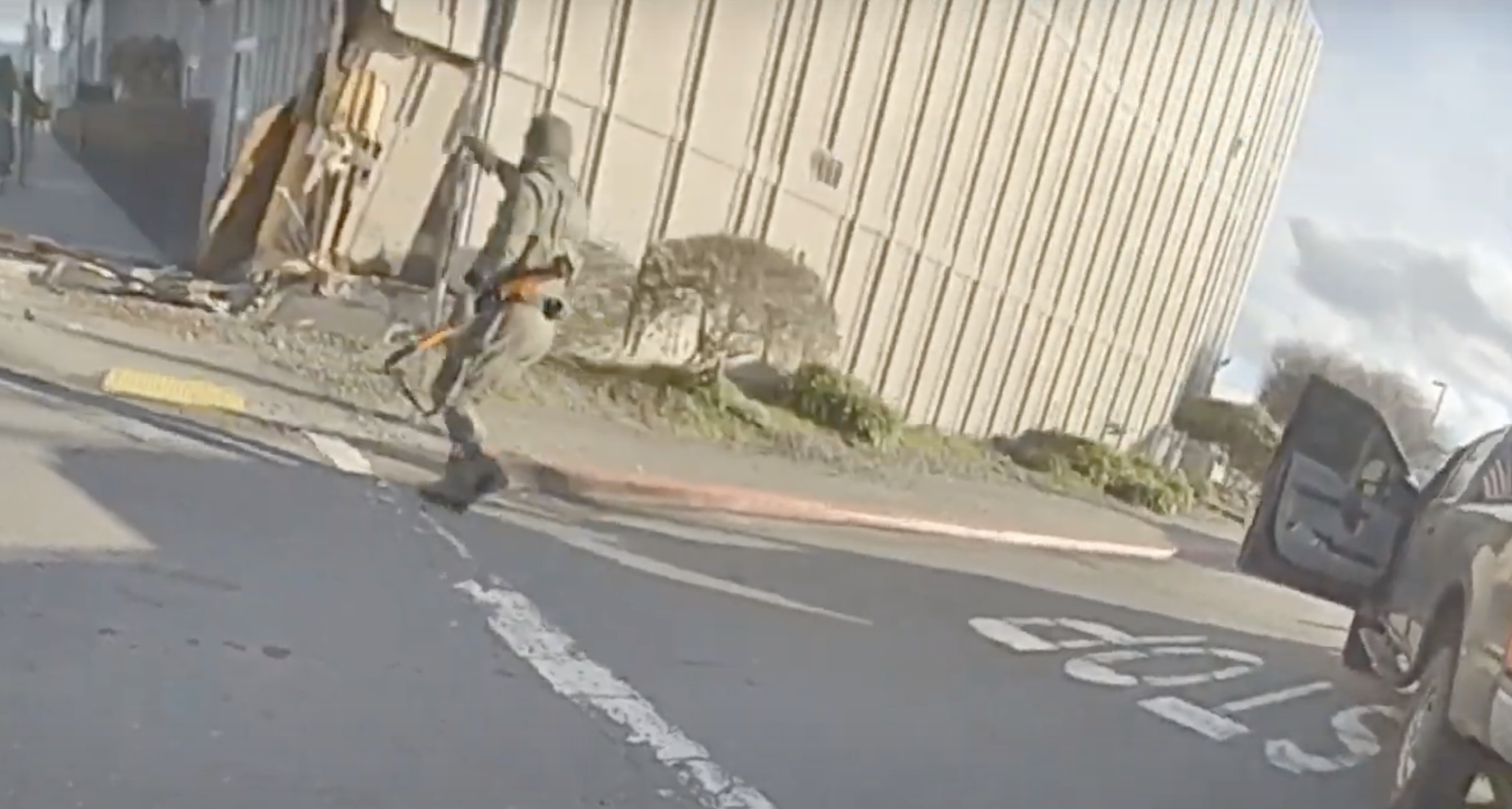
Moon, who was wanted on several violence-related charges, was injured in the shooting, but managed, after being hit, to flee, first by vehicle and then on foot, damaging several vehicles and the corner of the Red Lion Inn in his attempt to escape.
The footage is from the body camera worn by EPD Detective Joseph Couch, who was the only law enforcement officer on scene who was wearing a device.
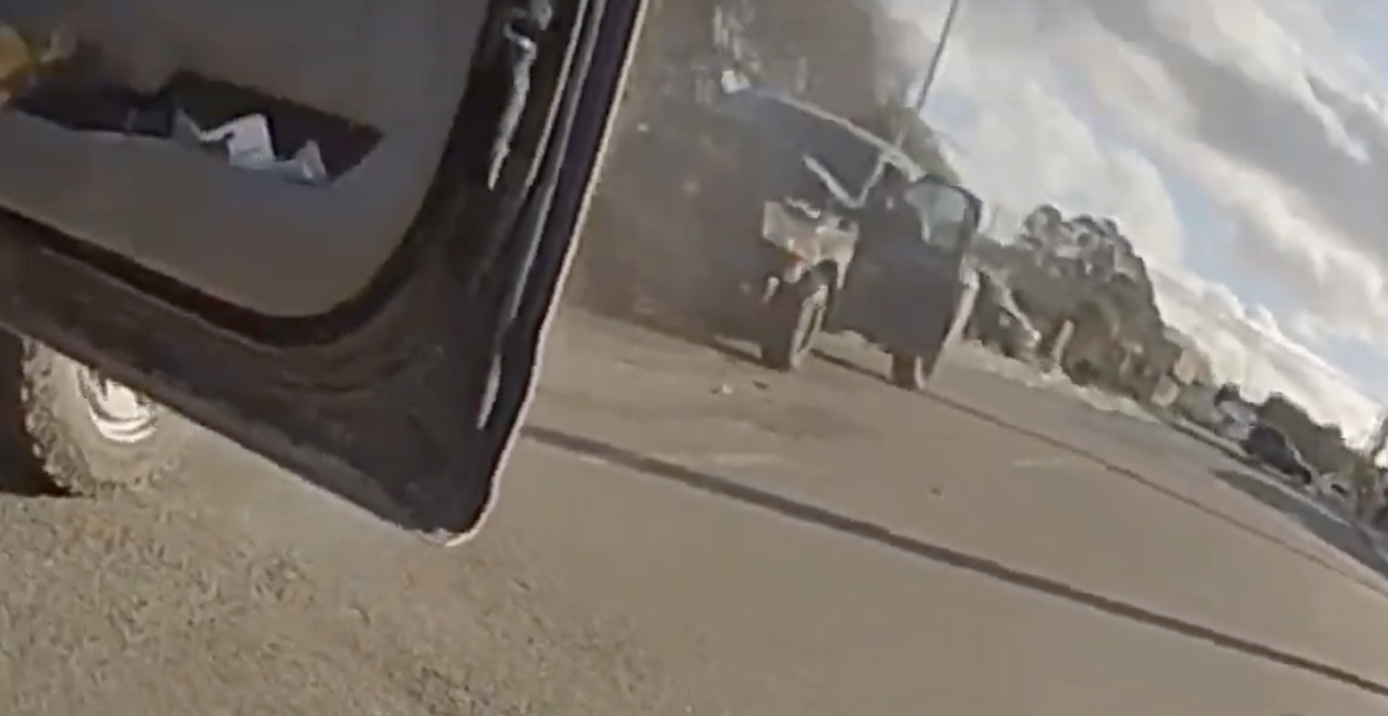
In the aftermath of the incident, the Eureka Police Department issued a statement saying Officer Couch was prompted to open fire after Moon “began ramming law enforcement vehicles.” Though the footage shows Moon’s vehicle appears to be moving pretty slowly immediately before Couch fires six shots, it does confirm that as he attempted to escape the net of law enforcement cars that had surrounded him he did serious front-end damage to the one directly behind his. A map embedded in the video shows a Sheriff’s deputy standing next to the damaged car at the time.
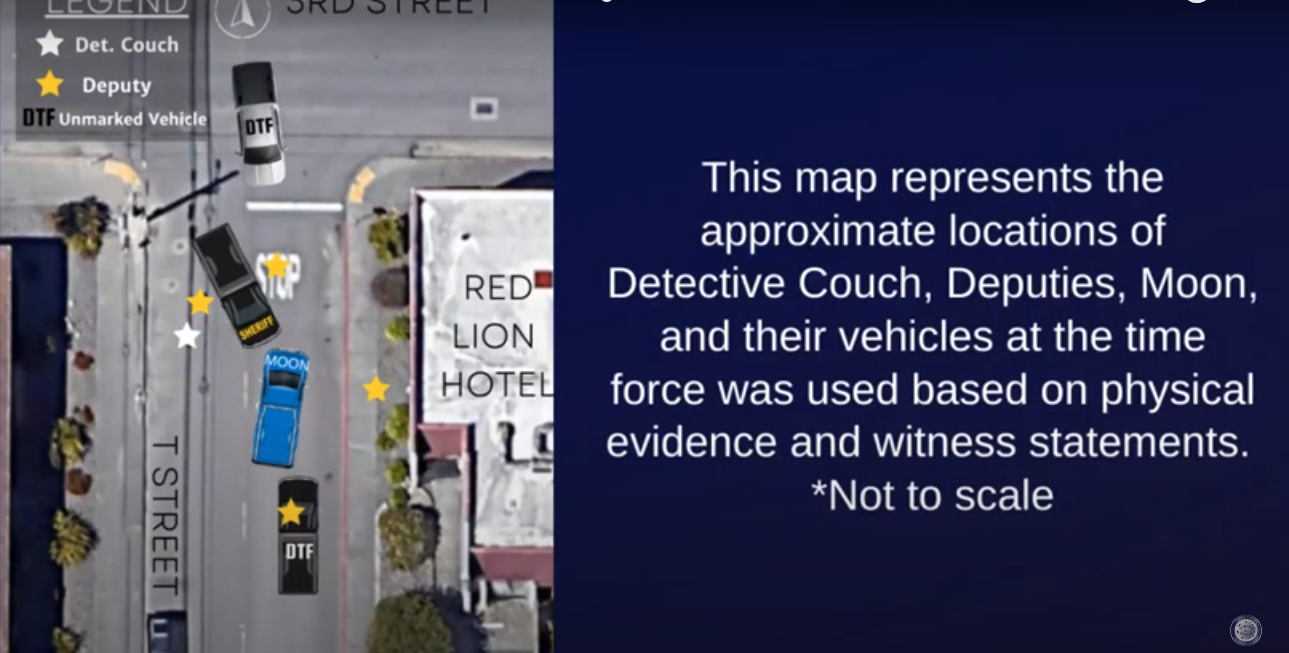
“Fuck, dude, I think I shot him” says Couch to his partner, after Moon manages to free his vehicle and briefly escape.
As the video notes, the Humboldt County Critical Incident Response Team continues to investigate the case. When they’re finished, the case will be turned over to the District Attorney’s office, which will decide whether or not any charges against the officers are warranted.
Press release from the Eureka Police Department:
Pursuant to California Government Code §6254(f)(4), modified by Assembly Bill (AB 748), video and/or audio recordings depicting the discharge of a firearm at a person by a peace officer or custodial officer shall be made public within 45 days of the event by the agency provided the release would not significantly interfere with a criminal or administrative investigation.
The Eureka Police Department has released the body worn camera recording depicting the discharge of a firearm during the December 30, 2021 officer involved shooting. The video can be found here: https://youtu.be/sj-U3uXqdG4
The Humboldt County Multi-Agency Critical Incident Response Team (CIRT) is continuing to investigate. This is an active criminal investigation and additional information will be released in accordance with California Penal Code 832.7.
###
PREVIOUSLY:
- SCANNER TRAFFIC INDICATES: Shots Fired in Eureka
- Eureka Police Release Statement on Today’s Apprehension of Felony Suspect Near Red Lion Inn, In Which an Officer Fired After Law Enforcement Vehicles Were Rammed
- Suspect Who Was Injured by Officer Gunfire to be Booked for Attempted Murder for Allegedly Ramming Police Vehicles With His Own, Says EPD
- Eureka Police Detective Named as Only Officer Who Fired a Gun During Last Month’s Officer-Involved Shooting
- Parolee Pleads ‘Not Guilty’ of Attempted Murder of Police Officers in Car-Ramming Case; Bail Set at More Than $1.5M
###
Suspect in Stickup at Eureka Car Wash Last Night Still at Large, Police Say
LoCO Staff / Friday, Feb. 11, 2022 @ 10:05 a.m. / Politics
From the Eureka Police Department:
On February 10, 2022, at about 8:20 p.m., officers with the Eureka Police Department responded to a carwash on the 1400 block of Broadway for the report of an armed robbery that had just occurred.
Based on statements and surveillance, the victim was washing her vehicle in a self- service stall when the suspect approached her, brandished a firearm and demanded money. The suspect fled on foot northbound when the victim said she only had coins. Officers searched the area but were unable to locate the suspect.
The suspect was described as a white male, 20’s to 30’s, and about 5’7” tall. He was wearing a dark colored backpack, dark colored jacket over a red hooded sweatshirt, black hat, and dark pants.
Anyone with information regarding this investigation or identity of the suspect is asked to contact Detective Sergeant Liles at tliles@ci.eureka.ca.gov or (707)441-4010.


Fortuna Has Too Much Compost! Come and Haul Away 2.5 Yards of Exceptional Quality (EQ) Compost For Absolutely Free
LoCO Staff / Friday, Feb. 11, 2022 @ 9:22 a.m. / garden
A call to Fortuna’s Public Works Department confirms that this amazing deal is not limited to Fortuna residents. Come on down to the Friendly City and load up!

Press release from the City of Fortuna:
The City of Fortuna will once again host a promotional give-away for Exceptional Quality (EQ) Class A compost for beneficial reuse as a soil amendment to your property or place of residence beginning on Monday, March 7th and continuing while supplies last until Friday, March 11th.
Loading hours will be from 9am to 2:30pm each day at our facility located at 180 Dinsmore Drive. As per the City’s Biosolids Management Plan, the public will be limited to 21⁄2 cubic yards (roughly one full-size pickup truck load) of material per address per year. Small pickup trucks should hold 11⁄2 cubic yards. Everyone will be required to sign a “Hold Harmless” release of liability, when picking up the compost. Drivers must have proper tarps for covering compost while transporting from the facility. Tarps are NOT provided by the City. No pickups with canopies will be loaded by City staff.
Due to current CDPH requirements under the Covid-19 pandemic, face-masks will be required for unvaccinated individuals on site. If staff is loading another vehicle upon arrival, remain waiting inside your own vehicle until it is your turn. Practice 6 foot social distancing while interacting with staff.
Please use the corporation yard entrance (2nd gate past the bridge) when picking up the compost. Vehicles entering the corporation yard can proceed directly to the loading area by following the signs. If you have any questions, you may call (707) 725-1476.
RODRIGUEZ TRIAL: Jury Still Out After First Day of Deliberations
Rhonda Parker / Friday, Feb. 11, 2022 @ 7:15 a.m. / Courts
Jurors in the murder trial of Ulisses Rodriguez deliberated all day Thursday without reaching a decision on whether he is guilty of murdering Jeremy Kuemmel and Tiffany Ellebrecht on a marijuana grow in Southern Humboldt.
Because today is a court holiday, the jury won’t start deliberating again until Monday morning.
Most jurors seemed to be in good spirits, talking and laughing, as they left the courthouse at 4:30 p.m.

Rodriguez, 27, is accused of shooting the couple to death, dragging their chained bodies to the back of Kuemmel’s Ford Expedition and then setting the vehicle on fire. The blazing Expedition was left in a turnout on Briceland Road.
Much depends on whether jurors believed the trial testimony of John Doe and Chano Sanchez, workers at the grow site who said Rodriguez told them he killed the couple and needed their help with the bodies.
Afterward, according to Sanchez and Doe, Rodriguez allowed them to leave but told them to come back in an hour with gasoline. Instead Doe went to a lawyer, then to law enforcement, to report what he had witnessed.
During closing arguments Wednesday, prosecutor Luke Bernthal said Sanchez and Doe told the truth, and their accounts are supported by the physical evidence.
But defense attorney Andrea Sullivan said Doe and Sanchez should be considered suspects. She argued that Doe had been selling methamphetamine to Kuemmel and Ellebrecht, and they were killed because they hadn’t paid their bill.
Sullivan said the car was set on fire on a main road to “send a message.”
Rodriguez was arrested at his parents’ home in Chico a few says after the killings. His mother and father have been in the courthouse every day of the trial. They headed home to Chico on Thursday but were planning to be back in Eureka on Monday.
Rodriguez has been in Humboldt County Correctional Facility since a few days after the killings on Aug. 14, 2018. He is charged with two counts of murder, making criminal threats and arson. He also is accused of special allegations that could mean life in prison without parole if he is convicted.
Jurors were given four options: first-degree murder, second-degree murder, voluntary manslaughter and acquittal.
###
PREVIOUSLY:
- Chico Man Arrested in Connection to Two Bodies Found Inside Burning Vehicle Near Ettersburg Junction
- Chico Man Pleads Not Guilty to SoHum Double Homicide
- Preliminary Hearing Set for Chico Man Charged With SoHum Double Murder
- Chico Man Held to Answer for Murder of SoHum Couple in Dispute Over Stolen Weed
- COURT ROUNDUP: Trial for Suspect in Gruesome SoHum Double Murder Set for Christmas Eve; Godoy-Standley Judged Mentally Competent; Fortuna Murderer Gets Two Years’ Credit
- HUMBOLDT COURT ROUNDUP: Updates on Two Murder Cases, Two Attempted Murder Cases
- COURT ROUNDUP: Mck Woman to Plead Guilty to Manslaughter; Hoopa Man’s Murder Trial Set to Begin; More Updates
- TODAY in COURT: Bear River Triple-Murderer’s Sentencing Delayed; Double-Murder Trial Over SoHum Couple’s 2018 Deaths Scheduled to Start Next Week
- TODAY in COURT: Two Local Murder Cases Moving Forward
- RODRIGUEZ TRIAL: First Testimony in SoHum Double Murder Trial Describes How the Burning Vehicle and Bodies Inside Were Found
- RODRIGUEZ TRIAL: Terrified Witness Describes Being Forced to Handle Bodies at Gunpoint
- RODRIGUEZ TRIAL: Detective Describe How They Tracked Down Double Murder Suspect and a Witness
- RODRIGUEZ TRIAL: Accused Murderer Spent the Days After Killing Searching for New Cars and Reading About the Crime, Investigator Testifies
- RODRIGUEZ TRIAL: Text Messages Suggest SoHum Murder Suspect Was Planning to Rob His Own Grow Operation, Prosecution Argues
- RODRIGUEZ TRIAL: Medical Examiner, Other Evidence Specialists Testify to Manner of Victims’ Deaths
- RODRIGUEZ TRIAL: Defense Lays Out Alternative Theory of the Double Murder as the Case Goes to the Jury
‘Morale Killer’: California Scientists Battle Over Pay Disparities
Rachel Becker / Friday, Feb. 11, 2022 @ 7:05 a.m. / Sacramento
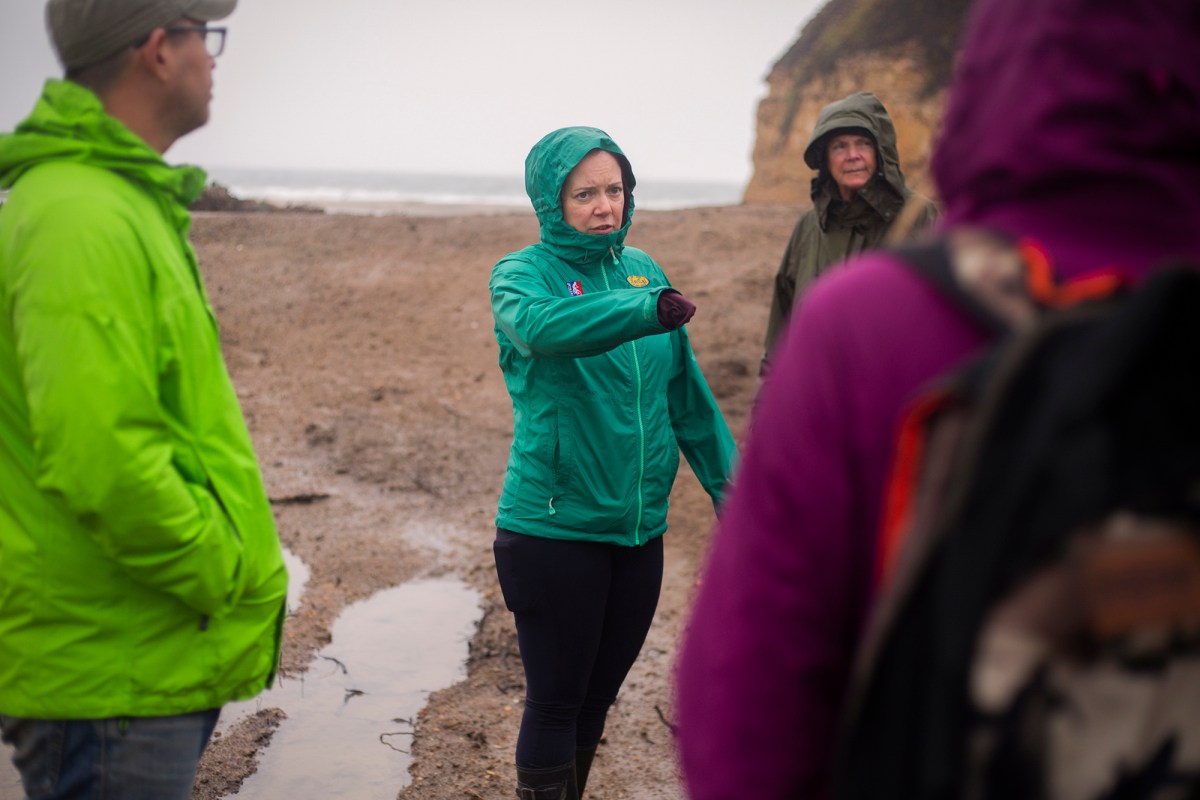
Christina Toms (center), a senior scientist with the San Francisco Bay Regional Water Quality Control Board, checks up on a new wetland restoration project at Drake’s Beach in Point Reyes. She has been overseeing the project for the past year in partnersh
###
One scientist working for the state of California drives for Lyft and Uber on nights, weekends and holidays to support his family in Sonoma County. Another manages the Berkeley building where he lives for extra cash. A third has been pushing for years to be reclassified as an engineer rather than a scientist — a change that could mean higher pay for the exact same work.
Scientists working for California are key to food safety, cleaning up hazardous waste and protecting wildlife, wetlands and water. Their work informs the state’s efforts to combat climate change, drought and wildfires.
Two years ago, two members of Gov. Gavin Newsom’s cabinet said scientists in their agencies were dramatically underpaid — earning less than their local and federal counterparts and state colleagues in similar roles who are classified as engineers.
Now the union representing staff scientists is back at the negotiating table after trying for nearly two years to update a contract that expired in July 2020. They’re seeking to narrow or close the gap with other state workers, like their colleagues in engineering.
Full-time rank-and-file state scientists on average earned 27% less than state engineers in 2020 wages — $83,586 compared to $114,012, according to a January state assessment. The engineers have a much larger union, with a bigger proportion of men.
About 78% of state engineers identify as men, according to a state assessment that included only binary genders. Among state scientists, the gender ratio is roughly even.
Pay rates for state employees who are not managers or supervisors are negotiated by their unions and the state Dept. of Human Resources, which works within limits established by the Department of Finance and the governor’s office. Lawmakers then vote to approve the contracts, which are signed by the governor.
As California’s lawmakers wrestle with how to spend the budget surplus, workers and environmental organizations warn: Fix the pay gap or risk undermining the state’s scientific ambitions and policy goals.
“I get to put on my little superhero cape every day and actually fight for a better California. And it’s a real privilege,” said Christina Toms, a state scientist working to protect and restore San Francisco Bay and other coastal wetlands that can combat sea level rise.
“I’m freaking terrified that all of these awesome people that I work with that are underpaid as (environmental scientists) are going to leave.”
Toms and other scientists interviewed emphasized they were speaking as union members, the California Association of Professional Scientists, rather than as employees of their agencies.
California’s disparity between scientists and engineers follows a national trend. Nationwide, the U.S. Bureau of Labor Statistics calculated that environmental scientists and specialists across the occupation earned $73,230 in median wages in 2020 — 20% less than environmental engineers, who earned $92,120.
For Christina Toms, becoming a scientist for the state of California gave her an added sense of purpose — and “an absolutely gut-punching salary cut.”
In California’s agencies, scientists and engineers often work side-by-side on state projects. Both fields generally require high levels of specialized education and technical expertise, and non-partisan analysts and the state’s personnel administrators have noted overlaps between the classifications.
Hope Smythe, who supervised scientists, engineers and geologists and recently retired as executive director of the Santa Ana Regional Water Quality Control Board, said there is no clear distinction between their work that would warrant different pay.
“The people that were in my unit, we were all working on the same thing,” Smythe said. “There was really no specific definition of well, this is geologist’s work, versus this is engineer’s work, versus this is scientist’s work.”
State engineer salaries began outpacing scientist salaries in the early 2000s after engineers negotiated a new contract. This caused “severe retention problems in the scientist classes where the duties, responsibilities, and knowledge overlap the engineer classes,” state personnel officials wrote in 2006.
In 2014, after a series of court battles, scientist supervisors received pay increases of up to nearly 43% that brought them more in line with their engineer colleagues. But among the rank and file scientists, subject to collective bargaining, a pay gap persisted.
Toms, who trained as an engineer and had worked as a consultant in environmental engineering, didn’t realize there was such a significant difference in pay when she applied for a permanent position with the San Francisco Bay Water Quality Control Board.
She has been trying to be reclassified as an engineer ever since, she said. For Toms, becoming a scientist for the state of California gave her an added sense of purpose — and “an absolutely gut-punching salary cut.”
The Professional Engineers in California Government union — which represents engineers and some geologists involved in shaping California’s infrastructure and technology, and protecting air and water quality — would not comment on the pay disparity.

Christina Toms and colleagues tour the restoration work at Drake’s Beach in Point Reyes. Nina Riggio for CalMatters
At least part of the disparity could be linked to a gender pay gap. In a letter to the administration, members of the union wrote “for female, Black, Native, Latinx, AAPI, LGBTQ+, and other scientists of diversity, a severe and long-standing pay inequity between state employee disciplines represents simply another form of institutional discrimination.”
The pay disparity “feels like more of the same, always,” said Tricia Lee, a senior environmental scientist with the state’s Delta Stewardship Council who works to reduce threats to California’s water supplies.
“I think there continues to be a narrative that state scientists are doing less important or … less technical work, and therefore are less deserving,” she said.
Some research suggests that fields with a greater proportion of women pay lower salaries, possibly because employers “ascribe a lower value for the work done in occupations with a high share of females and consequently set lower wage levels.”
‘Dramatic parity challenges’
“Science was on the ballot,” California Gov. Gavin Newsom said after his victory in the September recall election. “We said yes to science.”
But members of his administration warned two years ago that underpaying scientists is compromising the state’s scientific endeavors.
“Rank and file scientists do similar work to rank and file engineers while being paid dramatically less,” California Natural Resources Secretary Wade Crowfoot warned in a 2020 memo to Eraina Ortega, director of the California Department of Human Resources. “Pay equity is urgently needed to enable high-quality science.”
The “dramatic… parity challenges faced by state scientists” threatens “the ability and capacity of CalEPA to fully implement its mission to safeguard California’s resources, products, food, and climate,” Environmental Protection Agency Secretary Jared Blumenfeld echoed in his own letter.
“Rank and file scientists do similar work to rank and file engineers while being paid dramatically less.”
— Wade Crowfoot, California Natural Resources Secretary
Some state scientists, such as chemists and epidemiologists, make more than the market average, according to a state assessment that included supervisors. But most are environmental scientists and specialists, who earn about 2% less in total compensation than the market average for public sector scientists in California and 8% less than federal ones. Their vacancy rate, however, falls slightly below the state’s.
Human resources department staff said the report compares median salary, which “would be centered on rank-and-file classifications.” But the scientists’ union disputes the analysis, saying it’s skewed by the inclusion of supervisors, who aren’t included in collective bargaining.
Environmental scientists in the pricey Bay Area — where nearly a fifth of state scientists work — face especially steep disparities, earning 23% less than their counterparts in local government, and about 41% less than federal scientists, according to the state assessment.
In 2019, 22% of 59 scientists in the Department of Toxic Substances Control, the State Water Resources Control Board and the regional water boards who responded to an informal survey said they held second jobs. Most said the pay affected their willingness to recruit others.
Chuck Striplen, who works in state and tribal intergovernmental affairs for an agency he asked not to be named because it doesn’t control his salary, holds a PhD, a master’s degree, two bachelor’s degrees and an archeology certification. His job involves protecting the state’s natural resources.
Striplen, who is based in Sonoma County, said he began driving for Uber and Lyft to supplement his pay and racked up thousands of miles of trips before the pandemic.
“You do what you gotta do to take care of your kids,” said the father of four, who is a California tribal citizen. “Having overcome the traditional barriers in education, in housing, to come into state service and be so woefully undercompensated because of a different form of discrimination — it’s just a bit of a morale killer.”
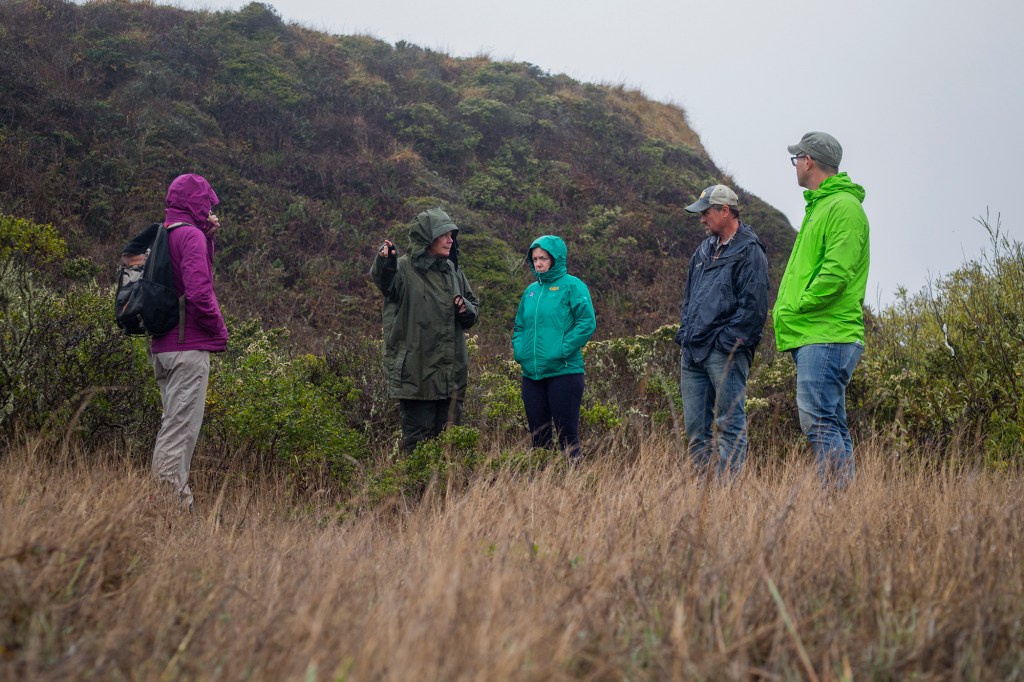
Christina Toms, who works to protect and restore San Francisco Bay wetlands, said Californians deserve to have the best scientists working for them, “and the way to do that is, you pay them.” Nina Riggio for CalMatters
Kim Tenggardjaja, who works for the Department of Fish and Wildlife, said finding out she was making less than her engineer colleagues was disheartening.
“California is seen as such a forward-thinking state, and we are. But at the same time, there’s this huge lack of pay parity there,” she said. And not remedying it, she added, makes a statement. “It’s saying, ‘Well, maybe scientists don’t matter as much as we would like to have others believe.’”
Environmental and other science and health-focused organizations wrote to Newsom, asking him to address the pay differences, calling it a “moral issue” but also an “unsustainable situation” that could threaten important services.
Ortega, the director of the Department of Human Resources, and Newsom’s office declined to comment on the ongoing negotiations.
Toms said no one goes into state service expecting to get rich. But as science continues to be critical to combatting major challenges ahead for California, like climate change, she said:
“Californians deserve to have the best of the best working for them. And the way you do that is, you pay them.”
###
CALmatters.org is a nonprofit, nonpartisan media venture explaining California policies and politics.


