
Jury Convicts Tsarnas of Felony Hit-and-Run
Rhonda Parker / Thursday, April 1, 2021 @ 12:37 p.m. / Courts
Jeffry Lee Tsarnas, father of a 14-year-old girl who was killed by a hit-and-run driver, was found guilty this morning of felony hit-and-run for failing to stop his car after he struck and seriously injured a pedestrian on Fernbridge.
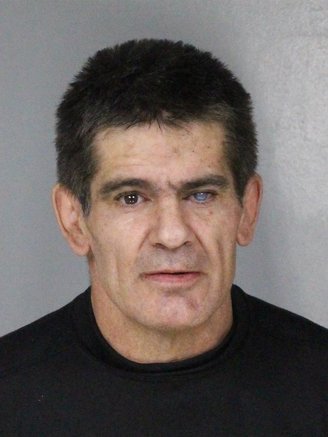
Tsarnas.
The jury, after a total of about 10 hours of deliberation over several days, returned the verdict about 11:30 a.m. Tsarnas did not visibly react. He is scheduled for sentencing April 26 and faces a maximum penalty of three years behind bars and a fine of $10,000. [UPDATE: A press release from District Attorney Maggie Fleming’s office contradicts this somewhat — it says that Tsarnas could face four years in prison.]
Judge Timothy Canning declined Deputy District Attorney Steven Steward’s request that, given the jury’s decision, Tsarnas be immediately taken into custody. Defense attorney April Van Dyke called that “absolutely unnecessary,” saying Tsarnas has almost no criminal history and has shown up for every court hearing.
The Fernbridge hit-and-run occurred in November 2018 and Tsarnas has remained out of custody. During the trial, it became clear Tsarnas knew his car hit something on the bridge about 5:30 p.m. When he arrived at Bear River Casino 10 minutes later, he got out of the sedan and immediately inspected the front end for damage.
Also, when he returned home about midnight and his then-girlfriend realized the driver’s side mirror was missing from the car, he explained he hit something on the bridge. He thought it might have been a dog, or a chunk of wood.
The mirror was found on Fernbridge and was turned over to the California Highway Patrol. Tsarnas went to the CHP office the next day and admitted he was the driver.
Van Dyke argued that the main prosecution witness, Tsarnas’s ex-girlfriend Barbara Craft, lied about statements Tsarnas made after the incident. The couple broke up within days of the collision, and Craft went from seeming supportive of Tsarnas to repeating self-incriminating remarks she said he had made.
Among those, Craft testified, were that after he got home from the casino he said at one point, “I hope I didn’t hit a person.” Also, she told the CHP that Tsarnas admitted to her he spilled his milk-and-brandy cocktail on the car’s floor when he hit the object on the bridge, and he knew he’d struck a person but wasn’t going to tell law enforcement.
One witness testified the car that hit the woman on Fernbridge was traveling up to 60 mph and didn’t slow down afterward.
The victim, Marie Kelley, suffered a broken ankle and foot. Tsarnas’s insurance company settled with Kelley out of court.
A little more than two years before the Fernbridge hit-and-run, Tsarnas’s daughter Faith Lorraine Tsarnas was killed when struck by hit-and-run driver Marci Kitchen. Kitchen’s own 14-year-old daughter was with Faith and also died.
PREVIOUSLY:
- CHP Identify Jeff Tsarnas as Driver in Fernbridge Pedestrian Hit-and-Run
- Jeff Tsarnas Arrested for November Hit-and-Run on Fernbridge
- Jeff Tsarnas Pleads Not Guilty to Fernbridge Hit-and-Run, Will Be Represented by Same Attorney as Marci Kitchen
- TODAY in COURT: Tsarnas Released on Bail; Attempted-Murder Suspect Pitches Fit in Court
- TODAY in COURT: Hearings Postponed For Fernbridge Hit-and-Run Suspect, Man Accused of Threatening Church Group Visiting HSU
- Witness Wanders Off Forcing Another Delay in Fernbridge Hit-and-Run Case
- TODAY in COURT: Preliminary Hearing in Opera Alley Murder Scheduled for Nov. 25; Fernbridge Hit-and-Run Put Off Until December
- Jeffry Tsarnas Must Stand Trial for Fleeing the Scene after Fernbridge Hit-and-Run Incident
- TSARNAS TRIAL: One Count Dismissed, but Suspect in Ferndale Hit-and-Run Will Continue to Stand Trial
- TSARNAS TRIAL: Defendant’s Ex’s Testimony Key in Fernbridge Hit-and-Run Case
- TSARNAS TRIAL: After Closing Arguments, Case of Hit-and-Run Fernbridge Driver Goes to the Jury
BOOKED
Today: 8 felonies, 12 misdemeanors, 0 infractions
JUDGED
Humboldt County Superior Court Calendar: Today
CHP REPORTS
Sarina Rd N / Us101 (HM office): Trfc Collision-Unkn Inj
ELSEWHERE
Mad River Union: Flight Path
Mad River Union: McK not-a-tree cell tower project bumped
Mad River Union: Arcata council decides this, decides that
Mad River Union: Porchfest 3 evolves with new prep, participation
Eureka Man Sentenced to Five Years in Prison After Pleading Guilty to Sexual Assault of 16-Year-Old; Will Serve Only a Few More Months
Rhonda Parker / Thursday, April 1, 2021 @ 11:51 a.m. / Courts
David Bernard Anderson II was sentenced this morning to five years in state prison for a November 2018 sexual assault on a 16-year-old Eureka girl.
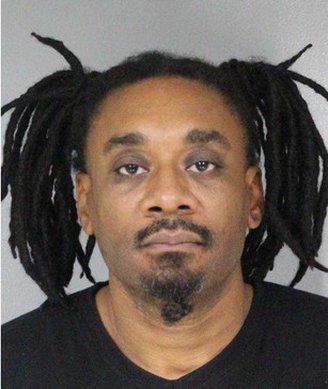
Anderson.
Judge Christopher Wilson sentenced Anderson to a total of five years for attempted pandering, false imprisonment and sexual intercourse with a minor. The prison term was agreed to when the 49-year-old Anderson pleaded guilty to those charges. Rape charges were dismissed.
Pandering is defined as procuring another person for prostitution.
Anderson will serve only a few months of the sentence because he was given credit, including good-time credit, for more than four years served in Humboldt County Correctional Facility. Wilson ordered Anderson to register as a sex offender for 10 years.
Deputy District Attorney Stacey Eads, the prosecutor in the case, told Wilson she believes Anderson is at high risk for committing the same crimes in the future. But “the heart of the matter” when agreeing to the plea deal was protecting the young victim from further trauma.
“The necessity of her having to testify would have been an extremely trying, traumatic experience for her,” Eads said.
Eads also read a statement from the girl’s mother, who said her daughter is suffering.
“I’ve seen the pain,” the mother wrote. “I’ve watched my daughter go from being full of life to being empty.”
During Anderson’s preliminary hearing, a Eureka police officer who interviewed the teen said she reported she was walking alone when Anderson offered her a ride. She said he drove her to his apartment, took her clothing and cellphone, raped and sodomized her and forced her to perform oral sex. She said he also told her “I could make a lot of money off you.”
The girl’s mother wrote that her daughter has constant nightmares and is homeless because she’s afraid to stay in one place. When her mother convinces her to spend the night at her home, “I’m up all night comforting her because of the nightmares.”
Anderson was convicted of human trafficking of an underage girl in 2014 and served three years in prison. He also has another alleged victim, who goes by the name Elle Snow. Anderson was never charged with crimes against Snow.
Snow, now 36, spoke to the court today via Zoom, saying Anderson abducted her when she was 19 and subjected her to an eight-month ordeal.
“I was sold to hundreds of men,” Snow said. “I’ll never know how many.” She said she eventually escaped, but “I live a life of trauma.”
She’s afraid to get close to someone, because she’s terrified something will happen to them. That’s why she doesn’t want children, or even pets.
Snow also testified against Anderson during his 2014 trial. The victim in that case also was 16.
“It’s my wish that we don’t have to do this again and we don’t have another girl like me,” Snow said.
When the plea bargain was negotiated, it was agreed Wilson could make the decision on whether to order Anderson to register as a sex offender. Today, explaining his decision, he said this was not the first time Anderson, who is almost 50, has been accused of sex with a minor.
“Mr. Anderson has a propensity for similar or related crimes,” Wilson said.
Defense attorney Michael Acosta questioned Wilson on whether he would also have to register if he moved out of California.
“I can’t make any order in other states,” the judge said, adding each state likely has its own regulations. Acosta then asked whether Anderson will be allowed to leave California.
“That will be up to Parole,” Wilson said, referring to the state parole board. Anderson will be on parole for a maximum of three years.
###
PREVIOUSLY:
- Eureka Police Arrest Man on Human Trafficking, Sexual Assault Charges
- Eureka Man Accused of Rape, Human Trafficking of a Minor Appears in Court; Preliminary Hearing in the Case Set for Day After Christmas
- COURT ROUNDUP: DA Alleges Fatal Humboldt Hill Collision Suspect Bailed Out With Illegal Weed Money
- TODAY in COURT: Latest on the Rio Dell, Manila, Hikshari Trail Murder Cases; Trial of Accused Eureka Sex Trafficker Delayed
- TODAY in COURT: Sex Trafficking Suspect Gets to Keep Lawyer, Who Faces His Own Criminal Charges; Eureka, Rio Dell Killings Also on Docket
- Virtual Preliminary Hearing Set Up for Eureka Man Accused of Sex Abuse, Trafficking; Proceedings Will Be Broadcast on YouTube
- TODAY in COURT: Preliminary Hearing for Eureka Sex Trafficking Suspect Underway
- Judge Drops Sex Trafficking Charges Against Accused Eureka Man; Suspect Will Still Stand Trial for Rape and Sodomy of a Minor
- TODAY in COURT: Date Set for Attorney’s Suit Against Judge for Alleged Abuse; Rio Dell Murder Suspect Heading to Trial Next Month
- TODAY in COURT: Accused West Del Norte Shooter Pleads Not Guilty; Sex Trafficking Suspect Hopes for Deal; Waterfront Murder Trial Delayed Again
- Eureka Sex Trafficker Pleads Guilty to Assault and Imprisonment of 16-Year-Old Girl; Takes Five-Year Sentence With Credit for Time Served
Search and Rescue Team Locates Overdue Lost Coast Campers
LoCO Staff / Thursday, April 1, 2021 @ 10:04 a.m. / Crime
Press release from the Humboldt County Sheriff’s Office:
On March 31, 2021, at about 11:26 a.m., the Humboldt County Sheriff’s Emergency Communications Center was contacted regarding two individuals who were overdue returning from a camping trip in the King’s Peak Area.
The campers, a male and female in their 20s, were reported missing by a roommate after they failed to return home as scheduled on Monday. The Humboldt County Sheriff’s Office Special Services Division was deployed to begin a search and rescue for the individuals.
During their search, deputies located the missing campers’ vehicle parked at the Mattole Beach Trailhead in Petrolia. Upon searching the beach, deputies located the two alive and well.
As the weather gets warmer and summer approaches, more people will be taking to our local trails and parks for camping and hiking. The Humboldt County Sheriff’s Office would like to remind the public to use caution when camping or hiking, and always be prepared.
- Inform a friend of where you are going and when you plan to return. Stick to that schedule and if extending your stay, be sure to update that friend.
- If planning a day hike, set a turnaround time to ensure you finish hiking before the sun goes down.
- Always carry a flashlight, even on short hikes.
- Bring extra water and high energy foods.
- Bring a small first aid kit.
- Stay on an established trail.
- Dress properly for a hike and prepare for changes in the weather, bring rain gear and warm clothes.
- If unfamiliar with the area, bring a map. If on the coast, consider bringing a tide chart.
- Consider bringing a whistle to help emergency responders find your location in a search and rescue situation.
- Ensure that your cell phone is charged and consider bringing a small power bank should you need to charge your cell phone.
- If hiking with a partner or a group, never leave someone behind.

Another Unpermitted Grow Op in Dinsmore Taken Down, Says Sheriff’s Office; $99,000 in Cash Seized, 6,600 Plants Eradicated
LoCO Staff / Thursday, April 1, 2021 @ 9:11 a.m. / Crime
Press release from the Humboldt County Sheriff’s Office:
On March 31, 2021, deputies with the Humboldt County Sheriff’s Office Marijuana Enforcement Team (MET) served one search warrant to investigate illegal cannabis cultivation in the Dinsmore area. The California Department of Fish and Wildlife assisted in the service of the warrant.
Two parcels were investigated during the service of the warrant. The parcels did not possess the required county permit and state license to cultivate cannabis commercially.
During the service of the warrant, deputies eradicated approximately 6,605 growing cannabis plants. Deputies also located and seized over $99,000 pursuant to asset forfeiture proceedings.
California Department of Fish and Wildlife representatives found the following violations:
- Five water diversion violations (up to $8,000 fine per day, per violation)
- Four water pollution violations (up to $20,000 fine per day, per violation)
Sheriff’s deputies will be requesting an arrest warrant be issued by the District Attorney’s Office for the individual responsible for this operation. This individual is believed to be responsible for multiple illegal cultivation operations, including those investigated last week in the Buck Mountain and Blocksburg areas.
Anyone with information about this case or related criminal activity is encouraged to call the Humboldt County Sheriff’s Office at (707) 445-7251 or the Sheriff’s Office Crime Tip line at (707) 268-2539.
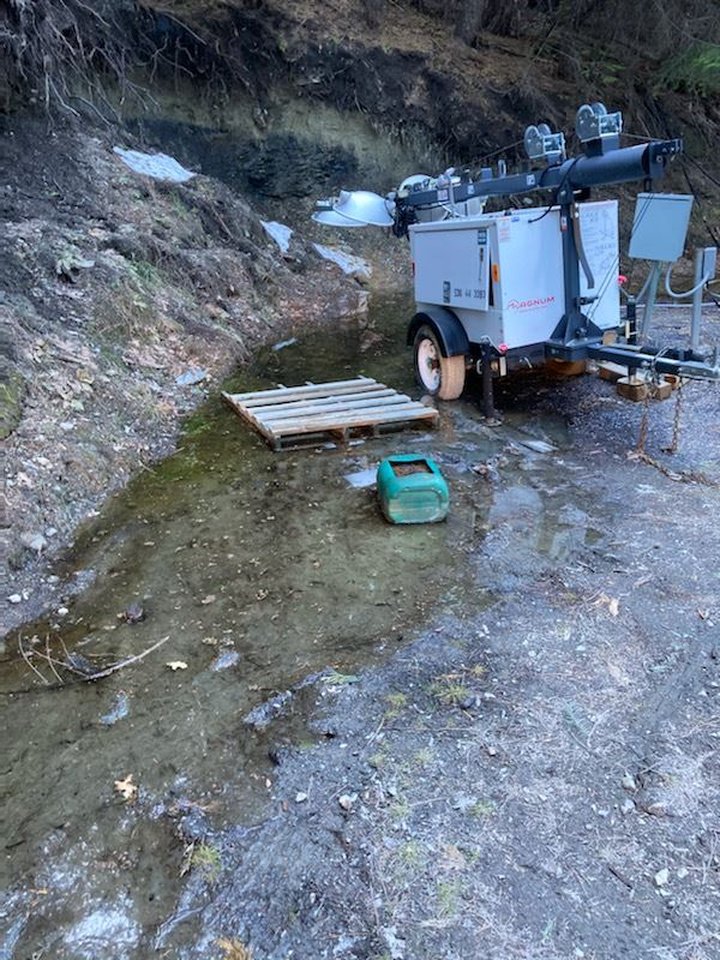
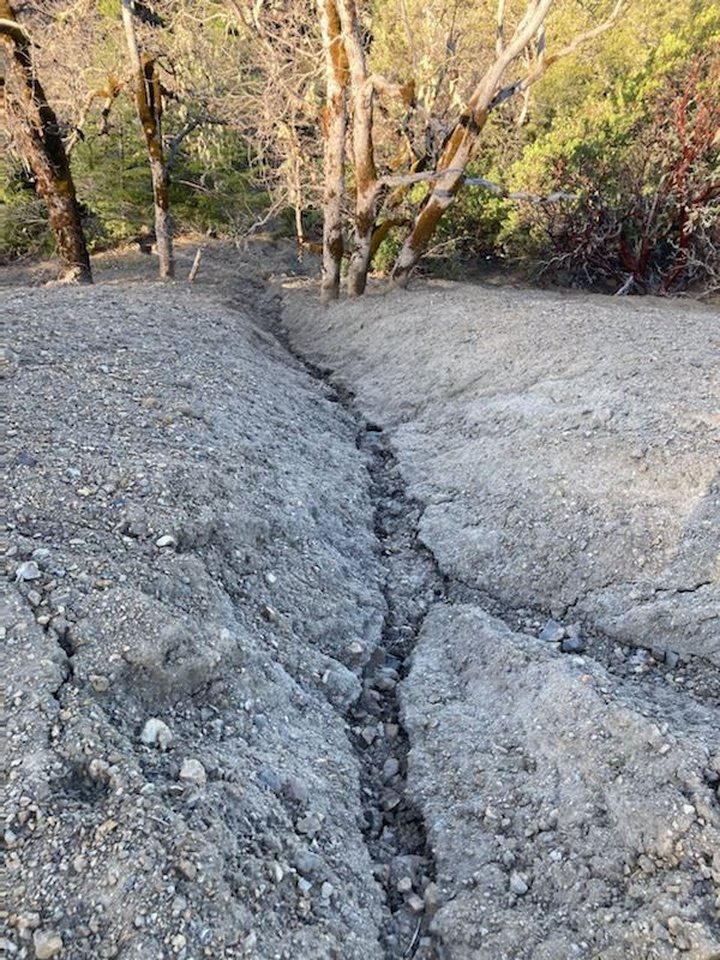
Photos: HCSO.
J&J Vaccine on Hold as State Expands Eligibility
Barbara Feder Ostrov / Thursday, April 1, 2021 @ 7:58 a.m. / Sacramento
Public health officials across California must rethink their COVID vaccine distribution plans after learning Wednesday that future U.S. shipments of the long-awaited, single-dose Johnson & Johnson vaccine have been abruptly halted over quality concerns.
The news couldn’t have come at a worse time as California dramatically expands vaccine eligibility to people 50 and older starting today. All Californians 16 and older become qualified on April 15.
California was allocated 572,700 doses of Johnson & Johnson vaccine for next week. That shipment will still arrive.
“We are working with the federal government to learn more about potential impacts,” California Department of Public Health spokesman Darrel Ng told CalMatters Wednesday. “Maintaining the highest standards during vaccine production to ensure safe and effective vaccines is a paramount concern.”
Up to 15 million doses of the Johnson & Johnson vaccine, also called the Janssen vaccine, reportedly were ruined in recent weeks because of quality-control problems at a Baltimore manufacturing plant, the New York Times reported Wednesday.
Production cannot restart until U.S. regulators complete an investigation. Johnson & Johnson said in a press release that “one batch of drug substance” used in manufacturing the vaccine “did not meet quality standards.”
All current doses of the Johnson & Johnson vaccine are considered safe as they were produced in a Netherlands facility approved by federal regulators, the Times reported.
The single-dose vaccine, which requires only refrigeration and not freezing, has been viewed as critical to speeding vaccinations in California and across the nation in a race against emerging COVID-19 variants.
Although Johnson & Johnson doses currently comprise a smaller part of California’s vaccination program than the Moderna and Pfizer vaccines, state officials expected supplies to increase significantly. The company projected that 100 million doses would become available nationwide by mid-year.
This is not the first time Johnson & Johnson doses have been delayed: Earlier in March, they were not distributed nationwide as planned because manufacturing was slower than expected, Reuters reported.
Public health officials also are trying to overcome the skepticism of some Americans about the vaccine, which the FDA says is safe and effective in preventing death and serious disease. Studies show it does not provide as much protection as the Pfizer and Moderna vaccines.
Last month, five of California’s top government doctors received the Johnson & Johnson shot to boost public confidence. Public health officers from nine Bay Area counties also jointly expressed their confidence in the single-dose vaccine, noting — ironically, in retrospect — that “the best vaccine is the one you can get the soonest.”
###
CALmatters.org is a nonprofit, nonpartisan media venture explaining California policies and politics.
Carrots, Sticks and Jabs: What Will California Do to Win Over Vaccine Skeptics?
Ben Christopher / Thursday, April 1, 2021 @ 7:41 a.m. / Sacramento
Today all Californians 50 and older are now eligible to get their coveted COVID vaccine — including one politically imperiled 53-year-old governor.
Gov. Gavin Newsom plans to celebrate this latest benchmark by getting a well-publicized jab himself, thus marking the beginning of the end of what has been a particularly thorny political challenge for the administration: How to make sure the millions of Californians eager to get a vaccine are able to get one.
Now it’s on to the next challenge: How to vaccinate the millions of Californians who aren’t quite so eager.
A survey released on Tuesday by the Public Policy Institute of California found that 14% of adult respondents said they would “definitely not get the vaccine.” Another 7% said they “probably” wouldn’t. That suggests that one in five Californians will need, at the very least, some extra convincing.
With new more virulent and lethal mutations of the novel coronavirus now rippling through the unvaccinated population, public health experts say convincing those “vaccine hesitant” holdouts is an urgent concern — not just for the unvaccinated, but for everyone.
“This is like a shapeshifter of a virus, so if we don’t do it now, then we may have to vaccinate everybody else again if some new super variant comes on board,” said Peter Chin-Hong, an infectious disease physician at the University of California San Francisco School of Medicine.
In the early days of the pandemic, epidemiologists estimated that roughly 70% of the population would need to acquire some degree of immunity to the virus — either by getting sick and developing antibodies or by receiving a vaccine — to slow transmission to a containable rate.
The new variants raise that figure to reach “herd immunity” to about 85%, said Chin-Hong.
“This is like a shapeshifter of a virus, so if we don’t (convince those hesitant) now, then we may have to vaccinate everybody else again if some new super variant comes on board.”
— Peter Chin-Hong, infectious disease physician at the UCSF School of Medicine
But many state lawmakers and public health officials say it’s still too early to consider resorting to mandates or other coercive measures that have already proven contentious to goad people to wear masks during the pandemic.
“Rather than coming out with a hammer right away,” said Assemblymember Jim Wood, a Santa Rosa Democrat who leads the Assembly health committee, the state should use the next few months to “identify what the major barriers are, educate people, provide information, reassurance, contact the people that have the most influence…and see where we end up.”
A “continuum of coercion”
Wood and his colleagues have good reason to tread carefully. In 2019, the acrimonious debate over a bill making it more difficult for parents to exempt their school-aged children from routine vaccine requirements ended with a protester literally raining blood onto the floor of the state Senate. During the pandemic, irate anti-vaccine protesters have been regular fixtures at legislative hearings. In January, two activists issued warnings to lawmakers — particularly sinister in the days following the storming of the U.S. Capitol — that a vaccine mandate of any kind would lead to armed political violence.
Newsom says that the recall campaign against him is backed by anti-vaccine extremists. At a press conference in mid-March, Orrin Heatlie, a lead organizer of the recall campaign, rejected that characterization. “I’m not an anti-vaxxer, folks…my children are vaccinated,” he said. But he also said: “I don’t want anybody force-vaccinated. I don’t want anybody tattooed against their will. And I don’t want anybody microchipped against their will.”
There are no state plans to mandate universal vaccination. In California and elsewhere, some health care workers and first responders, who were given priority for shots, declined the opportunity. In a March report by the Kaiser Family Foundation and the Washington Post, only 52% of health care workers said they had received a shot.

A sign thanks Santa Clara County residents for receiving their COVID-19 vaccine at Levi’s Stadium on the first day the 49ers home opened as a vaccination site on Feb. 9, 2021. Photo by Anne Wernikoff, CalMatters
In theory, California and other state governments have “broad power to regulate in the public health, even if that means limiting individual rights,” said Dorit Reiss, law professor at the UC Hastings College of Law. But in practice, states have been wary of exerting that power.
On the “continuum of coercion” that ranges from mandatory public health education to fines for non-vaccination to mandatory shots, “we don’t really use those last two in the United States,” said Reiss.
A rare exception: During a 2019 measles outbreak in New York City, public health officials targeted a handful of neighborhoods with low vaccination rates, hitting vaccine-refusers with $1,000 fines.
Waiting for the dominos to fall
On April 15, all California adults are scheduled to become eligible to get their shots. With supply still the limiting factor, Darrel Ng, a spokesperson for the California Department of Public Health, said it will be a couple more months before everyone who wants a vaccine actually gets one. As of Wednesday, more than 18 million doses had been administered and more than 6.5 million of 40 million Californians had been fully vaccinated, according to the department.
“Given where we are in the supply cycle, we are working to help people who want to get the vaccine and to convince the next people who perhaps are only one step away through additional access and information,” Ng said.
That means partnering with community groups that can help the tech-unsavvy book their appointments and peppering vaccine-hesitant or out-of-the-loop Californians with ads.
As more vaccine holdouts see their friends, family members and neighbors get the shot and enjoy a return to a nearly-normal life, Ng said there is likely to be a “domino effect.”
But those last few dominos could prove difficult to topple.
Mark Baldassare, president of the Public Policy Institute of California, which conducted the poll released this week, said the vaccine-reluctant bloc hasn’t diminished much since January when a similar survey put the number at 24%.
“There seems to be a hard core of 20%,” he said. Despite early concerns that Black Americans would be particularly reluctant to be vaccinated, given the long history of undertreatment and mistreatment at the hands of health care professionals, the share of Black respondents “definitely” opposed to getting the vaccine fell significantly over the last two months — from 35% to 17% as public information campaigns ramped up.
Instead, the most striking and unmoving predictor of vaccine skepticism was political affiliation. While 26% of Republicans said they “definitely” will not get vaccinated, only 13% of independents and 5% of Democrats said they definitely won’t.
Assemblymember Wood said he’s optimistic that with enough time, enough information and enough encouragement, most people will come around. “I would hope that people that maybe have a political reason for not doing this would show a little bit more compassion for their fellow man,” he said.
Baldassare said he drew a different conclusion from the new numbers: “Don’t take for granted that as more vaccine becomes available that people will just come to accept it.”
Earlier this week, the Washington Post reported that the White House is considering a program to give those reluctant to get the shot an extra nudge. “Vaccine passports” would offer proof of inoculation for international travelers, but also give companies and public institutions the ability to mandate vaccination among their employees or customers. The program is similar to Israel’s “green pass” program, which has allowed vaccinated people to enjoy concerts, sporting events and other perks of pre-pandemic life.
That news prompted a backlash on the political right.
“It’s a huge step — a huge step — towards numbing us toward federal mandates about health and federal mandates about our personal lives,” said Emily Jashinsky of the conservative publication The Federalist.
Republican U.S. Rep. Marjorie Taylor Greene of Georgia, who was stripped of her committee assignments over her past peddling of far-right conspiracy theories, had a more Biblical denunciation, asking in a social media post whether a vaccine passport was “something like Biden’s mark of the beast.”
Don’t vaccinate me, lawsuits say
There’s also some legal uncertainty over the three COVID vaccines, all of which were fast-tracked for regulatory approval.
Earlier this month, seven Los Angeles Unified School District workers, including four teachers, sued the district over a requirement that all district employees be vaccinated. The legal argument hinges on whether a vaccine authorized only for emergency use can be required as a condition of employment. This follows a similar case brought by a county jail officer in southern New Mexico.
That uncertainty is discouraging some of California’s other public institutions from issuing their own mandates. At a meeting of the University of California regents in March, vice president Carrie Byington said the emergency-use authorization status of the three vaccines “would make it very difficult” for the UC to follow the lead of New Jersey’s Rutgers University and mandate vaccines for all students.
With politicians and public officials hesitant to act, the private sector seems to be taking the lead on much of the nudging, with carrots favored over sticks.
California businesses are “all looking at how they can reopen safely, protect their employees and their customers,” said Rob Lapsley, president of the California Business Roundtable, a coalition of large businesses. But at the moment, he said, there’s no coordinated “discussion about it being mandatory or a requirement.”
Kroger’s, Trader Joe’s, Target and Amtrak are among the major employers who have recently announced bonus pay, paid leave and other financial incentives for their employees to get vaccinated.
And then there’s Krispy Kreme, which is offering neither carrot nor stick, but a donut. Dozens of them. The company recently announced that it would offer a free donut “anytime, any day, every day for the rest of the year” to all customers who bring in their vaccination cards.
###
CalMatters reporter Mikhail Zinshteyn contributed to this story. CALmatters.org is a nonprofit, nonpartisan media venture explaining California policies and politics.
OBITUARY: Carol Davis, 1944-2021
LoCO Staff / Thursday, April 1, 2021 @ 6:56 a.m. / Obits
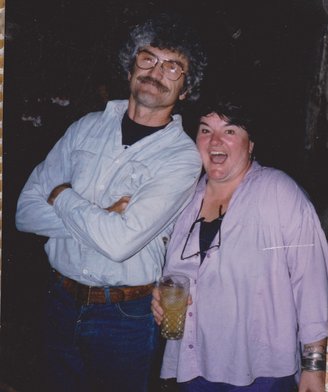
Carol Davis was born in Los
Angeles on June 17, 1944 and settled into the loving arms of Ray and
Lorene Davis. She passed away quietly at home on March 13, 2021 in
the care of her loving children.
A lively child and a curious teen, Carol’s parents had religion and music in abundance, so she grew playing piano and singing for the choir and church gatherings. When Aunt Martha, a socialite from Florida with a literary bent, came to visit she brought trunks of dress-up clothes, hats, shoes, a Ouji board and vitamins. The seeds of destiny are born in the child. If there is a thru line to this special life, it is music. If there is a subtext, it is food. If there is a purpose, it is the happiness and welfare of children.
In 1962, Carol graduated high school and moved to Los Angeles to attend a Southern Baptist Bible College. While there, she realized she could also put her choir-trained voice to use in gay bars and brothels. Her repertoire expanded with her horizons.
Nobody quite remember exactly when she appeared in Arcata. Sometime in the early mid ‘60s, she left LA to take a job as a stage manager in Ashland, Oregon. The fog was heavy in the trees and Humboldt was the most beautiful place she had ever seen. Arcata had a little college with a theater department and when she went to see about it, they were doing Theater of the Absurd. She passed up the job and stayed, studied under a fabulous theater faculty and with student actors and technicians pushing the envelope of the theatrical and the political, It was a heady time to be engaged in the arts.
In 1968 she and scene designing grad student David Brune married out at Rothrock’s with an after-party held at the Pin Room, which was always tolerant of hippies. The couple set off to Purdue in Indiana then to New Orleans following David’s work, of course, he being the one with the graduate degree. New Orleans suited Carol; she bore two swell babies there, explored its music and food scenes, and continued to return whenever possible.
Carol came back to Arcata without David and with two little ones: Catlin, a toddler, and Stuart, a babe in arms. They lived in a little apartment at Rothrock’s at first until she got work and on her feet when they moved to a little duplex on Grotzman Lane. The kids went to Centering School and then to St. Mary’s for some discipline and the simplicity of the uniform. All children took to Carol.
She was an early cocktail waitress at the Jambalaya and often burst into a song or two after hours to inspire the clean up. She worked for a time a Plaza Design, pitched in at the Minor Theater Corp and took other jobs that were like mini play productions – a project to be organized, accomplished, and put away. She was utterly reliable and never left a mess behind.
Then she met Pat Conlin, her Irishman, and he liked her, and the kids liked him, so they became a family, sealed the match in 1977 at the Vet’s Hall, and what a party that was — the music, the food, the universal delight.
It was time for steady regular work, and Carol hired on with the Child Care Council where she applied her organizational talents to the well-being of children. Starting in the resource unit, supporting the work of providers in the field, she later moved on to the abuse prevention unit, and worked directly with families. She was a dedicated, hard-working advocate for families and their kids, finding resources and options, being present in that way she had, so you knew she had all her attention directed at your problem. This work required great tenacity and heart. Carol had plenty of both. Co-workers from this time recall her generosity and warmth, the great food and fun which made their difficult work more manageable, but also her insistent curiosity and willingness to ask the tough questions, while holding everyone to an ethical client focus.
All through these decades they catered gatherings large and small for all manner of group events. The non-profit fundraising world relied on her good food prepared with little fuss, on time and at reasonable cost. She did much of the work from home, but could command any kitchen, keeping the volunteer help happily doing her bidding. She fed children at summer camps, worked memorials and reunions, workshops and anniversary parties. There was no job of work that offended her, and she never needed to advertise.
In about 1980 the Davis-Conlins bought a piece of land up above West End and started building a house. And what a house; it grew and evolved, opened up and out into garden and forest. Catlin remembers coming home late one night to find Pat with saws out, cutting in a new emergency window. Carol’s design sense was spot-on and her working man indefatigable.
From this power center Carol began to research her origins and the practicality of opening a food business down town. The birth family quest was successful, and she discovered, after years of searching, the slew of family she always expected to find. Sister Sue became especially close. This work answered lots of nagging questions and brought new avenues of affection to her. And by the end she knew a great deal, both good and bad, about adoption law.
The Pacific Rim Noodle House opened on I street between 10th and 11th and for a decade cooked up really good affordable take-out food, and employed and trained a steady stream of young foodies. Everyone hoped new owners would keep it going, but without Carol’s energy and connections, it was lost to food history.
In retirement, she still entertained and liked nothing so much as keeping the pot stirred and the conversation flowing. A great hostess is having a great time, and nobody had more fun than Carol. It radiated from her and was irresistible.
Pat died in 2016 and his absence was hard for her to carry, but she did. She bought a new hat and walked to town for some shopping and to meet and greet her many friends. When she couldn’t drive safely, she stopped, and gradually her world grew close around her. Her memories like her voice remained strong.
Even as she lay dying (did you catch that, Aunt Martha?) those qualities of her character – curiosity, warmth, directness – remained. If she was vague it was only about things that didn’t matter. If frustrated, it resolved into acceptance.
When visited in her dying bed by a musician friend, she sang with him – Swing Low and If I Only Had a Heart and Summertime. He went to cheer her and she made him glad.
To quote the poet: “Our grand orchestra of liberation has dwindled to a funeral march, but with Sister Carol’s voice and a tambourine gone ahead of us, wherever we’re going, they’ll know some serious jubilation is coming.”
Sometimes a person comes to a town with no agenda, just a good heart and a pocketful of talents, and she makes the place different by her steady presence among us. Carol was like the beating heart of Arcata for about 50 years. This was her great gift to our time in our town. And the place is better for it.
Catlin and Stu hope to be able to celebrate Carol’s birthday in June with her friends and good food and music. We’ll let you know what to bring.
###
The obituary above was submitted on behalf of Carol Davis’s loved ones. The Lost Coast Outpost runs obituaries of Humboldt County residents at no charge. See guidelines here.


