

Decision Day: Which Bills Did California Lawmakers Kill?
Ben Christopher / Friday, Aug. 12, 2022 @ 9:38 a.m. / Sacramento

The state Capitol in Sacrament on July 6, 2022. Photo by Rahul Lal, CalMatters
###
On most days, California lawmakers deliberate, debate and decide bills out in public for every Californian to see.
Yesterday was not one of those days.
In simultaneous marathon hearings, the appropriations committees in the Assembly and Senate rattled through hundreds of bills in a single discharge of rapid-fire legislating. Many proposals lived to see another day. Among them: Gov. Gavin Newsom’s proposal for new courts to compel more homeless individuals to seek mental health and substance abuse treatment, and bills to strictly limit the use of solitary confinement in California jails and prisons, allow for the composting of human remains and increase family leave payments for lower-wage workers, though it wouldn’t take effect until 2024.
But many other closely-watched bills came to an unceremonious end, killed in one of Sacramento’s most opaque lawmaking processes. They included a Republican-backed bill that would have capped copays for insulin, a California Medical Association-backed proposal making it easier for doctors to approve procedures and prescriptions without first getting permission from an insurance company, and a bill to allow prosecutors to go after social media companies for knowingly addicting children.
It’s called the suspense file. For months, the appropriations committees, tasked with assessing the fiscal impact of any bill outside the annual budget, gather any legislation with more than a negligible price tag and put it to the side. Then twice a year, after legislative leaders decide which bills live and which die behind closed doors, they announce the results in a single hearing. In most cases, no public votes are taken and no debates are held.
In theory, this arcane procedure allows lawmakers to quickly run through the hundreds of fiscal bills they need to consider by the end of the legislative session, which arrives at the end of this month. Today, the two committees ran through more than 820 bills.
In practice, it’s also a good way for Democratic lawmakers, who hold super-majority power, to kill legislation without having to take a public, and potentially politically difficult, stand. The stakes were especially high today. The legislative session ends this month and many lawmakers will either retire or be replaced before the next one begins, making this the last opportunity for some legislators to leave their mark on state policy. Politically, it’s also a tense time: the November general election is less than three months away.
Thus, bills requiring gun owners to buy liability insurance and forcing law enforcement agencies to let the public listen to police radio transmissions were also quietly killed. Who pulled the trigger? The public often has no way to know for sure. We can only count the legislation that succumbed.
In this case, more than 200 were killed, while nearly 600 stayed alive.
Here are some of the other bills that were culled — and the advocacy and interest groups that lobbied on them:
No help for diabetics
Dead for the session: A bill by Sen. Pat Bates, a San Clemente Republican, that would have capped insulin copays at $35 per prescription per month for diabetics. With insulin list prices increasing on average 15% to 17% per year since 2012, some state and federal leaders have been pressing for action with little success. A similar effort for privately insured patients was also recently abandoned in the U.S. Senate; Congress is, however, moving forward with a $35-a-month cap for Medicare patients.
“The decision by Assembly Democratic leadership to hold the bill blocked meaningful relief for millions of California residents struggling to pay for the rising cost of insulin. This was a missed opportunity for the California State Legislature to accomplish what Washington D.C. failed to do,” Bates said in a statement.
Her bill was opposed by the health insurance lobby that has long argued that copay caps do nothing to bring down the actual list price of the drug and would only shift the cost in the form of higher premiums.
Supporters said such a bill could have provided more immediate relief to patients. California has plans to manufacture and distribute its own, more affordable insulin, but that could take years. As of last week, the governor’s office said it has started a “request for information” process with drug manufacturers interested in partnering with the state. In California, 3.2 million people have been diagnosed with diabetes and many of them rely on insulin to survive.
— Ana B. Ibarra
A mixed bag for tech regulation
Amid fervent opposition from the tech industry, lawmakers killed a nationally watched bill co-authored by Republican Assemblymember Jordan Cunningham of San Luis Obispo and Democratic Assemblymember Buffy Wicks of Oakland that would have permitted public prosecutors, such as the state attorney general and county district attorneys, to bring civil lawsuits against social media companies for deploying products or features they know will addict kids. The bill had already been amended to remove a clause that would have also allowed parents to file civil lawsuits, but that evidently wasn’t enough to overcome pushback from powerful industry players — some of whom gathered last week with influential lawmakers at a swanky Napa Valley resort.
Cunningham, who called the bill the most important of his career, pitched it as a response to a youth mental health crisis exacerbated by social media companies conducting “an unfettered social experiment on children.”
Cunningham said he was “extremely disappointed” that Senate Appropriations Committee Chairperson Anthony Portantino, a Glendale Democrat, made “the unilateral decision” to hold the bill and warned that “the bill’s death means that a handful of social media companies will be able to continue their experiment on millions of California kids, causing generational harm.”
“I believe that this idea would be overwhelmingly supported if presented directly to the voters, as it would be prohibitively expensive for social media companies to take every California voter on a Tech Caucus junket in Napa,” Cunningham added in a statement.
But tech companies countered there were better ways to address kids’ mental health than impinging on online platforms’ First Amendment rights.
“As we’ve said from the start, protecting children online is a priority but must be done responsibly and effectively,” Dylan Hoffman, TechNet’s executive director for California and the Southwest, said in a statement. TechNet, an industry group that represents such companies as Meta (the parent of Facebook and Instagram), Apple and Google, lobbied aggressively against the bill. “We’re glad to see that this bill won’t move forward in its current form. If it had, companies would’ve been punished for simply having a platform that kids can access. It would’ve done little to improve child safety.”
Also dead: Another Cunningham bill that would have authorized a study into whether using blockchain technology could help California’s beleaguered unemployment department verify applicant identities and prevent fraud — two things it’s struggled to do amid the pandemic.
However, other closely watched bills to regulate the tech industry advanced with amendments. They would expand kids’ privacy rights online, force social media companies to be more transparent about their terms of service, allow people targeted by violent posts online to seek an order requiring social media companies to remove them, and increase oversight of the budding cryptocurrency industry.
— Emily Hoeven
Pay transparency, kind of
Lawmakers in the Assembly Appropriations Committee advanced a pay transparency bill intended to root out discrimination and pay disparities — but only after stripping out its most significant provision: To require the state to post for public view businesses’ pay data, broken down by position, race and gender.
That proposal by Sen. Monique Limón a Santa Barbara Democrat, landed SB 1162 on the California Chamber of Commerce’s “job killer” list, a designation policy advocate Ashley Hoffman said the Chamber is now prepared to remove.
Businesses with 100 or more employees are required to report the data to the state under a 2020 law, but the reports are not available for the public. The bill would have required the reports be published online for businesses with 1,000 employees or more by 2025 and 250 employees or more by 2027. The Chamber and other employer groups pushed back hard against the public reporting provision, arguing the reports are too broad to show discrimination but would be “held out to the public, whether it’s a media headline or a lawsuit … as representing something it’s not.”
Other parts of the bill, which proponents say will still help narrow the wage gap, survived. The bill would still require the companies also to report the pay data of their contractors, and require all employers with more than 15 workers to post the pay ranges for open positions and add state enforcement authority for businesses not reporting the data.
In a statement, Limón said that she was “deeply disappointed” in the amendments.
“One day California will lead on pay equity and our actions will match our aspirations,” she said. “That day is just not today.”
— Jeanne Kuang
No leeway for doctors
The doctor’s lobby took an “L” on one of its priority bills for the year. Senate Bill 250 by Sen. Richard Pan, a Sacramento Democrat, sought to ease administrative hurdles for physicians. More specifically, the bill would have required health insurance plans to exempt certain medical providers from prior authorization rules.
Prior authorization is seen as a cost-control tool that keeps doctors from providing and charging for unnecessary care. Health insurance plans must deem certain medication and procedures as “medically necessary” before a doctor can prescribe or render services.
The California Medical Association argued that reducing red tape would allow doctors to spend more time on patient care and less on paperwork — most importantly, it would help patients access the care and medications they need more quickly. A timely example: one Orange County pediatrician shared on Twitter this morning that one of his premature baby patients can’t access “life-saving medication” because he can’t get a hold of the patient’s insurer.
Health insurance plans, in opposition of the bill, argued that SB 250 could instead lead to over-prescribing and inefficient care, ultimately raising costs.
— Ana B. Ibarra
Student housing money in limbo
If lawmakers have a plan to spend $1.8 billion in loans to public colleges and universities to build student housing, the public doesn’t know about it. Held on the suspense file today was a bill that would have set the rules for a revolving loan to build student housing. It’s a strange development for a spending plan that lawmakers and the governor already approved in the state budget this year. Basically, the money is there, but the rules for spending the money are not.
Among advocacy groups, the lone registered foe of the bill is the all-powerful State Building and Construction Trades Council. The construction union knocked the bill in June for what it said were “watered down” provisions to ensure that workers who build the campus housing are part of an apprenticeship program. But other unions whose workers are key to housing development backed the bill, including the California State Association of Electrical Workers and California State Pipe Trades Council.
The bill sought $5 billion for a revolving loan fund to build campus housing for students and staff. The budget deal approved over the summer would commit a smaller amount, $1.8 billion, for that purpose starting in the 2023-24 fiscal year. Either way, the idea is that the state lends campuses money to build housing, and as they pay back the loans over time, the state replenishes its campus housing reserves to lend out additional dollars. The loan fund would add to the several billion dollars in grants lawmakers have already committed to building student housing.
The bill’s author, Assemblymember Kevin McCarty, a Democrat from Sacramento, said “we still need some further clarification on how it’s actually implemented in next year’s budget.”
What that language will look like is unknown. Portantino’s office and the leadership of the Senate and Assembly didn’t respond to emails from CalMatters seeking comment.
— Mikhail Zinshteyn
Police radios can stay silent to the public
If they’re willing to wade through the crackly radio and police patois, reporters assigned to the newsroom scanner will hear about unexplained booms, cats lost, lawn equipment missing, kitchens smoking and shots fired.
That is, unless they’re in parts of the Bay Area and Inland Empire, where some police departments and sheriff’s offices encrypt radio communications.
Sen. Josh Becker, a San Mateo Democrat, and First Amendment advocates tried to change that this year, but Senate Bill 1000 today failed to clear Assembly Appropriations.
At issue: a state Justice Department memo mandating that California police agencies submit a plan to keep identifying information such as people’s driver’s license numbers and criminal histories off police airwaves by December 2020. Some police departments ran with it, encrypting all of their communications. Others, including the California Highway Patrol, relay personal info on special channels while keeping most communications public.
The bill, while requiring unencrypted radio traffic, would have created exceptions: Officers would be urged to communicate identifying information through something other than a radio, and tactical or undercover operations communications could be encrypted.
Asked why the bill died, Becker said “I think there’s some misinformation on the cost side. This is not a cost issue. This bill would have saved money.”
The California State Sheriffs’ Association argued it would force police agencies that have already encrypted their radios to revert to their original, unencrypted transmission “at tremendous expense” — and that alternatives such as cell phones or laptops would not work in places where there’s no signal.
“We think it’s really critical for our reporters to cover not only breaking news, but also how police respond to those situations as they occur,” said Brittney Barsotti, general counsel for the California News Publishers Association, which backed the bill. (CalMatters is a member of the association.)
— Nigel Duara
A cut for carbon sequestration
Today’s suspense file saw the death of Assemblymember Cristina Garcia’s bill that calls for sequestering at least 60 million metric tons of carbon dioxide and other greenhouse gases in California’s wildlands, parks, forests and farmland by the end of 2030 — and more by the end of 2035.
The Democrat from Downey faced steep opposition from agricultural interests, who agreed that farmland can soak up and store carbon but questioned whether the targets were feasible. Critics also questioned whether the bill might alter the state’s forest management strategies to maximize carbon storage.
Despite support from environmental groups, the bill failed to clear the suspense file. “This summer is a stern reminder that bold action is needed now, and we must use all the tools available to us, it’s literally a matter of life and death,” Garcia said in a statement.
The move could be a setback for Gov. Newsom’s climate agenda for the final days of the legislative session, which called for state policy to “support sequestering carbon through natural carbon sequestration.”
Or it could signal that there may be life yet for natural carbon sequestration in another form. There’s less than three weeks left to find out.
— Rachel Becker
###
CalMatters.org is a nonprofit, nonpartisan media venture explaining California policies and politics.
BOOKED
Today: 5 felonies, 7 misdemeanors, 0 infractions
JUDGED
Humboldt County Superior Court Calendar: Today
CHP REPORTS
9940 Mm101 N Men R99.40 (HM office): Car Fire
ELSEWHERE
Governor’s Office: Governor Newsom declares states of emergency related to multiple severe weather events
Governor’s Office: Governor Newsom announces appointments 4.17.26
Governor’s Office: Governor Newsom exposes Trump’s Sable offshore pipeline lie: one month of oil, prices have only gone up
The Outpost’s John Ross Ferrara Has Logged Off
Hank Sims / Thursday, Aug. 11, 2022 @ 5:30 p.m. / Housekeeping

Outpost ex John Ross Ferrara is pictured here on his very first day of work. He’s the one on the left. Photo: Andrew Goff.
A hundred years from now, a Cal Poly Humboldt grad student will sit down and write the history of the Lost Coast Outpost. At some point, after spending several weeks in communion with the archives, as she pulls off her vape pen and curses her choice of career, she will come to a realization.
She will realize that few decisions in LoCO history were so momentous as that time in June 2015, when the Outpost’s founding generation pulled an ambitious greenhorn straight off the scrappy streets of Burbank and set him up with an internet connection. The lightbulb will flash atop our grad student’s metaversical head. She has found her thesis topic.
Friends: The Outpost’s John Ross Ferrara, who has delighted you in these pages for the last seven years, is off to bigger and if not better then at least more lucrative things. For seven years he has reflected his light and wit back at Humboldt County, alternately amused and terrified by the things he surveyed here, and now he heads off to a cushy news gig in a very tall building in Portland, Oregon. Today is his last day.
There’s all the boring nuts and bolts stuff Ferrara has done, which we know about but you probably don’t. He single-handedly built the Outpost’s Instagram into a 32.8k-follower behemoth. He most often manned the desk on weekends, and he sieved Facebook and other garbage social media platforms for small nuggets of the human condition that would later blossom into full-flown stories.
But the real magic of Ferrara has always been the way in which he transformed this dross into gold. His features, especially, were knowing and real and moving and funny and humane, without ever succumbing to either cheap internet cynicism on the one hand or saccharine bullshit on the other.
You liked it too. Look at any of our end-of-the-year posts, and I bet you’ll find that at least five of the top 10 LoCO stories of the year were his. The Ferrara style will be forever be part of our DNA.
Let’s take a walk down memory lane! Scan your eyes down the headlines below. If we hire again sometime in the future — and it looks like we will! — these are the shoes you will have to fill. Good luck.
And good luck to Portland.
FERRARA’S BIGGEST OUTPOST HITS:
- Cat Miraculously Survives Fork Complex Fire, is Reunited With Owners
- Aggressive Dog Allegedly Owned by Chris Brown Found Loose in Humboldt County, Euthanized on Christmas Eve After Serious Biting Incident at Singer’s LA Home
- Hometown Heckler Who Called LeBron James a ‘Pussy-Ass Bitch’ Feels He Should be More Humble
- (UPDATING) WINDAGEDDON: Intense Winds are Causing Outages and Disorder Across the County
- Eureka Man Reportedly Attacked By 18-Foot Shark While Kayaking in Shelter Cove; Local Fishermen Rescue Him From Icy Water
- (VIDEO) Woman Tells Arcata Cashier She Looks Like an ‘Illegal Immigrant’ After She’s Asked to Cover Her Face While Inside the Store
- Guy Fieri Encounters Furries at County Fair
- Video of Redway Computer Repairman Spraying Customer in Face With Bear Mace Goes Viral
- Humboldt Gets a Shoutout in Poster for New SpongeBob SquarePants Movie Featuring Keanu Reeves
- (VIDEO) Comedian Joe Rogan Gives Humboldt a ‘Holla,’ Praises Sheriff Honsal for Refusing to Enforce Proposed Beaches Closures in Latest Podcast
BONUS DIRECTOR’S CUT DVD EXTRAS:
Ferrara tells us that the stories below are also among his favorites, in addition to the ones above. — Ed.
- Respect for the Game: A Coach’s Journey From the Arena Football Hall of Fame to Redwood Bowl
- Kortney Olson, International Entrepreneur and Humboldt Native, Bounces Back From Addiction on the Strength of Her Watermelon-Crushing Thighs
- METH, LIES AND VIDEOTAPE: How Hidden Cameras and Crooked Policing Botched One of the Biggest Busts in Del Norte History
- QUARANTINE CASTAWAY: Vacationing McKinleyville Woman Stuck in the Philippines for Months Due to COVID-19 Hopes to Fly Home Next Week
- Firefighters Wash Five-Block-Long Trail of Blood From Old Town Eureka’s Sidewalk
- TRAVEL-BANNED: One Iranian HSU Student’s Crazy Odyssey to Get Back to the States and Finish the School Year
- New Student Housing and Education Buildings, Two Parking Structures and Major Demolition Work Ahead: A Look at Cal Poly Humboldt’s Five-Year Infrastructure Plan
- Humboldt Debuts at Sundance Film Festival as a ‘Shithole Town in the Middle of Nowhere’
- (VIDEO) Artificial Intelligence Image Generator Funded By Elon Musk Transforms Eureka’s ‘Pink Lady’ Victorian Into a Work of Modern Architecture
- (VIDEO) They Buried That Dead Whale and Now Smelly Humpback Juice is Gurgling Up From Samoa Beach

Hello, Portland!
Thursday’s Duplex Fire in Old Town Eureka Was Caused by Arson, Investigation Finds
LoCO Staff / Thursday, Aug. 11, 2022 @ 5:12 p.m. / Fire
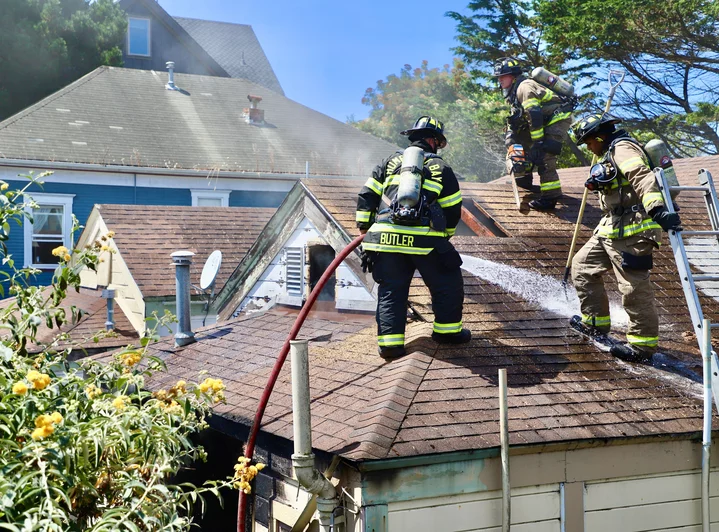
Firefighters extinguishing a blaze in a duplex on the 800 Block of Second Street in Eureka. | Photo by Andrew Goff
PREVIOUSLY: (VIDEO) Fire in Duplex on Old Town’s Second Street Prompting Large Response
###
Press release from Humboldt Bay Fire:
On 8/11/2022 at 1:44 P.M. Humboldt Bay Fire was dispatched to a reported structure fire on the 800 Block of Second Street in Eureka. Three engines, a ladder truck, and Battalion Chief responded to the incident. The first arriving Humboldt Bay Fire unit found heavy fire coming from the rear porch area of a duplex apartment building.
The first unit was assigned to search the structure and rescue any remaining victims. There were multiple people who had entered the structure and had to be removed by fire personnel. Within minutes everyone was confirmed out of the structure.
While the first unit searched for victims additional units arrived, attacked the fire and ventilated the structure. The main body of fire was primarily exterior but had spread to the interior and attic areas. Fire crews had the fire controlled in 15 minutes. Crews transitioned to mop-up and investigation duties.
The investigation of the fire on Second Street was determined to be arson. The Eureka Police Department was contacted and responded to assist Humboldt Bay Fire with the fire investigation. No civilians or firefighters were injured in the fire. Damages were estimated at $25,000.
During the structure fire, a Humboldt Bay Fire unit was dispatched to an alarm sounding and report of smoke in the area on the 1300 Block of I Street. The HBF unit discovered and extinguished a cooking fire in an apartment. Humboldt Bay Fire would like to thank the Arcata Fire Protection District and Samoa Fire Protection District who responded to assist with coverage of Humboldt Bay Fire’s area. They responded to multiple medical aids while covering.
ARCATA’S GATEWAY PLAN: Planning Commissioners Consider Citizen Group’s Request to Enhance Public Outreach, Mull Questions Ahead of Big Joint Study Session
Isabella Vanderheiden / Thursday, Aug. 11, 2022 @ 4:48 p.m. / Local Government
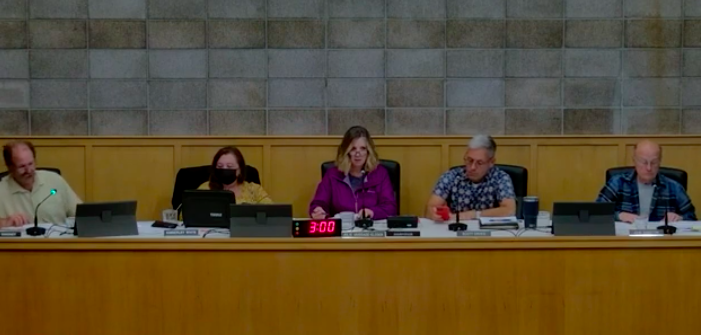
Screenshot of Tuesday’s Arcata Planning Commission meeting.
After discussing elements of the Gateway Area Plan for the better part of a year, Arcata’s Planning Commission and City Council are ready to get into the nitty-gritty.
If you haven’t kept up with our somewhat incessant coverage of the Gateway Area Plan in the last couple of weeks, here’s a rundown: The Gateway Area Plan is a housing initiative by the City of Arcata to rezone 138 acres of underutilized land in and around the Creamery District to accommodate high-density housing in the years and decades to come. The plan will streamline future development efforts and serve as an outline of what Arcatans do and do not want built within the Gateway Plan Area.
The Arcata Planning Commission met this week to consider Responsible Growth Arcata’s request to form a Gateway Area Plan advisory group. One of the group’s members, Scott McBain, emphasized that Responsible Growth Arcata’s intent is “to help the city produce a balanced, high-quality Gateway Plan that we can be proud of in 20 years and beyond.”

McBain | Screenshot
“This advisory committee [would] mirror previous City of Arcata task forces…that have successfully improved large-scale infrastructure and planning efforts,” McBain told commissioners. “Part of the vision here is to do that again and to build community support towards a better outcome, which is why we’re all here.”
The advisory committee would be composed of seven to nine council-appointed members. The committee would work to bridge the gap between local government bodies and the public and, ideally, allow staff to focus on the city’s General Plan update.
McBain acknowledged the city’s extensive public outreach efforts surrounding the Gateway Area Plan but felt as though public feedback “is going into a black hole.”
“We would like to see more collaboration and partnership with the public in identifying solutions so we can spend our time trying to solve problems instead of coming here for every meeting [to speak] for two minutes. The net result of this is to build community trust,” he said. “The next objective is to address and recommend solutions to priority issues that have been raised.”
Commissioner Daniel Tangney said he was concerned about the potential for bias within the advisory committee, noting that many of Responsible Growth Arcata’s members already have strong views surrounding the Gateway Area Plan.
“There’s some angle already exposed here,” he said. “If Responsible Growth Arcata is crafting this in any way I feel like we’re heading towards a train wreck because some of these things that you’ve outlined [in your letter] are totally antithetical…to what the Gateway Area Plan presently proposes.”
He acknowledged that the committee “sounded really great for developing community input and trust and everything else” but maintained that there was already “a deck stacked against what has already been proposed.”
Vice-Chair Scott Davies worried that the advisory committee would be redundant.
“There are any number of committees already in the City of Arcata…all involving city volunteers, all of whom have spent time interacting with city staff already…and I’m curious, why do you feel that those individual groups reviewing the Gateway Plan are not able to bring the same process to bear that the committee you’re proposing does?” Davies asked. “How is this not going to be redundant to efforts that have already been made by all these citizens of Arcata in all of these already existing committees?”
McBain maintained that a Gateway-specific committee would allow its members to really delve into the particulars of the project and “roll up our sleeves and try to figure out how to do this.”
Commissioner Kimberley White spoke in favor of the advisory committee and said it had the potential to get more community members involved.
“Some people feel as though this is just going to slow down the process. I think rather than slowing it down, it’s actually going to speed it up,” she said. “This [plan] is going to affect Arcata forever. …If we don’t do the process correctly and we don’t have all the voices heard, we’re not going to have housing anytime in the near future. I think this is the way to move forward and a way to include all of the voices.”
Public comment was split as well. About half of the commenters agreed with White and felt a Gateway advisory committee could enhance public outreach efforts. Others felt the committee would just slow down the planning process.
The commission ultimately decided not to make a recommendation for or against the formation of an advisory committee, leaving the decision to the City Council. The City Council will likely discuss the matter during its regular Aug. 17 meeting.
Delo Freitas, senior planner for the City of Arcata, asked commissioners to mull over a few questions that will be discussed during the upcoming study session with the Arcata City Council. The study session will focus on building height, amenities and the timeline and process for the review of the draft Gateway Area Plan.
Freitas asked commissioners the following questions:
- Do we want to recommend limiting the maximum building height
- Do we want to recommend limiting the maximum building height in certain districts?
- Which amenities, if any or all, do we consider actual amenities and which, if any, do we consider “standard requirements”?
- Should we require setbacks from the sidewalk or shall we allow structures to be built right up to the sidewalk?
- Do we want to recommend maximum residential density caps?
After a bit of deliberation, Freitas reminded commissioners that the primary purpose of the discussion was to get everybody on the same page ahead of the joint study session. “Our goal is to try and understand, you know, what are the main sources of concern and areas where [staff] needs to go back and find more information to be prepared for that session.”
The commission agreed to move forward without taking a vote or offering any firm recommendations to staff.
What’s next? Arcata’s Community Development Department will host another informational webinar surrounding the next steps in developing form-based code for the Arcata Gateway Area on Tuesday, Aug. 16 at 6 p.m. (Here’s a link to the previous webinar.) The big joint study session will take place at 6 p.m. on Tuesday, Aug. 23.
Do you have strong feelings (or really any feeling at all) about the Gateway Area Plan? Tell commissioners! Tell the council! Tell Community Development Director David Loya! You can find all those email addresses at this link.
PREVIOUSLY:
- ARCATA’S GATEWAY PLAN: City Releases Draft Plan For Developing Housing in the 138-Acre ‘Gateway Area’ of Town, and Wants Your Input
- Arcata City Council Approves Plan to Convert Valley West Hotels to Homeless Housing, Reviews ‘Gateway Area Plan’ to Create High-Density Housing in Town
- GUEST OPINION: Gateway Plan Does Housing the Right Way
- ARCATA’S GATEWAY PLAN: Planners Propose Converting K and L to One-Way Streets; Transportation and Safety Committee Will Review Plan This Evening
- Confused About Arcata’s Gateway Area Plan? There are Still Opportunities to Learn More and Provide Feedback About How You Want the City to Create More Housing
- Arcata Mayor Atkins-Salazar Can’t Participate in Gateway Plan Work, Says State’s Fair Political Practice Commission in Response to City’s Request for Guidance
- (UPDATE) Arcata’s Mayor Can’t Participate in the City-Defining Gateway Area Plan; These Two Current Candidates for City Council Probably Can’t Either, for the Same Reason
- HUMBOLDT HOLDING UP: Catching Up on the Arcata Gateway Plan With Senior Planner Delo Freitas
- Want to Learn More About Arcata’s Gateway Plan? City Holding Public Meeting on Wednesday to Answer Your Questions
- A Big Week for the Arcata Gateway Area Plan: Planning Commission, Historical Landmarks Committee to Look at the Area’s Past and Future
- A Big Public Meetings on Nordic Aquafarms and Arcata’s Gateway Area Plan Tonight
- ARCATA’S GATEWAY PLAN: Big Meetings Coming! Planning Commission to Consider New Public Engagement Approach Ahead of Big Study Session Later This Month
(VIDEO) Fire in Duplex on Old Town’s Second Street Prompting Large Response
LoCO Staff / Thursday, Aug. 11, 2022 @ 2:02 p.m. / Fire
Photos/video: Andrew Goff
UPDATE, 2:06 p.m.: Several witnesses at the scene tell the Outpost’s Andrew Goff that the fire was preceded by an explosion of some kind. “Our entire building shook like crazy,” said one neighbor.
###
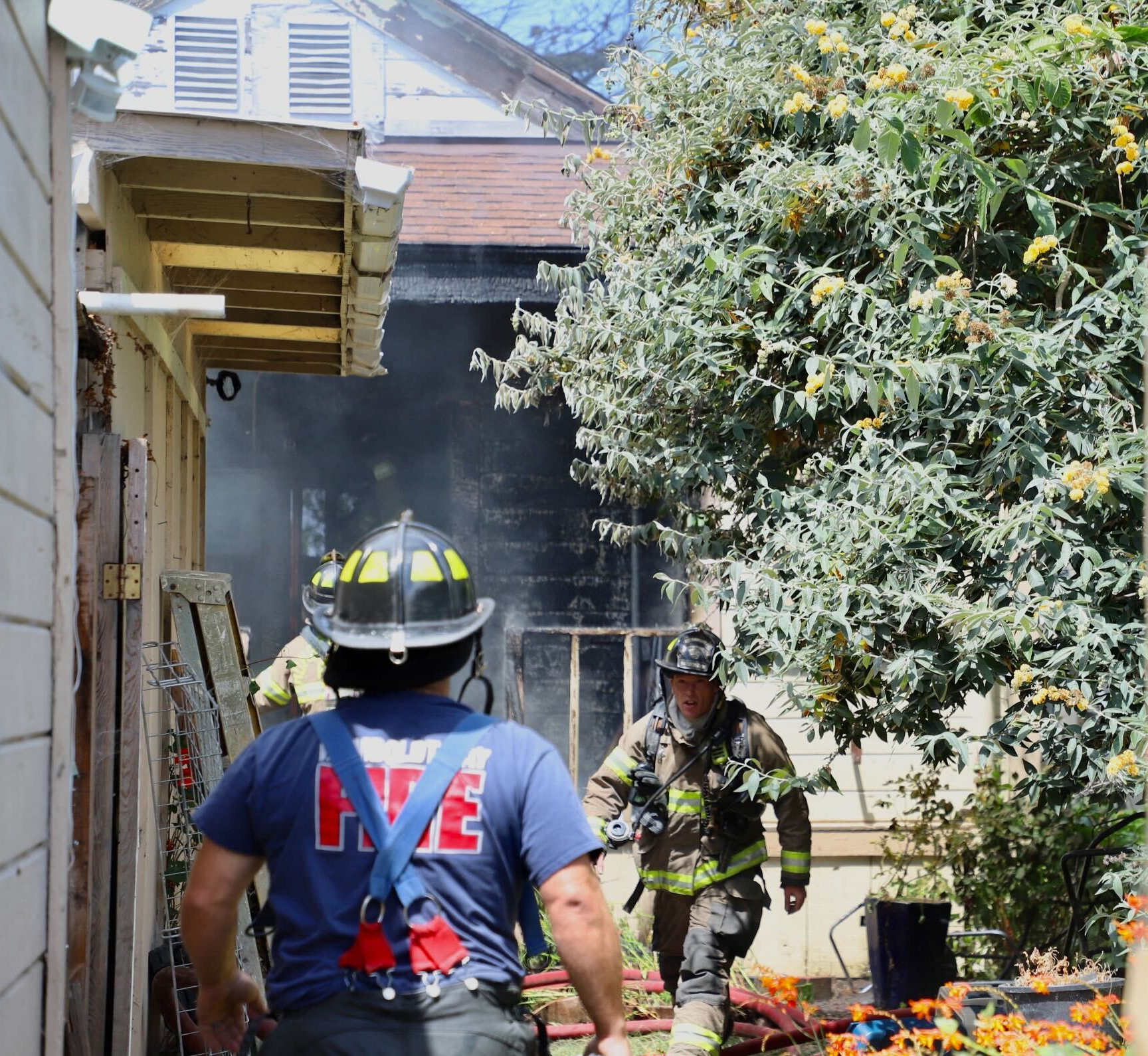
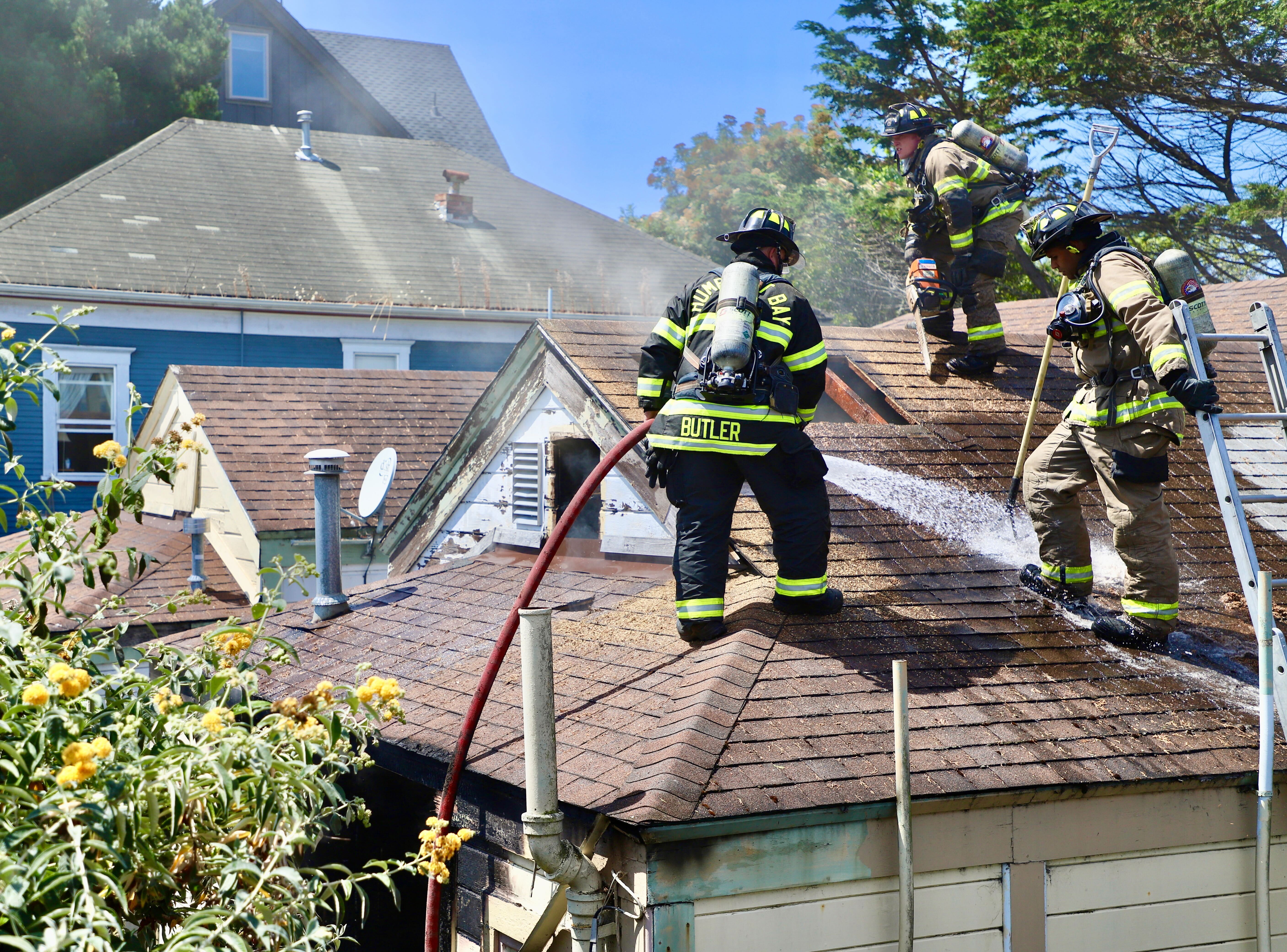
Just a few minutes ago, an outbuilding attached to a Second Street duplex just a couple of blocks from the library went up in flames.
The first call came into Humboldt Bay Fire’s dispatch center at about 1:45 p.m. Witnesses reported seeing flames and black smoke coming from the building, between I and J streets. Dispatch ordered a large response.
The first units at the scene discovered that the fire was an an outbuilding attached to the rear of the duplex. Firefighters are attacking the blaze now. Arcata Fire is responding to cover calls for Humboldt Bay while the local agency is tied up at the scene.
Second Street and J street are both closed at that intersection. We’ll update.
Newsom Unveils Long-Term Strategy to Bolster California Water Supply
Rachel Becker / Thursday, Aug. 11, 2022 @ 12:51 p.m. / Sacramento

Low water levels at Shasta Lake on April 25, 2022. Photo by Miguel Gutierrez Jr., CalMatters
California Gov. Gavin Newsom today unveiled a broad strategy for bolstering the state’s water supply that includes targets to recycle more water, expand reservoir storage and collect more data on the amounts farmers use.
Newsom warned that new strategies are essential because California’s water supply will shrink by 10% as climate change brings warmer, drier conditions throughout the state.
The plan, however, has limited details, distant deadlines and does not include a water conservation mandate.
It also does not include measures to substantially address water use by agriculture, which uses about four times more water in California than people in urban areas use.
Included in the strategy are possible grants to fallow fields and collect timely data on how much surface water growers use. It also floats the possibility of regulations to curtail growers’ pumping from rivers and streams beyond during drought emergencies.
The new strategy mentions that the state’s administration of its complex and archaic water rights system — entrenched since the Gold Rush — needs changes. ”That is something (Newsom) will lean into,” Anthony York, a spokesperson for the governor, told CalMatters. “That’s a huge deal for ag.”
Despite an ongoing drought that grips the state, the governor’s strategies will not increase the amounts of water available to urban areas and farms in the near future: For instance, it sets a 2030 target for recycling 800,000 acre-feet of water by 2030 — an 8% increase from the amount recycled in 2020.
The drought “is not a short-term situation. It’s the new reality. And we cannot conserve our way out of this given how our climate has changed,” said York.
In the 19-page document released today, the Newsom administration outlined efforts that include bolstering recycled water supplies and storage capacity, both in reservoirs and groundwater. They also include:
- Increasing desalination of brackish water by 28,000 acre-feet per year by 2030 and 84,000 acre-feet per year by 2040. An acre foot of water can serve on average three Southern California households for a year.
- Expanding reservoir and groundwater storage by about 4 million acre-feet – through more groundwater recharge, stormwater capture, completing storage projects and expanding or rehabilitating existing reservoirs and dams.
- Finalizing water efficiency standards for houses and businesses called for by 2018 “in ways that make sense in each region.”
- Considering rules or other ways to “streamline and modernize the water right system, clarify senior water rights, and establish more equitable fees.”
The report also touted the state’s controversial tunnel proposal to replumb the Sacramento-San Joaquin Delta and pump more water south. Antioch Mayor Lamar Thorpe criticized the tunnel plan during remarks today with Newsom, although he voiced support for the rest of the administration’s water strategy.
The strategies were already “identified broadly” in the state’s Water Resilience Portfolio, a news release says, “but they will now be expedited given the urgency of climate driven changes.”
Peter Gleick, co-founder and senior fellow at The Pacific Institute, a global water think-tank, applauded the announcement, but noted its limitations.
“Many of the things in this strategy are important, many of these things need to be done. All of them need to be done faster. And there’s some gaps,” Gleick said. “There’s very little in here for agriculture … a hard challenge, because there are fewer knobs and levers that the state can turn and twist here.”
For urban users, Newsom has yet to follow in the footsteps of former Gov. Jerry Brown, who imposed a statewide conservation mandate. Newsom has thus far preferred to leave the details to local water agencies in what he has called a “mandate of local mandates.”
But water use has not substantially declined under his voluntary measures. Urban usage dropped by about 7.6% in June compared to two years ago, but only 2.7% since last July compared to the same stretch in 2020.
Today’s press conference, with a backdrop of the Antioch Brackish Desalination Plant, comes on the heels of a poll revealing that more than two-thirds of Californian adults surveyed say that state and local governments must do more to combat the current drought, according to a recent Public Policy Institute of California poll.
Newsom’s announcement also follows a high-profile resignation of a California water official who lambasted the administration for “nearly eviscerat(ing)” the state water board’s “ability to tackle big challenges.”
He called on the Legislature, in its last weeks of session, to “streamline processes so projects can be planned, permitted and built more quickly, while protecting the environment.”
###
CalMatters.org is a nonprofit, nonpartisan media venture explaining California policies and politics.
Two Redding Residents Arrested Following Strong-Arm Robbery of Booze and Food at the Valley West Ray’s Food Place, Arcata Police Say
LoCO Staff / Thursday, Aug. 11, 2022 @ 12:04 p.m. / Crime
Press release from the Arcata Police Department:
On 08/10/22, at approximately 1225 hours, officers from the Arcata Police Department were dispatched to Rays Food Place (5000 Valley West Blvd) on the report of a robbery in progress.
Upon arrival, officers were advised by the on-site security officer, two males had entered the business and filled a cart with food and alcohol and attempted to leave without paying. The security officer stopped the men, at which time he became involved in a physical fight with one of the subjects. The second subject pulled a handgun from his waistband and pointed it at the security officer. The security officer backed away and both men fled on foot.
A citizen in the area observed the altercation and began to follow the two men in his vehicle. One of the subjects again pulled a handgun from his waistband and pointed it at the citizen. The citizen stopped, and both men continued away from the scene.
Officers, utilizing video surveillance, were able to determine the men had fled to a nearby hotel. Additional investigation revealed the men were staying in a room at the hotel located in the 4800 blk of Valley West Blvd. Officers contacted the subjects and were able to take them into custody without further incident.
Kobe Sai Nhamnhouane, 18 of Redding and a 17-year-old male juvenile also from Redding, were taken into custody for suspected violations of PC 211- Robbery, and PC 245- Assault with a Deadly Weapon.
A search warrant was obtained for the motel room and two handguns were located.
Anyone with additional information related to this event is encouraged to call the Arcata Police Department at (707)822-2428.


