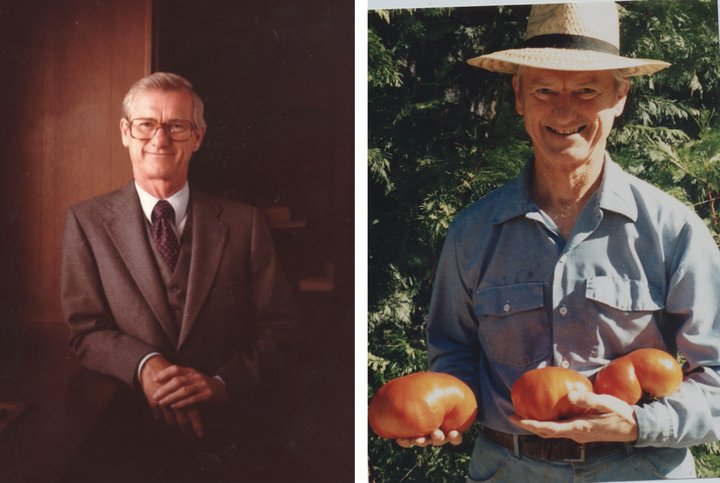
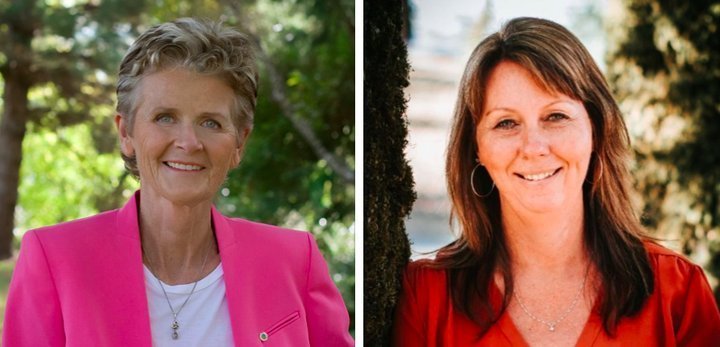
Fennell (left) will make way for Bushnell. File photo.
###
It’s been a long, slow process, but the Humboldt County Elections Office just posted its final tally of the Nov. 3 general election. The only close-ish race in the county ended up where it seemed certain to end up a week and a half ago, with challenger Michelle Bushnell unseating two-term incumbent Second District Supervisor Estelle Fennell.
The final vote?
SUPERVISOR, DISTRICT TWO
ESTELLE FENNELL
5,785
48.26%
MICHELLE BUSHNELL
6,201
51.74%
Bushnell ended with 416 votes more than Fennell — way outside recount territory.
When all was said and done, Humboldt County notched up a 81.72 percent voter turnout rate — easily a record for recent county history — with just shy of 70,000 votes cast and counted.
After serving as Eureka’s interim city manager for the past five-and-a-half months, Miles Slattery is about to be offered the job for real. And he plans to accept.
The agenda for Tuesday night’s Eureka City Council meeting includes a resolution that would authorize Mayor Susan Seaman to execute an employment agreement with Slattery, who previously worked as the city’s Parks and Recreation director and, most recently, its Community Services director.
The timing here is interesting. Tonight’s meeting will be the last one for councilmembers Austin Allison and Heidi Messner, neither of whom ran for reelection. Newly elected councilmembers Scott Bauer and Kati Moulton are set to be sworn in at the Dec. 15 meeting.
Also of note: The employment contract is on the consent calendar, meaning the resolution is set to be adopted without public discussion.
Here’s how that happened: At the end of the council’s Nov. 3 meeting, Allison suggested he and his colleagues should discuss offering Slattery the full-time job at the next meeting, on Nov. 17.
“I personally feel that Miles has [done] a fantastic job … and I don’t think we can find a better person currently,” Allison said via Zoom at the Nov. 3 meeting. “I think it is important that we act sooner than later as I don’t think it’s fair to keep people in interim roles for too long who want the full-time job.”
His fellow councilmembers said they were willing to talk about it. However, since Slattery’s employment is a personnel matter, the Nov. 17 conversation took place entirely in closed session, which means the councilmembers can’t talk about it.
When reached by phone Tuesday afternoon, Allison said he and the rest of the council have “come to an agreement.” Asked why he wanted to help make this important hiring decision himself, rather than leaving it to the newly elected council, he responded, “basically because I feel like I’ve worked with Miles for the last four years.”
For the new council members, he continued, “it’s going to take a lot of time to make the connection I’ve made with [Slattery] and other staff members and sort of understand the history. I want to set the new council up for success, and Miles will do a really good job of working for the city.”
Reached by phone Tuesday afternoon, Slattery, who was one of five finalists for the city manager job last time around, said it’s not uncommon for the city to return to an established, ranked list of candidates rather than initiate a new search — whether the vacancy is for the city manager or a custodian.
“We hold on to [the list] for a period of time so we can always go back,” he said.
Allison believes that’s the right approach following the Lotter debacle. “I don’t think we should look for external candidates for some time,” he said ruefully. “I’m totally a believer in hiring from within and allowing candidates to climb the ladder so they really understand and know the city well.”
The employment contract for Slattery includes an annual base salary of $162,000, plus benefits. That’s about $5,500 more than former Eureka City Manager Greg Sparks made in 2018, the most recent data available via Transparent California, but it’s less than the $170,000 contract signed by Lotter.
Asked about his priorities as city manager, Slattery said, “Economic development is more important than ever.” He feels the city has adapted well to the challenges wrought by the COVID pandemic, helping local businesses with grants to see them through while working on an economic development strategic plan that’s now being reviewed by local chambers of commerce and other agencies.
With new revenue due to flow in thanks to the passage of Measure H, which will replace an existing 0.5 percent sales tax with a 1.25 percent sales tax, Slattery said there should be more money for roads, public facilities, public safety and quality-of-life projects such as the Redwood Sky Walk at Sequoia Park and the waterfront trail.
Asked if he’ll accept the job offer, Slattery chuckled and said he will.
“I just want to thank council for considering this and also want to thank the community for supporting the city,” he said. “I think we’ve come a long way over the last five, six years, and I want to continue that [trajectory] so we’re not only the county seat but we’re also leading in out-of-the box thinking, making [Eureka] a great place to live and a great place to do business.”
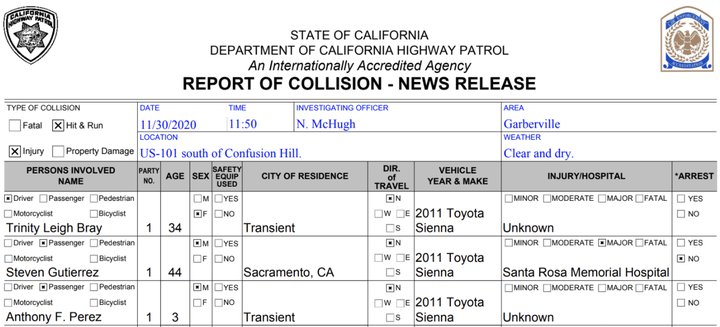
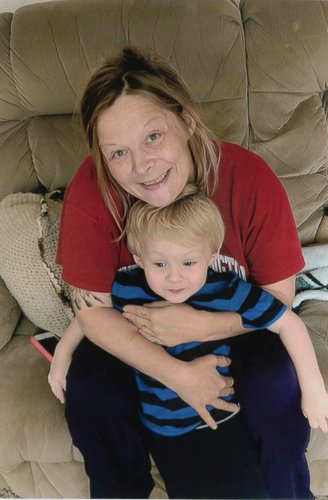
On 11/30/2020, at approximately 1150 hours, a 2011 Toyota Sienna traveling northbound on US-101, south of Confusion Hill, collided with a tree along the east road edge, for reasons still under investigation. Officers from the Garberville CHP area were called at 1200 hours, responded to the scene and arrived at approximately 1218 hours. One of the occupants identified as Steven Gutierrez, sustained major injuries and was transported from the scene for medical care. Two other occupants, a white female adult identified as Trinity Leigh Bray, and a male juvenile identified as Anthony Florentine-Perez, voluntarily walked away from the scene prior to CHP arrival. Bray and Florentine-Perez were reported walking northbound along US-101 and did not appear to be injured as a result of the collision. Officers searched the surrounding area and businesses and were unable to locate Bray or Florentine-Perez upon arrival.
Trinity Leigh Bray and Anthony Florentine-Perez
CHP Garberville was notified by friends and family of Bray’s, she had not made contact nor been seen since the accident. Officers were dispatched to all known current and prior addresses of Bray’s to confirm her and the child’s welfare. A welfare, “Be On the Look Out” was broadcast to adjacent and neighboring law enforcement agencies. CHP Air Operations, officers from the Garberville CHP, and Leggett Valley Fire Department conducted a coordinated air and foot search of the area surrounding the collision scene and were unsuccessful in locating either party. The investigating officer attempted contact with Bray at all known prior contacts and a cellular phone locating ping was initiated to attempt to locate Bray. All attempts were also unsuccessful.
If anyone has any further information regarding the whereabouts of Trinity Bray and/or Anthony Florentine-Perez please contact the Garberville CHP area office at (707) 923-2155.
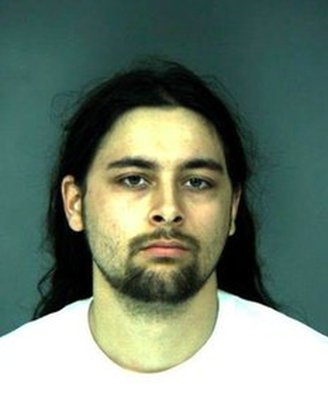
Although the soaring number of local Covid-19 cases may force Humboldt County courts to close, for now the jury trial of murder suspect Brandon Matthew Watson is still scheduled to begin this week.
“We have the governor threatening to shut us down,” Judge Christopher Wilson said this morning while conferring with attorneys about the status of the Watson case. He set another hearing for Thursday to determine whether jury selection will resume at the end of the week. As of today, about half of necessary jurors have responded to summons for the trial, which is expected to last 30 days.
Watson.
Watson is accused of two stabbings, both involving bar fights. He allegedly killed a man in an Arcata alley and also knifed and seriously injured two men behind a bar in Eureka.
Deputy District Attorney Roger Rees and defense attorney Andrea Sullivan have discussed resolving the case before trial, but Rees told the judge this morning that a life sentence in prison is the sticking point.
“Mr. Watson is not prepared to accept a life sentence and we are not prepared to reduce the charges to manslaughter,” Rees said. The prosecution has offered Watson a deal for second-degree murder with use of a deadly weapon.
“The victim in the (murder) case went into the alley first,” Rees said. “Mr. Watson followed him … I believe the jury will return a first-degree verdict.”
As time goes on without the trial proceeding, the prosecutor said, “My concern is we might lose some jurors.”
Wilson noted that with the Covid-19 threat plus the holiday season, “things have really slowed to a trickle.”
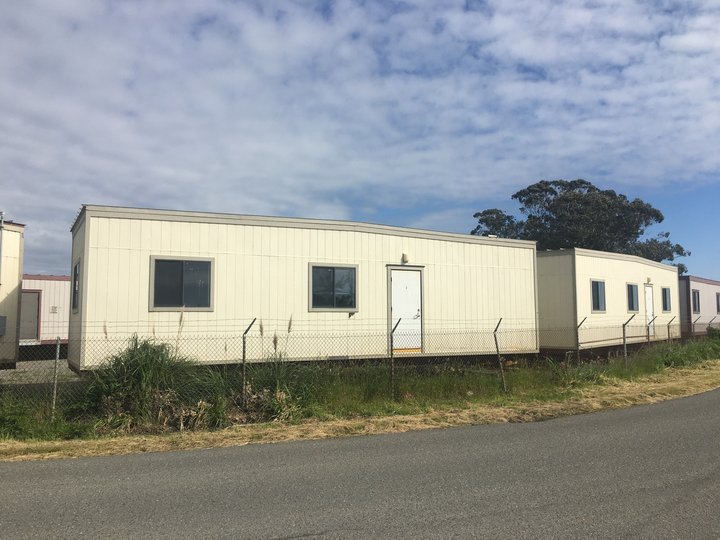
Donated trailers on the Crowley Site on Hilfiker Lane, across from the Hikshari Trail. File photo.
###
After years of controversy surrounding the syringe exchange program operated by Humboldt Center for Harm Reduction (HACHR), the City of Eureka and HACHR have proposed a compromise that will require the nonprofit switch to a mobile-only syringe exchange and cease operation of the service at its Third Street facility.
During tonight’s meeting the Eureka City Council will review a mediation settlement agreement proposal signed by HACHR Executive Director Lasara Firefox Allen and Interim City Manager Miles Slattery. The council requested that city staff and HACHR attend mediation after the California Department of Public Health (CDPH) granted a two-year reauthorization for the syringe exchange program, but excluded the City of Eureka from the reauthorization.
Over the last several years the relationship between HACHR and the City has been rocky, with some community members complaining about the syringe exchange program and the activity it drew to the Third Street site. In August the tension came to a head when the Eureka Police Department released the results of a months-long investigation, which allegedly found HACHR staff was allowing drug use and sales to occur at the Third Street facility. Though HACHR denied the allegations, the Eureka City Council opted to send a letter to the CDPH opposing the reauthorization of HACHR’s syringe exchange.
Though HACHR has always held that it wants to cooperate with the City, in the past the organization was authorized by the state and not necessarily bound by city regulations. By not reauthorizing the program in Eureka, the CDPH effectively gave the City more control, requiring HACHR to adhere to Eureka’s regulations to continue operating the syringe exchange within city limits.
In addition to requiring that HACHR move to a mobile-only exchange, the agreement proposal also asks that HACHR install a fence around the Third Street building and hire someone to monitor and “deter inappropriate activities” at the center and the surrounding area.
Slattery told the Outpost that the city will work with HACHR to secure grant funding to cover the cost of the vehicle for the mobile exchange and to determine where the service can operate. Slattery said that the city is working on an agreement with Open Door Health Services to cover the cost of the fence around HACHR’s Third Street site.
Once approved by the council, the plan will have to go through California Environmental Quality Act (CEQA) review, before the changes can take place. The city will then need to adopt another ordinance to make the agreement official.
Slattery said that the discussions with HACHR have been amicable and he feels confident that the proposed changes will address the needs of the Third Street neighborhood, while still allowing HACHR to operate the syringe exchange, something the City needs to help prevent the spread of blood-borne illness.
“It was great working with them,” Slattery told the Outpost. “We hope this is something we continue to collaborate on.”
###
In other business, the council will vote on the adoption of two ordinances that will change the zoning of the Crowley Site — which is adjacent to the Hikshari Trail — to allow for the development of Betty Chinn’s trailer housing project to finally move forward.
Chinn proposes to turn 11 trailers — donated to the Betty Kwan Chinn Foundation by PG&E over two years ago — into a transitional housing project for the homeless, providing the occupants with an affordable place to live and support services to help keep them off of the streets.
The Crowley site.
But developing the trailers into a permanent housing site has been a complicated process. Not only have there been issues with some neighbors, but also the site sits in the Coastal Zone and housing was not one of the permitted uses. The Coastal Commission approved changing the zoning to allow for multiple uses, including housing, but asked the city to make some amendments to the land use plan. The council will now vote to adopt those amendments, allowing for a housing development on the site.
Slattery told the Outpost that the city now needs to apply for a coastal development permit, which will then need to go before the planning commission and then the city council for approval. Mercer Fraser has agreed to help with the water, sewer and paving on the site and a private donor has helped fund the necessary improvements to the trailers. If all goes to plan, Slattery said, the city is hoping that the project will be up and running by March 2021.
Chinn told the Outpost that she was really happy to see things falling into place for this thanked the City and the County for all their support with this project. “I’m really in a good place,” Chinn said. “I’m really looking forward to moving forward.”
###
The council will also vote on the adoption of a replacement camping ordinance, that will prohibit “involuntary camping” in city parks, near trails and in several business districts.
The Eureka City Council meets online via Zoom tonight at 6 p.m. You can view the full agenda and directions on how to participate here.
Jackie Bustamante, with her son Peter, 8, prepares to vote at San Francisco Voting Center on Nov. 8, 2020. Photo by Anne Wernikoff for CalMatters
Mono County tried its hand at new election technology during the March 2020 primary but then the internet cut out. For the general election, it reverted to old-fashioned paper voter rolls.
Los Angeles County, too, suffered technology snafus during the primary election. But it doubled down on vote center technology for the general election. Voters could check online to find centers with the shortest lines, and once they arrived, quickly scan the check-in code already mailed to them. Hardly any waits were reported in the nation’s largest county.
Most of the state’s 58 counties followed suit this election, choosing to use technology and some form of vote center. It turned out to be critical infrastructure to support California’s pandemic-inspired decision to mail ballots to every registered voter. Forty-eight counties responded to a CalMatters survey, with many registrars attributing a smoother election to the new approach. Now that politicians in Sacramento are talking about making vote-by-mail permanent and expanding vote centers, though, some local officials are worried about cost given vote center usage.
The vote centers were possible this year because of the 2016 Voter’s Choice Act, intended to increase turnout by allowing more ways to cast a ballot. Voters could receive a mailed ballot that could be returned via mail or in an election drop box. They could vote early at a voting center or on election day. Fifteen counties — including Los Angeles and Orange — had opted into the Act and its perks. The pandemic prompted another 24 counties like Riverside and Sonoma to try on similar changes by having flexible-use vote centers for early voting.
“We can now say, I think, with confidence that the voting model we’ve adopted in L.A. County is sustainable,” said Los Angeles County Registrar Dean Logan. “From a 95-year-old voter to a generation Z voter and everything in between, the system worked as it was designed and it got overwhelmingly positive reviews in its utility and in the intuitive ease of its use.”
Kiyana Asemanfar, program manager for California Common Cause, assessed California’s election this way: “The experience in this last election will nudge more counties to adopt it in 2022.”
Technology is key
Central to vote centers’ success are electronic poll books, which instantly look up any voter’s information from any center in the county, including if they voted already, the correct ballot for their address and more. They are why counties with vote centers saw huge drops in provisional ballots.
That ease of voting is the intention of the Voter’s Choice Act.
“It’s crazy that in this modern era, people living the busy lives that they live, that we had a vote model that says that you could only vote in one place on one day, between certain hours, as opposed to offering people flexibility,” said state Sen. Ben Allen, D-Santa Monica, author of the Voter’s Choice Act.
Assemblyman Marc Berman, D-Menlo Park, plans to take the next step to ease voting; he will introduce legislation to mail California voters their ballots each election.
But permanently mailing ballots could pose hurdles for counties forgoing vote centers and their savvy technology. Imperial and Lake counties saw hiccups this election after many voters didn’t know they needed to bring and surrender their mailed ballot to vote in person. Without electronic poll books to confirm they hadn’t already voted, it meant more provisional ballots and more forms to fill.
“We saw long waits at the polling site that were not normal compared to other previous elections,” said Linsey Dale, Imperial County public information officer. “Many of our voters were not accustomed to receiving that mail-in ballot.”
Asemanfar, of California Common Cause, said, “We all kind of experienced what (the Voter’s Choice Act) looks like this year…This kind of gave them an opportunity to try whether they want to stick to something like it or if they want to stick to the previous model.” Her organization convenes registrars, advocates, and Secretary of State officials to help counties transition to the Act.
San Diego County, among the state’s most populous, has yet to opt into the Act after conducting a feasibility study in 2019. San Francisco is readying a similar report and registrars in Riverside, Sonoma, Shasta and more also have said they are considering opting in.The decision to join is up to a county’s board of supervisors. “If a group of voters wanted to take it upon themselves to kind of push for their county to adopt it, they could advocate for their county to become a VCA county,” Asemanfar said.Still, some smaller, rural counties lack the infrastructure and internet access to opt in.
“It would be very difficult for us to have vote centers here because of the rural nature of our county,” said Terry Hansen, registrar of voters for Yuba County, which has about 40,000 registered voters. “We don’t have large buildings, we don’t have reliable internet service, especially in the foothills, and we don’t have public transportation.”
Costs ‘worth it in the long term’
In Madera County, Registrar Rebecca Martinez said in 2018 that the county saved between $400,000 and $600,000 when it implemented the Act and needed less voting equipment. Nevada County’s registrar anticipated savings this year of $1 million before the pandemic hit. For the 2020 election cycle, counties found even greater relief: $18 million in state and federal support was available for help with Act-related costs.
Equipment costs under the Act typically include electronic poll books and ballot-on-demand printers, which can be paid for by counties, with matching state and federal funds. The Act also requires at least three voting machines accessible to voters with disabilities per vote center. Sam Mahood, the Secretary of State’s press secretary, told CalMatters in an email, “We will be doing a county by county assessment on total costs after the certification of this election looking at the total costs for this election cycle for the implementation of the VCA.”
So far, counties report widely varying costs to adopt the Act.
Orange County, for instance, bought 1,120 electronic poll books at $360 per device and more than 600 accessible ballot marking devices, or voting machines, at about $5,000 each.
Because Sacramento County implemented the Act early on, no electronic poll books were certified yet. It instead bought 300 laptops for about $1,200 each. The county deployed 268 ballot marking devices during the election, each costing $2,500.
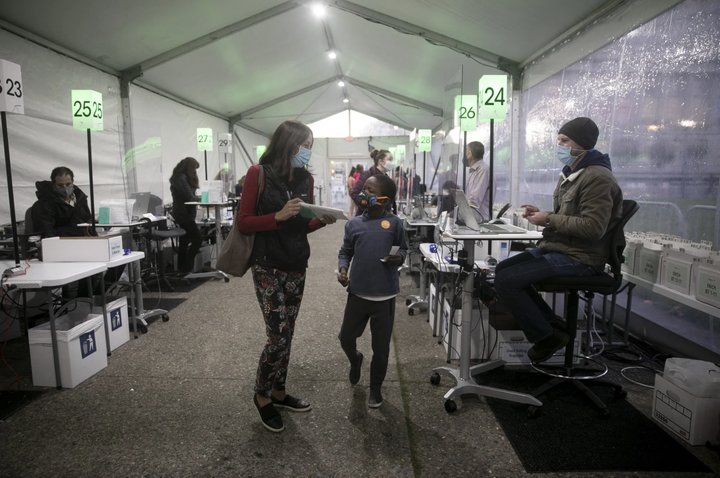
A check-in station at a South Los Angeles vote center on Nov. 3, 2020. Photo by Tash Kimmell for CalMatters.
The Act requires more than just new equipment. It requires counties to consolidate traditional neighborhood polling places into fewer vote centers. That can mean cost-savings for some counties.
“It’s not as expensive as traditional polling places because there are fewer locations and fewer poll workers,” said Donna Johnston, Sutter County’s clerk-recorder. The county did not opt into the Act but consolidated five polling places this election, each open for early voting days.But some worry about multiday costs of early voting at the centers, which typically also are larger.
“It costs money to rent locations for 11 days… as opposed to using a fire station for a day or using a school gym for a day,” said Deva Proto, Sonoma County Registrar of Voters.
The Act’s upfront costs scared off Sonoma officials at first. But when the pandemic hit, the county experimented with centers this fall after it couldn’t use its usual polling places. Officials and voters liked the flexibility.
“CARES Act funding helped with those upfront costs. So if we move to the VCA in the future, we have some of the upfront costs already taken care of,” Proto said.“After this election is certified, we will evaluate the success of the model.”
Allen, the Voter’s Choice Act author, said he anticipated rural counties might face hurdles with the Act and that’s why it is an opt-in model. But most counties delayed upgrades while waiting for the state to revamp elections, allowing them to invest in the new system “rather than double down on a system that was old and antiquated.”Counties that already implemented the Act see the investment as a win-win, he said. “They realize that the upfront investment would be very much worth it in the long term, both in terms of cost savings and increases in voter turnout and voter flexibility.”
Mailed ballots driving turnout
California’s historic turnout was largely fueled by voters using their mailed ballots during this election year pandemic. In the Voter’s Choice Act counties of Los Angeles and Orange, for instance, only 21% and 17% of voters chose to cast their ballot in person, respectively. Los Angeles County saw more than 4.3 million ballots cast, its largest number ever as well as the most of any local jurisdiction in the nation.
Less than 10% of voters in Madera County, also under the Act, chose to vote in person in the March primary and in the recent election. Since vote-by-mail is so popular, some officials say vote centers may not be worth the cost or hassle.
“There’s not a huge payoff in terms of voters coming in based on data from other counties that have been part of the Voter’s Choice Act,” said Proto, the Sonoma County registrar. She estimated about 4% of registered voters voted in person in her county.
“We only had 7,000 people go to our 10 voter assistance centers,” said Candace Grubbs, Butte County’s registrar of voters. “So they were hardly used for that matter. We put a whole lot of money into it, bought a whole lot of COVID stuff, hired a lot of people.”
Registrars in Fresno and Sutter County suggested cutting back on the number of days a vote center is required to be open, which under the Act can be up to 11 days.
Yet Asemanfar said her group’s Election Protection Program has observed perks with the early voting period, including the ability to fine-tune technology and fix errors without the crush of voters around. It’s also a chance for local groups to turn out the vote by holding community events around vote centers, she said.
“We just need to acknowledge that it’s a new model, and a lot of voters are learning about it for the first time,” Asemanfar said. “There are a lot of conversations taking place for what the next steps might be for California.”
Votebeat reporter Lewis Griswold and University of California Berkeley Graduate School of Journalism reporters Katie Licari-Kozak, Aaron Leathley and Freddy Brewster contributed to this story.
This coverage is made possible through Votebeat, a nonpartisan reporting project covering local election integrity and voting access. In California, CalMatters is hosting the collaboration with the Fresno Bee, the Long Beach Post and the UC Berkeley Graduate School of Journalism.
###
CALmatters.org is a nonprofit, nonpartisan media venture explaining California policies and politics.
Bernard Robert Strohm (Barney) died of natural causes at age 94 on November 16, 2020 in
Eureka, California. He was born to Frank and Agnes (Nelson) Strohm, the middle child of ten, in
Lyons, Iowa. He and his brothers survived many adventures on the Mississippi River together. A
star football player in high school, he joined the military towards the end of WW II, at age 17,
after he lost a brother to that war. He served in the Pacific Theatre.
Upon his return from overseas, Barney was able to enter college on the GI Bill. He married
LaVonne F. Holm, his high school sweetheart, in 1947. Together they had seven children,
providing a wonderful home first in Iowa, then Columbus, Ohio, then in Los Angeles, and finally
in Grizzly Flats, California. Family was supremely important to Pop, and he was always home
for dinner. He extended a loving kind hand to many nieces, nephews, grandchildren, great
grandchildren and friends over the years.
After earning his bachelor’s degree at the University of Iowa in 1950, he went on to earn both his
Physical Therapy license and a Master’s Degree. After many years working hands-on as a skilled
physical therapist, he eventually became a Senior Administrator at UCLA Health. He was very
capable, caring, and committed to the organization, and as a result was well-loved by those who
worked for him and with him. He fought the polio epidemic, established a school for physical
therapy in collaboration with Cal State Northridge, and successfully led multiple departments
throughout the UCLA System.
He always emphasized the importance of “making a contribution” to the world and “doing the
right thing” when it came to social injustices. Although he carried a lot of responsibility, he
never put on “airs”. He was infamous for parking his little VW bug in the UCLA VIP parking lot
next to all the Mercedes, Porches, and other fancy cars. He was civic-minded. He participated in
the Unitarian Church of Santa Monica, as president and chair of the fund-raising drive for several
years. Even in retirement, Pop was a member of the local water board, volunteered for first aid
efforts, the Volunteer Fire Department’s community crab feeds, and fire safety efforts.
Barney travelled the world for both his work, and with LaVonne. He attended to amputees after
the 1964 Alaska earthquake; helped establish medical services in India, Sri Lanka, and Egypt. He
visited Russia, Mongolia, New Zealand, Peru, and Africa. Every summer he traded in his first
class airplane ticket in favor of loading the whole family into the VW bus for cross-country
camping trips in order to get to his professional conference.
Preceding him in death were his parents, his brothers Eugene, Donald, Abe, Frank and Paul; and
his sisters Marion and Alyce. He is survived by his wife of 73 years, LaVonne, and his seven
children: Laura (Haven), Nancy (Peter), Dan (Catherine), Carolyn, Jill (Mark), David, and Janet;
thirteen grandchildren and nine great-grandchildren. He is also survived by his brother Lloyd, his
sister, Shirley, sister-in-law Judy, and many nieces and nephews.
Barney lived a long and wonderful life. If desired, donations of remembrance of him may be
forwarded to: UCLA Global Health Program Fund giving.ucla.edu/strohm This fund helps support
international clinical care, health education, and medical students.
A celebration of his life will be held when the pandemic allows.
###
The obituary above was submitted on behalf of Barney’s loved ones. The Lost Coast Outpost runs obituaries of Humboldt County residents at no charge. See guidelines here.


 A check-in station at a South Los Angeles vote center on Nov. 3, 2020. Photo by Tash Kimmell for CalMatters.