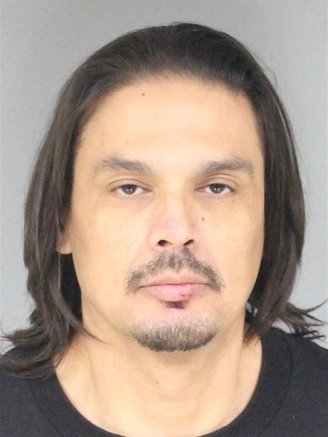
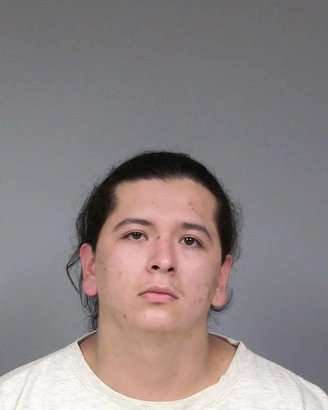
A local man arrested in Utah with triple-murder suspect Mauricio Eduardo Johnson was arraigned in a Utah court today on a charge of being a fugitive from justice.
Von Eric Keener, 46, appeared via video before Judge Dianna Gibson in Third District Court, Tooele County. Gibson told Keener he is a charged with being a fugitive, and he has “a no-bail warrant out of California.”
“OK,” Keener responded.
Asked if he wanted an attorney, Keener said “I have no job. Am I going to need an attorney, or are they just going to come and pick me up?”
The judge appointed a lawyer for Keener and told him to call the lawyer. She set his next hearing for the afternoon of March 23.
Keener was arrested Feb. 18 on Interstate 80 while riding in a car with the 18-year-old Johnson, the son of Keener’s girlfriend. Johnson is suspected of shooting three people to death on Feb. 10 in a home on the Bear River Rancheria: Margarett Lee Moon, 40, her fiance Nikki Dion Metcalf, 40, and her 16-year-old daughter Shelly Moon. Two younger children in the house were not harmed. One of the kids called 911 to report the shooting.
At the time of the arrest Johnson’s mother, Melissa Sanchez-Johnson, was reportedly driving in a separate vehicle behind Keener and her son. She was taken into custody but is not in jail now, a Tooele County Detention Center spokesman said. He said Mauricio Johnson remains at the detention center and has not been to court.
“We’re holding him on an out-of-state warrant,” he said.
Keener is on parole in California. Today he wore an orange-and-white striped uniform and a face mask.
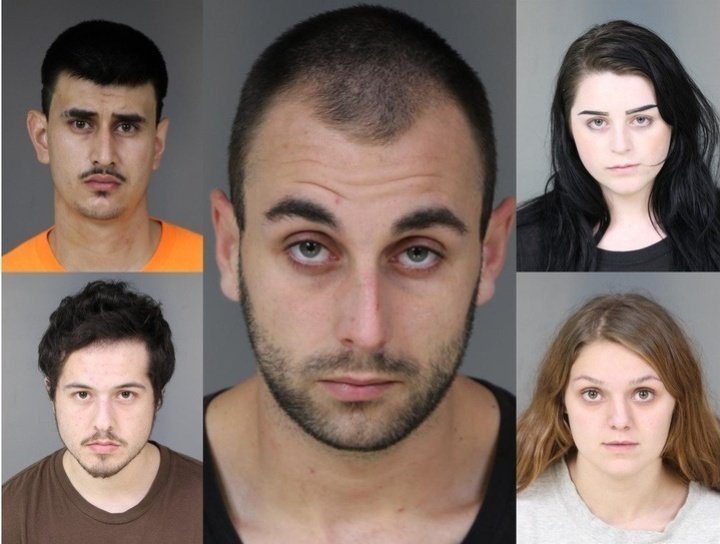
Clockwise from upper left: Valenzuela, Mitchell, Fode, Thomson, Godoy-Standley.
More than four years after Tyson Eduardo Claros was shot dead during a carjacking near Manila, attorneys are still trying to work out how much restitution the five defendants owe Claros’s parents and step-parents.
Eddie and Cami Claros and Cristina and Michael Dennison are requesting compensation for lost wages during years of attending court hearings and meetings with law enforcement. They also want to be reimbursed for funeral costs, counseling sessions and other expenses.
Defendants Brandon Mitchell, Catherine Fode, Nicole Thomson, Hector Godoy-Standley and Cesar Valenzuela were sentenced to state prison for their roles in the December 2016 killing of the 20-year-old Claros. Mitchell, the shooter, and Valenzuela, who pleaded guilty to carjacking, are already serving their prison terms. The other three defendants have not yet been transported and were in court today for the hearing.
Defense attorneys have raised questions about some of the restitution claims, and Judge Christopher Wilson also noted there might be “some credibility issues.”
For example, the judge said, Eddie and Cami Claros say they attended 32 two-hour meetings at the District Attorney’s Office.
“I don’t see how that’s even remotely possible,” Wilson said.
Also, payment was requested for “memorial jewelry and funeral keepsakes for family members” and for a dinner that may or may not be associated with the funeral.
“(Defense) counsel will want to scrutinize the requests,” Wilson said.
Eddie Claros has asked to be reimbursed for lost wages at a rate of $169 per hour. And one of the claimants submitted a $23,000 bill for counseling.
Eddie and Cami Claros were watching the hearing via Zoom, and Wilson was about to have them testify about their claims and be cross-examined by defense attorneys. But then Deputy District Attorney Carolyn Schaffer, who had placed a phone call to the couple, said they didn’t want to be questioned.
“They are experiencing a great amount of trauma at this time,” Schaffer said. “Testifying would only increase the amount of trauma they are experiencing … I think they’ve reached their wits’ end, and understandably so.”
In the end, the judge set out this timeline: Schaffer is to have documentation of the claims to the court by Feb. 24. Defense attorneys have until March 10 to submit their responses. On March 19, Wilson will issue his tentative ruling. Also on that date, another hearing may be set for calling witnesses for cross-examination.
Wilson said he knows all involved are weary of the dragged-out proceedings. He hopes to soon “put the courtroom chapter of this tragedy to rest.”
Fode is represented by Neal Sanders, Thomson by David Nims, Godoy-Standley by Russ Clanton, Mitchell by Andrea Sullivan and Valenzuela by Deputy Public Defender Casey Russo. Russo said today that because Valenzuela admitted only to carjacking, he should not owe restitution for any expenses relating to the killing.
In other court news, as jurors are being summoned for the trial of rape suspect David Anderson II, attorneys are still discussing a possible settlement in the case.
This morning Judge Christopher Wilson agreed to meet privately with the prosecutor, Deputy District Attorney Stacey Eads, and Anderson’s attorney Michael Acosta, to discuss ongoing negotiations.
In the meantime, should the trial proceed, a panel of prospective jurors is expected to be brought in Friday and questioned about their eligibility to serve.
Anderson has already been convicted of sex trafficking. He is now charged with raping and sodomizing a 16-year-old Eureka girl. At Anderson’s preliminary hearing the judge dismissed a sex-trafficking charge for lack of evidence.
According to the teenage victim, Anderson told her during the sexual assault incident that “I could make a lot of money off you.”
Eads refiled the sex-trafficking charge and Acosta filed a motion to dismiss it. Judge Larry Killoran granted Acosta’s motion and the charge was dropped.
The next hearing in the case is scheduled for Thursday morning.
Press release from the Humboldt County Sheriff’s Office:
On Feb. 14, 2021, at about 7:53 p.m., Humboldt County Sheriff’s deputies on patrol in the area of Alderpoint Road and Redwood Drive, in Garberville, conducted a traffic stop for a vehicle code violation.
Upon deputy contact, the driver of the vehicle provided deputies with a false name. Through further investigation, deputies were able to identify the driver as 34-year-old Codi Ronald Owens of Eureka. Owens was found to have a suspended driver’s license and to be on probation. Deputies searched the vehicle pursuant to the terms of Owens’ probation. During the search of the vehicle, deputies located over 24 grams of methamphetamine, over 16 grams of heroin, over 23 grams of Oxycodone pills, approximately 7 pounds of cannabis bud, a large bag of cannabis trim and over 4 grams of suspected cocaine. Deputies also located a large amount of cash, items consistent with drug sales and two firearms, one of which was loaded.
Owens was arrested and booked into the Humboldt County Correctional Facility on charges of possession of a controlled substance while armed (HS 11370.1(a)), possession of a controlled substance (HS 11378), transport/sale of a controlled substance (HS 11379(a)), possession of a controlled substance for sales (HS 11351), transportation/sale of a controlled substance (HS 11352(a)), possession of cocaine (HS 11351.5), felon in possession of a firearm (PC 29800(A)(1)), person prohibited in possession of ammunition (PC 30305(a)), false impersonation (PC 529(A)(3)) and violation of probation (PC 1203.2(a)(4)).
Anyone with information about this case or related criminal activity is encouraged to call the Humboldt County Sheriff’s Office at (707) 445-7251 or the Sheriff’s Office Crime Tip line at (707) 268-2539.
From the Humboldt County Joint Information Center:
Nearly a year since the first case of COVID-19 was reported in Humboldt County, data suggests that younger adults — the 20-29 and 30-39 age groups — remain the largest percentage of total cases. Because it will likely be months before people in these age groups are eligible to receive the vaccine, health officials encourage routine testing and continued safety precautions.
In the most recent weekly update on the Humboldt County Data Dashboard (humboldtgov.org/dashboard), residents age 20-29 made up about 24% of total cases, while those age 30-39 made up approximately 20% of total cases. Both groups have consistently maintained the highest rates since late September 2020, and the gap between them and other age groups has only increased since late November 2020.
Public Health officials have previously noted that people in these age groups tend to make up much of the essential workforce and often are unable to work from home. “While vaccines are part of our way out of the pandemic, they’re only one piece of the puzzle,” said Sam Gentle, Logistics Section Chief for the Emergency Operations Center. “We need to continue practicing these proven behaviors that are now part of life — mask wearing in public, staying at least 6 feet away from those outside your household, frequent hand washing and traveling only for essential purposes. Testing, even for those without symptoms, remains a great tool in identifying how much virus is circulating in our community.”
Testing continues to be available for free through the state-contracted COVID-19 testing provider OptumServe seven days a week at Redwood Acres in Eureka. Walk-ins are available at all OptumServe sites and turnaround time for results is averaging 48 to 72 hours. See the full schedule below:
Eureka – Seven days a week, 7 a.m. to 7 p.m. (Redwood Acres, 3750 Harris St.)
Arcata – Mondays, 8 a.m. to 5:30 p.m. (Arcata Community Center, 321 M.L.K. Jr. Pkwy.)
Garberville – Tuesdays, 9 a.m. to 4:30 p.m. (SoHum Health Sprowl Creek Campus, 286 Sprowl Creek Road)
• Fortuna – Wednesdays, 8 a.m. to 5:30 p.m. (River Lodge Conference Center, 1800 Riverwalk Dr.)
CORRECTION: The headline slapped on this JIC press release originally stated that young adults represent the majority of COVID-positive cases. While that may in fact be true, depending on your definition of “young” and/or “adult,” the statistics cited for people in their 20s and 30s amount to only 44 percent of positive cases.
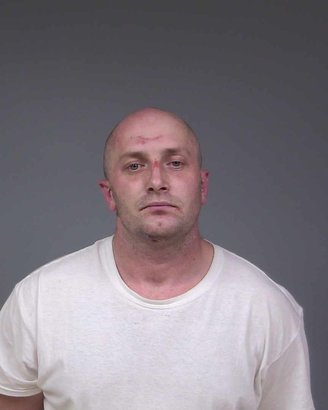
At approximately 11 p.m. on February 13, deputies located Colegrove on the Lower Mill Creek Road property and he was arrested without incident.
Colegrove was booked into the Humboldt County Correctional Facility on a warrant for attempted murder (PC 664/187(a)), discharging a firearm (PC 12022.53(c)), discharge of a firearm resulting in great bodily injury in commission of a felony (PC12022.53(d)), assault with a firearm on a person (PC 245(a)(2)), using a firearm in commission of a felony (PC 12022.5(a)) and discharge of a firearm in gross neglect (PC 246.3(a)).
Anyone with information about this case or related criminal activity is encouraged to call the Humboldt County Sheriff’s Office at (707) 445-7251 or the Sheriff’s Office Crime Tip line at (707) 268-2539.
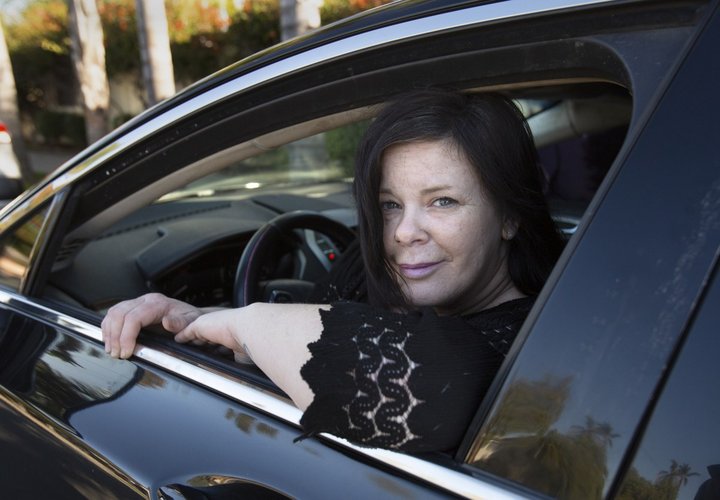
Erica Wood is photographed in her car near her home in San Diego on Feb. 6, 2021. Wood owns a small mobile piercing business but has been able to work due to COVID-19 restrictions. While struggling with unemployment benefit, she took out a title loan on her car and is now in debt as a result. Photo by Peggy Peattie for CalMatters
###
On paper, the Golden State appears to have escaped 2020 without a personal debt crisis. Despite an unprecedented 2.4 million jobs lost in the spring, Californians joined their fellow Americans in paying down interest-heavy debt such as credit card bills while acquiring wealth-building loans by taking out mortgages. In California, new mortgages jumped 10% even as real estate prices soared, suggesting an unexpected resistance to a prolonged pandemic.
Economists and financial researchers across the country aren’t seeing tell-tale signs of financial hardship in the Federal Reserve Bank of New York’s reports of American consumer debt, like the devastating spikes in defaulted debt, bankruptcies and foreclosures suffered during the Great Recession. In fact, they’re seeing near-record lows.
But looks can be deceiving.
The large gains of well-off Californians appear to be cloaking the experiences of suffering segments in debt records that aren’t easily broken down by race, income or geography. Plus, millions of Californians suffering job losses have accumulated crippling levels of debt that go uncounted in many national measures: unpaid rent, utility bills, borrowed money from loved ones and, in some cases, predatory loans.
“Once the dust settles, this is going to be a story of inequality,” said Matthew Harding, professor of Economics and Statistics at UC Irvine.
A counterintuitive trend
Economic downtowns usually trigger high levels of debt distress.
“Debt is what fills the gap,” said Taylor Nelms, senior director of research at Filene Research Institute, a nationwide think tank working with hundreds of credit unions.
After the 2008 financial crisis, credit card debt spiked. So did the share of U.S. borrowers late on debt payments, which can ravage credit scores. By the end of 2009, roughly 12% of American household debt was delinquent, the highest rate ever recorded.
A below-average 3.4% of Americans’ personal debt was delinquent as of late September. California, one of the states hit hardest by Great Recession delinquencies, now has among the lowest rates nationwide, according to an interview with researchers at the Federal Reserve Bank of New York.
In another surprising twist, U.S. credit card debt — which, unlike mortgages, economists often consider an unhealthy form of debt because it doesn’t build wealth — dropped by $76 billion in the spring, the steepest decline since the country’s bank system began analyzing debt records in 1999.
That’s a sign, experts say, that Americans are spending less due to travel restrictions, business closures and lost income. But it’s also due to active debt repayments from those who enjoyed extra financial padding from boosted unemployment benefits and $1,800 stimulus checks. About half of Californians who received the latest round of stimulus checks report that they mostly used them to pay off outstanding debt, according to January Census Bureau surveys.
It may just be on hold. Federal cash infusions have helped many pull through the year. California lawmakers barred evictions through the end of June and Newsom banned water and electricity shutoffs during the pandemic. While ensuring access to basic needs during the crisis, those moratoria cloud the true level of Californians’ debt troubles.
“If the protections were extended permanently, then the data would align with reality,” said Nelms.
Lawmakers have taken steps to reduce delinquent debt. The federal government, along with some private lenders, offered people the option to postpone payments on their student loans and mortgages, a process called forbearance. But these relief efforts have also created mixed signals about the state of delinquency in California.
One working paper by Stanford and USC researchers, among others, found that Americans have benefited from forbearance on roughly $2 trillion worth of loans between March and October, of which $1.1 trillion came from delayed mortgage payments. Study co-author and USC assistant professor Erica Xuewei Jiang believes that sets a record.
Forbearances explain much of the difference between the 2008 crisis and the pandemic, said Giacomo De Giorgi, director of the Institute of Economics and Econometrics at the University of Geneva in Switzerland, including why foreclosures — when a lender repossesses a home after the owner fails to pay the mortgage — have virtually stopped.
“We’ve never seen this before,” De Giorgi said. “It’s very hard to know whether this is an optimistic picture.”
A story of inequality
Another reason why debt levels appear deceivingly healthy is deepening inequality.
“When we worry about the averages, we miss a lot,” said Harding of UC Irvine.
The wealthy are skewing the Fed’s debt measurements. For example, people with credit scores above 760, who tend to make more money, are responsible for 85% of the national boom in new mortgage debt, taking out $329 billion more in home loans since March. The mortgage balance among borrowers with scores below 620 declined.
Harding also worries the data, which he says can’t be broken down by race, might be hiding alarming trends among specific demographics.
Ernesto Martinez said he’s witnessing “probably the largest wealth stripping event of our lifetime” among the families he serves as Director of Asset Building Programs at the Mission Economic Development Agency.
Before the pandemic, the nonprofit helped about 8,000 mostly immigrant families who made an average of $30,000 a year in the Bay Area build wealth through career training, financial coaching, tax filing services and affordable housing.
Now his team is scrambling to help clients hold on to “whatever little wealth” they might have developed.
Desperation debt goes uncounted
The federal reserve’s data also fails to measure some of the most distressing forms of debt, often affecting those who have endured long months without assistance because they are undocumented or their unemployment benefits were frozen or delayed.
It only counts debtors with Social Security numbers, excluding undocumented immigrants. It doesn’t include mounting utilities and rental debt, which “has the potential to be quite catastrophic,” said Marisabel Torres, director of California policy for the Center for Responsible Lending, a nonprofit working to fight predatory lending.
It doesn’t capture the 14% of Californians who told the Census Bureau in January that they borrowed money from family or friends in the past week. It doesn’t count people who turn to high-interest financial services, like payday or title loans, because they have limited or poor credit history.
An analysis of Google searches by the Federal Reserve Bank of Kansas City found evidence that demand for title and payday loans has dropped. However, experts are worried these types of often-predatory services will skyrocket when financial protections expire. The use of payday loans doubled in the years following the Great Recession, hitting people with limited or poor credit hardest.
Until recently, Erica Wood of San Diego had mostly dealt in cash, leaving the 44-year-old pharmacology researcher-turned-small-business-owner with little credit history.
The pandemic wiped out Wood’s booming mobile piercing business. Late on May’s rent, she got desperate. Through an online loan agency, she took out a $4,000 title loan at a 400.87% annual interest rate, with her 2015 Lincoln MKZ as collateral. When the end of the pandemic still seemed right around the corner, Wood figured she’d pay back the loan right away.
But the pandemic continued and the interest grew faster than she could repay it. Wood cashed out on her 401K, refinanced the loan, sold stocks and a prized classic truck.
She might have paid off the loan sooner, if not for California’s Employment Development Department’s chaotic crackdown on fraud, which led Bank of America to freeze her benefits card in September. After countless hours on the phone with representatives, Wood still hasn’t seen a cent of her biweekly $598 Pandemic Unemployment Assistance.
Two months late on repaying the title loan, she still owes about $4,300.
Though Wood’s financial crisis doesn’t show up in national debt statistics, her boyfriend’s relative success might soon. An electrician, his annual income increased from about $55,000 to over $80,000, as business boomed and he worked weekends.
“He wants to buy a house now because the mortgage rates are so great,” Wood said. “But I’m freaking out.”
###
This article is part of the California Divide, a collaboration among newsrooms examining income inequality and economic survival in California.
CALmatters.org is a nonprofit, nonpartisan media venture explaining California policies and politics.
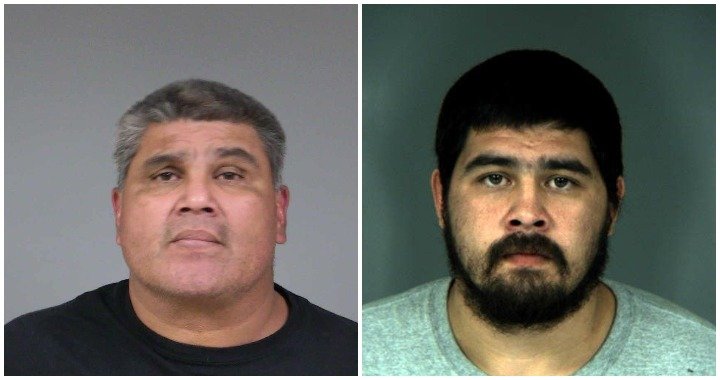
Frederick Lewis (left), Derrick Lewis. Photos: HCSO.
###
Press release from the Humboldt County Sheriff’s Office:
On Feb. 13, 2021, at about 12:35 p.m., Humboldt County Sheriff’s deputies were dispatched to a business on the 22,800 block of State Highway 96 for the report of a gunshot victim that had just arrived at the location.
Deputies arrived on scene and located a 32-year-old male with non-life-threatening gunshot wounds. The male was transported to a local hospital for treatment of his injuries. Upon further investigation, deputies learned that the shooting occurred at a property on Upper Cappell Road near Weitchpec. According to witnesses, the suspects reportedly followed the victim to the Upper Cappell Road property and confronted him for reasons still under investigation. An altercation occurred, during which the suspects reportedly fired multiple shots toward the victim, one of which striking and injuring him.
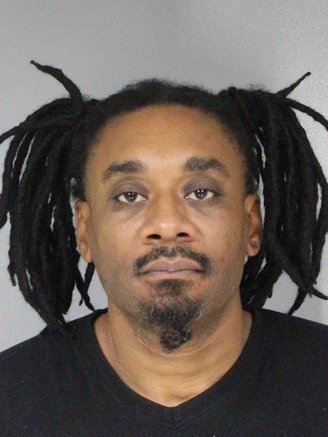
The suspects were later identified as relatives of the victim, 51-year-old Frederick William Lewis and 31-year-old Derrick Anthony Lewis.
While still investigating, deputies were notified that Hoopa Valley Tribal Police officers had located Frederick Lewis at a business in Hoopa. Lewis was taken into custody without incident.
Frederick Lewis was booked into the Humboldt County Correctional Facility on charges of assault with a firearm on a person (PC 245(A)(2)), discharge of a firearm in gross neglect (PC 2463(A)), exhibiting a firearm (PC 417(A)(2)), felon in possession of a firearm (PC 29800(A)(1)) and conspiracy to commit a crime (PC 182(a)(1)).
Derrick Lewis remains outstanding at this time and is wanted on charges of attempted murder. Lewis is described as an American Indian male adult, approximately 5 feet 6 inches tall, 189 pounds with brown hair and brown eyes.
Anyone with information about this case or Derrick Lewis’ whereabouts is encouraged to call the Humboldt County Sheriff’s Office at (707) 445-7251 or the Sheriff’s Office Crime Tip line at (707) 268-2539.
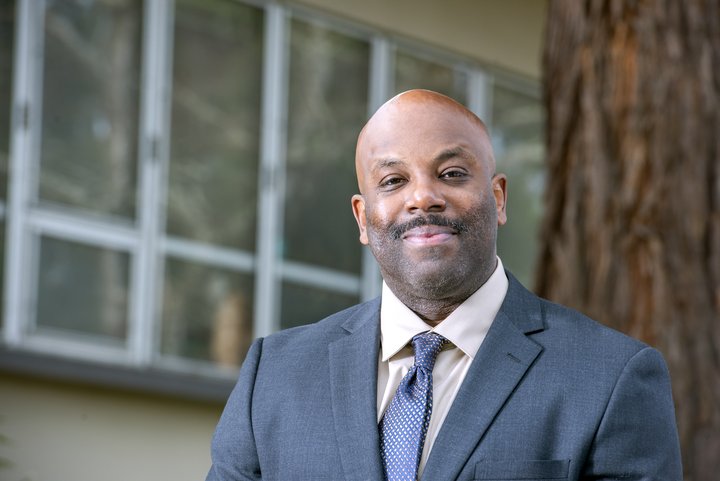
Anthony Morgan is Humboldt State’s newest chief of police and the first African American to hold the position in the University’s history. Arriving in Humboldt with a long career in law enforcement, Morgan is excited about living in the redwoods and working hand-in-hand with the HSU community.
Morgan clocked in for his first day at HSU on February 15. Previously, Morgan served as police chief in Mount Rainier, Maryland and Covington, Virginia after more than 15 years with the police department in the college town of Kalamazoo, Michigan. Last year, Morgan’s department worked closely with protestors to safely hold a Black Lives Matter rally in Mount Rainier along with overseeing food distribution efforts during the pandemic.
When asked about the key to healthy town-and-gown relationships, Morgan stresses that communication is key.
“It’s clear that the community, which students are a big part of, has a strong voice here,” says Morgan. “As a community partner, we’re accountable to meeting everyone’s expectations.”
As the new police chief, Morgan hopes to exceed those expectations. He plans to start by listening.
“It’s so important for law enforcement to listen to the concerns and needs of students, faculty, staff, and neighbors of the University,” says Morgan.
In his first position with a college police department, Morgan is looking forward to working with the student population, known for their social consciousness and activism, and collaborating with police departments across the CSU to ensure best practices for safe and equitable law enforcement.
“It’s an opportunity to have a positive influence on young adults before they go out into the world,” says Morgan. “As a police department, you can really have a positive impact at the University level.”
With three children of his own, Morgan and his wife were attracted to Humboldt by the region’s natural beauty, access to outdoor activities, and reputation for strong community engagement. Since arriving in town a few weeks ago, the Morgan family has enjoyed hiking on scenic trails and exploring the coastline.
“I’m excited to be here, especially during this pivotal moment in law enforcement when students are leading the charge to demand social change,” says Morgan.
As police chief, Morgan looks forward to being inclusive in all the departments’ actions and ensuring that HSU students have a direct line to voice concerns.
“There’s a lot of positive momentum right now,” says Morgan. “I want to keep building off that progress.