

Child Dies Following Reported Medical Emergency at the Carson Mansion Pool
John Ross Ferrara / Monday, July 26, 2021 @ 10:30 a.m. / Emergencies
The Ingomar Club pool. | Google.
A 9-year-old boy has died after reportedly suffering from an unspecified medical emergency in the Ingomar Club pool within the grounds of the Carson Mansion in Eureka on Saturday.
Humboldt Bay Fire responded to the scene on the 100 block of M Street to provide medical aid for an unresponsive person in the pool at approximately 5:11 p.m. The Eureka Police Department was also dispatched to the scene to assist firefighters with the emergency.
Humboldt County Sheriff’s Office spokesperson Samantha Karges told the Outpost that the 9-year-old victim was transported to a local hospital where he was declared dead.
It’s unclear if a cause of death has been determined at this time. No criminal investigation is being conducted in connection to the incident.
BOOKED
Yesterday: 3 felonies, 8 misdemeanors, 0 infractions
JUDGED
Humboldt County Superior Court Calendar: Today
CHP REPORTS
1800 Mm101 N Dn 18.00 (HM office): Traffic Hazard
ELSEWHERE
RHBB: Planning for Sea Level Rise Splits Humboldt Commission
RHBB: Burning Starting Today on Vegetation Management Project West of Redding
MONDAYS WITH MICHAELE: Relay For Life is Back!
LoCO Staff / Monday, July 26, 2021 @ 7:45 a.m. / Mondays With Michaele
Good Monday morning and good health, Humboldt@ Your President of Positivity is out for her morning run along Eureka’s waterfront when, wouldn’t you know it, she runs into some friends who remind her that it’s almost again time for Relay For Life. The main event takes place Aug. 7 at McKinleyville High School starting at 6 p.m.
Time flies! Now you’ve also been reminded!
# # #
Perhaps You’d Like to Explore Previous Mondays With Michaele For Some Reason!
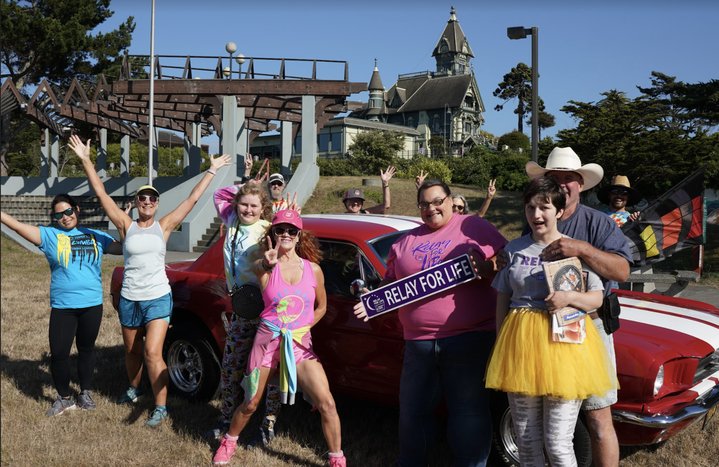
Photo: Patrick Rutherford
Fired: California Bill Aims to Decertify Police for Serious Misconduct
Robert Lewis / Monday, July 26, 2021 @ 7:15 a.m. / Sacramento
On a Wednesday afternoon in April 2018, Gardena police officers got a “triple beeper” over their radios — three high-pitched squawks signaling an emergency. As many as 20 shots reportedly had been fired near a local park.
“That kind of gets you a little adrenaline squirt going,” Gardena Police Officer Michael Robbins would later tell investigators.
In minutes, a 25-year-old Black man, Kenneth Ross Jr., was dead — shot twice and killed by Officer Robbins as he ran past Rowley Park. Police said a gun was found in the dead man’s shorts pocket, and Robbins would later be cleared by local authorities of any wrongdoing.
But the case was far from over.
What happened on April 11, 2018 — which led to immediate cries for police accountability and demonstrations — is now a centerpiece of a bill that is arguably California’s biggest criminal justice proposal this legislative session.
The bill would allow California to decertify police officers for misconduct — effectively stripping them of a license to work in law enforcement and kicking them out of the profession. California is one of only four states in the country without such power. As a result, a number of high-profile cases have been reported over the years where an officer involved in a questionable shooting was allowed to remain on the streets, only to kill again. Officers also have been fired for wrongdoing in one department, then quietly moved on to another agency.
“California is able to revoke the certification or license of bad doctors, bad lawyers, even bad barbers and cosmetologists — you can even recall an elected official — but is unable to decertify police officers who have broken the law and violated public trust,” state Sen. Steven Bradford said at a committee hearing earlier this year. Bradford, a Gardena Democrat who chairs the public safety committee and lives near where the shooting took place, introduced the bill along with Senate President Pro Tem Toni Atkins.
In the Gardena shooting, local law enforcement — as it typically does in such cases — investigated the shooting. The district attorney’s office cleared Robbins of wrongdoing because it said the officer believed the man running away from him was armed and might reasonably have feared for his life
But criminal justice reform advocates say for too long police accountability has been solely in the hands of local agencies — police policing themselves. They question if the man Robbins shot in the back was truly a threat running away and point out it was the officer’s fourth shooting, suggesting he was too quick to use deadly force.
“This nation has cried out — especially in Black and brown communities — for change.”
— State Sen. Stephen Bradford
Bradford’s bill is the latest effort to break through the wall of legal protections built up over the years that critics say shield California law enforcement officers from accountability. CalMatters was only able to obtain internal police reports and videos regarding the Gardena shooting because a 2018 law for the first time opened certain law enforcement records, including files pertaining to use of deadly force and some misconduct. Another law that went into effect this year requires the state attorney general’s office to handle investigations regarding police killings of unarmed civilians.
“This nation has cried out — especially in Black and brown communities — for change,” Bradford told CalMatters, ticking off a list of high-profile police killings and use of force incidents from Stephon Clark in Sacramento to Oscar Grant in Oakland to Rodney King in Los Angeles. “It’s definitely overdue.”
But there’s still work to be done, he added.
“It’s one thing to pass legislation. It’s another to change the mindset and internal training and operations of law enforcement,” Bradford said.
And his bill is far from certain, as police associations and chiefs from around the state have signaled their opposition.
“No one wants to see bad officers removed from law enforcement more than good officers do,” said Brian Marvel, president of the Peace Officers Research Association of California, in a statement to CalMatters.
“When an officer acts in a way that is grossly inconsistent with the missions and goals of our profession, it tarnishes the badge and the great work being done day in and day out by officers keeping our families and communities safe.”
But he added that the bill as written creates a “biased and unclear process for revoking an officer’s license.”
“No one wants to see bad officers removed from law enforcement more than good officers do.”
— Brian Marvel, president of Peace Officers Research Association of California
The bill would create a new division within the state’s Commission on Peace Officer Standards and Training to investigate or review possible misconduct. A nine-member advisory board would consider the evidence and recommend whether to strip an officer of certification. The majority of that board would be civilians without policing experience, including four members who would be experts on “police accountability” and two who either personally suffered from an officer’s use of force or lost a loved one to such an incident. The commission would have final say on decertification, but language in the bill suggests they’d be expected to adopt the advisory board’s recommendations when reasonably supported by evidence.
As for what constitutes wrongdoing that could cost an officer their career, it’s unclear. The bill includes categories such as sexual assault and dishonesty but would leave it to the commission to develop a full definition of “serious misconduct” that also includes broader areas such as “abuse of power” and “physical abuse.”
“We all want to see a fair and transparent decertification system put in place that permanently removes officers for serious misconduct, but even with recent amendments (the bill) fails to create a balanced and even process,” said Abdul Pridgen, president of the California Police Chiefs Association, in an email to CalMatters. “However, we remain committed to continuing our work with the Governor’s office, legislative leaders, and Senator Bradford to address our remaining concerns and establish a decertification process we can all have faith in.”
Among the sticking points for the association is the makeup of the advisory board, the degree to which that board’s recommendations are binding and what will happen if a local department exonerates an officer but the state commission finds wrongdoing.
A decertification bill failed last session. The current bill made it out of the Senate but not without changes. The initial version had made it easier for civilians to sue officers for misconduct, but that language is largely gone.
More recent amendments reduce the role of the advisory board. Bradford’s spokesperson said those changes were made after working with the governor’s office and key lawmakers. The original bill gave the advisory board the power to direct the commission to investigate certain officers. The new version, however, simply says the board can recommend investigations. It also drops a licensing fee on officers.
“They’re trying to duck accountability time and time again.”
— Sheila Bates, Black Lives Matter Los Angeles
Police unions have been donating to some Democrat lawmakers who could play a role in forcing further changes — news that prompted a sharp tweet from Sen. Bradford accusing opponents of trying to “kill solid policy.”
“If you can’t win on the merit of your argument, you resort to paying off legislators?? SHAMEFUL, BUT NOT SURPRISING!!,” he tweeted.
Advocates said they’re concerned powerful police associations will further weaken the bill.
“They’re trying to duck accountability time and time again,” said Sheila Bates, a member of the Black Lives Matter Los Angeles policy team and part of the coalition co-sponsoring the bill. “Had (Gardena Police Officer)Michael Robbins been held accountable the first, second, or third time when he shot somebody, then Kenneth Ross Jr. might still be alive.”
Records from the shooting investigation show that as Officer Robbins got near the scene he saw other officers arriving and Ross, who matched the suspect’s description, running away. Robbins parked, grabbed his assault rifle and shouted for Ross to stop.
“You’re going to get shot,” Robbins yelled.
Video from his body-worn camera shows what happened next.
Standing behind the engine block of his squad car for cover, the barrel of Robbins’ rifle tracks Ross’ movement. Just after Ross crosses in front of Robbins’ position, maybe 100 feet away, the officer gives the trigger two quick taps. (“I gave him…a double tap that was just amazing, training just kicked in,” he told investigators later.) Ross falls to the ground dead.
It was the fourth time Robbins shot at someone in his nearly 30-year career, although his first shooting since the early 2000’s, he later said.
The Gardena Police Department, which is currently facing a lawsuit over the shooting, declined an interview request. Attorneys representing the officer also did not comment for this story.
As for Robbins, the pending decertification bill likely wouldn’t affect him. He retired from the Gardena Police Department in July 2020 with the rank of sergeant, records show. But if future officers are kicked out of the profession, it will be because of a bill named after the man he killed.
Next month, lawmakers will be taking up the Kenneth Ross Jr. Police Decertification Act of 2021.
###
CALmatters.org is a nonprofit, nonpartisan media venture explaining California policies and politics.
Why Are Key California Affordable Housing Bills Bottled Up?
Manuela Tobias / Monday, July 26, 2021 @ 7:01 a.m. / Sacramento

Construction workers break down dirt at an affordable housing job site in Long Beach, on July 22, 2021. Photo by Pablo Unzueta for CalMatters.
Encouraging housing to be built in place of abandoned big box stores and strip malls. Making it easier to build student housing near community colleges. Establishing an authority in Los Angeles to finance affordable housing.
These proposals all promise to ease California’s ever-worsening housing crisis by adding or preserving the already-scarce supply.
But these bills also appear to be dead in the water.
They missed a key July 14 deadline to be heard in a policy committee in the state Assembly before lawmakers went on a month-long summer recess until mid-August. It’s still possible to revive the measures before the session ends in mid-September, but doing so would require a rules waiver — and political willpower.
So if lawmakers have stated time and again that easing the state’s housing affordability crisis is their top priority, and these are some of the solutions, what’s the hold up?
As often happens in the Legislature, it’s impossible to say for certain, and key players remain tight-lipped. But several observers of the housing debate noted a significant similarity among the bills: They all require that a portion of the workforce that builds the housing be graduates of mostly union-run apprenticeship programs.
That union labor requirement has proven to be a deal-breaker or deal-maker for several housing bills already: The provision made it into bills and allowed them to survive so far. Or it was excluded and resulted in strong opposition and a bill’s demise, including one last year to build affordable housing in church parking lots, and another retail-to-housing conversion effort similar to the bill now in limbo.
The requirement is a source of tension between the powerful State Building and Construction Trades Council — which represents more than 450,000 California construction workers and wants more jobs for its members — and affordable housing developers, who are hoping to build many of the proposed projects.
“This question of good jobs versus affordable housing is a false question,” said Lola Smallwood Cuevas, a project director at the UCLA Labor Center. “It’s a question that has been living for 15 years that cannot afford to live on.”
Negotiations between the two groups hit a wall in January; CalMatters reported in June that developers hoped legislative leaders would help break the stalemate.
Instead, Assembly Speaker Anthony Rendon, a Lakewood Democrat, is standing up to the Trade Council’s hard-nosed approach by holding up the bills, according to several lawmakers and legislative staffers, speaking on the condition of anonymity because of the sensitivity of the negotiations.
“This question of good jobs versus affordable housing is a false question.”
— Lola Smallwood Cuevas, a project director at the UCLA Labor Center
Two of the bills in limbo are in the housing package proposed by Senate leader Toni Atkins, a San Diego Democrat: Senate Bill 6 to allow housing in commercial zones and SB 330 to create workforce and student housing in community college districts. Several other bills in the Senate package also include the union language, including SB 7, which Gov. Gavin Newsom signed into law to expedite environmental review on larger projects, including affordable housing.
Two other high-profile bills in the Atkins package — SB 9 to allow duplexes and lot splits in areas zoned for single-family homes and SB 10 to let cities authorize more dense housing development near transit — aren’t affected by the labor provision because they only cover smaller projects.
Sources said that talks are ongoing between Rendon, Atkins and the Building and Trades Council, known as “the Trades.”
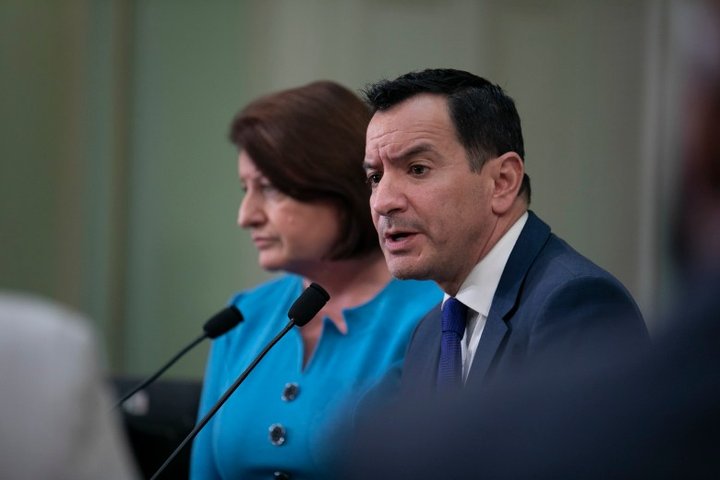
Assembly Speaker Anthony Rendon gives remarks with Senate leader Toni Atkins by his side following Gov. Newsom’s 2020 State of the State address. Photo by Anne Wernikoff, CalMatters
Both Rendon and Atkins declined to comment for this story. Trades spokesperson Erin Lehane said she knew nothing about a conflict with leadership over the labor language, and her group had not been part of any discussions.
“I’ve really no idea,” Lehane said. “Nobody’s told me that there’s any issues with these bills.”
But the holdup could be about more than just policy. Several sources said the Trades got sideways with Rendon when they funded attack ads in 2018 against Assemblymember Cristina Garcia, a Bell Gardens Democrat with whom they had also sparred over energy policy. The Trades, along with affiliated local unions, has given more than $90 million to state candidates and campaigns since 2015
Bill Wong, a senior political adviser to Rendon, said it’s possible those tensions have lingered: “It’s like when couples argue about things from the past not relevant to the argument at hand. I think it’s human nature.”
Wong, however, warned against reading too much into the missed deadline. He said contentious bills typically make it unscathed through the chamber where they were introduced, while the more difficult policy debates take place in the other house before they get to the governor’s desk.
“It’s the nature of negotiations,” he said. “We’ve got approximately four to six weeks left in session. You know, if I’m the Trades, I want to get the best deal I can, which means, if I cut a deal today, and my members are saying, ‘Well you had six weeks to get a better deal, why didn’t you go all the way to the bitter end?’ ”
Trades Council President Robbie Hunter, who has been at the helm of these discussions, announced his retirement at the end of June, shortly after the CalMatters story and a Politico story about lawmakers’ frustration with his negotiating tactics.
But Lehane said that Hunter could stay on the job through the end of the year and laughed off a question about the timing: “Everybody was looking for so much reading on it. It was funny. I think it surprised a lot of people but it really is just, he wants to have some time for himself.”
What’s at stake?
At issue is the bills’ “skilled and trained” language that states at least a third of the employees in each trade (plumbers, bricklayers, etc.) working at a job site must be graduates of an apprenticeship program. That mostly benefits the Trades’ members, as unions run about 90% of such apprenticeships.
The council is pushing the requirement because they say non-union construction workers barely float above the poverty line while graduates of apprenticeship programs earn higher wages over the course of their careers.
Affordable housing developers, on the other side, say a tiny fraction of construction workers are unionized — so the requirement would constrain an already-tight labor pool and raise costs. Besides, they argue, many state laws already require that they pay union-level wages, unlike market-rate developers.
It’s a chicken-and-egg scenario: Unions say they can’t recruit more members through apprenticeships if they can’t guarantee jobs, but developers say they can’t build housing if there aren’t enough workers.

Apprentices sort through wire ropes called chokers at the Ironworkers Local Union 377 training center in Benicia on June 20, 2021. Photo by Anne Wernikoff, CalMatters
Lehane insisted the “skilled and trained” language wasn’t a problem, pointing to the bill Newsom signed into law and Assembly Bill 777, which would allow the state to transfer land in Sacramento to UC Davis to construct much-needed affordable housing for students. The labor requirement was added to the bill at the last minute, in the Senate.
Assemblymember Kevin McCarty, a Sacramento Democrat and the bill’s author, attributed the timing of the amendment to “due diligence and evaluating what this language would mean as far as trying to find contractors to do work here.”
“I would think that in some of the other bills there’s questions as far as the impact,” he said. “But in my case here, I came to the undeniable conclusion that this language will not hold back what we’re trying to accomplish at UC Davis for increased student housing at the Med Center campus.”
Mystery on L.A bill
Another bill in limbo that has the union requirement, SB 679, would establish an authority to finance affordable housing in Los Angeles.
According to the most recent state data, there’s about one unionized construction worker for every three needed affordable housing units in Los Angeles County. That ratio matters because research shows it takes roughly one worker to build each unit of housing. And while the goal is to build up the workforce over time, mostly union members would be immediately eligible to start building under these bills.
Under state law, L.A. County must plan for 340,000 housing units by 2030 that are affordable to low- and very low-income households.
“It took us a little bit to realize that the bill was being held in a sort of purgatory,” said Tommy Newman, a senior director at the nonprofit United Way, which sponsored the bill. “We assume that the reason relates to the larger debate around labor requirements.”
The bill’s author, Democratic state Sen. Sydney Kamlager, who represents most of downtown and South Los Angeles, said the bill checks all the boxes to pass. It has 10 co-authors in the Legislature; it is a top priority for the 39-member Los Angeles delegation; and it has support from Bay Area legislators, who don’t typically see eye to eye with their Los Angeles counterparts on housing issues.
“So, there’s no tension there,” said Kamlager, who leads the L.A. delegation. Instead, she pointed to a Los Angeles Times editorial that highlights the same conflict with the Trades.
“I do think that it is time for us to have more honest and deliberate conversations about what our workforce looks like in Los Angeles.”
— State Sen. Sydney Kamlager, a Los Angeles Democrat
If the “skilled and trained” provision really is the problem, she said, it seems irrelevant, because the bill is about creating an agency to finance housing projects — not build them. The new agency, she said, “won’t have any trained workers, so I don’t know if it makes sense to have that kind of detail in this bill.”
“But I do think that it is time for us to have more honest and deliberate conversations about what our workforce looks like in Los Angeles,” she added. “What experience and training do they currently have and how do we get folks into these kinds of jobs? What are all the different levers and mechanisms we should be tapping into and using? But this bill is not that bill.”
Maybe it should be, said UCLA’s Smallwood Cuevas, who is also director of the Los Angeles Black Worker Center.
“We have to build on targeted local hire and apprenticeship, and overlay that with very intentional language and structure that ensures that those communities most marginalized get access,” she said.
She pointed out that while Black people comprise less than 8% of Los Angeles residents, they are 34% of the homeless population. She believes the bill should help people on the verge of homelessness get into construction of affordable housing so that they can afford rent and build a career.
Kamlager said she would be open to whatever is necessary to move the bill forward, as long as stakeholders are involved in the discussions. While she hasn’t been involved so far, she is counting on Atkins: “I am putting my faith in her.”
###
CALmatters.org is a nonprofit, nonpartisan media venture explaining California policies and politics.
OBITUARY: Joseph ‘Les’ Miranda, 1934-2021
LoCO Staff / Monday, July 26, 2021 @ 6:56 a.m. / Obits
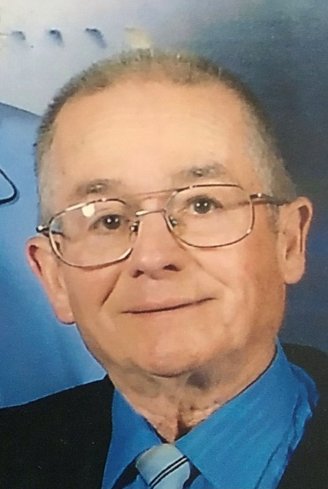
With
sadness, we regretfully announce the death of our dad, Joseph “Les”
Miranda of Rio Dell. He passed away peacefully with his family at his
bedside on July 17, 2021 at the age of 87.
Les was born in Ferndale on April 4, 1934 and was raised in Humboldt County. He enlisted in the Navy and was stationed at Pearl Harbor, Hawaii where he met and married Lorraine Gomes in 1955. After receiving an honorable discharge from the Navy, he moved back to Humboldt County where he resided in Rio Dell/Scotia and raised three daughters.
Les was a proud disabled Navy Veteran and a devoted Catholic at St Patrick’s Church in Scotia. Les enjoyed volunteering at the Senior Center in Rio Dell and the local food banks. He was proud of his Portuguese heritage and enjoyed working at the Portuguese celebrations in Ferndale.
Les was blessed with a green thumb. He was well known for his fruit trees and vegetable garden, which he proudly shared with family and friends. He also enjoyed many activities such as deer hunting, fishing, and traveling across the United States. One of his fondest memories was time he spent in Alaska fishing for salmon.
Les is survived by his three daughters – Debbie Espinola, Los Banos, Calif,; Laureen O’Connell (Roger) Danville, Calif.; Marie Miranda, San Ramon, Calif. He is also survived by his grandchildren Krisena, Keena, Michelle, and Joseph; and great-grandchildren, Hailey, Kennedy, Megan, Addison, Destiny, and Danielle.
Les is preceded in death by Lorraine Miranda and son-in-law Mike Espinola.
Viewing will be held from 4 p.m. to 6 p.m. on Monday, August 2, 2021 followed by the recitation of the rosary at 6 p.m. at Gobles Fortuna Mortuary. Mass will be held at Saint Joseph Catholic Church in Fortuna at 2 p.m. on August 3, 2021.
Les will be laid to rest at San Joaquin National Cemetery in Santa Nella on Friday August 6, 2021 at 1 p.m.
In lieu of flowers the family requests donations made to Disabled American Veterans (DAV.Org) Hospice of Humboldt, 3327 Timber Falls Court, Eureka, CA 95503 or American Cancer Society, 317 I St. Eureka, CA 95501
The family would like to thank Redwood Memorial Hospital, Veterans Clinic in Eureka and Hospice of Humboldt County for the wonderful care provided to our dad. Special thanks to Rebecca Morris from VA in Eureka and his care provider Cindy.
###
The obituary above was submitted on behalf of Les Miranda’s loved ones. The Lost Coast Outpost runs obituaries of Humboldt County residents at no charge. See guidelines here.
OBITUARY: Barbara Jean Slade, 1931-2021
LoCO Staff / Monday, July 26, 2021 @ 6:56 a.m. / Obits
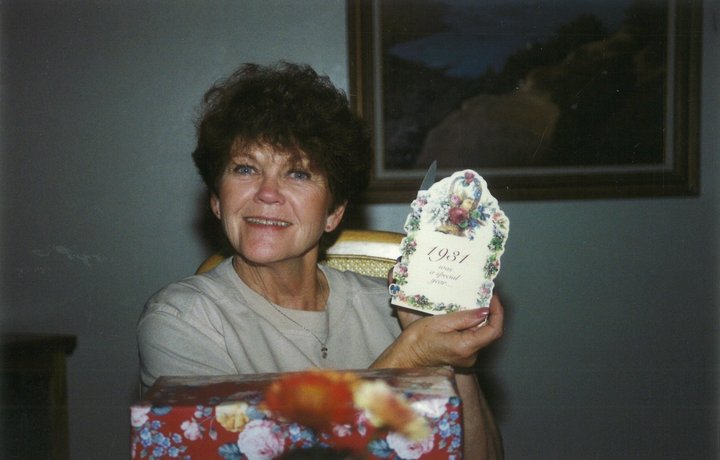
On July 19, 2021, Barbara Jean Slade passed away peacefully at the age of 89. Barbara was born on September 11, 1931, to Harriet and Gilbert Shirley in Eureka. When she was a teenager she met the love of her life, Milton, at Redwood Acres skating rink. The young couple eloped and married on February 14, 1948, in Reno. Against all odds, Barb and Milt were together for 43 years until his death in 1992. Barb and Milt spent their married life in Eureka, where they raised their three daughters, Judy, Vicki and Shari.
Because she married so young, Barbara never finished high school and at the age of 35 entered college, earning her bachelor’s degree and high school teaching credential in 1972. After her student teaching she was assigned to Zoe Barnum High School where she spent her entire career teaching English, journalism and photography. She was head of the school yearbook and received permission from Walt Disney Studios to use the Tasmanian Devil logo as the school mascot on the yearbook cover. Mom was a dedicated teacher and many former students acknowledge and remember how much they learned from her.
Mom enjoyed her books, her roses and her wine. She loved adventure and after Milt’s death she traveled to England, Ireland, the Panama Canal, Alaska, Hawaii and the east coast. She had a passion for reading, photography and her grandchildren. Her annual homemade calendars were something that everyone looked forward to receiving. She belonged to several organizations and clubs including the Retired Teachers Association, two birthday clubs, book club and the pour group. Her last wishes were, “Let it be known that I loved all of my children, grandchildren and friends.”
Barbara was proceeded in death by her parents, her step-mother Lee Shirley, her loving husband, Milt, her sister Valerie Bognuda and her step-sister Connie Ghisetti. She is survived by her children: Judy Bertain (John), Vicki Butler (Vaughn), and Shari Doers; her grandchildren: Jeffrey Bertain, April Hatherill, Petria Black (Donovan), and Angie Slade; her great-grandchildren: Zaine and Brody Hatherill, Marrah Wong and Jaddah and Niko Black, Micah Newman (Dillan) and Natalie and Isaac Schlueter; great-great grandchild: Dean Newman; nieces and nephews, Gary Bognuda (Marci), Kevin Bognuda (Elisa), Karen Argo (Scott), Brian Bognuda, Troy and Darren Ghisetti, Kathy and Geri. She also leaves behind many extended family members and friends, including special friend and caregiver, Jessica Vulich.
Barbara lived a long and full life. Burial will be private at Ocean View Cemetery, next to her beloved Milt. A Celebration of Life is being planned for a later date.
Donations in Barbara’s name may be made to the Humboldt County Alzheimer’s Asssociation or your favorite charity.
###
The obituary above was submitted on behalf of Barbara Slade’s loved ones. The Lost Coast Outpost runs obituaries of Humboldt County residents at no charge. See guidelines here.
(AUDIO) HUMBOLDT HOLDING UP: A River May Soon Not Run Through It? Kayak and Fishing Guide Eric Stockwell On the Health of Humboldt’s Waterways
LoCO Staff / Sunday, July 25, 2021 @ 9 a.m. / Humboldt Holding Up

Eric Stockwell, navigator of waterways | Photo: Dave Bradfield
(AUDIO) Eric Stockwell is Holding Up!
California’s historic drought and increased water demands are taking its toll on our rivers and its bumming Eric Stockwell out. As a kayak and fishing tour operator with Loleta Eric’s Guide Service, Stockwell regularly gets up close and personal with our local waterways, the Eel River in particular, and he’s very concerned about the deteriorating situation he’s witnessing.
“It’s so hard to watch the slow death of the Eel and the continued decline of its fisheries,” Stockwell wrote in a recent post discussing this year’s low river flows. On this week’s episode of Humboldt Holding Up, the Lost Coast Outpost‘s somehow-still-operational podcast experiment, Stockwell shares about the distressing conditions he’s seeing locally and why he believes a culture shift toward a better understanding of our natural world is necessary to preserve our environmental resources going forward.
Click the player above or — an even better option, if you ask us — head on over to Apple Podcasts to hear Stockwell’s chat with LoCO’s Stephanie McGeary and Andrew Goff. And be sure to check out previous episodes below.
Listen Local! Subscribe to Humboldt Holding Up on iTunes!
- #59 Eureka City Councilmember Natalie Arroyo
- #58 Wiyot Cultural Center Manager Marnie Atkins
- #57 Humboldt County Growers’ Alliance’s Natalynne DeLapp
- #56 RREDC Executive Director Gregg Foster
- #55 Dell’Arte’s Michael Fields
- #54 Llama Wrangler Keagan Trischum
- #53 Crabs President David Sharp
- #52 Ferndale Organic Dairy Farmers Kristina Radelfinger and Dorice Miranda
- #51 Former Arcata Mayor Alex Stillman
- #50 Cooperation Humboldt’s David Cobb
- #49 Ink People Center for the Arts’ Libby Maynard
- #48 Humboldt Bay Social Co-Owner Amy Cirincione O’Connor
- #47 Musician Lyndsey Battle
- #46 Mad River Brewing CEO Linda Cooley
- #45 LoCO Editor Hank Sims
- #44 Humboldt Republic’s Jason Brandi
- #43 Table Bluff Farmer Hannah Eisloeffel
- #42 Logger Bar Owner Kate Martin
- #41 Teacher/Rapper Zach “Zigzilla” Lehner
- #40 Madaket Captain “Zippo” Libby Tonning
- #39 Event Planner Alegria Sita
- #38 Food For People’s Anne Holcomb
- #37 AHHA President Nezzie Wade
- #36 Performance Artist Noël August/Tucker Noir
- #35 Eureka Mayor Susan Seaman
- #34 Eagle House Owner Jennifer Metz
- #33 Absynth Quartet Drummer Mike “Tofu” Schwartz
- #32 HACHR Executive Director Lasara Firefox Allen
- #31 Alchemy Distiller Owner Amy Bohner
- #30 Eureka City Councilmember Kati Moulton
- #29 Eureka City Councilmember Scott Bauer
- #28 Ungraceful Ager Barry Evans
- #27 Arcata City Councilmember Sofia Pereira
- #26 HumBrews Music Booker Laurel Weston
- #25 Eureka City Councilmember Kim Bergel
- #24 Film Commission’s Cassandra Hesseltine and Nate Adams
- #23 Marble Maker Topher Reynolds
- #22 Arcata Playhouse Director Jacqueline Dandeneau
- #21 Humboldt Political Junkie Eric Kirk
- #20 Rio Dell Mayor Debra Garnes
- #19 Second District Supervisor Estelle Fennell
- #18 Arcata Food Aficionado Jada Calypso Brotman
- #17 Body Piercer Jackie Silva
- #16 Dick Taylor Chocolate’s Adam Dick
- #15 FUHS Teachers Mark Thom and Inma Thompson
- #14 Eureka City Manager Miles Slattery
- #13 Savage Henry Co-Founder Chris Durant
- #12 Eureka Street Art Festival Organizer Jenna Catsos
- #11 SCRAP Humboldt Founder Tibora Bea
- #10 Gym Owner Tyler Parr
- #9 Six Rivers Brewery Co-Owner Meredith Maier
- #8 Multicultural Skincare Therapist Levia Love
- #7 Annie’s Cambodian Server and Social Worker Joshua Coppock
- #6 Eureka City Councilmember Austin Allison
- #5 HSU Professor Deidre Pike
- #4 Pastor Bethany Cseh
- #3 Singer/Songwriter Chris Parreira
- #2 Eureka City Councilmember Leslie Castellano
- #1 Arcata City Councilmember Paul Pitino


