

A Serious Man: Can Kevin Faulconer Run for Governor Without the Gimmicks?
Ben Christopher / Monday, June 14, 2021 @ 7:26 a.m. / Sacramento
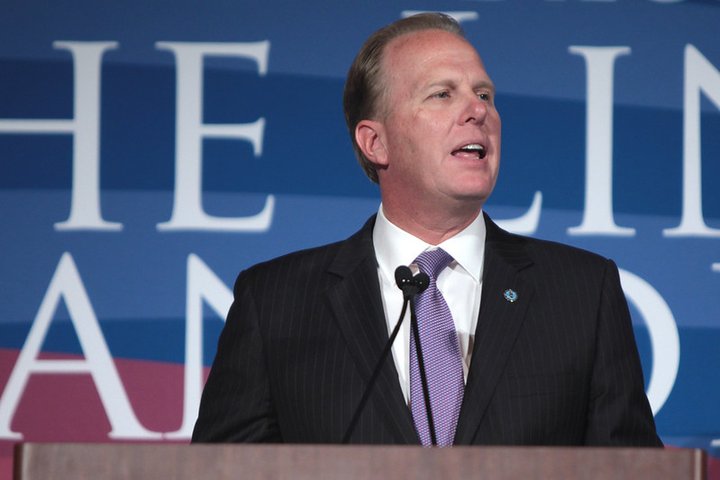
Then-mayor Kevin Faulconer speaking at the San Diego County Republican Party’s 2015 Lincoln Reagan Dinner in San Diego. Photo: Gage Skidmore. Creative Commons license.
###
Kevin Faulconer is not the guy with the bear.
You’re thinking of John Cox, the mild-mannered Republican and unsuccessful 2018 gubernatorial candidate who spent much of May palling around the state with a 1,000-pound Kodiak named Tag, hoping to siphon off some of the bear’s starpower in his effort to unseat Gov. Gavin Newsom in the all-but-certain recall election that could be as soon as September.
Faulconer is also not the Kardashian-adjacent, Olympian-turned-reality TV star whose campaign highlights include gabbing with Sean Hannity, selling merch and claiming, despite documented evidence, that she didn’t vote in the last election. That, of course, would be Caitlyn Jenner.
Nor is he the get-rich-quick YouTube star who insists he is “not a stalker” (that’s a different Kevin — Kevin “Meet Kevin” Paffrath). Nor the pink Corvette-driving 1970s billboard model (Angelyne). Nor the porn star (Mary Carey).
No, Faulconer is the other one.
A Republican former mayor of San Diego, he governed that once Republican but now reliably blue coastal city as a pro-immigrant, climate-change-believing, bilingual urbanist. He touts endorsements from the traditional quarters of state GOP leadership.
And he really wants you to take the recall election seriously.
So far, Faulconer has tried to make waves in a way that almost seems quaint in 2021: by releasing policy proposals.
Last month, his campaign garnered some national media buzz when he announced a plan to nix state income taxes on individuals making less than $50,000 and joint filers earning as much as $100,000.
If you missed that announcement, that’s probably because he rolled it out the same week that Newsom was on his statewide budget tour grabbing headlines with various plans to goose the state’s economy, including a proposal to send more cash directly to lower-income Californians.
The next week, Faulconer rolled out another plan, this one to exempt military retirement income from state income taxes. That, too, got a little bit of play on Fox News, though nothing to rival the public attention showered on Jenner the human or Tag the bear.
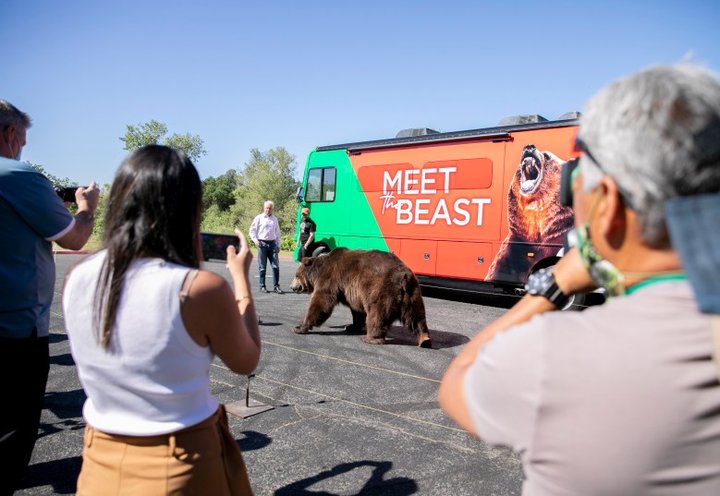
John Cox, a Republican candidate for governor, kicks off his “Meet the Beast” bus tour on May 4, 2021 in Sacramento. Photo by Anne Wernikoff, CalMatters
No one should be surprised that the 2021 California recall is, so far, running high on spectacle. The electoral ousting of Democratic Gov. Gray Davis in 2003 was also a bonanza of oddball candidates and attention-grabbing stunts.
Even so, Faulconer insists he’s “getting significant traction” with his policy proposals, arguing that — never mind the sensational media coverage — earnest conversations about policy are what many voters crave.
He notes his track record pushing for more development to boost San Diego’s housing supply, opening up shelters and banning people from sleeping on the sidewalks. He points to San Diego’s 2020 budget, which increased funding to the police amid calls from the left to defund the department. He references his biography as evidence of his commitment to good, nonpartisan governance: His father was assistant city manager of Oxnard, his mother a city college professor and both were Democrats. Unlike Cox and Jenner, he points to his experience governing: He served on San Diego’s city council for 12 years before running for mayor. And he highlights his ability to win over voters outside his party: In 2014, he won the mayor’s race by 6 percentage points and in 2016, he was easily reelected with 57% of the vote.
“This election calls for a serious candidate with serious policy proposals,” he said in an interview.
“Serious” is but one way to describe Faulconer’s earnest, pragmatic approach to politics. There’s also “calm,” “mild-mannered,” “genial,” “cautious” and “not the loudest guy in the room.” This is the man, after all, whose 2013 bid for mayor featured the slogan: “There’s no Democrat or Republican way to fill a pothole.”
Thus the other adjective that’s sometimes used to describe the former mayor: “boring.”
“His advantage is that he’s a boring guy who at least has an agenda,” said Carl Luna, a political science professor at San Diego Mesa College and a longtime watcher of local politics. “Whereas Cox is a boring guy with a bear.”
“This election calls for a serious candidate with serious policy proposals.”
— Kevin Faulconer, Republican candidate for governor
After months of lockdowns, political tumult and economic calamity, boring could be just what California voters want. Or not. Even some of Faulconer’s allies still aren’t sure he’s wise to have jumped into the recall race.
“Kevin has the ability to break out as the sober responsible person who’s not using gimmicks, who is substantive,” said Jason Cabel Roe, Faulconer’s longtime political advisor in San Diego politics who has since moved to Michigan, where he serves as the state GOP’s executive director.
Should his recall campaign prove to be a bust, Faulconer plans to run for governor during the next regularly scheduled election in 2022. But, Roe said: “The whole circus of the recall diminishes everyone that’s involved.”
The ‘good luck kid’
There’s an inevitable logic to Faulconer’s campaign. California political consultants have been predicting it for years.
As the former mayor of California’s second largest city, he is one of the few Republicans who comes close to resembling a rising star.
In theory, he’s also the kind of politician who could appeal to voters outside his own party. He supports immigration reform, believes in the science of climate change, speaks Spanish and — until voting for him in the 2020 election — distanced himself from the nativist politics and incendiary personage of Donald Trump.
“His advantage is that he’s a boring guy who at least has an agenda.”
— Carl Luna, a political science professor at San Diego Mesa College
In 2019, New Way California, a cadre of the California GOP’s few remaining centrists, held a summit a few blocks from the state Capitol. Faulconer, one of the headline speakers, encouraged California’s GOP to “not be a carbon copy” of the national party remade in Trump’s image.
In a state where registered Democratic voters outnumber Republicans nearly two-to-one and where a Republican hasn’t won a statewide race since 2006, Faulconer’s centrist cred makes him an obvious choice for strategically minded Republicans.
A Faulconer campaign memo, circulated to reporters earlier this year, said as much.
The “secret” to Faulconer’s success was that he is not “perceived as far-right by Democrats and Independents,” he is running on a “fiscal-conservative message, promising to be a barrier to tax-and-spend” Democratic lawmakers and he is “libertarian on social issues,” the memo read.
“He wasn’t a ‘build the wall’ guy, so I think he takes a lot of the kind of lazy hits that the Democrats have used for years off the table,” said Roe.
In a typical election, that relative moderation could very well hurt a candidate as much as it might help. It’s a perennial problem that statewide Republicans face: To win a spot in the general election, candidates often have to lock up the support of the party’s Trump-supporting, conservative diehards. But doing so can disqualify a candidate with many of the Democratic voters a candidate needs to win statewide.
This year could be different. That’s because of the weird way that California holds its recall elections — nixing a two-step primary process and simply handing the governorship to the candidate who gets the most votes in the first round, if a majority of voters decide to kick out Newsom. That could give a candidate like Faulconer the rare opportunity to run a consistent up-the-middle campaign.
“You don’t have to do these two stages of running to the right and then wriggling back to the center,” said UC San Diego political scientist Thad Kousser. The recall hands candidates a “get out of polarization free card.”
Faulconer has played that card before. In his first city council race and in his two successful mayoral runs, he repeatedly benefited from Democratic scandal and a fragmented left-of-center vote, and ran less on his partisan brand and more on pledges to compromise and adopt “common sense” solutions.
The recall election could be “another one of these perfect storms that has marked his career,” said Luna. “He’s either the ‘accidental candidate’ or the ‘good luck kid’ and maybe that will be enough to take him into Sacramento.”
The most recent polls don’t have any perfect storms in the forecast. Last month, a survey from the Public Policy Institute of California found that 57% of likely voters did not support ousting Newsom. The financial figures aren’t much more encouraging. So far, the committee fighting the recall has outraised the pro-recall committees more than three-fold, according to a CalMatters tracker.
But if a majority of voters turn on Newsom — and that’s a big if — Faulconer could be next in line. Though Cox has pulled $7.7 million into his 2021 and 2022 campaign committees, most of that has come from his own wallet. With $2.4 million, Faulconer has dramatically outraised the rest of the competition, including Jenner and former member of Congress Doug Ose.
Another statewide poll from May, conducted by UC Berkeley’s Institute of Governmental Studies, asked voters if they were inclined to support any of the four highest profile Republicans running to replace Newsom so far. The good news for Faulconer is that he was neck-and-neck with Cox for first place.
The bad news: First place was still only 22% of voters (Jenner came last with 6%).
A late embrace of Trump
Some of Faulconer’s critics say it’s too late for him to portray himself as the bipartisan problem-solver.
In recent weeks, Faulconer has been making the rounds of right-wing media to shore up his bonafides with conservative voters in California and conservative donors everywhere. In late May, Faulconer was on Ruthless, the podcast co-hosted by U.S. Senate Republican leader Mitch McConnell’s former chief of staff, where he bemoaned a state government “captive to the far-left.” A week later he spoke to conservative pundit and YouTuber Ben Shapiro.
“The media have been basically ignoring your candidacy…they are focused mainly on attempting to downplay the recall itself by focusing in on candidates who are, frankly, I think, patently unserious,” Shapiro said during the interview.
“I think we’re always going to have to deal with that kind of bias,” Faulconer responded. But “we are a serious campaign with serious plans.”
What’s likely to be a bigger liability for Faulconer is his apparent warming to the former president whom California’s voters rejected last November by nearly 30 percentage points.
After the national GOP’s nomination of Trump in 2016, Faulconer, having just won his own re-election as mayor, told a reporter that he “could never vote for Trump” and found his “divisive rhetoric” to be “unacceptable.”
Four years later, Faulconer said he changed his mind, noting that Trump was “going to be best for our economy and to keep folks employed.” He said he did not revise that opinion after the storming of the U.S. Capitol on Jan. 6 and Trump’s subsequent second impeachment. “I still feel like from an economic standpoint, there was a very clear difference in the presidential race,” Faulconer said.
Mike Madrid, a longtime political consultant who has been one of the former president’s sharpest critics within the Republican party, called Faulconer’s belated embrace of Trump a “huge tactical blunder.”
“I think he will personally regret it because that’s not who he is,” said Madrid. “Though to give the guy some grace, he’s kind of damned if he does and damned if he doesn’t.
“That’s the conundrum of Republicans who want to govern.”
Faulconer, who has spent his entire political career in increasingly Democratic San Diego successfully resisting such pigeonholing, said he is confident state voters are willing to put aside their loyalties to one party or another.
“I think people are less concerned whether you have an ‘R’ or a ‘D’ next to your name,” he told CalMatters. “This campaign is a referendum on Gavin Newsom’s failures, and that’s what voters are focused on.”
The governor and his electoral defenders are hoping instead for a referendum on partisan identity. Hence the name of the political action committee that has so far raked in nearly $15 million to back the governor: “Stop the Republican Recall.”
That’s a good bet, said Madrid.
“With the exception of the Schwarzenegger years, the trend line for the Republican vote has been remarkably consistent,” he said. “Gavin (Newsom) just has to partisan-ize it.”
Even the most serious of Republican candidates will have a hard time overcoming that.
###
CALmatters.org is a nonprofit, nonpartisan media venture explaining California policies and politics.
BOOKED
Today: 7 felonies, 9 misdemeanors, 0 infractions
JUDGED
Humboldt County Superior Court Calendar: Today
CHP REPORTS
Us101 N / Metropolitan Rd (HM office): Traffic Hazard
1 Mm162 E Men R0.00 (HM office): Assist with Construction
ELSEWHERE
RHBB: Body Recovered from Humboldt Bay Near Foot of Commercial Street
KINS’s Talk Shop: Talkshop September 9th, 2026 – Michelle Bushnell
RHBB: HCSO Credits Jail Staff with Saving Inmate’s Life During Medical Emergency
Governor’s Office: Government, made easier. Governor Newsom introduces AskCA, a new AI-powered tool for Californians
As California Reopens, 6 Things You Need to Know About COVID-19
Ana B. Ibarra / Monday, June 14, 2021 @ 7:09 a.m. / Sacramento
Fifteen months after Californians faced their first COVID-19 stay-at-home order, most mandates will be lifted on Tuesday. And what a journey it’s been — just months ago, hospitals were overwhelmed with severely sick people seeking scarce beds.
But while California’s outlook is brighter, COVID-19 remains a very real threat. Even though the state’s infection rate and hospitalizations are at an all-time low, the pandemic isn’t over. People are still dying from COVID-19, just at lower rates than six months ago.Restrictions like physical distancing and mask-wearing offered some protection to people who have not yet been vaccinated, and now that most of those are going away, infections are expected to start rising, said Dr. Kirsten Bibbins-Domingo, an epidemiologist at University of California, San Francisco.
As of Friday, 54.6% of eligible Californians — everyone 12 and older — have been fully vaccinated. Another 11% have received one dose.
But as vaccine demand fades, public health officials worry how new infections will play out among those not yet protected. Will the state see another uptick in cases? Who is vulnerable and where?
Here are six things you should know about where infections, deaths and vaccinations stand today.
Infections and hospitalizations are down, but not gone
At the peak of the pandemic, 17% of people in California tested for COVID-19 were infected. For about a month now, it’s been under 1%.
Last week, California recorded between 792 to 1,136 new infections every day. That’s comparable to the early days of the pandemic last spring.
Hospitalizations also have been on a downward trend for several months. As of Friday, 1,263 people statewide were hospitalized with COVID-19 and another 261 were in intensive care. During the mid-January peak, more than 22,000 infected people were hospitalized and more than 4,800 were in ICUs.
It’s a new record low: Hospitalizations are now less than half what they were in mid-October, when around 3,000 infected people were hospitalized, according to the 14-day average.
Fifty-five more people were added Friday to California’s pandemic death toll, which now includes 62,593 people.
At one point in the winter, nearly two dozen counties had fewer than 10 available ICU beds. In many cases, hospitals had to turn away patients or transfer them to hospitals hundreds of miles away.
The tragedies, however, remain. Fifty-five more people were added Friday to California’s pandemic death toll, which now includes 62,593 people.
In the past few weeks, California has recorded among the lowest numbers in daily COVID-19 deaths, with numbers similar to April 2020.
California isn’t close yet to herd immunity
About two-thirds of eligible residents have received at least one dose of the vaccine. And as the governor likes to remind us, California has administered almost 16 million more doses than the next most populous state, Texas.
State health officials don’t set a vaccination goal for herd or community immunity, since children under 12 — 15% of the population — cannot yet be vaccinated and previously infected people may already be protected.
But experts say that 70% to 85% of the total population must be fully vaccinated to reach large-scale protection against the virus.
The state tracks vaccination progress for those eligible by county. As of last week, Marin County led with 75% vaccinated among its 12 and older population. Lassen County ranked last with 22%. The top six counties with the highest percentage of vaccinated populations are in the Bay Area.
Outbreaks are still possible
Experts say another wave of infections is possible. But they add that it probably won’t be as severe as the past surges, when labs were overwhelmed with tests and hospitals exceeded their capacity.
“Let’s not forget that this is an ongoing pandemic,” said Andrew Noymer, epidemiologist at University of California, Irvine. For example, “in Orange County, Latino males are lagging in vaccination, so that is a group that is still at risk,” he said.
Come fall or winter, it is likely the state will see another wave of infections, he said.
Dr. Mark Ghaly, the state’s health and human services secretary, said he expects to see outbreaks, especially in counties with lower vaccination rates. “It’s at those moments of an outbreak that we need to be ready to vaccinate additional people,” he said.
That also means smaller, rural counties may still run the risk of overflowing their hospital systems if they experience an outbreak. “We know capacity is least in rural counties, and those counties also have lower vaccination rates,” Bibbins-Domingo said.
Blacks and Latinos still at high risk
About 56.5% of Black residents and 55% of Latinos have not been immunized, compared to 38% of white residents and 15.5% of Asian Americans, according to the state’s vaccination breakdown.
“They say, ‘well my comadre hasn’t gotten vaccinated, so I’m not sure I want to.’”
— Dr. Efrain Talamantes, internist in AltaMed in East Los Angeles
That means the groups that were harmed the most by the virus are still facing the most risk. Mistrust in the health system and vaccine hesitancy are barriers, but experts say access issues, like the inability to take time off work and lack of transportation are likely the bigger issue.
Dr. Efrain Talamantes, chief operating officer at AltaMed in East Los Angeles, has found that some patients are not necessarily against getting immunized, but just need a little more time or information to make up their mind.
Among Latinos, there is usually a community effect, he said. When one family member gets vaccinated, others tend to follow. But it works both ways. “They say, ‘well my comadre hasn’t gotten vaccinated, so I’m not sure I want to,’” Talamantes said.
Many seniors aren’t vaccinated, and most kids aren’t even eligible
A significant portion of California’s seniors — about 1.5 million of them — have not yet been vaccinated, despite being among the most vulnerable to the virus. Seniors make up almost 16% of the state’s population, but 73% of COVID-related deaths. Still, 22% of them have not been vaccinated.
People 65 and older have been eligible for shots since mid-January, although the first few weeks were riddled with confusion and supply issues.
Many seniors may be facing access issues. If they don’t drive, they likely rely on family members’ schedules. If they are ill or homebound, they might be waiting for public health departments and providers to come to them.
Experts say it also will be important to see how infections play out among kids, many who will be heading back to the classroom soon for the first time in a long time. About 34% of children ages 12 through 17 have received at least one dose.
Vaccines for the approximate 6 million children in California younger than 12 years may not be available well until the fall. Last month, Pfizer said it expects to seek emergency use authorization from the Food and Drug Administration for its vaccine for kids 2 to 11 years old in September.
You may need a booster shot
Ghaly said there are two reasons people may need booster shots — waning immunity and the need for additional protection because of a more dangerous variant.
“I pray that it is very unlikely that it’s the variant problem,” Ghaly said. But if needed, California is ready to re-up mass-vaccination efforts, he said.
Like with many other diseases, immunity from vaccination can decrease eventually, but because COVID-19 is new, it’s unclear how long protection will last.
###
CalMatters COVID-19 coverage, translation and distribution is supported by generous grants from the Blue Shield of California Foundation, the Penner Family Foundation and the California Health Care Foundation.
CALmatters.org is a nonprofit, nonpartisan media venture explaining California policies and politics.
OBITUARY: Victor Golla, 1939-2021
LoCO Staff / Monday, June 14, 2021 @ 7 a.m. / Obits
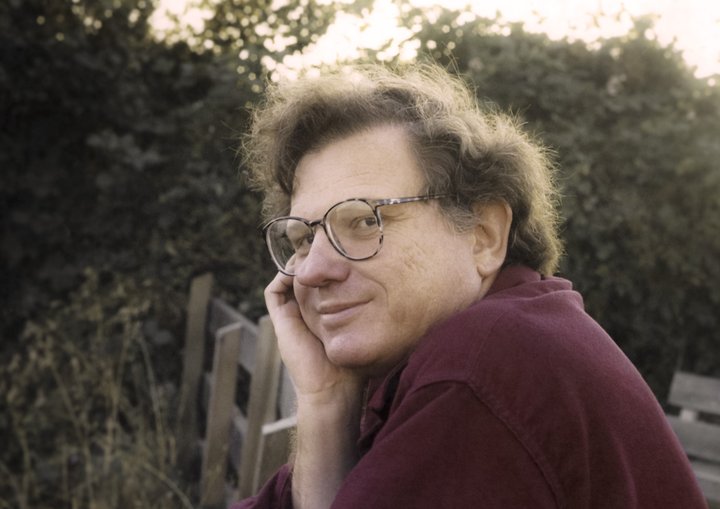
Victor Golla died at his home in Trinidad on April 24, 2021 of end-stage Parkinson’s disease and the after-effects of a stroke.
Victor was born in Santa Rosa on February 10, 1939 to Anne Lou and Victor Golla. His family settled in Mount Shasta for most of his childhood. His father was a funeral director, and his family lived above the mortuary on Chestnut Street. Victor loved to tell stories about his unusual childhood. He said his father was always on the lookout for dog hair inside the showroom caskets, that being his dog Tippy’s favorite place to hide, especially when there was thunder.
Victor Sr. was an avid outdoorsman who loved to hunt and fish. His dreams of sharing these pastimes with his only son ended the first time he took young Victor Jr. hunting. As a buck came into view and the elder Victor raised his rifle, young Victor put his hands over his ears and screamed, “Run! He’s trying to kill you!”
Victor always had a soft spot for animals.
Victor’s family moved to Oakland when he was in high school. At Oakland High, Victor met his life-long friends Stephen Davis, John Westfall and Joe Weinstein. He earned all of his degrees from U.C. Berkeley, obtaining a Ph.D. in linguistics in 1970. His dissertation topic was a grammar of the Hupa language.
Victor’s academic career was long and distinguished. He held positions at the University of Alberta, Columbia and George Washington University before returning home to California to take a position at Humboldt State University in 1988. He also had a professional affiliation with U.C. Davis.
As one of his colleagues put it, Victor did more to revitalize American Indian linguistics as a scholarly field than any other person. He co-founded the Society for the Study of the Indigenous Languages of the Americas, and was SSILA’s secretary-treasurer and newsletter editor for 25 years. SSILA established the Victor Golla Prize in his honor in 2010. He was the author of several books and numerous articles on American Indian languages. He was also a co-principal investigator of the J.P. Harrington Database Project. (A recent documentary being shown on PBS stations across the country, Chasing Voices—The Story of John Peabody Harrington, includes excerpts from an interview with Victor.)
Locally, Victor was especially known for his work on the Hupa language. He created the Hupa Practical Alphabet and collaborated with the Hoopa Valley Tribe on a number of educational and reference materials, including an English-Hupa bilingual dictionary. He co-edited with Sean O’Neill a 1120-page compendium of Hupa materials that Edward Sapir had collected in 1927.
Victor’s first two marriages ended in divorce. Victor met his third wife Ellen through a mutual friend in 1990. He asked her to marry him two months after they met. “Are you out of your mind?!,” she exclaimed. “We’ve only known each other two months! If we still know each other in two years and are still speaking, ask again.”
They married two years later at the home of close friends, coincidentally near Victor’s mother’s hometown in Washington state. They were devoted eccentric soul mates who went on numerous adventures together through the years.
For a long time, Victor had thought about writing a book—a “brain dump,” in his words—of all he knew about the Native languages of California. After being diagnosed with Parkinson’s disease in the early 2000s, he felt a sudden pressing publishing deadline: he needed to get that book done before his eventual incapacity. And so he spent the next several years working long, grueling hours on the book while still teaching at Humboldt State. The result was California Indian Languages, which was published in 2011. It earned Victor the Leonard Bloomfield Prize from the Linguistic Society of America in 2013.
Victor was preceded in death by his parents, Victor and Anne Lou Golla, his dogs Tippy and Frazer, and several adored cats. He is survived by his wife Ellen and his cats Dominic, Stephen, Natasha, and Jeffrey. The cats were a great comfort during his last days, especially Dominic who rarely left his side.
Ellen would like to thank: Victor’s former home health nurse Heather Campbell, for her compassionate care and for caring; Victor’s caregivers from Visiting Angels, especially Sam and, most especially and deeply, Sandra; his caregiver Matt; the E.M.T.s from Arcata-Mad River Ambulance, who were always outstanding and kind; the members of Westhaven Volunteer Fire Department and staff at the Trinidad Cal Fire station for their help during Victor’s last years; veterinarians Dr. Sarah and Dr. Desen and staff at Healing Spirit Animal Wellness Center, who not only cared for our cats, but cared about us; our gardener, helper, and friend, Merrie; and all our friends near and far who’ve reached out, offered compassion and help, and got us through some of our darkest hours. Thank you so much, all of you, with deep and sincere gratitude.
Due to the lingering COVID situation, a memorial is not being planned at this time.
###
The obituary above was submitted on behalf of Victor Golla’s loved ones. The Lost Coast Outpost runs obituaries of Humboldt County residents at no charge. See guidelines here.
MONDAYS WITH MICHAELE: A Trip to the Garbage Museum!
LoCO Staff / Monday, June 14, 2021 @ 6 a.m. / Mondays With Michaele
One person’s trash is another person’s museum exhibit. At least that’s how it works out on the Samoa Peninsula at Recology Humboldt County. That’s where Linda Wise, Recology’s general manager, collects trashy treasures to display in Humboldt’s own Garbage Museum. Linda was kind enough to give your President of Positivity a tour this week while also sharing some helpful reminders on how to properly dispose of your waste. What could be better?
Thanks for letting us jaunt through your junk, Linda! And for everyone else, once this pandemic is behind us, feel free to stop in to see and smell the garbage museum! Ciao Bella!
# # #
Perhaps You’d Like to Explore Previous Mondays With Michaele For Some Reason!
(AUDIO) HUMBOLDT HOLDING UP: Dell’Arte’s Michael Fields Reflects on 45 Years Creating ‘Havoc’ in Blue Lake
LoCO Staff / Sunday, June 13, 2021 @ 7 a.m. / Humboldt Holding Up
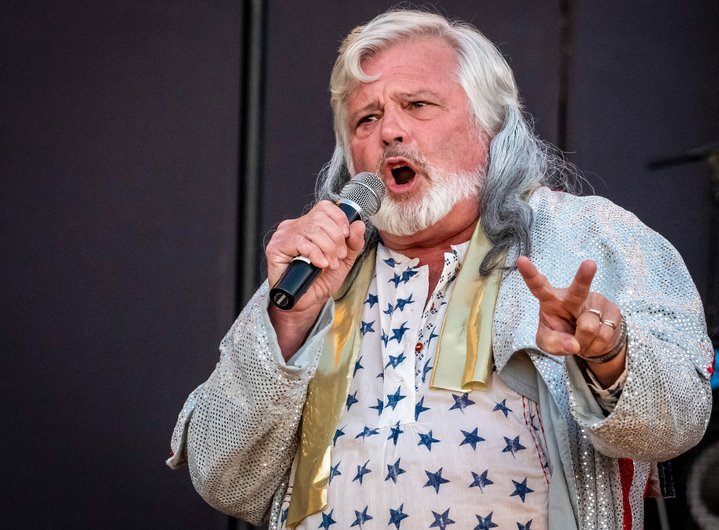
Michael Fields, character | Photo: Mark Larson
Listen Local! Subscribe to Humboldt Holding Up on iTunes!
For nearly a half century, Michael Fields has drawn Humboldt theatre goers out the 299 to Blue Lake with the promise of strange-but-actually-familiar characters that reflect our odd corner of the globe. It’s an impressive feat to have pulled off, especially in a tiny rural town full of loggers. Earlier this week though, Fields announced that he’d be stepping down from his role as Producing Artistic Director of the Dell’Arte Company, closing the largest chapter of his professional life (even if he’s not exactly going away).
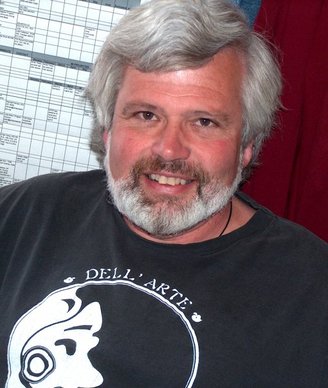
On today’s episode of Humboldt Holding Up — the Lost Coast Outpost’s good enough podcast™ — Fields reflects on a career and life he feels lucky to have been able to live. Topics include:
- The story of his first trip to Blue Lake at age 21 (and the subsequent “good ol’ boy” fight he found himself in minutes after his arrival)
- The early years of Dell’Arte and crafting productions that honor the spirit and stories of the community they found themselves in
- Fields’ advice for young creative types looking to carve out their own weird worlds
- An update on Dell’Arte’s efforts to address long-simmering racial equity issues in their ranks and in the theatre world at-large
- Details on Fields’ new production company LONGSHADR and what audiences can expect at this summer’s Baduwa’t Festival
- More wild tales of Blue Lake physical altercations of yesteryear
Click the audio player above to be transported into Fields’ conversation with LoCO’s Stephanie McGeary and Andrew Goff and also be sure to scroll past Humboldt Holding Up guests below.
PREVIOUS HUMBOLDT HOLDING UP GUESTS:
- #54 Llama Wrangler Keagan Trischum
- #53 Crabs President David Sharp
- #52 Ferndale Organic Dairy Farmers Kristina Radelfinger and Dorice Miranda
- #51 Former Arcata Mayor Alex Stillman
- #50 Cooperation Humboldt’s David Cobb
- #49 Ink People Center for the Arts’ Libby Maynard
- #48 Humboldt Bay Social Co-Owner Amy Cirincione O’Connor
- #47 Musician Lyndsey Battle
- #46 Mad River Brewing CEO Linda Cooley
- #45 LoCO Editor Hank Sims
- #44 Humboldt Republic’s Jason Brandi
- #43 Table Bluff Farmer Hannah Eisloeffel
- #42 Logger Bar Owner Kate Martin
- #41 Teacher/Rapper Zach “Zigzilla” Lehner
- #40 Madaket Captain “Zippo” Libby Tonning
- #39 Event Planner Alegria Sita
- #38 Food For People’s Anne Holcomb
- #37 AHHA President Nezzie Wade
- #36 Performance Artist Noël August/Tucker Noir
- #35 Eureka Mayor Susan Seaman
- #34 Eagle House Owner Jennifer Metz
- #33 Absynth Quartet Drummer Mike “Tofu” Schwartz
- #32 HACHR Executive Director Lasara Firefox Allen
- #31 Alchemy Distiller Owner Amy Bohner
- #30 Eureka City Councilmember Kati Moulton
- #29 Eureka City Councilmember Scott Bauer
- #28 Ungraceful Ager Barry Evans
- #27 Arcata City Councilmember Sofia Pereira
- #26 HumBrews Music Booker Laurel Weston
- #25 Eureka City Councilmember Kim Bergel
- #24 Film Commission’s Cassandra Hesseltine and Nate Adams
- #23 Marble Maker Topher Reynolds
- #22 Arcata Playhouse Director Jacqueline Dandeneau
- #21 Humboldt Political Junkie Eric Kirk
- #20 Rio Dell Mayor Debra Garnes
- #19 Second District Supervisor Estelle Fennell
- #18 Arcata Food Aficionado Jada Calypso Brotman
- #17 Body Piercer Jackie Silva
- #16 Dick Taylor Chocolate’s Adam Dick
- #15 FUHS Teachers Mark Thom and Inma Thompson
- #14 Eureka City Manager Miles Slattery
- #13 Savage Henry Co-Founder Chris Durant
- #12 Eureka Street Art Festival Organizer Jenna Catsos
- #11 SCRAP Humboldt Founder Tibora Bea
- #10 Gym Owner Tyler Parr
- #9 Six Rivers Brewery Co-Owner Meredith Maier
- #8 Multicultural Skincare Therapist Levia Love
- #7 Annie’s Cambodian Server and Social Worker Joshua Coppock
- #6 Eureka City Councilmember Austin Allison
- #5 HSU Professor Deidre Pike
- #4 Pastor Bethany Cseh
- #3 Singer/Songwriter Chris Parreira
- #2 Eureka City Councilmember Leslie Castellano
- #1 Arcata City Councilmember Paul Pitino
GROWING OLD UNGRACEFULLY: UFO Silly Season
Barry Evans / Sunday, June 13, 2021 @ 7 a.m. / Growing Old Ungracefully
“If the government issues a report saying it’s all artifacts of camera, balloons, bokeh — the ufologists are not going to accept it. Nothing satisfies a true believer.” (Michael Shermer, Skeptic Magazine)
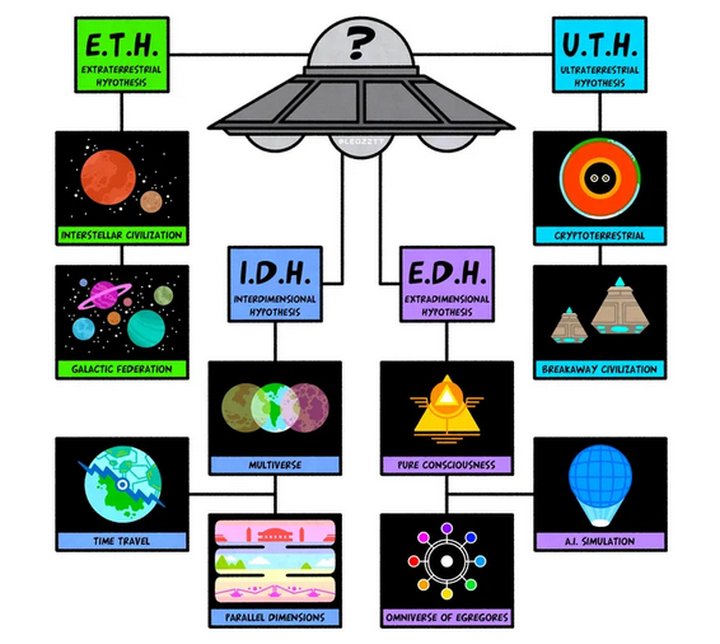
We’re back into silly season with UFOs again. It happens pretty regularly, starting in June, 1947, after a private pilot reported seeing nine strange objects near Mount Rainier, whose motion was like “a saucer skipped over water” — hence “flying saucers. Within a month, nearly a thousand similar reports had been made. Then we had the March 1966 mass sightings in Michigan (written off by officials as swamp gas)…and hundreds more. Check this out.
Now we have the current “we’ve been here before” UFO hysteria, supposedly culminating later this month in the publication of a government report (initiated six months ago by Senator Marco Rubio) but leaked last week by the New York Times. “U.S. Finds No Evidence of Alien Technology in Flying Objects, but Can’t Rule It Out, Either: A new report concedes that much about the observed phenomena remains difficult to explain, including their acceleration, as well as ability to change direction and submerge.” I’m turning into a conspiracy nut myself, except in my case I’m starting to believe there’s a conspiracy in Washington and the military to simply refuse to consider any prosaic explanation, despite such explanations being readily available online.
Why else, for instance, is there no mention in the NYT story (June 3) - -no skeptical aside even — of the rational explanations offered by Mick West (on his YouTube site Metabunk) for those videos purporting to show fantastic acceleration and ability to change direction referred to above. Note that the NYT report wasn’t written by some gullible cub reporter, but by veteran (20 years) national security correspondent Julian Barnes. But look, you don’t have to buy West’s versions of the Navy pilots’ incidents; you just have to listen to the pilots themselves!
Take Commander David Fravor’s recent interview on Lex Fridman’s show. Fravor is the prime witness for what’s touted as the best example we have for UFOs, the “Tic Tac” incident. In November 2004, Fravor was flying an F/A-18F Super Hornet on a routine training mission with the USS Nimitz Carrier Strike Group off the southern California coast when he was told to investigate an unusual craft that had been descending from 80,000 feet to 20,000 feet and then hovering. He was told that the USS Princeton had been tracking this object on radar for two weeks. (Why did they wait two weeks before asking for it to be checked out???)
Fravor (speaking from memory about a 16-year old incident) claims he saw a 40-foot long white oval craft 50 feet above the water. Since he was flying at 20,000 feet, you’ve got to ask, how did he know it was 40 foot long, the length of his own plane. Fridman, referencing Mick West’s debunking, does, in fact, ask that. Fravor replies, “16 years flying against other aircraft…pure experience and having done it for so long.” Fridman then asks, “How often do you make mistakes?” “A lot!” answers Fravor, explaining, “The sad part is, your brain believes what your eyes see, you’ve got to trust your instruments.” He adds that pilots fly into the sea all the time because, lacking any reference, they misjudge their height (hence radar altimeters).
Wait a bit. Commander Fravor knows, from the evidence of his own eyes, that the “Tic Tac” is 40 feet long and 50 feet above the ocean. He’s four miles above the ocean, with nothing to reference the object against — and a moment later he says that pilots are trained not to trust their eyes! What’s going on here? How can he know what he says he can’t know? Unfortunately neither Fravor nor Commander Jim Slaight, the other occupant of the plane, took videos of the Tic Tac.
The fuzzy infrared (1 minute 16 second) “FLIR1” video that was taken by the pilot who followed him up shows the white Tic Tac against a dark background, which has been convincingly explained away by Mick West as the hot twin exhausts of a distant jet. When it seems to peel off abruptly at the end of the video, this is supposed to be evidence of the object’s fantastic acceleration, but West shows that it’s probably just camera movement.
So what’s going on? Why does the NYT play along with the “unexplained” line, without mentioning alternative explanations? Why was there no skeptical voice on the 60 Minutes show I discussed two weeks ago? My own mantra when it comes to weird phenomena is, When in doubt, follow the money. In this case, the media have much more to gain financially by pretending to believe sensational claims than countering with the voice of reason — or at least offering that there really might be rational interpretations for all the fuss.
For a much more grounded media approach to it all, the San Diego Union-Tribune did a fine follow-up of the 60 Minutes show, well worth five minutes of your time if you’re interested in balanced reporting.

Creative Commons license. Check out Randall Munroe’s xkcd strip for more great “romance, sarcasm, math, and language. Click to make big.
(PHOTOS) Eureka’s Fallen Firefighter Memorial Officially Unveiled at Dedication Ceremony in Clarke Plaza
Stephanie McGeary / Saturday, June 12, 2021 @ 5:05 p.m. / Event , News
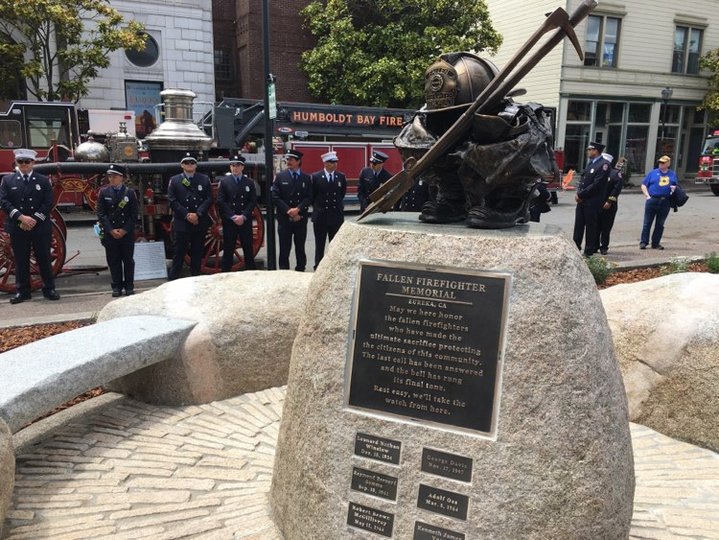
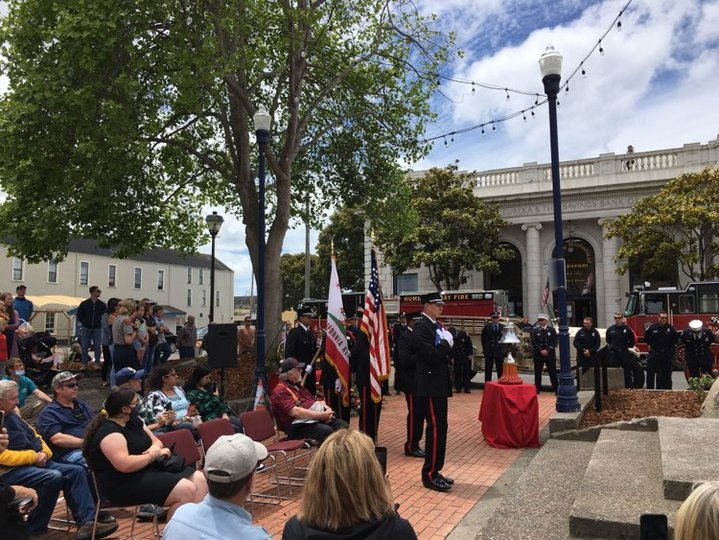
Humboldt Bay Fire staff gather for the dedication ceremony of the Fallen Firefighter Memorial in Clarke Plaza
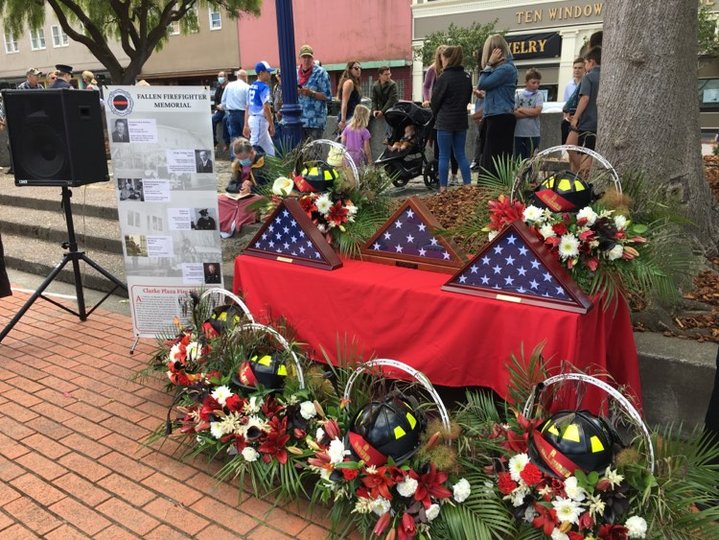
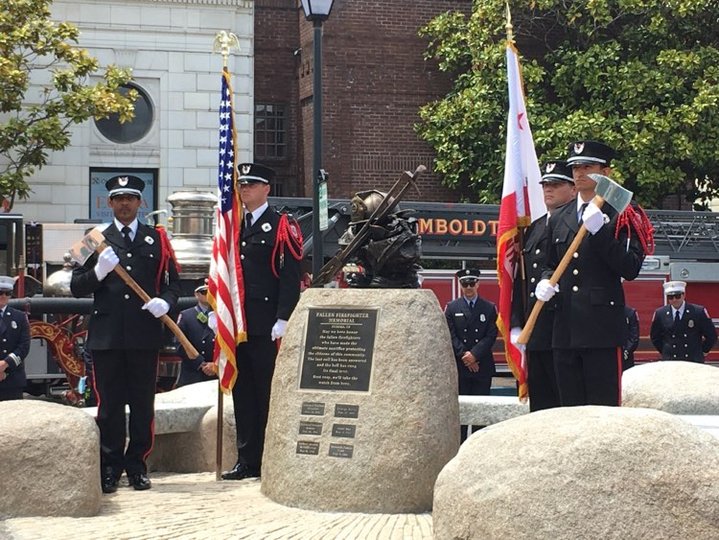
Six local firefighters who lost their lives in the line of duty years ago — Leonard Nathan Winslow, George “Pudgy” Davis, Raymond Bernard Somma, Adolph Oss, Robert Brown “Smokey” McGillvray, and Kenneth James Voss — now have their names forever enshrined on the Fallen Firefighter Memorial, recently installed in the middle of Clarke Plaza in Old Town Eureka.
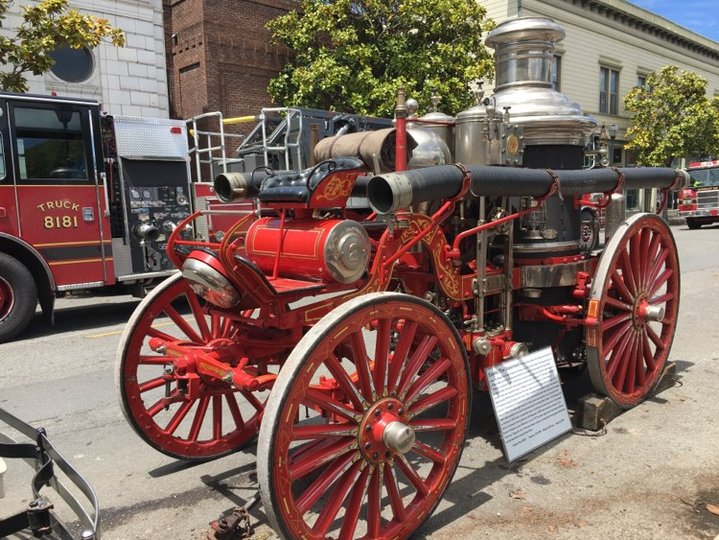
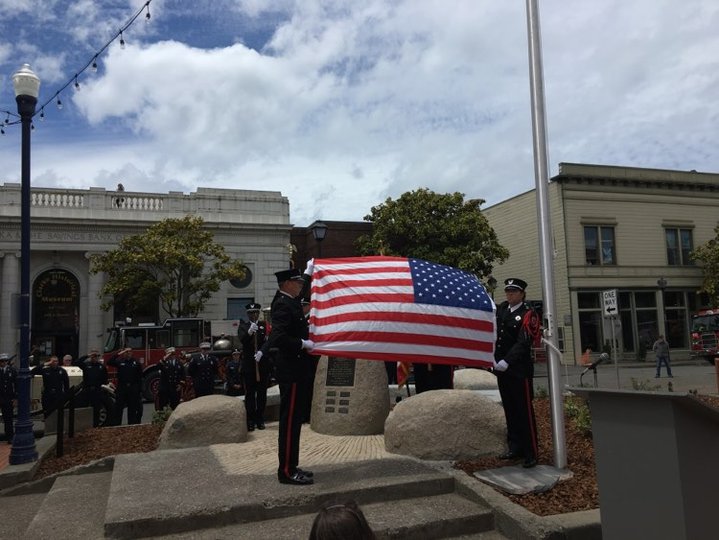
Humboldt Bay Fire firefighters and personnel, City of Eureka representatives, family members of the six fallen firefighters and many other members of the community gathered at the Clarke Plaza Saturday afternoon for the official dedication ceremony of the memorial statue. Following the opening ceremonies, Humboldt Bay Fire Captain David Terry addressed the crowd, thanking the community and all the supporters who helped make this long-planned project into a reality.
“I’m humbled and I’m honored by the turnout that’s here today,” Terry said to the crowd. “Taking a look around at all the families that are here, all of the friends, the departments, the supporters — I’m overwhelmed. Thank you. This community has stepped up and shown that they truly honor and respect those who have made the ultimate sacrifice.”
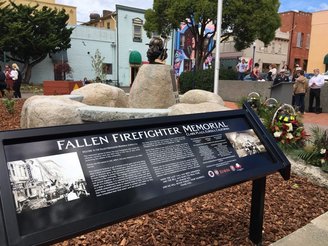
The statue consists of a stone base, with plaques containing the names of the six lost firefighters and is topped by a bronze sculpture of firefighter’s clothing and tools. It was designed and built by local sculpture Todd Kruper, architect Kassidy Banducci and stone mason Kyle Schlagenhauf. The Clarke Plaza was chosen as the site for the memorial, in part, because of its proximity to the Clarke Museum, which now contains a complimentary exhibit honoring the firefighters of Humboldt.
Another reason the Clarke Plaza was selected for the memorial is because of the plaza’s history. In 1959 a large fire broke out in the buildings that once stood on the site, injuring several firefighters and one resident and damaging several buildings. The structures were eventually torn down in the 1960s and the plaza was built in 1973.
During the ceremony, Eureka City Manager Miles Slattery explained that the firefighter memorial is meant not only to honor the sacrifice of our lost firefighters, but also to help beautify the Clarke Plaza and promote it as a social gathering place — something the City has been trying to do for years.
Humboldt Bay Fire Chief Sean Robertson also spoke to the crowd, emphasizing the sacrifice made by the six fallen firefighters and the risk that is taken by all firefighters when they vow to protect their community.
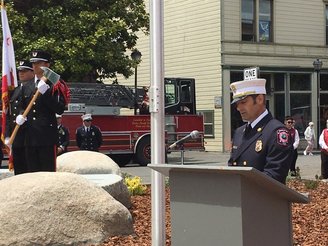
Fire Chief Robertson addresses the crowd
“This memorial creates a space of tribute and reflection for the work our firefighters dedicate themselves to and to the sacrifice that work can cost,” Robertson said toward the end of the ceremony. “In the 155 years that the City of Eureka has had an organized fire department, only six firefighters have lost their lives in the line of duty. All six of these names have been enshrined on the California Fallen Firefighters Memorial in Sacramento and are now also preserved here, in the community they served.”
Scroll down for more photos of the dedication ceremony.
###
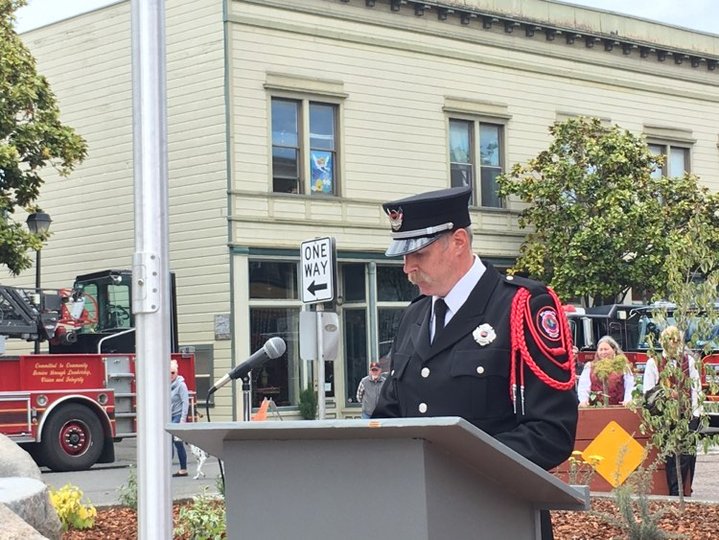
Fire Captain David Terry
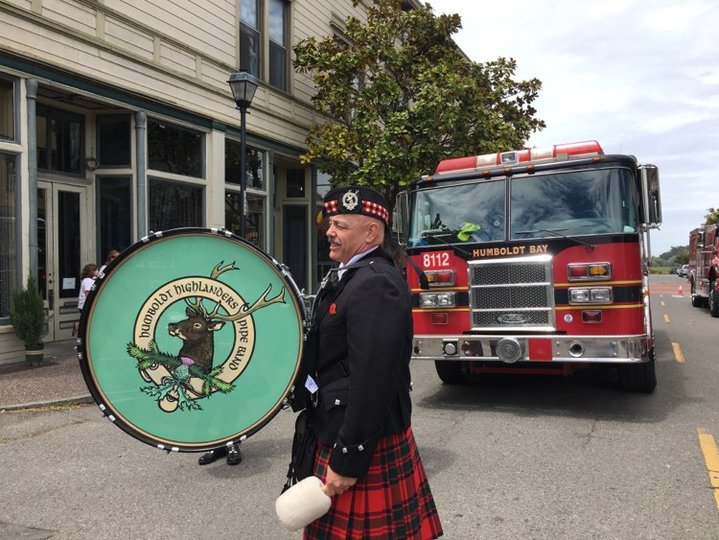
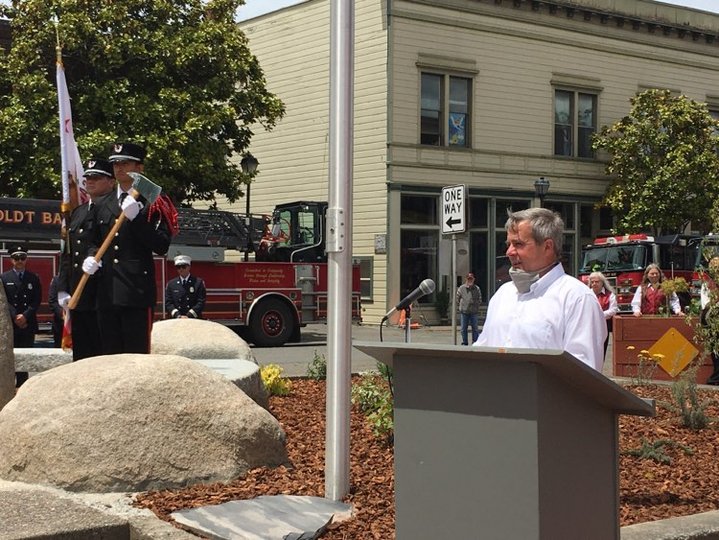
Eureka City Manager Miles Slattery


