

KNOW BEFORE YOU GO: Last Chance Grade Between Humboldt and Del Norte to be Closed During Most Weekday Hours
LoCO Staff / Tuesday, July 6, 2021 @ 10:05 a.m. / Infrastructure
From Caltrans:
Beginning Tuesday, July 6 at Last Chance Grade on U.S. 101 south of Crescent City in Del Norte County, Caltrans will encourage motorists to travel through the area Monday through Thursday before 8 a.m., from noon to 3 p.m., or after 7 p.m. On Fridays motorists are encouraged to travel through the area before 8 a.m. or after noon. 30-minute delays should be expected at all open hours. [Note: A table of the new closure schedule can be viewed at the end of this news release]
By simply “timing it right” to arrive at Last Chance Grade slightly before and during these open windows, travel impacts can be greatly reduced as crews continue their hard work battling the elements by stabilizing the slope.
Until July 6 motorists should still anticipate closures Monday through Thursday from 9 to 11 a.m., from noon to 2 p.m., and from 3 to 5 p.m., on Fridays from 9 to 11 a.m. and from noon to 2 p.m., and 30-minute delays at all other hours. From July 2 through July 5 motorists should only anticipate 30-minute delays due to the holiday weekend.
These schedule changes at Last Chance Grade will more than double our rate for ongoing work operations and are estimated to change the completion date of long closures from November to the end of August. Caltrans conducted extensive outreach in the last several weeks with agency partners and other community leaders to plan and implement these changes. Patience, planning, and pointing others to this information will be key as we all work together to tackle this landslide. During the days with two four-hour closures, we will be able to conduct seven or more hours of effective work per day rather than the three we are getting currently getting due to constraints. Additionally, implementing this schedule change may allow for further work efficiencies as work progresses. Ambulances and emergency vehicles will be permitted through the closure when necessary. CHP will be on-site to assist with emergencies. Portable restrooms will also soon be placed on both sides of the closure.
“While we know no one wants longer closures, and such closures can have significant impacts on jobs, families, and the community, it’s imperative that we do all we can to reestablish an open and sustainable transportation corridor between Klamath and Crescent City as soon as possible,” said Caltrans Construction Manager Sebastian Cohen. “This adjusted work schedule will more than double our production and allow us to get the road open to more flexible schedules much sooner.”
For more information about Last Chance Grade and for a banner link to this post, please visit lastchancegrade.com
A table of the new schedule to be implemented July 6
Monday through Thursday:
8 a.m. to noon Closed
Noon to 3 p.m. Open with 30-minute delays
3 p.m. to 7 p.m. Closed
7 p.m. to 8:30 p.m. Open with 30-minute delaysFriday:
8 a.m. to noon Closed
12 p.m. on Open with 30-minute delaysSaturday and Sunday and all other hours:
Open with 30-minute delays
BOOKED
Today: 5 felonies, 10 misdemeanors, 0 infractions
JUDGED
Humboldt County Superior Court Calendar: Today
CHP REPORTS
Dutch Creek Rd / Sr299 (RD office): Traffic Hazard
1 Mm162 E Men R0.00 (HM office): Assist with Construction
ELSEWHERE
RHBB: Planning for Sea Level Rise Splits Humboldt Commission
RHBB: Burning Starting Today on Vegetation Management Project West of Redding
California Is Betting $61 Million That New Highway Crossings Will Keep Wildlife Safe
Marissa Garcia / Tuesday, July 6, 2021 @ 7:26 a.m. / Sacramento
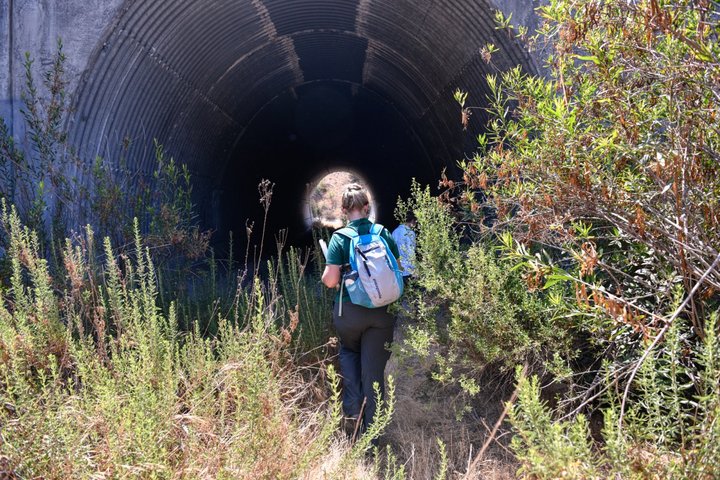
Michelle Mariscal, an ecologist for the Puente Hills Habitat Preservation Authority, walks into the Harbor Boulevard Wildlife Underpass in La Habra Heights, on June 30, 2021. “This is the wildlife’s gateway to the open space on either side of this busy road,” Mariscal said. “The animals to the underpass are able to live longer lives.” Photo by Pablo Unzueta for CalMatters
###
It’d be just another normal day, nearly 17 feet above Highway 101 in Agoura Hills.
A southern alligator lizard and a western toad hide from the heat in the greenery of restored native vegetation. Mountain lion cubs pounce on rocks and spring into the nearby canyons. The sun glints on the feathers of a golden eagle soaring overhead.
This is the scene environmentalists hope will someday become reality on a massive overpass above the ten-lane freeway that cuts through the Santa Monica Mountains near Los Angeles. The project known as the Liberty Canyon Wildlife Crossing is one step closer to happening now that Gov. Gavin Newsom has signed a budget that includes $7 million to help build it — and another $54.5 million for similar projects in other parts of the state.
It’s part of a larger nationwide push to build special bridges and tunnels that help animals safely cross busy roads and freeways. The goal is two-fold: to give species at risk the space they need to find mates, and to reduce the number of car crashes that imperil both wildlife and humans.
About 7,000 vehicle crashes a year on California highways involve large wildlife, such as deer, according to 2018 data from the Road Ecology Center at the University of California, Davis. That’s nearly 20 crashes a day, at least. Many are likely unreported.
And they aren’t cheap — for the drivers or the government. Between 2015 and 2018, wildlife crashes have cost more than $1 billion. The expenses include car damage, personal injuries, emergency response, traffic impacts, lost work and the clean-up.
Highways aren’t just crash sites for the deer caught in the headlights; they’re also a great divide that can threaten the future of an entire species.
That’s because highways cut through critical habitat, making it impossible for animals from one side to breed with animals on the other. This leads to inbreeding and deformities that result from dwindling genetic diversity.
Wildlife crossings can help.
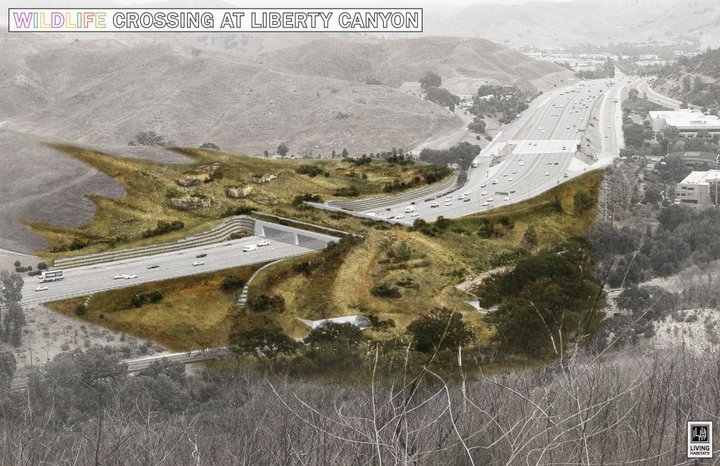
An artist rendering of the Liberty Canyon Wildlife Crossing, which would help restore connectivity in the Santa Monica Mountain Range, buffering mountain lions from extinction. Photo courtesy of National Wildlife Federation/Living Habitats
Utah saw a 98.5% reduction in deer mortalities when it built two animal underpasses on a stretch of highway that blocked traditional migratory routes. In Colorado, wildlife-vehicle collisions dropped by 89% after the state built two bridges to help mule deer and elk safely cross a highway. Arizona, Florida, Montana, Oregon, New Mexico, Washington and Wyoming have also built successful wildlife crossings.
But California? Despite its environmentally-aware reputation, the Golden State lags in building these crossings. The Liberty Canyon overpass would be California’s first bridge on the state highway system designed specifically for fostering wildlife connectivity. And even with the new funding, it’s still years away from completion.
“We’re not an environmental state,” said Fraser Shilling, co-director of the Road Ecology Center at UC Davis. “We don’t have environmental-based legislation that is resulting in protection of wildlife.”
This year, however, conservationists are encouraged by action at the state Capitol. A bill making its way through the Legislature would encourage the state transportation agency to build more wildlife crossings.
And the budget lawmakers passed last month includes new funding to build animal overpasses and underpasses. In addition to the $7 million for the bridge at Liberty Canyon, it also includes $2 million to build a tunnel for deer and mountain lions to pass under Highway 17 in the Santa Cruz Mountains, plus $52.5 million for other wildlife crossings that have yet to be identified.
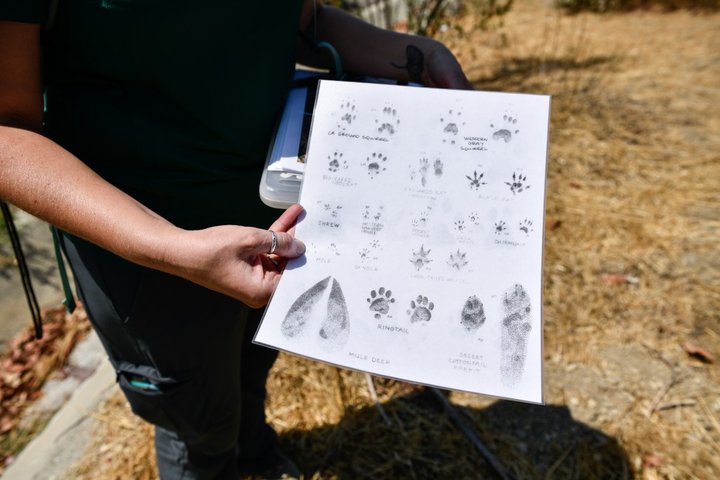
Michelle Mariscal, an ecologist for the Puente Hills Habitat Preservation Authority, holds a sheet that assists in identifying wildlifes using the Harbor Boulevard Wildlife Underpass in La Habra Heights, on June 30, 2021. Photo by Pablo Unzueta for CalMatters.
Wildlife crossings have gained support across the political spectrum — both from environmentalists as well as groups that advocate for hunters. Even though he disagrees with California’s ban on hunting mountain lions, Dan Whisenhunt, chief executive officer at the California Deer Association, supports building more overpasses and underpasses.
“This is one time that politics is listening to common sense… because nobody loses in this,” Whisenhunt said. “It could be somebody from Los Angeles or San Francisco or out of state, traveling on Highway 395, and they’re going to have the benefit of that crossing because there’s not going to be the deer running across the road.”
Near Lake Tahoe, for instance, three underpasses help mule deer safely wander below Highway 395. In Los Angeles County, the Harbor Boulevard Wildlife Underpass is a metal corrugated tunnel directing coyotes, deer and bobcats under the road. In Orange County, a corridor will provide a safe route for gray foxes, bobcats, coyotes and other creatures to travel between the Santa Ana Mountains and the coast.
Underpasses are generally cheaper than overpasses, and some animals, such as deer, prefer them.
Mountain lions, however, prefer overpasses. A desire to protect them from extinction has led to the years-long push to build the Liberty Canyon Wildlife Crossing. Expected to be complete in late 2025, it will be the largest wildlife passage in the world.
Liberty Canyon overpass could save mountain lions
Mountain lions in the Santa Ana and Santa Monica Mountains face a 99% chance of extinction within the next 50 years, and genetic isolation is to blame.
“They’re inbreeding with each other, and they face this extinction vortex,” said Mari Galloway, the California program manager at Wildlands Network. “It’s shown in this kinked tail.”
The kinked tail is a familiar omen. A few decades ago, fewer than 30 mountain lions remained in Florida. Isolated by highways, they were breeding in too small of circles. The proof was in the tail: When on the edge of extinction, the ends of the tails were bent out of shape.
“What they need is genetic connectivity, and so Liberty Canyon will provide more opportunities for outside mountain lions to come in and really give that gene pool a boost and diversity,” said Tiffany Yap, senior scientist at the Center for Biological Diversity in San Francisco. “Not only is that crossing really key for mountain lions, but it would help an incredible amount of biodiversity in the area.”
Connecting one side of the mountain range to the other, the crossing would provide a safe passageway for mountain lions as well as gopher snakes, mule deer, and desert cottontail rabbits.
“Not only is that crossing really key for mountain lions, but it would help an incredible amount of biodiversity in the area.”
— Tiffany Yap, senior scientist at the Center for Biological Diversity
The project — expected to cost $87 million — is being funded with public and private dollars, including $250,000 from the Leonardo DiCaprio Foundation and $25 million from the Annenberg Foundation.
“We’re not just relying on the state,” said Beth Pratt, regional executive director at the National Wildlife Federation.
The investments not only buoy conservation efforts, but also make highways safer and financially self-sustaining. In Placerville, in the Sierra Nevada foothills, a tunnel under Highway 50 cost $1.3 million to build.
“The project is pretty close to having paid for itself already by reducing collisions with deer,” said Shilling, the UC Davis ecologist.
Enticing road builders to plan for wildlife
Money, however, isn’t the only problem. Even if consistent funding went to wildlife crossings, actually building them can get complicated.
That’s because California’s transportation planners — under pressure to serve growing communities and alleviate traffic — haven’t had much incentive to build tunnels and bridges for animals. State Sen. Henry Stern wants to change that.
“We’ve got all these big statewide goals around biodiversity and protecting natural lands and conserving open space,” the Malibu Democrat said. “But we thought we needed to do something… that really integrated wildlife connectivity and habitat connectivity into the transportation planning process.”
Stern’s Senate Bill 790 creates an incentive system that allows Caltrans, the agency that builds roads and freeways, to get credits from the state if it retrofits highways with new wildlife crossings.
In the future, when Caltrans builds transportation projects that may have adverse environmental impacts, the department can draw upon these mitigation credits from building wildlife crossings. The concept is similar to other environmental programs that encourage companies to offset some of their pollution by paying for ecological benefits.
The bill passed the Senate with overwhelming bipartisan support and is now being considered in the Assembly.
“We thought we needed to do something… that really integrated wildlife connectivity and habitat connectivity into the transportation planning process.”
— State Sen. Henry Stern, a Malibu Democrat
The bill would also grant mitigation credits to Caltrans when its projects protect species listed under the California Endangered Species Act. Since October 2020, some mountain lions in Southern California and the Central Coast have been granted temporary legal protection under the act, while the state Department of Fish and Wildlife reviews whether they should be listed as threatened.
That means if Stern’s bill becomes law, projects such as Liberty Canyon could receive a boost because Caltrans could receive mitigation credits for building a crossing that helps mountain lions.
This issue also represents an opportunity for Newsom to advance his family legacy of mountain lion conservation. More than 30 years ago, his father William Newsom championed the ballot measure that banned hunting the species in California. The governor remembers licking envelopes to help promote his father’s hunting ban, he told the Sacramento Bee last year.
Stern talked with Newsom about his connection to mountain lions when they toured the site for the Liberty Canyon Wildlife Crossing almost two years ago.
“This is how he and a lot of other people connect to nature,” Stern said. “He was out there with his dad helping get the original mountain lion ballot initiative passed… and he wanted to run around in the wilderness with me… and you could tell, it woke up the kid in him.”
###
CALmatters.org is a nonprofit, nonpartisan media venture explaining California policies and politics.
OBITUARY: Delores Jeanne (Dolly) Kennison, 1925-2021
LoCO Staff / Tuesday, July 6, 2021 @ 6:56 a.m. / Obits
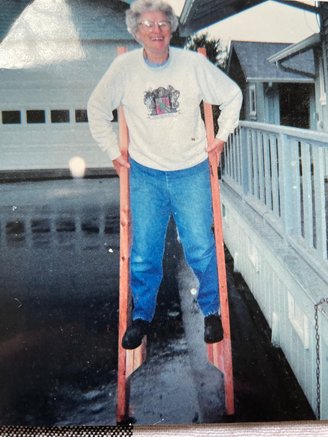
Delores Jeanne (Dolly) Kennison, Theuerkauf, born March 14,1925 in
Portland, Oregon, to Fred and Cecilia (Bowen) Kennison, passed away
June 24, 2021 in Mckinleyville at the age of 96.
When Delores was an infant they moved back to James Town, North Dakota. Dolly graduated from St. Johns Academy High School in 1943. She attended Northern Pacific railroad Telegraph School for three months and then went to work as a telegrapher for five years for Northern Pacific railroad. She worked in several different towns, including Buffalo, Jessie Valley City, Casselton and West Fargo, North Dakota. Her last job was in Dilworth, Minnesota.
In the fall of 1948 she moved to San Francisco. In 1950 she married Joe Swift and had two sons, James and Thomas. They divorced in 1957. Delores started a new job working for Simpson Timber Co, in the sales department. In the fall of 1958 she was transferred to Arcata. In 1960 she met and married Ernie Theuerkauf. They had three sons — Todd, Ross and Lee. They bought a house in Bayside in 1963 and she resided there until her time of death.
Mom loved to play Scrabble and solve crossword puzzles.
She leave behinds Jim (Sandy) Swift, Tom (Jennifer) Swift, Todd (Mary) Theuerkauf, Ross (Holly) Theuerkauf and Lee Theuerkauf; ten grandchildren; and 10 great-grandchildren.
She was preceded in death by Ernie Theuerkauf; parents Fred and Cecelia Kennison; siblings Ralph Kennison, Anita Fischer, Betty Lockhart, Lorraine Fairfield and Bob Kennison.
Services will be held at Paul’s Chapel, Arcata at 11 a.m. on July 10. Viewing will be held July 9 from 5 to 8 p.m. for family and friends. A reception will follow at the family’s home in Bayside.
###
The obituary above was submitted on behalf of Dolly Kennison’s loved ones. The Lost Coast Outpost runs obituaries of Humboldt County residents at no charge. See guidelines here.
MONDAYS WITH MICHAELE: The Humboldt Kiters Want to Fly With You
LoCO Staff / Monday, July 5, 2021 @ 7 a.m. / Mondays With Michaele
After nearly three decades without one, is Humboldt County in desperate need of a kite festival? The wind-riding members of Humboldt Kiters think so. But until they get that figured out, local kiter Jimmie Nord wants to make sure everyone knows that they’re invited to come fly their own colorful kites with his crew during their regular gatherings which take place on the third Saturday of the month kinda down near the Humboldt Bay bridges. (Hint: Look for the kites.)
Keep an eye on the Humboldt Kiters Facebook page for more. And have a great week! Ciao Bella!
# # #
Perhaps You’d Like to Explore Previous Mondays With Michaele For Some Reason!
(AUDIO) HUMBOLDT HOLDING UP: Marnie Atkins on the Wiyot Tribe’s New Old Town Cultural Center, Preserving the Soulatluk Language, and Educating the Community About Our Shared History
LoCO Staff / Sunday, July 4, 2021 @ 9 a.m. / Humboldt Holding Up
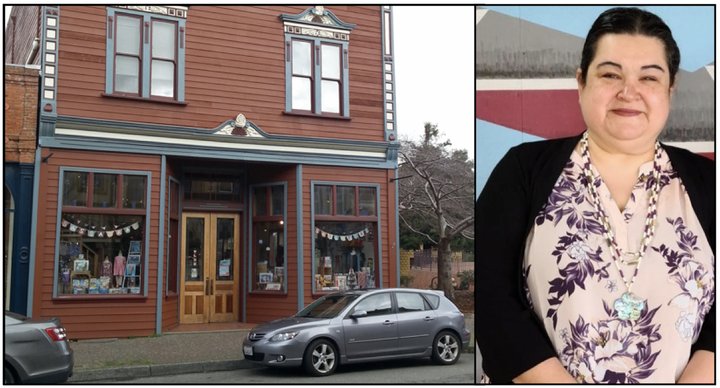
COMING SOON: The Wiyot Tribe is opening a new cultural center on Eureka’s Second Street. The facility will be overseen by tribal member Marnie Atkins
(AUDIO) Marnie Atkins is Holding Up
If things stay on schedule, the Wiyot Tribe plans to open its brand new, shiny cultural center in Old Town Eureka — in the old Restoration Hardware space on Second Street — around the end of September to coincide with California Native American Day.
It’s been a longer road than expected. Cultural center manager and Wiyot tribal member Marnie Atkins has worked through numerous unforeseen COVID-related setbacks, but when she spoke with the Outpost for this week’s episode of Humboldt Holding Up, she was brimming with excitement about all the ways her new facility might be able to further understanding between the larger community and her people.
“Not only can people come in and learn about the tribe, about our beautiful baskets and regalia, and our language,” Atkins said. “You can also learn about our shared history and we can talk about that.”
Topics on this week’s podcast episode include:
- How Atkins’ love of her people and their language led her to pursue her education — she holds a BA in Native American studies with an emphasis in Federal Indian Law from Humboldt State University, and two degrees from the University of Oregon: an MA in (Native) Language teaching specialization and an MS in cultural anthropology.
- Her efforts to preserve and promote Soulatluk, the Wiyot tribe’s language
- What she hopes to accomplish through her work with the cultural center
- A discussion on returning local place names to their Wiyot designations
- The importance of allowing the tribe to have a voice on decisions concerning our area’s natural and cultural resources
- Tribal members’ contributions to the upcoming Baduwa’t (formerly Mad River) Festival
Click the audio player above or head over to iTunes to hear Atkins’ conversation with LoCO’s Stephanie McGeary and Andrew Goff and also be sure to scroll past Humboldt Holding Up guests below.
PREVIOUS HUMBOLDT HOLDING UP GUESTS:
- #57 Humboldt County Growers’ Alliance’s Natalynne DeLapp
- #56 RREDC Executive Director Gregg Foster
- #55 Dell’Arte’s Michael Fields
- #54 Llama Wrangler Keagan Trischum
- #53 Crabs President David Sharp
- #52 Ferndale Organic Dairy Farmers Kristina Radelfinger and Dorice Miranda
- #51 Former Arcata Mayor Alex Stillman
- #50 Cooperation Humboldt’s David Cobb
- #49 Ink People Center for the Arts’ Libby Maynard
- #48 Humboldt Bay Social Co-Owner Amy Cirincione O’Connor
- #47 Musician Lyndsey Battle
- #46 Mad River Brewing CEO Linda Cooley
- #45 LoCO Editor Hank Sims
- #44 Humboldt Republic’s Jason Brandi
- #43 Table Bluff Farmer Hannah Eisloeffel
- #42 Logger Bar Owner Kate Martin
- #41 Teacher/Rapper Zach “Zigzilla” Lehner
- #40 Madaket Captain “Zippo” Libby Tonning
- #39 Event Planner Alegria Sita
- #38 Food For People’s Anne Holcomb
- #37 AHHA President Nezzie Wade
- #36 Performance Artist Noël August/Tucker Noir
- #35 Eureka Mayor Susan Seaman
- #34 Eagle House Owner Jennifer Metz
- #33 Absynth Quartet Drummer Mike “Tofu” Schwartz
- #32 HACHR Executive Director Lasara Firefox Allen
- #31 Alchemy Distiller Owner Amy Bohner
- #30 Eureka City Councilmember Kati Moulton
- #29 Eureka City Councilmember Scott Bauer
- #28 Ungraceful Ager Barry Evans
- #27 Arcata City Councilmember Sofia Pereira
- #26 HumBrews Music Booker Laurel Weston
- #25 Eureka City Councilmember Kim Bergel
- #24 Film Commission’s Cassandra Hesseltine and Nate Adams
- #23 Marble Maker Topher Reynolds
- #22 Arcata Playhouse Director Jacqueline Dandeneau
- #21 Humboldt Political Junkie Eric Kirk
- #20 Rio Dell Mayor Debra Garnes
- #19 Second District Supervisor Estelle Fennell
- #18 Arcata Food Aficionado Jada Calypso Brotman
- #17 Body Piercer Jackie Silva
- #16 Dick Taylor Chocolate’s Adam Dick
- #15 FUHS Teachers Mark Thom and Inma Thompson
- #14 Eureka City Manager Miles Slattery
- #13 Savage Henry Co-Founder Chris Durant
- #12 Eureka Street Art Festival Organizer Jenna Catsos
- #11 SCRAP Humboldt Founder Tibora Bea
- #10 Gym Owner Tyler Parr
- #9 Six Rivers Brewery Co-Owner Meredith Maier
- #8 Multicultural Skincare Therapist Levia Love
- #7 Annie’s Cambodian Server and Social Worker Joshua Coppock
- #6 Eureka City Councilmember Austin Allison
- #5 HSU Professor Deidre Pike
- #4 Pastor Bethany Cseh
- #3 Singer/Songwriter Chris Parreira
- #2 Eureka City Councilmember Leslie Castellano
- #1 Arcata City Councilmember Paul Pitino
GROWING OLD UNGRACEFULLY: The Un-Blank Slate
Barry Evans / Sunday, July 4, 2021 @ 7 a.m. / Growing Old Ungracefully
Man has no nature.
(José Ortega y Gassett)
The human brain is capable of a full range of behaviors and predisposed to none. (Stephen Jay Gould)
Give me a child and I’ll shape him into anything. (B.F. Skinner)
###

Steven Pinker, the first member of the Luxuriant Flowing Hair Club for Scientists (LFHCfS) organized by the Annals of Improbable Research. Photo: Rose Lincoln/Harvard University, via Wikimedia. Creative Commons license.
I rarely buy hardback
books for reasons, in equal measure, of economy and utility. One
exception to this, nearly 20 years ago, was Canadian
linguist-psychologist Steven Pinker’s The Blank Slate. My
splurge was rewarded: it’s a terrific read, in which Pinker wraps
complicated, controversial and complex themes and ideas in a playful
and easy-to-digest text. My sort of book.
In it, Pinker demolishes the thesis that we are born as “blank slates” (as alluded to above by historian Ortega y Gasset, evolutionist Gould and psychologist Skinner) i.e. that we — our minds — are 100% products of the environment in which we grow up, including that of our parents and of society as a whole, and of our life experiences. He undermines the blank slate idea in at least four ways: universal traits, acquisition of culture, twin studies and our Stone Age responses.
Universal traits: There are literally hundreds of universal traits in all of our planet’s 6,000-odd cultures. (The Darwinian anthropologist Donald Brown itemized about 300 in his 1991 book Human Universals, listed in an appendix in The Blank Slate.) While it sometimes seem as if our seven billion persons are defined by our differences, a Martian anthropologist would be much more impressed by our commonalities. Eight traits in particular define humanness in every society that’s been studied by anthropologists: belonging (we’re social beings); community (we want to be part of something larger than our individual selves); creativity (we’re imaginative); curiosity (we triumphed over our non-curious ancestors); family (whatever our relationship with our family, it’s hugely important); love (nature’s trick to get us to self-perpetuate); memory (both to help our own lives and to pass on survival information to our progeny); storytelling (from the earliest raconteurs and cave painters).
Acquisition of Culture: Somehow we — all of us — effortlessly “acquire” the culture into which we’re born. How? Because we’re born already wired with the innate circuitry that supports this ability. (Compare this to Noam Chomsky’s controversial “Language Acquisition Device.” I explored the controversy here.)
Twin studies: This is where the blank slate thesis falls apart empirically. I’m usually wary of anecdotal evidence, but the story of identical twins Oskar and Jack is worth repeating here. Separated at birth, one was raised in a Catholic and pro-Nazi family in Germany, the other in a Jewish family in Trinidad. When they agreed to take part in the Minnesota Study of Twins Reared-Apart (which aimed to differentiate between inherited traits and those learned from the environment), they arrived at the airport wearing “the same rimmed glasses, the same neatly trimmed mustaches, the same quirky shirts with epaulets and four pockets on the front, the same collection of rubber bands on their wrists.”
(For that matter, anyone who has had more than one child, twins or not, knows that kids don’t arrive as if cast from the same mold!)
Stone Age responses: We’re born with stuff learned a million years ago on the East African savannah. Ever wonder why ice cream is so delicious? It’s no accident that our Pleistocene forebears learned the survival value of sugars and fats, leading to our unhealthy cravings today. Or why it’s so hard to let go of perceived hurts and injustices? Way back then, human’s thirst for revenge kept things orderly in the tribe. Why men, the world over, are preferentially attracted to women with a 0.7 waist-to-hip ratio? Think fertility…
If all this intrigues you, do watch this old TED talk from Stephen Pinker here—it will be the best 22 minutes of your day. Unless you’re rafting on the Klamath.
LETTER FROM ISTANBUL: In The Shade of Karaköy
James Tressler / Sunday, July 4, 2021 @ 7 a.m. / Letter From Istanbul
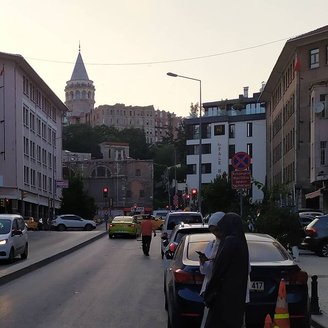
Photos: James Tressler.
Like
all great cities, Istanbul is a city that is forever in the process
of becoming, never arriving. It never stands still, and nowhere can
this be more clearly seen these days than along the shores of
Karaköy.
This district, on the European side of the Bosphorus, was known as Galata in Constantinople days, and still rests pleasantly in the shadow of the proud stone namesake tower standing post at the top of the hill. And just across the flat Galata bridge, with its fishermen casting lines out carefully to avoid passing tourists, one can see the minarets of the great mosques.
But as you look closer, you see yet another new project. At the site of the Istanbul Modern Museum, workers are busy with ongoing construction of Galataport, as nearby signs indicate to the curious. Later I Googled it, and found a news story that said the project, set to be finished this year,as “arts centers, a world-class cruise terminal, hotels and various boutiques, cafes and restaurants, along with office spaces.” According to the same recent news report, more than 200 cruise ships, carrying 350,000 passengers have already made reservations, despite the pandemic.
I just wanted to put these details up front as a reminder that one of the pleasures of stepping out in Istanbul, even after you’ve lived here a long time, you never know what you may see, but there’s always change afoot.
###
Now on to more pressing matters. For the first time in a year, my wife, son and I were taking a ferry. With the city baking in heat, there seemed no better time, especially now that the restrictions were finally on their way out. And what better place than Karakoy?
The feeling of the wind in your face, as the engines of the boat fire up, churning out white bubbles of the Bosphorus, the shores of our Uskudar neighborhood quickly receding, and our son Leo getting excited, pointing in every direction.
During the 15-minute journey, Leo marveled at all the boats passing by, the other ferries, the big tankers, the sailboats, all the things he had seen in his baby books but now floating past in real time. We marveled too, invested with that long-overdue sense of freedom, excitement, that we could go where we wanted to go in this great city (my wife and I have both received our first doses of Pfizer/Biontech). Of course, we still wore our masks, and kept a bottle of limon colonya close by.
###
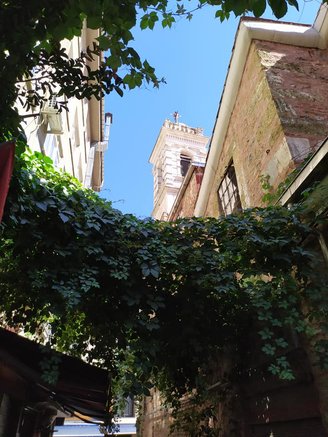
When the boat landed at the Karaköy pier, the Galata Tower, peering from the top of the hill, seemed to welcome us back. Still, we stepped ashore a little tentatively, the other passengers passing swiftly. We felt like tourists in our own city.
Straightaway you felt the keen differences instantly. It’s one of the old pleasures I’d missed, the visceral change, realizing you are now in Europe. Nearby, as if confirming this assessment, a fish restaurant with breezy, ivy-covered interior, open-air, blue-colored tables and a Greek vibe beckoned, but we passed it and went through the tunnel to Karaköy proper, where you can look out at the iskele or pass into the backstreets.
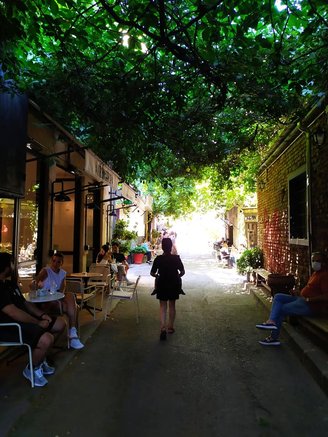
Since it was mid-day and the sunlight really sharp and intense, we opted for the shady backstreets. Here, too, we savored the aesthetic and tonal differences from our home in Üsküdar. The streets here have almost an Italian flavour, and indeed I read somewhere that back in the 15th Century this area Galata, a fishing and commercial port, was modeled after Venice, when that city and the Ottomans were battling for supremacy of the Mediterranean.
Nowadays, much of the neighborhood has been revamped, re-cast as a cultural center. There’s the Istanbul Modern along the waterline, but also a host of other galleries, small shops and lots of cafes, bars and restaurants.
For our first stop, we went to Güllüoğlu, which is one of the oldest baklava restaurants in the city. Next door, in Namli Gurme, one finds a lot more than baklava. The place offers shelves full of pricey and “exotic” goodies, from teriyaki sauce, bacon (very expensive), to JiF peanut butter. It’s self-service inside, so we settled on fistik baklava, tea and coffee and sat outside.
Later, we walked through the slender backstreets. The names of the places … Berlin Line, Italian Gastropub, Papel, Chez Moi… reflect the area’s cosmopolitan past and present.
“Isn’t this where all the Greeks, Armenians, Jews and even White Russians used to live?” I wondered aloud, and my wife nodded.
Indeed, here and there, peering up through the ivy, one makes out the tower of an old church, with a gold cross at its peak, and here and there gold crucifixes adorn the walls, while a few doors down the walls are sprayed with hip hop graffiti, another almost whimsical, rather than mystical, blend of the ancient and post-modern. The industrial chic and all the ivy hanging, and even fresh grapes growing in some of the overhanging greenery combine to give a sense of edgy, teeming vitality. For an old city, it feels really young, especially in this neighborhood.
Everywhere locals and visitors alike were sitting at small tables outside the cafes, catching a breath from the heat, some having iced coffee but others sipping pints (the Italian Gastropub boasted: “OUR BEER IS COLDER THAN YOUR EX’S HEART!”).
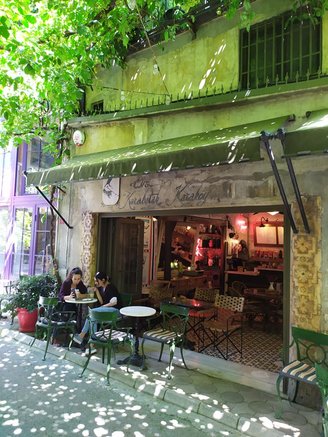
We arrived at a lovely street that was completely shaded. Green grapes draped just above our heads, and blossoms fell softly, blending with the dappled sunlight on the ground. It was likee we were in Bozcaada, or some other Aegean coastal retreat, right here in the heart of the big city. A café called Karabatak lay nestled deep in the recesses of the shady corridor. Except for the occasional motorcycle (lots of those in Karaköy, as everywhere else in the city) and casual pedestrians, the corridor felt almost deserted.
I learned that Karabatak (named after the sea bird) used to be a metal works facility, and was refashioned into a café in 2010. So the café is a set piece example of the revitalization one finds all over the district. We ordered cay and an Americano (the bill came out to about 50 TL, so a bit pricey this urban revitalization is, I guess; perhaps all the neighborhood was preparing for all those rich cruise liner passengers soon to arrive) and sat at the comfortable wooden chairs outside. Others sat nearby, chatting and enjoying cool air and sequestered vibe.
As my wife took our son Leo to explore the nearby side streets, I sipped my Americano and thought about my friends back in Northern California and Oregon, which have been hit with a scorching heat wave in recent days, and how I was here in the shade of Karaköy, a breeze fluttering through the streets, and spending time with my wife and son.
Later, we crossed the main road near the tram stop and walked up the hill to Tophane. There was a garden there we knew, a former orphanage, that served beer. Alas, when we found it, the garden was still there, looking inviting and resplendent alongside the restored ruins of the orphanage, but the beer was no longer served.
By then, it was after four, and Leo was long past his nap time, but he was still quite awake and over-excited from all the new things and places he was seeing. We walked back to Karaköy, over to a long straight street with lots of cafes and restaurants. We passed Çorba Evi, or Soup House. Being “Seinfeld” fans, we couldn’t help but check the menu to see if they had Mulligatawny soup, but no, but perhaps they do have a Soup Nazi employed. “Next time,” we promised ourselves. Lots of people were out now, lots of them looking very young and fashionable. They sat at places like Chez Moi, with its French red awning, sidewalk tables and colorful drinks. We had Leo with us though so again, we would have to enjoy those pleasures some other time.
“Looks like Taksim is going down and Karaköy is rising,” my wife said, impressed. I agreed. We haven’t been to Taksim since the pandemic started, but even before that, Taksim just hadn’t felt the way it used to feel, back when I first arrived in the city in 2010. Walking through Karaköy, I too had this feeling that, with its ongoing redefined ex-commercial, now-cultural aesthetic, and all the young people out and about, that if I were young and single again, I would be saying, “Farewell Taksim, Hello Karaköy!”
###
Still, as we headed to the iskele to catch the ferryboat back to Üsküdar, my wife and I both felt tired but refreshed, exalted. It felt good to be exploring the city again, which is the whole reason one lives in a city like Istanbul to begin with. Sitting at home much of the time this past year, or at best venturing out to the same old tired streets in our Üsküdar neighborhood, one started to forget that there’s a whole city out there, whole worlds in fact, and one of the many pleasures of Istanbul is that you have so many of them just a ferry ride away.
Perhaps next time we’ll head to Balat, or Moda, or if we’re feeling saucy we’ll risk taking the funicular up the hill to see what’s shaking in Cihangir these days, or Ortaköy . Or perhaps Ortakoy, can’t recall the last time we were there, certainly long before Leo. Hell, why not Kilyos? A bit of a Black Sea day. Oh well, the summer is long and, touch wood, we’ll have our second shots soon, and we will be able to get around to these places and see how much they have changed too.
###
Evening in Karaköy … The air is cooler, more fragrant. All of the restaurants and cafes and bars are full, and the people look relaxed and happy sitting outside, their masks tied to their elbows. Leo looked around entranced at all the lights, the colorful lights and umbrella-covered passages, techno music inviting the younger crowd while the waiters looked up and down the streets, greeting people as they passed.
I wanted to try Chez Moi but all the tables were taken, but my wife noticed a nice set of cushy chairs unoccupied at a place next door, with enough space to accommodate Leo. A mural of Charlie Chaplin on the wall behind the chairs peered down at us as we ordered a glass of wine for Ozge, a tall glass of cold Tuborg for me, and some French fries. It was pleasant to sit and drink the beer and look out at the people passing on their way to their evenings, and feel somewhat normal again.
“It’s like a different world over here,” I said to my wife.
“It is a different world!” she scoffed. “Not ‘like!’”
Later as we walked back to the ferry station, the call to prayer could be heard coming from a nearby mosque. Well, not an entirely different world, one supposed. Meanwhile, the fishermen were casting their lines out, and night was falling, the lights of the city shining in the darkening waters, the smell of fish and smoked kebab in the air coming from nearby restaurants. While my wife rocked Leo to sleep (it was past his bedtime), I looked out at the shining lights of the city, and the jeweled light of Topkapi Palace and the great mosques, and thought about the city, and how long ago it had felt so vast and mysterious, and how now, it felt that way again.
###
James Tressler, author of several books on Istanbul and a teacher, is a long-time contributor to Yabangee.


