

MONDAYS WITH MICHAELE: Humboldt Kids Once Again Need Toys!
LoCO Staff / Monday, Dec. 6, 2021 @ 7:15 a.m. / Mondays With Michaele
Your President of Positivity recognizes that we are well into the season of giving and wants to gently remind everyone that children are quite fond of toys. We know this because for each year since back in the 1920s the Humboldt Bay Firefighters Union, Local 652 has been bringing joy to local kids through their annual toy drive.
And it’s not too late for you to get in on this goodness! Just bring a toy to any Humboldt Bay Fire station by Dec. 17 and you’ll be good on karma ‘til at least Christmas. Ciao Bella!

Photos: Patrick Rutherford
BOOKED
Today: 12 felonies, 16 misdemeanors, 0 infractions
JUDGED
Humboldt County Superior Court Calendar: Friday, Sept. 4
CHP REPORTS
Sr299 / Industrial Pkwy (RD office): Traffic Hazard
0 Sr299 (RD office): Trfc Collision-1141 Enrt
0 Us101 S (HM office): Traffic Hazard
ELSEWHERE
RHBB: CDPH Issues Immunization Recommendations for 2026-27 Respiratory Virus Season
RHBB: Redway Transfer Station to Close an Extra Day for Construction
RHBB: Dows Prairie Road to Close for Two Months for Culvert Repair
Controversial Math Guidelines Have Had Mixed Results at San Francisco Unified
Joe Hong / Monday, Dec. 6, 2021 @ 7 a.m. / Sacramento
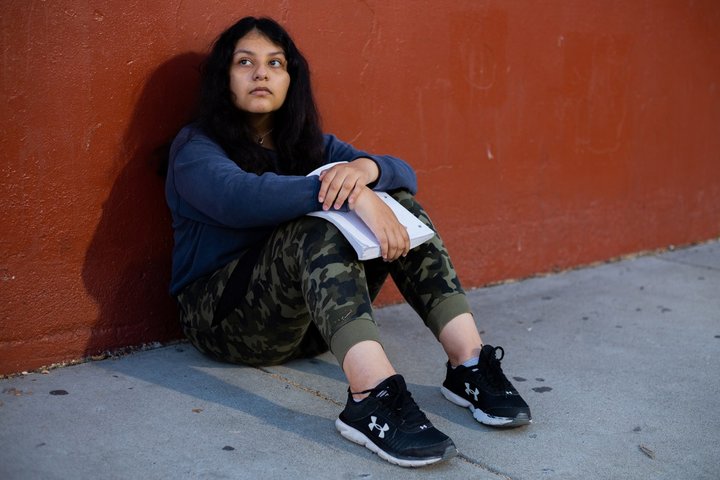
Joselyn Marroquin at a park a few blocks from her home in the Bay View neighborhood of San Francisco Dec. 2, 2021. Nina Riggio for CalMatters.
###
Joselyn Marroquin, a freshman at Lincoln High in San Francisco, challenged herself by taking two math classes this year.
Because the San Francisco Unified School District requires students to wait until 9th grade to take Algebra 1, Joselyn enrolled in both Algebra 1 and Geometry at the same time so she can make it to AP Calculus by her senior year.
“The stress of taking two classes and having homework for each was difficult to manage,” Joselyn said. “It was hard at first, but I got used to it.”
In 2014, district officials decided to delay Algebra 1 until 9th grade in hopes of lowering the number of Black, Latino and low-income students failing Algebra 1 in 8th grade. The goal was to get these students into higher level math classes and eventually to careers in science, tech, engineering or math. The change succeeded at reducing the number of students failing courses, but has coincided with a drop in test scores at some schools serving higher-needs students, a point of criticism relevant to all of California because the state plans to recommend the same policy for every school district statewide as part of a new math framework.
At the same time, the change has led families with resources, like Joselyn’s, to find ways to help their kids get ahead in math, perpetuating some of the inequities the policy was meant to eliminate.
To make sure Joselyn could handle taking two math classes this year, her grandfather Rex Ridgeway, who oversees Joselyn’s education, paid $850 for her to enroll in an Algebra 1 class during the summer after 8th grade. Ridgeway, who is Black, said he hoped that going into high school already knowing Algebra 1 would lighten the burden of taking two math classes.
“I had her take Algebra 1 over the summer so she could master it when she took it again with Geometry,” Ridgeway said. “A lot of Black families don’t have the resources to do what I did.”
The state’s recommendation of the same policy in its controversial math framework has reignited San Francisco parents like Ridgeway who opposed the measure nearly eight years ago. After blowback from parents and math experts, the state will be releasing the revised framework in January before finalizing the guidelines in July. The framework, however, is a set of suggestions and there will be no penalty for districts that opt to ignore it.
Ridgeway said he was furious when he learned about the district’s policy and sought ways to get Joselyn to Calculus by 12th grade and maximize her chances of attending UCLA, her dream school. Other parents in the district have done the same. Teachers aren’t surprised.
“It has led to even worse inequities and driven them underground,” said Elizabeth Stratmore, a math teacher at the district’s Lowell High, the city’s top performing public high school. “People with means started finding other ways to get ahead.”
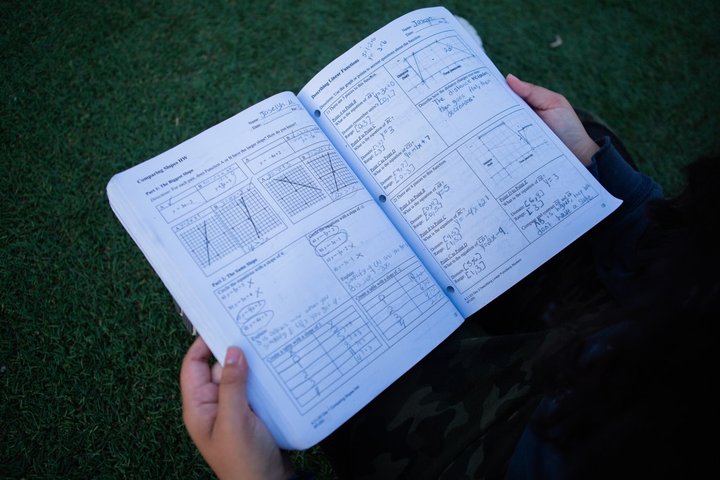
Joselyn Marroquin does her homework at a park a few blocks from her home in the Bay View neighborhood of San Francisco on Dec. 2, 2021. Nina Riggio for CalMatters.
A calculated move
San Francisco’s status quo before 2014 wasn’t great.
“Our kids were flunking out of Algebra in 8th grade, and I would say there was an equity issue,” said Emily Murase, who was a school board member in 2014. “Our math curriculum was clearly not serving our Black and Latino kids who were failing Algebra 1.”
Schools in the district have come up with a variety of ways for students to get to calculus by the 12th grade, even with the policy change. Some schools offer a summer geometry course for which low-income students get priority enrollment. At other schools, students can take a one-year class that combines Algebra 2 and Precalculus.
Lizzy Hull Barnes, who oversees math instruction at San Francisco Unified, said these options count towards the admissions requirements for the University of California and the California State University.
The change meant that all students would take the same math classes from grades 6 through 8. The district at the same time adjusted the curricula for middle school math classes to better align with state standards: While students aren’t taking a class called “Algebra 1” in 8th grade, they are still covering almost all the concepts they would have previously, like linear equations, proportional relationships and systems of equations. They should know everything they need going into their 8th grade standardized testing.
Barnes said all students, but especially Black, Latino and low-income students, are better prepared to succeed in Algebra 1 if they focus on learning these foundations in middle school.
“The concepts from Algebra 1 were pulled apart and redistributed in more thoughtful ways,” she said. “We wanted to interrupt racialized outcomes associated with math.”
Ridgeway and other parents of high-achieving students said the district was holding back students. But Barnes said the Algebra 1 now taught in 9th grade is more advanced than the one taught in 8th grade prior to 2014. The curriculum now includes concepts from Algebra 2 and data science.
Under the district’s framework, students can decide whether they want to take more advanced math classes in high school once they have a better understanding of their own interests and skill levels in math. Before 2014, Barnes said, students were placed onto pathways, or “tracks,” far too early.
“I think the most important thing we want to convey is that students who want to achieve higher level mathematics are able to,” Barnes said. “We’re not taking anything away from anyone.”

The San Francisco Unified School District Building in San Francisco on Dec. 2, 2021. Nina Riggio for CalMatters
San Francisco’s mixed math results
Fewer students across all demographics failed Algebra 1 in the years after the district adopted the rule in 2014, according to the district. It reported more students across all racial demographics have enrolled in both advanced math and completed more math and science credits during their high school careers since the policy was adopted.
“It really helped the bottom and average achieving students to take more math,” said former board member Murase. “The big surprise was that students took more science as a result. That was an unintended consequence.”
But standardized test data paints a more complicated picture.
Districtwide, the percentage of students meeting what the state considers an appropriate level of math knowledge increased by 2.6 percentage points between the 2014-15 and the 2018-19 school years. The percentage of Black and Latino students meeting standards also increased by 2.6 points. But the gap between the percentage of low-income students and the percentage of students district-wide meeting standards has grown by 2 points.
Schools with high proportions of Black and Latino students have fared far worse on standardized tests.
O’Connell High School enrolled the highest percentage of Black students among the district’s comprehensive high schools in the 2018-19 school year. In the 2014-15 school year, based on standardized tests, a mere 6% of the school’s Black students met math standards. As bad as that sounds, it got worse after the district changed the way it taught math. In the 2018-19 school year, that number dropped to 0%.
Willie Brown Middle School had the highest percentage of Black enrollment that same year among middle schools. Since it opened in 2015, the percentage of students meeting math standards dropped from 14% to 7.8% in 2019. The percentage of Black students meeting standards remained below 4% during all four of those years in between. In the 2018-19 school year, only 1.5% of the school’s 84 Black students met math standards.
At James Lick Middle, nearly three-quarters of its 568 students were Latino in the 2018-19 school year, making it the school with the largest share of Latino students in the district. That year, however, only 7% of Latino students met math standards, a five-year low. Meanwhile, 18.16% met English Language Arts standards, a five-year high for the school’s Latino students.
At Presidio and Roosevelt Middle Schools, the two middle schools with the highest percentages of white students, test scores saw significant improvement. The percentage of Black and Latino students meeting standards increased by double digits at both schools.
As for the various ups and downs in test scores at San Francisco Unified, Polikoff said “there’s a million different things that can explain trends in test scores.”
Morgan Polikoff, an education professor at the University of Southern California, said if more students are taking more advanced classes and receiving good grades, that could be a good sign. But standardized test scores would show whether students are actually learning the material.
“Grading standards can be watered down,” he said. “But the standardized test is supposed to serve as independent evidence.”
As for the various ups and downs in test scores at San Francisco Unified, Polikoff said “there’s a million different things that can explain trends in test scores.” San Francisco Unified officials refused requests to discuss test score data in detail.
California’s standardized tests are based on the same standards that guided the policy change, so offering Algebra 1 in the 9th grade should have in theory resulted in more equitable outcomes on state tests.
But Barnes said the number of students enrolling in higher level math is a more effective measure and that test score data “is not the measure we would use to evaluate impact.
“In high school they take the test one time in 11th grade,” she said. “It’s difficult to use that as a measurement for success in all of mathematics.”
Polikoff said that although standardized tests aren’t a perfect measure, the district can’t simply dismiss them, especially because they test exactly what students should have learned under the district’s policy change.
“You can’t say, ‘We’re going to pass this policy, and we can’t evaluate it with test scores,’” he said. “That’s not acceptable.”
Murase maintains that test scores would have been even worse if San Francisco Unified stuck with its old ways.
“You would have to compare the trajectory of math scores to what it would have been under the old system,” she said. “No one would think those scores would’ve been any higher if we kept Algebra in the 8th grade.”
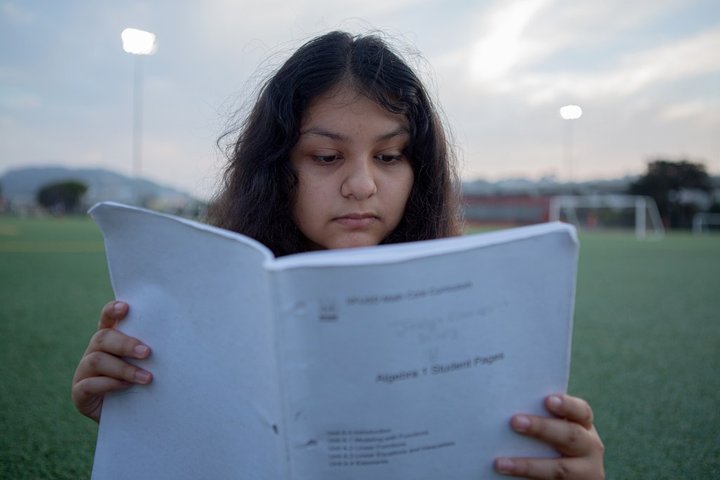
Joselyn Marroquin does her homework at a park a few blocks from her home in the Bay View neighborhood of San Francisco on Dec. 2, 2021. Nina Riggio for CalMatters
Local outcomes, statewide implications
Delaying Algebra 1 is one of the core ideas recommended by California’s proposed math framework. The framework, a set of non-binding guidelines for math instruction in the state’s public schools, also recommends using more inclusive language in the classroom and more real-life examples in math lessons, with the goal of getting a more diverse student body engaged in mathematics.
Parents, educators and mathematicians statewide oppose the framework for a variety of reasons. They accuse the authors of watering down math with social-justice oriented lessons.
Parents also say the framework holds back high-achieving students. The authors of the framework disagree. They said the revisions will include more explicit recommendations for advanced students.
While California’s proposed math framework stirs controversy nationwide, in San Francisco it’s revived the ire of some parents who vehemently opposed these ideas back in 2014.
Maya Keshavan is the mother of two recent graduates from the district and a member of Families for San Francisco, a group of parents fighting against California’s proposed math framework. Keshavan and other members say the framework should not recommend delaying Algebra 1 until 9th grade based on some inconsistencies they found in San Francisco Unified’s reported successes.
A report by Families for San Francisco said the district published misleading data on how often students had to repeat Algebra 1: While the rate of students re-taking the class dropped from 40% to 7% in the year after it pushed Algebra 1 to 9th grade, the district also eliminated an Algebra 1 placement test, which Families for San Francisco said is likely to have reduced the repeat rate by removing an additional hurdle to getting to the next math class.
Barnes said the district does not have data showing how many students had to retake Algebra 1 because of the placement test alone.
Keshavan, a woman of color who works as an electrical engineer, said she understands the need for diverse viewpoints in the fields of science and technology. But she said that the questionable data reported by the district raises serious doubts about the merits of delaying Algebra 1 until 9th grade.
The authors of the state’s framework, however, cite the reduced number of students repeating Algebra 1 as evidence of success. Jo Boaler, one of the authors of the state framework and a professor of math education at Stanford University, co-wrote an editorial citing these reported successes at San Francisco Unified. The current draft of the framework references this editorial.
When asked about this potentially misleading data at San Francisco Unified, Boaler said the proposed state framework is in no way based on the policies at one district. She said, unlike the policies at the district, the state framework calls for high schools to integrate Algebra and Geometry rather than teaching them as two separate classes.
Boaler also declined to comment on the declining test scores at the district. Ben Ford, another co-author of the framework, said he would revisit the references to San Francisco Unified in the current draft.
Keshavan’s daughter, who graduated in 2020, was part of the first cohort required to take Algebra 1 in 9th grade. Keshavan, however, paid $700 for her daughter to take an Algebra 1 course with a private company during 8th grade.
And like her daughter, she said, students across the state who come from privileged backgrounds will keep the upper hand when it comes to college admissions and entering careers in science, tech, engineering and math.
“I knew I had to work around it for my daughter,” Keshavan said. “To this day I feel it was unfair that she had the advantages of being able to pay for the external class.”
###
CALmatters.org is a nonprofit, nonpartisan media venture explaining California policies and politics.
Sector Humboldt Bay Rescues Lost Coast Hiker With Broken Leg
LoCO Staff / Sunday, Dec. 5, 2021 @ 2:30 p.m. / Emergencies

Rescue photo provided by USCG.
U.S. Coast Guard Sector Humboldt Bay:
At 9:30 a.m., watchstanders at USCG Sector Humboldt Bay received a relayed report from CALFIRE of a woman who broke her leg while hiking on a remote section of the Lost Coast Trail south of Punta Gorda.
Sector diverted an MH-65 helicopter crew that was already airborne on a fisheries patrol. The aircrew quickly located the hikers, deployed the rescue swimmer, and successfully hoisted the injured hiker and her spouse.
They brought her back to Sector Humboldt Bay where she was transferred to an awaiting EMS in stable condition.
Congratulations to the crew on a well-executed rescue, especially LT Justin Lovell and AMT3 Owen Maurer!
LT Lovell recently received his Aircraft Commander designation and this was his first duty-day as Pilot in Command. AMT3 Maurer just finished his Flight Mechanic qualification, and this was only his fourth duty-day. Bravo Zulu to all!



(AUDIO) HUMBOLDT HOLDING UP: Miranda’s Rescue Founder Shannon Miranda Discusses His Work Caring For Animals (And People Too)
LoCO Staff / Sunday, Dec. 5, 2021 @ 8 a.m. / Humboldt Holding Up

Shannon Miranda and resident camel Tonka
(AUDIO) Shannon Miranda is Holding Up
Like Humboldt’s very own Dr. Dolittle, Shannon Miranda has done much to care for local animals in need over this past quarter century. In that time thousands of creatures—from dogs, cats and goats to a camel and an African water buffalo—have found respite at Miranda’s Rescue, a sprawling 50-acre no-kill sanctuary nestled along the Eel River just south of Fortuna.
“I always say there’s always room for one more,” Miranda says about his organization, which adopts out hundreds of animals annually.

Another Day: This past week, Shannon was called to rescue a submerged stray dog from the Eel River
On this week’s episode of Humboldt Holding Up, we discuss Miranda’s tireless efforts to attempt to care for critters with nowhere else to go. Topics in this weeks episode include:
- His most-recent social media star turn in which he was summoned to rescue a stray dog from a river
- The mission of Miranda’s Rescue
- A discussion about some of the rarer animals that have ended up in his complex
- In addition to caring for animals, how much of his job involves being sensitive to human emotions
- How Miranda’s Rescue’s collection of thrift stores and support from the community help keep his organization going
- More
Click the audio player above (or click on over to Apple Podcasts here) to listen to Miranda’s chat with the Outpost’s Stephanie McGeary and Andrew Goff and feel free to scroll through our past guests below!
PREVIOUS HUMBOLDT HOLDING UP GUESTS:
- #77 Eureka Police Department Chief Steve Watson
- #76 Artistic Directors of ‘The Bartow Project’ Michelle Hernandez and Zuzka Sabata
- #75 Foggy Bottoms Boys Thomas and Cody Nicholson Stratton
- #74 North Coast News’ Nazy Javid
- #73 Pumpkin Carver Mike Craghead
- #72 Eureka Police Department Sergeant Leonard LaFrance
- #71 Eureka Artist Duane Flatmo
- #70 Arcata City Councilmember Sarah Schaefer
- #69 Humboldt Hot Air Director Neroli Devaney
- #68 St. Joe’s James Ladika and Austin Allison
- #67 Eureka Artist Richard Evans
- #66 NCRT’s Calder Johnson
- #65 TV Newsman Dave Silverbrand
- #63 Housing Policy Specialist Brian Heaton
- #62 Muralists Blake Reagan and Lucas Thornton
- #61 Arcata City Councilmember Emily Goldstein
- #60 Kayak Guide Eric Stockwell
- #59 Eureka City Councilmember Natalie Arroyo
- #58 Wiyot Cultural Center Manager Marnie Atkins
- #57 Humboldt County Growers’ Alliance’s Natalynne DeLapp
- #56 RREDC Executive Director Gregg Foster
- #55 Dell’Arte’s Michael Fields
- #54 Llama Wrangler Keagan Trischum
- #53 Crabs President David Sharp
- #52 Ferndale Organic Dairy Farmers Kristina Radelfinger and Dorice Miranda
- #51 Former Arcata Mayor Alex Stillman
- #50 Cooperation Humboldt’s David Cobb
- #49 Ink People Center for the Arts’ Libby Maynard
- #48 Humboldt Bay Social Co-Owner Amy Cirincione O’Connor
- #47 Musician Lyndsey Battle
- #46 Mad River Brewing CEO Linda Cooley
- #45 LoCO Editor Hank Sims
- #44 Humboldt Republic’s Jason Brandi
- #43 Table Bluff Farmer Hannah Eisloeffel
- #42 Logger Bar Owner Kate Martin
- #41 Teacher/Rapper Zach “Zigzilla” Lehner
- #40 Madaket Captain “Zippo” Libby Tonning
- #39 Event Planner Alegria Sita
- #38 Food For People’s Anne Holcomb
- #37 AHHA President Nezzie Wade
- #36 Performance Artist Noël August/Tucker Noir
- #35 Eureka Mayor Susan Seaman
- #34 Eagle House Owner Jennifer Metz
- #33 Absynth Quartet Drummer Mike “Tofu” Schwartz
- #32 HACHR Executive Director Lasara Firefox Allen
- #31 Alchemy Distiller Owner Amy Bohner
- #30 Eureka City Councilmember Kati Moulton
- #29 Eureka City Councilmember Scott Bauer
- #28 Ungraceful Ager Barry Evans
- #27 Arcata City Councilmember Sofia Pereira
- #26 HumBrews Music Booker Laurel Weston
- #25 Eureka City Councilmember Kim Bergel
- #24 Film Commission’s Cassandra Hesseltine and Nate Adams
- #23 Marble Maker Topher Reynolds
- #22 Arcata Playhouse Director Jacqueline Dandeneau
- #21 Humboldt Political Junkie Eric Kirk
- #20 Rio Dell Mayor Debra Garnes
- #19 Second District Supervisor Estelle Fennell
- #18 Arcata Food Aficionado Jada Calypso Brotman
- #17 Body Piercer Jackie Silva
- #16 Dick Taylor Chocolate’s Adam Dick
- #15 FUHS Teachers Mark Thom and Inma Thompson
- #14 Eureka City Manager Miles Slattery
- #13 Savage Henry Co-Founder Chris Durant
- #12 Eureka Street Art Festival Organizer Jenna Catsos
- #11 SCRAP Humboldt Founder Tibora Bea
- #10 Gym Owner Tyler Parr
- #9 Six Rivers Brewery Co-Owner Meredith Maier
- #8 Multicultural Skincare Therapist Levia Love
- #7 Annie’s Cambodian Server and Social Worker Joshua Coppock
- #6 Eureka City Councilmember Austin Allison
- #5 HSU Professor Deidre Pike
- #4 Pastor Bethany Cseh
- #3 Singer/Songwriter Chris Parreira
- #2 Eureka City Councilmember Leslie Castellano
- #1 Arcata City Councilmember Paul Pitino
GROWING OLD UNGRACEFULLY: Making Sense of Bitcoin
Barry Evans / Sunday, Dec. 5, 2021 @ 7 a.m. / Growing Old Ungracefully
I’m intrigued, dazzled, baffled and intimidated by Bitcoin, the oldest (2009) and largest cryptocurrency. I first wrote about it five years ago, before it became a “thing” that, it seems, everyone now has an opinion about. Back then, I compared Bitcoin to paper money, imagining what the doges of Venice might have thought when Marco Polo, returning from China, enthused about the “paper money” he’d seen in use there. He later wrote, “All these pieces of paper are issued with as much solemnity and authority as if they were of pure gold or silver…[a person can] transact all sales and purchases of goods by means of them just as well as if they were coins of pure gold.”
Paper money is fiat money. Fiat, Latin “it shall be,” is currency created and legitimized by governments. That works OK so long as the government can be trusted. When people lose trust in the government — such as in 1922 during the German Weimar Republic, or in 2013 when, overnight, the nearly bankrupt Government of Cyprus levied a 47.5% “tax” on deposits held by the Bank of Cyprus — the system fails. Suddenly a piece of paper, which yesterday would have bought a full bag of groceries, is worthless. (Remember, it was only in 1964 that U.S. Treasury ceased minting silver coins, when the silver content exceeded the face value. A 1964 quarter now has a silver bullion value of nearly $5.)
Which is why Bitcoin and other cryptocurrencies have attracted so much attention, since they’re not dependent on governments for their value. Bitcoin itself is inflation-proof, i.e. no chance of the hyperinflation that beset, for instance, Germany in the 1920s. Once 21 million Bitcoins have been mined, which will happen around the year 2040, that’s it. This is the genius of Bitcoin: it was set up this way from the get-go, unlike, say, the number of US dollars in circulation, which changes at the whim of the government.
The key to the success of Bitcoin is the blockchain, a single, public ledger, stored in multiple copies on about 100,000 “nodes” around the world, manned by an estimated one million individuals. Most of these nodes are operated by “miners.” New Bitcoins are mined at a predetermined rate set by computers (about 900 per day), and a miner is paid—both for success in mining and for maintaining their node — in Bitcoins. I’ve explained it here and here.
Will Bitcoin, or cryptocurrencies in general, one day supersede fiat currency? Judging by how fast it’s been accepted, that’s a real possibility. It took just 12 years for the market cap of Bitcoin to reach $1 trillion. Compare that with Microsoft (44 years), Apple (42) and Google (21).
I can’t write about Bitcoin without discussing its impact on the environment, since huge amounts of energy are needed to operate a Bitcoin mine. Here’s one way of looking at it: The global banking industry consumes some 250 terawatt-hours per year, about 1% of the global energy consumption of 23,000 TWH/year. (Manufacturing = 77% of that, mining = 12%, construction = 7%, agriculture = 4%.) Meanwhile, Bitcoin miners consume between 32 and 110 TWH/year—it’s hard to estimate. Much of that—at least half—comes from renewable energy or from surplus “stranded” gas that would otherwise be flared off. (Norway offers subsidies to miners to use local hydroelectric sources.) Here’s a positive spin on Bitcoin’s energy use.

Bitcoin mining “farm” in Iceland, where cheap electricity is available from hydro and geothermal sources. Photo: Marco Krohn, via Wikimedia. Creative Commons license.
I wrote, “Publications including Fortune, Business Insider and The Street have run over 100 ‘death of Bitcoin’ stories in the last five years, which hasn’t stopped Bitcoin startups from raising more than a billion dollars in that time.” That was in May 2016, when Bitcoin was trading at about $450. Since then, it’s been redefining the word “volatility”: last March, it was trading at over $60,000, while summer saw it down to $32,000. Now it’s yo-yoing between $42,000 and $69,000. (In case it’s not obvious, I’m the last person to ask about investments, so don’t use any of the above as a guide.)
Ponzi or currency of the future? Dunno. Ask me in five years.
LETTER FROM ISTANBUL: My Old Neighborhood
James Tressler / Sunday, Dec. 5, 2021 @ 7 a.m. / Letter From Istanbul
I was 50. Half a century. How was that even possible?
Some years ago, one of
my directors Zeynep, a lovely, cheerful Mediterranean woman had
recently hit this milestone. I remember wishing her a happy birthday,
as she stood having a cup of tea and smoking a cigarette on the
balcony of our school.
“How are you?” I
asked.
Zeynep stared out at
the cityscape blankly, her usual smile replaced with a grim,
thoughtful look.
“When you are half a
century old,” she mused, “Half a century! How is one supposed to
feel?”
Indeed, there seemed no clear answer to that one. And now, here I standing at the same pale precipice: Yes, how is one supposed to feel?
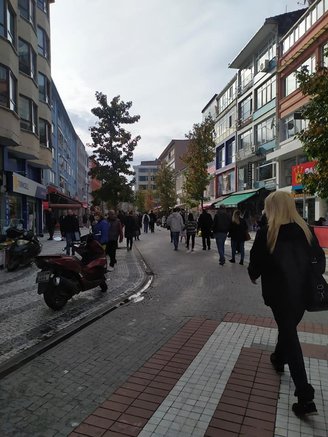
Photo: James Tressler.
For my birthday, my
wife Özge and I loaded our son Leo into a taxi and headed to
Kadıköy, hoping a change of scene would lift my mood. It was
Saturday, and the late autumn weather was holding up fine. At least
it wouldn’t rain. The traffic was light too, another decent sign.
In Kadıköy, we got
out of the taxi near the iskele and walked up the hill. Although it
was already after noon, the streets were mostly quiet, and most of
the shops and cafes were still closed. We passed a menemen café, and
the tables outside were full of young people who looked like they had
just rolled out of bed. Further on, the bar streets looked exhausted,
with their empty beer kegs deposited on the pavement for the trucks
to pick up, the tables all empty, the bars themselves sleeping off
the night’s reveries.
Remembering my own days
living in Kadıköy, I recalled the neighborhood was then, as now,
very popular with young people, Turks and foreigners alike. Thus, the
shopowners and cafes and bistros set their clocks in sync with their
youthful patrons. Ah, to be young and living in Kadıköy, to be
living in Istanbul – hell, to be young anywhere.
“Give them another
hour or so,” I thought. We walked towards Bahariye Street, a busy
thoroughfare where the tram runs up the hill. We passed cool shops
that we hadn’t seen before (there are always new places, or places
you haven’t previously noticed, in Kadıköy). One of the shops was
stocked with expensive-looking fashionable leather boots, for both
sexes. I suggested Özge and I get a pair each – that would be a
nice birthday gift, a swanky new pair of boots.
“What – did you
suddenly win the lottery?” my wife asked. “With what money are
you planning to buy these boots with?”
It was true. Payday was
still a few days off, and inflation has been the news story for some
time. Just the night before there had been scattered protests around
the city, we read. People calling for action to stop rising prices,
to halt the lira’s sickening tumble. When one is a teacher, and
your wife is on maternity leave with a toddler, and inflation is in
the double digits, one must not indulge expensive fancies, even if
you do only turn 50 once a century.
We stopped at a women’s
shop, where outside pink and green balloons festooned the windows.
“PİNK FRİDAY SALE!” read the signs (Black Friday has become a
tradition here too, notwithstanding the fact that Turks are for the
most part oblivious to the fact that the tradition stems from the
start of Christmas season). My wife went in for a moment to browse,
leaving me to entertain Leo with the balloons. She came out a minute
or two later empty-handed, and we continued on up the hill.
We walked past Viktor
Levi, a wine house where we had our first date, just over eight years
ago. Just out of curiosity, we stopped and looked at the menu. A
cheese plate cost 90 lira (“When we were there, it was only 40!”
my wife exclaimed). As for the wine, forget about finding a bottle
for less than three digits, and the imported wines cost several
hundred lira.
“Imagine if we wanted
to have dinner here for your birthday,” Özge said. “We’d end
up paying nearly 1,000 lira!” Our first date, back in fall 2013,
had consisted of dinner and a bottle of wine, and had probably cost
not more than 200 lira. And we’re not talking about “back in the
‘80s,” or something. We’re talking about only eight years ago,
not a long time at all.
“Nostalgia is getting
more expensive every day,” I said.
I wasn’t in any
particular hurry, or was trying not to be. At 50, aren’t you
supposed to have this acquired, hard-won wisdom that allows you to
take things easily, as they come? Wasn’t quiet desperation for the
thirtysomethings? Hadn’t I already survived my haunted youth?
So I just followed as
Özge steered the stroller toward the quiet streets of Moda. Leo
didn’t seem to mind where we were going. He was content to sit
upright in the stroller and take in the sights, pointing out things
here and there that he liked. Moda, which is really more of a summer
kind of place, with its seaside villa vibe, was in full autumn mode.
The streets were littered with dried leaves, the colored trees
rustling in a gentle breeze, and the people walking as we were, in
search of nothing in particular except to while away the quiet early
afternoon.
We passed Granny’s waffle and dessert café, which in summer serves very popular waffle ice cream cones in the warm nights. It was not busy. The other breakfast places looked steady. One of them offered American breakfasts, but when we looked at the picture, it hardly resembled any American breakfast I’d ever had. Pancakes, yes – but with cucumbers and parsley? Where were the grits? The hash browns? The bacon (you can find pork in Istanbul in some places).
Out near the seaside, where on fine summer evenings people sit at tables beneath the shady trees, having Turkish coffee or tea and looking out at the Marmara, we turned the stroller around and headed back. We needed a few things for the house, but upon passing the Migros supermarket, we noticed a long queue and decided to wait. The neighborhood, meanwhile, had woken up. The streets were now thronged, teeming with mostly young people. A long line of people waited outside a sweet shop that was serving Christmas-themed desserts. While Christmas is not a Muslim holiday, Turks seem to enjoy all the bright, festive accoutrements of the season, the trees and lights and ornaments can be found all over the city this time of year.
We stopped at a decoration shop and bought for Leo one of those glass ornaments that you shake and it fills with snow, like the one in “Citizen Kane.” Leo was fascinated, and held it in his hands, shaking it the rest of the way (unfortunately, as expected he ended up smashing it the very next day – 45 liras gone).
“What do you want to do?” my wife asked, finally.
“Why don’t we go to the Irish pub?” A pint was in order, if anything.
The Harp Irish pub had just opened, and was deserted except for the grizzled barman. He brought two pints of Carlsbad in very tall glasses. Özge wished me happy birthday, and we sat and drank the beer while Leo played with his snow ornament.
“Shall we walk over to Yeldeğirmeni?” Özge asked, as we finished and rose to pay. “We can get a taxi from there.”
I had just been thinking the same thing, strangely enough. Yeldeğirmeni was my old neighborhood, where I had lived in the years before meeting Özge.
###
It was about a ten-minute walk, through the busy streets of Çarşa, with everywhere busy now. We crossed the main street over to where Yeldeğirmeni begins. It looked almost exactly the same as I remembered. A few different places here and there, but the overall vibe was the same. We passed the bakery where Özge and I used to get this bread she liked in the early days. We stopped and she went in. “They don’t have it,” she said, exiting quickly. We passed other places I knew, like the restaurant that served really good iskender kebab, and where I used to go after a rough night out at the bars. The same guy was still standing next to the sweating döner, with his balding head and broad easy smile. I nodded and he squinted for a second, seemed to dimly recognize me and nodded back.
There was Damli, the classic old-school pide place that heats the pide and lamahcun in a large flaming oven, the men using wooden sticks to take them out of the heat and onto a wide table. Finally there was my old street, with the tekel on the corner. It was owned by two Kurdish brothers, Edep and Bulent. This was where, back in the old days, I could always get beer and other stuff on account towards the end of the month.
Bulent was standing on the sidewalk outside. He was a lot grayer than I remembered, but he still had the twinkling eyes and easy smile. He saw me and lit up instantly. I went over and we embraced. I pointed out Leo, who was by then asleep in the stroller.
“Junior James!” Bulent offered, smiling again. He waved shyly at Özge, who waved nervously back. I asked after his brother, and Bulent said he was doing fine, fine, thanks. We bid each other farewell.
Down the hill, the cars and buses were passing under the iron footbridge on their way toward the Nautilus Shopping Mall, or else out toward Fenerbahçe stadium. How many times had I walked this way?
“Remember that place?” I said to my wife. I pointed to a white house, fresh and new-looking, where a ramshackle old Ottoman house had once stood. “Remember on our second date we walked past that old Ottoman house, and we talked about how they needed to restore it?”
“Yes, now it’s a hair dresser,” Özge said. And so it was, as a neat sign over the door informed us. Who needs restored Ottoman architecture when you can have hairdressers?
Leo was still sleeping as we passed beneath the iron footbridge, and where the new metro line runs out to the neighborhoods further on. I remembered the old train, and how it had been torn out and replaced with the metro line. I remembered when the metro lines were being built, and how every day the dust from the construction seeped over into the neighborhood, and you wondered if the work would ever be finished, and now the work was done and had blended in with the surroundings, become part of the neighborhood.
I felt better. I was glad we had decided to walk through Yeldeğirmeni. This glimpse into the not so distant past made me feel less disconnected, to see that some of the people and places were still there as I remembered, and that some of them even still remembered me, and that I had memories of the city as it had been as well as the feeling of having been though the changes with the city too. It was nice to be around to see the changes.
How is one supposed to feel about being a half century old? For younger readers, I’ll leave it to you to answer it when your time comes. The older ones no doubt are asking other questions. I guess the thing to do is stick around.
###
James Tressler, a former Lost Coast resident, is a writer and teacher living in Istanbul.
OBITUARY: John (‘Jack’) Edward Johnson, 1938-2021
LoCO Staff / Sunday, Dec. 5, 2021 @ 6:56 a.m. / Obits
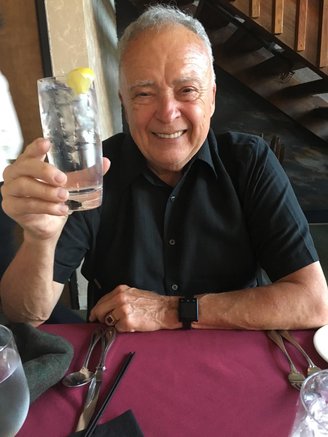
Our
family recently said goodbye to an amazing man — a
musician, husband, father, grandfather and friend, Jack Johnson lost
his battle with congestive heart failure on Monday, November 22, with
family by his side. We will remember most fondly his passion for
music, his appreciation of gin and tonics and his unwavering love for
his dear wife, Lynne.
John “Jack” Edward Johnson was born on June 6, 1938 in Eureka to Robert and Grace Johnson. A third-generation Humboldt resident, Jack was raised in Weott for most of his life until moving to Eureka in 1956 to attend Humboldt State University. It was there that he met his first wife, Denise Moore, who he married in 1959 and with whom he had four children.
Jack was a gifted musician with a deep passion for music that was a guiding principle of his life. He learned to play the trumpet at age 8 and by 14 was playing in local dance bands across Southern Humboldt. He started the Johnson Music Company in the mid-1970s along with Denise, their friends Chet Petty, Dick Baum and Bill Moehnke, and their son Bob and daughter-in-law Sue. Together they traveled the county playing music for local weddings, dances and parties. Jack particularly loved jazz and could be found on stage at the Dixieland Jazz Festival in Eureka nearly every year during his time as a musician.
While not playing the trumpet, piano, cornet, bass, trombone or tenor guitar, Jack was known as the local paint expert. Though he explored many interests early on — working as a local butcher, mailman and tinkering with electronics, computers and other cutting-edge technologies far before it was mainstream — Jack eventually found his calling as a paint mixer and salesman and in 1979, he opened a family owned and operated paint store on Fifth Street in Eureka. The paint store was the first in the county to carry Benjamin Moore paint, and Jack quickly became the go-to guy for painting advice, techniques and troubleshooting. After owning the paint store for more than 25 years, Jack finished out his career behind the paint counter at Shafer’s Ace Hardware in Eureka, where he was known and loved by many for his experience, knowledge and friendly attitude.
After marrying Lynne Wright in 1999, Jack developed a love for travel. Lynne worked as a travel agent at Dalianes Travel Service in Eureka and she used her travel experience to show Jack the world. The two traveled for much of their marriage; embarking on numerous journeys and cruises to destinations such as France, Italy, Greece, Mexico and Hawaii, and they were often joined by Lynne’s sisters or their dear friends Mike and Diane Barmore.
Jack’s love of music spanned his entire life and he continued to perform long after his professional retirement. In his nearly 70 years as a musician, Jack played in more than 20 different bands and musical groups. One of his favorite bands was the Freshwater 450, a local brass/jazz band in which he played with some of his dearest friends and bandmates. His other bands included the Pistol River Band, the Hall Street Honkers, The Scotia Band, The Horn Band and the Fog Town Strummers, who were often spotted playing at care homes, weddings, Christmas shows and other community events.
Jack is preceded in death by his parents, Robert Edward Johnson and Grace Johnson Cruz; his aunt Elaine Johnson Wood and uncle Everett Wood. He is survived by his wife Lynne, with whom he shared a profound love for the past 31 years. He is also survived by his sister, Roberta (Del) Poppelreiter, his first wife Denise, his son Bob (Sue), his daughters Janine (Mark), Geri (Alan) and Jackie (Fred), his stepson Benny Wright (Ryanne Wheeler), his grandchildren Patrick, Danica, Collin, Aaron, Maddie and Natalie and his great-granddaughters Kennedy and Harper. Additionally, Jack is survived by his dearest friends, Larry Dake and George Isenhart.
Jack’s family sincerely appreciates the heartfelt condolences and gestures memorializing our dear husband, father, grandfather and friend. In lieu of flowers or donations, Jack would have loved for any offerings or remembrances to be made by making, watching, or dancing to live music — preferably from local bands and musicians — and by making sure to tip your performers well.
###
The obituary above was submitted on behalf of Jack Johnson’s loved ones. The Lost Coast Outpost runs obituaries of Humboldt County residents at no charge. See guidelines here.


