Press release from the Humboldt County Sheriff’s Office:
Aragon.
On Jan. 22, 2022, at about 9:28 p.m., Humboldt County Sheriff’s deputies on patrol in the area of Highway 101 near Fields Landing conducted a traffic stop for a vehicle code violation.
Deputies contacted the driver of the vehicle, 18-year-old Justin Lee Aragon. During their investigation, deputies learned that the vehicle had been reported stolen out of Eureka. Aragon was taken into custody without incident. During a search of Aragon, deputies located two keys commonly used to bypass vehicle ignition locks.
Aragon was booked into the Humboldt County Correctional Facility on charges of possession of a stolen vehicle (PC 496d(a)), possession of burglary tools (PC 466) and driving without a license (VC 12500(a)).
Anyone with information about this case or related criminal activity is encouraged to call the Humboldt County Sheriff’s Office at (707) 445-7251 or the Sheriff’s Office Crime Tip line at (707) 268-2539.
What is with this unseasonable warmth we are having? Your President of Positivity will take it and, maybe if we’re lucky, hopefully the sunshine will last until next weekend when local run enthusiasts will head north for the 56th annual Trinidad to Clam Beach Run taking place Saturday, Jan. 29 starting in Saunders Park at 12:30 p.m. See you there and Ciao Bella!
Many major players in Humboldt’s cannabis economy gathered at the county courthouse this week with a message: We are struggling and we need help. After decades of growing weed illegally in an unregulated wild west, a period when astronomical profits built countless fortunes for those brave enough to risk legal peril in the rugged hillsides, many growers say they are struggling to maintain their way of life in a post-legalization world.
Jesse Duncan, cannabis conversationalist
What does this downturn mean for Humboldt County, which for years has garnered much of its identity from its association with this plant? On this week’s episode of Humboldt Holding Up, we speak with Jesse Duncan, a lifelong Humboldt resident and legal commercial cannabis cultivator who recently launched his column “The Cannabis Conversation” here on the Outpost. Duncan says there is a lot of fear about the future of the industry locally, much of it currently centered on the regulatory structure folks in his industry believe just isn’t working.
“People are scared,” Duncan told the Outpost. “I run a no-cost consulting platform in the offseason where I speak with small farmers and help them with business and financial matters and it’s gotten to point where people are concerned not only about their livelihoods but being able to maintain their properties. It’s a very heavy time in this space.”
Click the audio player above (or click on over to Apple Podcasts here) to listen to Duncan’s wide-ranging chat with the Outpost’s Stephanie McGeary and Andrew Goff on many topics surrounding Humboldt’s cannabis world and also feel free to scroll through our past guests below.
Last
week, a commentator objected to my use of the phrase “quantum leap”
when describing the James Webb Space Telescope. My initial reaction
was, Well shit, if
squeezing a 22-foot diameter telescope, together with its five-layer
tennis-court size sunshield, into the 16-foot nose cone of a rocket,
and subsequentially unfolding it in space, doesn’t count as a
quantum leap, what does? Surely
that technological marvel, 20-odd years and tens of thousands of
people in the making, is much more impressive than James Bond
figuring out how (once again) to battle the Spectre organization in
Quantum of Solace,
not to mention Verizon’s Quantum internet, Duracell’s Quantum
battery, Quantum Corporation’s automation tools … and many more
quantums/quanta to boot.
The
commentator seemed to be convinced that the only legitimate use of
“quantum leap” was as it applied to quantum
mechanics, which sent
me scurrying to the many online etymological sites. How could
something as small as a quantum jump in QM have made it into the
prosaic meaning — my meaning — of quantum leap, “an abrupt
change, sudden increase or dramatic advance,” as Merriam-Webster
has it. (Sorry commentator!)
Quantum,
from Latin quanta
(how much) had been in use long
before Max Planck, in 1900, introduced the term in his revolutionary
formulation of physics, single-handedly introducing the world to what
became quantum physics, the world of the very small. For instance,
Edgar Allan Poe (may his name be praised) used the term, rather
obscurely, in his 1832 story Loss
of Breath: “I would
have the judicious reader pause before accusing such asseverations of
an undue quantum of absurdity.” Anyone want to parse this?
Early
(pre-Planck) physicists glommed onto the word. For instance, when
physician/physicist Julius von Mayer wrote to a colleague outlining
what we now call The First Law of Thermodynamics (energy can be
neither created nor destroyed, only transformed), he used “quantum”
simply as a synonym for “quantity.” That was in 1841, and the
word became a handy go-to term for 19th century scientists trying to
figure out what energy was and how it worked.
In 1900, Max
Planck brought science into the modern world when, singlehandedly, he
created the science of quantum mechanics, the foundation of all of
quantum physics: quantum chemistry, field theory, information science
and more. His insight came as he was researching “black-body
radiation” spectra, that is, the way objects change color when
they’re heated. By assuming that energy was emitted and absorbed in
tiny discrete packets, instead of continuously, Planck turned
conventional physics on its head. He called these packets “quanta,”
in the process deriving one of the most important physical constants,
h, the eponymous Planck constant. To say this constant is small is an
understatement; it’s ridiculously, crazily small. For his epiphany,
Planck received the Nobel Prize in Physics in 1920.
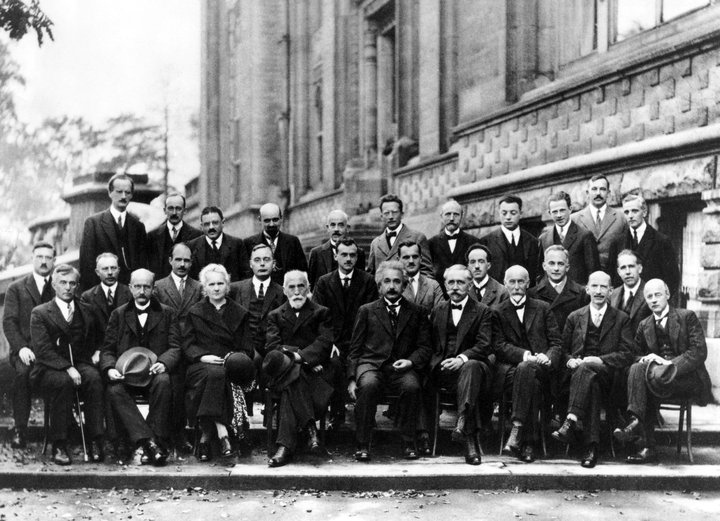
Four giants of physics sitting side by side in the front row at the 1927 Solvay Conference: Max Planck, Marie Curie, Hendrik Lorentz and Albert Einstein. (Benjamin Couprie, Institut International de Physique de Solvay. Public domain)
One
of the main beneficiaries of Planck’s discovery was young Albert
Einstein, who in 1905 — his annus
mirablis — published
no less than four papers that changed our view of the world and our
place in it. One of these papers proposed that a beam of light
doesn’t consist of a wave, as was thought at the time, but rather
can be thought of as a series of photons, discrete quanta
of energy, foreshadowed by Planck’s
black-body radiation insight. For this (not for the theories of
relativity), Einstein was awarded his Nobel
Prize in Physics two years after Planck, in 1922. (The prize money
went to support his ex-wife and children.)
The,
er, quantum leap from tiny to huge wasn’t made until 1956,
according to the OED,
quoting a writer who discussed the US-Soviet nuclear arms race: “The
enormous multiplication of power, the ‘quantum leap’ to a new
order of magnitude of destruction.”
And
that’s the rest of the quantum story.
###
CORRECTION:Barry, you idiot! Max Planck’s surname has a “C” in it. The Outpost regrets Barry’s error. —Ed.
“Do
you know why this city exists? So that a guy like me doesn’t take
you to the end of the world!”
This
is what the womanizing driver Ismet says to Raşel, as they are
locked deep in an embrace in the rainy streets of Beyöğlu. The
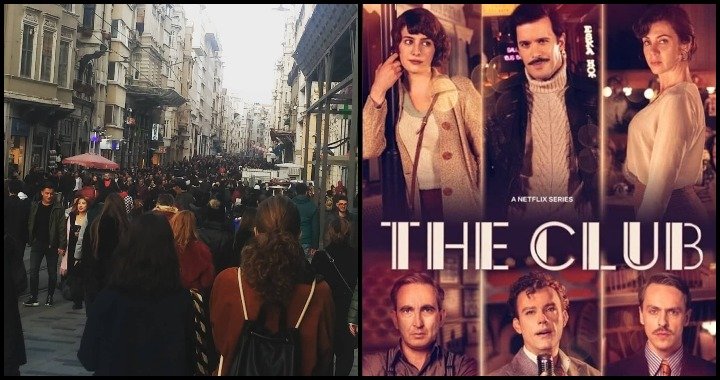
scene is from “Kulüp,” or “The
Club,” a
popular Netflix series set in 1950s Istanbul.
The two
lovers are both estranged from their families, the girl having been
raised in an orphanage and the boy Izmet alienated from his father.
They are kindred spirits, aligned in their self-proclaimed
independence. “They say tuberculosis is the disease of the
century,” Izmet insists. “But the real disease is family.” In a
sense, they are united by identifying themselves as the children of
whores, bastard offspring.
Watching
this scene, set as it is at night on the rainy streets of Beyöğlu,
I had a lot of impressions. Partly personal: like many Turks watching
the show, I too recognized the street, having walked in that very
spot countless times. Part nostalgic: Also like many Turkish viewers,
I found myself longing for those days of colorful, cosmopolitan Pera
(like those who watch “Mad Men,” and wistfully imagine living in
the smoky, cocktail-swilling world of 1960s Manhattan).
And
finally, the scene evoked a strong impression that has lingered with
me ever since my arrival in the city, a sense of weightlessness, of
loss, of competing impulses of duality and nullity – a city that is
and is not what it appears to be. Sure, you can insert the usual
clichés – East meets West, Muslim world meets Christian, Ancient
meets Modern, and so on – but the core of the city at times seems
to exist only in its absence; as a vacuum or black hole rather than
as a planet or star. Like the characters in “Kulüp,” it is a
city that is forever in search of something, of itself.
The French
writer Andre Gide, upon visiting the city in the early 20th
century, was infamously contemptuous in his assessment. Nothing in
the city, he wrote, seemed to have come from the city itself –
everything seemed to come from somewhere else, that the city lacked a
distinctive native identity, cultural or otherwise. Of course, Edward
Said’s “Orientalism” appeared to refute such effete criticisms,
which he believed came out of Western writers imposing their own set
of beliefs and values on a culture that was not theirs to define.
Of
course, a writer such as I runs the same risk, so I am not trying to
define or judge, but merely reflect on the impressions the TV series
“Kulüp” left with me as an outsider myself. I am aware that my
knowledge of Turkish history (or “modern” history) is brief and
cursory. The series was directed by Turks, Seren
Yüce and Zeynep Gunay,
after all, so the reader is free to go and watch the series and
arrive at their own conclusions.
At
any rate, the series centers around the Jewish community living in
Istanbul around that time. The titular club is a nightclub in Beyöğlu
whose owner seeks to revolutionize the quarter, through modern music,
and making the club into a kind of beating centerpiece of
cosmopolitanism. He enlists the help of Selim Songur, a young
composer whose music combines traditional Turkish music with the
rhythms and style of modern jazz. Also working at the club are the
girl’s mother Matilde, daughter of a once wealthy Sephardi Jewish
family. Having spent years in prison on a murder charge, Matilde is
now reduced to a washerwoman and hopes to reconnect with her
long-lost daughter – who as I said up front is estranged and locked
in the embraces of the wily Izmet.
There are
other stories weaved into the narrative – the series has six
episodes – and all center in and around the club and the
interactions of the Muslim and non-Muslim characters. We are
introduced to painful historical realities that affect the lives of
the characters. The mother Matilde, for example. We learn that her
family lost their fortune due to the Wealth Tax of 1942, which
cruelly discriminated against non-Muslims and was aimed by the
Turkish government at taking away businesses and properties from the
non-Muslims (principally Jews, Greeks and Armenians) and handing them
over to Muslims. Also, the Istanbul pogrom of 1955 factors into the
story.
Again,
what drew me most to the program was not all the ins and outs of the
historical events. Rather it was the overall impression, or
aesthetic, that it evoked. Throughout much of its history, going back
to Ottoman poets, Istanbul has been compared to a woman. In the same
stroke, it has been oft-likened to a whore or bastard, depending on
the context. The former because of the perceived sell out nature of
the city – that it welcomes everybody and anybody (including yours
truly) into its opportunistic embrace, and for its endless obsession
with money and status. (Interestingly, when the girl Raşel meets her
mother Matilde, one of the first things she asks is, “Are you a
prostitute?”)
The
latter because of its lack of a putative father (Greeks? Romans? The
Levantines? The Byzantines? The Ottoman Turks? Et al?), its somewhat
nebulous, disputed origins. Looking over this, I fear that the tone
or register may seem overly critical, or too limited in its scope.
For those hoping that “Kulüp” will offer a gleaming, vibrant
portrait of Pera in its past glory, by all means it does. The sets,
whether they are real or digitized, more than satisfy the viewer’s
imagination with a rich palette of colors and reconstructions of shop
fronts and signs, and the sight of cars cruising on Istiklal itself
is enough to make a discerning viewer
smile. For lovers of this city, it’s a time capsule and travelogue
into these familiar haunts.
Perhaps
I am drawn to those two figures embracing in the rainy streets of
Beyöğlu – Izmet and Raşel – because they, in their willful,
stubborn romance, the embrace of outcasts – are for me the perfect
visual symbol of the city. Almost as if to say: “We are bastards
and whores, and we don’t care!” That’s romantic and probably
misleading, I know, but I leave the impression for what it’s worth.
“You
know why this city exists? So that guys like me don’t take you to
the end of the world!” I think of Izmet’s entreaties again to the
smitten Raşel. In other words, the two of them could only belong in
a city like Istanbul, despite its many cruelties and hard realities
that they and the other characters soon face.
But
then again, perhaps it is not Izmet and his Raşel that I am thinking
of, nor Matilde or the other characters, but of myself, a yabancı. I
was able to mentally place myself somewhere in the story, amidst that
scrambling multitude passing by the club’s location on Istiklal,
not far from where the tram rounds toward Sişhane, And watching the
show has just provided a new lens with which to view my own,
floating, ever-evolving relationship with this great city and its
many, many people.
###
James
Tressler is a teacher and writer living in Istanbul. His most recent
book of short stories and essays, “Building For The Apocalypse,”
is available now at Amazon.
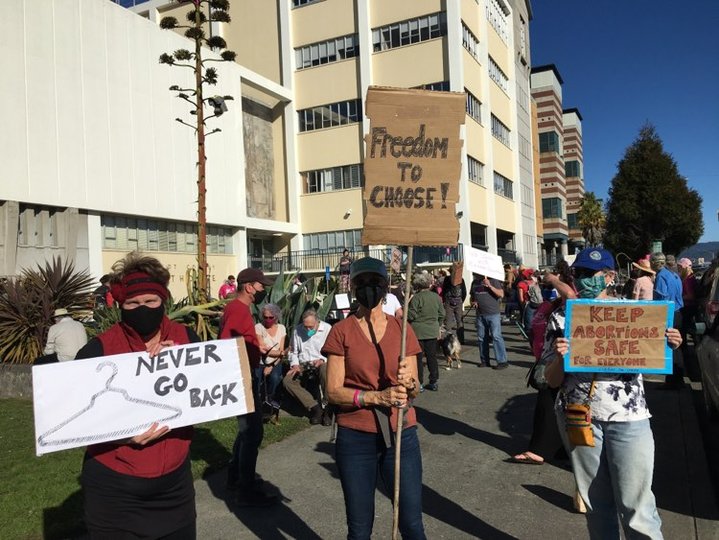
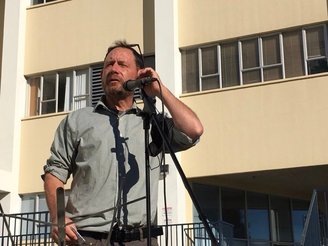
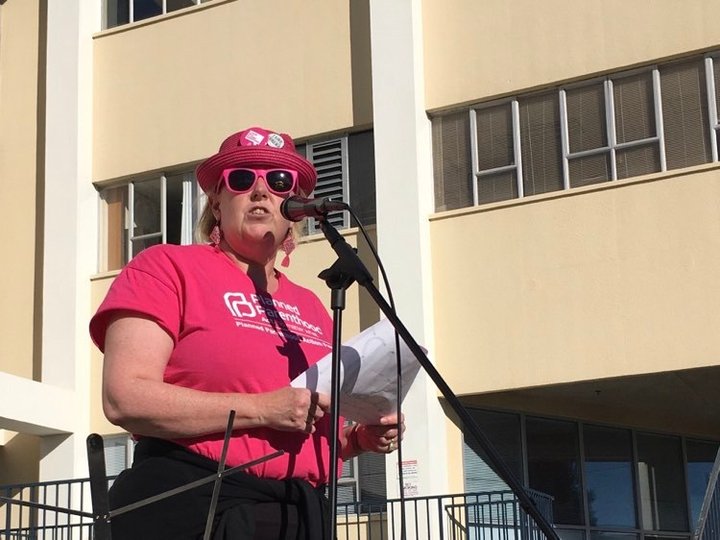
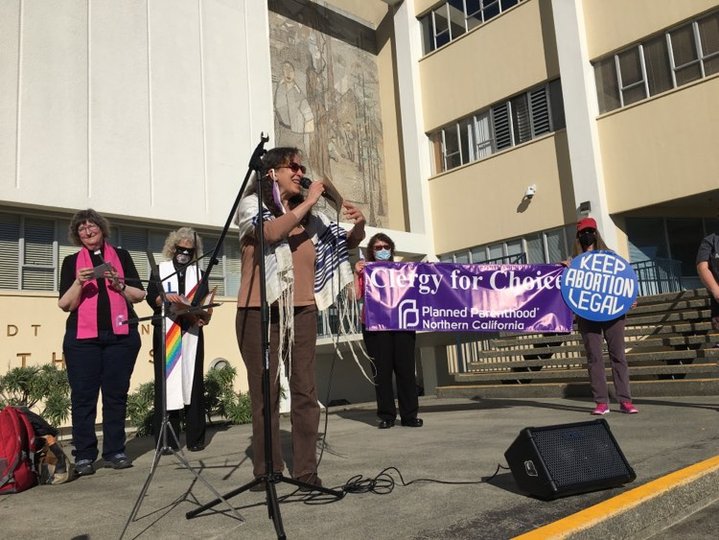
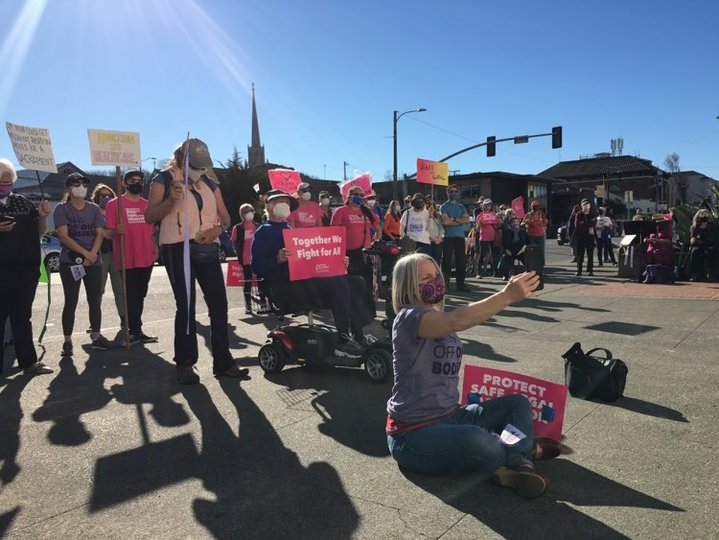
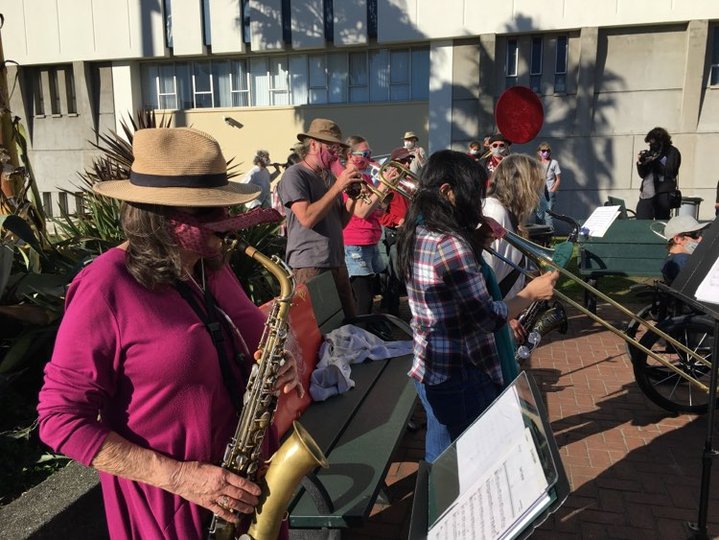
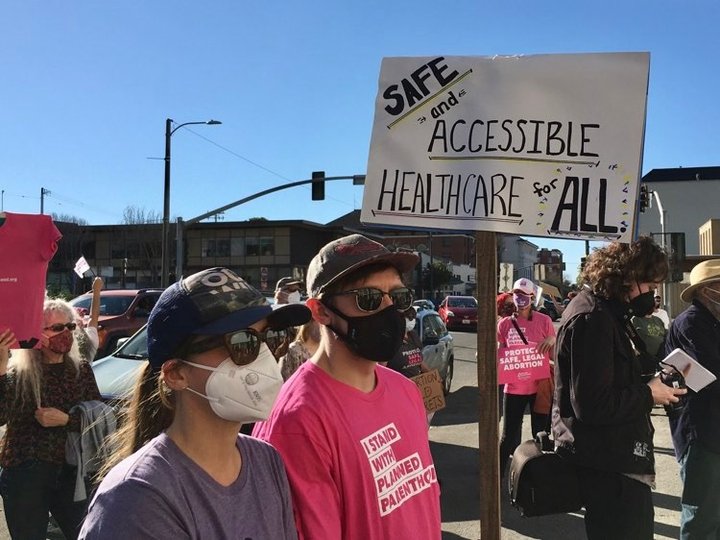
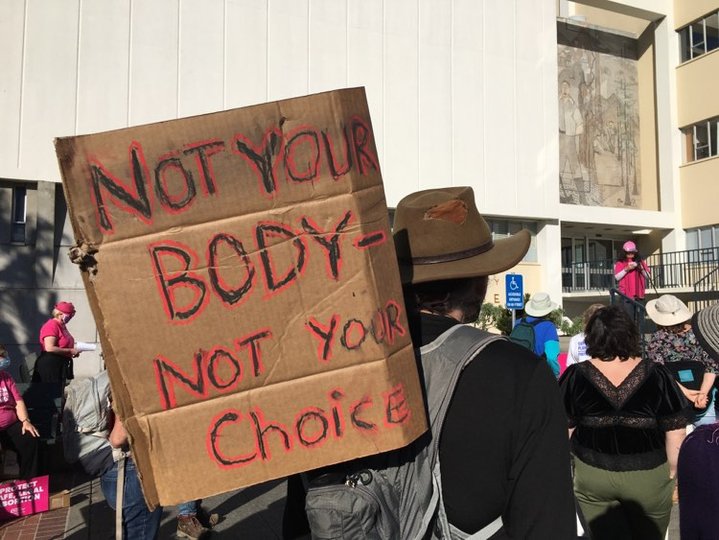
A crowd of roughly 100 people gathered in front of the Humboldt County Courthouse this afternoon for Planned Parenthood’s Roe the Vote rally, to honor the 49th anniversary of the landmark Supreme Court decision in Roe v. Wade and to protest the attacks on reproductive rights that have been occurring across the country.
“On this day in 1973, the Supreme Court decided ‘we recognize the right of the individual, married or single, to be free from unwanted governmental intrusion and to matters so fundamentally affecting a person as to bear or beget a child,’” Marisa Formosa, public affairs officer for the Planned Parenthood Northern California Action Fund said to the crowd. “That right necessarily includes the right of a woman to decide whether or not to terminate her pregnancy.”
Formosa went on to say that today, nearly 50 years later, that right has been under attack, with many states across the country restricting access to abortion, making it difficult for many to find ways to safely and legally terminate a pregnancy.
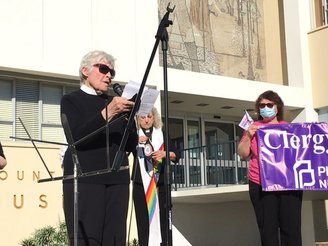
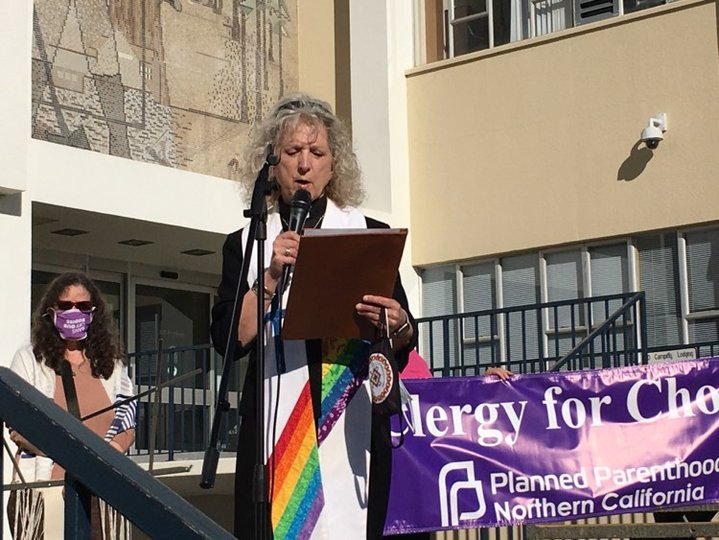
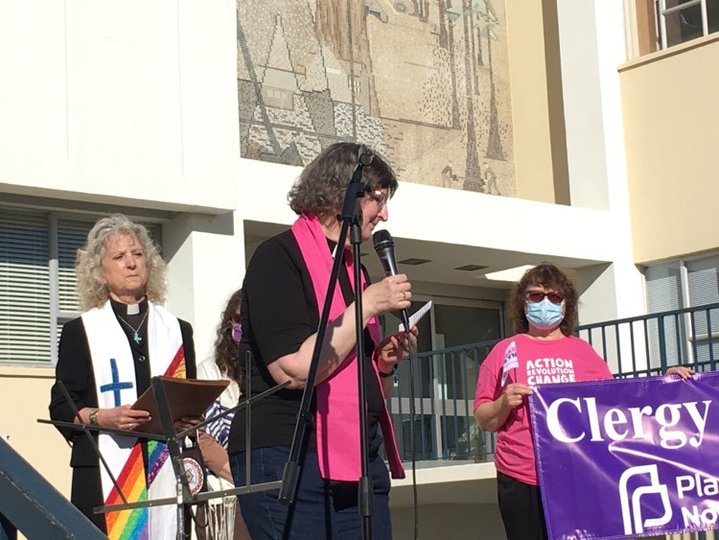
Reverend Anne Pierson of Clergy for Choice
Met with cheers from the crowd and honks of support from passing vehicles, many others took turns speaking during the rally, including several members of Clergy for Choice – a multi-faith collection of religious leaders who stand with organizations like Planned Parenthood in support of people’s reproductive rights.
“We at Clergy of Choice, along with many in the faith community, support a person’s right to receive the complete range of reproductive care throughout their lives,” Reverend Anne Pierson of the Christ Episcopol Church in Eureka said to the crowd. “We trust that God is with us all, no matter what our life circumstances or the results of decisions made.”
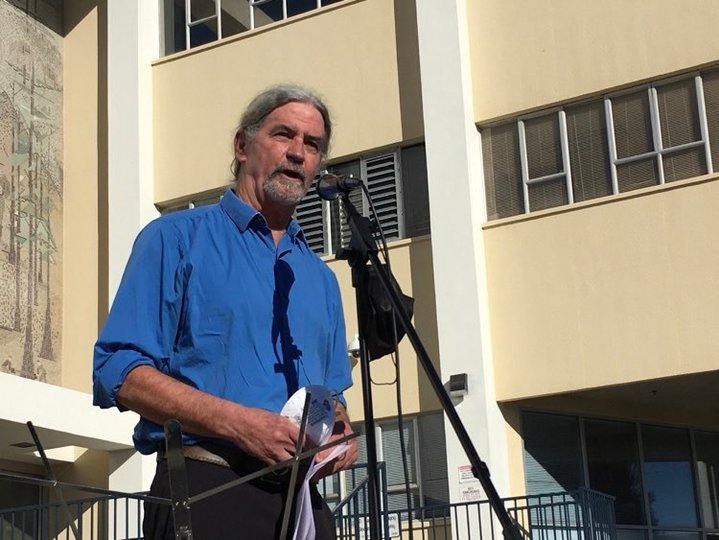
Several elected officials were in attendance, including Kim Bergel, Eureka City Councilmember and Board of Supervisors candidate, Third District Supervisor Mike Wilson and Fifth District Supervisor Steve Madrone. Wilson and Madrone both spoke during the rally, voicing their support for Planned Parenthood and abortion rights and emphasizing the importance of voting and holding our elected officials accountable.
Third District Supervisor Mike Wilson
“What happens in other states matters to us,” Wilson said during the rally. “That pressure is coming on us and we’re going to have to fight – both locally and statewide – for expanding and ensuring these rights.”
Following Wilson, Madrone took to the mic, echoing the importance of ensuring that abortion rights are maintained for our citizens. Madrone also emphasized the importance of men taking responsibility for family planning, proudly stating that he has a vasectomy.
“We have a responsibility as men as well,” Madrone said. “It’s not all on the women. But we’ve got to be able to protect the rights that we’ve all worked so hard for for women and for our families and our communities. So thank you for being here today.”
Closing out the speeches for the day was local business owner Sue McIntyre, who reminded people of the importance of sharing their own stories, supporting the organizations that help provide safe access to abortion and sexual health and the importance of voting to help keep abortion legal.
“Who you vote for matters,” McIntyre said. “Every vote counts. It does. Elect people who you know share our values, who support access to abortion, who know the importance of abortion as basic healthcare. And don’t stigmatize and talk about it negatively.”
Photo: Author Gary Ferguson with Mary M. Clare. Photo courtesy Gary Ferguson.
###
Naturalist
and best-selling nature writer Gary Ferguson joins the show to talk
about how nature can teach us important lessons to make us better
humans. From the interconnectedness of mycorrhizae bounding trees
together from how a wolf pack moves through Yellowstone, the natural
world is a countless source of wonder and inspiration that can help
us overcome our climate blues.
For
more about Gary’s work and philosophy, check out his new
project, Full
Ecology.