

Narcan-Packing Deputies Save Man Overdosing in Downtown Garberville Early This Morning, Sheriff’s Office Says
LoCO Staff / Monday, Feb. 28, 2022 @ 11:01 a.m. / Emergencies
Press release from the Humboldt County Sheriff’s Office:
Two Humboldt County Sheriff’s deputies saved the life of a man experiencing an opioid overdose emergency this morning in Garberville.
On Feb. 28, 2022, at about 12:48 a.m., sheriff’s deputies were dispatched to the 800 block of Redwood Drive for the report of an unresponsive male lying outside of a business.
Based upon deputies’ training, the man was determined to be experiencing an opioid overdose emergency. Deputies administered three doses of nasal Narcan, an opioid antagonist, and the man was successfully revived. He was then transported to a local hospital for further medical treatment.
Symptoms of an opioid overdose include: unconsciousness, limp body, extreme drowsiness, slow, shallow, irregular or no breathing, pale, blue, cold and/or clammy skin, choking, snoring, or gurgling sounds, slow or no heartbeat, and very small or “pinpoint” pupils. In the event of an overdose, Narcan can be administered and can reverse the effects of overdose and prevent death. Narcan is available to the public at no cost at the following locations:
- Department of Health and Human Services
908 7th Street, Eureka
707-268-2132- Humboldt Area Center for Harm Reduction
924 5th Street, Eureka
707-407-6013- Redwood Rural Health Center
101 West Coast Road, Redway
707-923-2783If someone you know is experiencing an overdose, call 9-1-1 immediately.
Anyone with information about this case or the illegal sale of opioids in Humboldt County is encouraged to call the Humboldt County Sheriff’s Office at (707) 445-7251 or the Sheriff’s Office Crime Tip line at (707) 268-2539.

BOOKED
Yesterday: 7 felonies, 17 misdemeanors, 0 infractions
JUDGED
Humboldt County Superior Court Calendar: Friday, Sept. 4
CHP REPORTS
No current incidents
ELSEWHERE
RHBB: CDPH Issues Immunization Recommendations for 2026-27 Respiratory Virus Season
RHBB: Redway Transfer Station to Close an Extra Day for Construction
RHBB: Dows Prairie Road to Close for Two Months for Culvert Repair
In a Chase, K9 Officer Helps Catch Man Wanted in Connected to Attempted Arcata Homicide
LoCO Staff / Monday, Feb. 28, 2022 @ 9:48 a.m. / Crime
Press release from the Humboldt County Sheriff’s Office:
On Feb. 27, 2022, at about 3 p.m., Humboldt County Sheriff’s deputies served an arrest warrant on a man wanted by the Arcata Police Department in connection to an attempted homicide investigation.
The suspect, 27-year-old Jesse Allen Beer, was believed to be camping in the Essex area. Deputies located Beer at a campsite near North Bank Road. Upon seeing deputies, Beer fled. After a brief foot pursuit, Beer was taken into custody with the assistance of HCSO K9 Yahtzee.
Beer was booked into the Humboldt County Correctional Facility on charges of attempted murder (PC 664/187(a)), assault likely to produce great bodily injury (PC 245(a)(4)), use of a deadly weapon – special allegation (PC 12022(b)(1)), causing great bodily injury in commission of a felony (PC 12022.7(a)), conspiracy to commit a crime (PC 182(a)(1)), possession of a stolen vehicle (PC 496d(a)), possession of burglary tools (PC 466), possession of a controlled substance (HS 11377(a)), resisting a peace officer (PC 148(a)(1)), first degree burglary (PC 459/461(a)), vandalism (PC 594(b)(1)), grand theft (PC 487(a)), possession of burglary tools (PC 466) and possession of a controlled substance paraphernalia (HS 11364(a)).
For more information regarding this case, please contact the Arcata Police Department.
MONDAYS WITH MICHAELE: I Left My Heart in Ferndale
LoCO Staff / Monday, Feb. 28, 2022 @ 8:45 a.m. / Mondays With Michaele
Humboldt’s President of Positivity just can’t get enough of the Eel River Valley! That’s why she’s kicking off the week with a little trip down Ferndale’s Main Street with her pal Lisa. After a quick stop at Chapman’s Bookery and More, they veer off the main strip to go admire The Gingerbread Mansion, unquestionably one of Humboldt most beloved historic buildings. What a treat!
Be like Michaele and make sure you get out and have yourself a little Humboldt adventure this week. Who knows? You might just run into her in real life instead of online. Ciao Bella!
# # #
Perhaps You’d Like to Explore Previous Mondays With Michaele For Some Reason!
As California Expands Medi-Cal, Hundreds of Thousands of Immigrants Will Still Be Left Behind
Ana B. Ibarra / Monday, Feb. 28, 2022 @ 7:02 a.m. / Sacramento
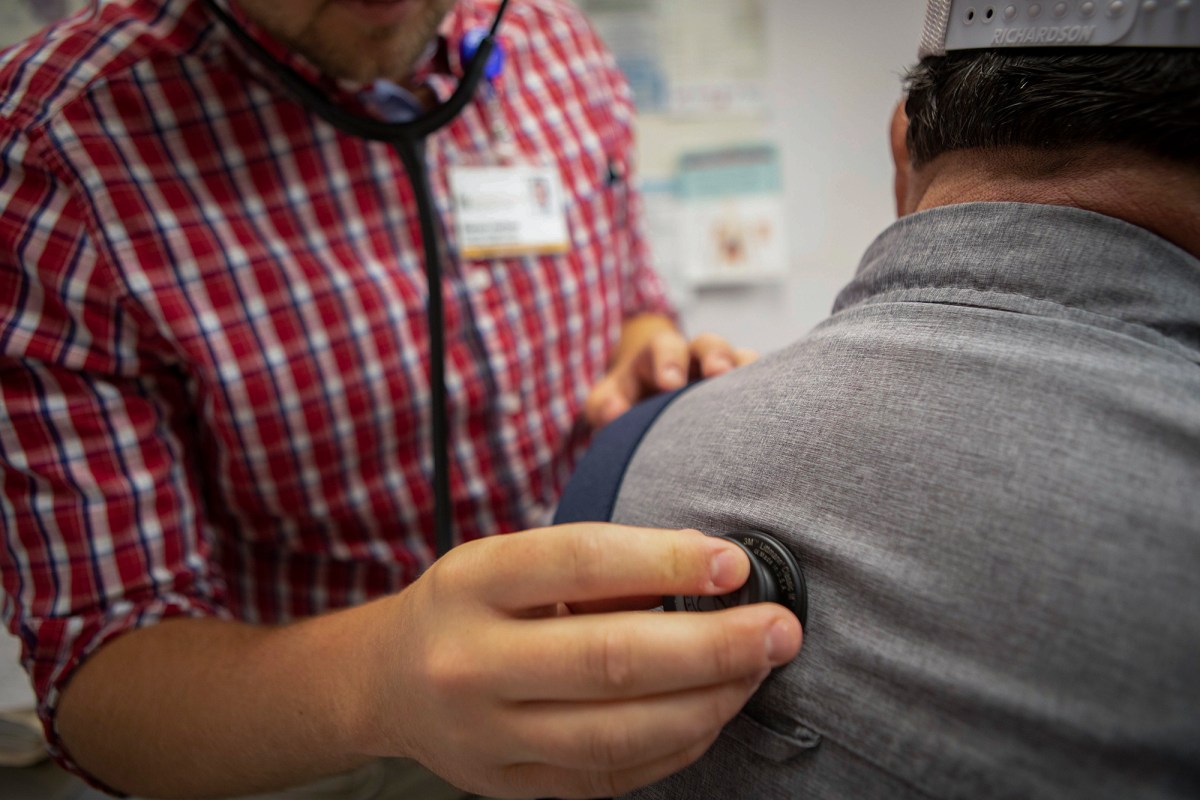
A physician’s assistant listens to a patient’s heartbeat at a clinic in Bieber. Photo by Anne Wernikoff for CalMatters
Lucia Marroquin knows what it’s like to wait out pain in hopes that it will go away on its own. She is suffering from kidney stones and may need surgery. But because she lacks health coverage, her first question when she falls ill is always “how much will that cost me?”
So when California officials announced plans to extend Medi-Cal coverage to more undocumented adults, the Fresno County resident was hopeful that she would finally qualify for health insurance.
But her farmworker husband’s annual income of $35,000 puts the couple over the limit to qualify for Medi-Cal, which is reserved for low-income residents. So even under Gov. Gavin Newsom’s planned expansion, she’ll likely be left with no health insurance.
Experts say allowing people to sign up for comprehensive Medi-Cal coverage regardless of their immigration status is the single biggest step California can take to insure as many people as possible in the current system. Newsom called his latest planned expansion “universal access to coverage.”
But the expansion would still leave several hundred thousand undocumented immigrants like Marroquin uninsured. They are unable to qualify because they have jobs where they earn above Medi-Cal’s annual income thresholds for most adults: $17,609 for single people, $23,792 for a couple and $36,156 for a family of four.
That leaves many low-income immigrants with few viable options for health coverage. While most Californians who earn over the Medi-Cal limit can get subsidized coverage through Covered California, undocumented people are not allowed to buy insurance through the marketplace under the federal Affordable Care Act.
“This is a great achievement and it is absolutely amazing, but there will still be some who will remain uninsured.”
— Arturo Vargas Bustamante, UCLA Fielding School of Public Health
On May 1, about 235,000 undocumented people aged 50 and older will gain new access to Medi-Cal under a law signed last summer. A second proposal, unveiled in Newsom’s January budget, would include another 700,000 undocumented adults in the 26 to 49 age group, starting as early as 2024, if approved in this year’s final budget. Children and young adults are already eligible.
“This is a great achievement and it is absolutely amazing, but there will still be some who will remain uninsured,” said Arturo Vargas Bustamante, health policy professor at the UCLA Fielding School of Public Health. “It’s not universal health care, but the situation for many immigrants in California will be much better.”In 2023, after Medi-Cal expands to cover undocumented immigrants 50 and older, about 3.2 million people will remain uninsured in California, according to researchers at the UC Berkeley Labor Center and the UCLA Center for Health Policy Research. Of those, 1.16 million will be unauthorized immigrants.
Even if Newsom’s next step is approved — covering undocumented adults 26 to 49 years old as early as 2024 — that would still leave roughly 450,000 undocumented people under 65 with no health coverage. (The difference between 1.16 million people and the 700,000 who would gain access.)
‘Doesn’t have to be free. Just a fair price’
The governor’s latest proposal would help Virginia Moscoso, a 29-year-old mother of two in Yolo County who is undocumented. She is enrolled in restricted-scope Medi-Cal, which is limited to emergencies and pregnancies, but hopes she would obtain full benefits if the proposal is approved in the final budget.
Full-scope benefits allow people coverage for routine, preventive care, long-term care and in-home supportive services.
Moscoso is especially interested in dental care. A few months back, she had a toothache that she alleviated with home remedies, but she is overdue for a checkup.
 Virginia Moscoso, who lives in the Yolo County town of Dunnigan, will qualify for full-scope Medi-Cal if Gov. Gavin Newsom’s budget is approved, expanding it to undocumented immigrants ages 26 through 49. But the expansion would still leave hundreds of thousands of undocumented immigrants who earn over the income threshold with no insurance.
In the past, Moscoso has worked seasonal jobs in farm fields, but her family of four mostly relies on her husband’s earnings of about $35,000, which means they would likely qualify — just barely — for Medi-Cal under Newsom’s expansion. Her children are already enrolled in Medi-Cal, and that’s a huge help, she said.
She’s grateful that apart from her pregnancies, she hasn’t needed to use her emergency Medi-Cal. But if she qualified for primary care, it would make a lot more sense than waiting until she’s ill in the hospital.
“For me it would be a great blessing,” Moscoso said. “Because when you go to the doctor it’s never just the one visit — you need tests and medication, and it adds up.”
Many people without health insurance seek care at community clinics where services may be offered on a sliding fee scale, so what they pay is based on their income.
That’s how Marroquin, 55, usually gets care. Each visit to the clinic costs her about $40. A recent ultrasound for her kidney stones cost her $200.
Marroquin has applied for emergency Medi-Cal in the past but was denied because her husband’s income of $35,000 was too high.
“It’s very difficult to be without coverage,” Marroquin said. “It doesn’t have to be free, just at a fair price. As my husband says, we can get car insurance, why can’t we buy health insurance?”
For most adult enrollees, the limit to qualify for Medi-Cal is 138% of the federal poverty level. Eligibility takes into account income and household size. (Certain groups like pregnant women qualify at slightly higher incomes.)
People like Marroquin with wages near that threshold are considered to be among the working poor: They are not earning a living wage in California. Most Californians in that situation can buy subsidized plans from Covered California. But undocumented immigrants cannot, and while they can purchase coverage directly from insurance companies, it is often unaffordable. For instance, premiums for a couple in their 50s could cost more than $1,000 a month, said Alex Hernandez, a health insurance agent in Merced.
“I think some people, especially if they have an illness, see the value of having insurance despite the cost. But it’s tough,” Hernandez said. Facing such high premiums, “most people are going to say forget it.”
Undocumented immigrants like Marroquin with wages near the threshold aren’t earning a living wage. But they don’t qualify for Medi-Cal or Covered California.
In 2016, California applied for a waiver from the federal government to allow undocumented people to buy from Covered California. But the state withdrew the application at the request of the Legislature when former President Donald Trump took office.
Insurance Commissioner Ricardo Lara, who spearheaded legislation for the waiver application when he was a state senator, said the request was rescinded because of concern that the Trump administration would use immigrants’ information against them.
The waiver application has not been resubmitted by the state, but it’s still an option, Lara said.
Even if a waiver were approved, undocumented residents would still have to purchase insurance without federal subsidies. The state could, in theory, provide some financial assistance, health advocates say.
Lara said Newsom made Medi-Cal expansion for undocumented immigrants a priority in this year’s budget, which shows just how much attitudes around the issue have changed.
“Back in the day this was an issue that people thought would cost you the election or cost you grief. It’s a tremendous shfit in attitude toward the undocumented community,” Lara said.
But to truly get to universal coverage, California will need to continue innovative approaches and drill down on affordability, Lara said. He authored a single-payer bill in 2017 and thinks that type of system is inevitable, but will take time. In the meantime, he said the state should keep expanding coverage where it can.
Last month, the Legislature’s latest version of a bill that would have created a state-funded single payer system died on the Assembly floor. It didn’t have enough votes, according to its author, Assemblymember Ash Kalra of San Jose.
Lack of access because of immigration status is just one piece of the remaining uninsured. Many other Californians forgo coverage despite being eligible, likely because of the cost. According to the UC Berkeley and UCLA study, 2 million uninsured people qualify for Medi-Cal, employer coverage or Covered California.
“The most common reason that people eligible for employer coverage remain uninsured is that they can’t afford the premium contributions,” said Laurel Lucia, director of the Health Care Program at UC Berkeley’s Labor Center.
People eligible for Medi-Cal may go without it for a number of reasons. A report from the California Health Care Foundation found that people may be deterred from applying because of misinformation or a negative perception of the Medi-Cal program. Some who tried applying reported having a hard time navigating the enrollment process.
Similarly, people eligible for Covered California may go without it because they either don’t know they are eligible for financial aid or may still not be able to afford it even with the help.
Covered California officials last month announced that because of a temporary boost in federal subsidies, two-thirds of enrollees in its most recent sign-up period were eligible to get coverage for $10 or less a month. This year’s enrollment period closed with a record 1.8 million Californians signed up for health insurance through the marketplace.
To further aid with affordability, the chairs of the Legislature’s health committees recently introduced bills that aim to reduce deductibles and copays for people enrolled through Covered California.
###
CALmatters.org is a nonprofit, nonpartisan media venture explaining California policies and politics.
(AUDIO) HUMBOLDT HOLDING UP: Comedian Josh Barnes on the Pros of the Humboldt Comedy Scene and Slogging Through the Unfunniness of COVID
LoCO Staff / Sunday, Feb. 27, 2022 @ 7 a.m. / Humboldt Holding Up
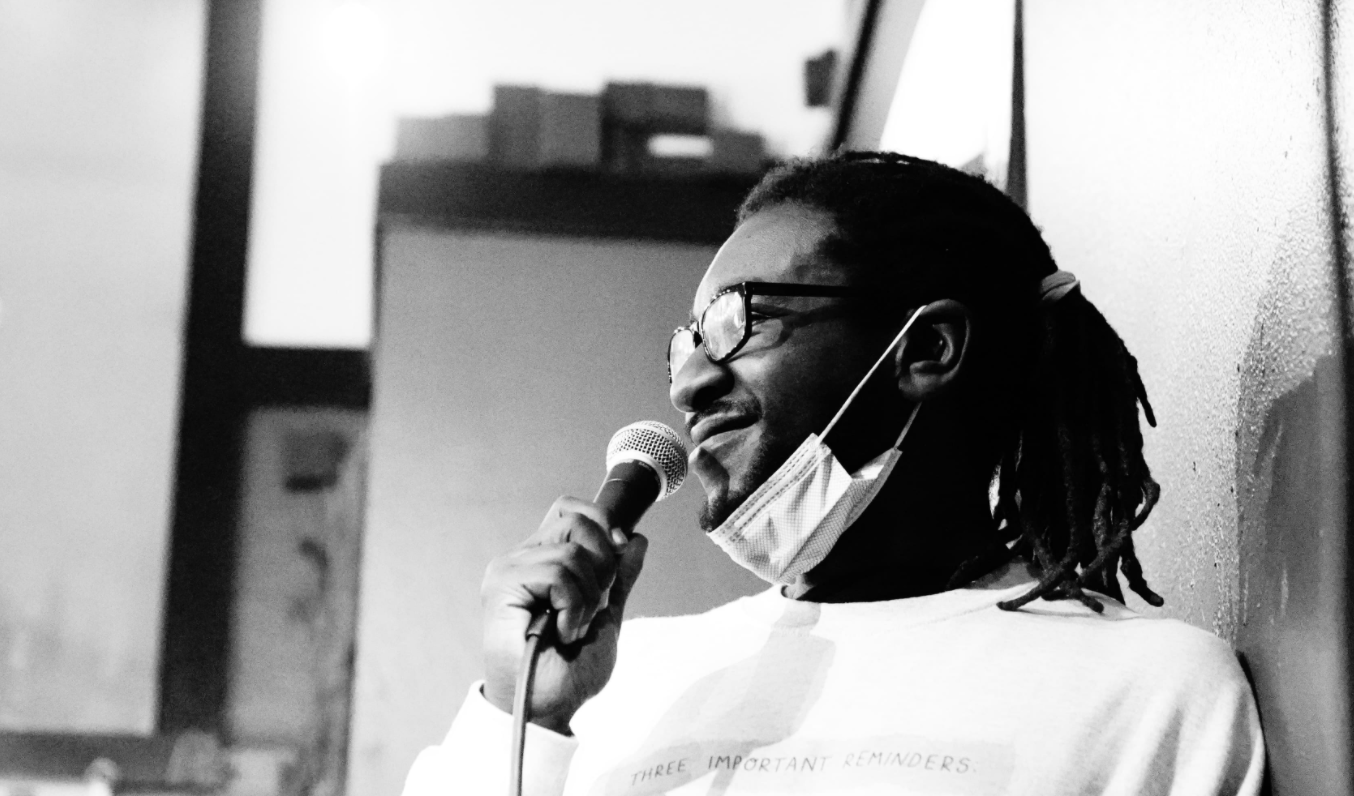
(AUDIO) Josh Barnes is Holding Up
Granted the last two years have arguably been the least funny of any of our lives, but the comedy nerds at Eureka’s Savage Henry Comedy Club managed to keep their venue open through much of the pandemic, offering up a space to gather for those brave enough to seek out the levity they were peddling.

After his stint in the U.S. Air Force came to an end nearly seven years ago, Josh Barnes moved from Southern California up to Humboldt County where he has spent many a night honing his comic craft on Savage Henry’s welcoming stage. On today’s episode of Humboldt Holding up, Josh talks about his comedy beginnings, what it was like during COVID times to try to hold together the scene he and his fellow yuk-slingers hold so dear, and his plans for future laugh extractions.
Click the audio player above to hear Josh’s chat with LoCO’s Andrew Goff and Stephanie McGeary and/or scroll through our lengthy roster of past Humboldt Holding Up guests below.
PREVIOUS HUMBOLDT HOLDING UP GUESTS:
- #84 Cal Poly Humboldt’s Jenn Capps, Connie Stewart & Mike Fisher
- #83 Eureka Artist Jesse Wiedel
- #82 Keyboard Veteran Brian Swislow
- #81 Lost Lewis Treasure Hunter Corey Lewis
- #80 “The Cannabis Conversation” Writer Jesse Duncan
- #79 Humboldt COAD’s Alison Sterling Nichols
- #78 Miranda’s Rescue Founder Shannon Miranda
- #77 Eureka Police Department Chief Steve Watson
- #76 ‘The Bartow Project’ Michelle Hernandez and Zuzka Sabata
- #75 Foggy Bottoms Boys Thomas and Cody Nicholson Stratton
- #74 North Coast News’ Nazy Javid
- #73 Pumpkin Carver Mike Craghead
- #72 Eureka Police Department Sergeant Leonard LaFrance
- #71 Eureka Artist Duane Flatmo
- #70 Arcata City Councilmember Sarah Schaefer
- #69 Humboldt Hot Air Director Neroli Devaney
- #68 St. Joe’s James Ladika and Austin Allison
- #67 Eureka Artist Richard Evans
- #66 NCRT’s Calder Johnson
- #65 TV Newsman Dave Silverbrand
- #63 Housing Policy Specialist Brian Heaton
- #62 Muralists Blake Reagan and Lucas Thornton
- #61 Arcata City Councilmember Emily Goldstein
- #60 Kayak Guide Eric Stockwell
- #59 Eureka City Councilmember Natalie Arroyo
- #58 Wiyot Cultural Center Manager Marnie Atkins
- #57 Humboldt County Growers’ Alliance’s Natalynne DeLapp
- #56 RREDC Executive Director Gregg Foster
- #55 Dell’Arte’s Michael Fields
- #54 Llama Wrangler Keagan Trischum
- #53 Crabs President David Sharp
- #52 Organic Dairy Farmers Kristina Radelfinger and Dorice Miranda
- #51 Former Arcata Mayor Alex Stillman
- #50 Cooperation Humboldt’s David Cobb
- #49 Ink People Center for the Arts’ Libby Maynard
- #48 Humboldt Bay Social Co-Owner Amy Cirincione O’Connor
- #47 Musician Lyndsey Battle
- #46 Mad River Brewing CEO Linda Cooley
- #45 LoCO Editor Hank Sims
- #44 Humboldt Republic’s Jason Brandi
- #43 Table Bluff Farmer Hannah Eisloeffel
- #42 Logger Bar Owner Kate Martin
- #41 Teacher/Rapper Zach “Zigzilla” Lehner
- #40 Madaket Captain “Zippo” Libby Tonning
- #39 Event Planner Alegria Sita
- #38 Food For People’s Anne Holcomb
- #37 AHHA President Nezzie Wade
- #36 Performance Artist Noël August/Tucker Noir
- #35 Eureka Mayor Susan Seaman
- #34 Eagle House Owner Jennifer Metz
- #33 Absynth Quartet Drummer Mike “Tofu” Schwartz
- #32 HACHR Executive Director Lasara Firefox Allen
- #31 Alchemy Distillery Owner Amy Bohner
- #30 Eureka City Councilmember Kati Moulton
- #29 Eureka City Councilmember Scott Bauer
- #28 Ungraceful Ager Barry Evans
- #27 Arcata City Councilmember Sofia Pereira
- #26 HumBrews Music Booker Laurel Weston
- #25 Eureka City Councilmember Kim Bergel
- #24 Film Commission’s Cassandra Hesseltine and Nate Adams
- #23 Marble Maker Topher Reynolds
- #22 Arcata Playhouse Director Jacqueline Dandeneau
- #21 Humboldt Political Junkie Eric Kirk
- #20 Rio Dell Mayor Debra Garnes
- #19 Second District Supervisor Estelle Fennell
- #18 Arcata Food Aficionado Jada Calypso Brotman
- #17 Body Piercer Jackie Silva
- #16 Dick Taylor Chocolate’s Adam Dick
- #15 FUHS Teachers Mark Thom and Inma Thompson
- #14 Eureka City Manager Miles Slattery
- #13 Savage Henry Co-Founder Chris Durant
- #12 Eureka Street Art Festival Organizer Jenna Catsos
- #11 SCRAP Humboldt Founder Tibora Bea
- #10 Gym Owner Tyler Parr
- #9 Six Rivers Brewery Co-Owner Meredith Maier
- #8 Multicultural Skincare Therapist Levia Love
- #7 Annie’s Cambodian Server and Social Worker Joshua Coppock
- #6 Eureka City Councilmember Austin Allison
- #5 HSU Professor Deidre Pike
- #4 Pastor Bethany Cseh
- #3 Singer/Songwriter Chris Parreira
- #2 Eureka City Councilmember Leslie Castellano
- #1 Arcata City Councilmember Paul Pitino
LETTER FROM ISTANBUL: My Friend in Kiev
James Tressler / Sunday, Feb. 27, 2022 @ 7 a.m. / Letter From Istanbul
When I woke up early Thursday morning, and saw in the news that the Russians had invaded Ukraine, my first thoughts were of Gokhan.
Here in Istanbul, we of course have been monitoring the crisis in Ukraine closely. After all, we are Black Sea neighbors. Turks have canceled planned holidays in Ukraine, and with inflation already skyrocketing here because of the lira’s woes, we can only imagine how the troubles up north will further add to our own problems.
But that morning, looking out at the cold, wet garden outside our small flat, I was thinking mostly of Gokhan, my friend in Kiev. Gokhan was one of my first friends when I arrived in Istanbul in 2010. We struck up a random conversation in a bar in Kadikoy one afternoon, and became instant friends. He was just 26 then, more than a decade younger than myself, but we hit it off, talking about literature, politics, history, and especially music. We shared a passion for all kinds of music, but especially metal. Over pints of Efes (though he generally preferred whiskey), we’d discuss the merits of early Metallica versus Megadeath, and in the same conversation drift over to the Ottomans or the early Republic days.
We were roommates for a time, but the neighbors soon wearied of our hard-partying ways, and the landlord sent us packing. After that, we sort of drifted apart. Gokhan was always between jobs it seemed, scraping by mostly on his wits and his proficient English, which enabled him to pay the rent by writing essays for desperate, lazy university students. His parents had divorced, his father gone off to Kazakhstan, where he had business interests, and his mother left to live with relatives in America.
Then, next thing I knew, Gokhan himself was gone. He left Istanbul, and his home country, for Kazakhstan. Over the next decade, we kept in touch via social media, chatting often about his life there, my life here, and reminiscing about the old days. He spent a few years in Astana (renamed Nur-Sultan), and later Almaty, getting by the same way he did in Istanbul, through various ever-changing jobs (teaching English, essay writing, translations, etc). Often I’d ask if he ever planned to return. He was always dead set against it. “Hell no, bro!” he’d always say.
The big reason, I gathered, was that he didn’t want to do his mandatory military service. If he ever returned to Turkey, he would be detained at the airport (most likely) and immediately sent into the army to fulfill his obligation. All men have to do their military service here, though there is a provision that now allows you do pay some money to avoid it (Gokhan doesn’t have that kind of money).
But even so, he has a university degree, and most likely his service would only be a year at most. Just come back and get it over with, I always wanted to say, but didn’t figuring it wanas his choice.
Anyway, a combination of things — the political unrest chiefly, but also restlessness — finally coaxed my old friend into leaving Kazakhstan early last year. Initially he settled in Dubai, but left after only a week or so and next thing I knew he was in Kiev. Surprised, I messaged him.
“Yeah, man! Change of plans!” he wrote.
Over the next few months, Gokhan began to settle in. He liked Kiev, liked its architecture, its cosmopolitan feel, and the people were friendly. Having lived in Kazakhstan for so long, and having a natural talent for languages, he had long since learned to get by communicating in Russian. He found a sales job, a proper job, at a company and proudly sent me an image of his new business card. This was just a month or two ago. He was elated, and I have to admit I was proud that he seemed to have at last found his niche.
Having traveled some of this world, and lived as a foreigner for many years, I am all too aware of how vulnerable you can feel, and the longing to find some attachment to your host country. I can recall the Gezi Park protests here in 2013, and the failed coup attempt three years later, not to mention the war in Syria and the sight of countless refugees on the streets. In these volatile times, it is vital to keep your connections close and options open. To be stranded in a foreign country, far from home, with few friends, no family and limited resources, one could find oneself in dire straits very fast indeed.
That is why, when I woke to the news of the Russian invasion Thursday morning, my thoughts were immediately with Gokhan. Man oh man: to have started a whole new life, only to have it be in a war zone. Ukraine: of all the places to be right now.
“How are you?” I wrote. We chatted for several minutes.
“I’m living outside the city center,” he said in a voice message. “The street is full of cars. People are fleeing the city. I heard some explosions earlier, up near the airport. I think the Russians are hitting the airport, but I can’t be sure.”
I asked how he was holding up.
“Just staying inside,” he said. “I’ve got enough stuff here at the house.” His boss had called and said there would be no work for the time being. As expected, all business has ground to a halt, with no idea what is going to happen in the next few days and beyond.
“Are you in touch with your family?” I asked. He wasn’t. And a few minutes later, he posted his father’s phone number as well as his map location in Kiev.
“Just in case anything happens to me,” he said. “There are sirens outside now, sirens everywhere. Some shit is going down, bro!”
Over breakfast my wife and I listened to the Turkish reports on the invasion, which the Turkish government has opposed by the way.
“They’re saying there’s no Internet in Ukraine right now,” my wife said.
But when I messaged Gokhan, he immediately replied. “Nope. I still got mine.” At the moment, he was standing in line at a supermarket, stocking up on groceries. “Once I get home, I don’t plan on going anywhere for at least the next 2-3 days.” He also wanted to grab some cash, but when he went to his local ATM, a line of several hundred people were waiting. “I’ll just have to try my luck again in the afternoon. Don’t worry about me, bro! I’ll survive one way or the other.”
I wished my old friend well, and to lay low, which I knew he would. He’s always been resourceful, a survivor. That’s something we have always had in common perhaps.
As I was writing this, I got another message. It was from John Driscoll, an old colleague from my days reporting at The Eureka Times-Standard. He wanted to know if I was OK. There he was in California, worrying about me in Turkey while I was worrying about my friend in Kiev.
After chatting with him, I took my son Leo to the market up the street. As we walked up the hill, I looked over my shoulder at the Bosphorus. Russian vessels, even war ships, pass by all the time, but that morning nothing seemed different. I guess it’s all a perspective. After all, we are just across the Black Sea, and as the old saying goes, “When our neighbor’s house is on fire, it’s time to look after our own.”
Early Friday morning, I woke to see that airstrikes had hit Kiev overnight.
“You still there?” I urgently messaged. He was. Again, living on the city’s outskirts left his neighborhood untouched. The good news? His company was transferring him and others to the company’s offices in Chisanau, the capital of nearby Moldova. They were scheduled to leave by car early Saturday morning.
“It’s just temporary, like three months,” Gokhan said. “But at least I’m getting the fuck out of here!”
I wished him luck.
###
James Tressler, a former Lost Coast resident, is a writer and teacher living in Istanbul.
GROWING OLD UNGRACEFULLY: The ACLU and Transgender Rights
Barry Evans / Sunday, Feb. 27, 2022 @ 7 a.m. / Growing Old Ungracefully
If you were around during the lead up to the 1988 election when vice-president George Bush defeated Michael Dukakis, you may recall the “card-carrying member of the ACLU” taunt that Bush repeatedly used against his opponent. He was, of course, piggy-backing on the old Joe McCarthy slur, who claimed during the Second Red Scare (1947-1957) that there were 57 “card-carrying Communists” working for the US Department of State. (The claim, widely reported, was unfounded, along with much of what the Senator said.)
At the time, I’d been an enthusiastic member of the ACLU for several years, but Bush’s “accusation” was all I needed to make sure I kept my membership card in my wallet, so I could join the worthy group being maligned by Bush. Although he ultimately won the election, Bush’s anti-ACLU tactics backfired, as membership grew in the wake of his claim. (Today, the ACLU comprises 1.7 million members, 500 staff attorneys and thousands of pro bono attorneys.)
It’s pretty easy to fault the organization, which has tried to stay true to its original, 1920, goal: “To defend and preserve the individual rights and liberties guaranteed to every person in this country by the Constitution and laws of the United States.” Although for Bush, and probably most Americans, the ACLU is a left-wing organization, it’s lost members over such controversial stances as its defense of: a neo-Nazi group in 1978 who wanted to march through a suburb of Chicago, Skokie, where many Holocaust survivors lived; “Ollie” North during the Iran-Contra affair (—North facilitated illegal weapons sales to Iran to fund Nicaraguan Contra guerrillas, but his trial relied on coerced testimony); and more recently, Georgia’s Ku Klux Klan, after the organization was rejected from the state’s “Adopt-a-Highway” program.
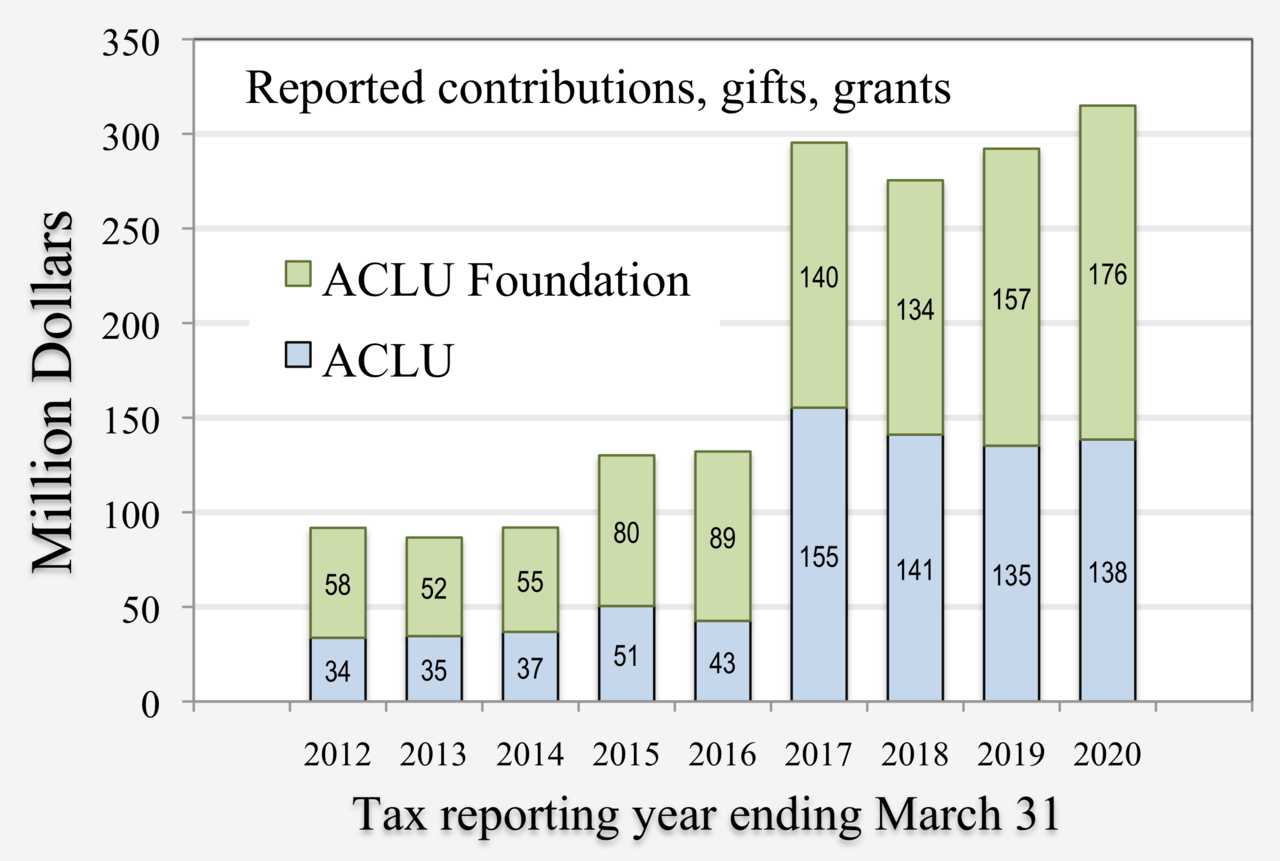
ACLU membership jumped and contributions increased following Trump’s 2017 executive order barring millions of refugees and citizens of seven Muslim-majority countries.
So yeah, the ACLU has taken positions which are hardly in line with its liberal reputation. I remember back in the 1980s, when I lived in Bellingham, WA, a group of us Nuclear Freeze activists met with a couple of ACLU legal officials from the Washington regional office. Someone—I think it was me—naively asked whether the stances taken by the ACLU were pretty cut-and-dried, that an issue was either obviously one the ACLU would defend or not. They two attorneys burst into laughter. “As if!” they said, adding that board members debated and argued every potential stance—even the ones that looked like no-brainers—until a hard-won consensus prevailed. Naive, as I say.
I was reminded of that meeting watching a video of two ACLU representatives discussing the topic of transgender rights, leading in with the statement, “Anti-LGBTQ lawmakers across the country are attacking our trans communities right now – overwhelmingly through cruel bills that target trans youth and their rights to healthcare and to play sports.” A question came up, What happens when “men are allowed to play on women’s teams”? The ACLU lawyer responded, “Good news. Men aren’t playing on women’s teams. Trans women are women.”
Which sent me to my go-to first reference, Wikipedia, since I wanted to know, What’s the definition of a trans woman? This should be easy, I thought (—I’m still that naive). A trans woman is a woman who was assigned male at birth, begins the entry on “Trans woman.” That settles it, right?
Except…here’s a person, say 14 years old in the thick of puberty, who fits the biological definition of “male,” having one X and one Y chromosome, with all the regular male genitalia, who announces to his parents or school counselor that “he” is a girl. My heart goes out to this individual (remembering my own emotional roller coaster during that phase of my life). Still, does someone’s self-definition make it so in society? Would the ACLU’s stance on gender rights mean that the organization would support this individual in transitioning, perhaps with hormone treatments and surgery?
My confusion only deepened when I went to Wikipedia’s “Talk” discussion on their “Trans woman” page. I’ve just spent the last hour or so—really, it’s that long—reading it. To get to the start of that simple, unequivocal statement, “A trans woman is a woman…” the (unpaid) Wikipedia editors and contributors have gone through hell and back again. (My heart’s with them, too.) As I say, I’m more confused than ever, glad that I’m not an ACLU attorney.
Fortunately, I have you, um, guys, out there to enlighten me. TIA!


