

How Much Do Wildfires Really Cost California’s Economy?
Grace Gedye / Monday, Oct. 11, 2021 @ 7:16 a.m. / Sacramento

Cook Martha Garcia preps food in the kitchen at Verde Mexican Rotisserie in South Lake Tahoe on Oct. 6, 2021. Owner Domi Chavarria says he lost more than $10,000 worth of inventory when the restaurant shut down for two weeks due to the Caldor Fire evacuation. Photo by Salgu Wissmath for CalMatters.
###
Not a single structure burned down in the city of South Lake Tahoe. And yet, the threat of the fast approaching Caldor Fire cost surrounding El Dorado County tens of millions of dollars, if not more.
In South Lake Tahoe, Domi Chavarria, co-owner of Verde Mexican Rotisserie, felt the devastation of the Caldor Fire even before the city was evacuated in August. Smoke had blanketed the city, and the tourists had mostly left. When the evacuation orders came down, Verde was stocked with food, almost all of which went bad during the more than two weeks the restaurant ultimately remained closed. Produce wilted; proteins went bad; prepared sauces couldn’t be used.
“All that stuff, none of that’s made to last weeks — it’s all made the last days,” says Chavarria. He estimates the lost inventory was worth between $10,000 and $13,000. None of it was covered by his insurance.
Losses like Chavarria’s add up — to at least $50.3 million in lost economic activity for El Dorado County, according to an initial estimate shared with CalMatters.
Knowing the true cost of wildfires could spur more ambitious action from both government and the private sector, experts say. For instance, tracking the costs systematically over several years could help policymakers figure out which fire prevention and mitigation strategies are most cost effective.
But right now, California has an incomplete understanding of how much wildfires cost the state each year.
The costs of business disruption, the cost of damage to uninsured homes, the cost of ecosystem damage, and the cost of secondary health impacts — such as those caused by wildfire smoke — aren’t being tracked.
Right now, we don’t have a comprehensive picture of the economic harm wildfires cause each year, according to Teresa Feo, senior science officer at the California Council on Science and Technology and lead author of a 2020 report from the council on the cost of wildfires in California.
“There isn’t a statewide systematic tracking effort to figure out these costs,” says Feo. She said it took only about a month of digging into the question to realize: ”Oh no, you can’t come up with a number, this is actually impossible with the existing data.”
The state does not track or estimate the cost of wildfires in a way that accounts for public health costs or ecological damage on a regular basis, confirmed Heather Williams, communications director for California Natural Resources Agency. “Those would always be a moving target since health impacts can occur years later. But with more research being funded, this may be more feasible to help the state better understand the economic and ecological impacts so we can continue to make science-based informed policy decisions,” Williams wrote in an email.
The different costs of wildfires
The initial analysis of the Caldor Fire’s economic impact was prepared by Tom Harris, an economist at the University of Nevada, Reno, for the Tahoe Prosperity Center, an economic development organization for the Lake Tahoe Basin. It estimates the combined losses of El Dorado and Nevada’s Douglas County at $93 million. And, says Harris, that preliminary estimate is low: It doesn’t include the losses in sectors like rental homes or recreation businesses. Nor does it include the lost economic activity caused by residents evacuating, and it doesn’t take into account the healthcare costs associated with wildfire smoke exposure.
Some costs are more immediate — the cost of Chavarria’s rotted food, for instance, and the fact that the fire took place over Labor Day weekend.
“That’s not a slow weekend in Tahoe,” says Chavarria. Tourism is about 63 percent of the Tahoe basin’s economy, according to a 2018 report from Tahoe Prosperity Center.
Between the slowdown in business due to smoke and the evacuation, Verde lost several weeks of revenue. Chavarria says that a month of sales for the restaurant is more than $100,000. Verde’s employees also went without paychecks for the two weeks the restaurant was shut down.
Nicole Smith, co-founder and taproom manager of South Lake Brewing Company, said her business fared better than many, partially because none of the beer went bad. But between the loss of sales in the company’s own taproom and the beer it sells to other local businesses, the brewery lost somewhere between $30,000 and $50,000 of revenue during the evacuation, estimates Smith.
In addition to lost business, some figures are easier to pin down, like the amount Cal Fire spends on fire suppression.
But the state, for example, does not systematically track deaths and health conditions linked to wildfire smoke exposure. The costs associated with smoke may be the largest costs we’re missing, says Feo. One study produced by public health department researchers and academics tracked the use of Medi-Cal services during San Diego’s 2007 fall fire season. It found that during the peak fire period, emergency room visits for respiratory conditions increased by 34% and visits for asthma increased by 113%. Especially concerning was a 136% increase in ER visits for children four and younger for asthma. That finding, the authors wrote, “is cause for particular concern because of the potential for long-term harm to children’s lung development.”
A systematic effort to track wildfire smoke effects would be especially profound, says Feo, because it reaches so far beyond the location of the fire. In 2018, for example, smoke from the Camp Fire clogged San Francisco, a city more than a 100 miles away. If you can put figures on the impact of smoke across the whole state, “who’s impacted by the fire suddenly changes very dramatically, and therefore who benefits from the prevention and mitigation changes,” she said.
Different approaches to wildfire data
The current approach to assessing the aftermath of wildfires is a hodgepodge of research looking into different aspects that is not led by any one agency.
A smattering of data collection efforts includes:
- The California Air Resources Board is funding a study of the health impact of wildfire smoke statewide for 2017, 2018 and 2020, which will be ready in three or four years;
- The board is also funding a study of lost work days due to wildfire smoke, which will be ready in a couple of years;
- Cal Fire is also increasing funding for research into forest health;
- The Department of Insurance tabulates the damage to insured homes for some major wildfires, but does not track damage from all wildfires each year;
- And a variety of academic studies.
Academic research on the cost of wildfires tends to come out several years later, and different studies focus on different fires using different methodologies. That makes it difficult to compare the findings, or track the costs over time.
These studies are also conducted based on the interests of the particular researcher, says Louise Comfort, a professor at the University of Pittsburgh and a faculty affiliate at UC Berkeley’s Center for Information Technology Research in the Interest of Society Policy Lab. “That doesn’t give us a comprehensive view,” Comfort says. She credits an UC-system wide effort to study the impacts of wildfires as a step in the right direction, but says the results are still not coming in in a standardized way.
The state may be in the best position to lead the effort on tracking the economic impact of wildfires. “The only thing that would give us a comprehensive view is if the state really said, ‘We want this kind of information,” says Comfort. But the state agencies shouldn’t go it alone, she says, they should engage experts in the university system.
Without statewide, systematically published numbers, it’s more difficult to compare how different regions are suffering from wildfires, or to assess the cost effectiveness of different wildfire prevention strategies. And it may be more challenging to justify spending on expensive, but nonetheless cost-effective, mitigation or prevention programs.
That’s a question that comes up when talking about spending taxpayer dollars, Feo said.
While wildfire costs aren’t tracked, there are some academic studies that attempt to estimate those costs and produce mind boggling figures. In 2020, for example, a team of researchers studied the nationwide impact of California’s 2018 wildfire season, and estimated that its economic damage totaled $148.5 billion.
The study, published in Nature Sustainability, captured direct capital costs, such as buildings burning down; health costs, including those related to air pollution exposure; and indirect losses such as the economic disruption of lost hours working, as well as disruption to regional and national supply chains.
The costs identified in that study exceed that of any disaster in the U.S. between the 9/11 terrorist attacks in 2001 and the ongoing COVID-19 pandemic, other than Hurricane Katrina, says Adam Rose, a research professor at University of Southern California and an expert in energy and environmental economics.
Rose said that a standardized methodology for assessing the total cost of wildfires should be established and applied on a regular basis — and it needs to be one that can be implemented relatively rapidly, as opposed to several years after a fire. That would allow a whole field of researchers to help track these costs, and would make their findings comparable. In addition to helping make the political case for government-led fire-prevention efforts, those numbers might spur private sector action on fire prevention efforts.
But not all experts said that measuring the costs associated with each wildfire season is important. William Siembieda, a professor emeritus at Cal Poly in San Luis Obispo and senior member of a Cal Poly team that prepared several of the state’s annual hazard mitigation plans, says he doesn’t know how policymakers would make use of those numbers.
What would be useful, Siembieda says, is for cities to model the economic impact of different levels of fire damage. What would be the cost if 5% of the city burned? What if 10% or 20% burned?
With those estimates, local officials could decide whether they’re prepared to eat that loss, insure against the risk, or pursue other strategies.
What’s next for victims?
For a couple weeks now, South Lake Tahoe residents and business owners have been reopening their restaurants, shops, and adventure outfits, taking stock of what happened. When Lisa Schafer, co-owner of Wildwood Makers Market, returned to the city and drove to her shop for the first time, she felt waves of different emotions. There was the fear she’d been holding on to — that her hometown, her house, and her business would all burn to a crisp. There was the gratitude she felt for the fact that they had all been spared.
“I cried the whole drive,” she said.
Her shop, which sells jewelry, wall decor, embroidery kits and other gifts, smelled smoky for her first few days back. It wasn’t a pleasant campfire smell; “it smelled like beef jerky.”
Business didn’t return to normal immediately; tourists didn’t rush back to the area. All told, Shafer lost about 60% of sales in September. Her insurance won’t cover that loss of business.
It’s clear, she says, that these fires are not going away. She said she wishes there were some sort of automatic aid for businesses and individuals impacted by the fire.
Ultimately, Wildwood Makers Market will bounce back from loss of business, Schafer said. But if something happens in the winter that disrupts the holiday shopping season, that could be “catastrophic,” she says. “One more hit would not be good for us.”
###
CALmatters.org is a nonprofit, nonpartisan media venture explaining California policies and politics.
BOOKED
Today: 3 felonies, 8 misdemeanors, 0 infractions
JUDGED
Humboldt County Superior Court Calendar: Today
CHP REPORTS
Us101 S / Redwood Dr Ofr (HM office): Traffic Hazard
ELSEWHERE
KINS’s Talk Shop: Talkshop September 7th, 2026 – Eureka Police
Governor’s Office: Happy Labor Day! California is the #1 for state for workers, #1 economy in the nation
Governor’s Office: Governor Newsom proclaims Labor Day
RHBB: Barn Destroyed as Fire Spreads to Second Structure Near Ferndale
OBITUARY: Mario Reveles, 1960-2021
LoCO Staff / Monday, Oct. 11, 2021 @ 6:53 a.m. / Obits
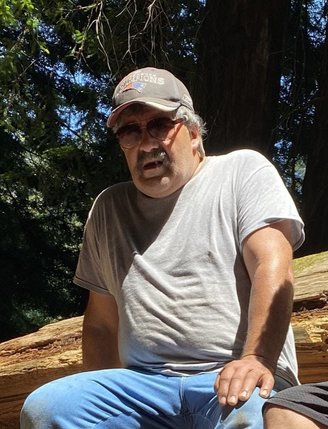
Mario Reveles
Born November 16, 1960
Died August 25, 2021
Mario Andres Reveles was born November 16, 1960 to Anastacio and Margarita Reveles at Redwood Memorial Hospital in Fortuna. He was part of the second set of twins ever born there. He died August 25, 2021 of complications stemming from having contracted Covid/Pneumonia. He was an altar boy at a young age and attended St. Joseph Elementary School as well as Fortuna Town School. Having grown up in Fortuna, he played on a variety of sports teams including little league baseball, Babe Ruth baseball, where he played on the All Star team, and Pop Warner football where he played on an undefeated team. High school football was a sport he excelled in as well. He also helped coach the Junior Giants, a team from Willits Ca., composed mainly of under privileged kids, some with physical disabilities. They played brilliantly for him all season long. They never lost a game.
A certified arborist by trade, he learned his craft working for Davey Tree Surgery in the East Bay where he ran crews and was a patroller for many years. He was also a district supervisor in San Ramon. He attended the Davey Tree Institute of Tree Services in Kent, Ohio. He could recite the Latin names of many trees and shrubs by heart. He met a good many people in the Fortuna area where he lived in his later years and he had a real talent for making his clients’ trees look beautiful. He was a Union Hod Carrier in his young adult days.
Most of all, he loved his family, friends, and music. Learning to play the guitar at a young age, he often gave free lessons to people and worked on their guitars to keep them tuned. He was a kind, gentle and funny man who was loved by everyone he met.
He is preceded in death by his mother and father, Margarita and Anastacio (Andy) Reveles, Brothers Efren, Joel, Carlitos, and Jorge Reveles. He leaves his lovely daughter Raevyn Reveles of Fortuna. He is survived by siblings Alberto Reveles of Pahrump, Nevada, Hector Reveles of Vacaville, Ca., Alicia Linfoot of Dos Rios, Ca. and Carlos Reveles of Fortuna. He is also survived by various nieces, nephews, and cousins.
A service will be held at the St. Joseph Catholic Church in Fortuna at 10 a.m. on Saturday, October 16, 2021 followed by a graveside service. A celebration of life will be held at 1800 Kenmar Road in Fortuna following.
###
The obituary above was submitted on behalf of Mario Reveles’ loved ones. The Lost Coast Outpost runs obituaries of Humboldt County residents at no charge. See guidelines here.
(AUDIO) HUMBOLDT HOLDING UP: Let’s Talk Psychedelics! Arcata City Councilmember Sarah Schaefer on the Council’s Recent Decriminalization of Entheogens
LoCO Staff / Sunday, Oct. 10, 2021 @ 7:30 a.m. / Humboldt Holding Up
Councilmember Schaefer is Holding Up
You’ve probably heard by now that the Arcata City Council recently passed a resolution decriminalizing the use of psychedelic plants and fungi (if you haven’t, read about it here), an item that was brought forward by advocacy group Decriminalize Nature Humboldt with support from City Councilmember Sarah Schaefer.
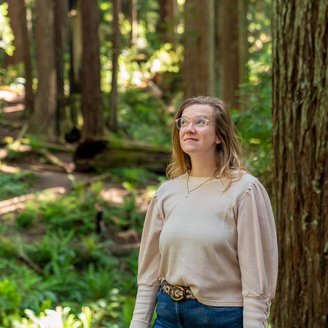
Schaefer amid the redwoods
“I think it’s a really important ideological stand against the war on
drugs and against the fact that we vilify any drug and anybody who uses
them since the 1970s,” Councilmember Schaefer told the Outpost. “Plants — like psilocybin, like mescaline, like ayahuasca — have been used in traditional ceremonies, for religious purposes, as rights of passage for cultural events for societies for millenia. And so it just doesn’t make sense that these plants and fungi would be illegal and would be such the center of controversy.”
On this week’s episode of Humboldt Holding Up — the Outpost’s lo-fi, but high-potency podcast — Schaefer dives deeper into her reasons for supporting this resolution, her appreciation for the history and uses of psychedelics and how she hopes this can help the people in her town seek alternative options to improve their mental health and well-being.
Of course, the councilmember cares about a lot of other issues and touches on other topics, including:
- The City of Arcata’s plans for $4.4 million in ARPA funds
- Establishing a safe parking program in Arcata to help the homeless
- Housing needs and plans for development of Arcata’s “Gateway District”
- What it’s been like to enter city council during the pandemic
- Her early local fame winning the Oyster Festival’s oyster calling contest at age seven
If you’re ready to expand your mind, click on the audio player above to listen to Schaefer’s chat with the Outpost‘s Andrew Goff and Stephanie McGeary and/or scroll through past guests below.
PREVIOUS HUMBOLDT HOLDING UP:
- #69 Humboldt Hot Air Director Neroli Devaney
- #68 St. Joes’ James Ladika and Austin Allison
- #67 Eureka Artist Richard Evans
- #66 NCRT’s Calder Johnson
- #65 TV Newsman Dave Silverbrand
- #63 Housing Policy Specialist Brian Heaton
- #62 Muralists Blake Reagan and Lucas Thornton
- #61 Arcata City Councilmember Emily Goldstein
- #60 Kayak Guide Eric Stockwell
- #59 Eureka City Councilmember Natalie Arroyo
- #58 Wiyot Cultural Center Manager Marnie Atkins
- #57 Humboldt County Growers’ Alliance’s Natalynne DeLapp
- #56 RREDC Executive Director Gregg Foster
- #55 Dell’Arte’s Michael Fields
- #54 Llama Wrangler Keagan Trischum
- #53 Crabs President David Sharp
- #52 Ferndale Organic Dairy Farmers Kristina Radelfinger and Dorice Miranda
- #51 Former Arcata Mayor Alex Stillman
- #50 Cooperation Humboldt’s David Cobb
- #49 Ink People Center for the Arts’ Libby Maynard
- #48 Humboldt Bay Social Co-Owner Amy Cirincione O’Connor
- #47 Musician Lyndsey Battle
- #46 Mad River Brewing CEO Linda Cooley
- #45 LoCO Editor Hank Sims
- #44 Humboldt Republic’s Jason Brandi
- #43 Table Bluff Farmer Hannah Eisloeffel
- #42 Logger Bar Owner Kate Martin
- #41 Teacher/Rapper Zach “Zigzilla” Lehner
- #40 Madaket Captain “Zippo” Libby Tonning
- #39 Event Planner Alegria Sita
- #38 Food For People’s Anne Holcomb
- #37 AHHA President Nezzie Wade
- #36 Performance Artist Noël August/Tucker Noir
- #35 Eureka Mayor Susan Seaman
- #34 Eagle House Owner Jennifer Metz
- #33 Absynth Quartet Drummer Mike “Tofu” Schwartz
- #32 HACHR Executive Director Lasara Firefox Allen
- #31 Alchemy Distiller Owner Amy Bohner
- #30 Eureka City Councilmember Kati Moulton
- #29 Eureka City Councilmember Scott Bauer
- #28 Ungraceful Ager Barry Evans
- #27 Arcata City Councilmember Sofia Pereira
- #26 HumBrews Music Booker Laurel Weston
- #25 Eureka City Councilmember Kim Bergel
- #24 Film Commission’s Cassandra Hesseltine and Nate Adams
- #23 Marble Maker Topher Reynolds
- #22 Arcata Playhouse Director Jacqueline Dandeneau
- #21 Humboldt Political Junkie Eric Kirk
- #20 Rio Dell Mayor Debra Garnes
- #19 Second District Supervisor Estelle Fennell
- #18 Arcata Food Aficionado Jada Calypso Brotman
- #17 Body Piercer Jackie Silva
- #16 Dick Taylor Chocolate’s Adam Dick
- #15 FUHS Teachers Mark Thom and Inma Thompson
- #14 Eureka City Manager Miles Slattery
- #13 Savage Henry Co-Founder Chris Durant
- #12 Eureka Street Art Festival Organizer Jenna Catsos
- #11 SCRAP Humboldt Founder Tibora Bea
- #10 Gym Owner Tyler Parr
- #9 Six Rivers Brewery Co-Owner Meredith Maier
- #8 Multicultural Skincare Therapist Levia Love
- #7 Annie’s Cambodian Server and Social Worker Joshua Coppock
- #6 Eureka City Councilmember Austin Allison
- #5 HSU Professor Deidre Pike
- #4 Pastor Bethany Cseh
- #3 Singer/Songwriter Chris Parreira
- #2 Eureka City Councilmember Leslie Castellano
- #1 Arcata City Councilmember Paul Pitino
GROWING OLD UNGRACEFULLY: Do You Throw the Switch?
Barry Evans / Sunday, Oct. 10, 2021 @ 7 a.m. / Growing Old Ungracefully
You’re
probably familiar with The
Trolley Problem — it’s
one of those “morality tests” that’s been around forever
(actually, 1967). You’re standing next to a switch that can divert
an out-of-control trolley car speeding down the track. If you do
nothing, the trolley goes straight ahead, killing five workers
standing on the track. If you throw the switch, the trolley is
diverted to the other track where one worker is standing. Do you
throw the switch to kill one worker — essentially murdering him —
or do nothing, in which case you’re innocent, even though five
workers die?

Illustration: McGeddon, via Wikimedia. Creative Commons license.
Most people opt for the “throw the switch” option, perhaps reasoning, “I may be innocent, but I’m still complicit in five deaths.” Typically, if you’re taking several of these tests, you might then be asked, “Is it moral to kill one person whose organs would be harvested to save the lives of five other people who would otherwise die?” If you respond the way most folks answer, you say, “Of course not.” You’d then be asked, “What’s the difference between the trolley scenario and the organ harvesting scenario?” (Take a moment to think about this.)
These sort of morality tests irritate me, for their otherworldly and contrived scenarios. In the first example, I’d yell (loudly!). If I’m given time to throw a switch, I’d sure as hell have time to shout a warning. In the second, the implication that “society” could choose to kill the odd person to save others for some utilitarian (the greatest benefit for the most people) reason clearly sucks; I don’t live in such a society, and neither do you. (Pause to consider Hiroshima and Nagasaki…)
Here’s another, more ambiguous than the ones above. A father gets a text message: “We’ve kidnapped your 10-year old daughter. Pay the ransom without contacting the police and we set her free. Don’t pay and she’ll die.” What does he do? Here’s how philosopher Chris Edwards responds, in a recent issue of Skeptic magazine:
[The father reasons] the kidnappers have no logical reason to set the girl free. If caught, the kidnappers would be guilty of multiple felonies already and to leave the girl alive would be to risk being identified later. After they receive the money, they would have no more use for the girl and, since they hold the girl, the father really has nothing to bargain with. Should the father pay the money? Logically, no. But I would pay in this situation. Wouldn’t you? The father might surmise that his daughter has a slightly higher chance of surviving if the payment is made.
That’s how the father reasons, but what about the kidnappers? What’s their thinking? Whether or not they receive the money, killing the girl opens them to murder charges, while not killing her makes them more vulnerable to being identified. So their best option is, receive the money and kill the girl. Meaning that the worst thing the father can do is to pay the ransom.
This is another irritating (and gruesome) thought experiment that sets up a dichotomy — pay/don’t pay — as if there are no other options. There are always options! (“All problems have at least three solutions.”) Contact the police, who understand, better than the father, the situation (and who know how to trace text messages); negotiate with the kidnappers — the father has money as a bargaining chip, so he makes it clear they only get the money as a quid pro quo for the girl’s life (meet on the bridge at midnight with the money, they come with the girl); do nothing (which would rattle them); bring the girl’s mother into it before you do anything; and etc.
I’d be interested in your take on any of these far-fetched scenarios. Am I being too rational and/or cynical?
ECONEWS REPORT: Broadway — Dangerous By Design?
The EcoNews Report / Saturday, Oct. 9, 2021 @ 10 a.m. / Environment
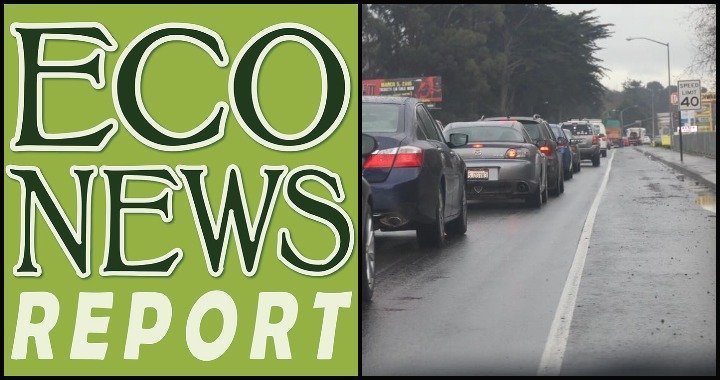
Broadway is one the most dangerous streets in California for pedestrians. In the last decade alone, at least 10 people have been killed and at least 14 people severely injured while walking or biking on Broadway.
What is being done about it? Colin Fiske of the Coalition for Responsible Transportation Priorities joins Gang Green to talk about what fixes can and should be undertaken immediately to make the roadway safer for all road users.
Want to take action? Sign the petition to Caltrans to demand immediate improvements here. Have you felt unsafe as a pedestrian? Mark the location to help drive improvements.
AUDIO:
“The EcoNews Report,” Oct. 8, 2021.
REQUIRED READING:
- ”Eureka May Propose New Roads Through Wetlands to Improve Broadway Corridor; Opponents Say Plans Aren’t Feasible,” Lost Coast Outpost, Oct. 28, 2020.
- ”Coalition for Responsible Transportation Priorities Holding Memorial on Friday for People Killed by Cars,” Redheaded Blackbelt, Aug. 23, 2021.
REQUIRED LISTENING:
- ”THE ECONEWS REPORT: Building Cities for People, Not Cars,” EcoNews Report, Sept. 25, 2020.
OBITUARY: Richard Olson, 1939-2021
LoCO Staff / Saturday, Oct. 9, 2021 @ 6:56 a.m. / Obits
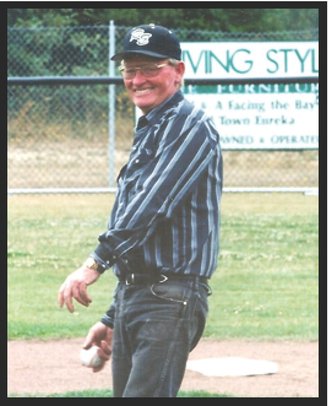
Richard “Rich” Olson, 81,
was born December 20,
1939, in Hettinger, North
Dakota to Rose Wandler
and Wriley Irwin. He
passed away peacefully Friday October 1, 2021, in
his Eureka home with his
family at his side.
Rich and Linda were married in Daglum, North Dakota on December 4, 1960, and moved to Eureka, where they have resided ever since, shortly after. Rich worked as a laborer/carpenter for many years for various people. He joined Eureka Construction, working for Pete Gill, until 1974 when he started RAO Construction.
Rich was a hard-working, dedicated man with the vision of building his company to what it is today. In 2002 he was named construction person of the year by Humboldt Builders Exchange, as well as receiving the Lifetime Achievement Award in 2016 and the 2011 Contractor of the Year from the Ingomar Club.
His legacy and work ethic continue through his three boys and grandchildren.
He was a member of Eureka Faith Center and the Eureka Elks Lodge.
Rich was an amateur boxer at the age of 21 and enjoyed golf and stock-car racing, but really kept himself busy with work. From his love of racing, Rich decided to pave the track at Redwood Acres Raceway and promoted racing for 26 years.
Rich was survived by Linda Olson, his wife of nearly 61 years; three sons, Rick (Suzi) Olson and stepdaughter Kasidy; Randy (Debbie) Olson and their children Randy Jr, Lacey and great-granddaughter Sophia; Rusty Olson and his children Shelby, great-grandson Laykin, Richard “Al” Olson II, great-granddaughter Ember, Rusty Jr, Alexus, Ricky, Royce, Jaylee, Vinitee and Halle; three sisters, Veronica “Ronnie” Ward, Paulette Papageorge, Pat Nichols; one brother, Merle Olson; sister-in-law Renae Heidt, and numerous nieces and nephews; many friends he considered close family: Bill and Terri O’Neill, The Marcelli Family, Ralph and Dorene Egerer, and Londa (Coy) and Tom Moore.
He was preceded in death by his parents, Rose and Einar Olson; mother- and father-in-law Emil and Frances Wendling; brother-in-law Tony Heidt; four brothers, Marvin Wilson, Jim Wilson, John Olson, and Larry Olson; three sisters, Mona Holt, Charlotte Horn and Martha Knorr; and good friends Gary Coy and Mercer “Old Man” Lawson Sr.
The Olson family would like to give a special thanks to Kristina Ellsworth and grandson Al for all their help allowing us to keep Rich at home and comfortable during his last few days.
In lieu of flowers the family is requesting donations be made to Redwood Fields for an honorary plaque for Rich’s involvement with youth sports. Donations can be mailed to PO Box 327 Cutten, CA 95534.
A memorial will be held on Sunday October 24, 2021, from 2 p.m. to 5 p.m. at the Redwood Acres Fairgrounds Home Economics Building located at 3750 Harris St., Eureka.
###
The obituary above was submitted on behalf of Richard Olson’s loved ones. The Lost Coast Outpost runs obituaries of Humboldt County residents at no charge. See guidelines here.
Board of Supervisors to Consider Vaccination Policy Options for County Employees
Ryan Burns / Friday, Oct. 8, 2021 @ 4:22 p.m. / COVID-19 and Humboldt , Local Government

File photo.
###
At a special meeting on Tuesday, the Humboldt County Board of Supervisors will consider implementing a COVID-19 vaccination policy covering all county employees.
The board will be presented with a range of possible policy options, including mandatory vaccinations for all employees except those with medical or religious exemptions.
In a report to the board, county staff says such mandates are legally enforceable. “Federal and state law make it clear that employers may require employees to receive an FDA-approved vaccination against COVID-19 infection” as long as the employer doesn’t discriminate and provides reasonable accommodations for employees with disabilities or sincerely held religious beliefs, the report says.
Nearly 400 million doses of COVID vaccines have been administered in the U.S. since December 14, and public health officials attest to their safety and efficacy.
“COVID-19 vaccines are one of the most important tools to end the COVID-19 pandemic, and this option presents the best opportunity to reduce the spread of the virus that causes COVID-19 in the workplace,” the county staff report says. It goes on to note the CDC’s advice that all three federally approved vaccines are safe, free and effective at helping protect against severe disease and death from the virus and its variants, including the Delta variant.
In conversations with the Outpost, a majority of county supervisors said they would likely support a policy requiring regular testing of all unvaccinated workers, though they said they’re looking forward to hearing feedback from the workforce. (Fifth District Supervisor Steve Madrone could not be reached before publication time.)
First District Supervisor Rex Bohn said he’s a proponent of the jab personally. “I am pro-vaccine because I see the results, and I’m looking out for my grandkids,” he said.
Bohn tested positive for COVID in August despite being fully vaccinated, and he credits the vaccine with making his symptoms mild and allowing a quick recovery.
Unvaccinated people in California are seven times more likely to contract COVID and 17 times more likely to die from it than fully vaccinated people, according to the latest state data.
Bohn said he has a lot of friends who are against the vaccines, and he’s gotten lots of emails with links to stories spreading misinformation and conspiracy theories. But he believes the data coming from public health authorities.
“When you read that [more] than 90 percent of all people having fatalities and severe cases where they wind up in the hospital are unvaccinated, it makes you wonder if there’s something there,” he deadpanned. “But with that, I think everybody has a choice what to do with their body. So if you don’t take the vaccine, you need to test on a weekly basis. … I’d have a hard time supporting a full vaccine mandate, [but] I do support a vaccine mandate with a testing option.”
Second District Supervisor Michelle Bushnell said she’s pretty much on the same page. “I don’t have a right to tell somebody they have to get a vaccine,” she said. “I can encourage, I can help, I can lead them if they so choose.” But she said she’d stop short of requiring jabs for all county workers. “I think a testing option is something we could do to ensure the safety of our employees.”
However, Fourth District Supervisor and Board Chair Virginia Bass said she’s been told that regularly testing the unvaxxed in a workforce as big as the county’s could be prohibitively expensive. One quote was for $3.9 million annually, she said.
“My personal wish [is that] we could make sure everybody is vaccinated and safe,” Bass said in a recent phone conversation. “We’ve got employees begging for us to require vaccinations, and of course we’ve got employees that are not very keen on the idea. … In a perfect world, everyone would get their vaccine, but that’s not where we live right now. … I think forcing [a vaccine mandate] would fracture the county at a time when we don’t need it.”
In recent weeks, an unfounded rumor began circulating, claiming that county supervisors would soon consider compulsory vaccinations for all county residents, not just employees. The rumor may have been sparked by an online petition calling for a countywide policy requiring proof of vaccination to enter all indoor public places.
Bohn and Bushnell said they were flooded by calls and emails ahead of last Tuesday’s Board of Supervisors meeting from people outraged by the false rumor. Many forwarded links to an online initiative dubbed the Humboldt Freedom Coalition, whose stated goal is cultivating “a movement which pushes back on the prevailing narrative with our own, unique brand of journalism.” (Their brand apparently includes blatant falsehoods. They claim, for example, that “the overwhelming majority” of Humboldt County residents are invulnerable to COVID-19.)
Third District Supervisor Mike Wilson said he was reluctant to take a definitive stance before Tuesday’s deliberations, but he said he’s open to the possibility of a vaccine mandate.
“In general it looks to me like [such a mandate] is the direction we’re gonna need to go if we’re gonna get a handle on these things,” he said, noting that other agencies and companies in both the public and private sectors have implemented such policies.
The City of Eureka passed a mandatory employee vaccination policy on Tuesday. The State of California now requires vaccinations for all workers in health care facilities. The City of Los Angeles just passed an ordinance requiring proof of vaccination to enter indoor restaurants, shopping malls, movie theaters, hair and nail salons and many other indoor venues, and the City of San Francisco already has such a policy.
Wilson predicted that health insurance companies may soon start increasing rates to cover unvaccinated people, which could have a big fiscal impact on government agencies. And, like Bass, he said the steep cost of regular testing could play a factor in his decision on a county policy.
“First and foremost is the safety of our employees and the public,” Wilson said. “We have to acknowledge that that’s our primary concern, but cost isn’t totally off the table in terms of how we develop a policy to keep people safe.”
Bushnell encouraged county employees to speak up either by emailing the supervisors or contributing to public comments at Tuesday’s meeting.
“This is going to affect our staff either way,” she said. “This is about them.”


