

MONDAYS WITH MICHAELE: She’s Jammin’
LoCO Staff / Monday, Jan. 31, 2022 @ 8:30 a.m. / Mondays With Michaele
Photos: Matt Filar
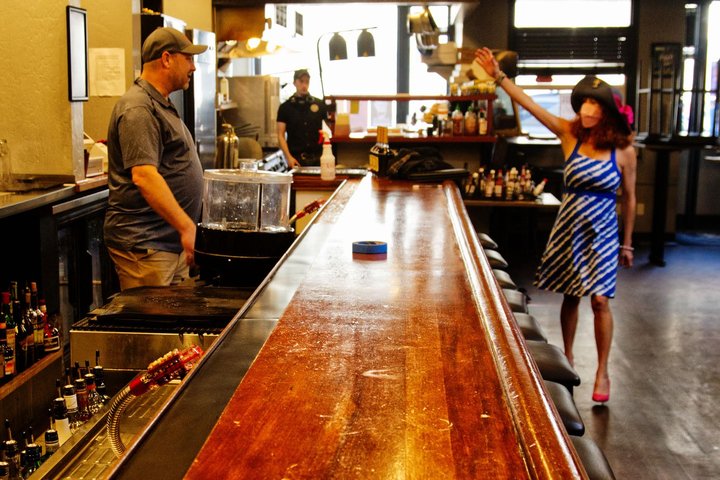
Your President of Positivity is ready to shake what her mama gave her this year! That’s why it was her great honor this week to hang with Gabe Pressure and DJ D’Vinity at The Jam in Arcata, the spot where the pair drop Afrobeat and reggae music every other Wednesday for your getting down needs. Work them into your week when you’re feeling brave enough to leave the house. Ciao Bella!



BOOKED
Today: 12 felonies, 16 misdemeanors, 0 infractions
JUDGED
Humboldt County Superior Court Calendar: Friday, Sept. 4
CHP REPORTS
4250 Mm299 W Hum R42.50 (HM office): Trfc Collision-1141 Enrt
ELSEWHERE
RHBB: CDPH Issues Immunization Recommendations for 2026-27 Respiratory Virus Season
RHBB: Redway Transfer Station to Close an Extra Day for Construction
RHBB: Dows Prairie Road to Close for Two Months for Culvert Repair
Gavin Newsom Was the Face of Legal Cannabis in California. Can He Fix Its Problems?
Alexei Koseff / Monday, Jan. 31, 2022 @ 7:15 a.m. / Sacramento
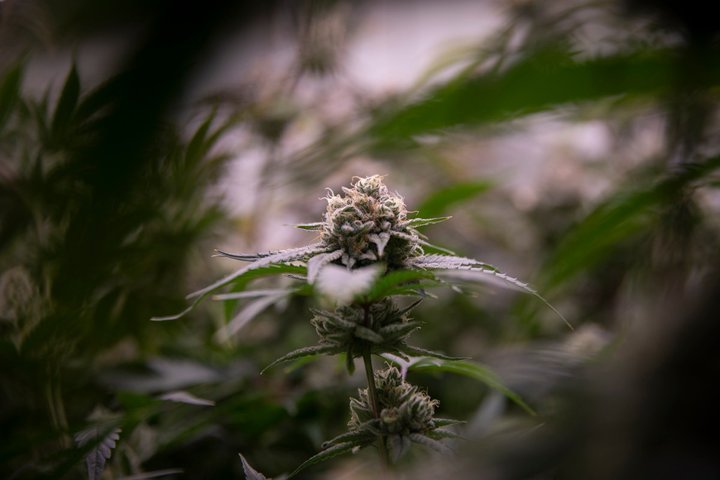
Cannabis plants at the Pure Beauty growing site in Sacramento on Jan. 26, 2022. Photo by Miguel Gutierrez Jr., CalMatters
###
When California voters legalized marijuana for recreational use in November 2016, it was also a victory for Gavin Newsom, who spent months traveling the state as the face of the campaign. At an election night party at a San Francisco nightclub, the then-lieutenant governor celebrated this “point of pride,” telling attendees that California had sent a “message powerfully to the rest of the nation.”
It was an important resume-building moment for Newsom, already deep into his first run for governor, who during decades in office has put himself at the forefront of political change. In a profile in Billboard magazine a few months later, he acknowledged that his legacy and that of Proposition 64, the legalization measure, were now tied together:
“Put it this way: Everything that goes wrong, you’re looking at the poster child.”
Five years later, Newsom is governor, and farmers, dispensary owners and other advocates are calling on him to rescue a legal market they say has been pushed to the brink of collapse by a steep drop in prices — and the inattention of a man who was once its most prominent proponent.
“He championed our message and he rode our coattails all the way to the top,” said Michael “Mikey” Steinmetz, co-founder of Flow Cannabis Co., a manufacturer and distributor. “We feel that he has turned his back in some capacity.”
The cannabis industry’s appeal for help is aggressively aimed at the heap of taxes that put it at a disadvantage with the robust illicit market in California. Steinmetz has proposed a boycott of the state’s cultivation tax unless there is financial relief in the upcoming state budget.
Newsom expressed support for taking unspecified steps to “stabilize the market” while unveiling his budget proposal on Jan. 10, but he seems unlikely to embrace radical changes to the system he put his name on with Prop. 64. No plan has yet materialized, and his office declined to make him available for an interview.
“It is an oversimplification to say that tax reduction will solve all of the industry’s problems,” Nicole Elliott, director of Newsom’s Department of Cannabis Control, told CalMatters. “It’s just a vast oversimplification of the number of variables that impact the health of the legal market and that support or foster illegal activity. It is not tax alone.”
Pro-legalization, but not pro-marijuana
Newsom once stood, cautiously, at the forefront of the legalization movement in California. He declared at the time that he was not “pro-marijuana” — he says he has never tried it — but “vehemently anti-prohibition.”
As lieutenant governor, he formed a blue ribbon commission on marijuana policy, which issued a report in 2015 warning that legalization would be a “process that unfolds over many years requiring sustained attention to implementation.” Prop. 64 followed the next year, pitched by Newsom more as an opportunity for social justice — to erase the damage of a drug war that had disproportionately targeted Blacks and Latinos — than for new tax revenue.
After 57% of California voters approved the measure, his focus has shifted to issues including health care, homelessness and early childhood education. In his first three years as governor, Newsom rarely discussed marijuana policy publicly, even before the coronavirus pandemic response consumed his administration.
That silence has disappointed many in the cannabis industry who expected he would continue to lead on the issue.
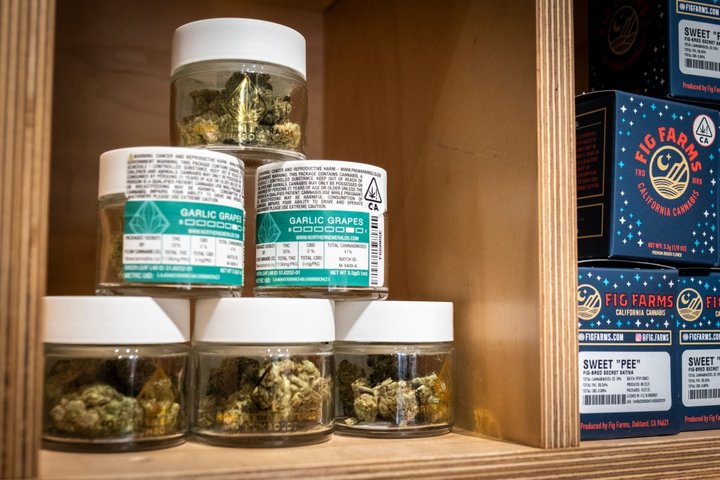
Cannabis products for sale at Bloom Room at Union Square in San Francisco on Jan. 11 2022. Photo by Martin do Nascimento, CalMatters
Some steps are viewed positively — consolidating the state’s three separate cannabis licensing programs into a single department and, in what was perhaps an industry-saving move, declaring marijuana dispensaries and delivery services an essential business that could remain open during the pandemic.
But there is widespread frustration with Newsom’s inaction on the problems preventing the licensed system from competing as a viable alternative to the dominant illicit market. Legal sales in California reached $4.4 billion in 2020, according to the industry publication MJBizDaily, while experts estimate that illegal sales could be at least twice as much.
Difficult transition to legal market
Those problems are not entirely Newsom’s creation.
Long before legalization, the Emerald Triangle of Mendocino, Humboldt and Trinity counties established itself as the base of marijuana cultivation for the entire country, making the transition to a regulated system uniquely challenging in California. Many long-standing farmers have been reluctant to make the jump. And despite a stated intent to give small growers a five-year head start, regulations on acreage limits adopted before Newsom became governor, though not over his opposition, opened the door for investors to link parcels into megafarms and flood the market with their crop.
Prop. 64 requires local governments to opt in, so recreational sales are still blocked in about two-thirds of jurisdictions, including some large cities such as Bakersfield and Anaheim. There are 866 licensed dispensaries in California, along with 374 licensed marijuana delivery businesses. That’s just a fraction of the number per capita in other states where cannabis is legal, including Oregon, Washington, Colorado and even Oklahoma. Growers and distributors say they have fewer shops where to sell their products now than when only medical marijuana was legal and licensing for dispensaries was looser.
In addition, taxes — stacked by state and local authorities for growing, distributing and selling — raise the price of legal marijuana by as much as 50% for consumers.
“It is an oversimplification to say that tax reduction will solve all of the industry’s problems.”
— Nicole Elliott, director of the california Department of Cannabis Control
Industry advocates argue that the Newsom administration has not done nearly enough to lower costs for licensed businesses, or to expand the legal market.
“He’s responsible for setting the agenda for what’s important in the state,” said Imelda Walavalkar, chief executive officer of Pure Beauty, an “environmentally conscious” marijuana brand that has indoor growing and production facilities in Sacramento. “It doesn’t seem like a super priority for them.”
Related:
The state, for instance, has not ramped up pressure or incentives to persuade reluctant communities to permit recreational marijuana sales. Social equity programs started by some cities and counties to diversify the industry with more people of color, formerly incarcerated people and residents of neighborhoods with historically disproportionate marijuana arrest rates are taking years to get off the ground.
Last year, Newsom vetoed the industry’s priority legislation, which would have authorized billboard advertising on California freeways, citing the need to protect children from exposure to marijuana.
Walavalkar said a vicious cycle of competition — with venture capital-backed businesses that can afford to operate at a loss to gain market share and licensed growers who continue to divert some of their crop to the illegal market to subsidize their operations — has driven prices in a race to the bottom.
“There’s just not a big margin left, no matter how you slice it or how slimmed down you are,” she said.
‘End of days’ for small farmers
The situation has reached a breaking point in recent months for growers including Ingrid Tsong, who runs Beija Flor Farms in Mendocino County with her husband, Jonathan Wentzel. Prices have fallen so far that their business is now losing money, and the couple is unsure they can afford to plant a crop this year.
“It is like end of days here. We do not know,” Tsong said. “I can’t find my way through this morass.”
Tsong said she and Wentzel were skeptical of Prop. 64, because they believe it lacked sufficient protections for the well-established industry of small cannabis farmers that has long existed on the margins in California. Still, after it passed, they stepped forward to license their operation.
The combination of high taxes and fees and an acreage cap for their farm, an oversupply of marijuana on the legal market and few places to sell it, has squeezed them from all directions. Tsong said their crop last fall cost about $460 per pound to produce, a third of that from California’s cultivation tax for growers. But wholesale prices have dropped to about $300 per pound in recent weeks, compared to as much as $800 per pound at the same time last year.
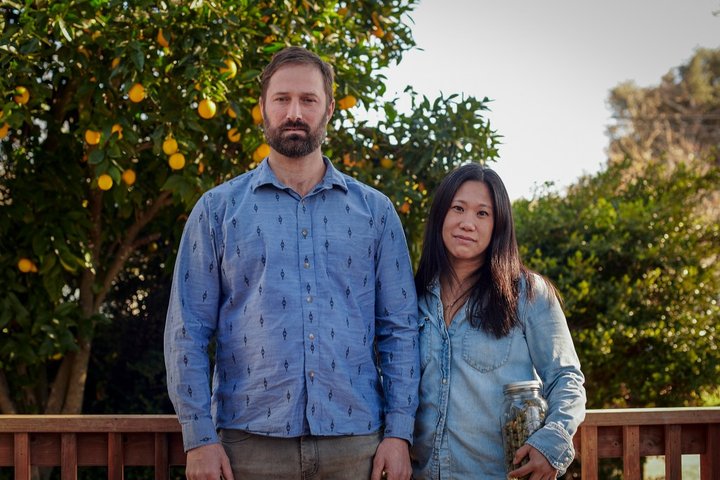
Jonathan Wentzel and Ingrid Tsong at their home in Healdsburg on Jan. 27, 2022. Wentzel and Tsong run Beija Flor Farms in Mendocino County. Photo by Paul Collins for CalMatters
The couple has already dipped into savings to stay afloat, Tsong said. Because cannabis is still illegal under federal law, they do not have access to bank loans or agricultural aid programs available to other farmers, leaving them without the capital they need to front the cost of production at the start of a new season.
While Beija Flor Farms, which harvests a piece of property that has been in Wentzel’s family through several generations of growing cannabis, is better positioned to survive than many small operations in the Emerald Triangle, the financial hit of sitting out a year is still difficult for Tsong to fathom. The couple has already pulled from their savings.
A decision looms, as Tsong and Wentzel will need to start preparing to put plants in the ground in May. Their calculation could change if the market turns around or the state takes quick action on relief for the cannabis industry — Tsong is hoping some of the state’s $21 billion discretionary surplus can go to a tax rebate for small farmers — but even a scaled-backed crop feels like a risk.
“It doesn’t seem smart to try again given the brick wall we’re facing,” Tsong said. “If we farm this year, it honestly might just be a labor of love.”
Industry seeks help from Sacramento
Three days after Newsom’s pronouncement about stabilizing the market, dozens of small growers from the Emerald Triangle, social equity license holders and other activists gathered on the steps of the Capitol to demand an end to what they deemed the “war on drugs 2.0.”
Johnny Casali brought a cannabis plant, from a strain named for his mother, from his Humboldt County farm and set it next to the podium as he railed against the overtaxation that he said was destroying the legal market. Dispensary owners, shut out of traditional banking, shared their struggles with frequent break-ins by thieves who know they have cash on hand.
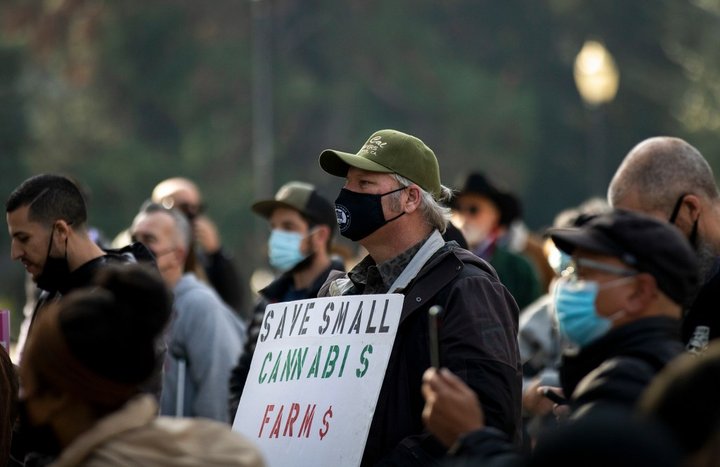
Supporters of cannabis tax reform gather for a rally at the state Capitol on Jan. 13, 2021. Photo by Rahul Lal for CalMatters
Attendees lingered after the speeches ended, enjoying a joint in the sun and waiting for a turn to talk to state Sen. Steven Bradford, who spoke at the event in solidarity.
As bill ideas circulate at the Capitol, lawmakers are poised to take up the cannabis industry’s cause this session. Bradford told CalMatters that, besides an overhaul of the tax structure, the Legislature could address prohibitive start-up costs for marijuana businesses, such as extensive environmental reviews or a requirement in many communities that dispensary owners have a storefront rented before they can even apply for a license to open.
Sen. Steven Bradford has taken at least $1.1 million from the Labor sector since he was elected to the legislature. That represents 22% of his total campaign contributions.
“We’re, in essence, enabling the illegal market to continue right now,” the Gardena Democrat said. “That’s who’s winning this battle.”
What the industry really wants is broad tax relief. At the Capitol rally, farmers urged the state to eliminate the cultivation tax, which recently increased to more than $10 per ounce, or switch from a flat rate to a percentage of the price. Social equity license holders asked for a suspension of the 15% excise tax, to give their businesses a greater opportunity to establish a foothold.
“You give us this opportunity and then you let us swim with sharks, because you don’t provide any protections.”
— Kika Keith, owner of Gorilla Rx Wellness, a dispensary in Los Angeles
Kika Keith, whose dispensary Gorilla Rx Wellness was one of the first licensed through Los Angeles’ social equity program, said campaign promises that Prop. 64 would provide redemption for communities hurt by the drug war proved to be a “Trojan horse.”
She slammed regulators for prioritizing bringing the existing cannabis market, which is predominantly controlled by white-owned businesses, into compliance. Assistance for entrepreneurs from disadvantaged backgrounds, including $55 million in grants from the state for social equity licensing programs, has been slow to reach those it was meant to help, she said.
“You give us this opportunity and then you let us swim with sharks, because you don’t provide any protections,” Keith said. “This is a state of emergency for Black and brown community members who have given up everything to be a part of this industry.”
Tough choices and trade-offs
It’s a complicated political puzzle for Newsom, who said at his budget press conference that he would “look at tax policy.” Any changes need to account for the impact on revenue, he said — an estimated $595 million in the 2022-23 budget to help fund child care slots, environmental cleanup programs and impaired driving prevention efforts.
The governor also said it’s “my goal to get these municipalities to wake up to the opportunities to get rid of the illegal market” and “to provide support and a regulatory framework for the legal market,” but did not offer any details. Tension over local control is a frequent issue at the Capitol, and there may be little appetite to dramatically curtail the rights of cities under Prop. 64.
Elliott, his top cannabis adviser, said the administration might be inclined to pursue changes that make it easier to comply with the legal cannabis system by addressing the “pain points” for operators, such as the fact that they must prepay some of their taxes on products they have not even sold. Newsom’s approach will depend on what proposals emerge from the Legislature, she said, because they will need to work together to reach the two-thirds vote threshold required of any tax measure.
“Everything’s a trade-off,” Elliott said. “It will be challenging to have anything but revenue neutrality because there are stakeholders who care about that revenue.”
Those include law enforcement organizations and unions that represent programs funded by the revenue. Public health groups also worry lowering the cost will encourage more marijuana use.
Keith Humphreys, a professor of psychiatry and behavioral sciences at Stanford University who served on the steering committee of Newsom’s blue ribbon commission, said the legalization framework of Prop. 64 was more corporate-friendly than the panel’s recommendations. He said the state should crack down on the illicit market by stepping up enforcement against unlicensed operators, rather than giving incentives to cannabis businesses.
“That’s more sensible than messing with taxes,” he said.
It’s a sensitive subject in an industry that is still grappling with the legacy and the trauma of the war on drugs. While some licensed growers and dispensary owners do believe the consequences are too low to discourage those operating illegally, others argue that large-scale enforcement would be fruitless against an illicit market that is so pervasive.
Steinmetz, whose Flow Cannabis Co. has gone through multiple rounds of layoffs over the past few years as it has struggled to compete, called it “a game of whack-a-mole.”
Law enforcement is unable to stay on top of illegal marijuana farms, especially on public lands, which steal precious water and raise the risk of devastating wildfires. Unlicensed dispensaries, even when they are shut down, often soon pop up in a new location.
Casali, whofse family started growing cannabis in Humboldt County in the mid-1970s, was arrested on illegal cultivation charges in 1992 and served eight years in federal prison. Unlike many of his peers, he opted to apply for a license for his Huckleberry Hill Farms after Prop. 64 because he was tired of a life in the shadows, running from helicopters and special agents.
Now he worries that legalization also means the end for the small farmers like him who built California into a marijuana powerhouse.
“The people who created the system truly do not understand what we went through,” Casali said. “We’re the ones who helped create a multibillion-dollar industry and now you don’t want us.”
###
CALmatters.org is a nonprofit, nonpartisan media venture explaining California policies and politics.
(AUDIO) HUMBOLDT HOLDING UP: The Search for Hunter Lewis and His Lost Treasure: Father Corey Lewis On the Life and Legacy of His Son
LoCO Staff / Sunday, Jan. 30, 2022 @ 7 a.m. / Humboldt Holding Up
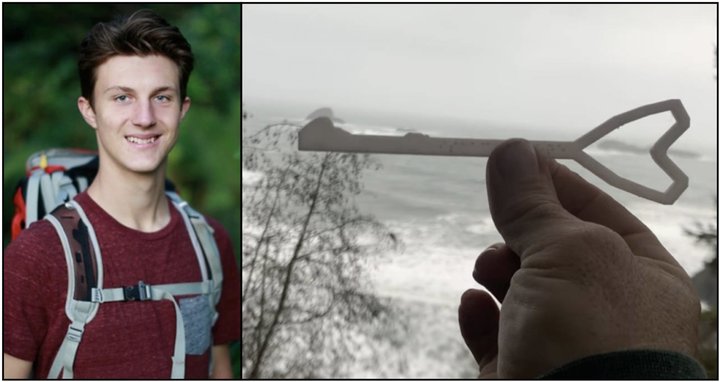
Hunter Lewis and one of his treasure hunt clues, a heart-shaped key made with a 3D printer with teeth that correspond to the position of rocks when viewed from a specific point on the coast near Trinidad
Corey Lewis Says #LiveLikeHunter
It was one month ago today when Hunter Lewis set out in his canoe into the Pacific waters near Trinidad on a quest to hide the final piece of an epic multi-day family treasure hunt.
Hunter — a 21-year-old aerospace engineering student at Cal State Long Beach who’d already acquired pilot’s and scuba licenses in his short life — had spent two years scheming this excursion and he’d been enjoying watching his loved ones working since Christmas Day on solving the clues he’d created for them.
But Hunter’s treasure hunt took a tragic turn on Dec. 30. when he didn’t return from his mission to set up the game’s climax. It’s believed Hunter was attempting to reach Flatiron Rock off the coast of Trinidad when he went missing. In the days following his disappearance, hundreds of locals coordinated online to systematically scour miles of coastline for signs of him. Portions of his canoe and other items he had with him would ultimately wash up on the beach. For Hunter’s father, Corey Lewis, the treasure hunt took on a new meaning as he instead redirected his efforts to searching for his son.
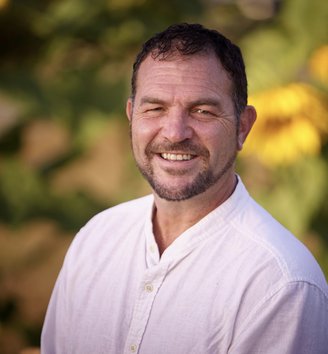
Corey Lewis, Hunter’s father
“He is the lost Lewis treasure,” Corey told the Outpost in the midst of a discussion about the intricacies of Hunter’s elaborate game. “The story he made up was actually a prophecy about his own passing.”
On today’s edition of Humboldt Holding Up, we speak with Corey Lewis about the person he watched his son grow to become, how he’s dealing with his grief, and we learn details about the impressive design of Hunter’s treasure hunt opus. Click the audio player above or click over to Apple Podcasts here to listen in.
Starting at 2 p.m. today, Sunday, Jan. 30, the Lewis family will hold a memorial for Hunter at the Arcata Community Center. In part to show gratitude to a community that supported his family during an unthinkable experience, Corey told the Outpost the event is open to all who knew Hunter or to those who’ve been touched by his story.
PREVIOUS HUMBOLDT HOLDING UP GUESTS:
- #80 “The Cannabis Conversation” Jesse Duncan
- #79 Humboldt COAD’s Alison Sterling Nichols
- #78 Miranda’s Rescue Founder Shannon Miranda
- #77 Eureka Police Department Chief Steve Watson
- #76 ‘The Bartow Project’ Michelle Hernandez and Zuzka Sabata
- #75 Foggy Bottoms Boys Thomas and Cody Nicholson Stratton
- #74 North Coast News’ Nazy Javid
- #73 Pumpkin Carver Mike Craghead
- #72 Eureka Police Department Sergeant Leonard LaFrance
- #71 Eureka Artist Duane Flatmo
- #70 Arcata City Councilmember Sarah Schaefer
- #69 Humboldt Hot Air Director Neroli Devaney
- #68 St. Joe’s James Ladika and Austin Allison
- #67 Eureka Artist Richard Evans
- #66 NCRT’s Calder Johnson
- #65 TV Newsman Dave Silverbrand
- #63 Housing Policy Specialist Brian Heaton
- #62 Muralists Blake Reagan and Lucas Thornton
- #61 Arcata City Councilmember Emily Goldstein
- #60 Kayak Guide Eric Stockwell
- #59 Eureka City Councilmember Natalie Arroyo
- #58 Wiyot Cultural Center Manager Marnie Atkins
- #57 Humboldt County Growers’ Alliance’s Natalynne DeLapp
- #56 RREDC Executive Director Gregg Foster
- #55 Dell’Arte’s Michael Fields
- #54 Llama Wrangler Keagan Trischum
- #53 Crabs President David Sharp
- #52 Organic Dairy Farmers Kristina Radelfinger and Dorice Miranda
- #51 Former Arcata Mayor Alex Stillman
- #50 Cooperation Humboldt’s David Cobb
- #49 Ink People Center for the Arts’ Libby Maynard
- #48 Humboldt Bay Social Co-Owner Amy Cirincione O’Connor
- #47 Musician Lyndsey Battle
- #46 Mad River Brewing CEO Linda Cooley
- #45 LoCO Editor Hank Sims
- #44 Humboldt Republic’s Jason Brandi
- #43 Table Bluff Farmer Hannah Eisloeffel
- #42 Logger Bar Owner Kate Martin
- #41 Teacher/Rapper Zach “Zigzilla” Lehner
- #40 Madaket Captain “Zippo” Libby Tonning
- #39 Event Planner Alegria Sita
- #38 Food For People’s Anne Holcomb
- #37 AHHA President Nezzie Wade
- #36 Performance Artist Noël August/Tucker Noir
- #35 Eureka Mayor Susan Seaman
- #34 Eagle House Owner Jennifer Metz
- #33 Absynth Quartet Drummer Mike “Tofu” Schwartz
- #32 HACHR Executive Director Lasara Firefox Allen
- #31 Alchemy Distillery Owner Amy Bohner
- #30 Eureka City Councilmember Kati Moulton
- #29 Eureka City Councilmember Scott Bauer
- #28 Ungraceful Ager Barry Evans
- #27 Arcata City Councilmember Sofia Pereira
- #26 HumBrews Music Booker Laurel Weston
- #25 Eureka City Councilmember Kim Bergel
- #24 Film Commission’s Cassandra Hesseltine and Nate Adams
- #23 Marble Maker Topher Reynolds
- #22 Arcata Playhouse Director Jacqueline Dandeneau
- #21 Humboldt Political Junkie Eric Kirk
- #20 Rio Dell Mayor Debra Garnes
- #19 Second District Supervisor Estelle Fennell
- #18 Arcata Food Aficionado Jada Calypso Brotman
- #17 Body Piercer Jackie Silva
- #16 Dick Taylor Chocolate’s Adam Dick
- #15 FUHS Teachers Mark Thom and Inma Thompson
- #14 Eureka City Manager Miles Slattery
- #13 Savage Henry Co-Founder Chris Durant
- #12 Eureka Street Art Festival Organizer Jenna Catsos
- #11 SCRAP Humboldt Founder Tibora Bea
- #10 Gym Owner Tyler Parr
- #9 Six Rivers Brewery Co-Owner Meredith Maier
- #8 Multicultural Skincare Therapist Levia Love
- #7 Annie’s Cambodian Server and Social Worker Joshua Coppock
- #6 Eureka City Councilmember Austin Allison
- #5 HSU Professor Deidre Pike
- #4 Pastor Bethany Cseh
- #3 Singer/Songwriter Chris Parreira
- #2 Eureka City Councilmember Leslie Castellano
- #1 Arcata City Councilmember Paul Pitino
GROWING OLD UNGRACEFULLY: The Four ‘Dunnos’ of Covid
Barry Evans / Sunday, Jan. 30, 2022 @ 7 a.m. / COVID-19 and Humboldt
“There’s no reason to believe that the virus has run out of room, genetically.”
— Kartik Chandran, Professor of Microbiology and Immunology, Albert Einstein College of Medicine, NYC
###
As we reel from Covid — about 2,000 new cases a week in Humboldt County, mostly the Omicron strain — many of us have four concerns, to which the experts I’ve been following are mostly united in their responses, as follows:
- Will a completely new variant appear this year? Dunno, but almost certainly
- How contagious will it be (i.e. how quickly will it spread)? Dunno
- How well will it evade our immune system, whether or not we’re vaccinated? Dunno
- How virulent (severe) will it be? Dunno
Much of the uncertainly about future of Covid stems from the Omicron variant, which came out of left field, blindsiding the experts. This diagram, in which Covid variants are scaled radially by genetic distance, shows that Omicron is radically different from previous strains of the virus.
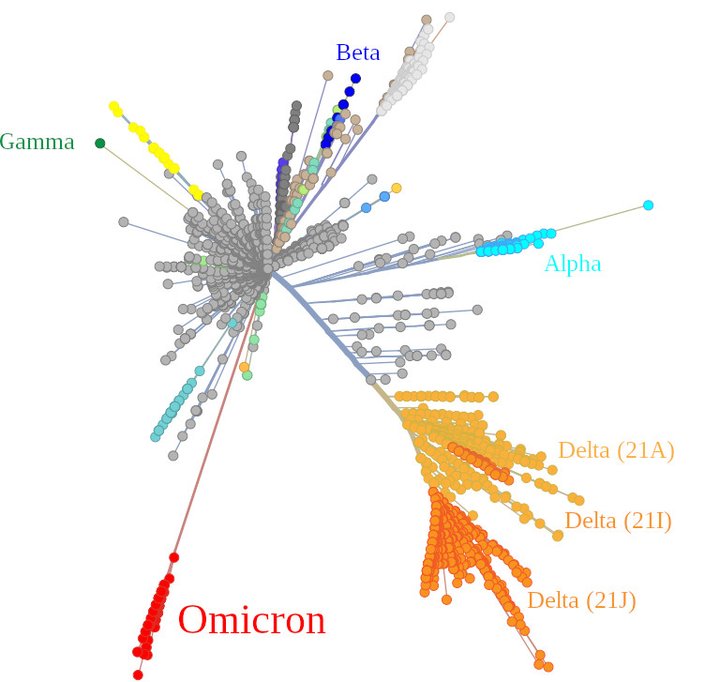
Graphic: Soupvector, via Wikimedia. Creative Commons license.
Conventional wisdom conflates contagiousness, or transmissibility, with mild symptoms, that is, if you’re infected but either don’t know it (very mild symptoms) or think you’ve just got a bout of flu, you’re likely to keep working and hanging with family and friends — thus rapidly and efficiently spreading the virus. The Omicron variant, for instance, grows more easily in the upper airways (70 times faster than the Delta variant) but less easily in the lungs. Meaning that it generally causes less severe disease than Delta, while being super-contagious. So you might expect a pattern in which viruses evolve to become less virulent (but more contagious) versions of their earlier selves.
However, the Delta variant blew conventional wisdom out of the water: it spread more easily than the original Alpha version while doubling Alpha’s risk of hospitalization for unvaccinated people. For that matter, HIV, Ebola and smallpox (the latter now thankfully eliminated) all maintained their severity, despite being long-lived diseases.
So what can we say about the future of Covid-19? In an interview with Live Science, Karen Mossman, Professor of Pathology and Molecular Medicine at McMaster University in Hamilton, Ontario, summed it up like this: “As more and more people become infected and/or vaccinated…they will build up higher levels of immunity against different variants…the overall evolution of SARS-CoV-2 will likely decline, and the pandemic will become endemic.” (Endemic = restricted to certain areas.) At this point though, two years into the pandemic, about 40 percent of the world’s population are unvaccinated. So the virus has plenty of wiggle room to evolve into new and scarier versions.
Finally, you already know you’re at greater risk if you’re not vaccinated, of course, but the degree of that “greater” is worth noting. Nationwide, CDC reports that unvaccinated adults are eight times more likely to be hospitalized with COVID-19 than those who are vaccinated, while locally, according to Humboldt County Public Health, unvaccinated residents are 17 times more likely to be hospitalized with the virus than their vaccinated counterparts.
Do I really need to restate the obvious? Public Health: covidinfo@co.humboldt.ca.us or (707) 441-5000.
LETTER FROM ISTANBUL: Notes From A Ghost
James Tressler / Sunday, Jan. 30, 2022 @ 7 a.m. / Letter From Istanbul
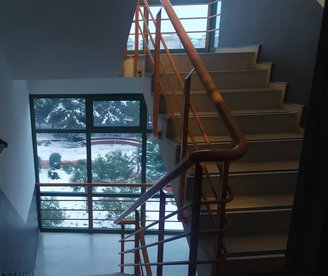
Photo: James Tressler.
The ghost stood on the terrace of the school, looking out at the snow-covered city. The school was closed that day because of the weather, and the corridors and classrooms were all silent except for the sounds of heavy winds outside.
There was no one on the terrace, and the half foot of snow covering the terrace was smooth and nearly undisturbed, saved for the boot prints left by one of the cleaning staff who had come out earlier for a cigarette and to take in the view.
The ghost had long ago ceased to bother with the cleaning staff. They weren’t worth haunting, the poor souls. It was so much more fun to mess with the students, who each year arrived in fresh waves, their bright faces singing the songs of youth.
The ghost smiled as memories flooded back … that time in the toilet on the 4th floor, when he had blown a shiver down the back of a first-year student who locked himself in the stall to pray. Or that time in that teacher who decided to stay late and enter midterm grades – the ghost locked the door of the unfortunate teacher’s office. The teacher had forgotten his phone at home, and was reduced to tearfully pounding on the door until a security staff heard his cries.
And then there were all those times the ghost cut the Internet right in the middle of exams. Oh, the curses, the cries of frustration, the scurrying IT guys! Good stuff. The ghost let out a ghostly chuckle (what other kind of chuckle does a ghost have?). These and other memories came flooding back as the ghost stood regarding the city from the terrace.
It was an important day for the ghost, and it wanted to take a moment. For this was the day the ghost graduated: after decades of purgatory (damned bureaucracy), the ghost was finally headed to the afterlife. In short time, the ghost’s successor at the campus was due to arrive, a teacher who had met with the business end of a wayward bus on the city’s icy streets a few hours before.
Naturally, or perhaps supernaturally, there would be a turnover, with the outgoing phantasm giving a rundown of duties to the incoming spirit. The job was pretty easy, dull, and consisted mostly of drifting through the corridors, occasionally causing drafts and unexplained noises. Haunting per se wasn’t even in the contract, for the school hadn’t been built on ancient burial grounds or anything like that. There were no unexpurgated sins on school grounds, no murders or grave crimes. It was a routine ghost post, so any haunting was left to the ghost’s whim or initiative – it didn’t bring any extra compensation or expedite the afterlife process, mind. Alas, there were few rewards in purgatory …
###
I wrote this story at my desk this past week, as the city was in fact buried under a snowstorm that hit on Monday. All classes at the campus were canceled, and the lessons were to be done online. That was fine with the students of course – snow days!
As for me, I have always loved coming to the campus. It reminds me of my youth I suppose, arriving at Humboldt State (now Cal Poly Humboldt, I hear) just after sunrise, strolling over to the Jolly Giant for breakfast and a hot cup of coffee, before heading over to the library to get some studying done before class. In those early morning hours, the campus was nearly deserted, and I felt as though I had this great fountain of learning all to myself.
Here in the city, the first snow day or two was not too bad. It was nice and cozy at home, to be warm and pajama-ed, while the snow fell from heavy grey skies outside. The problem is we have a very small flat, and a two-year-old son. He cooperated pretty well though, turning in for his afternoon nap just in time for my lessons, and I was able to work on the balcony (with a portable heater) undisturbed.
But by Thursday, I’d had enough. Wasn’t nearly two years of remote working enough during the worst days of the pandemic? Aren’t we entitled to some separation of work and home life? Just because the rest of the school wants to stay home, does that mean I have to? Besides, being home day and night, day and night in a small flat with a two-year-old, my wife and I were starting to get on each other’s nerves. “The secret of a successful marriage,” a wise man once said, “is frequent periods of long absence.”
Thursday morning, snow be damned, I set out for the campus. It wasn’t so bad outside. There hadn’t been any fresh snowfall in a day or two. The streets were mostly clear, wet only with melted snow, all the rest piled up beside.
The ferry across the grey, nearly motionless Bosphorus was quick, as was the bus ride, and in no time at all I found myself at the campus. Entering the main entrance, darkness greeted me initially. Then a security guard materialized, peering at me quizzically. You could tell he was stunned to see me, or anyone for that matter. Probably resented having his peace and quiet disturbed.
I went upstairs to the fourth floor, where my office is located. All of the corridors were dark and silent. Up on the fifth floor, the door to the coffee room was locked, as was the smoking terrace. Not a soul was stirring, not even the ghost of a mouse. Was I to be denied even a cup of morning mojo? All I ask is one cup, brother!
There had to be a cup of coffee somewhere on campus. Beginning to feel a bit spectral myself, with my lone boots echoing in the empty halls, I thought of those slasher movies where the last girl treds fearfully through dark, silent halls, the masked killer’s heavy breathing not far behind. “Yep, it’s just you and me today, mad man!” I thought grimly, nevertheless casting a cautious look down the dark corridors once more. At the far end, you could see the winter landscape peering in from a small window.
Speaking of masks: I donned my mask out of habit (what was the point? Who was I going to get Covid from, the solitary street cat lounging at the foot of the steps? It stared at me with wide eyes as I passed).
At last, on the ground floor over in the A Block, I found a coffee vending machine. It accepted my bank card and poured forth a blessed black brew in a paper cup. Ah, ye gods! It tasted marvelous, and by the time I got back to my office in B block I was back in my mostly human form. In the stairwell I encountered another soul. She looked young enough to be a student, a flashing dark, moon-faced girl with a tossel cap. It was on the tip of my tongue to ask what she was doing, but then I thought that maybe she didn’t have Internet access at home, and came to the school for her online lessons. Or maybe like me, she just couldn’t stand being stuck at home day in and day out. A kindred ghost.
A second security guard, who also appeared to be of the living, accosted me.
“The coffee room is open, hoca! Fifth floor!” He barked in Turkish. Not wishing to disabuse him, having just checked a few minutes before, I kindly nodded and we both went about our business.
###
On the bus ride to the campus, I had thought about what to write. There was the urgent situation in Ukraine. The Turkish president has offered to serve as a mediator between the two parties, to help de-escalate the conflict. Turkey has no wish to live in a war zone, but in peace, the leader said. Reading that made me think of the Syrian war, which has gone since my arrival here a decade ago. First Syria, now Ukraine, and don’t forget about the unrest in Kazakhstan. I thought about writing something about living in a country surrounded by conflicts, an open letter to Putin perhaps. “Dear Vladimir (can I call you Vladimir?), I write as a member of the human race, as a “friend.” ….” But as I sat down to write, after a moment of concentration I just sighed and said, “You know what? I really don’t care!” and sat down and wrote this story instead.
I went upstairs and checked the coffee room once more. Why, it was open! The security guard was right. I poured myself a proper hot cup of Joe, and tried the door to the terrace. Open! I stepped out onto the deserted terrace, lit a cigarette, and breathed in the cold morning air. A pathway had been shoveled by the staff, and somebody had made a snowman out of some of the loose, dirty snow. Two thin metal bars stuck out from the sides like arms, so that the whole effect resembled a crude, winter crucifixion.
The crucified snowman and I stood alone on the rooftop, with all of the city cold and grey around us. “Well, snowman, it’s just you, me and the city!” I said. “What shall we do about Ukraine, snowman?”
The snowman didn’t answer. It felt strange to be talking to a snowman, especially one who had been crucified. But then again, just an hour before I had been communing with ghosts. Funny what a few snow days will do to you.
Later, there was a knock at my door. Mick, one of the other American teachers, presented himself. No doubt, he and I were the only teachers in the building.
“Wanna grab some lunch?” he asked. The cafeteria was closed, but we could grab a burger or something at the food court in nearby Trump Tower.
“What about our level meeting?” I asked. We had a Zoom session scheduled for one o’clock.
“We can just log in with our phones,” Mick suggested. “That’s what I did for the last meeting.”
“Sounds good to me.”
So after the lessons finished, we left the campus and headed out into the cold streets, back to the land of the living. Some day this winter will end, and hopefully take the pandemic with it. One day all of these things will be part of the ghostly past.
###
James Tressler, a former Lost Coast resident, is a writer and teacher living in Istanbul.
OBITUARY: Thomas Joseph Hassler, 1934-2021
LoCO Staff / Sunday, Jan. 30, 2022 @ 6:56 a.m. / Obits
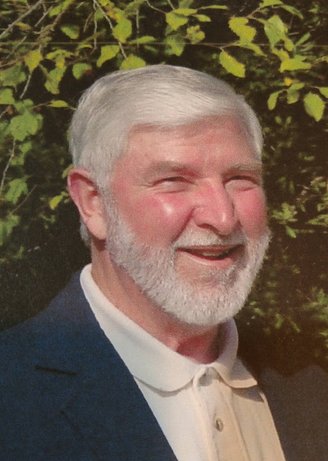
Thomas Joseph Hassler passed away peacefully November 30, 2021, in Bayside surrounded by his loving family. Tom was born January 6, 1934, to Joseph Francis Hassler and Margaret Moore Hassler in McCook, Nebraska. Born the eldest of four children, Tom grew up working in the family store and enjoyed playing sports, duck hunting, fishing, and boating. Tom graduated from McCook High School in 1952, lettering in football his junior and senior year. He attended McCook Community College and went on to attend the University of Nebraska where he earned a BS in Botany and Zoology in 1957.
Tom married Patricia Joan Kitchen on December 27, 1956. After his graduation they moved to Logan Utah where he continued his schooling at the University of Utah earning an MS degree and a Ph.D in Fishery Biology. Tom assisted with research projects and taught introductory Botany and Plant Taxonomy labs and Fish Biology labs. He also worked two seasons as game checker for the US Fish and Game. Tom and Pat had four children while in Utah: Jed Thomas, Michael Byrn, Wesley Joseph and Tracy Ann.
After graduation the family moved to Pierre, South Dakota where Tom worked for the U S Fish and Wildlife Service at the National Reservoir Research Program conducting field studies and research on fish populations and their habitat. He regularly spoke to area high school and elementary students about ecology and was a regional judge for high school science fairs. While in Pierre, Tom was active in the Lutheran Church, volunteered as a Cub Master for the Scouts, and served as vice president then president of the Pierre Federal Employee Credit Union.
In late 1972, the family moved to Bayside, California where he and Pat resided until his death. Tom was Assistant Leader of the California Cooperative Fishery Research Unit at Humboldt State University from 1973 – 1995 where he was a research biologist and a professor of Fisheries. Tom developed and taught a graduate level course in his area of expertise, Reservoir Development and Fisheries Management. He supervised the graduate programs for many students as major professor and research projects director. He retired in 1997 as the Acting Leader of the unit.
Upon retirement, Tom and Pat began to travel throughout the United States and Alaska, Canada, and Europe. Tom was an active member of the Lutheran Church of Arcata where he held numerous positions. Tom was a man of strong Christian faith, a devoted husband and father. He enjoyed birdwatching, agate hunting and spending time with family and friends.
Tom was preceded in death by his parents, Joseph and Margaret Hassler and sister, Mary Catherine Derauf. Tom is survived by his wife Patricia, his sister Roseanne (Hassler) Ruby and husband Richard of Lincoln, Nebraska, his brother Daniel Hassler and wife Cynthia of Crete, Nebraska, and his children: Jed Thomas Hassler and wife Jeannette of Arcata, California, Michael Byrn Hassler and wife Pamela of La Conner, Washington, Wesley Joseph Hassler and wife Mariann of Fieldbrook, California, and Tracy Ann Hassler-Jacobsen and husband Jeffrey of Mesa, Arizona. Tom is also survived by 10 grandchildren and 21 great grandchildren.
Memorial Services will be held at the Lutheran Church of Arcata Saturday, February 19, 2022, at 1 p.m. following county COVID-19 protocols. A small reception will be held after the service. In lieu of flowers, please consider a donation to the charity of your choice.
###
The obituary above was submitted on behalf of Thomas Hassler’s loved ones. The Lost Coast Outpost runs obituaries of Humboldt County residents at no charge. See guidelines here.
Confused About Arcata’s Gateway Area Plan? There are Still Opportunities to Learn More and Provide Feedback About How You Want the City to Create More Housing
Stephanie McGeary / Saturday, Jan. 29, 2022 @ 10:45 a.m. / Housing
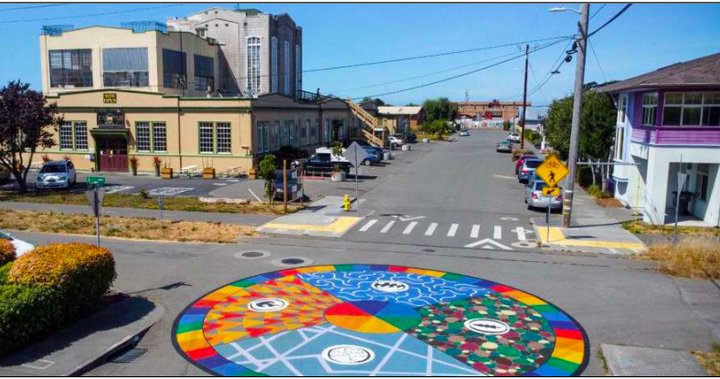
Arcata’s Gateway Area includes the hip Creamery District | Images from the City of Arcata’s Draft Gateway Area Plan
###
You’ve heard it before: With big changes like HSU becoming Cal Poly Humboldt, COVID prompting more people to work remotely and climate change making coastal Humboldt’s weather increasingly more attractive, Arcata’s population is expected to explode in the coming years and that means the city needs to plan for the creation of more housing. Like, a lot more.
The best way to do that, members of Arcata city staff believe, is through the Gateway Area Plan – a plan to rezone 138 acres of land mostly west of the downtown/ Arcata Plaza area to allow for the creation of high-density housing on some of the town’s underutilized sites. Much of this area of town was zoned primarily for industrial purposes, resulting in many vacant lots and sites holding business that only take up a small portion of the property. The Gateway Area Plan basically looks to update the zoning of those sites to allow for mixed use — meaning housing and businesses. The plan also would update the city’s building codes, which currently only allow developments up to four stories in height, to allow for much taller buildings, possibly as tall as eight stories.
“Whoa!” You might be saying, “Eight stories!? That’s way too tall for my quaint, little Humboldt town!” And you certainly would not be alone in thinking that. The proposed height increase has arguably been the most controversial aspect of this plan, and many Arcata residents have voiced concerns over the development of eight-story, or even six-story buildings in town, saying they will disrupt Arcata’s lovely views and cast large shadows over neighboring buildings, among other things. But city staff argues that increasing the permissible building height is the only way to fit the number of units the city will need without building out into our surrounding agricultural land or forests.
Some concerned community members even formed a group called Arcata Gateway District Community and have held public meetings, facilitated social media conversations and gone door to door to ask residents what they think of the Gateway Plan. Daniel Bixler and Sherri Star of the community group told the Outpost that they and other members of the community have concerns not only about the potential building heights, but also the potential impact on other city services, the level of community engagement and the potential parking impacts.
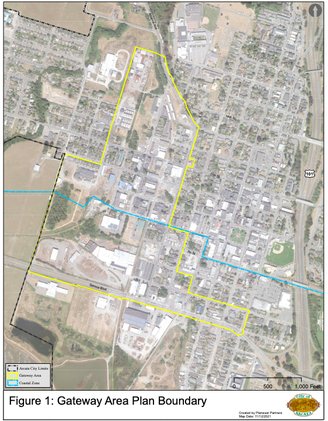
The plan is meant to be pedestrian-and- bike-friendly and, although it does include proposed changes to accommodate more traffic, it clearly states that the plan does not prioritize parking. Bixler supports the goal of decreasing greenhouse gas emissions, but thinks it is unrealistic to not plan to not plan for a substantial increase in vehicles.
“The reality is, I don’t think we’re getting rid of cars,” Bixler told the Outpost last week, during an Arcata Gateway Area Plan open house at the Community Center. “We’re just switching to electric cars, and we’ll still need to park them.”
Starr had concerns over the number of people in town who were completely unaware of the Gateway Area Plan, saying that in going door to door, she and other members of the community action group found that only about one in thirty people had heard of the plan.
But both Bixler and Starr wanted to be clear that they are not against the Gateway Area Plan and they absolutely support the creation of more housing. They just have concerns about how it’s done.
“Everyone wants infill,” Starr told the Outpost in front of the community center last week. “We just want it done right. We’re really open to discussion and I think the City is too.”
And city staff has been doing its darndest to engage the community in this planning process, holding open houses, public meetings, walking tours and online surveys. During last weeks community open house, David Loya, community development director for the City of Arcata, told the Outpost that the Gateway Area Plan is meant to be “for the community, by the community” and that everything included in the draft plan has been based on community feedback held at various community visioning sessions and public meetings.
Now that the city has released the draft plan, staff is trying to gather feedback to see if they hit the mark. All of the comments and critiques of the plan will be considered by the Arcata City Council, when the plan comes before the council sometime in the next couple of months. The council will likely hold several meetings and give staff directions on any necessary changes to the plan before it is adopted at the end of 2022.
Loya says that building height is definitely one of the concerns he has heard the most during this process and says that there is certainly a chance the council will decide not to approve eight-story buildings and will maybe cut if off at six. Of course, even six stories sounds too high to some people. But, if the city also requires other design aspects to make buildings more aesthetically pleasing — such as requiring the building to be set back from the street — Loya said, six or even eight stories might not be as imposing as it sounds.

The four-story Danco development on 7th and I streets | Photo: Stephanie McGeary
“Some people say four or five [stories] is too big,” Loya told the Outpost. “But we have four-and five-story buildings in town already and people don’t seem to mind. The Creamery building, for example, is five stories tall. But because of the way its designed, from the streetscape it doesn’t seem like this large, imposing building.”
To offer a sense of perspective, the Danco housing development on Seventh Street between J and I Streets is only four stories tall and some residence might say it is a bit more imposing. Basically, if you don’t like the way that building looks, you should be telling the city about it now. Loya says that there are design aspects that can be written into the plan to require a different type of aesthetic.
Just to be clear, this big plan is only that – a plan. No housing will actually be built by the city. The purpose of the plan is to streamline the housing development process. By coming up with a sort of checklist that shows what the community wants out of its housing developments, the City can then approve development plans if they meet those requirements.
The plan proposes implementing this through a “Community Benefit Program,” which requires an development plans to include a certain amount of community amenities — such as creation of green spaces, community gardens, murals, job creation, rooftop dining, electric vehicle charging or bus passes for residents — for different building tiers. What tier the development falls under would determine how tall it can be, how dense and what sites it could be built on.

You probably have some thoughts on all of this and the city wants to hear them. You can view the Draft Gateway Area Plan here and/or watch a 60-minute video outlining the plan here. You can provide feedback by filling out the the community survey here (the survey is open until April 1.)
You can talk to city staff about the Gateway plan in-person by going to the city’s table at the Arcata Farmers’ Market on the second and fourth Saturdays of the month. You can also schedule a walking tour of the Gateway Area for a group of between five and twenty people by calling Delo Freitas at (707) 825-2213.
“If people see this plan and think ‘you went too high,’ they should stay engaged in the design process,” Loya told the Outpost. “The reality is that we have to plan for this growth, we need to sit down as a community, roll up our sleeves and decide what the future of Arcata is going to look like as it grows and develops.


